How to Diagnose My AC Unit Not Blowing Cold Air
Feeling frustrated because your AC unit isn’t blowing cold air? You’re not alone—many people struggle with this problem, especially during the hotter months.
Luckily, there are some simple steps you can take to troubleshoot and get your AC back to cooling your space efficiently.
First, check that your thermostat is set correctly and tuned to “cool” mode with a temperature below the room temperature.
Inspect your air filter and replace it if it’s dirty.
Then examine your outdoor unit for debris or damage.
Verify refrigerant levels and look for leaks with soap water or gauges.
Also, inspect your ducts for obstructions.
If these steps don’t solve the issue, there’s more you can do to get your AC back to ideal.
Key Takeaways
- Check the thermostat settings to make sure it’s set to cooling mode and at the temperature you want.
- Inspect your air filters and replace any that are dirty. This helps improve airflow and makes your system more efficient.
- Take a look at the outdoor condenser. Remove any debris, dirt, or damage that might block heat exchange.
- Check the refrigerant levels for leaks or low pressure. Also, listen for strange noises that could mean mechanical problems.
- Think about environmental factors like high humidity or outdoor heat, which can affect how well your AC cools.
Check If Your Thermostat Is Set Correctly
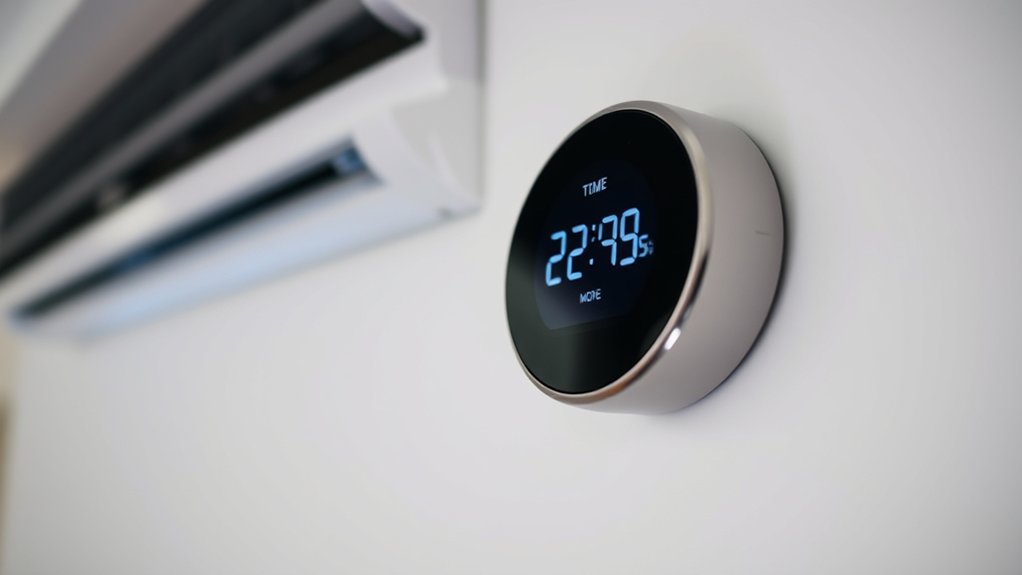
The first step is to make sure your thermostat is set correctly. Check the thermostat calibration to ensure it’s reading the right temperature.
If your thermostat has a manual dial, turn it to the desired cooling setting. For digital thermostats, make sure it’s set to “cool” mode and the temperature is below the current room temperature.
Many modern thermostats come with a remote control. Check that it’s working properly and that you’ve set the temperature you want.
Sometimes, the remote might be out of sync or have dead batteries, which can cause the thermostat to malfunction. Confirm that the thermostat is powered and responding.
If you have a smart thermostat, use the app to review and adjust the settings if needed. Proper calibration and correct settings are key because an incorrect setup might stop your AC from turning on or producing cold air.
Always double-check these settings before moving on to troubleshoot further.
Inspect and Replace Your Air Filter
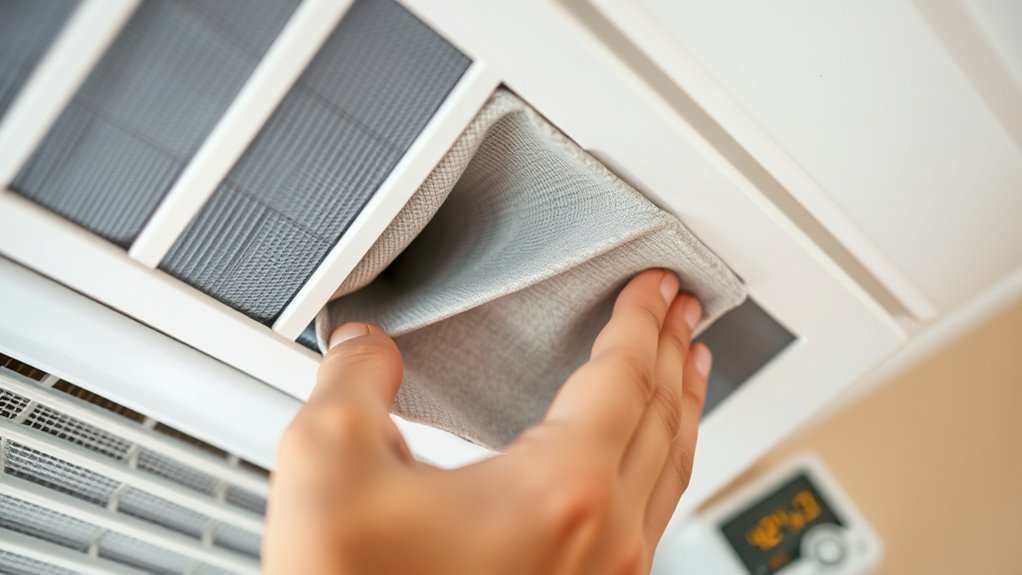
A dirty or clogged air filter can significantly reduce your AC’s cooling power, so inspecting and replacing it should be your next move. A clean filter ensures proper airflow, which helps your system run smoothly and efficiently.
To check it, turn off your AC and find the filter—usually near the return vent. If it looks dirty or clogged with dust, dirt, or debris, it’s time to replace it. Regular filter changes improve air quality and prevent strain on your AC unit.
| Step | Action |
|---|---|
| 1 | Turn off the AC and find the filter |
| 2 | Remove the filter and check for dirt |
| 3 | Replace it if it’s dirty or clogged |
| 4 | Turn the AC back on and verify thermostat accuracy |
Keeping your air filter clean is essential for maintaining cooling efficiency and ensuring your thermostat stays properly calibrated.
Look for Blockages or Damage on the Outdoor Condenser
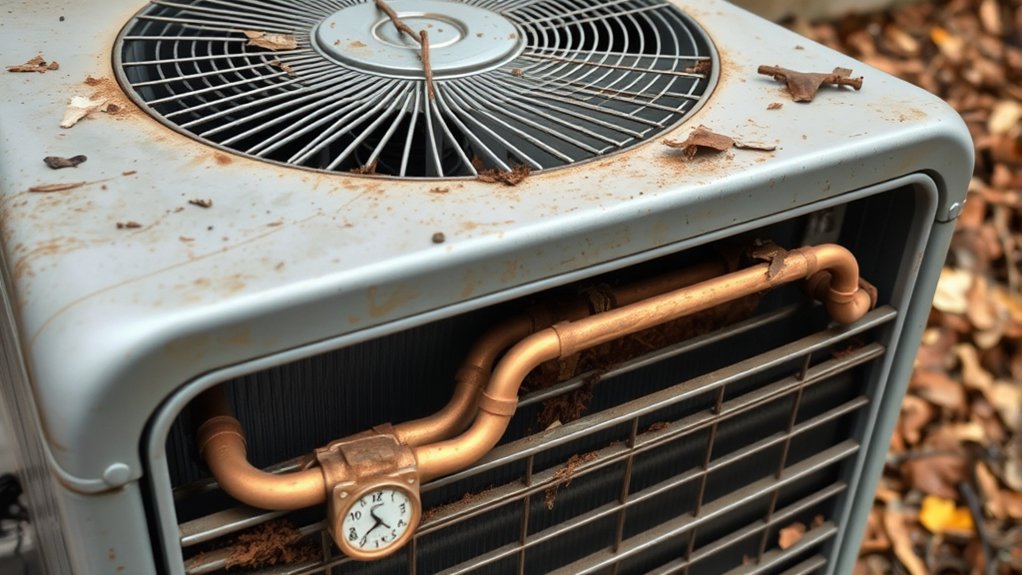
Since the outdoor condenser is exposed to the elements, debris like leaves, dirt, and grass clippings can build up around it, blocking airflow and reducing efficiency. Regular inspections help you spot blockages or damage early.
Check the fins and coils for dirt buildup or bent fins that can restrict airflow. Clear away leaves, dirt, or obstructions around the unit. During cleaning, gently brush off debris from the coils and fins to ensure proper heat exchange.
Look for signs of physical damage, such as bent or broken fins, corrosion, or leaks. If you notice any damage or persistent blockages, it’s best to address them quickly—either by cleaning the unit yourself or calling a professional.
Keeping the outdoor condenser free of debris and damage helps your AC run efficiently, cool effectively, and prevents unnecessary wear and tear.
Verify Refrigerant Levels and Spot Leaks
First off, grab a gauge and check your AC’s refrigerant pressure to see if it’s at the recommended level. If the pressure’s low, that might mean you’ve got a leak that needs fixing. While you’re at it, take a look around the coils for any signs of oil or refrigerant stains—they can be a good indicator that there’s a leak somewhere.
Check Refrigerant Pressure
Wondering if low refrigerant levels are causing your AC to blow warm air? Checking refrigerant pressure is your next step.
Using pressure gauges suited for your refrigerant types, you can measure if the system’s pressure matches the manufacturer’s specs. These gauges connect to service ports on your AC unit and give real-time readings.
If the pressure is too low, it means you might have a refrigerant shortage, which can reduce cooling efficiency. Remember, different refrigerants like R-22 or R-410A need specific gauges and pressure ranges.
Always handle pressure measurements carefully. Make sure your system is off and safety precautions are in place. Correct pressure readings can help you determine whether your refrigerant levels are adequate, guiding your next steps for repair or professional servicing.
Detect Possible Leaks
Detecting leaks in your AC system is essential because even small refrigerant escapes can significantly reduce cooling performance. If your unit isn’t blowing cold air, it’s time to check refrigerant levels and look for leaks.
Use a leak detector or apply soapy water on fittings and coils; bubbling indicates a leak. Low refrigerant levels mean your system needs a recharge to restore proper cooling.
Keep in mind, leaks outside of a recharge can cause refrigerant to escape again, so fixing the leak is crucial. Leaks can also disrupt airflow, making your AC work harder.
Addressing leaks promptly improves efficiency and cooling power, preventing further damage. Regular inspections help keep your system sealed and running smoothly, so your home stays cool and comfortable.
Examine Your Ducts for Leaks or Obstructions
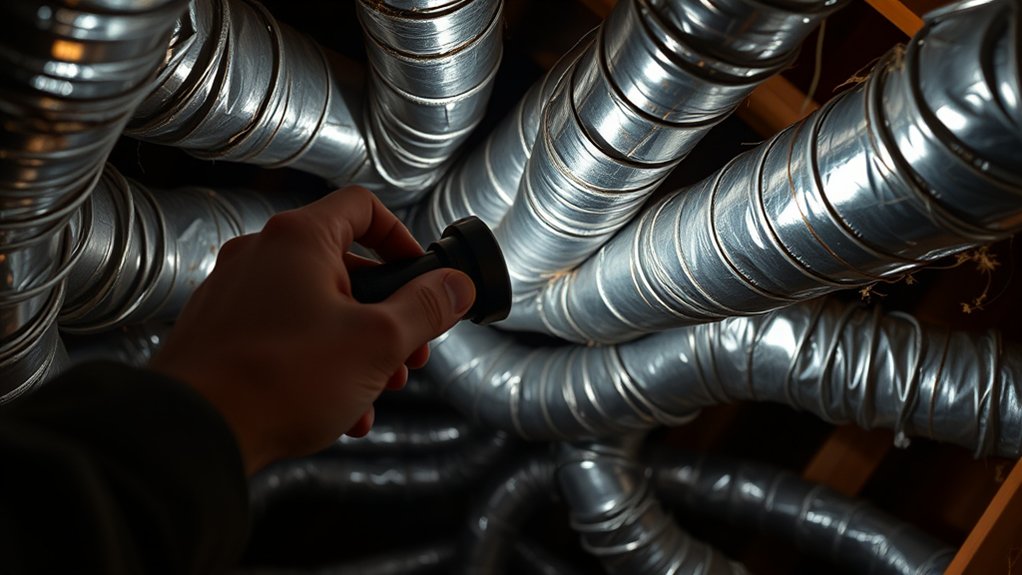
First, take a good look at your ducts. See if you can spot any tears, holes, or parts that might have come apart. It’s a good idea to peek inside and check for anything blocking the airflow, like debris or buildup.
Also, make sure all the connections are sealed up tight. This helps prevent leaks and makes your system work more efficiently. Just a quick visual check can go a long way in keeping everything running smoothly!
Inspect Ducts Visually
Since your AC isn’t blowing cold air, it’s important to take a look at your ducts for any leaks or obstructions. Check for damaged or disconnected duct insulation, which can cause a lot of temperature loss and make your system less efficient.
Look for obvious tears, gaps, or holes that might be letting cooled air escape. Also, keep an eye out for crushed or kinked sections that can restrict airflow. Make sure the ducts are clear of dust, debris, or anything blocking the airflow.
Here are some signs to watch for:
- Visible tears or disconnections in duct insulation
- Crushed or kinked duct sections
- Dust buildup around duct joints
- Loose or sagging ducts
- Obvious leaks or holes
Fixing these issues can boost airflow and help your AC cool your space more effectively.
Check for Obstructions
After inspecting your ducts visually for tears or damage, the next step is to check for obstructions that could be blocking airflow. Start by inspecting your air filter; poor maintenance can cause reduced airflow and hinder cooling. Replace or clean the filter if it’s dirty or clogged.
Next, examine the ductwork for any debris, obstructions, or kinks that may restrict airflow. Also, verify that your thermostat is calibrated correctly. An incorrectly set or faulty thermostat can prevent your AC from cooling properly.
Ensuring your thermostat reads accurately helps the system respond properly. By addressing these obstructions and maintaining your air filter and thermostat calibration, you can improve airflow and help your AC unit blow cold air more effectively.
Seal Leaky Connections
Leaky duct connections can significantly reduce your AC’s efficiency by letting cooled air escape before it reaches your living spaces. To fix this, you need to seal leaks and ensure your connections are secure.
Start by inspecting your ducts for obvious holes, tears, or loose fittings. Use mastic sealant or metal tape to close any gaps, preventing cooled air from leaking out. Proper sealing boosts your system’s performance and lowers energy bills.
Don’t ignore signs like uneven cooling or increased noise, as these often indicate duct leaks. When you seal leaks properly, you take back control of your indoor comfort and save money.
Take action now to improve your AC’s efficiency and enjoy a cooler, more comfortable home. Feel the relief of a consistent, invigorating breeze. Say goodbye to wasted energy and soaring bills.
Reclaim control over your home’s comfort and experience the satisfaction of a sealed, efficient system. Rest easy knowing your ducts are secure and working as they should.
Listen for Unusual Noises or Mechanical Signs of Trouble
Unusual noises or mechanical signs often indicate that your AC unit is experiencing problems. During acoustic diagnostics, listen carefully for any knocking, squealing, or rattling sounds. These can signal loose components or worn-out parts.
Mechanical vibrations are another key indicator. If you notice excessive shaking or buzzing, it could point to imbalance or motor issues. Pay attention to the compressor’s sounds—loud hums or rapid clicking often suggest electrical or mechanical faults.
Unusual noises may also come from the fan motor or blower, indicating a need for lubrication or part replacement. These signs are often early warnings of underlying problems that can worsen if ignored.
Consider Environmental Factors Like Humidity and Temperature
High humidity can really make your AC work extra hard and can even cut down on how well it cools your space. When the air’s moist, your AC has to work more to remove that extra moisture, which can strain the system over time.
And don’t forget about the outside temperature. Hot days, especially during heatwaves, can make your AC struggle a bit more to keep your place cool. On the flip side, colder weather or sudden cold spells can also impact how well your system functions. So, it’s good to keep these seasonal changes in mind when you’re checking on your AC or troubleshooting any issues.
Humidity Levels Impact Cooling
Humidity levels can significantly impact how well your air conditioner cools, especially when it’s humid outside. High humidity makes it tougher for your AC to remove moisture from the air, leaving your home feeling damp and uncomfortable.
To help improve cooling, try adding indoor plants that absorb excess moisture and promote better air circulation. Keep windows and vents open to allow proper airflow, which helps your AC work more efficiently.
When humidity is high, your unit might struggle to reach the temperature you want, leading to frustration and discomfort. Feeling sticky and sluggish? That’s often a sign humidity is overwhelming your system.
Addressing humidity issues can restore comfort and efficiency, making your home feel cooler and fresher even on really humid days.
External Temperature Influence
External temperatures really impact how well your AC can cool your space. When it gets hot outside, your system has to work harder to keep things comfortable indoors. Good outdoor ventilation helps by letting heat escape and reducing your AC’s workload.
Solar shading around your home also helps by blocking out the sun and preventing your space from heating up too quickly. Without enough shading or ventilation, your AC uses more energy trying to cool down the excess heat.
High outdoor temps and direct sunlight make indoor heat worse, making it harder for your AC to blow cold air. Paying attention to these environmental factors can improve cooling and even save you energy costs.
Seasonal Weather Changes
As seasonal weather changes, fluctuations in temperature and humidity can significantly impact your AC’s ability to cool effectively. During these shifts, rising or falling temperatures and changing humidity levels challenge your system’s efficiency. Weather fluctuations might cause your AC to struggle, especially if it’s not built to handle these variations.
You might feel frustrated if your unit works harder but doesn’t cool properly. There could also be anxiety about rising energy bills or disappointment during heatwaves. The unpredictable system performance can cause stress, and if your AC stops working at the worst moment, panic sets in.
Understanding how seasonal shifts affect your AC can help you spot issues early and adjust accordingly. This knowledge ensures your system runs smoothly year-round, no matter what the weather throws at you.
How Do I Know When to Call a Professional HVAC Technician?
Knowing when to call a professional HVAC technician can save you time, money, and frustration. If you’ve checked your air filter and found it clean, yet your AC still isn’t cooling properly, it’s time to seek expert help.
Similarly, if your thermostat isn’t calibrated correctly, your unit may not respond as it should, leading to inefficient cooling. When you notice inconsistent temperatures, strange noises, or if your AC runs constantly without cooling the room, these are signs you need a professional’s diagnosis.
Don’t attempt complex repairs if you’re unsure. Handling refrigerant or electrical components without proper training can be dangerous. Also, if your system trips circuit breakers frequently or if there’s visible damage to the unit, call a technician.
Recognizing these signs early helps prevent minor issues from becoming costly repairs. It also ensures your AC gets the professional attention it needs to function efficiently again.
Tips to Keep Your AC Running Smoothly in the Future
To keep your AC running smoothly, regular maintenance is key. Proper upkeep not only boosts energy efficiency but also improves indoor air quality, making your home healthier and more comfortable. Schedule annual professional inspections to catch issues early and keep your system working its best.
Regular AC maintenance ensures efficiency, better air quality, and a healthier, more comfortable home.
Change filters regularly because clogged filters reduce airflow and strain your AC, which can lead to higher energy bills. Keep vents clean and unobstructed so your cooling stays efficient. Clear debris around outdoor units to prevent overheating and improve performance.
Consider installing a programmable thermostat to easily regulate temperatures and save energy. These simple steps help prevent unexpected breakdowns and keep your home cool and fresh all season long.
Feel confident knowing your system is operating at peak efficiency. Enjoy cleaner indoor air free from dust and allergens, and save money with lower energy bills.
Experience reliable, consistent cooling and breathe easier in a healthier home.
Common Mistakes That Can Cause Cooling Problems
One common mistake that can cause cooling problems is neglecting regular maintenance, like not changing filters or cleaning vents. Many homeowners think filters only need changing once a year, but dirty filters block airflow and reduce cooling efficiency.
User errors, such as ignoring routine inspections, can lead to clogged coils or compressor issues. Another mistake is misjudging thermostat settings, thinking it’s correct when it’s not. Some believe closing vents in unused rooms saves energy, but it actually strains the system.
Overlooking refrigerant levels is also a frequent error. Low refrigerant can cause poor cooling, yet many assume leaks are rare. Finally, neglecting outdoor unit upkeep such as removing debris or vegetation can hinder heat exchange.
Avoid these user errors and misconceptions to keep your AC running smoothly and prevent cooling problems. Regular maintenance and correct operation are key to peak performance.
Frequently Asked Questions
Can Electrical Issues Cause My AC to Stop Blowing Cold Air?
Yes, electrical issues can cause your AC to stop blowing cold air. Faulty wiring or a tripped circuit breaker can interrupt power to your unit, making it stop working properly.
You should check your circuit breaker to see if it’s switched off or needs resetting. Also, look over the electrical wiring for any damage or loose connections, as these can affect your AC’s cooling performance.
How Often Should I Schedule Professional AC Maintenance?
You should schedule professional AC maintenance at least once a year, ideally before the peak cooling season. During these visits, technicians check for refrigerant leaks, clean the dirty condenser, and ensure all components work efficiently.
Regular maintenance helps prevent issues like refrigerant leaks and a dirty condenser that can reduce cooling performance. Staying proactive keeps your AC running smoothly, saving you money and avoiding unexpected breakdowns when you need cool comfort most.
What Are Signs of a Failing Compressor in My AC Unit?
You’ll notice your compressor making strange noises or struggling to start, which are classic signs it’s failing. Watch out for refrigerant leaks, as they can cause your AC to lose cooling power and put extra strain on the compressor.
If the compressor is overheating or if your system suddenly stops cooling, it’s definitely crying out for help. Ignoring these signs can lead to a total breakdown, leaving you sweating and wishing you’d maintained your system earlier.
Could Thermostat Placement Affect Cooling Performance?
Yes, thermostat placement can affect cooling performance. If you put it in direct sunlight, near heat sources, or in a drafty spot, it might read higher than the actual room temperature. This can cause your AC to work harder or run longer than needed.
For the best cooling, place the thermostat in a central, shaded spot away from windows and vents. This helps ensure it gets an accurate reading and keeps your space at a comfortable, steady temperature.
How Does Outdoor Weather Impact My Ac’s Efficiency?
Think of your AC as a kite soaring against the outdoor weather. When it’s hot and humid outside, indoor humidity rises, making your system work harder, like fighting a strong wind.
High outdoor temperatures put extra strain on the compressor, which reduces cooling efficiency. Refrigerant leaks also hinder performance, causing warm air to blow out.
Extreme weather conditions really test your AC’s limits, making it struggle to keep your home cool and comfortable.
Conclusion
Remember, many cooling issues come from simple fixes like a dirty filter or incorrect thermostat settings. These small problems are easy to check and fix yourself, saving you time and hassle.
Some people think refrigerant leaks are rare, but they’re actually a common cause of AC problems. Regular maintenance and quick DIY checks can often prevent more costly repairs down the line.
Trust your instincts—if your troubleshooting doesn’t resolve the issue, calling a professional is the best move. They can diagnose problems like refrigerant leaks or other complex issues, ensuring your AC blows cold again efficiently.