Diagnosing My Car AC Blowing Warm Air
If your car’s AC is blowing warm air, you’re definitely not alone. Many drivers struggle with this frustrating issue, especially during hot days when staying cool is a top priority.
Luckily, diagnosing the problem doesn’t have to be complicated.
To diagnose why your car’s AC blows warm air, start by checking the basics: make certain your controls are set correctly, inspect the cabin air filter, and verify refrigerant levels—they may be low due to leaks.
Next, examine the compressor and clutch for proper operation, and use gauges to check system pressure.
Inspect electrical fuses and connections for issues, and make sure the condenser isn’t blocked or damaged.
If problems persist, exploring these steps further can help pinpoint the cause.
Key Takeaways
- Check if AC controls are correctly set, including temperature and fan speed, before troubleshooting further.
- Verify refrigerant levels using service ports and gauges, and look for leaks with UV dye and leak detection kits.
- Inspect the compressor clutch engagement and system pressure to ensure proper compressor operation.
- Examine condenser fins for debris, damage, or blockages that can hinder heat exchange.
- Inspect electrical fuses, wiring, and connections related to the AC system for faults or corrosion.
Why Is My Car AC Blowing Warm Air?
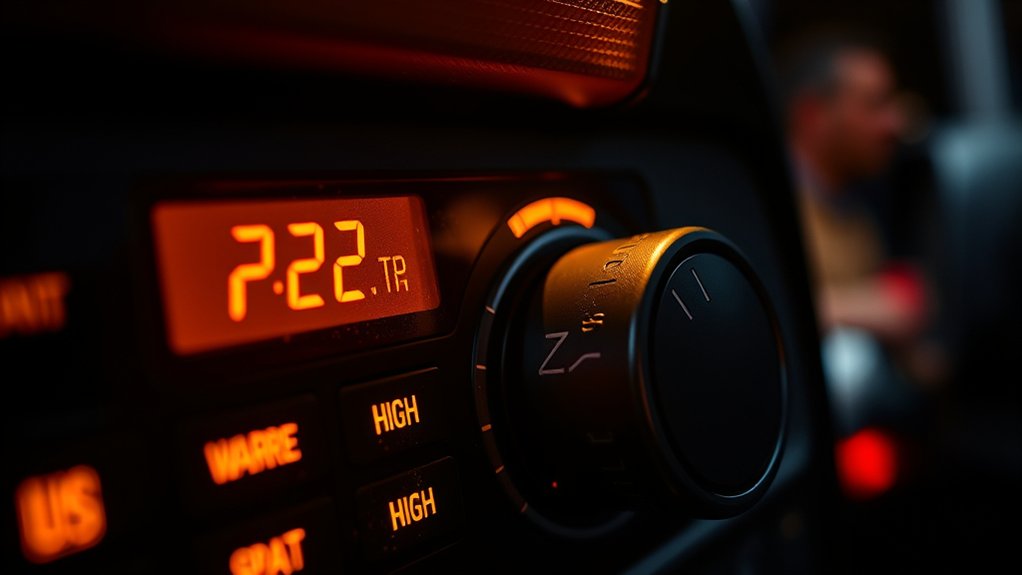
When your car’s AC starts blowing warm air instead of cool, it can be pretty frustrating, especially on hot days. This issue directly affects your comfort and climate control, making driving less enjoyable.
Several factors can cause this problem. One common reason is low refrigerant levels, which reduce the system’s ability to cool the air effectively. A leak in the AC system often leads to refrigerant loss.
Low refrigerant levels and leaks can prevent your car’s AC from cooling effectively.
Additionally, a malfunctioning compressor can prevent the refrigerant from circulating properly. Dirty or clogged condenser and evaporator coils also block heat exchange, resulting in warm air.
Sometimes, electrical issues or faulty sensors disrupt the AC system’s operation. If these parts aren’t working right, your climate control system won’t produce cool air.
Identifying the cause quickly helps restore comfort and ensures your AC system works properly, especially when you need it most.
Quick Checks to Fix Your Car’s Air Conditioning
If your car’s AC is blowing warm air, there are a few quick checks you can do before calling a professional. First, make sure the AC controls are set correctly—sometimes, the temperature dial or fan speed gets accidentally changed.
Check the cabin air filter; a clogged filter reduces airflow and cooling efficiency. Replacing or cleaning it is a simple maintenance tip that can make a big difference.
Make sure the vehicle has enough refrigerant. Low levels can cause warm air, but avoid handling refrigerant yourself for safety reasons.
Inspect the AC compressor belt for signs of wear or looseness. A faulty belt can prevent the compressor from working properly.
Throughout these checks, prioritize safety by turning off the engine and parking the vehicle securely. Performing these quick fixes can save you time and money, but if the problem continues, always seek professional help.
How to Check the Refrigerant Level and Detect Leaks
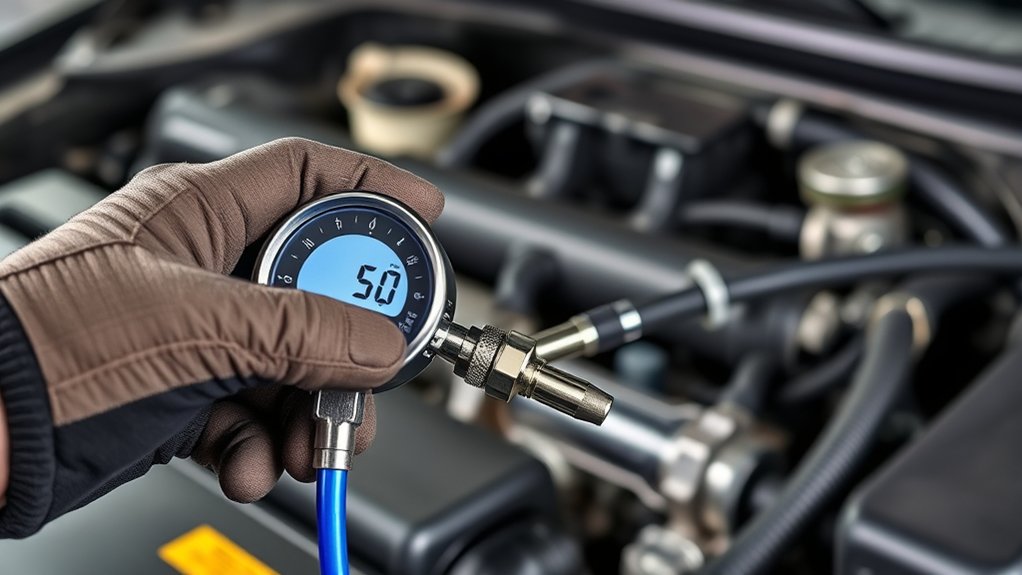
After performing the quick checks on your AC system, the next step is to verify the refrigerant level and look for leaks. Start by locating the service ports, usually on the low-pressure and high-pressure sides of the system.
Check refrigerant levels and inspect for leaks to keep your AC running efficiently and prevent damage.
Attach a refrigerant gauge to the low-pressure port to check the current level. If it’s below the recommended range, you might need to recharge the refrigerant. Just be careful not to overfill, as too much refrigerant can cause issues.
For leak detection, look for oily residue or dye around the fittings, hoses, and compressor. Using a UV leak detection kit can make it easier—adding dye during recharge helps identify small leaks by revealing fluorescent spots.
If you find leaks or the refrigerant level is low, addressing these issues promptly is key. Doing so will help restore your AC’s cooling power and prevent further damage.
Is the AC Compressor Working Properly?
First, you’ll want to see if the compressor clutch kicks in when you turn on the AC. If it doesn’t engage, that’s a sign the compressor might not be working as it should.
Then, check the pressure levels in the system. If they’re outside the recommended range, it could mean there’s an issue. So, if the clutch isn’t engaging or the pressure seems off, it might be time to have the compressor looked at—possibly repaired or replaced.
Compressor Clutch Engagement
The compressor clutch is essential for the AC system to work properly. It engages and disengages the compressor to control refrigerant flow. When it engages, it powers the compressor and helps your cooling system remove heat.
If it doesn’t engage, warm air will blow from your vents. To check this, look for these signs: the clutch’s pulley spins freely when the AC is off but engages when turned on. You might hear a clicking sound as the clutch engages.
Another sign is if the compressor’s pulley stays stationary when the AC is on. That indicates a problem. A malfunctioning clutch may mean you need a refrigerant recharge or other repairs.
Making sure the clutch engages properly is key to getting cold air back and keeping your cooling system running efficiently.
Compressor Pressure Levels
How can you tell if the compressor pressure levels are within the proper range to confirm the AC is functioning correctly? First, check the pressure readings with a gauge. Low pressure often indicates refrigerant leaks or not enough refrigerant in the system.
High pressure can suggest the system is overcharged or that a blocked expansion valve is causing issues. During an evaporator inspection, look for ice buildup or frost, which can signal pressure problems.
If the pressures are off, your compressor might not be working properly. You may need to recharge the refrigerant or repair leaks. Keeping pressure levels correct helps your compressor run smoothly and prevents warm air from blowing.
Regular inspections and maintaining proper refrigerant levels are key to keeping your AC system in top shape.
How to Inspect the Clutch and System Pressure
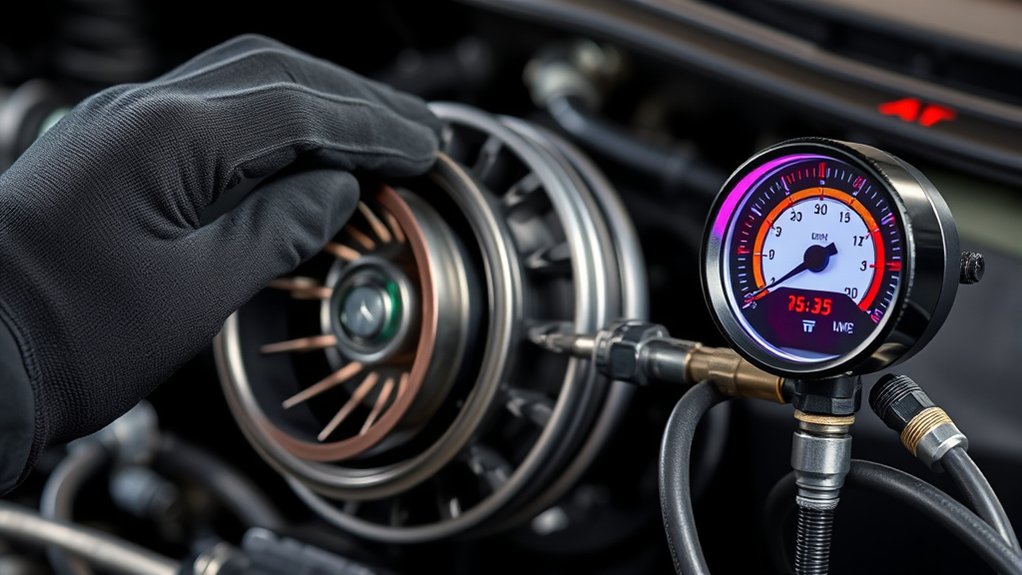
To properly diagnose why your car’s AC is blowing warm air, inspecting the clutch and system pressure is essential. Start with a clutch inspection: locate the AC compressor and check if the clutch engages when the AC is turned on.
Inspect the AC clutch and system pressure to diagnose warm air issues effectively.
If it doesn’t, it could be a sign of electrical issues or a faulty clutch coil. Next, examine system pressure using a manifold gauge set. Attach the gauges to the service ports and compare the readings to the manufacturer’s specifications.
Here’s what to check:
- Make sure the low-pressure side isn’t too low, which indicates a refrigerant leak.
- Confirm the high-pressure side isn’t excessively high, suggesting a blockage or overcharge.
- Check if the clutch engages and disengages smoothly, indicating proper clutch operation.
Checking and Replacing Your Cabin Air Filter
Since a dirty cabin air filter can restrict airflow and cause your AC to blow warm or stale air, it’s important to check and replace it regularly. Keeping the filter clean helps ensure good cabin air quality and optimal AC performance.
To check the filter, locate it behind the glove box or under the dashboard, then carefully remove it. Look for dirt, leaves, and debris—if it looks clogged or discolored, it’s time to replace it.
Replacing the filter is simple: just insert a new one of the same size and type, making sure it’s seated correctly. Regularly changing the cabin air filter improves air quality and prevents strain on your AC system.
This small step can make a big difference in comfort and help your AC blow cold air more effectively. Keep up with air filter maintenance for a healthier, fresher cabin environment.
Are the Electrical Fuses and Connections Okay?
First, take a look at your fuses and see if any are blown or look damaged. It’s a good starting point because blown fuses are often the cause of electrical issues. Next, you’ll want to check the wiring connections—make sure they’re all tight and free from corrosion or rust. Loose or corroded connections can cause all sorts of problems.
Finally, it’s a good idea to test the electrical continuity. This will help you confirm that the circuits are complete and working as they should. If everything checks out but you’re still having issues, you might need to dig a little deeper or get a professional to take a look.
Checking Fuse Condition
Your first step in diagnosing a warm air issue from your car’s AC is to check the electrical fuses and connections. Start by locating the fuse box inside your vehicle, usually under the dashboard or in the engine bay. Remove the fuse cover and examine the fuse related to the AC system.
To verify it’s working properly, look for a broken or burnt filament inside the fuse. You can also use a multimeter or fuse tester to check for continuity. If you find a blown fuse, replace it with one of the same amperage.
A blown fuse can cause the AC to blow warm air, which may lead to windshield fogging or a stuffy interior. Confirming the fuse’s condition helps eliminate simple electrical problems early, saving you time and trouble.
Inspecting Wiring Connections
Before ruling out electrical issues, carefully inspect the wiring connections related to your AC system. Start by checking the wire harnesses for any signs of damage or disconnection. Loose or frayed wires can disrupt power flow and cause warm air from the vents.
Next, examine the connectors for corrosion. Look for green or white deposits around the terminals, and clean them gently with electrical contact cleaner if needed. Make sure all connectors are securely attached and free of debris.
Properly maintaining these connections is essential because faulty wiring or corroded terminals can prevent the AC system from working correctly. This can lead to warm air instead of cool. Taking these steps helps rule out simple electrical faults before moving on to more complex diagnostics.
Testing Electrical Continuity
How can you be sure that your vehicle’s electrical system isn’t causing warm air from the AC vents? Start by testing electrical continuity. First, perform remote diagnostics if your vehicle supports it to scan for electrical faults.
Next, check the fuse box for blown fuses related to the AC system. Finally, measure the battery voltage with a multimeter. It should read around 12.6 volts; anything lower could disrupt electrical components.
These steps confirm that your fuses are intact and electrical connections are solid. If continuity tests reveal issues, replacing blown fuses or repairing corroded connections can restore proper function.
Ensuring good electrical flow helps your AC system operate efficiently and prevents warm air from blowing into the cabin.
Is the Condenser Blocked or Damaged?
A blocked or damaged condenser can seriously impact your car’s air conditioning. When the condenser fins get clogged with debris, dirt, or bugs, airflow is restricted and heat isn’t dissipated properly.
This means the refrigerant can’t cool effectively, so you end up with warm air inside your vehicle. A damaged condenser might have bent fins, leaks, or corrosion, which all hurt its ability to transfer heat.
Check the condenser visually for any bent or broken fins, debris buildup, or signs of refrigerant leaks. You might notice your AC isn’t cooling as well or hear a hissing sound if there’s a leak.
If the condenser is blocked, cleaning it carefully can often restore proper airflow and cooling. But if it’s damaged, it usually needs professional repair or replacement.
Addressing condenser issues quickly helps your AC work efficiently, keeps you comfortable, and prevents further damage to the system.
Understanding How the AC Pressure Switch Affects Cooling
The AC pressure switch is key to keeping your cooling system running smoothly by monitoring the refrigerant pressure inside. It helps maintain the right pressure levels so your AC works efficiently.
When the pressure gets too low or too high, the switch kicks in to shut off the compressor as a safety measure. This prevents damage to other parts of the system.
When pressure is too high or low, the switch shuts off the compressor to protect your system.
Here’s how it works: the switch detects the refrigerant pressure while the AC is running. If the pressure isn’t in the right range, it turns off the compressor.
Once pressure stabilizes, the switch resets, and the compressor can start up again. This keeps the system from overworking or freezing up.
It’s important because proper pressure regulation stops your AC from blowing warm air or getting damaged. A faulty switch might mistakenly shut everything down or block refrigerant flow.
Making sure the switch works properly is essential for your AC to cool efficiently and stay in good shape.
When to Take Your Car to a Professional Mechanic
If your AC keeps blowing warm air even after you’ve tried to fix it, or if you hear weird noises when you turn it on, it’s probably time to see a professional. These kinds of issues usually point to bigger problems that need a mechanic’s expertise to sort out.
Don’t wait too long to get it checked out. Ignoring these signs can lead to more serious and costly repairs down the road. It’s always better to have a pro take a look sooner rather than later!
Persistent Cooling Issues
When your car’s air conditioning keeps blowing warm air despite your attempts to fix it, it’s a sign you should see a professional mechanic. Persistent cooling problems can affect your fuel efficiency and safety.
A mechanic will check for issues like refrigerant leaks, which lower cooling and put strain on the system. They’ll also look at the compressor, as faulty ones can prevent proper coolant circulation.
Don’t forget that incorrect tire pressure can cause extra strain on your vehicle, impacting both performance and cooling. If your AC stays warm even after topping off refrigerant or adjusting tire pressure, it’s time to get a professional opinion.
Ignoring these signs can lead to more damage and higher repair costs. Early diagnosis is key and can save you money in the long run.
Unusual AC Noises
Persistent issues with your car’s AC blowing warm air can signal underlying problems, but unusual noises from the system are often a clear indicator that something’s wrong. If you notice strange sounds like squealing, rattling, or hissing, it’s a good idea to have a mechanic check it out.
These unusual noises often come with inconsistent airflow, making your AC less effective. Ignoring these signs can lead to more serious damage, like compressor failure or refrigerant leaks.
If your AC suddenly starts making noises or airflow becomes erratic, don’t wait. Take your car to a professional mechanic promptly to diagnose and fix the issue before it gets worse.
Addressing unusual noises early can save you money and help restore your AC’s performance.
Frequently Asked Questions
Can a Faulty Thermostat Cause Warm Air From My Car AC?
Yes, a faulty thermostat can cause warm air from your car AC. When it malfunctions, it messes up the cooling system diagnostics, preventing the system from keeping the right temperature.
This can cause the AC to blow warm air instead of cold. To fix this, it’s best to have a professional check it out and replace the thermostat if needed. This way, your cooling system will work properly and keep you comfortable.
How Do I Reset the AC System After Repairs?
Think of your car’s AC system as a finely tuned orchestra; after repairs, you need to cue the instruments. To reset it, start the engine, turn on the AC, and set it to maximum cool.
Run the system for about 10 minutes to allow AC diagnostics to complete and check for refrigerant recharge if needed. Turn off the engine, then restart to see if the cooling improves.
Will Low Engine Coolant Affect My Ac’s Cooling Performance?
Low engine coolant can definitely impact your AC’s cooling performance. When coolant levels are low, your engine may overheat, which can cause the AC system to work less efficiently.
F refrigerant leaks often happen alongside coolant issues, which can also compromise cooling.
As your engine struggles with overheating, it diverts energy from the AC system, reducing its ability to cool effectively.
Make sure to check both coolant levels and for refrigerant leaks to restore peak AC performance.
Can a Bad Blend Door Valve Cause Warm Air in the Cabin?
A bad blend door valve can definitely cause warm air in your cabin. When the blend door or its valve malfunctions, it prevents proper mixing of hot and cold air, leading to persistent warmth.
You might notice uneven temperatures or air that refuses to cool. Valve repair or replacement is often necessary to restore proper climate control.
Addressing this issue promptly helps you stay comfortable and prevents further HVAC system damage.
How Long Does It Take to Recharge the AC Refrigerant Properly?
Recharging your car’s AC refrigerant usually takes about 30 minutes, but it really depends on the system’s condition. If there’s a leak or the compressor isn’t working right, it could take longer or you might need to fix those issues first.
It’s a good idea to check for leaks before recharging because they can cause the refrigerant to escape, which leads to warm air. Proper recharging ensures your AC works efficiently, but fixing any underlying problems like leaks or a faulty compressor is key for a lasting fix.
Conclusion
Think of your car’s AC system as a delicate dance of parts working in harmony to keep you cool. When it sputters or blows warm air, it’s like the music stops mid-song.
By checking these key areas, you’re tuning up this dance. But if the rhythm still falters, don’t hesitate to call in a professional.
With expert care, your AC will resume its symphony of cool comfort, turning your drive back into an invigorating breeze.
Diagnosing your car AC blowing warm air can be simple if you start with the basics and know when to seek help.