How to Diagnose My Central AC Running but Not Blowing Air
Many homeowners find themselves frustrated when their central AC runs but isn’t blowing air. You’re not alone—this is a common issue that can make your home uncomfortably warm.
Luckily, there are simple steps you can take to troubleshoot the problem before calling in a professional.
If your central AC runs but isn’t blowing air, start by checking the air filter and replace it if it’s dirty or clogged.
Next, inspect the blower and fan motor for dirt, debris, or unusual noises, and make certain they’re spinning properly.
Look for duct leaks or blockages that could restrict airflow.
If these steps don’t resolve the issue, there might be electrical or mechanical problems needing professional help.
Keep exploring to learn how all these components work together.
Key Takeaways
- Check the air filter for dirt or clogging, and replace it if needed to keep the airflow smooth.
- Inspect the blower fan and motor for dirt, damage, or strange noises that could point to a problem.
- Make sure all duct connections are tight, sealed, and free of leaks or blockages.
- Look at the condensate drain and coils for clogs or dirt buildup that might block airflow.
- Test electrical parts like capacitors and contactors for faults that could stop the fan from running.
Why Is My Central AC Running but Not Blowing Air?
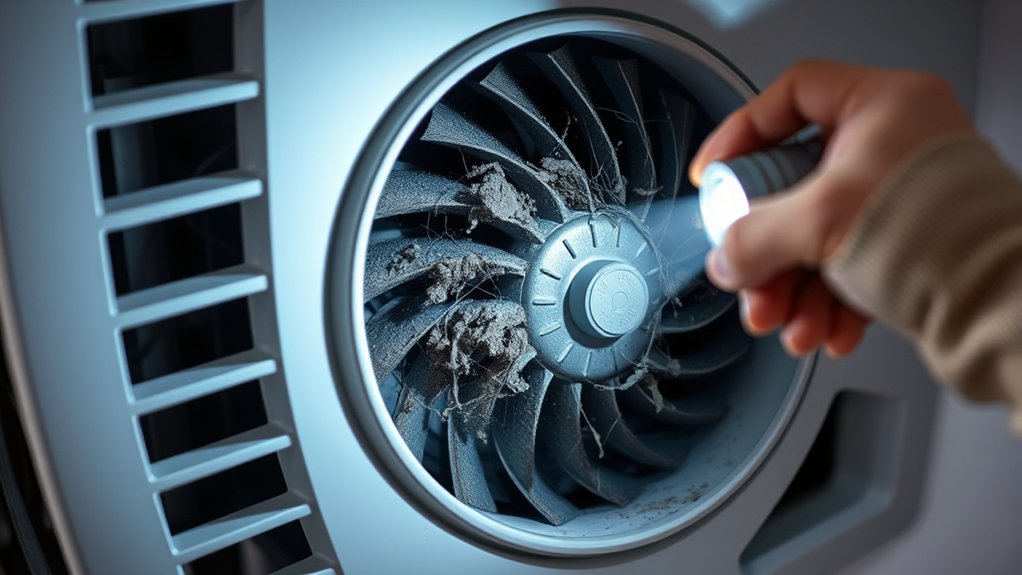
Have you noticed that your central AC runs but doesn’t blow air? One common reason could be a clogged or dirty air filter. When the air filter is blocked, airflow is restricted, making it seem like the system is working but not pushing air through the vents.
Check if the filter needs cleaning or replacing. Another issue might be a malfunctioning fan motor. If the fan motor isn’t operating properly, the blower won’t move air even if the AC compressor runs normally.
Check the filter and fan motor if your AC isn’t blowing air properly.
Listen for unusual noises or observe if the fan isn’t spinning. Sometimes, the fan motor can seize or burn out, preventing airflow. Electrical issues or worn-out belts can also cause the fan motor to fail.
If you suspect the fan motor, it’s best to have a professional inspect and repair it. These problems can often be diagnosed quickly with a bit of troubleshooting.
Check and Replace Your Air Filter Regularly
Regularly checking and replacing your air filter is one of the simplest and most effective ways to ensure proper airflow from your central AC. A dirty or clogged filter restricts airflow, making your system work harder and reducing cooling efficiency.
During regular maintenance, inspect the filter every 1 to 3 months, especially during peak use. If it looks dirty, replace it right away. Using the correct type and size of filter helps your system perform at its best.
A clean filter not only improves airflow but also helps maintain indoor air quality and keeps dust and debris from circulating. Neglecting this simple task can strain your AC components and boost your energy bills.
Making regular maintenance a habit can extend your system’s lifespan and keep it running smoothly. Remember, a clean air filter is a key step in diagnosing why your central AC is running but not blowing air effectively.
Inspect the Fan Motor and Blower for Proper Operation
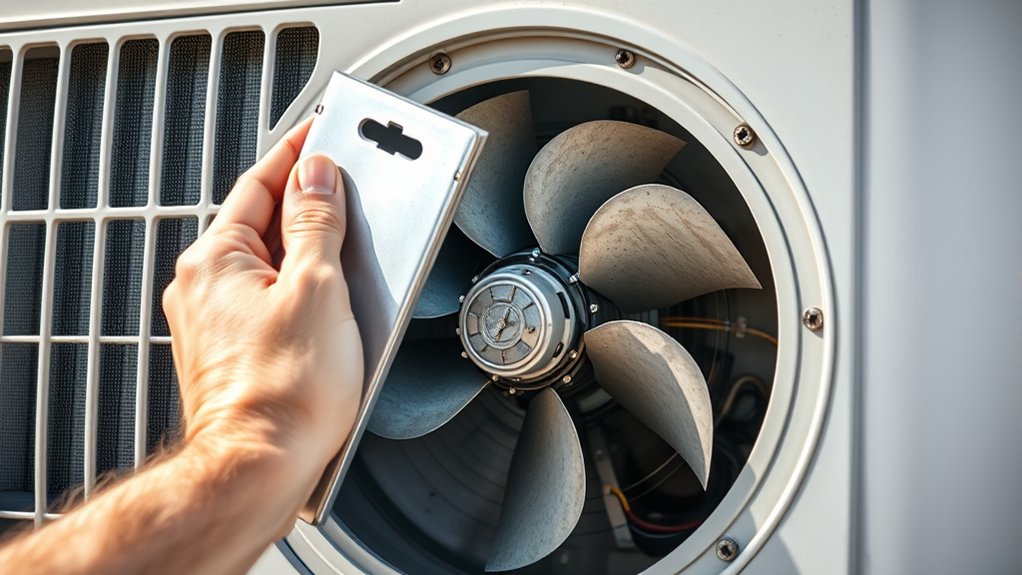
After ensuring your air filter is clean, the next step is to check the fan motor and blower to see if they’re working properly. Start by listening for any unusual noises or vibrations when the fan runs.
Check the fan motor and blower for proper operation, listening for noises or vibrations when the fan runs.
If the fan isn’t spinning at all, it could mean a motor problem or that a fuse has blown. During blower inspection, look for dirt, debris, or damage that could block airflow.
Try spinning the blower manually to see if it moves freely. Resistance or squeaking might indicate motor or bearing issues. Also, check for loose or disconnected wiring.
If the fan motor isn’t working right, it may need repair or replacement. Making sure the blower runs smoothly helps confirm it’s not causing airflow problems.
Proper fan maintenance and blower inspection are key to figuring out why your AC runs but doesn’t blow air. This can help you determine if the motor or blower needs professional attention.
Look for Duct Blockages and Leaks That Could Stop Airflow
Take some time to inspect your ducts for any blockages or debris that might be stopping the airflow. Sometimes, dirt or small objects can get caught inside, making it harder for air to pass through smoothly.
Also, keep an eye out for leaks, gaps, or sections that might have become disconnected. If you notice any, sealing or reconnecting them can make a big difference. When your ducts are clear and properly sealed, your system can do its job more efficiently and keep the air flowing just right.
Inspect Ducts for Obstructions
Duct obstructions or leaks can significantly reduce airflow, even if your central AC is running. Check your ducts for any visible blockages like debris or disconnected sections.
Poor duct insulation can also cause leaks, which lowers ventilation efficiency and prevents cool air from reaching your rooms. Look for signs such as disconnected or crushed ducts near vents and registers.
Sealing leaks and making sure your ducts are well-insulated helps maintain good airflow and improves your system’s performance. Use a flashlight to spot any damage or gaps along the ductwork.
If you find obstructions or leaks, address them quickly to restore proper airflow and cooling. Regularly inspecting your ducts can prevent airflow issues and keep your AC running smoothly.
Seal Leaks and Gaps
Leaking or disconnected ducts can really cut down airflow, even when your AC is on. Gaps or leaks in your ductwork let conditioned air escape, which lowers efficiency and reduces airflow.
Insulation issues around ducts can also cause temperature loss, making it harder for air to reach the vents. Check your thermostat settings to make sure they’re correct; wrong settings can mimic airflow problems.
Use the table below to identify common leak points and how to fix them:
| Duct Location | Common Leak Signs | Fixing Method |
|---|---|---|
| Seams & Joints | Air escaping, visible gaps | Seal with mastic or foil tape |
| Supply Registers | Reduced airflow | Tighten or reseal register connections |
| Return Ducts | Uneven airflow | Reinforce or replace damaged sections |
| Insulation | Condensation, cold spots | Improve insulation quality |
| Duct Connections | Disconnections | Secure with clamps or tape |
Fixing these leaks helps restore airflow and improves efficiency.
Check for Disconnected Ducts
Even when your AC runs, disconnected or blocked ducts can stop air from reaching your vents. Duct disconnection is a common cause of ventilation problems and can make it seem like your system isn’t blowing air, even if it’s working fine.
Check your ductwork for any loose or detached sections, especially where ducts connect to vents or the main unit. Look for visible gaps, tears, or disconnected joints that might be causing issues.
Leaks in the ducts can also let air escape before reaching your rooms, reducing airflow. Seal any leaks with mastic or metal tape to restore proper ventilation.
Making sure your ducts are intact is key. Otherwise, your AC might run, but the air won’t reach your living spaces, leading to ongoing airflow problems.
Check the Condensate Drain and Coils for Dirt and Clogs
First, take a look at the condensate drain line to see if there are any clogs or blockages. If it’s blocked, water can back up and cause issues with airflow, so it’s good to clear it out.
Next, check the air conditioner coils for any dirt, dust, or debris that might be stuck on them. When these coils get dirty, they can prevent proper heat exchange, making your AC work harder than it needs to. Cleaning these parts can really help boost your AC’s performance and ensure everything’s flowing smoothly.
Inspect Drain Line Blockages
A clogged condensate drain line can cause your central AC to run without blowing air, so it’s important to check this part first. Drainage issues often lead to water backing up and triggering safety shut-offs, which can stop airflow through your vents.
Start by locating the drain line, usually a PVC pipe near the unit. Clear any visible blockages or debris, and use a wet/dry vacuum to suck out any clogs deeper in the line. Check for algae, dirt, or mold buildup that could restrict water flow.
Clean Air Conditioner Coils
Cleaning your air conditioner coils is essential because dirt and debris can block airflow and reduce efficiency. When coils are dirty, your system has to work harder, which can cause it to run without blowing air properly.
Start by turning off your unit and inspecting the evaporator and condenser coils for dust, dirt, or grime. Use a soft brush or coil cleaner to remove buildup gently.
While you’re at it, check the condensate drain for clogs to prevent water backup. Regular air filter maintenance helps keep dirt from reaching the coils.
Duct sealing reduces leaks that strain your system. Clean coils guarantee better airflow and cooling performance, helping your AC run smoothly and efficiently.
Proper maintenance can prevent common issues like reduced airflow or system failure.
Are Electrical Components Causing Your Airflow Problem?
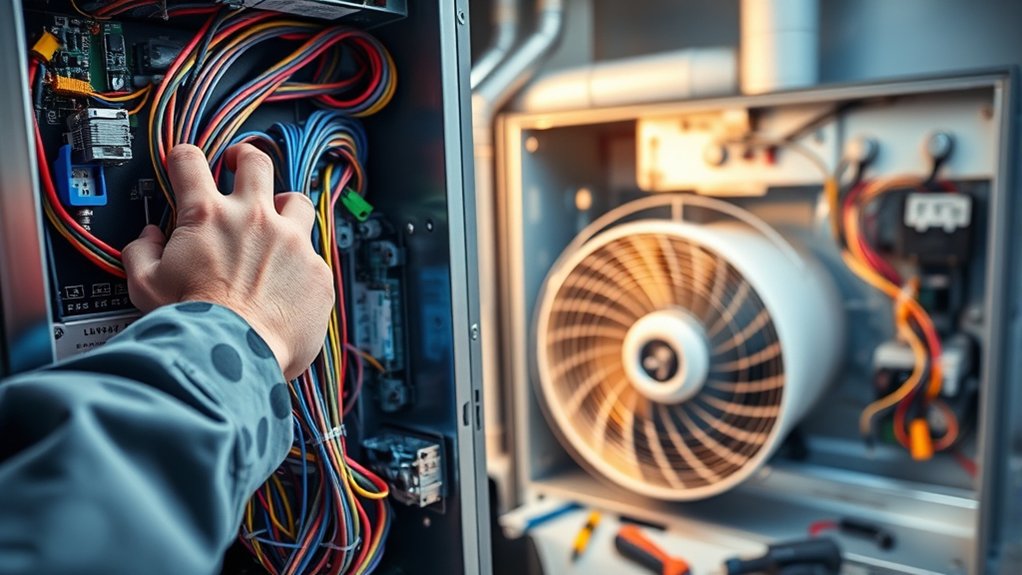
Electrical components are key to your central AC’s ability to blow air properly. If your system is running but airflow is still a problem, faulty wiring or broken parts might be the cause.
Electrical issues can mess with fans or motors, stopping airflow even when the unit turns on. It’s a good idea to do circuit testing to spot problems with wiring or switches.
| Electrical Component | Common Issue |
|---|---|
| Capacitors | Failing or blown, causing motor shutdown |
| Contactor | Stuck or worn, interrupting power flow |
| Thermostat wiring | Loose or damaged connections |
| Fan motor | Burned out or faulty wiring |
| Circuit breaker | Tripped or faulty, cutting power |
Signs You Need a Professional to Fix Your AC
When your central AC isn’t blowing air properly even though it’s running, that’s often a sign you need a professional. If indoor humidity stays high despite the system running, it could mean a refrigerant or airflow problem beyond simple fixes.
Similarly, if your thermostat isn’t calibrated right, your AC might run but not cool or push enough air. These issues usually need a technician’s expertise to diagnose and fix correctly.
Ignoring these signs can lead to higher energy bills, discomfort, or more damage to your system. If you notice uneven cooling, strange noises, or if adjusting your thermostat doesn’t help, it’s time to call a pro.
They can check your system’s overall performance, look for refrigerant leaks, and make sure your thermostat is calibrated for optimal efficiency.
Maintain Your AC to Prevent Future Airflow Issues
Regularly maintaining your air conditioning system is key to preventing airflow problems before they start. Seasonal upkeep helps keep your AC running smoothly and lasts longer.
To keep airflow and efficiency at their best, try these simple steps:
- Change or clean filters every month during peak seasons. Dirty filters block airflow and make your system work harder.
- Schedule professional seasonal maintenance to check and clean coils, ducts, and fans. This keeps everything running smoothly.
- Keep the area around outdoor units clear of debris. Blockages can reduce airflow and put extra strain on your system.
- Check for duct leaks and seal them up. This improves energy efficiency and ensures proper air distribution throughout your space.
What Are Your Options If Troubleshooting Doesn’t Fix the Problem?
If troubleshooting your central AC hasn’t fixed the issue of it running but not blowing air, your next step should be to consider professional repair options. A qualified technician can diagnose underlying problems like faulty motors or duct issues that might be blocking airflow. They can also evaluate your system’s energy efficiency and humidity control, making sure everything’s working as it should.
Here’s a quick overview of your options:
| Service Type | What It Addresses | Benefits |
|---|---|---|
| Professional Repair | Mechanical or electrical faults | Restores airflow and efficiency |
| System Replacement | Outdated or severely damaged units | Improved energy efficiency and humidity control |
| Maintenance Service | Regular tune-ups | Prevents future issues and keeps your system running smoothly |
| Duct Inspection | Leaks or blockages in ductwork | Better airflow and energy savings |
Getting professional help ensures your system runs efficiently, keeps proper humidity levels, and uses energy wisely.
Safety Tips for DIY AC Repairs and When to Call in Experts
While troubleshooting your central AC can sometimes fix simple problems, doing repairs yourself can be unsafe if you’re not careful. Always put safety first and know your limits. Before you start, turn off the power to avoid electrical shocks and prevent damaging your system. Keep in mind, improper repairs can reduce energy efficiency and cause system issues, leading to higher bills or breakdowns.
Here are four safety tips to keep in mind:
- Wear protective gear — gloves and safety glasses help protect you from sharp parts and refrigerants.
- Check the system’s voltage — always make sure the power is off before working on electrical components.
- Avoid refrigerant contact — refrigerants can be dangerous, so leave leaks or repairs to the pros.
- Know when to call in experts — if you’re unsure about compatibility or if the repair involves complex parts, hire a licensed HVAC technician.
Knowing when to call in the experts helps keep your system running safely and efficiently. It also prevents costly damage or safety hazards down the line.
Frequently Asked Questions
Can a Thermostat Issue Cause My AC to Run but Not Blow Air?
Yes, a thermostat issue can cause your AC to run but not blow air. If your thermostat isn’t properly calibrated, it might send the wrong signals, which can prevent the fan from turning on.
A faulty fan belt can also be a problem. Even if the system is running, a broken or slipping belt might stop air from moving properly.
Check your thermostat settings to make sure they’re correct. You might also want to inspect or replace the fan belt to ensure good airflow.
How Do I Test if the Blower Motor Is Functioning Properly?
To check if the blower motor is working properly, start by listening for any sounds when your AC runs. If you don’t hear anything, it might be a sign it’s not working.
Next, turn off the power and perform some electrical testing. Use a multimeter to check the blower motor’s electrical connections. Look for continuity in the motor’s windings and make sure it’s actually getting power.
If these tests show issues, then the blower motor may need repair or even replacement.
What Role Do Air Vents and Registers Play in Airflow Problems?
Air vents and registers act as gateways for airflow, but blockages or improper placement can hurt your AC’s efficiency. When vents are blocked or registers aren’t maintained, air can’t circulate properly, which reduces airflow even if the system is running.
Regular register maintenance and clearing air vent blockages keep pathways open, so cool air can flow freely throughout your space. Properly functioning vents and registers are key to getting the most out of your cooling system.
Can Refrigerant Levels Affect My Ac’s Airflow?
Refrigerant levels don’t directly affect airflow, but a refrigerant leak can make your AC work harder. This extra effort can lead to compressor failure, which affects overall cooling.
If the compressor isn’t working right, it can reduce airflow or stop the system from cooling properly. So, while refrigerant itself doesn’t block airflow, leaks and compressor problems related to refrigerant issues can indirectly cause airflow problems in your AC.
How Long Should I Wait After Turning on the AC to See Airflow?
Most central ACs take about 5 to 10 minutes to start blowing air after you turn them on. During this time, check your air filter and ductwork because a clogged filter or blockage can delay airflow.
If you see no air after 10 minutes, turn off your system and inspect for duct blockages or a dirty filter. These are common causes of delayed airflow and reduced efficiency.
Conclusion
Regular maintenance can help extend your AC’s lifespan. Did you know neglecting filters and ducts can cause system failures in up to 70% of cases?
If your central AC runs but doesn’t blow air, start with simple checks like filters and vents. Sometimes, a dirty filter or blocked vent is all it takes to stop airflow.
Still no airflow? Don’t hesitate to call a professional. Diagnosing issues like a faulty blower motor or a broken relay needs expert attention.
Keeping your system in top shape not only saves money but also ensures reliable cooling when you need it most. Regularly diagnosing problems with your central AC can make all the difference.