What Does the Dry Setting on My Window AC Do?
Many people struggle with the discomfort of high humidity, especially during hot summer days. It can make your home feel sticky, damp, and less comfortable, even if the temperature isn’t too high. If you’re tired of battling humidity without overcooling, you’re not alone.
The dry setting on your window AC helps reduce indoor humidity without substantially cooling the room. It runs at a lower fan speed and reverses the usual cooling cycle to remove moisture from the air, making your environment more comfortable during humid days.
This setting is useful when you want to control dampness without overcooling. If you want to understand how to get the most out of it, there’s more to learn below.
Key Takeaways
- The dry setting helps lower indoor humidity by focusing on removing moisture, not cooling the room.
- It runs at lower fan speeds and compressor cycles to pull out excess moisture from the air.
- Unlike regular cooling, dry mode doesn’t significantly lower the temperature but makes the air feel more comfortable by reducing dampness.
- It’s perfect for humid days when you don’t need to cool the room but want to control moisture.
- Using it correctly can help prevent mold, damp smells, and keep indoor humidity levels comfortable.
What Is the Dry Setting on Your Window AC and How Does It Work?
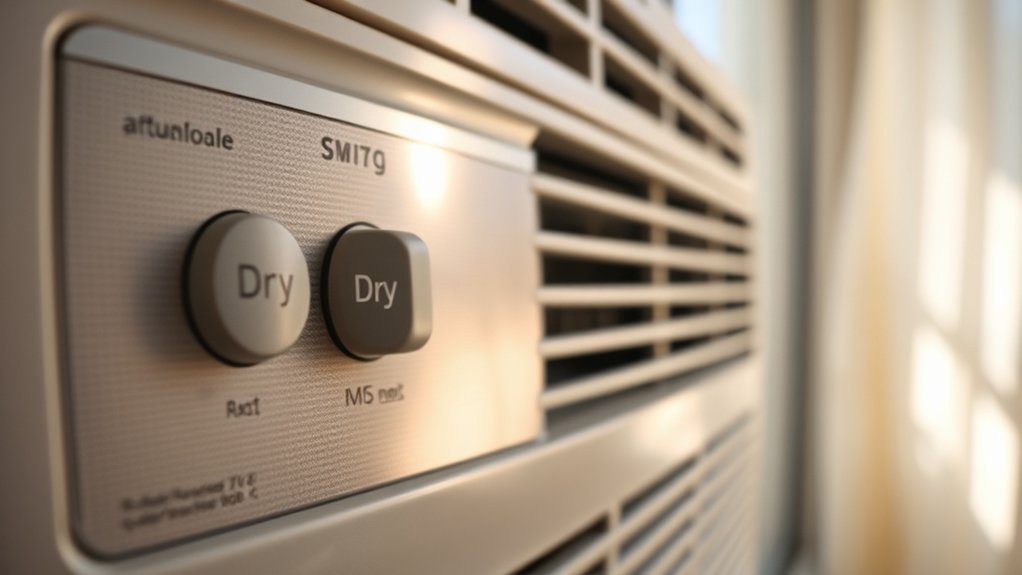
Have you ever wondered what the dry setting on your window AC actually does? This setting helps reduce indoor humidity without overcooling the room.
When activated, the AC runs at a lower fan speed and compressor cycle, focusing on moisture removal rather than cooling. Because it operates more gently, the dry mode often consumes less energy, making your unit more efficient.
Dry mode runs at lower speed, focusing on moisture removal and saving energy.
You’ll also notice that noise levels decrease during this mode since the compressor runs less frequently and more quietly. This makes dry mode perfect for days when it feels humid but isn’t particularly hot.
It’s especially useful for maintaining a comfortable atmosphere without wasting electricity or creating unnecessary noise. Keep in mind, dry mode isn’t meant for cooling temperatures but for controlling humidity and boosting indoor comfort.
Using it strategically can help you save energy and enjoy a quieter environment.
How Is Dry Mode Different From Regular Cooling?
Dry mode mainly works by pulling out extra moisture from the air, so it’s great for those really humid days. It doesn’t drop the temperature as much as regular cooling does, which makes it perfect when you just want to make the air feel less damp without making everything cooler.
Regular cooling, on the other hand, is all about lowering the room’s temperature while also keeping humidity in check. So, when you turn on the AC in cooling mode, you’ll notice the room gets cooler and more comfortable overall. Basically, dry mode focuses on humidity, and regular cooling tackles both temperature and humidity to keep you comfortable.
Moisture Removal Process
Ever wondered how dry mode on your window AC differs from regular cooling? When you select dry mode, your AC mainly focuses on removing excess moisture from the air rather than lowering the temperature.
It works by circulating air over cold coils, causing humidity to condense into water, which then drains away. This process helps improve air quality by reducing humidity and preventing mold growth, making your indoor environment more comfortable.
Imagine dew forming on windows during humid days, walls feeling damp and clammy, or condensation dripping from the unit. You’ll notice a clear drop in humidity levels, and the air will feel fresher and less sticky.
Temperature Regulation Differences
While moisture removal focuses on reducing humidity, temperature regulation in dry mode works a bit differently from regular cooling. It mainly aims to lower humidity without dropping the room temperature too much.
This makes it more energy-efficient for keeping a comfortable environment without overcooling. Because it runs at a lower capacity, your AC usually makes less noise, so it operates more quietly.
Unlike regular cooling, which actively cools the air to a set temperature, dry mode gently moderates the temperature. It prevents sudden drops, offering a more subtle cooling effect.
If you want to reduce humidity while keeping noise levels low and saving energy, dry mode is a good choice. It’s perfect for mild days when you don’t need intense cooling.
How Does Dry Mode Remove Humidity From the Air?
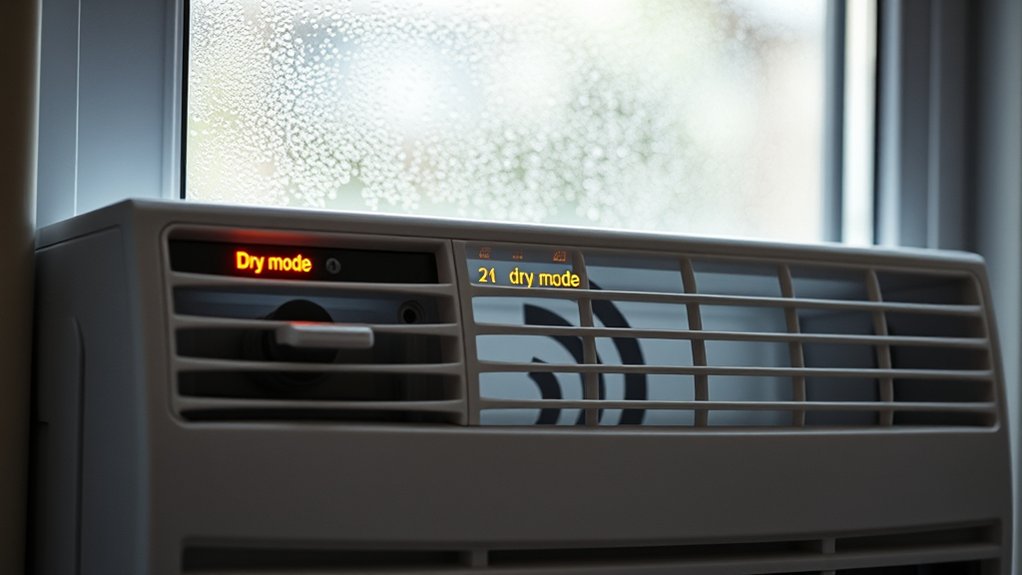
When you switch your AC to dry mode, it starts working a bit differently. Instead of just cooling the air, it actually pulls moisture out of the air through its cooling coils.
So, what happens is that the AC essentially condenses the humidity, turning it into water that gets collected and drained away. This process makes the air less damp and sticky, helping to create a more comfortable indoor environment.
Basically, dry mode helps to keep your space feeling fresher and less humid without necessarily cooling it down too much.
Moisture Absorption Process
Dry mode on a window AC works by actively removing moisture from the air through a simple process. As the unit runs, it cools the air and causes water vapor to condense on the evaporator coils. This moisture is then drained away, lowering humidity levels.
Imagine indoor plants thriving with less excess moisture, and your home feeling more comfortable with fewer damp odors. You’ll notice clearer windows without condensation and less mold buildup in corners.
This process helps create a healthier living space by controlling humidity and preventing mold or mildew growth. Keeping moisture levels in check improves indoor air quality, making your home more comfortable and safer for everyone.
Air Dehumidification Mechanism
Have you ever wondered how the dry mode on your window AC pulls moisture from the air? It works by reversing the usual cooling cycle to focus on dehumidification.
The unit’s compressor runs, cooling the air, which causes moisture to condense on the evaporator coil. This water then drips into a collection pan or drain, removing humidity from your room.
Unlike humidifiers that add moisture, this process eliminates excess humidity. It makes the air feel cooler and more comfortable.
When comparing dehumidifiers, your AC’s dry mode offers a more integrated solution. It cools while drying, so you don’t need a separate dehumidifier.
This dual function makes it an efficient choice for controlling indoor humidity effortlessly.
Effect on Indoor Comfort
Removing excess humidity with your window AC’s dry mode greatly boosts indoor comfort. By cutting down moisture, your space feels fresher and more breathable.
Dry mode helps minimize that muggy, sticky feeling and stops mold from growing. It also makes your environment seem cooler and cleaner, improving overall comfort.
Plus, it improves air quality by reducing dampness that can trap dust and allergens. This makes the air healthier and easier to breathe.
Dry mode uses less energy than full cooling, so it’s more efficient. Imagine feeling a light, crisp breeze with less stickiness and sweat.
You’ll notice fewer musty odors, clearer air, and less fogging on your windows. This mode helps keep your space comfortable, healthy, and energy-friendly.
When Should You Use the Dry Setting During Hot and Humid Days?
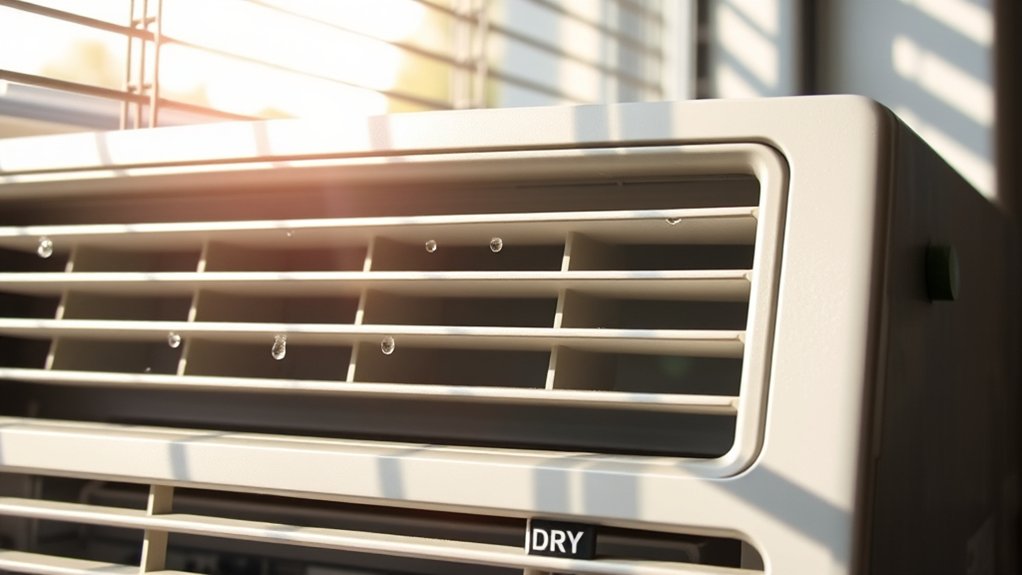
On hot and humid days, using the dry setting on your window AC can help reduce indoor moisture levels. When humidity is high, your indoor space can feel muggy and uncomfortable, even if it’s not extremely hot.
This setting helps remove excess moisture from the air without cooling it drastically. It’s perfect for days when you want to keep a comfortable temperature while controlling humidity.
If you have indoor plants, the dry mode prevents overwatering issues caused by too much moisture, protecting them from mold and rot. Air purifiers work alongside the dry setting by filtering out airborne pollutants, improving air quality.
Use the dry mode during the hottest and most humid parts of the day or when humidity levels go above 60%. This keeps your indoor air fresh, comfortable, and less prone to mold or musty odors.
What Are the Benefits of Using Dry Mode for Comfort and Energy Savings?
Using the dry mode not only makes your indoor environment more comfortable but also offers notable benefits in energy efficiency. When you switch to dry mode, your AC reduces humidity, which improves air quality by minimizing mold, dust mites, and musty odors. This creates a fresher, healthier space that feels more comfortable without overcooling.
Furthermore, dry mode consumes less energy than full cooling, saving you money on your electricity bill. It’s especially useful during humid days when temperature isn’t the main concern but humidity is high.
Visualize the following benefits:
- Reduced humidity levels, making the air feel lighter and fresher
- Less energy consumption, lowering your utility bills
- Improved air quality, lessening allergy and asthma triggers
- Enhanced comfort without extreme cooling
- Longer lifespan for your AC, thanks to a lighter workload
Using dry mode effectively helps you enjoy a more comfortable, healthier home while saving energy and reducing costs.
Are There Any Downsides to Using Dry Mode Regularly?
While dry mode offers many benefits, using it excessively or as a substitute for regular cooling can sometimes cause problems. One issue is that it might not lower indoor humidity enough, which can affect comfort and humidity benefits.
Overusing dry mode could also impact your indoor air quality, especially if the air gets too dry. This can lead to dry skin, irritated eyes, or breathing issues. Relying only on dry mode might throw off the natural humidity balance that humidifiers usually help keep steady.
This imbalance can make your environment less comfortable during dry seasons. Plus, constantly running dry mode might strain your AC unit, causing more wear and tear over time. While it can be helpful for managing humidity, it’s best to use dry mode wisely and not rely on it completely.
Balancing dry mode with other methods, like regular cooling or humidifiers, helps improve indoor air quality and overall comfort.
How Can You Use the Dry Setting Effectively for Best Results?
Want to get the most out of your dry setting? First off, aim to keep your room’s humidity around 40-50%. That way, you’ll stay comfortable without feeling damp or too dry. It’s also a good idea to keep your space well-ventilated—this helps prevent moisture from building up and keeps the air fresh.
Don’t forget to give your AC some TLC by cleaning it regularly. When your unit is clean, it works more efficiently, which means better drying and overall performance. Following these simple tips will help you get the best results from your dry mode and keep your space just right!
Optimal Humidity Levels
Maintaining the right humidity level is key to maximizing your window AC’s dry setting. When humidity is too high, your space feels damp, and indoor plants might suffer. Use the dry setting to lower humidity to comfortable levels, typically between 30-50%. Visualize:
- Fresh, crisp air that helps your indoor plants thrive
- Reduced musty odors lingering in corners
- Comfortable breathing without stuffiness
- Less condensation on windows
- A dry, balanced environment perfect for relaxation
Adjust the dry setting based on the current humidity levels, especially during humid seasons. This helps prevent mold growth and keeps your indoor environment comfortable. Monitoring humidity with a hygrometer ensures you’re using the dry setting effectively for ideal indoor air quality.
Proper Ventilation Techniques
Wondering how to make the most of your dry setting on a window AC? Proper ventilation is key. Keep indoor plants nearby to naturally purify the air and help maintain balanced humidity.
Use the dry setting during the day when humidity spikes, but open windows briefly to let fresh air in. This helps remove stale air and prevents mold growth.
Make sure your AC vents are unobstructed for efficient air circulation. If your space has poor airflow, consider using fans to help improve ventilation along with the dry setting.
Check regularly for excess moisture around windows and walls, and adjust your ventilation approach as needed. Combining these tips keeps your indoor environment comfortable, fresh, and free from excess humidity.
Regular Maintenance Practices
Regularly cleaning and inspecting your window AC ensures it runs efficiently when using the dry setting. This maintenance helps improve air quality and keeps indoor plants healthy by reducing excess moisture.
To keep your unit in top shape, check and replace filters, clear debris from vents, and clean coils. Doing this prevents mold and mildew buildup, which can harm indoor plants and worsen air quality.
Here are some easy practices to follow:
- Wipe down filters and vents with a damp cloth
- Remove dust and dirt from coils
- Confirm drainage is clear to prevent water buildup
- Check for mold around the unit
- Keep indoor plants away from direct airflow to avoid over-drying
Consistent maintenance ensures your dry setting works effectively. It creates a comfortable, moisture-controlled environment that benefits both your indoor plants and air quality.
Common Myths About the Dry Mode on Your Air Conditioner
Many people believe that the dry mode on their window air conditioner is a perfect solution for reducing humidity without cooling the room considerably. But this isn’t entirely accurate.
While dry mode does lower humidity levels, it’s not a magic fix for air quality issues. Some assume it cleans the air, but it mainly focuses on moisture, not filtration or purification.
Dry mode reduces humidity but doesn’t improve air quality through filtration or purification.
Furthermore, many think dry mode is more energy-efficient than regular cooling. However, it can sometimes consume similar or even more energy, especially if run for extended periods.
The misconception that it greatly improves air quality is also common. In reality, dry mode helps create a more comfortable environment by reducing moisture but doesn’t replace air purifiers or filters designed to remove pollutants.
Understanding these myths can help you use the dry setting more effectively. It’s a tool for humidity control, not a complete air quality solution or a highly efficient energy-saving mode.
What Should You Do When Dry Mode Isn’t Working Properly?
When your dry mode isn’t working as expected, it can be frustrating, especially since many rely on it to manage humidity without cooling the room much. To troubleshoot, start by checking if your AC’s filters are clean, since dirt can block airflow and reduce dehumidification.
Make sure vents aren’t blocked by furniture or curtains, and double-check that the thermostat is set correctly. Sometimes, dry mode acts more like a humidifier than a dehumidifier, so it’s good to understand its limits.
Also consider if your unit is the right size for your room. An undersized AC might struggle to dehumidify effectively. If these steps don’t help, consult the user manual or contact a technician.
Alternatives to Dry Mode for Controlling Humidity in Your Home
If dry mode isn’t effectively managing humidity, consider alternative ways to keep your home comfortable. Using a dehumidifier can help with climate control and boost energy efficiency, especially during humid seasons.
You can also improve ventilation by using exhaust fans or opening windows on dry days to naturally regulate moisture levels. Investing in smart thermostats is another option—they optimize humidity and temperature settings to reduce energy use.
| Method | Benefits |
|---|---|
| Dehumidifier | Controls humidity directly |
| Improved Ventilation | Natural moisture regulation |
| Smart Thermostats | Efficient climate adaptation |
| Insulation & Sealing | Prevents excess moisture ingress |
Frequently Asked Questions
Can Dry Mode Be Used to Cool the Room Quickly?
Dry mode isn’t designed to cool your room quickly. Instead, it focuses on humidity control and energy efficiency by removing excess moisture from the air.
While it can help make the room feel more comfortable, it doesn’t significantly lower the temperature like cooling mode.
Use dry mode when you want to reduce humidity without high energy costs. But for fast cooling, switch to the regular cooling setting.
Does Dry Mode Reduce Allergens or Dust in the Air?
Imagine your room as a fresh forest after rain, air clean and crisp. When you use dry mode, it helps reduce allergens and dust by pulling moisture out of the air, which can make allergens less airborne.
This air filtration process doesn’t eliminate all allergens but does support allergen reduction, creating a healthier environment. So, while it’s not a full purifier, dry mode definitely helps improve your indoor air quality.
Is Dry Mode Suitable for Use in Winter or Cooler Months?
Dry mode isn’t ideal for winter operation because it mainly reduces humidity, which isn’t necessary in cooler months. Using it then might lead to overly dry air, causing discomfort.
Plus, dry mode consumes extra energy without providing much benefit in winter, so it’s less energy-efficient during colder months.
Instead, set your window AC to a normal cooling or fan mode for better comfort and energy savings.
How Loud Is the Dry Setting Compared to Regular Cooling?
The dry setting is usually quieter than regular cooling, with noise levels around 50-55 decibels. That’s about the same as a quiet conversation.
You’ll notice it makes a softer sound, which is great for nighttime or when you want to keep noise to a minimum.
This setting reduces humidity without the loud compressor noise typical of cooling mode, so you stay comfortable without loud distractions.
Can Dry Mode Help Prevent Mold Growth Indoors?
Yes, dry mode can help prevent mold growth indoors. It works by controlling humidity levels and reducing excess moisture that mold thrives on.
When you use dry mode, your window AC removes humidity from the air, creating a less hospitable environment for mold spores. Regular use of this setting can keep humidity levels in check.
This helps maintain better indoor air quality and protects your home from mold-related problems.
Conclusion
Using the dry setting on your window AC helps reduce humidity, making your space more comfortable without overcooling. It’s especially handy on muggy summer days when excess moisture makes the air feel heavy.
Switching to dry mode can lower indoor moisture levels while keeping a pleasant temperature. It’s a great way to stay comfortable without wasting energy on unnecessary cooling.
By understanding when and how to use the dry setting effectively, you can enjoy a fresher, more comfortable home. Plus, it can help you save energy by avoiding overuse of the cooling function.
Just remember, if the dry setting isn’t working as expected, troubleshooting or exploring alternatives can help keep your environment ideal. Using the dry setting on your window AC is a smart move for better comfort and efficiency.