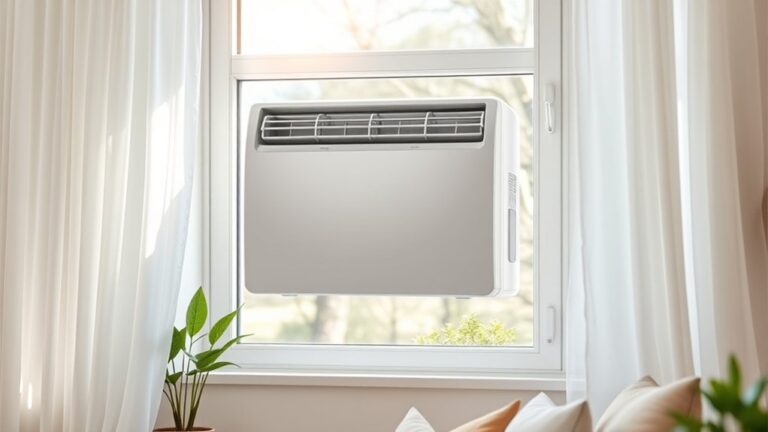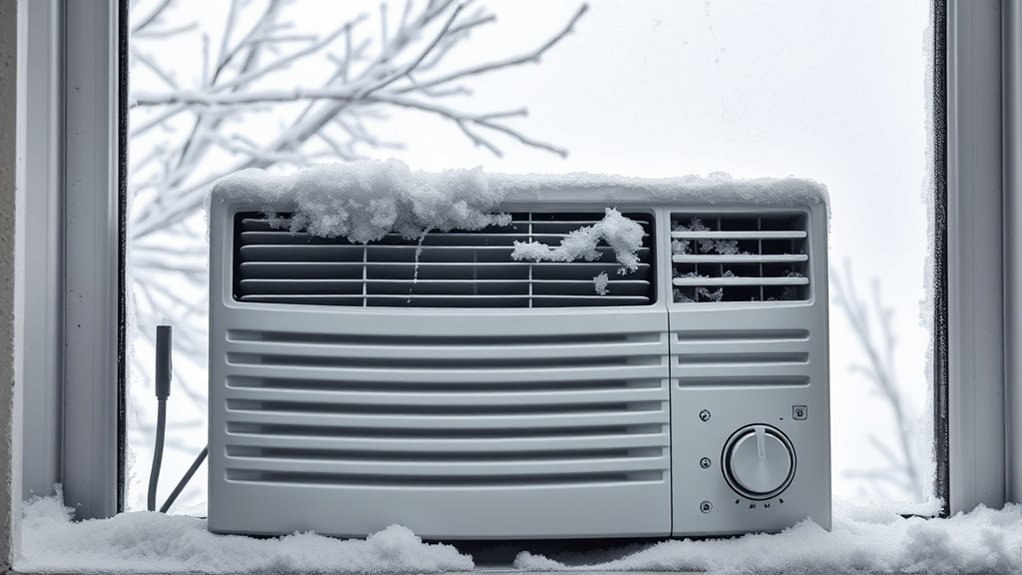
What Happens if You Leave Your Window AC in Winter?
Many people struggle with figuring out what to do with their window AC units during the winter months. You’re not alone—leaving your AC in during cold weather can lead to a bunch of problems.
If you leave your window AC in during winter, it can cause internal damage from moisture, mold, and debris buildup, which reduces air quality and risks corrosion. Cold temperatures may freeze parts, strain the compressor, and cause leaks or cracks, leading to costly repairs.
Plus, energy wastes as it cycles unnecessarily, and pests might find their way inside. Want to uncover how to protect your unit and avoid these problems? Keep exploring for helpful tips.
Key Takeaways
- Dust, mold, and debris can build up over time, which can lower indoor air quality and clog filters and vents.
- Moisture inside the unit can lead to mold, mildew, water damage, and even rust on the components.
- In cold weather, parts might freeze or crack, causing expensive repairs and possibly harming the compressor.
- Melting ice or condensation can cause water leaks, leading to internal damage and harm to nearby areas.
- Leaving the AC on during winter wastes energy, boosts your utility bills, and can invite pests and rodents inside.
Should You Leave Your Window AC in During Winter?
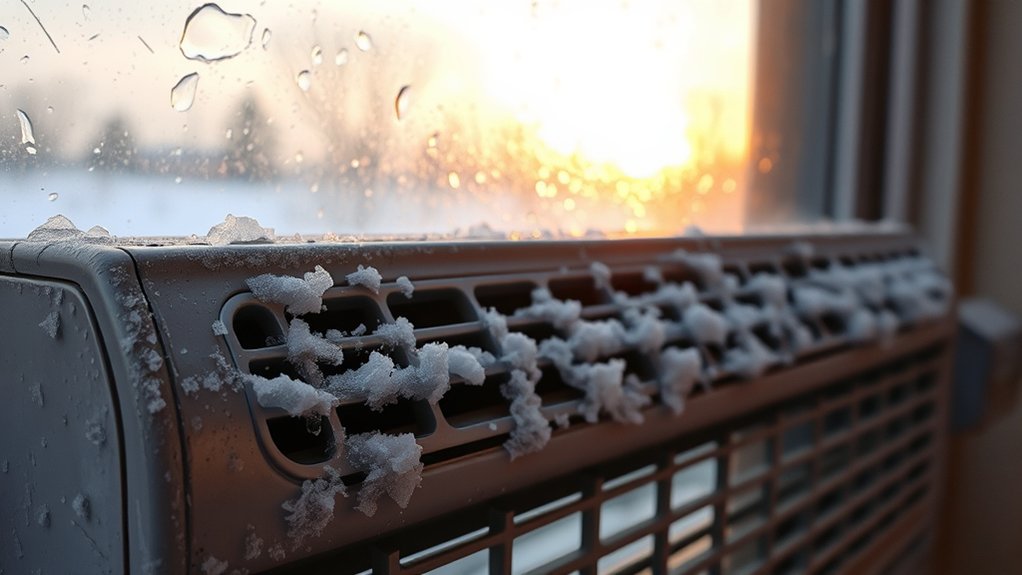
While it might seem easier to leave your window AC unit in place during winter, it’s generally not recommended. Leaving it installed can negatively impact your indoor air quality, especially if dust or mold build up inside the unit during months of disuse.
Plus, an unused AC can become a source of allergens or musty odors that affect the air you breathe. From an energy perspective, leaving the unit plugged in and running can waste electricity, which hikes up your utility bills and wastes resources.
Even if you turn the unit off, it may still draw power in standby mode, adding to your energy costs. Removing or properly covering your window AC during colder months helps protect the unit, prevents air leaks, and keeps indoor air cleaner when you’re not using cooling.
In the end, storing or covering your AC is a smart move for maintaining indoor air quality and saving energy.
Risks of Leaving Your Window AC Installed in Cold Weather
Leaving your window AC installed during cold weather can lead to several risks. One major concern is the potential decline in indoor air quality. When the unit stays in place, dust, mold, and other allergens can build up, reducing air purity and possibly causing respiratory issues.
Plus, the AC’s parts might freeze or get damaged if exposed to low temperatures, which could mean costly repairs or replacements. From an energy standpoint, leaving it on wastes electricity and hikes up your utility bills unnecessarily.
Even if you turn it off, having it still installed can cause small energy drains if it has standby features. The exposed unit can also gather debris, clog filters or vents, and make indoor air quality worse while lowering efficiency.
To avoid these risks, it’s best to remove or properly cover your window AC during winter. This helps protect the unit and keeps indoor air healthier.
Can Cold Temperatures Damage Your Air Conditioner?
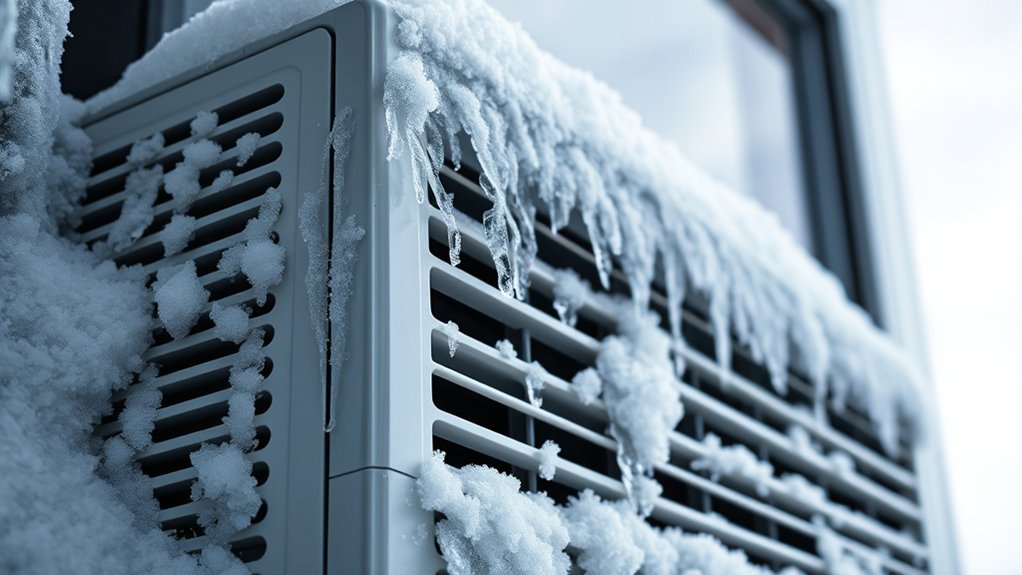
Cold temperatures can actually cause some issues for your air conditioner. For example, the components can freeze up or crack if moisture gets trapped inside, which isn’t great for the system. And if the compressor keeps running in low temperatures, it might strain or even get damaged, leading to some pretty expensive repairs down the line.
Plus, when ice melts or condensation forms, water can leak out and cause water damage around your unit. So, it’s definitely good to be aware of how cold weather can impact your AC and take steps to protect it during the colder months.
Freeze Formation Risks
When temperatures drop significantly, your window AC unit is at risk of developing freeze formation, which can cause serious damage. If the evaporator coil freezes, airflow decreases, and the unit becomes less efficient.
This can also lead to refrigerant leaks, damaging internal parts. To avoid this, make sure to keep up with air filter maintenance to ensure proper airflow and reduce the chance of freezing.
Freezing can also happen if refrigerant levels are low, which needs professional repair. Knowing these risks helps you prevent costly repairs and extend your AC’s lifespan.
| Issue | Impact |
|---|---|
| Air filter blockage | Reduces airflow, causes freeze buildup |
| Low refrigerant levels | Promotes coil freezing |
| Cold ambient temperatures | Accelerates freeze formation |
| Dirt and debris | Clogs filters, hampers airflow |
| Lack of proper maintenance | Increases risk of refrigerant leaks |
Compressor Strain Potential
If your window AC is exposed to low temperatures, it can put extra stress on the compressor—the heart of your cooling system. Cold weather can cause the compressor to work harder, reducing its energy efficiency and increasing wear over time.
This added strain may lead to premature failure, which can be costly to repair or replace. Plus, the compressor’s strain can cause more noise, making your unit louder and more disruptive.
Running the AC in winter doesn’t just waste energy; it also risks damaging essential components. To protect your investment, it’s best to turn off and cover your unit during cold months, preserving its efficiency and minimizing noise and strain on the compressor.
Water Damage Concerns
You might wonder whether winter temperatures can cause water-related issues for your air conditioner. Cold weather can lead to moisture buildup inside the unit, which risks water damage if it’s not properly drained or stored.
This moisture can cause corrosion, affecting your air conditioner’s efficiency and indoor air quality. Freezing temperatures can damage parts like the condensate drain or coils.
Poor thermostat calibration during winter might cause your AC to run unnecessarily, increasing humidity and moisture problems. Proper winterization helps prevent water damage and keeps indoor air quality high.
If you leave your AC in winter, make sure it’s dry and stored correctly to avoid long-term damage from water or ice buildup.
How Cold Air Affects Your Window AC’s Components
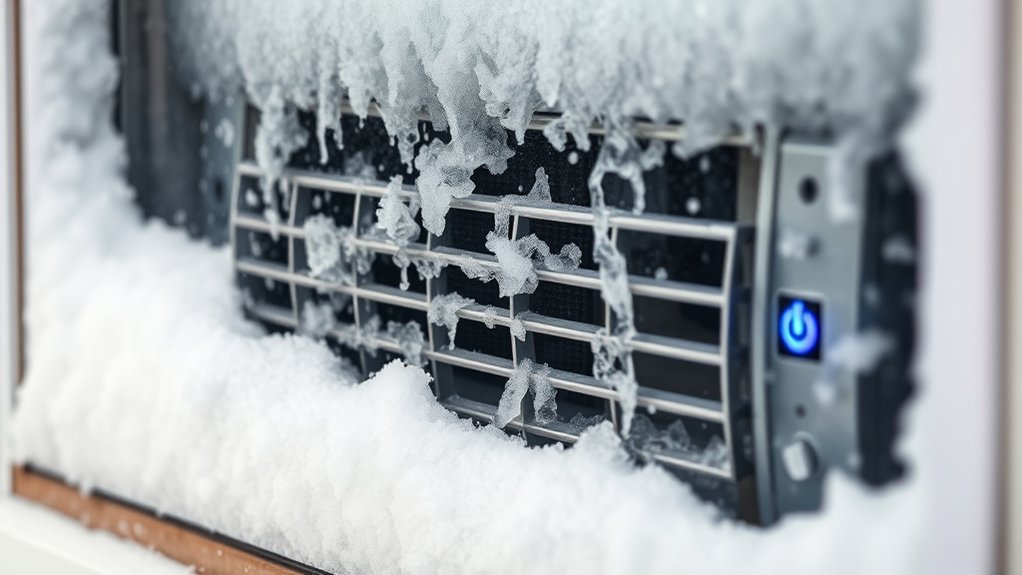
When cold air hits your window AC, it can cause the compressor to freeze up, which might lead to some pretty serious damage. Nobody wants to deal with a broken unit, right? Plus, the moisture from those low temperatures creates the perfect environment for mold to grow inside the unit. That mold isn’t just gross; it can also affect the air quality in your space. Both of these issues can end up costing you a lot in repairs and can even make your AC work less efficiently. So, it’s definitely worth keeping an eye on how cold weather is affecting your unit!
Freezing Causes Compressor Damage
Cold temperatures can cause serious damage to your window AC’s compressor. When it freezes, the internal parts can become brittle and crack, leading to costly repairs or even the need for a new unit.
If you leave your AC out during winter, the compressor might struggle to start or run efficiently when you turn it on again. This can affect indoor air quality by letting dust and allergens circulate freely.
A frozen compressor can also make a lot of noise, which can be pretty disruptive. Plus, it hampers the AC’s ability to regulate temperature properly, making it less effective at keeping your home comfortable.
To avoid these problems, it’s best to turn off and store your unit properly during cold months. This helps keep it in good shape for future use and ensures it works well when you need it, keeping your air clean and noise levels down.
Cold Air Promotes Mold Growth
Even in chilly weather, residual moisture inside your window AC can create the perfect environment for mold to thrive. Cold air doesn’t eliminate moisture entirely; instead, it can cause condensation inside the unit, promoting mold growth on coils and filters.
Mold can negatively impact your air quality, spreading spores that worsen allergies and respiratory issues. Plus, mold buildup may lead to unpleasant odors and further damage your AC components.
Leaving the unit in winter can also increase noise pollution, as mold and moisture can cause parts to rattle or become less stable. Over time, this deterioration reduces your AC’s efficiency and may lead to costly repairs.
To keep your air clean and avoid noise problems, it’s best to clean and store your window AC properly during winter.
Signs Your AC Is Uncomfortable or Unsafe in Winter
If your window AC shows signs of trouble during winter, it’s important to pay attention because running it can be unsafe. Unusual behavior like increased noise or poor air quality signals there’s an issue. You might notice strange noises, rattling, or vibrations, which could mean mechanical problems.
Poor air quality might be due to dust or mold inside the unit, affecting your health. If the AC emits burning smells or sparks, turn it off immediately to prevent fire hazards. Always address these signs promptly to stay safe.
Why Moisture and Condensation Are Problems During the Cold Season
When you leave your window AC running during the winter, moisture can start to build up inside the unit and even in your home. That extra humidity isn’t just uncomfortable—it can lead to some serious problems like mold, mildew, and water damage.
Knowing about these condensation issues is key to preventing costly repairs and keeping your home healthy. It’s a good idea to turn off the AC when it’s cold outside and find other ways to keep your home comfortable without risking moisture buildup.
Moisture Accumulation Risks
Leaving your window AC in winter can cause moisture to build up inside the unit, leading to condensation. This excess moisture can harm your indoor air quality by encouraging mold and mildew growth, which can cause health problems and unpleasant odors.
Moisture can also lead to corrosion of the AC’s components if it stays damp for too long. Plus, it makes your unit work harder to keep your home warm, which wastes energy and raises your bills.
Ignoring these risks can turn your winter downtime into costly repairs and poor indoor air quality. Regular maintenance and seasonal removal are key to protecting your investment and keeping your home safe.
Condensation Damage Potential
Moisture that accumulates inside your window AC during winter doesn’t just sit harmlessly; it can lead to significant condensation damage. When the unit has trapped moisture, it can cause rust, mold, and corrosion, which might spread to nearby areas or damage your window frame.
This moisture can also drip onto outdoor lighting or solar panels nearby, creating safety hazards or reducing efficiency. If you leave the AC running or just unplug it, the trapped humidity can freeze or seep into components, making damage worse over time.
Plus, the excess moisture can promote mold growth inside the unit, releasing spores that affect indoor air quality. Properly draining or removing the unit during winter helps prevent these condensation-related risks and protects your home and outdoor equipment.
How Leaving Your AC Increases Energy Bills in Winter
If you forget to turn off your window AC during winter, your energy bills can skyrocket. Running the unit unnecessarily wastes electricity and causes your system to work harder, which increases costs. An active AC also affects indoor humidity levels, making your home less comfortable and possibly leading to mold growth.
Leaving your window AC on in winter wastes energy, raises bills, and can cause humidity issues and mold growth.
To understand how this impacts your bills, think about these points:
- The AC uses power even if it’s not cooling, especially if it’s set to fan mode.
- Keeping it on constantly raises energy use, reducing overall savings.
- The unit may cycle on and off more often, using more electricity each time.
- Leaving an unused AC on in winter wastes energy and raises utility costs with no benefit.
Turning off your AC saves money and helps keep indoor humidity balanced. This contributes to better energy conservation and lower bills during the winter months.
Can Pests or Rodents Enter Through Your Window AC in Winter?
Even during winter, pests and rodents can find ways to get into your window AC if it’s not properly sealed or maintained. Gaps around the unit create openings for pests to sneak inside.
Insects, mice, and other rodents often look for shelter and warmth during colder months. If you leave your AC in place without sealing it properly, you might invite unwanted visitors into your home.
Rodents can chew through wires or insulation, causing damage and even fire hazards. Spiders and bugs may also crawl into the vents, especially if the unit isn’t covered or sealed tight.
Regular inspections and sealing any gaps are really important to prevent pests and rodents from getting in. Leaving your window AC exposed in winter without precautions can lead to messy, costly problems later on.
Best Ways to Winterize or Remove Your Window Air Conditioner
To protect your window air conditioner during the colder months, it’s best to either winterize it properly or remove it entirely. Proper winterization helps maintain indoor air quality and makes sure your unit works efficiently when summer comes back.
If you decide to remove it, storing it correctly can prevent damage and dust buildup. To winterize, follow these simple steps:
- Clean or replace the filter to improve indoor air quality.
- Remove and drain any accumulated water to prevent mold.
- Cover the unit with a breathable cover to shield it from dust and debris.
- Check the seals around your window to keep your home energy-efficient.
Alternatively, taking out the unit and storing it in a dry, sheltered space can extend its lifespan. Both options help keep your home energy-efficient and ensure your air conditioner stays in good shape for next season.
Proper winterization or removal reduces potential damage and keeps your HVAC system running smoothly.
Proper Storage Tips for Your Air Conditioner Off-Season
When the warm months end, storing your air conditioner properly ensures it stays in good shape for next season. Start by cleaning the filters, vents, and coils to get rid of dust and debris, which helps keep it energy-efficient.
Properly storing your air conditioner after warm months keeps it efficient and in great condition for next season.
Next, turn off the unit and unplug it to avoid any electrical issues during storage. If you can, remove the unit from the window to prevent damage and store it in a dry, cool place.
Cover the AC with a breathable fabric or plastic cover to protect it from dust and moisture. Just avoid storing it somewhere damp or humid, as that can cause rust or mold.
Taking a little time now for seasonal maintenance will help your unit last longer and work better when you’re ready to use it again. Proper storage not only keeps it in good condition but can also save you money through improved energy efficiency next season.
Frequently Asked Questions
Can Leaving My Window AC in Cause Mold Growth Inside?
Leaving your window AC in winter can cause mold growth inside if indoor humidity levels rise and the unit isn’t maintained properly. Moisture can build up in the device’s parts, creating a perfect place for mold to grow.
To keep this from happening, make sure to clean your AC regularly and control the humidity inside your home. Turning off the unit and winterizing it properly also helps prevent mold issues and keeps your home healthier.
Will Leaving My AC in Winter Void the Warranty?
Leaving your window AC in winter *won’t* automatically void the warranty, but it can make things more complicated. Manufacturers usually stress proper use and maintenance, so neglecting to turn it off or protect it could affect your coverage.
Plus, running the AC in cold weather isn’t great for energy efficiency and can increase your bills. To keep your warranty intact and save money, it’s best to store or turn off the unit during winter.
How Does Winter Weather Affect the Refrigerant Levels?
Winter weather can cause refrigerant evaporation, especially if your AC isn’t properly sealed or maintained. Cold temperatures may lead to minor leaks or reduce pressure, causing refrigerant levels to drop.
That’s why seasonal maintenance is so important. It helps check for leaks and ensures your system stays efficient.
If refrigerant levels decline, your AC won’t cool properly, and you risk damage. Regular checks keep your unit running smoothly through winter.
Is It Safe to Operate My Window AC During a Snowstorm?
It’s not safe to operate your window AC during a snowstorm. Snow and ice can damage the unit, and cold temperatures reduce its efficiency, especially for indoor air quality.
Running it wastes energy without providing cooling, and it might cause electrical issues. Instead, cover your AC to protect it from snow.
Focus on maintaining indoor air quality through proper heating and ventilation during winter months.
What Are the Long-Term Effects of Winter Exposure on the Compressor?
Leaving your window AC in winter can lead to serious long-term effects on the compressor. Statistically, about 30% of AC failures are caused by electrical damage from moisture and corrosion.
Over time, winter exposure can cause corrosion in the compressor, weakening its parts. Electrical damage can also occur, which may result in costly repairs or even needing a new unit.
Protect your AC by properly winterizing it. Taking these steps can help prevent damage and extend the life of your compressor.
Conclusion
Leaving your window AC in during winter isn’t just unnecessary. It can actually damage your unit and cause your energy bills to go up. Many think it keeps the cold out, but cold temperatures can harm the compressor and other parts.
Don’t risk pests or costly repairs. Instead, properly winterize or store your AC. Protect your investment and make sure it lasts by taking simple, proactive steps.
Your future self will thank you for keeping your window AC safe during the winter months.