Properly Cover Your Window AC for Winter
Many homeowners find it challenging to keep their window AC units protected during the winter months. You’re not alone—covering your AC properly can feel confusing, especially with so many options out there. But with a few simple steps, you can keep your unit safe and in good shape for next season.
To properly cover your window AC for winter, start by thoroughly cleaning the unit. Selecting weather-resistant covers made of foam or heavy-duty plastic is also important. Make certain the cover fits snugly, sealing edges with weatherstripping or tape to prevent water and cold air from entering.
Secure it tightly with straps or bungee cords, and leave small gaps for ventilation. Regularly check and tighten the cover during winter storms. Keep your unit protected and maintained by following these tips—more details will help you get it just right.
Key Takeaways
- Clean the unit thoroughly before covering to remove dust, dirt, and debris. This helps keep it in good shape over the winter.
- Use weather-resistant, insulating covers that fit snugly around the AC. This prevents cold air and moisture from getting inside.
- Seal all edges with weatherstripping and tape to ensure a tight, waterproof barrier. It keeps out drafts and moisture effectively.
- Secure the cover with straps, bungee cords, or clips. This prevents it from slipping off during wind or snowstorms.
- Remove the cover promptly in spring, making sure the unit is dry and undamaged before reuse or storage.
Why It’s Important to Cover Your Window AC Before Winter
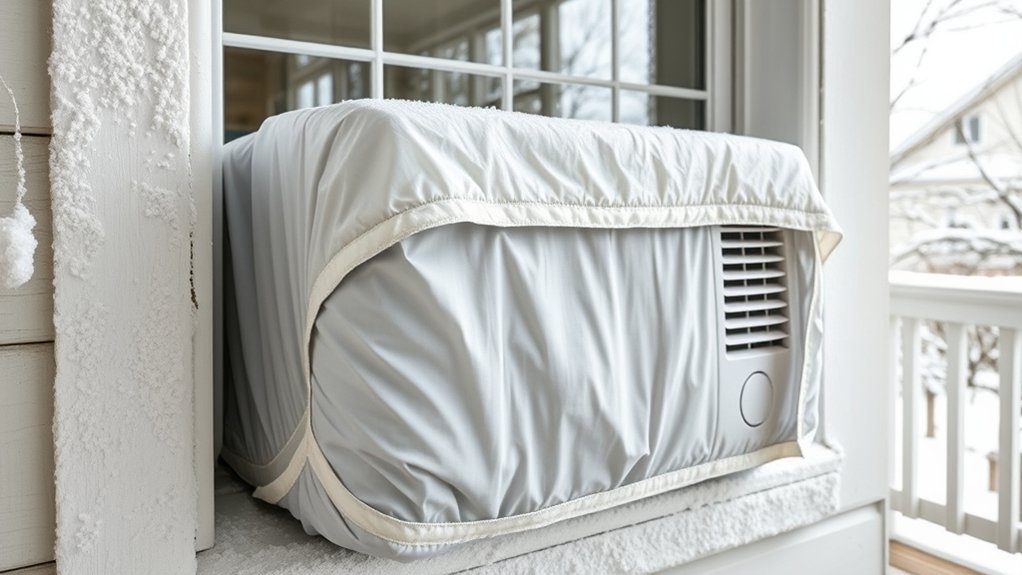
Have you ever wondered why it’s essential to cover your window AC unit before winter? Using decorative window covers can protect your unit from snow, ice, and debris, preventing damage and corrosion.
Seasonal window decor doesn’t just add style; it also acts as a barrier that keeps cold air and moisture out. When you leave the AC exposed, moisture can seep inside, causing mold or rust to develop.
Covering it properly helps maintain its condition and extends its lifespan. Plus, a well-chosen cover *improves* your home’s appearance during the off-season, blending functionality with decor.
Not only does this prevent costly repairs, but it also keeps your unit clean and ready for use when summer returns. Covering your window AC in winter is a simple step that offers long-term benefits, safeguarding your investment while adding a touch of seasonal charm.
How to Choose the Best Materials to Protect Your AC in Winter
Choosing the right materials to protect your window AC in winter is essential for ensuring durability and effectiveness. Look for insulating covers made from durable, weather-resistant materials like foam or heavy-duty plastic, which help improve energy efficiency by preventing heat loss. Proper insulation keeps your home warmer and reduces the strain on your heating system, saving you money.
Choose durable, weather-resistant materials like foam or heavy-duty plastic for effective winter AC protection.
Furthermore, consider materials that offer noise reduction. Thick foam or soundproof covers can minimize the noise from wind or snow hitting the unit, making your home quieter during winter months. Avoid flimsy or porous materials that let cold air in or let noise escape.
The best materials are those specifically designed for outdoor use, providing a tight seal around the unit. Remember, the goal is to protect your AC from the elements while maintaining energy efficiency and minimizing noise disturbances.
Choose wisely, and your unit will stay in better shape for years to come.
Tools You’ll Need to Cover Your Window Air Conditioner
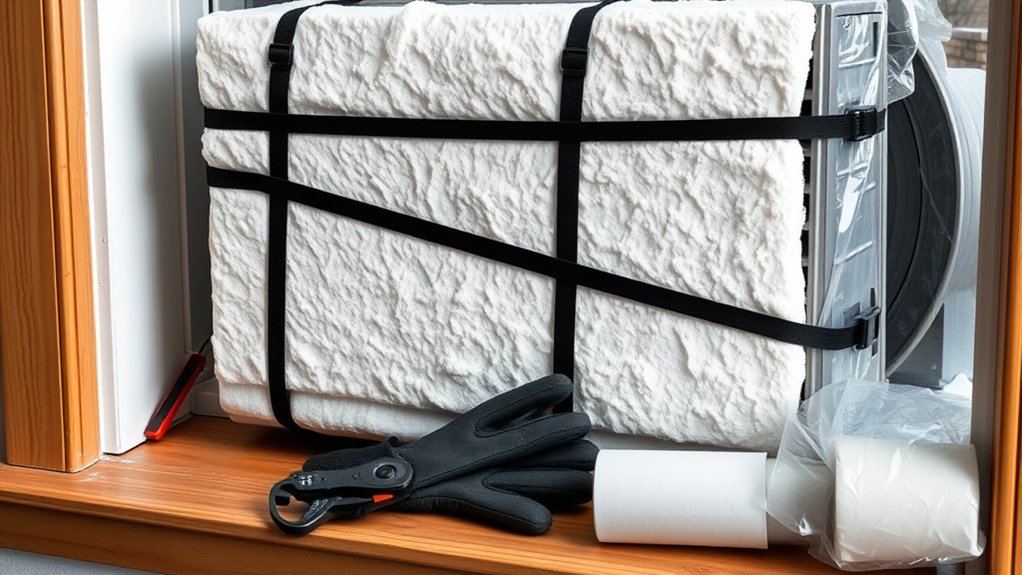
To properly cover your window air conditioner for winter, you’ll want to gather a few essential materials and tools. Having the right cover along with some basic hand tools makes the whole process much easier and more effective. So, let’s go through what you’ll need to get the job done right and keep your AC protected during the colder months.
Essential Covering Materials
When preparing to cover your window air conditioner for winter, gathering the right materials is key to making sure the cover is secure and effective. You’ll want durable, weather-resistant fabric or plastic sheeting to keep out snow and moisture.
Foam insulation or weatherstripping is also important. They help improve energy efficiency and stop drafts from sneaking in around the unit. This keeps your home warmer and reduces energy costs.
If you want to keep your window looking nice during winter, consider adding decorative covers. They can hide the cover and add a bit of style to your window area.
| Material | Purpose |
|---|---|
| Weather-resistant fabric | Protects from elements and boosts energy efficiency |
| Foam insulation | Seals gaps and enhances insulation |
| Plastic sheeting | Acts as a waterproof barrier |
| Decorative cover | Adds aesthetic appeal and conceals the cover |
Basic Hand Tools
Before you start covering your window air conditioner, gather the essential hand tools you’ll need to make the process easier and more efficient. A screwdriver is key for removing panels or screws securing the unit, ensuring a clean fit and paint protection.
Pliers can help with tightening or removing clamps, while a utility knife is useful for trimming any covering materials to size. A wrench may be necessary for loosening bolts.
Having a level ensures your cover sits properly, which helps optimize energy efficiency in winter. Keep a measuring tape handy to verify dimensions and prevent gaps that could compromise insulation.
Using these basic hand tools helps you install the cover securely, protecting your AC and improving paint protection during winter. Proper tools streamline the process and ensure a snug, effective cover.
Step-by-Step: How to Properly Cover Your Window AC for Winter
First things first, gather all the materials you’ll need to cover your window AC for the winter. Having everything on hand makes the whole process much smoother. Once you’ve got your supplies, give the unit a good cleaning and wipe it down. You want to make sure no dirt or debris gets trapped inside during the off-season.
After it’s clean, carefully place the cover over the unit. Make sure it’s snug and secure so that it doesn’t slip off when the weather gets windy. Finally, seal the edges tightly to keep out water, snow, and cold temperatures. That way, your window AC stays protected and ready to go when summer rolls around again!
Gather Necessary Materials
Gathering the necessary materials is the first step to ensure your window AC is properly covered for winter. You’ll need a few key items to make sure your cover is secure and looks good.
Start with a durable decorative cover that fits your unit. It can also add a nice seasonal touch to your home’s exterior. Next, get weatherproof tape or straps to hold the cover tightly in place.
Finally, gather any extra insulation or foam padding if you want extra protection against cold drafts. Picture your window dressed up with a charming decorative cover that blends with your winter décor.
These materials will help protect your unit and add a festive touch, making your winter prep both practical and visually appealing.
Clean and Prepare Unit
Wondering how to make sure your window AC is ready for winter? Start by cleaning the unit thoroughly. Remove any dust, dirt, or debris from the vents and filters. This keeps the system in good shape and prevents mold or mildew buildup.
Next, wipe down the exterior with a damp cloth, avoiding harsh chemicals. If you have window treatments or seasonal decorations around your unit, carefully detach or move them to prevent damage.
Clearing the area guarantees you can access and clean the AC properly. Check for any signs of damage or corrosion, and address minor issues now.
Proper cleaning and preparation help extend your AC’s lifespan and make covering it easier when winter arrives. This step keeps your unit in prime condition for next season.
Secure and Seal Cover
Are you unsure how to secure and seal your window AC properly for winter? To protect it from the elements and improve aesthetics, carefully install your cover, ensuring a snug fit.
First, secure the cover tightly using weatherproof tape or straps to prevent drafts. Second, seal any gaps around the edges with foam or weatherstripping to keep cold air out and moisture in check.
Third, consider adding decorative covers or aesthetic improvements to make your unit blend seamlessly with your winter décor. This not only keeps your AC protected but also elevates your window’s appearance.
Making sure your unit is properly sealed and secured will keep it safe all winter long while maintaining a clean, attractive look.
How to Secure Your Cover to Prevent Damage During Heavy Snow and Wind
Securing your window AC cover properly is key to preventing damage during heavy snow and wind. If you’re using decorative covers or seasonal decorations, make sure they’re tightly fastened.
Use bungee cords, adjustable straps, or heavy-duty clips to anchor the cover firmly around the window frame. Avoid leaving loose edges that wind could catch, which might tear or loosen the cover.
For decorative covers, double-check that all attachments are snug, especially if they extend beyond the unit. If snow is expected to pile up, clear any accumulated snow promptly to prevent pressure buildup.
Consider adding extra weights or sandbags along the bottom edge for added stability. Regularly inspect the cover during winter storms to ensure it stays secure, and re-tighten straps if needed.
Properly securing your cover protects your AC from damage and keeps your seasonal decorations intact during harsh weather conditions.
Insulating and Sealing Your AC to Keep Out Cold Drafts
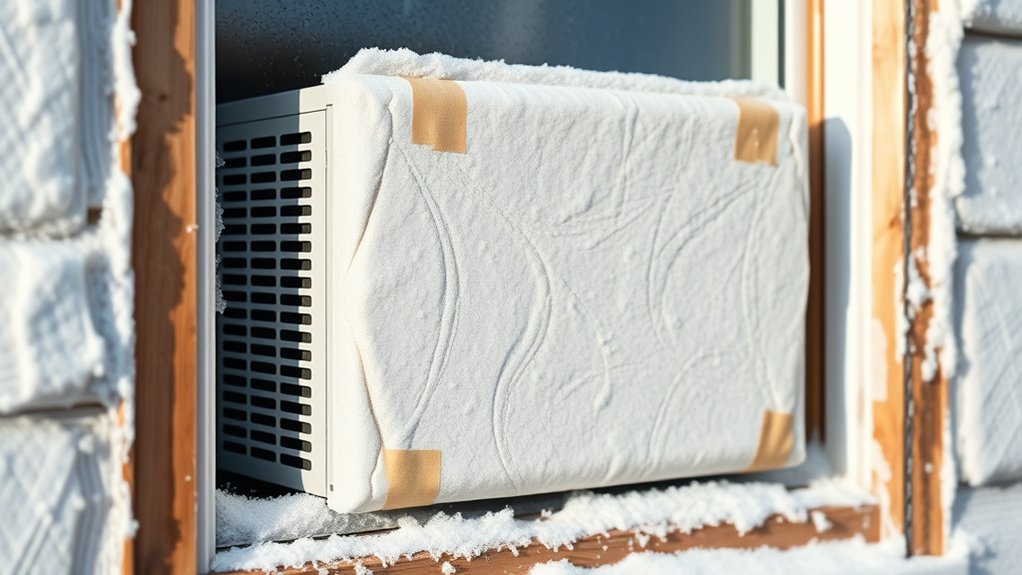
When winter weather sets in, insulating and sealing your window AC helps prevent cold drafts from sneaking into your home. This not only keeps you warmer but also saves energy.
Proper insulation also reduces outside noise, making your space quieter. To get started, consider these simple steps:
- Apply weatherstripping around the edges of the unit to block gaps and drafts.
- Use foam insulation boards behind or around the AC to create a thermal barrier.
- Seal cracks and gaps with caulk or sealant for a snug fit, so cold air can’t sneak in.
These easy measures keep cold drafts out and improve your home’s comfort. Plus, sealing your AC is an affordable way to boost energy efficiency and reduce heating costs.
Common Mistakes to Avoid When Covering Your Window AC
Failing to avoid common mistakes when covering your window AC can undermine your efforts to protect it during winter. One mistake is neglecting window security; using flimsy or poorly fitted covers can allow drafts, debris, or intruders to access your unit. Make sure the cover fits snugly to prevent gaps that could weaken insulation and security.
Avoid flimsy covers; ensure your window AC is snugly protected for winter security and insulation.
Also, avoid covering your AC with materials that clash with your home’s look. Clunky or mismatched covers can make your window appear cluttered or unattractive. Choose a cover that complements your home’s exterior while providing proper protection.
Another common mistake is forgetting to remove covers properly in spring. Trapping moisture inside can cause damage to your unit. Always remove the cover carefully and promptly once winter is over.
Finally, don’t ignore the importance of ventilation. While it’s a topic for later, keeping proper airflow is key to preventing issues. By avoiding these mistakes, you’ll keep your window secure, your home attractive, and your AC protected through the winter months.
How to Ensure Proper Ventilation While Your AC Is Covered
Keeping proper airflow around your covered window AC is key to preventing moisture buildup and mold growth. Good ventilation helps keep the indoor climate comfortable and can even save energy during winter.
To make sure air can circulate properly, install a vent or small gap at the top or sides of the cover. This allows air to flow without exposing the unit to snow or debris.
Use breathable covers made from moisture-wicking materials. These let air pass through while blocking snow and dirt, helping to keep your unit dry and clean.
Avoid sealing the unit completely. Leave enough space for air to move freely around the AC to prevent condensation and potential damage.
When and How to Remove the Cover in Spring for Safe Reuse
As winter ends and the weather starts to warm, it’s important to remove your window AC cover safely and properly to keep the unit in good shape for reuse. Perform some seasonal maintenance by inspecting your AC for any damage or debris that might have built up during the off-season.
Before taking off the cover, make sure the unit is completely dry to avoid mold or corrosion. Carefully remove the cover, avoiding any force that could damage the fins or other parts of the unit.
Once it’s uncovered, give the exterior a good cleaning and check for signs of wear or damage. If you plan to reuse the cover next season, store it in a dry, dust-free spot.
Also, keep the AC itself in a safe, sheltered place to protect it from moisture and pests. Following these steps will help ensure your window AC stays in excellent condition and is ready for quick installation when the temperature rises again.
Long-Term Storage Tips: Maintaining Your Window AC for Future Seasons
Before you put your window AC away for the season, give it a good cleaning and make sure it’s completely dry. This helps prevent mold from forming and keeps it in good shape. It’s also a good idea to check for any issues or damage and take care of repairs now so everything’s ready to go when you need it again.
When storing the unit, find a dry, protected spot where it won’t be exposed to moisture or extreme temperatures. Keeping it in a safe place will help ensure it stays in great condition until next year.
Clean and Dry Unit
After disconnecting your window AC, it’s important to clean and dry the unit thoroughly to prevent mold, mildew, and corrosion during storage. Start by wiping down the exterior and vents with a damp cloth to remove dust and dirt.
Next, carefully clean the filters and internal components, making sure no debris is left behind. Once everything is clean, dry the unit completely with a soft cloth or let it air dry in a well-ventilated space.
As you prepare for winter, think about placing decorative covers over the unit to protect it from dust and seasonal decorations. Picture the clean, dry appliance tucked away behind a decorative cover, ready to be stored safely.
This process will help keep your window AC in good shape for future seasons and maintain its performance year after year.
Store in Dry Location
Once your window AC is clean and dry, the next step is to store it in a dry, protected spot. Keeping it in a climate-controlled space prevents moisture from building up, which can damage internal parts and harm the air filter.
A dry spot also helps preserve the unit’s efficiency, so your indoor air stays fresh and clean when you use it again. To see why this matters, check out this table:
| Dry Storage Benefits | Impact on Indoor Air Quality |
|---|---|
| Prevents rust | Maintains air filtration |
| Avoids mold growth | Keeps indoor air clean |
| Protects electrical parts | Ensures peak operation |
| Reduces corrosion | Extends lifespan |
| Maintains unit value | Saves money long-term |
Storing your AC properly protects your investment and keeps indoor air healthy and fresh for future seasons.
Inspect and Repair
To keep your window AC in good shape for the next season, it’s important to inspect it thoroughly and do any needed repairs. Start by checking the outside for damage or loose parts, and make sure the grille and vents are clean.
Look inside for debris or corrosion that could slow down performance. While inspecting, consider if your window decoration or seasonal decorations might have affected airflow or caused minor damage.
Here are three key steps:
- Test the fan and compressor to make sure they run smoothly.
- Clean or replace filters for optimal efficiency.
- Tighten screws or swap out damaged parts as needed.
Doing these checks now can prevent issues later and help keep your AC working well and lasting longer.
Frequently Asked Questions
Can Covering My Window AC Void Its Warranty?
Covering your window AC for winter might not automatically void its warranty, but improper covering can cause issues. If you don’t follow the manufacturer’s guidelines for seasonal maintenance, you risk damaging the unit, which could void the warranty.
To maintain energy efficiency and protect your investment, use a proper cover designed for winter and make sure it’s installed correctly. Always check your warranty terms before covering your AC to avoid any potential problems.
Is It Safe to Cover My AC With Plastic or Tarps?
Did you know that improper winter covers can cause more damage to your AC than leaving it exposed? Covering your unit with plastic or tarps isn’t safe because these materials trap moisture, which can lead to rust and mold.
Instead, follow weatherproofing tips like using a breathable cover designed for outdoor units. Pick a cover that fits well, allows air circulation, and prevents water buildup. This way, you’ll protect your AC and help it last longer.
How Often Should I Inspect the Cover During Winter?
You should inspect your window AC cover at least once a month during winter. Regular checks help keep indoor air quality high and ensure the cover stays intact.
This prevents debris or moisture from affecting the unit. Keep an eye out for damage or mold, which can lower energy efficiency and harm indoor air quality.
Address any issues promptly to keep your space safe and your unit protected throughout the season.
What Signs Indicate My Cover Needs Replacing?
You might wonder if your cover needs replacing. Signs include tears, holes, or significant wear in the cover material.
If the cover’s durability has diminished, it won’t protect your AC properly from winter elements. Check for cracking or peeling paint, which shows weather damage.
When these signs appear, it’s time to replace your cover. This will help keep your window AC protected and working well for the next season.
Should I Remove the Cover if It Snows Heavily?
Yes, you should remove the cover if heavy snow accumulates. Snow buildup on the cover can add extra weight and potentially cause damage, especially if the cover material isn’t designed to handle it.
Heavy snow can also trap moisture, which might lead to mold or rust over time. It’s a good idea to regularly check your cover during winter storms.
Make sure to remove it promptly after a heavy snowfall to protect your window AC unit from any potential damage.
Conclusion
Wrapping up your window AC like a cozy blanket shields it from winter’s harsh embrace, making sure it’s ready to spring back to life when the flowers bloom. Think of your cover as a guardian, standing sentinel against snow, wind, and debris.
With proper care and attention, your unit will rest peacefully through the cold, emerging refreshed and enthusiastic. It’s like a slumbering bear waiting for spring to stretch, roar back to life, and get ready for the warm months ahead.