When Were Window AC Units Invented?
Struggling to stay cool during those scorching summer days? You’re not alone—many people find it tough to beat the heat indoors. Luckily, window air conditioners can be a game-changer for comfort and relief.
Window air conditioners were first developed and introduced in the mid-20th century, transforming indoor comfort for everyone. The first practical window AC unit was invented around 1950 by engineers at Frigidaire, a General Motors division.
This innovation made cooling affordable and accessible to the masses, shifting indoor climate control from a luxury to a necessity.
If you want to investigate how these units have evolved and improved over time, there’s plenty more to uncover.
Key Takeaways
- The first practical window air conditioner was invented in 1950 by engineers at Frigidaire.
- Early indoor cooling ideas go back to the early 20th century, with big steps in the 1930s to 1950s.
- Willis Carrier created the first large-scale air conditioner in 1902, mainly to control humidity.
- After World War II, mass production of window units started, making them more affordable and common in the 1950s.
- Modern window AC units came from innovations in materials and tech starting in the early-to-mid 20th century.
Why Do We Need Window Air Conditioners?
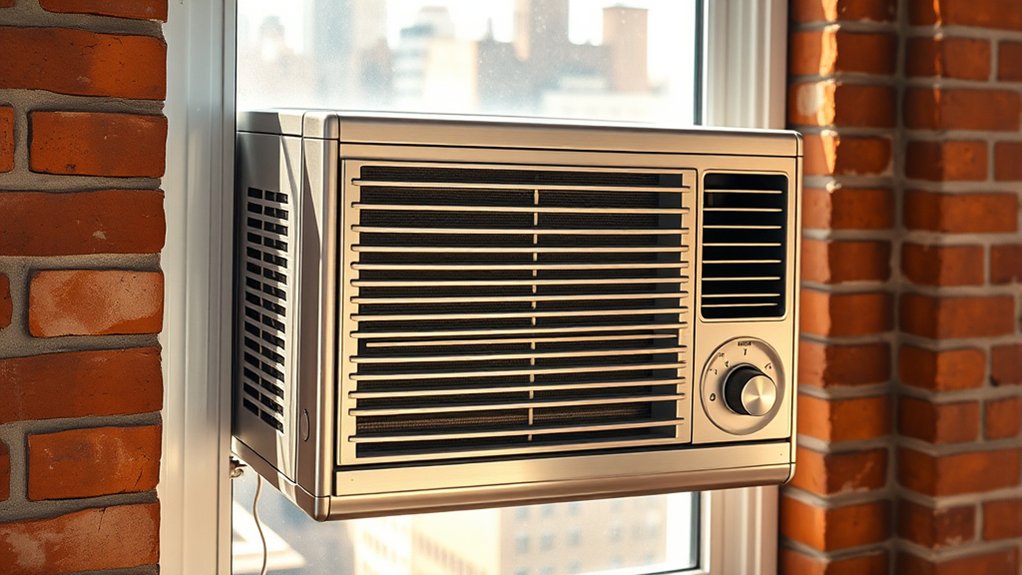
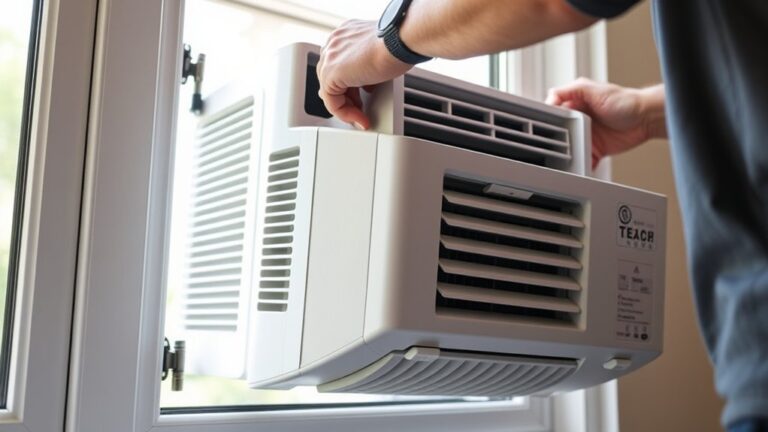
Have you ever wondered why window air conditioners are so popular? The answer lies in their efficient window design and reliable cooling capacity. These units are designed to fit snugly into a window frame, making installation straightforward and saving space inside your home.
Their compact design allows you to cool individual rooms effectively without needing a central system. Plus, window AC units come with various cooling capacities, so you can choose one that matches the room size—whether it’s a small bedroom or a larger living area.
This flexibility ensures you get targeted cooling exactly where you need it. Furthermore, their portability and ease of use make them a practical choice for many households.
When you select a window air conditioner with the right cooling capacity, you gain control over your indoor climate. You can keep your space comfortable without wasting energy. That’s why they remain a popular choice worldwide.
When Were Air Conditioning Systems First Invented?
The idea of cooling indoor spaces has been around for centuries, but the modern air conditioning systems we use today started to take shape in the early 20th century. The main goal was to improve climate control and make indoor environments more comfortable, especially in factories and theaters.
In 1902, Willis Carrier invented the first large-scale air conditioner, initially to control humidity in a publishing house. This breakthrough laid the groundwork for the systems we rely on now, transforming how we manage indoor climates.
Over time, innovations led to smaller, more efficient units, making climate control accessible in homes and offices. These advances helped make indoor comfort more widespread and practical.
Who Invented the First Window AC Unit?
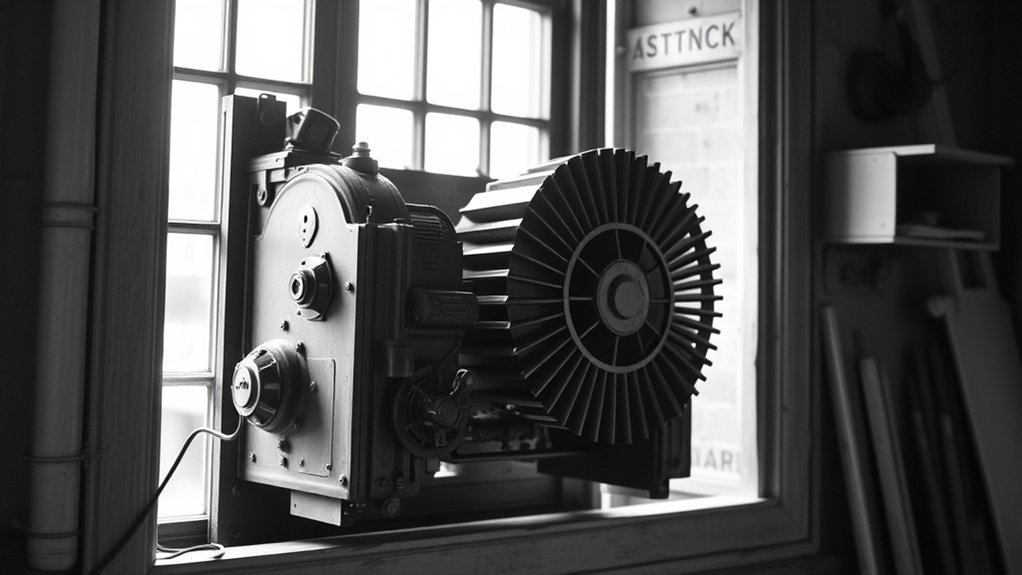
As air conditioning technology evolved, the need for more accessible cooling solutions led to the development of window units. In the historical context, Willis Carrier is credited with inventing the first modern air conditioner in 1902, but it wasn’t designed for home use.
Market trends shifted in the 1930s when manufacturers aimed to create compact, affordable cooling devices. This led to the emergence of window AC units.
The first practical window air conditioner was invented in 1950 by engineers at Frigidaire, a division of General Motors. This innovation was driven by consumer demand for convenient cooling solutions that could be installed in existing windows.
The market responded quickly, and these units gained popularity due to their affordability and simplicity. By focusing on accessible technology, early inventors set the stage for widespread adoption of window AC units, transforming comfort standards in homes.
How Have Window Air Conditioners Evolved Over the Years?
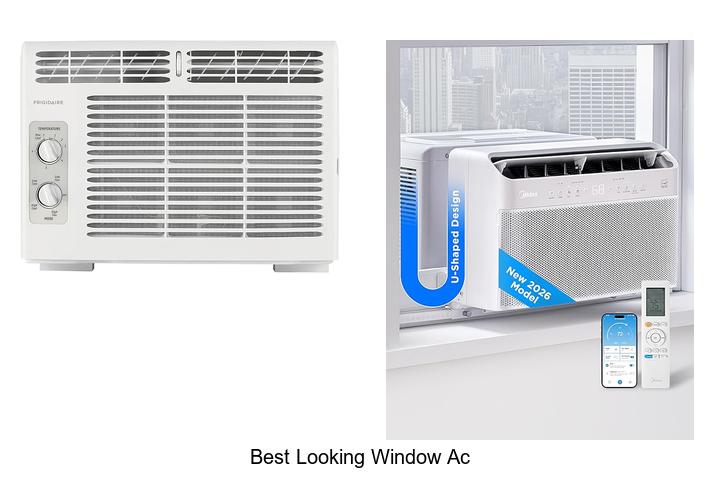
Over the years, window air conditioners have really come a long way. They’ve gotten smarter with better technology, making them more efficient and easier to use. You might notice that newer units are quieter and have sleeker designs that fit better in your window.
Plus, they’re now more energy-efficient, which is great for saving on your electricity bills. Installation has also become simpler, so you don’t have to stress about setting them up. All these improvements help keep you cool while being kinder to your wallet and the environment.
Technological Advancements Over Time
Since their invention, window air conditioners have gone through some pretty big technological improvements that boost efficiency, convenience, and overall performance.
At first, these units were bulky and loud, but innovations like rotary compressors and better insulation helped cut down noise and save energy.
As environmental concerns grew, refrigerants changed from harmful, ozone-depleting chemicals to more eco-friendly options.
Digital controls, thermostats, and timers became standard features, making them much easier to operate.
Advances in airflow design and filtration also improved cooling power and air quality inside rooms.
All these changes show how manufacturers keep pushing to meet what consumers want while following new regulations, making window air conditioners more reliable, efficient, and user-friendly.
Design and Efficiency Improvements
Window air conditioners have undergone significant design and efficiency improvements that make them more effective and user-friendly. Modern window designs focus on being compact, reducing noise, and making installation easier, which boosts convenience.
Advances in compressor technology and refrigerants increase cooling power while lowering energy use. Improved airflow management and adjustable vents let you better control your comfort levels.
Many units now come with digital controls, remote operation, and programmable timers, making them simpler to use. The latest insulation and sealing techniques help prevent drafts and boost efficiency.
What Key Innovations Improved Window AC Units?
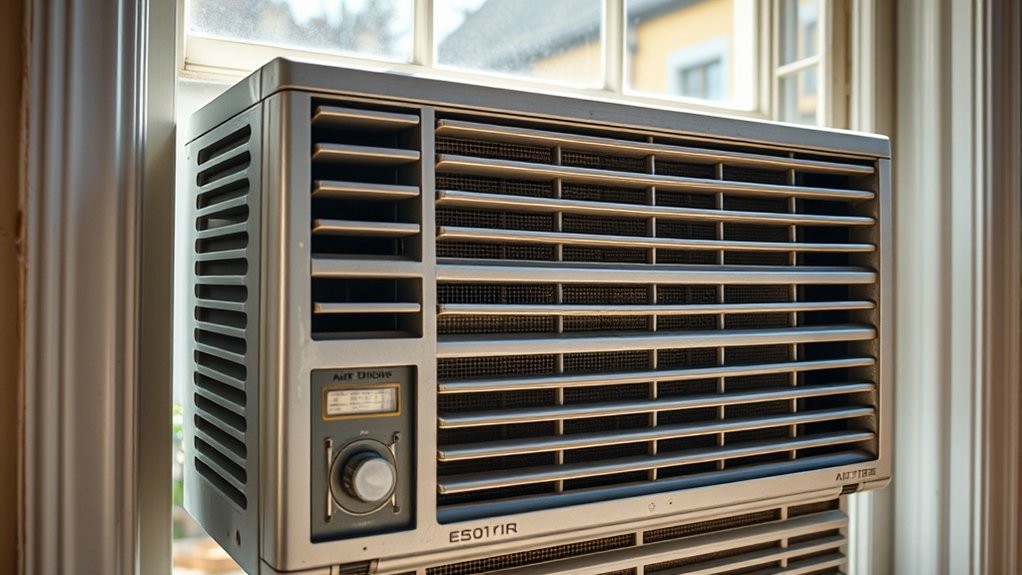
Advancements in compressor technology and refrigerants have significantly boosted the efficiency and performance of window air conditioning units. These innovations increased cooling capacity while keeping that vintage design appeal.
As a result, units became more reliable and energy-efficient. Here are some key innovations that made a real difference:
- Improved Compressors: Modern compressors provide better cooling with less noise, making your space more comfortable without sacrificing that vintage look.
- Advanced Refrigerants: Safer, eco-friendly refrigerants improved efficiency and reduced environmental impact, making units more sustainable.
- Enhanced Insulation and Ventilation: Better sealing and airflow design minimized energy loss, boosting overall performance and ensuring consistent cooling.
These innovations turned window AC units from simple coolers into dependable, efficient appliances that blend vintage charm with modern performance. You get cool comfort with style.
How Did Early Window Units Change Indoor Comfort?
Early window units changed indoor comfort by making cool, conditioned air available to homes and businesses that relied on less effective methods before.
Back then, people depended on fans, open windows, or evaporative coolers, which didn’t offer much relief.
In the mid-20th century, manufacturers started making more efficient and affordable window AC units, which really changed how we experienced indoor environments.
These units provided consistent cooling, better air quality, and helped reduce humidity, making indoor spaces more comfortable regardless of what was happening outside.
This shift improved personal comfort and also boosted productivity at work and health at home.
The widespread adoption of window units marked a big step toward modern climate control and paved the way for the advanced cooling solutions we have today.
What Modern Materials Make Window ACs Better?
Modern window ACs have come a long way, thanks to new materials that make them work better. For example, they now use improved heat transfer materials, which help the units cool faster and use less energy. That means you get to stay cool more efficiently without cranking up the power bill.
Plus, the parts inside are lighter and more durable. This makes the units easier to install and helps them last longer without breaking down. All these upgrades mean you get a more reliable, energy-efficient AC that’s easier to maintain and keeps your space comfortable.
Enhanced Heat Transfer Materials
Many of today’s window air conditioning units benefit from innovative heat transfer materials that improve efficiency and cooling performance. These materials *augment* the transfer of heat between the refrigerant and the environment, making your AC more effective.
Here are three key advancements:
- High thermal conductivity metals like copper and aluminum enable rapid heat exchange, boosting cooling power.
- Advanced insulation materials reduce heat loss, ensuring the cool air stays inside longer.
- Composite materials combine insulative properties with excellent thermal transfer, optimizing performance in compact designs.
Lightweight Durable Components
Advancements in lightweight, durable materials have significantly improved the design and lifespan of window AC units. Modern components use high-strength plastics and metals that cut down weight without losing strength, making installation and portability easier.
These materials also boost durability, helping units withstand daily wear and tear. Better insulation materials improve energy efficiency and reduce noise, leading to quieter operation and more effective portable cooling.
By using corrosion-resistant metals, manufacturers extend the lifespan of the units, especially in humid environments. These innovations make window AC units more reliable and easier to handle, ensuring they perform well over time.
When Did Window AC Units Become Widely Available?
The widespread availability of window AC units took several decades to unfold after their invention. The historical context played a significant role, as initial models were expensive and bulky, limiting regional adoption. Over time, innovations made units smaller and more affordable, leading to greater accessibility.
Here are three key milestones in their expansion:
- 1920s: Early commercial models were introduced, mainly in luxury settings.
- 1930s and 40s: Post-World War II economic growth fueled broader regional adoption, especially in warmer climates.
- 1950s: Mass production and technological improvements dramatically reduced costs, making window units a household staple nationwide.
How Do Modern Window Air Conditioners Compare to Old Models?
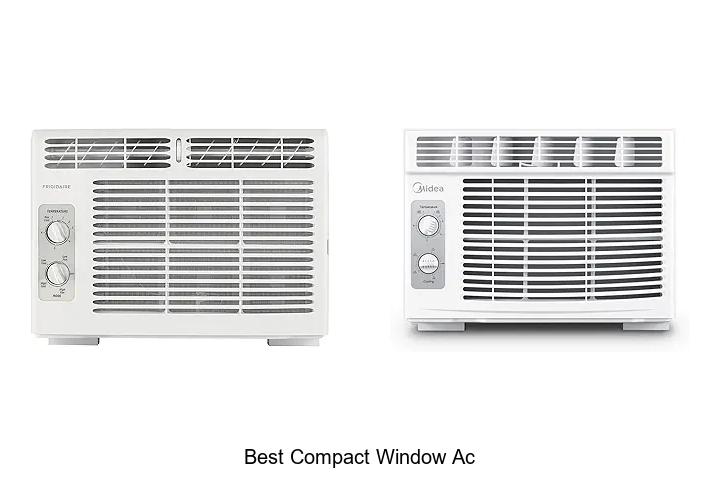
Modern window air conditioners are way more energy-efficient than the old models, so you can save a good chunk on your electricity bills. Plus, they run a lot quieter, which makes your space way more comfortable without all that constant noise. All these upgrades mean you get better cooling and performance, but without the extra disturbance or cost.
Energy Efficiency Improvements
Today’s window air conditioners are much more energy-efficient than their early versions, thanks to new technology and stricter standards. Modern units feature advanced compressors, better insulation, and smart sensors to save energy.
To get the most efficiency, keep a few things in mind:
- Proper window placement helps with airflow and prevents energy loss.
- Choose a unit with a high Energy Efficiency Ratio (EER) to reduce power use.
- Regular maintenance, like cleaning filters, keeps your AC running smoothly.
Compared to older models, today’s units use significantly less power, saving you money on utility bills. These upgrades make modern window air conditioners eco-friendly and cost-effective while still cooling effectively.
Noise Level Reduction
Although older window air conditioners tend to be noticeably noisy, recent advancements have significantly lowered their sound levels. Modern models now feature improved noise cancellation technology, making them much quieter during operation.
This reduction in noise helps you enjoy indoor comfort without disruptions. Quieter units also help maintain a stable indoor humidity level, preventing excess moisture that can cause discomfort.
Newer ACs often include sound-dampening materials and optimized fan designs, which greatly cut down on noise output. As a result, you can run your window unit without disturbing your daily activities or sleep.
What’s Next for Window AC Technology?
Advancements in window AC technology are focusing on being more energy-efficient, smarter, and better for the environment. Expect to see units with features like smart integration, so you can control them remotely with your smartphone or voice assistants.
This makes managing your cooling system more convenient and efficient. New designs will also aim to reduce environmental impact by using eco-friendly refrigerants and energy-saving parts.
Here’s what’s coming next:
- Smart Integration: Compatibility with home automation systems for easy control.
- Eco-Friendly Refrigerants: Moving to refrigerants with lower global warming potential.
- Enhanced Energy Efficiency: Better compressors and insulation to use less power.
These innovations will make window AC units more sustainable, user-friendly, and environmentally responsible, helping you stay cool while reducing your carbon footprint.
Frequently Asked Questions
What Are the Main Differences Between Window and Portable Air Conditioners?
Window and portable air conditioners mainly differ in how they’re installed and how loud they are.
Window units need to be securely installed in a window, which can be tricky—especially if you’re renting or don’t have the right windows. Portable units are easier to set up but tend to be noisier.
If you’re looking for a quieter option, a window unit might be better. But if you want something simple to move around, a portable AC could be the way to go.
Think about your space, how easy installation is, and your noise preferences when choosing between the two.
How Energy-Efficient Are Modern Window AC Units?
Imagine your window AC unit as a diligent gardener, working efficiently to cool your space. Modern units are quite energy-efficient, thanks to advanced technology that reduces energy consumption while maximizing insulation effectiveness.
They use smart features and better design to keep your room cool without wasting power. So, you get a cooler home and lower energy bills, making your investment both practical and eco-friendly.
Can Window AC Units Be Used in All Types of Buildings?
Window AC units can be used in many building types, but a historic development shows they’re most suitable for single-family homes and small commercial spaces.
You might face installation challenges in multi-story buildings or those with limited window space, making them less practical.
Before installing, consider your building’s structure and size to guarantee compatibility and proper cooling, especially if you’re dealing with older or complex architectural designs.
What Are Common Maintenance Issues With Window Air Conditioners?
You’ll often encounter maintenance issues with window air conditioners like clogged filters and dirty coils. Regular filter replacement ensures good airflow and keeps your unit running efficiently.
Cleaning the coils prevents ice build-up and overheating. Check and clean your unit’s filters monthly, and clean the coils at least once a season.
Addressing these common problems helps your AC run smoothly, lasts longer, and keeps you cool throughout the season.
Are There Eco-Friendly Options for Window AC Units?
Yes, you can find eco-friendly window AC units that have eco certifications and use sustainable refrigerants.
These units are designed to cut down on environmental impact by using less energy and avoiding harmful chemicals.
When shopping, look for certifications like Energy Star and refrigerants such as R-32 or R-410A, which are more eco-friendly.
Choosing these options helps you stay comfortable while supporting sustainability efforts.
Conclusion
Remember, progress is a journey, not a destination. Window AC units have come a long way since they were invented in the early 20th century.
They’ve evolved with new innovations and materials to keep you cooler and more comfortable. As technology keeps advancing, we can expect even smarter, more efficient models in the future.
Staying informed helps you make better choices. So, keep an eye on new developments in window AC units. After all, the only constant is change, and embracing it guarantees you stay ahead of the heat.