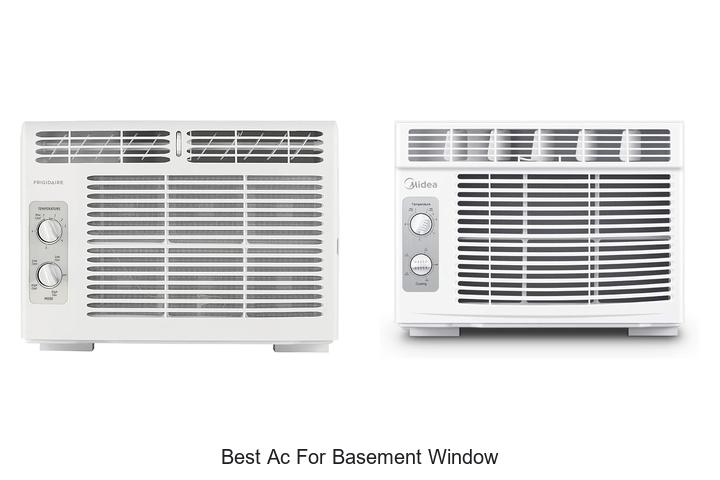
How Many Watts Does a Window AC Unit Use?
Are you tired of your summer electric bills soaring every time you turn on the window AC unit? Many people struggle with figuring out how much power these units actually use and how to make them more efficient. Understanding the wattage can help you save money and keep your home comfortable.
A typical window AC unit uses between 500 and 1,500 watts, depending on its size, efficiency, and cooling capacity. Smaller models for single rooms usually consume less power, while larger units for bigger spaces need more.
Factors like refrigerant type, insulation, and inverter technology also influence energy use. To understand how much power yours might need and how to optimize it, keep exploring the details below.
Key Takeaways
- Window AC units usually use between 500 and 1,500 watts, depending on their size and cooling power.
- Check the label or manual on your unit to find the exact wattage.
- To estimate how much energy it uses, convert BTUs to watts by dividing the BTU rating by 3.412.
- Inverter models tend to use less power because they adjust the compressor speed based on cooling needs.
- Making sure your unit is the right size and installed properly can help improve efficiency and lower overall wattage use.
How Much Power Does a Window AC Use?
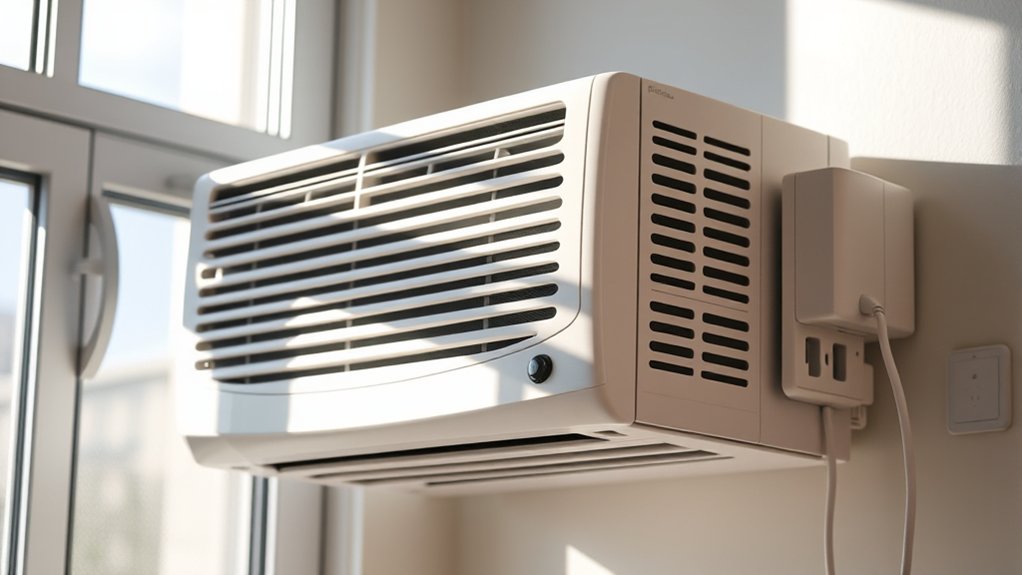
Understanding how much power a window AC unit consumes is important for planning your energy use and budget. Usually, these units use between 500 and 1,500 watts, depending on their size and cooling capacity. Smaller units for single rooms tend to use less power, while larger models for bigger spaces consume more.
Keep in mind that wattage directly affects your energy bill. Choosing an appropriately sized unit helps you keep costs in check. Noise levels also matter when considering power consumption, as quieter units often operate more efficiently thanks to better insulation or advanced technology.
The way your window AC interacts with indoor air circulation can also influence energy use. Well-maintained filters and proper placement improve efficiency. By understanding how indoor air quality, noise levels, and power use relate, you can pick a unit that balances comfort, quietness, and energy efficiency.
What Factors Affect Your Window AC’s Wattage?
Several key factors influence how much power your window AC unit uses. One major factor is the refrigerant type. Different refrigerants have varying efficiency levels, which can impact the unit’s energy consumption. For example, newer, eco-friendly refrigerants often require less power to operate effectively, reducing wattage needs.
Noise levels also play a role. Units that operate more quietly may use extra insulation or soundproofing, which can increase power use slightly. Conversely, louder units might prioritize airflow over energy efficiency, affecting wattage.
Furthermore, the size of your space and the cooling capacity needed influence power consumption. However, these are more about load than intrinsic wattage factors. Overall, understanding refrigerant types and noise levels helps you gauge how much energy your AC might consume and choose a unit that balances performance with efficiency.
How to Calculate Your Window AC’s Energy Consumption
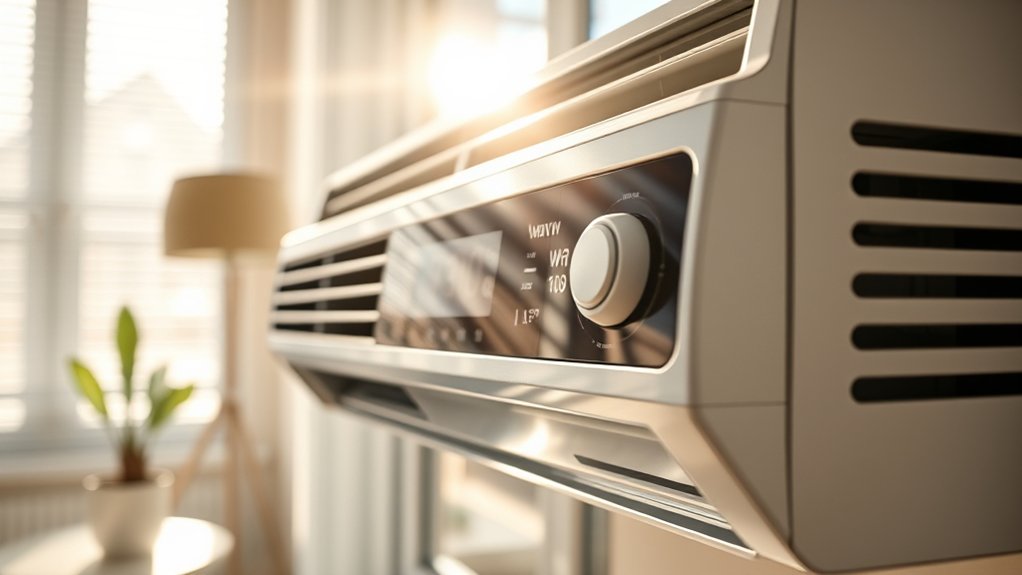
To figure out how much energy your window AC unit consumes, start by checking its wattage rating. You can find this on the unit’s label or in the user manual.
Once you have the wattage, determine how long you run the unit each day. Multiply the wattage (in kilowatts) by the hours of operation to get your daily energy use.
For example, a 1000-watt (1 kW) unit running for 8 hours uses 8 kWh. To save energy, try tips like setting the thermostat higher or using a timer.
Keep in mind, noise levels might go up if you run it longer, so pick a model that’s quieter if noise is a concern. Regular maintenance and good insulation can also help cut down on energy use.
Monitoring your usage helps you find ways to save money while staying comfortable. Knowing your AC’s energy consumption helps you make smarter choices for savings and noise management.
Comparing Wattage Across Different AC Sizes and Models
When comparing the wattage of different AC units, it’s important to recognize that larger models usually use more power. But there are exceptions based on efficiency and features.
Larger AC units typically use more power, but efficiency and features can make smaller models more energy-consuming.
A bigger unit with a high SEER rating might actually use less energy than a smaller, outdated model. To get an accurate comparison, check the power listed on the labels or specifications.
This helps you understand each unit’s energy consumption and find ways to save energy, like choosing a model with better insulation or adjustable settings.
Keep in mind that wattage isn’t the only thing that affects energy use. Features like inverter technology can lower power draw even in larger units.
Comparing wattage across models lets you make smarter choices that balance cooling capacity and energy efficiency.
Ultimately, understanding these differences helps you pick an AC that’s both effective and cost-efficient.
Why Energy Efficiency Ratings Matter for Window ACs
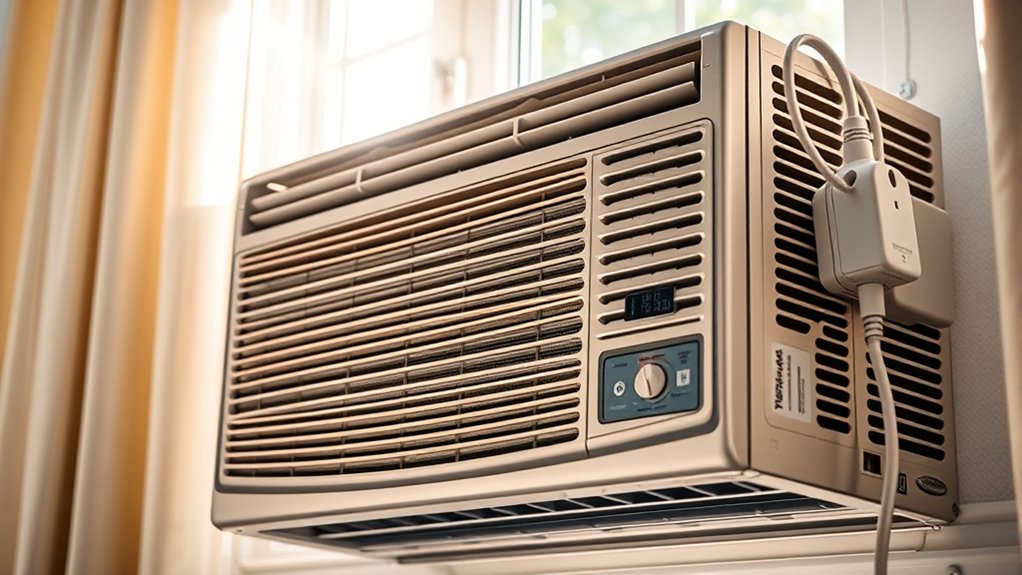
Understanding how much power an AC unit consumes is important, but just as crucial is knowing how efficiently it uses that energy. Energy efficiency ratings help you find models that save power and money, which means lower utility bills and less environmental impact.
An Energy Star-certified window AC unit, for example, meets strict efficiency standards. This ensures you get effective cooling without wasting unnecessary power. Higher ratings also reduce the risk of power surges that can damage your electrical system.
When shopping, keep these points in mind:
- The Energy Star label shows top efficiency standards
- A higher EER (Energy Efficiency Ratio) means less energy waste
- Efficient units lower the chance of power surges
- Better efficiency can lead to lower electricity bills
- Long-term savings often outweigh initial costs
Choosing an energy-efficient AC makes your cooling more sustainable and helps protect your home’s electrical system from spikes and surges. It’s a smart investment for comfort and saving money.
Tips to Reduce Power Usage and Lower Your Electricity Bills
Reducing your electricity bills involves more than just turning off appliances when not in use; it also requires adopting smart habits and making strategic choices. Historical trends show that energy-efficient practices have become more important as electricity costs go up.
Smart habits and strategic choices are key to lowering electricity bills and embracing energy-efficient living.
One effective tip is to set your window AC unit at the highest comfortable temperature. Avoid constant low settings that use more power. Using fans alongside your AC helps circulate air and lets you raise the thermostat without sacrificing comfort.
Regular maintenance like cleaning filters keeps your unit running efficiently. Future technologies, such as smart thermostats and energy monitoring systems, can help optimize usage and spot waste.
Insulating your home properly also minimizes cooling needs, reducing power consumption. Stay informed about these trends and adopt energy-conscious habits to lower your bills while supporting sustainable practices.
How to Find the Wattage on Your Window AC Unit
To find the wattage on your window AC unit, start by checking the label or specification sticker, usually found on the side or back of the unit. This sticker shows important details for understanding its power use.
Look for the “W” or “Watts” label, which indicates the maximum wattage draw. If you don’t see this info, check the user manual or visit the manufacturer’s website.
Understanding your AC’s wattage helps you manage energy better and save on costs. Here are some tips to locate the wattage:
- Check the side or back panel for a label or sticker
- Look inside the front panel or near the controls
- Consult the user manual if you have it
- Search online using your model number
- Use a plug-in power meter to measure real-time power usage
Knowing the wattage helps you make smarter decisions about energy savings and power measurement.
How Room Size and Insulation Impact Your AC’s Power Needs
The size of your room and its insulation directly affect how much power your AC needs to keep things cool. Larger rooms need more wattage to stay comfortable, and poorly insulated spaces lose cool air faster, which means higher energy use.
Proper window placement can make a big difference too. If your AC is near windows with direct sunlight or drafts, it has to work harder, increasing power consumption. Good insulation helps reduce heat transfer, easing the load on your unit.
Keep in mind that noise levels from the AC can also be influenced by room size and window placement. If your unit is installed in a way that amplifies sound or exposes it to outside noise, it can get louder.
Making sure your window unit is well-positioned and your room is properly insulated helps your AC run efficiently. This saves electricity and reduces wear and tear on the unit.
Planning ahead like this makes a noticeable difference in how much power you use and how comfortable your space feels.
Are Inverter Window AC Units More Energy-Efficient?
Inverter window AC units are designed to adjust their compressor speed based on the cooling needs, making them more energy-efficient than traditional models. By controlling power use, they consume less electricity while keeping a steady temperature.
Inverter window ACs optimize compressor speed for energy savings and consistent cooling.
This efficiency can significantly lower your energy bills, especially if you pair your AC with smart thermostats that optimize operation based on your schedule and preferences. Inverter units also support integrating renewable energy sources, helping reduce your carbon footprint.
Consider these benefits:
- Lower energy consumption compared to non-inverter models
- Smoother temperature regulation for better comfort
- Compatibility with smart thermostats for remote control
- Support for renewable energy systems like solar panels
- Quieter operation and longer compressor life
Choosing an inverter window AC unit saves you money and promotes eco-friendly practices. It’s a smarter, more sustainable way to cool your space.
The Link Between BTUs and Wattage in Window Air Conditioners
Knowing how BTUs connect to wattage can really help you get a better idea of how much energy your window AC might use. It’s not just about the cooling power—other things like efficiency and design come into play too, which means two units with the same BTUs might actually use different amounts of electricity.
Getting a handle on this relationship can make it easier for you to pick an AC that strikes the right balance between cooling ability and energy efficiency. That way, you’re not only keeping your space comfortable but also saving on your energy bills.
BTU and Watt Conversion
Converting BTUs to watts helps you understand how much power a window AC unit uses. BTUs measure cooling capacity, while watts show energy consumption. So, converting between them is key for assessing efficiency.
To convert BTUs to watts, simply divide the BTU number by 3.412. For example, a 12,000 BTU unit uses about 3,517 watts. This helps you pick a unit that’s powerful enough without wasting energy.
Knowing the wattage also affects your temperature control choices, making sure your AC cools effectively. It can even influence noise levels because higher wattage units tend to run louder.
Keep in mind that a higher BTU doesn’t always mean better performance if the wattage isn’t right for your space. Understanding this link helps you find a unit that balances power, noise, and energy use efficiently.
Power Consumption Factors
Have you ever wondered why two window AC units with the same BTU rating might use different amounts of power? Several factors influence their actual wattage.
First, insulation quality and room size affect how hard the unit needs to work. A well-insulated space requires less energy. The presence of smart thermostats can optimize operation, reducing unnecessary energy use.
Moreover, if you use renewable energy sources, your unit’s power consumption impacts your overall energy footprint. Other factors include compressor efficiency, age, and design.
Modern units often have variable-speed compressors, which adjust power based on cooling needs, saving energy. Understanding these factors helps you choose a unit that balances cooling capacity with energy efficiency, ultimately saving you money and reducing environmental impact.
Efficiency and Energy Use
Ever wondered how the cooling power of a window air conditioner relates to its energy consumption? The key is understanding the link between BTUs and wattage. Higher BTUs usually mean more power, but efficiency can vary.
Look for units with a good Energy Efficiency Ratio (EER) to save on energy costs. Keep in mind, noise levels can impact your comfort, especially if the unit isn’t efficient.
Proper installation tips, like sealing gaps and choosing the right size, help optimize performance and reduce unnecessary energy use. An efficient AC unit uses less wattage for the same cooling, lowering your energy bill.
To maximize efficiency, consider units with adjustable fan speeds and smart thermostats for precise control. Proper sizing and installation also influence noise levels and energy use.
Frequently Asked Questions
How Does Ambient Temperature Influence Window AC Power Consumption?
Ambient temperature greatly impacts your window AC unit’s power consumption because it affects how well the unit can regulate temperature. When it gets hotter outside, your AC has to work harder to cool the space, which uses more power and makes it less efficient.
On the other hand, cooler outside temperatures mean less strain on the unit, helping it run more efficiently and saving energy. To get the most out of your AC, keep windows and doors sealed to prevent warm air from sneaking in.
Using a thermostat can also help because it allows you to set and optimize cooling cycles based on the ambient temperature. This way, your AC works just enough to keep things comfortable without wasting energy.
Can Running Multiple Window Units Increase Overall Energy Costs Significantly?
Running multiple window units can really bump up your overall energy costs, especially if they’re all running at full blast.
To save energy, try setting thermostats a bit higher, using fans, and sealing any leaks around your windows.
Comparing how much power different units use can help you pick more efficient ones.
Upgrading to Energy Star models or using fewer units on cooler days can also help cut costs and boost your energy savings.
Are Older Window AC Models Less Energy-Efficient Than Newer Ones?
Older window AC models are generally less energy-efficient than newer ones, meaning they use more power to cool the same space.
To save energy, try simple tips like setting your thermostats higher and sealing any leaks around the unit.
Think about eco-friendly options, like units with ENERGY STAR ratings, which consume less electricity.
Upgrading to a modern model can help cut your costs and also reduce your environmental impact.
How Do Maintenance and Cleanliness Affect AC Energy Use?
Regular maintenance can cut your AC’s energy use by up to 15%. When you clean or replace filters regularly, your unit runs more efficiently, which means less strain and lower power use.
Addressing refrigerant leaks quickly also helps. It prevents the system from working harder than needed, saving energy in the process.
Staying on top of maintenance keeps your AC running smoothly, lowers your energy bills, and makes your cooling more cost-effective and eco-friendly. Plus, it helps extend your unit’s lifespan.
What Are the Signs That My Window AC Is Consuming Excessive Power?
If your window AC is using excessive power, you’ll notice higher energy bills and possible noise level changes. Look for signs like the unit running constantly, strange noises, or inadequate cooling.
To save energy, try cleaning filters regularly and sealing leaks around the window. These simple steps can make a big difference.
Raised noise levels might also mean there’s a motor issue or debris inside. Addressing these problems quickly will help keep your AC running efficiently and reduce power consumption.
Conclusion
By balancing your budget and your room’s needs, you can beat the heat without breaking the bank. Understanding wattage, room size, and efficiency ratings helps you make smarter, savvier choices.
So, stay savvy, select the right size, and seek energy-efficient options to keep cool cost-effectively. With a little knowledge about how many watts a window AC unit uses, you’ll breeze through scorching summers while saving energy and expenses.
Enjoy cool comfort that’s just right for your space—and keep your energy bills in check.