How Do Window AC Units Work to Cool Air?
Feeling hot and uncomfortable in your own space? You’re not alone—many people struggle with keeping cool during those sweltering days. Luckily, window AC units are a popular solution to beat the heat and stay comfortable.
Window AC units cool your air by circulating refrigerant through a cycle that absorbs heat from inside your room and releases it outside. The refrigerant absorbs warm air, turns into a gas, and is compressed by the compressor.
It then passes through the condenser where heat is discarded outside, and the refrigerant condenses back into a liquid. Proper airflow and maintenance help the process run smoothly.
To learn more, you’ll find out how each part works together to keep your space comfortable.
Key Takeaways
- Window AC units pull warm indoor air over cold refrigerant coils to absorb heat and cool the air.
- The refrigerant circulates through the system, changing from liquid to gas as it absorbs heat from indoor air.
- The outdoor condenser releases the absorbed heat outside, cooling the refrigerant back into liquid form.
- The compressor increases refrigerant pressure, helping the system transfer heat more efficiently.
- Proper airflow and regular maintenance keep the system working well, ensuring effective heat removal and good cooling performance.
How Do Window AC Units Cool Your Room?
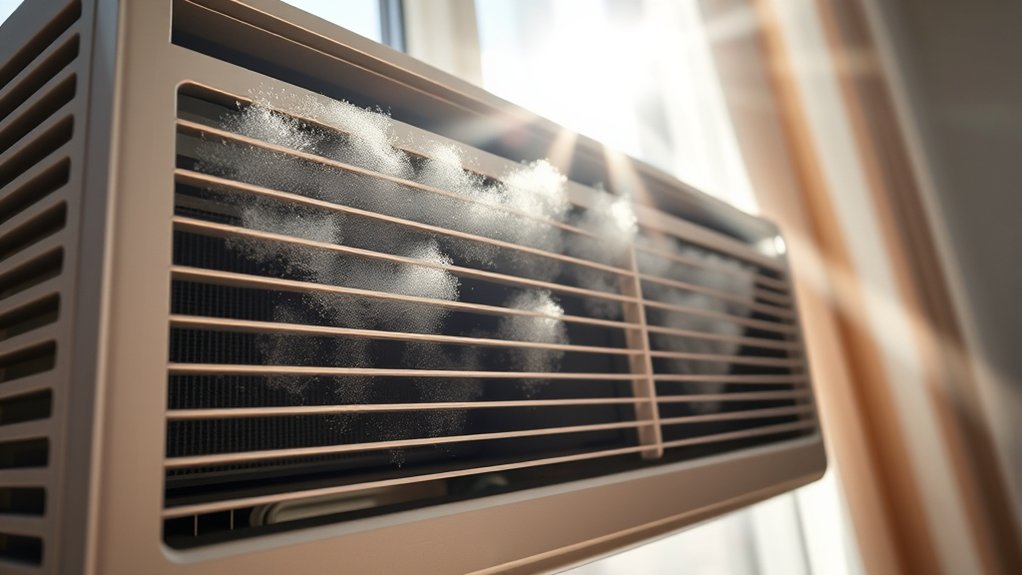
Have you ever wondered how a window AC unit keeps your room cool? It works by pulling warm air from inside, passing it over cold coils filled with refrigerant.
As the refrigerant absorbs heat, it transforms into a gas, which then flows to the outdoor unit for cooling down. This cycle repeats, continuously removing heat from your room.
While this process effectively lowers the temperature, it also impacts energy consumption. A more powerful AC may cool faster but could use more electricity, increasing your energy bills.
A more powerful AC cools faster but may raise energy costs.
Noise levels can vary between units; some operate quietly, while others produce noticeable sounds during operation. If noise bothers you, look for models with sound-dampening features.
Balancing energy consumption and noise levels helps you choose an AC that’s efficient and comfortable, ensuring your room stays cool without excessive cost or disturbance.
What Are the Main Parts of a Window AC and How Do They Work?
Your window AC unit is made up of a few main parts that all work together to keep your room cool. The compressor and condenser are responsible for releasing the heat outside, so your space stays comfortable. Then, inside, you have the evaporator and expansion valve, which work to cool the air inside your room.
Knowing how these parts work together can help you understand how your AC keeps things nice and chilly. It’s pretty neat how everything connects to make your space comfortable!
Compressor and Condenser Function
At the heart of a window AC unit, the compressor and condenser work together to remove heat from the indoor air. The compressor compresses refrigerant, turning it into a high-pressure gas that flows to the condenser.
There, the refrigerant releases heat to the outside air, aided by the condenser coil. Proper window installation helps guarantee efficient operation and noise reduction, making the unit quieter and more effective.
The compressor’s vibration can cause noise, but good installation minimizes this. The condenser dissipates heat, maintaining the cooling cycle.
- Efficient window installation reduces noise and improves cooling
- The compressor transforms refrigerant into a high-pressure gas
- The condenser releases heat outside, completing the cycle
Evaporator and Expansion Valve
After the refrigerant releases heat outside through the condenser, it moves into the evaporator coil inside your window AC unit. Here, the evaporator absorbs heat from the indoor air, cooling it down.
The expansion valve plays an essential role; it controls the flow of refrigerant into the evaporator, reducing pressure and allowing the refrigerant to evaporate into cold vapor. This process absorbs heat from the air, lowering the room’s temperature.
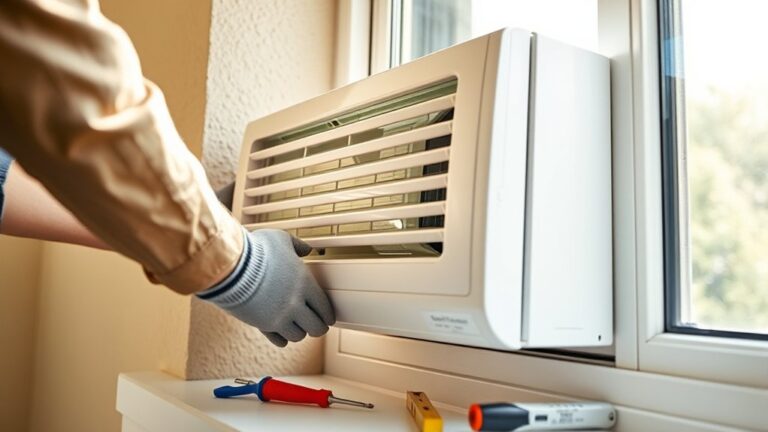
During installation, you’ll secure the unit within the window frame, ensuring proper positioning of the evaporator and expansion valve. This setup allows the refrigerant to circulate efficiently, maintaining a continuous cooling cycle.
Understanding these parts helps you appreciate how your window AC effectively cools your space.
How Does the Refrigeration Cycle Remove Heat From Your Indoor Air?
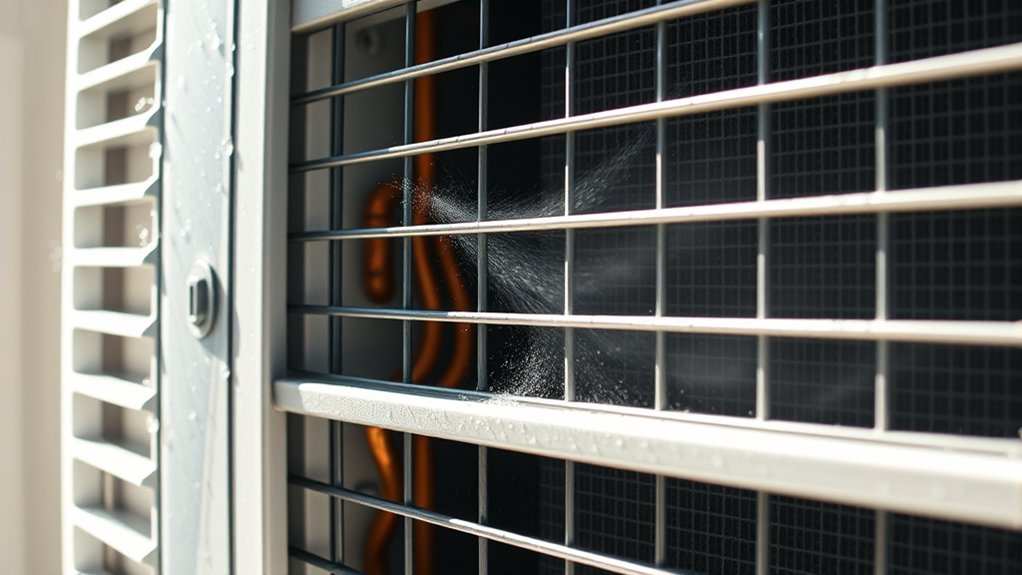
Ever wondered how a window AC unit actually cools the air inside your room? The refrigeration cycle removes heat by circulating refrigerant through its components.
When the refrigerant absorbs heat from the indoor air, it transforms from a low-pressure liquid into a high-pressure gas. This process pulls heat away from the air and improves indoor air quality.
Key points to remember include the refrigerant’s ability to absorb and release heat efficiently, the importance of proper maintenance for peak cooling, and how reducing energy consumption tips can lower costs.
As the refrigerant releases heat outside, it condenses back into a liquid, ready to repeat the cycle. This continuous process keeps your room cool.
Properly functioning parts and good airflow are essential for effective heat removal. This ultimately boosts indoor air quality by eliminating excess heat and humidity.
What Does the Compressor Do in Cooling Your Room?
The compressor is really the heart of your air conditioning system when it comes to cooling your room. Basically, it compresses the refrigerant gas, turning it into a hot, high-pressure liquid. This process is crucial because it helps move the refrigerant through the system.
It also keeps everything running smoothly by regulating the pressure levels. Without the compressor doing its job, the heat transfer process wouldn’t happen properly, and your room just wouldn’t get cool. So, in simple terms, the compressor is what makes the cooling possible!
Compresses Refrigerant Gas
The compressor is the heart of your window AC unit’s cooling process. It actively transforms refrigerant gas into a high-pressure, high-temperature state.
It works by compressing the refrigerant, which increases its pressure and temperature. This helps the refrigerant flow through the system more effectively.
This process is crucial for heat transfer from inside your room to the outside. The compressor’s role ensures the refrigerant moves efficiently and keeps your cooling steady.
Key points to remember:
- It controls refrigerant flow to keep the system running smoothly
- It increases pressure to prepare the refrigerant for heat exchange
- Proper pressure regulation is essential for effective cooling performance
Regulates Pressure Levels
Because the compressor controls the pressure within the refrigerant system, it plays a crucial role in keeping the right conditions for cooling. This helps ensure your room stays comfortable. It manages pressure by compressing the refrigerant, which raises its pressure and temperature.
This process helps control how the refrigerant flows, allowing it to move smoothly through the system. If the pressure gets too high or too low, the system won’t cool effectively. The compressor adjusts pressure levels to keep the refrigerant in the perfect state for heat absorption and release.
Here’s a quick look at how pressure regulation impacts cooling:
| Function | Effect on Refrigerant | Result for Your Room |
|---|---|---|
| Compresses refrigerant | Increases pressure | Efficient cooling |
| Maintains pressure | Ensures proper flow | Consistent temperature |
| Regulates pressure | Prevents system damage | Reliable operation |
| Controls refrigerant flow | Enhances heat transfer | Comfortably cools |
Facilitates Heat Transfer
A compressor plays an essential role in facilitating heat transfer within your window AC unit. It compresses the refrigerant, turning it into a hot, high-pressure gas that releases heat as it moves through the condenser coils outside your window frame.
This process is critical during installation, making sure the refrigerant flows correctly and efficiently transfers heat from your room to the outside. Proper placement of the unit within the window frame helps maximize heat exchange.
To optimize cooling, keep the outdoor unit clear of debris for better heat dissipation. Make sure the installation is properly insulated to prevent leaks. Regularly check the refrigerant levels to ensure efficient heat transfer.
These steps help the compressor effectively transfer heat, keeping your room cool and comfortable.
How Does the Condenser Help Discard Heat Outside?
When your window AC runs, the condenser plays a key role in getting rid of heat outside. Its main job is to dissipate heat, meaning it transfers the heat from inside your space to the outside environment.
The condenser has coils and a fan working together to release this heat efficiently. As the refrigerant moves through the coils, it lets go of the heat it absorbed from inside. This cools the refrigerant down in the process.
The fan blows air over the coils, helping carry the heat away from the condenser and dispersing it outside. This process makes sure the refrigerant is ready to soak up more heat when it cycles back inside.
Without the condenser’s effective heat dissipation, your AC wouldn’t keep your indoor space cool. Instead, heat would build up, making the system less efficient and possibly causing it to overheat.
How Does the Evaporator Coil Absorb Heat and Moisture?
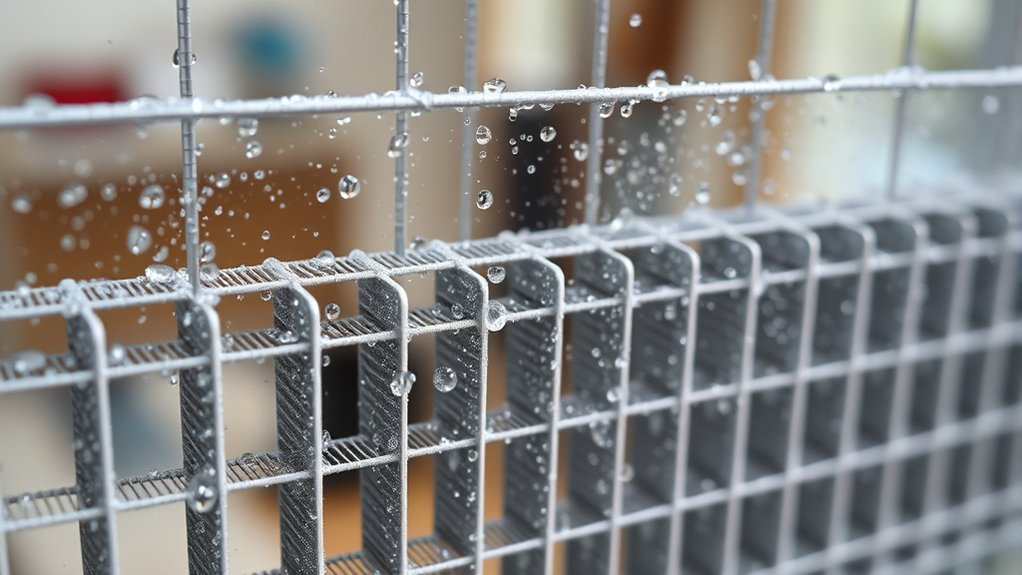
As the refrigerant flows through the evaporator coil inside your window AC, it absorbs heat from the surrounding air. This process cools the air that blows back into your room. The coil is filled with low-pressure, cold refrigerant that turns into a vapor as it absorbs heat.
This heat absorption helps lower the temperature of the air passing over the coil. At the same time, moisture in the air condenses on the coil’s surface, removing humidity from your room. This moisture removal makes the air feel cooler and more comfortable.
The evaporator coil acts as a heat sink, drawing heat away from the air. Moisture condenses on the coil, helping dehumidify the room. The refrigerant’s heat absorption cools the air efficiently, providing relief on hot days.
What Is the Role of the Expansion Valve in Cooling?
The expansion valve is a pretty important part of the cooling process. It basically controls how much refrigerant gets into the evaporator coil, making sure everything runs smoothly.
It also manages the pressure of the refrigerant, so it’s at just the right level to absorb heat effectively. When it does its job well, your air conditioning system works more efficiently, helping keep your space cool and comfortable.
Regulates Refrigerant Flow
The expansion valve plays an essential role in controlling the flow of refrigerant within your window AC unit. It ensures the right amount of refrigerant reaches the evaporator for effective cooling.
Proper flow control allows the refrigerant to expand from high pressure to low pressure, which is vital for absorbing heat from the air. If too much refrigerant passes through, efficiency drops; too little, and cooling suffers.
The valve responds to temperature and pressure changes to maintain ideal refrigerant regulation. This helps keep your AC running smoothly and efficiently.
It also maintains consistent cooling performance, prevents compressor overload, and guarantees efficient energy use.
Controls Pressure Levels
Ever wonder how your window AC keeps your room cool by maintaining the right pressure? It all comes down to pressure regulation, which is crucial for controlling the refrigerant.
The expansion valve is a key player here. It controls how much refrigerant enters the evaporator. As the refrigerant passes through, its pressure and temperature drop, turning into a cold, low-pressure vapor.
This process lets the refrigerant absorb heat from the indoor air efficiently. Without proper pressure regulation, it wouldn’t evaporate at the right rate, which would reduce cooling effectiveness.
The precise control of the expansion valve ensures the refrigerant stays at ideal pressure levels. This helps your AC deliver consistent, effective cooling and protects the system from damage caused by pressure fluctuations.
Enhances Cooling Efficiency
By precisely controlling the flow of refrigerant into the evaporator, the expansion valve directly boosts your window AC’s cooling efficiency. It ensures the refrigerant enters as a low-pressure, cold vapor, which helps maximize heat absorption from the air.
This regulation prevents overcooling or inefficient cooling, saving energy and reducing noise caused by compressor strain. To improve efficiency even more, consider simple tips like maintaining proper insulation and cleaning filters regularly.
Proper refrigerant flow also helps minimize noise, making your unit quieter during operation. The key points include:
- Optimized refrigerant flow for energy savings
- Reduced compressor strain and noise
- Better cooling performance and consistency
This balance enhances overall cooling and extends your AC’s lifespan.
How Does Air Circulation Improve Cooling Efficiency?
Good air circulation is key to making your window AC work better. When air moves smoothly around the room, it helps spread cooled air evenly, so you don’t get hot spots or stagnant areas.
Good air circulation ensures even cooling and prevents hot spots in your room.
Better airflow ensures the cooled air reaches every corner, making the cooling faster and more consistent. It also helps get rid of warm, stale air that can hang around and slow things down.
By promoting good airflow, your AC doesn’t have to strain as much to keep the temperature comfortable. This can lower energy bills and help the unit last longer.
Simple things like using fans, keeping vents clear, and opening interior doors can make a big difference. Overall, good air circulation boosts your AC’s ability to cool effectively and keeps the environment more comfortable.
Tips to Use Your Window AC More Energy-Efficiently
To get the most energy-efficient performance from your window AC, set the thermostat to the highest comfortable temperature instead of the lowest. This helps reduce your unit’s workload, saving energy and lowering your electric bill.
Keep blinds or curtains closed during peak sunlight hours to prevent heat from building up inside. Regularly clean or replace filters because dirty filters make the unit work harder and use more power.
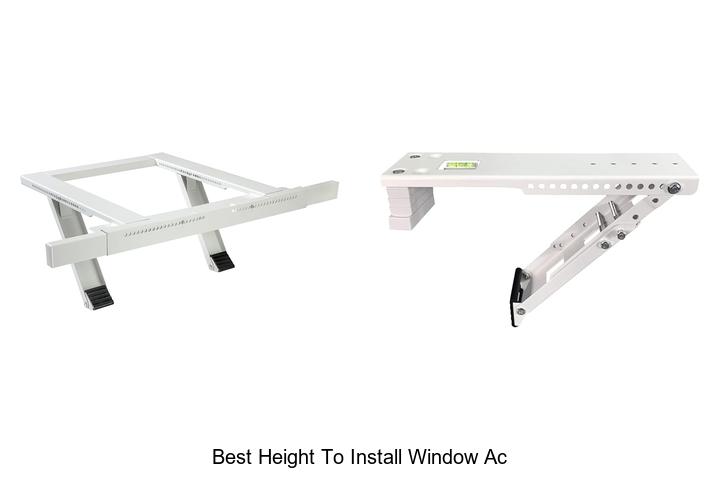
Make sure your AC is installed correctly—secure mounting and sealing around the unit stop cool air from leaking out and wasting energy.
Here are some easy energy-saving tips: use a programmable timer to turn off the AC when you’re not home or sleeping. Keep vents unobstructed for better airflow. Seal gaps around windows to keep warm air from sneaking in.
Following these tips helps your AC run more efficiently, last longer, and cut down on energy costs. Proper installation and regular maintenance are key to keeping your unit operating at its best.
Troubleshooting Common Window AC Problems
When your window AC isn’t cooling effectively or making strange noises, troubleshooting can help identify and fix common issues quickly. Start by checking the air filter; if it’s dirty or clogged, airflow drops, and cooling becomes less efficient. Regularly cleaning or replacing the filter keeps your unit running smoothly.
Next, look at the remote control. Make sure the batteries are fresh and you’re using the right settings. Sometimes, the remote might not communicate properly with the unit, causing operational problems. If that’s the case, try replacing the batteries or resetting the remote.
If your AC is making unusual noises, check for loose parts or debris around the fan blades. Also, ensure nothing is blocking the unit, like furniture or curtains, which can restrict airflow. Clearing these obstructions helps the AC work better.
If it still isn’t cooling well, try resetting the unit or look at the user manual for troubleshooting tips. Fixing these common issues can restore your AC’s performance and help it last longer.
Frequently Asked Questions
How Do Window AC Units Affect Indoor Humidity Levels?
Window AC units affect indoor humidity levels by removing excess moisture through their dehumidification process. As the unit cools the air, it also condenses water vapor, reducing humidity for better comfort.
This humidity control makes your space feel cooler and less sticky. By continuously dehumidifying, the AC helps maintain a balanced indoor environment.
It also prevents mold growth and dampness, especially in humid climates. So, your home stays more comfortable and healthier overall.
Can Window AC Units Cool Multiple Rooms Simultaneously?
While window AC units usually cool just one room efficiently, some models with multiple vents can handle two or more rooms. However, they usually can’t cool large spaces simultaneously.
For larger areas, you might want to think about installing multiple units or a central cooling system. This approach helps keep everything comfortable and energy-efficient.
Proper placement and sealing are key. They prevent energy loss and help ensure each room gets the right amount of cooling.
How Loud Are Typical Window AC Units During Operation?
Typical window AC units produce noise levels between 50 and 60 decibels, which is about the same as a normal conversation. The sound insulation of your window frame and wall can affect how loud the unit feels inside your room.
You might notice some vibration or humming, especially when using higher settings. To keep things quieter, look for units with quiet modes or extra sound insulation.
This can help create a more comfortable environment while your AC is running.
What Maintenance Is Needed to Keep a Window AC Functioning Efficiently?
Think of your window AC as a well-tuned engine that needs regular care. You should replace the filter every month or two to keep airflow steady. Also, clean the outdoor coil to prevent dirt buildup that can reduce efficiency.
Check for leaks, clear the drain pan, and make sure the fan blades spin freely. These simple steps help keep your unit running smoothly and cool your space without breaking a sweat.
Are There Environmental Impacts Associated With Refrigerants Used in Window ACS?
You should know that refrigerants in window AC units can have environmental impacts, especially if leaks happen, releasing harmful chemicals into the air.
Traditional refrigerants like CFCs and HCFCs contribute to ozone depletion and global warming.
Luckily, eco-friendly options like hydrofluoroolefins (HFOs) are available, which help reduce environmental harm.
Regular maintenance is key to preventing refrigerant leaks and keeping your unit efficient and eco-conscious.
Conclusion
Now that you understand how your window AC unit works to cool your room, you’re armed with knowledge that could outsmart even the most stubborn heat waves.
By keeping your unit well-maintained and using it wisely, you can ensure it runs smoothly and efficiently. This way, your space becomes an oasis of cool comfort, as refreshing as a mountain breeze.
Stay savvy, stay cool, and let your AC do the heavy lifting in the battle against the summer heat.