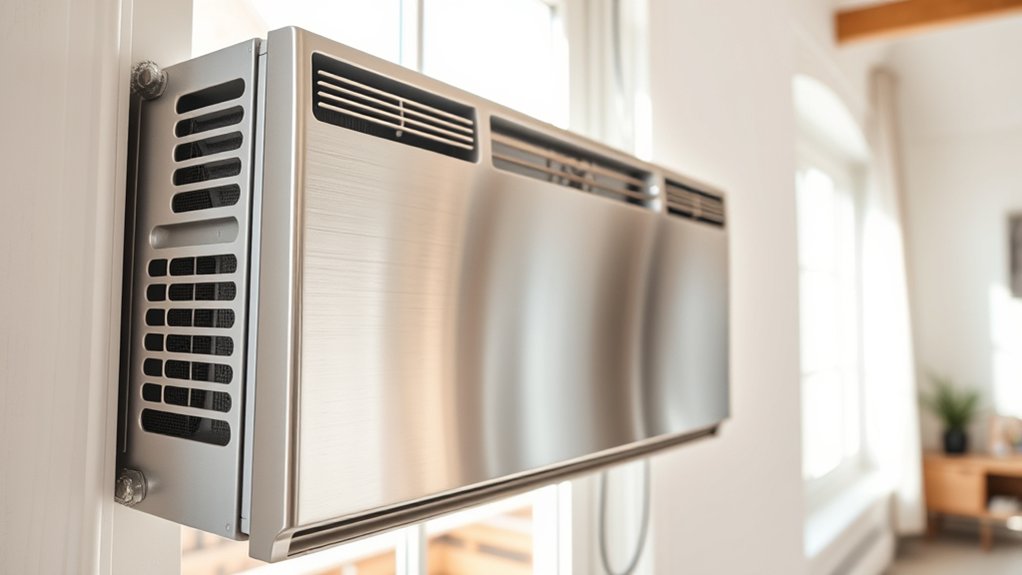
Essential Tips for Safely Using Window AC Units
Many people struggle with keeping their window AC units safe and efficient during hot days. It can be tricky to ensure everything is installed correctly and runs smoothly without any hazards. You’re not alone—safety and performance are top concerns for many homeowners.
To use your window AC safely, guarantee proper installation with sturdy mounting and seal gaps to prevent air leaks. Regularly clean or replace filters, keep vents unblocked, and avoid overextending the window. Reinforce the window frame and use safety brackets to prevent accidents.
Check electrical cords for damage, use grounded outlets, and keep water drainage clear to avoid hazards. Following these tips helps keep your unit efficient and safe—continue with these guidelines to uncover more expert safety advice.
Key Takeaways
- Properly install the unit with secure brackets, making sure it stays level and tightly fastened in the window frame.
- Regularly check and clean filters, drain pans, and vents to keep everything safe and working efficiently.
- Keep the area around the unit free of debris and obstructions to avoid airflow problems and potential hazards.
- Use grounded outlets and steer clear of extension cords to reduce electrical risks.
- Before storing the unit for the season, turn it off, drain it, and give it a thorough cleaning to prevent mold and damage.
How to Use Your Window AC Safely
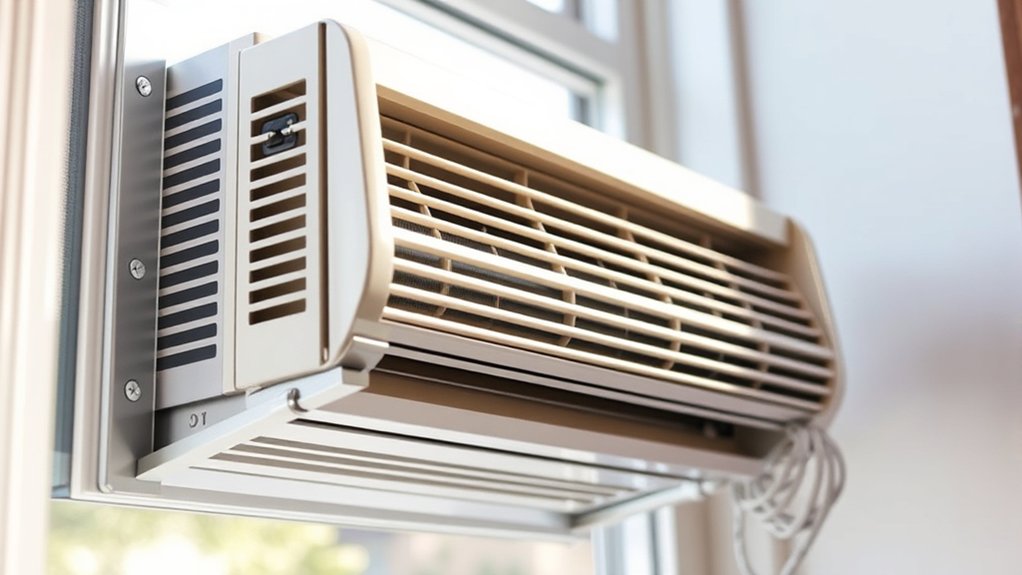
To guarantee your window AC unit operates safely and efficiently, it’s crucial to follow proper usage guidelines. Start by setting the temperature to a comfortable yet energy-efficient level, around 78°F, when you’re home. This helps reduce energy consumption and lowers your utility bills.
Keep the unit clean and regularly replace or clean filters to maintain optimal airflow and prevent noise issues. Proper insulation around the window helps minimize drafts and noise, promoting better cooling and quieter operation.
Avoid blocking the air intake or exhaust vents, as this can strain the system and reduce efficiency. Use the fan mode when full cooling isn’t necessary to save energy.
Furthermore, keep curtains or blinds closed during peak sunlight hours to help the unit cool more effectively without overworking. These simple steps help your AC run smoothly, conserve energy, and operate quietly, making your space more comfortable and cost-effective.
How to Properly Install Your Window AC Unit
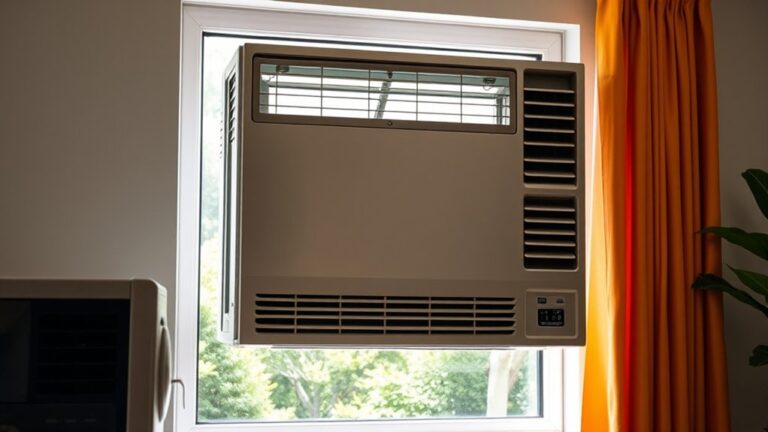
Installing your window AC unit correctly is key to ensuring safety, efficiency, and good cooling. First, check the installation instructions provided by the manufacturer. Make sure your window frame is sturdy enough to hold the weight of the unit and that the sash can securely support it.
Before installing, close and lock the window to prevent any gaps. If the manufacturer recommends it, use a mounting bracket or support arm for extra stability. Seal any gaps with foam or weatherstripping to keep air from leaking in or out.
Always follow safety precautions, like unplugging the unit during installation and wearing protective gloves. Make sure the unit is level to prevent leaks and to help with proper drainage. Double-check that all screws and brackets are tight to avoid the AC falling down.
A proper install not only boosts performance but also makes it safer. Take your time to follow these steps carefully for the best results.
How to Recognize and Fix Common Safety Hazards
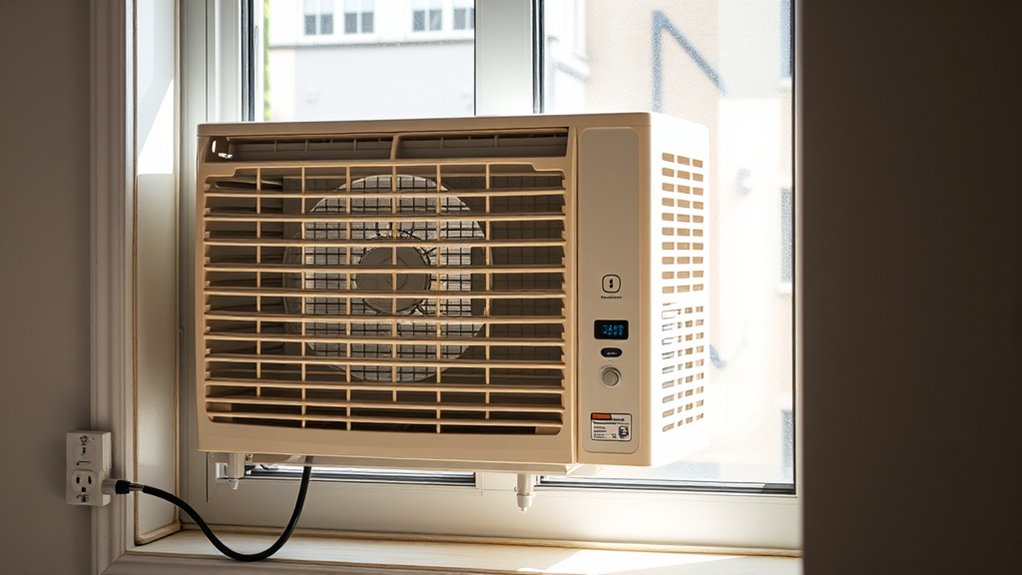
Recognizing and fixing common safety hazards with your window AC unit is essential to prevent accidents and ensure safe operation. Start by inspecting the area for electrical issues, like frayed cords or exposed wires, which can pose shock risks.
Always wear safety gear, such as gloves and safety glasses, when inspecting or repairing your unit. This helps protect you from sharp edges or electrical shocks. Hazard identification involves checking for loose mounting brackets that could cause the unit to fall, and making sure proper drainage is in place to prevent water leaks that could lead to mold or electrical shorts.
Keep the area clear of debris or obstructions that might interfere with airflow or cause tripping hazards. Regularly test the power cord and plug for signs of damage. Fix issues promptly, either by tightening loose parts or calling a professional if needed.
Staying vigilant helps you maintain a safe environment and prolongs your AC unit’s lifespan.
How to Secure Your Window AC to Prevent Accidents
Ensuring your window AC unit is securely mounted is essential for preventing accidents. Proper window security involves using sturdy brackets or mounting kits designed for your AC model.
Check that the unit is level and tightly fastened to avoid wobbling or slipping. Reinforce the window frame if needed, using strong support braces to prevent accidental falls.
Avoid overextending the window or placing the unit in a weak or damaged frame, which can compromise stability. Regularly inspect mounting hardware and tighten any loose screws or brackets.
Using additional safety devices, like window locks or safety bars, adds extra protection against accidental falls. Remember, a secure installation not only protects your household but also prevents injuries or property damage.
Take your time during installation, follow manufacturer instructions carefully, and consider professional assistance if you’re unsure. Properly securing your window AC ensures safety and peace of mind year-round.
Key Maintenance Tasks for Safe and Efficient Operation
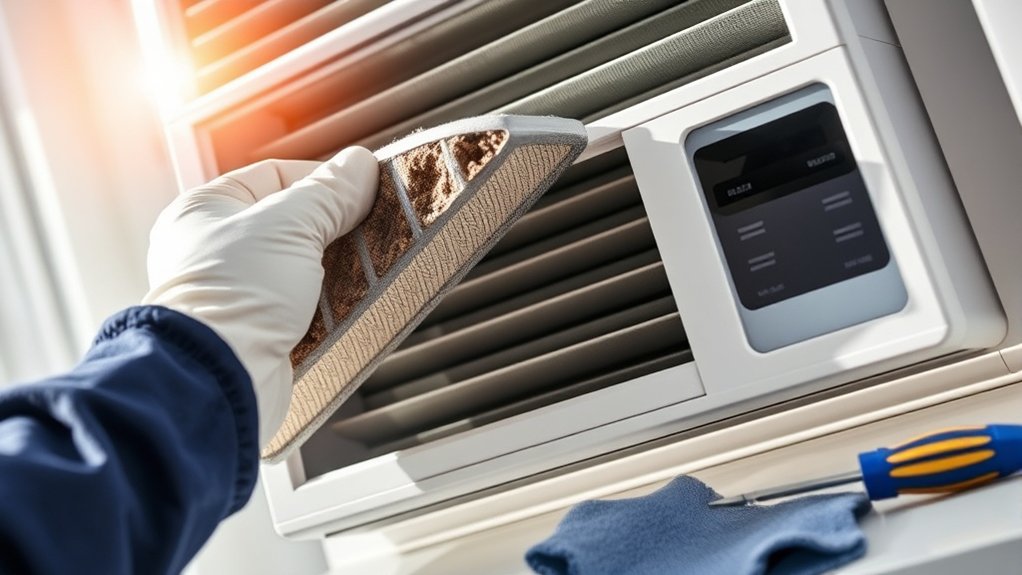
To keep your window AC running safely and efficiently, it’s important to stay on top of a few key maintenance tasks. For example, make sure to regularly clean your filters—that way, air can flow freely and your unit doesn’t have to work as hard.
Also, don’t forget to inspect the power cords for any damage or fraying. It’s a simple step, but it can prevent potential electrical issues down the line. And while you’re at it, check for any obstructions around the unit that might block airflow. Removing those ensures your AC can cool your space effectively and safely.
Regular Filter Cleaning
Regular filter cleaning is essential for keeping your window AC unit running smoothly and avoiding potential problems. The air filter traps dust, dirt, and debris that can clog the system.
When the filter gets dirty, airflow drops, making the unit work harder and cooling less effectively. To clean it, turn off your AC and remove the filter. Gently vacuum or wash it with mild soap and water, then let it dry completely before putting it back.
Regular cleaning helps your unit run better and keeps the air quality high. Aim to do this at least once a month during peak use. Keeping your air filter clean not only improves cooling but also helps your AC last longer.
Inspect Power Cords
After cleaning your filter, it’s important to check the power cords regularly to prevent electrical hazards and keep your unit running safely. Proper cord inspection helps spot potential wiring issues before they cause problems.
Look for frayed, cracked, or worn insulation on the cord. Check for exposed wires or loose connections at the plug and where the cord enters the unit.
Make sure the cord isn’t pinched or damaged by furniture or sharp edges. Test the cord’s flexibility—if it feels stiff or brittle, it’s a sign it’s deteriorating.
Regularly inspecting your AC’s power cords keeps your unit safe and working efficiently. Replace damaged cords immediately for peace of mind and to prevent electrical fires or malfunctions.
Clear Airflow Obstructions
Ensuring unobstructed airflow is essential for your window AC unit’s safety and efficiency. Airflow blockage can cause your unit to work harder, increasing energy use and risking overheating.
Regularly check that nothing is blocking the vents or the outside grille. Keep the ventilation clearance around the unit free of debris, leaves, or furniture.
Clear any obstructions from the filter and grille to maintain proper airflow. If airflow is restricted, your AC won’t cool effectively, and components may wear out faster.
Make it a habit to inspect the area around your unit periodically, especially during heavy use. Proper ventilation clearance ensures smooth operation, better cooling performance, and extends the lifespan of your window AC.
Best Practices for Operating During Extreme Heat
During extreme heat waves, operating your window AC unit efficiently and safely becomes even more important. To get the best performance and keep noise levels down, follow these simple tips:
- Set the thermostat properly. Keep it at a comfortable yet energy-efficient temperature, around 78°F. This helps reduce strain on the unit and keeps it quieter.
- Use fan mode when possible. This helps circulate air without constantly running the compressor, saving energy and lowering noise.
- Ensure proper insulation. Seal gaps around the window unit to stop heat from coming in. Better insulation boosts cooling efficiency and cuts energy costs.
- Limit opening windows. Keep windows closed during the hottest parts of the day to prevent warm air from entering. This reduces the load on your AC and keeps outside noise out.
Following these tips helps your AC work more efficiently, keeps noise to a minimum, and ensures safe, effective cooling during extreme heat.
Electrical Safety Tips for Your Window AC
To keep your window AC unit running safely and avoid electrical hazards, it’s important to pay attention to its wiring and power connections. Regularly check the power cord for signs of damage, like fraying or exposed wires, and replace it right away if needed.
Make sure the unit is plugged into a grounded outlet that can handle its electrical load. Avoid using extension cords, as they can increase the risk of electrical hazards and fires.
Plug your AC into a grounded outlet and avoid extension cords to prevent electrical hazards and fires.
Keep the area around the unit clear of clutter to prevent overheating and ensure proper airflow. Never tamper with the internal wiring or try to fix it yourself—always hire a qualified technician.
Using the correct voltage and avoiding overloads can help prevent electrical fires. By following these fire prevention tips, you reduce the risk of electrical hazards and keep your window AC safe and reliable all season long.
Managing Water Drainage to Prevent Safety Hazards
Water drainage is a key part of keeping your window air conditioner safe to use. If not managed properly, it can cause water damage or mold growth. Standing water around your unit can harm your window frame or lead to mold that’s harmful to breathe.
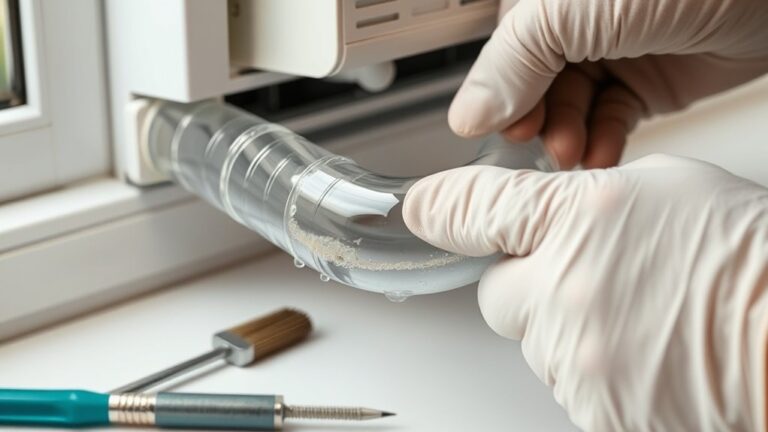
To keep things running smoothly, check the drain pan regularly for clogs or cracks. Make sure the drain hole is clear of debris so water can flow out easily. You can also use a wet/dry vacuum to remove any standing water around the unit.
Finally, ensure the drainage path outside your window isn’t blocked. It should direct water away from your home to prevent any potential damage or safety issues.
When and How to Schedule Professional Inspections and Repairs
Scheduling professional inspections and repairs for your window AC unit is key to keeping it running smoothly and safely. Regular check-ups help catch issues early, so you can avoid breakdowns during those hot heatwaves.
It’s best to schedule inspections at least once a year, ideally before peak cooling season. This keeps your unit energy-efficient and ensures it operates safely.
If you notice strange noises, leaks, or your cooling seems to weaken, don’t wait—call a professional right away. Timely repairs can boost energy efficiency and save you money on energy bills.
Plus, regular inspections help prevent safety hazards like electrical faults or refrigerant leaks that could be harmful. Keep an eye on your unit’s performance and schedule repairs when needed.
Staying proactive with professional help not only extends your AC’s lifespan but also guarantees it works safely when you need it most.
How to Remove and Store Your Window AC Safely in Off-Season
Before you start taking out your window AC, make sure it’s turned off and unplugged. Safety first, right? Once that’s done, drain any leftover water from the unit and give it a good, thorough clean. This helps keep mold away and prevents any damage while it’s stored away.
Lastly, find a dry, secure spot to store your AC. Make sure to use proper techniques to keep it in great shape for next season. Taking these simple steps can really make a difference in extending the life of your air conditioner!
Power Off and Unplug
To safely remove your window AC unit for storage during the off-season, start by turning it off and unplugging it from the power outlet. This helps prevent electrical hazards and keeps everyone safe when handling the unit.
Unplugging also helps save energy when the unit isn’t in use and reduces noise while it’s stored away.
Follow these steps:
- Carefully disconnect the power cord, making sure not to damage it.
- Clean the filter and vents to prevent dust buildup.
- Store the unit in a dry, cool place.
- Cover it with a protective cover to keep dust and debris out.
Drain and Clean Unit
After unplugging your window AC unit and cleaning the filter, it’s important to drain any leftover water. This helps prevent mold and damage during storage. Proper drainage maintenance also keeps your unit from corroding and helps it stay in good shape.
To do this, remove the drain plug or find the drainage outlet. Tilt the unit to let the water escape. It’s best to do this in a sink or outside. Then, wipe down the interior and exterior thoroughly before storing.
Make sure to dry everything well, either by air drying or towel drying. This step is key to preventing mold from growing inside the unit. Skipping drainage can lead to internal damage or mold buildup over time.
Proper Storage Techniques
When it’s time to store your window AC unit for the off-season, carefully remove it from the window and prepare it for safe storage. Proper storage helps keep indoor air quality high and makes sure your unit stays energy-efficient for next year. Follow these simple steps:
- Clean the filter and coils thoroughly to prevent mold and dust buildup.
- Drain any remaining water to avoid damage and mold growth.
- Wrap the unit in plastic or a protective cover to keep dust and pests out.
- Store it in a cool, dry place away from direct sunlight and extreme temperatures.
This process helps preserve your AC’s performance and indoor air quality, so it runs smoothly when you need it again. Proper storage keeps your unit in top shape for many seasons to come.
Frequently Asked Questions
Can I Run My Window AC Unit With the Window Open?
You shouldn’t run your window AC unit with the window open because it really cuts down on energy efficiency and puts extra strain on the unit.
Open windows let warm air and humidity in, which makes your AC work much harder to cool the space.
For the best performance, make sure the unit fits snugly and seal any gaps.
This helps improve efficiency, saves energy, and prevents damage to your AC, keeping your space comfortable and safe.
What Should I Do if My AC Unit Emits Unusual Noises?
If your AC unit makes unusual noises, start by checking for vibration issues. Loose parts or uneven installation can often cause these sounds.
Next, tighten any loose screws or panels. Also, look for debris or obstructions around the fan that might be causing noise.
If the noises keep going, it’s a good idea to call in a professional. Regular maintenance like cleaning filters and inspecting parts can also help prevent noise problems and keep your AC running smoothly.
Is It Safe to Use Extension Cords With Window AC Units?
It’s not safe to use extension cords with window AC units because extension cord hazards can lead to electrical fires or damage.
For AC unit safety, always plug your unit directly into a grounded outlet. Using extension cords can overload the circuit and cause overheating.
To guarantee safety, consider installing a dedicated outlet for your window AC. Avoid temporary fixes that could compromise your safety.
How Can I Tell if My Window Frame Is Strong Enough?
You can tell if your window frame is strong enough by checking its stability and support. Look for signs of sagging, warping, or cracks, which indicate it might be weak.
Try gently applying pressure to the frame. If it wobbles or feels loose, it probably needs reinforcement. A sturdy, well-supported frame keeps everything safe and prevents accidents.
This is especially important when installing or using your window AC unit. When you’re unsure, it’s best to call in a professional to get an expert assessment.
What Are the Signs of Electrical Issues in My AC?
Electrical issues can be silent alarms for danger, and ignoring them is like inviting a storm. Watch for flickering lights, odd noises, or a burning smell from your AC—these are signals of electrical hazards.
If your unit trips the circuit breaker frequently or the cord feels hot, you’re facing circuit overload risks. Address these signs promptly because they point to potential electrical problems that could threaten your safety.
Conclusion
By following these essential tips, you’ll turn your window AC into a safe, reliable oasis during the heat. Think of it as tending a delicate garden—attention and care guarantee it thrives. Regular maintenance, proper installation, and safety checks aren’t just chores; they’re your shield against accidents.
Keep your cool with confidence, knowing you’ve mastered the art of safe cooling. Because safety isn’t just a goal, it’s the foundation of comfort. When you prioritize safety, your window AC will serve you well and keep you safe all summer long.