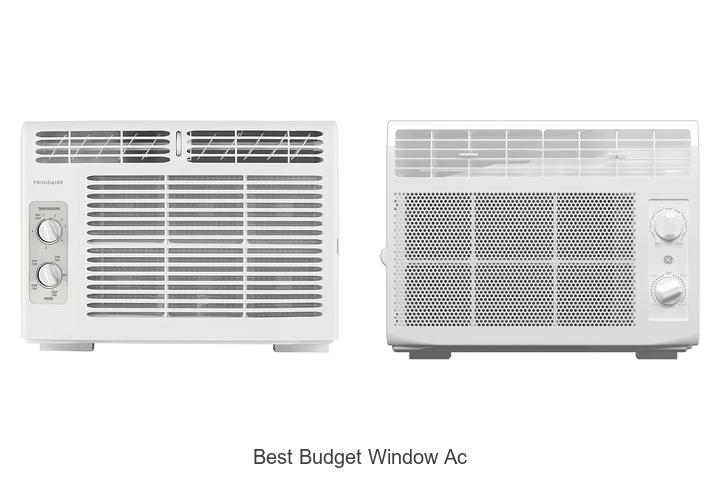
How to Safely Put a Window AC on the Floor
Many people struggle with finding the perfect spot for their window AC unit, especially when they want to use it on the floor. It can feel tricky to ensure safety and efficiency without the right setup. You’re not alone in this challenge—making sure your unit is stable and secure is essential for safe operation.
Putting a window AC on the floor is unsafe without proper precautions. You should choose a flat, stable surface like tile or concrete, making sure it’s level with shims or supports.
Secure the unit firmly and verify all electrical connections are safe and grounded. Use ventilation kits to direct hot air outside and place rubber pads to dampen vibrations.
For detailed steps on making it safer, keep exploring—there’s more to take into account for proper and secure installation.
Key Takeaways
- Avoid placing the window AC directly on the floor because it’s unsafe and doesn’t meet safety standards.
- Instead, pick a flat, stable surface like tile or concrete, and make sure it’s level so the unit doesn’t wobble.
- Use shims, platforms, or rubber pads to help stabilize the AC and absorb vibrations.
- If needed, secure the unit with supports or brackets, and keep electrical cords neatly managed and out of the way.
- Always follow the manufacturer’s instructions for installation and regularly check that everything stays stable and safe.
Is It Safe to Install a Window AC on the Floor?
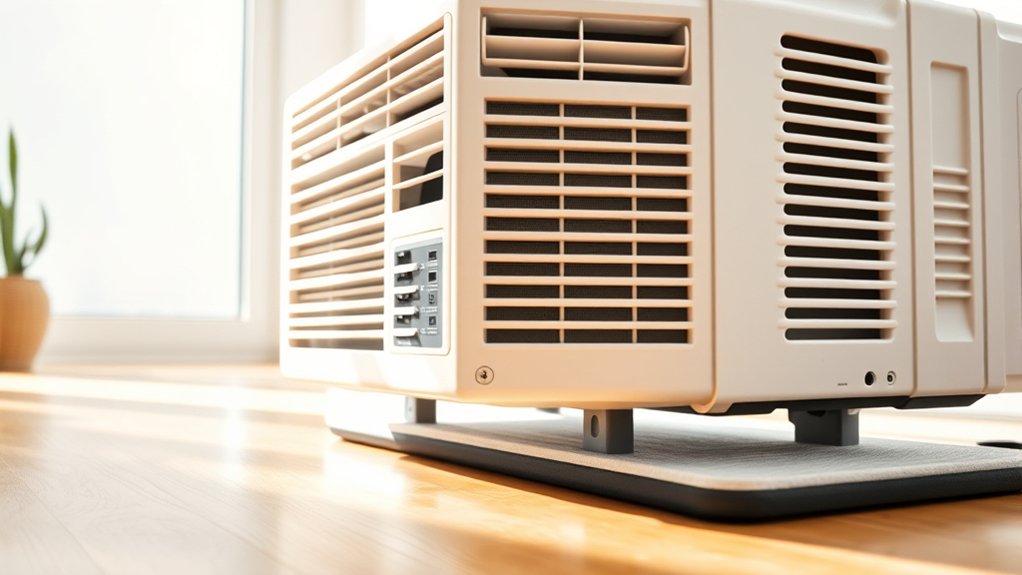
While it might seem convenient, installing a window AC unit on the floor isn’t usually safe or recommended. Window units are designed to be installed in window openings for proper support and airflow.
Installing a window AC on the floor is unsafe and goes against proper design and safety standards.
This design reflects building standards and safety norms that have developed over many years. Placing a window AC on the ground ignores these standards and can lead to injuries or damage.
The unit isn’t built to handle the weight or vibrations when on the floor, which can cause it to become unstable or leak. Plus, airflow and cooling efficiency are compromised without the correct positioning.
It might seem like a quick fix, but this approach disregards safety practices rooted in building codes. Understanding this helps explain why floor installation isn’t just unsafe but also incompatible with how these units are meant to work.
Always prioritize safety and follow proper installation guidelines for your air conditioner.
How to Choose the Right Spot for Floor Installation
Finding the right spot for your floor-installed air conditioner is key to ensuring top performance and safety. First, pick a location with enough space around the unit so it can breathe and be easily maintained.
Avoid tight corners or cramped spaces because these can reduce efficiency and cause overheating. Think about how the unit will look—placing it near a wall or corner can help it blend into your room’s design.
Space is important too. Make sure the AC isn’t blocking doorways or walkways, so your space stays functional and safe. Also, choose a spot close to an electrical outlet with enough power supply.
Stay away from areas exposed to direct sunlight or drafts, as these can affect how well the unit cools. Ultimately, finding a spot that balances practicality, looks, and airflow will keep your floor AC working well and make your room more comfortable.
What Floor Types Are Suitable for Your Air Conditioner?
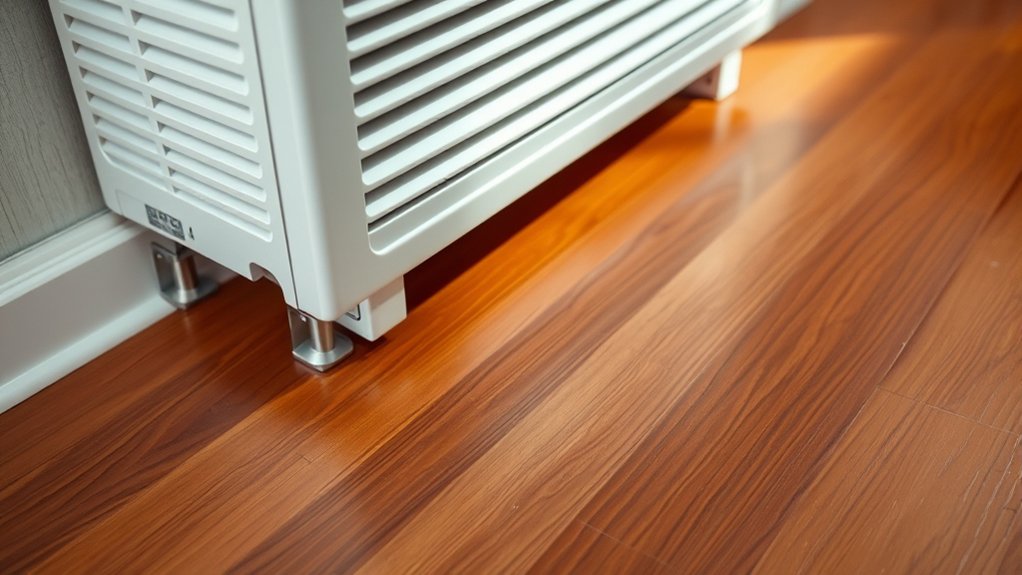
Choosing the right floor type is key to ensuring your air conditioner stays stable and works effectively. Hard, level surfaces provide the best support, making installation easier. Soft or uneven floors can cause instability, which might damage the unit or make it less efficient.
Here are some common floor materials to consider:
| Floor Material | Suitability for AC Placement |
|---|---|
| Hardwood | Suitable if level and stable |
| Tile/Concrete | Ideal; durable and level |
| Carpet | Not recommended; unstable |
| Vinyl | Acceptable if firm and flat |
Hard surfaces like tile or concrete are best because they offer stability and make installation simpler. Avoid carpeted floors, as they can shift or provide uneven support.
If you pick a different floor type, make sure it’s level and can support the weight of your AC. Proper support helps prevent vibrations and keeps the unit secure during operation.
How to Prepare Your Floor Before Installing the AC
Before installing your window AC, it’s important to prepare the floor to ensure stability and proper operation. First, clear away any debris, dust, or objects that could cause instability.
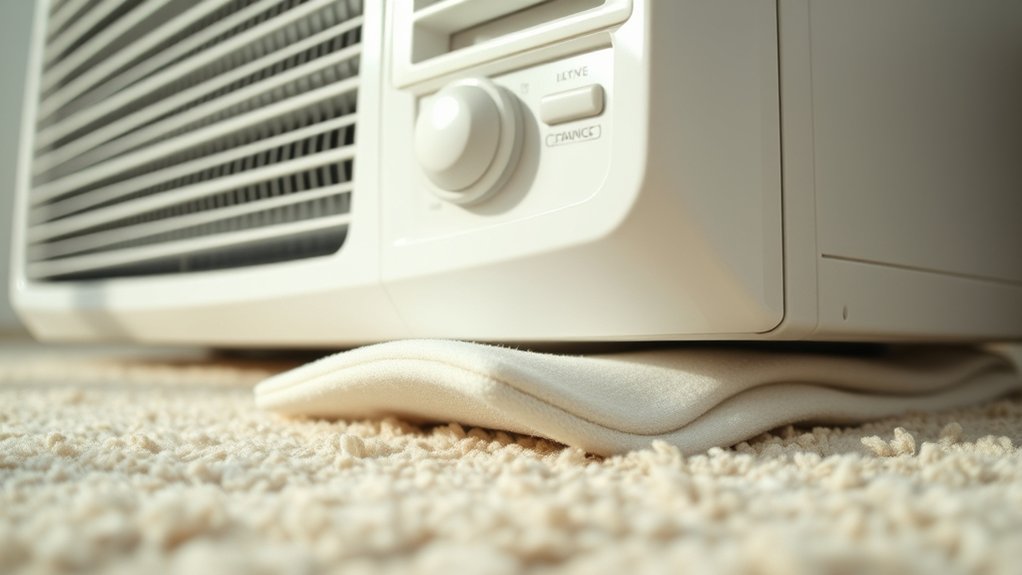
You might want to place a protective mat or decorative cover under the unit. This helps prevent scratches and gives a cleaner look. It also absorbs vibrations and reduces noise, making your space more comfortable.
Make sure the floor is level. If it isn’t, use shims or a sturdy platform to create a flat surface. This stability helps minimize vibrations and prevents the unit from shifting.
Positioning the AC on a soft, non-slip surface can also dampen noise and vibrations. Proper floor prep not only keeps the unit secure but also improves noise reduction for quieter operation.
Taking these steps makes for a safer, more efficient setup that can help your AC last longer.
How Do You Connect and Ventilate a Window AC on the Floor?
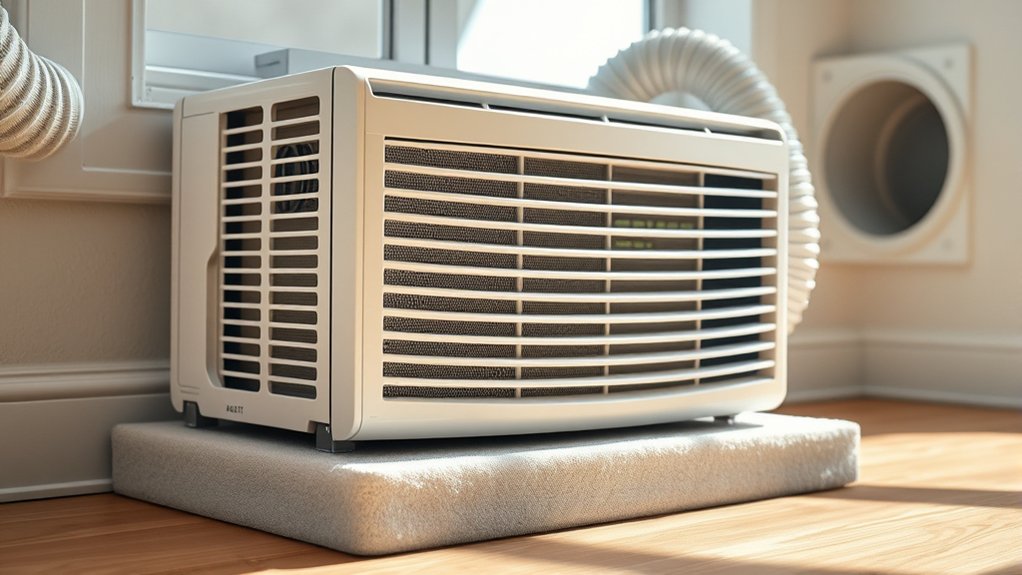
How do you connect and ventilate a window AC on the floor? First, make sure the unit is stable on a flat surface and all electrical connections are secure.
Plug it into a grounded outlet and check that the power cord isn’t strained or pinched. Since it’s on the floor, proper ventilation is really important for efficiency and safety.
Plug into a grounded outlet and ensure the cord isn’t strained for safe, efficient operation.
Create good airflow by adjusting or removing the front grille and ensuring the exhaust side isn’t blocked. If possible, place the AC near a vent or open a window nearby to help with airflow.
You can also use a portable venting kit designed for floor setups, which directs hot air outside. Proper ventilation prevents overheating and keeps the unit running safely.
Finally, correct connection techniques and ventilation help your AC operate effectively and securely.
Tips for Securing Your Window AC Safely on Different Floors
Securing your window AC properly on different floors helps prevent accidents and makes sure it works well. When placing your AC on various levels, think about the stability and safety of the unit.
Use sturdy brackets or supports, especially on higher floors, to stop it from tipping or falling. To make it look better, you can add decorative covers that hide the mounting hardware. These covers also protect the unit from dust and debris.
| Floor Level | Securing Tips | Aesthetic Considerations |
|---|---|---|
| Ground Floor | Use heavy-duty brackets | Match covers to wall color |
| First Floor | Secure with anchors and supports | Choose sleek, unobtrusive designs |
| Second Floor | Reinforce with extra supports | Pick decorative covers that blend in |
| Third Floor | Use safety cables for extra security | Select covers with attractive finishes |
| Rooftop | Anchor to the structure | Choose covers that match the architecture |
Properly securing your AC on each floor keeps everything safe and looking good.
How to Test Your Floor-Installed Window AC for Safety and Efficiency
Before you fire up your floor-installed window AC, it’s a good idea to make sure it’s safe and running efficiently. First, take a quick look at the power supply—make sure the outlet is stable and the plug is secure. You don’t want any flickering lights or odd sounds when you turn it on.
Next, give the unit a once-over for any leaks, cracks, or signs of damage. If you spot anything unusual, it’s best to get it checked out before using it regularly. Lastly, turn on the AC and see how well it cools the room. If it’s not cooling as it should, there might be an issue that needs fixing.
Taking these simple steps can help you avoid problems down the line and keep your space nice and comfortable.
Check Power Supply Stability
Ever wonder if your floor-installed window AC is getting a stable power supply? It’s important to check for issues like power surges or faulty wiring that could affect how it works or pose safety risks.
Start by plugging the unit directly into a grounded outlet, avoiding extension cords. Turn it on and see if it powers up smoothly without flickering or shutting off unexpectedly.
Use a multimeter to test the outlet voltage; it should match your local standards. Keep an eye out for signs of power surges, like sudden voltage changes or frequent circuit breaker trips.
If you notice anything unusual, it’s a good idea to call in an electrician. Making sure your power supply is stable helps protect your AC from damage and keeps you safe from electrical hazards.
Inspect for Leaks and Damage
How can you guarantee your floor-installed window AC is operating safely and efficiently? First, inspect for leaks around the unit, since refrigerant or water leaks can harm your indoor space and pose safety risks.
Check for any visible damage to the casing, vents, or power cords, which could lead to electrical hazards or increased noise. Leaks or cracks might also reduce cooling efficiency and cause unpleasant noise, disturbing your comfort.
Make sure all seals are intact to prevent drafts or leaks that can affect performance. Address any damage immediately to keep your AC safe and working well.
Regular inspections help you catch issues early, so your AC runs smoothly without noise problems or aesthetic concerns.
Evaluate Cooling Performance
Are you confident your floor-installed window AC is cooling effectively? To evaluate its performance, start by checking the temperature in the room. Confirm the air feels cool and consistent. Pay attention to energy efficiency—if your unit uses more power than usual, it could be less effective.
Listen for noise levels. Loud or abnormal sounds might signal a problem. Also, observe how quickly the room cools after turning it on.
Measure room temperature before and after running the AC for a set period. Monitor energy bills for any unexpected increases. Note any unusual noise or vibrations during operation.
These steps help you determine if your AC is functioning safely and efficiently, keeping your space comfortable without wasting energy.
What Maintenance Does a Floor-Installed Window AC Need?
To keep your floor-installed window AC running smoothly, it’s a good idea to clean the filters regularly and take a peek at the condenser coil now and then. Doing these simple things helps stop dust from piling up and keeps the airflow flowing nicely.
Filter Cleaning Schedule
Regularly cleaning the filter is essential to keep your floor-installed window AC running efficiently. The air filter traps dust, preventing it from circulating and helping maintain good air quality.
Check the filter at least once a month, especially during peak use. If it looks dirty or clogged, it’s time for a thorough cleaning. Regular maintenance keeps the AC from straining, saving energy and extending its lifespan.
To clean it, carefully remove the filter without damaging it. Wash it with mild soap and water, then let it dry completely.
Once dry, reinstall the filter securely before turning the unit back on.
Following this schedule will help your AC perform well and keep the air clean.
Condenser Coil Maintenance
After cleaning the filter, it’s important to check and maintain the condenser coil, which helps release heat from your unit. A dirty or clogged coil reduces energy efficiency, making your AC work harder and raising your electricity bills.
Regularly inspect the coil for dirt, debris, or damage. Clean it using a soft brush or compressed air. Keeping the coil clean improves energy efficiency and also reduces noise because a well-maintained coil runs more smoothly.
Avoid harsh chemicals that could damage the coil’s fins. Proper maintenance ensures your window AC operates quietly and efficiently, helping it last longer. Consistent coil upkeep is key for great cooling and a quieter, more cost-effective operation.
Troubleshooting Common Problems With Floor Installations
When installing a window AC unit on the floor, problems can happen if the unit isn’t properly balanced or secured. An unsteady unit can wobble, causing noise or even damage over time, which affects both energy efficiency and how your space looks.
Start by checking if the unit is stable. Make sure it’s level and sitting firmly on a flat surface. Misalignment can reduce cooling efficiency and cause uneven airflow.
Verify that the unit isn’t wobbling and is sitting securely. Adjust any uneven surfaces underneath to improve its balance. Also, check for loose or damaged mounting brackets or supports.
Fixing these issues helps keep your AC running smoothly, saves energy, and keeps your interior looking sleek. Proper installation prevents unnecessary wear and tear, which can extend the unit’s lifespan and keep your space cool and stylish.
Safety Tips and Best Practices for Installing a Window AC on the Floor
Installing a window AC unit on the floor requires careful attention to safety to prevent accidents or damage. First, verify the unit is stable and won’t tip over easily. Use decorative covers around the unit to improve safety and aesthetics, preventing sharp edges from causing injuries.
Secure any loose cords or wires to avoid tripping hazards. When positioning the AC, think about noise reduction; placing the unit on the floor can increase sound, so use rubber pads or mats to dampen vibrations and minimize noise.
Always check that the unit is level to prevent water leaks and ensure proper operation. Keep the area clear of obstacles and avoid blocking airflow. If you’re using a cover, make sure it’s ventilated to prevent overheating.
Finally, follow the manufacturer’s instructions carefully and regularly inspect the installation for stability and safety. Proper setup not only protects you but also helps extend your unit’s lifespan.
Frequently Asked Questions
Can a Floor-Installed Window AC Affect Your Home’s Electrical System?
Installing a window AC on the floor can affect your home’s electrical safety if it exceeds your system’s power capacity. It might draw more current, which could lead to overloads or short circuits.
To avoid problems, make sure your electrical system can handle the appliance’s power needs. Always use proper circuits and steer clear of daisy-chaining multiple devices.
Are There Specific Brands or Models Recommended for Floor Installation?
For floor installation, look for brands known for compatibility with alternative setups, like LG, Frigidaire, or Whynter. Focus on models with suitable dimensions and features that support secure placement on the floor.
Check the specifications to confirm model suitability, especially regarding exhaust and drainage systems. Always verify if the brand’s design accommodates floor use, and consult the manufacturer’s guidelines to prevent potential issues.
How Does Floor Installation Impact the Ac’s Noise Levels?
Placing a window AC on the floor can increase noise levels because of vibrations and less effective sound insulation.
Adding vibration reduction pads can help cut down on the noise caused by vibrations. Using soundproofing materials around the unit also improves acoustic insulation.
These steps work together to dampen sound transfer and make your space quieter.
Keep in mind that proper placement and extra insulation really affect how loud your AC is when installed on the floor.
What Are the Insurance Implications of Installing a Window AC on the Floor?
Installing a window AC on the floor can impact your insurance coverage and liability.
You might face higher liability concerns if the unit causes damage or injury. It’s a good idea to check your policy for any coverage gaps.
Some insurers might see this setup as a risk, which could lead to exclusions in your coverage.
To avoid surprises, it’s best to notify your insurance provider beforehand.
Also, think about safety measures to reduce any liability concerns.
Can a Floor-Installed Window AC Be Used in Outdoor or Semi-Outdoor Areas?
A floor-installed window AC isn’t designed to handle outdoor conditions or semi-outdoor spaces.
You shouldn’t use it outside because weather like rain, sun, and wind can damage the unit and create safety hazards.
If you need cooling for outdoor or semi-outdoor areas, look for units made for those environments.
Options like portable air conditioners or outdoor-rated models are safer and more efficient for those spaces.
Conclusion
Installing your window AC on the floor is like giving your home a cool, comfy hug. Just make sure to pick the right spot, prepare the surface, and follow safety tips to keep everything running smoothly.
With a little care, your AC will be a loyal friend, keeping your space revitalizing cool without a hitch. Think of it as turning your room into a cozy oasis where comfort and safety dance hand in hand.
Remember, placing a window AC on the floor can be safe if you choose a stable, flat surface and secure it properly. Always follow the manufacturer’s instructions for safe installation.