What Does a Window AC Take From Outside Air?
Many people struggle with keeping their indoor air fresh and cool, especially during hot or polluted days. You’re not alone in wondering how your window AC interacts with outside air and whether it’s helping or hurting your comfort.
A window AC pulls in outside air through intake vents or louvers, which help with cooling and air exchange. It filters this air to block dust, pollen, and pollutants, ensuring better indoor air quality.
The outdoor coil dissipates heat outside, while the condenser’s fan moves outside air over coils for efficient cooling. Weather and pollution levels affect performance.
To learn more about how outside air impacts your AC’s efficiency, keep exploring this topic.
Key Takeaways
- A window AC pulls in outside air through intake vents or louvers to help with ventilation and improve indoor air quality.
- It filters this incoming air to remove pollutants like dust, pollen, and debris, keeping the air cleaner.
- The outdoor coil releases heat from the refrigerant using outside air, which helps the system cool more efficiently.
- Outside air can affect humidity and temperature levels inside, which in turn impacts how well the AC performs and how much energy it uses.
- If too much outside air enters and isn’t properly filtered or controlled, it can carry pollutants and lower indoor air quality.
How Do Window Air Conditioners Cool Your Home?
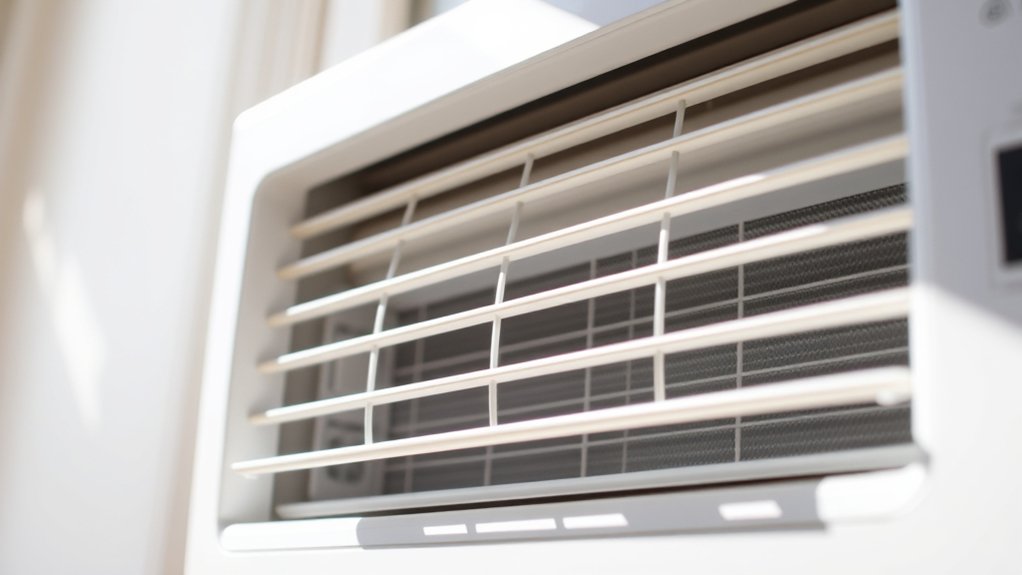
Have you ever wondered how a window air conditioner cools your home? It’s a clever process that relies on energy efficiency and managing noise levels.
The AC pulls warm indoor air into the unit, where the refrigerant absorbs heat, cooling the air quickly. The cooled air then circulates back into your room, lowering the temperature.
Meanwhile, the warm refrigerant is compressed and sent outside, releasing heat outside your window. This cycle keeps your space comfortable and consistent.
Modern window ACs are designed to be energy-efficient, meaning they use less power to deliver effective cooling, which saves you money on energy bills.
Noise levels are also taken into account, with many models equipped with noise-reducing features so you can sleep or work peacefully.
What Parts of Outside Air Does a Window AC Draw In?
Your window AC takes in outside air through certain parts, mainly the air intake components and external air filters. These parts are designed to let fresh air flow in while also helping to keep out dust, dirt, and debris.
Knowing how these parts work can give you a better idea of what kind of outside air is actually making its way into your space. It’s pretty interesting to see how these small components work together to bring in fresh air while still maintaining a clean and comfortable environment inside.
Air Intake Components
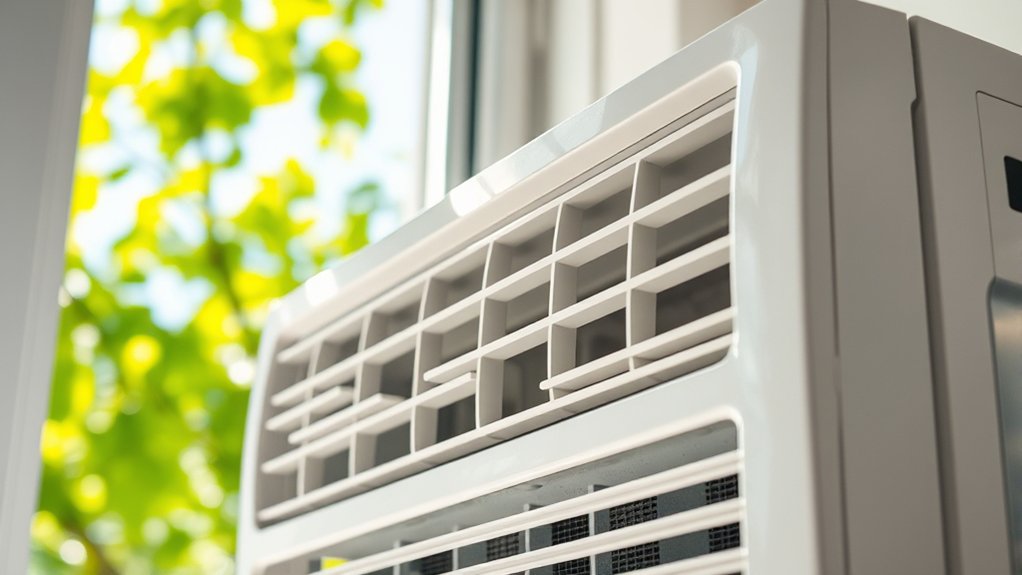
A window air conditioner draws outside air through specific intake components designed to filter and regulate the air entering the unit. These parts typically include louvers or vents that let outside air flow in while blocking debris.
During window installation, you might notice some models have adjustable vents to control how much outside air gets in. This can affect indoor air circulation and comfort.
The intake system is built to balance fresh air intake with maintaining a comfortable indoor environment. These parts work together to ensure the unit pulls in outside air efficiently without bringing in too much dirt or pollutants.
This helps your AC run smoothly and effectively, keeping your space comfortable.
External Air Filters
External air filters in a window AC are designed to trap pollutants and debris as outside air enters the unit. They help prevent dust, pollen, and other airborne particles from getting inside, making the air you breathe healthier.
Good filter maintenance is really important. If you neglect it, airflow can get restricted, and your cooling efficiency drops. When filters clog, your AC has to work harder, which uses more energy and can strain the system.
Make sure to check your filters regularly and clean or replace them when needed. This keeps your AC running at its best and helps maintain good indoor air quality. Clean filters also help your unit last longer.
How Does the Outdoor Coil Help Your Window AC Work?

The outdoor coil plays an essential role in your window AC’s cooling process by releasing the heat absorbed from inside your room. It’s necessary for the heat exchange process, where heat is transferred from the refrigerant to the outside air. When the refrigerant flows through the outdoor coil, it cools down after absorbing heat from your indoor space. This process keeps your room cool and comfortable.
The outdoor coil releases heat from your room, ensuring efficient cooling and comfort.
Here are three key points about the outdoor coil:
- It helps with heat exchange by dissipating heat to the outside air.
- Proper airflow around the outdoor coil makes heat transfer more efficient.
- A clean outdoor coil improves cooling performance and saves energy.
Without the outdoor coil, your window AC wouldn’t be able to effectively release heat. This would reduce its cooling capacity. That’s why this component is vital for a steady, efficient cooling cycle.
How Does the Condenser Release Heat to Outside Air?
When your window AC runs, the condenser is key to releasing heat outside. It uses a fan to pull air over coils filled with high-pressure refrigerant. As the refrigerant cools, it gives off the heat it absorbed from inside your home.
Good airflow around the condenser makes the whole process more efficient. This helps your AC work less hard and saves energy.
Here’s a quick breakdown of how it works:
| Component | Function | Impact on Energy Efficiency |
|---|---|---|
| Fan | Moves outside air over the condenser coils | Helps dissipate heat faster |
| Coils | Transfer heat from the refrigerant to the air | Improves cooling performance |
| Outside Air | Carries the heat away from the unit | Ensures effective heat release |
This cycle keeps your room cool while using less energy, thanks to efficient heat exchange with outside air.
Which Filters and Vents Control Outside Air Intake and Exhaust?
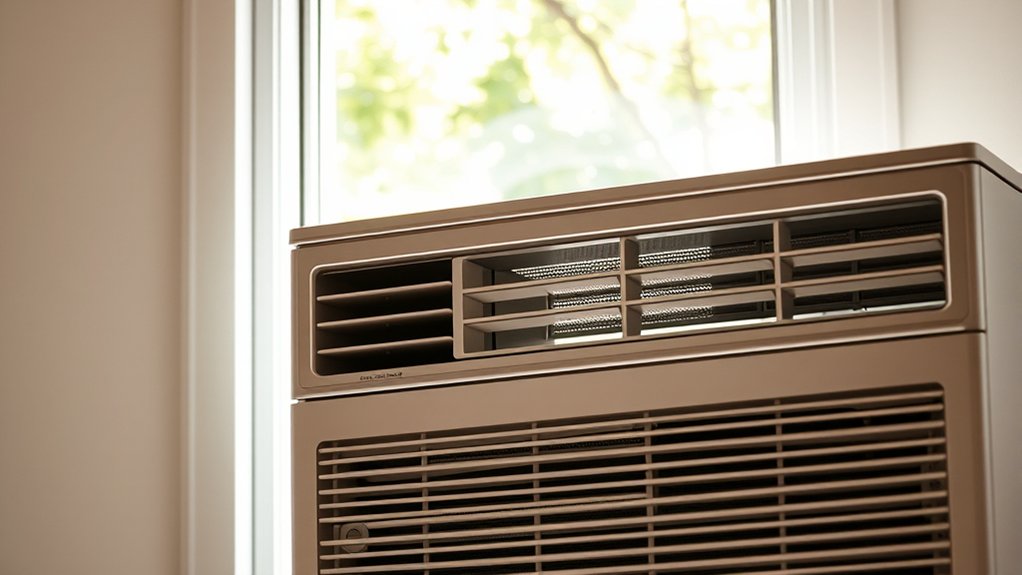
You’ll want to get familiar with where the intake and exhaust vents are on your unit so you can manage outside air effectively. Knowing their locations helps you control when fresh air comes in and when stale air goes out.
When it comes to filters, the type and efficiency you choose make a big difference. They determine how well the outside air is filtered before it enters your space, keeping things clean and healthy. And don’t forget about the exhaust vent—it’s essential for removing stale air and keeping the airflow balanced. Properly managing these vents and filters ensures your environment stays comfortable and fresh.
Intake Vent Location
Where should you locate the intake vents to guarantee proper outside air flow? Ideally, they should be placed based on your window AC’s ventilation design and outdoor placement.
To maximize efficiency, consider these key points:
- Position vents away from pollution sources like busy streets or exhaust fumes.
- Make sure vents aren’t blocked by furniture or landscaping, so airflow stays clear.
- Place vents in areas with good air circulation, such as higher on walls or near open spaces.
This setup helps your window AC draw fresh outside air effectively. Proper intake vent location is essential for good ventilation, preventing stale air buildup, and maintaining indoor air quality.
Filter Types and Efficiency
The type of filters and vents used in your window AC determines how effectively outside air is brought in and exhausted.
High-quality air filters can trap dust, pollen, and other pollutants, improving indoor air quality.
Your AC’s efficiency depends on regular air filter maintenance; neglecting this can reduce airflow and strain the unit.
A consistent filter replacement schedule, usually every 1 to 3 months, keeps your system running smoothly and ensures good filtration.
Different filters, like fiberglass, pleated, or electrostatic, offer varying levels of efficiency.
Choosing the right filter depends on your needs and air quality concerns.
Properly maintained filters help your AC operate more efficiently and extend its lifespan, all while keeping indoor air cleaner and healthier.
Exhaust Vent Functionality
Have you ever wondered how your window AC handles outside air intake and exhaust? The exhaust vent is crucial for controlling outdoor ventilation and keeping indoor air quality high.
It allows stale air to exit, which helps prevent humidity buildup and odors from lingering. The way the exhaust vent works depends on three main factors:
- Whether it’s automatic or manual control, deciding when to open or close based on your settings.
- The placement of the filter, making sure outdoor air gets properly filtered before entering or leaving.
- The position of the vent itself, adjusted to optimize airflow and stop unfiltered outdoor air from coming inside.
How Does Outside Air Quality Affect Your Window AC’s Performance?
Outside air quality directly impacts your window AC’s ability to cool effectively and operate efficiently. When the outside air is polluted or dusty, it can compromise your indoor air quality, making your space less comfortable.
Poor outside air quality reduces window AC efficiency and indoor comfort by allowing pollutants to enter and clog filters.
If your ventilation systems aren’t filtering pollutants properly, dust, pollen, or smog can be drawn inside and circulated by your AC. This not only worsens indoor air quality but can also clog filters and reduce airflow, forcing your unit to work harder.
Poor outside air quality may lead to increased strain on your AC’s components, decreasing its lifespan. Ensuring good ventilation and maintaining clean filters can help mitigate these effects.
If outside air is highly polluted, consider using additional air purifiers or sealing leaks to limit contaminants entering your space. Ultimately, outside air quality plays a vital role in your window AC’s performance, affecting both efficiency and indoor comfort levels.
How Do Weather Conditions Impact Cooling Efficiency?
Weather conditions can really affect how well your window AC works. For example, when it’s humid outside, it can be tougher for the unit to remove moisture from the air and keep things cool inside. The more humidity there is, the more strain it puts on your AC, making it less efficient.
Temperature differences also play a role. If it’s really hot outside, your AC has to work harder to cool your space down, which can reduce its overall efficiency. Plus, wind and airflow around your unit matter too. Strong breezes or poor airflow can make it harder for your AC to draw in the outside air it needs to operate effectively and maintain a steady, comfortable temperature.
Humidity Levels Affect Efficiency
Ever wonder how humidity levels can influence your window AC’s performance? High humidity can make your unit work harder, which reduces efficiency and increases energy use. When outside air is moist, your AC has to remove more moisture to cool the indoor air, putting extra strain on the system.
This process also impacts indoor air quality because excess humidity can lead to mold and mildew growth. To manage this, consider these points:
- Lower humidity levels help your AC cool more effectively and save energy.
- High humidity forces your AC to run longer, raising your energy bills.
- Proper ventilation can improve indoor air quality and lessen humidity’s effects.
Controlling humidity not only boosts your AC’s efficiency but also helps create a healthier indoor environment.
Temperature Differential Challenges
Have you noticed your window AC struggles more on some days than others? Temperature differential challenges are a key factor.
When outdoor temperatures soar, your AC has to work harder to cool your indoor air, which increases energy use. If your home has solar panels, they might help offset some of this extra load, but the AC still faces the same efficiency issues.
On hot days, the air outside is much warmer than your desired indoor temperature. This makes the cooling process less effective. As a result, your unit runs longer and consumes more power without providing the same level of comfort.
Weather conditions like heatwaves directly impact your window AC’s performance. Understanding these temperature differentials is essential for *ideal* operation and better energy management.
Wind and Airflow Impact
How does wind influence your window AC’s cooling efficiency? Wind can really change how air moves around your unit, affecting how well it works. Strong gusts can create more wind resistance, making it tougher for your AC to pull in outside air effectively.
This can lead to less cooling power and higher energy bills. To help prevent this, make sure your unit isn’t directly in the path of strong breezes.
Using barriers or screens can also block excessive airflow. Lastly, regularly check and clean your vents to keep airflow smooth and unobstructed.
Common Myths About Outside Air Intake in Window Units
Many people believe that running a window AC with outside air intake will always improve air quality and ventilation, but that’s not necessarily true. Some think it automatically boosts indoor air circulation or reduces indoor pollutants.
However, outside air can carry pollen, dust, and pollutants that decrease air quality inside. The myth is that fresh air always benefits your space, but in reality, it can introduce allergens or pollutants, especially during high pollution or allergy seasons.
Relying solely on outside air intake as a ventilation strategy can sometimes make indoor conditions worse. Proper ventilation involves balancing outside air with indoor air filtration and circulation methods.
Instead of assuming outside air automatically improves ventilation, you should evaluate your specific environment’s needs. Understanding these misconceptions helps you make smarter decisions about your window unit’s outside air intake and overall indoor air quality.
How Can You Improve Your Window Ac’s Interaction With Outside Air?
Improving your window AC’s interaction with outside air starts with understanding how to control its intake and exhaust settings effectively. Proper adjustments boost energy efficiency and reduce noise.
First, ensure your unit’s vents are sealed when outside air isn’t needed. This prevents unnecessary heat exchange and keeps your indoor temperature stable.
Second, use the “fresh air” option sparingly. Keeping it closed minimizes outdoor noise and helps your AC maintain a consistent indoor temperature more efficiently.
Third, consider installing a damper or vent cover to manually control outside airflow. This gives you better command over air exchange and noise levels.
Regular maintenance is also key. Cleaning filters and checking seals improve your AC’s overall performance.
These steps help your AC operate more efficiently, saving energy and reducing noise disturbances.
Understanding How External Factors Influence Indoor Comfort
Ever wonder why your indoor comfort shifts even when your air conditioner is running? External factors like outdoor air quality, humidity, and temperature have a big impact. Poor outdoor air circulation can bring in pollutants or extra humidity, making it harder for your AC to keep things steady inside.
When the outside air is humid or polluted, your unit has to work harder to filter and dehumidify, which uses more energy. If your window AC pulls in outside air, it might struggle to cool effectively, leading to temperature swings.
Sunlight exposure and wind also affect indoor comfort by influencing how much heat enters your space. Knowing these external factors can help you optimize your AC’s performance, cutting down on energy costs and keeping your indoor climate more stable.
Proper insulation, ventilation, and window coverings can help control how external elements impact your indoor environment. This way, you stay comfortable and your system runs efficiently.
Frequently Asked Questions
Can Window AC Units Operate Without Outside Air Intake?
Yes, window AC units can run without outside air intake, mainly recirculating indoor air to cool your space.
But, this can affect indoor air quality because it limits ventilation, trapping pollutants and humidity.
To improve air quality, think about adding proper ventilation methods.
Running the unit without outside air intake is okay for short periods, but for long-term health, ensure good ventilation and fresh air exchange.
Does Outside Air Cause Window AC Units to Use More Energy?
Yes, outside air can cause your window AC to use more energy. When it pulls in fresh air, it increases the workload, forcing the unit to cool both the incoming air and the indoor space.
This can lead to ventilation concerns and affect air quality considerations, especially if the outside air is humid or polluted. To save energy, think about sealing leaks and using the unit mainly for cooling instead of ventilation.
How Does Outside Air Humidity Affect Window AC Performance?
Outside air humidity can really affect how well your window AC works, almost like a hurricane in your living room! When the humidity is high, your unit has a tough time cooling because it has to work extra hard to remove moisture from the air.
This makes it harder to keep your indoor air comfortable and dry. It also leads to higher energy use and less effective cooling. To stay comfortable and improve air quality, it’s best to keep humidity levels in check.
Are There Risks of Outdoor Pollutants Entering Through the Window AC?
Yes, outdoor pollutants can enter through your window AC, affecting indoor air quality. Pollutant infiltration happens when the unit pulls in outside air, which may bring in dust, pollen, or vehicle emissions.
To minimize these risks, make sure your AC has proper filters and replace them regularly. Using a high-quality filter helps trap pollutants, reducing indoor air contamination.
This keeps your home healthier and more comfortable.
Can Outdoor Air Intake Be Blocked to Improve Efficiency?
Blocking outdoor air intake is like putting a lid on a boiling pot—you can control the heat. Yes, you can close the vents or dampers to reduce outdoor air, which can improve efficiency.
This limits ventilation concerns and air exchange limitations, keeping pollutants out and cooling in. But it’s important to find a balance between air quality and energy savings.
Make sure you have proper ventilation to maintain indoor air freshness without sacrificing comfort.
Conclusion
Think of your window AC as a vigilant guardian, tirelessly balancing inside comfort and outside air. It takes in just enough fresh air to keep things lively without overwhelming your space.
By understanding how it pulls outside air and releases heat, you can better tune its rhythm. When you master this delicate dance, your home becomes a cozy oasis amid the busy world outside.
In this way, your window AC carefully manages what it takes from outside air to keep your home cool and comfortable.