10 Simple Steps to Drain Water From Your AC Window Unit
Everyone who has a window AC unit knows the hassle of dealing with water buildup. It’s a common issue that can cause leaks, mold, or even damage your AC if not handled properly.
Many people struggle with draining water from their window AC units, especially if they’re unsure where to start. But don’t worry—you’re not alone, and it’s easier than you think.
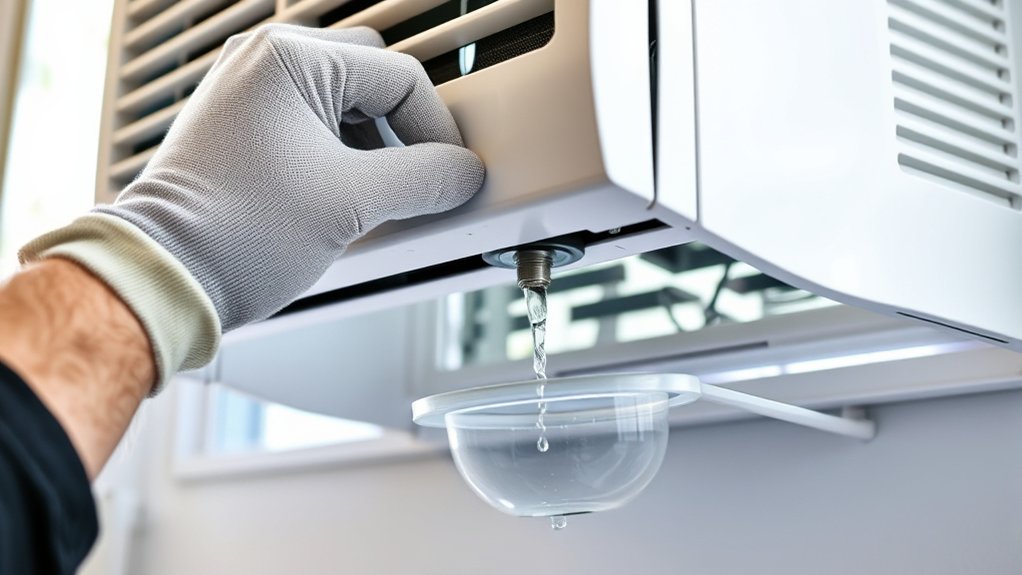
To drain water from your window AC, turn off and unplug the unit, then locate the drain pan and drain line. Clear any blockages using a vacuum or syringe, and clean the pan with soap or vinegar.
Check for damage and repair if needed. Make sure the drain line is straight and unobstructed before restarting the AC.
If you want to learn more about the steps, keep going for detailed guidance.
Key Takeaways
- Turn off and unplug the window unit to stay safe before you start any maintenance.
- Find the drain pan and drain line located beneath the evaporator coil.
- Remove any standing water using a syringe, vacuum, or manual pump.
- Clear any blockages in the drain line with vinegar, water, or a flexible brush.
- Check for damage, clean the drain pan, and then test the system before turning it back on.
How Water Builds Up in Your Window AC and Why It Matters
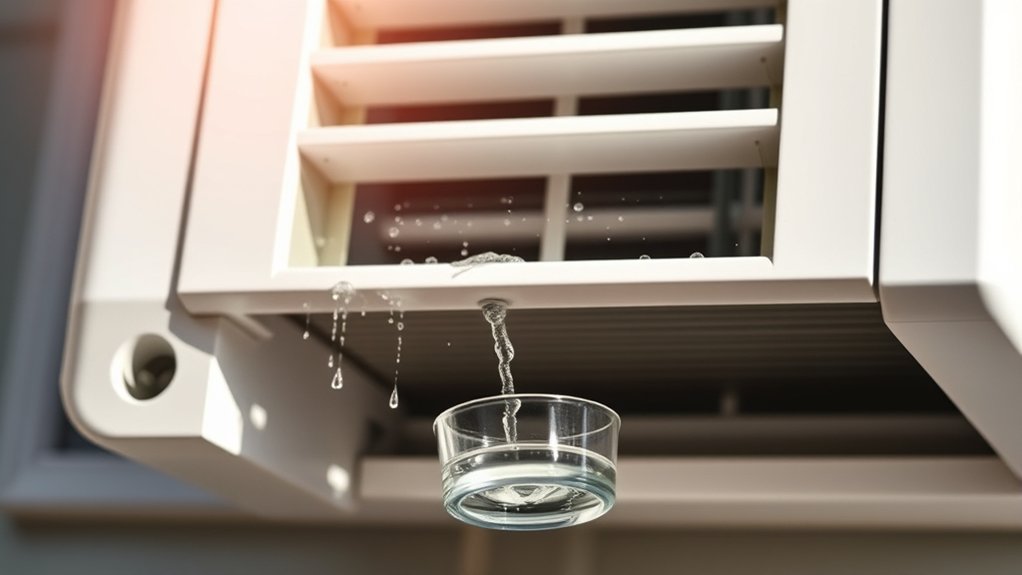
Have you ever wondered why water starts to gather inside your window AC unit? It all comes down to humidity control. As your AC cools the air, it also removes excess moisture, creating condensate buildup on the evaporator coils.
This water then drips into a pan or drain pan designed to handle it. When everything works properly, the condensate flows out through a drain hose. However, if the drain gets clogged or the pan overflows, water accumulates inside the unit.
This buildup can lead to mold, unpleasant odors, and even damage to internal components. Understanding how this process works helps you realize why regular maintenance is essential.
Properly managing condensate buildup not only ensures your AC runs efficiently but also prevents water damage and keeps your space comfortable. Keeping the drain clear and the unit clean maintains good humidity control and prevents excess water from causing problems.
Gather Tools and Prepare Your Workspace
Before you start draining water from your AC unit, it’s important to gather all the necessary tools and set up your workspace for safety and efficiency. You’ll need a screwdriver, a container or towel to catch water, and possibly a wrench if your drain pan or hose needs loosening.
Check your air filter for maintenance needs—clean or replace it before proceeding. This step helps your unit run efficiently and prevents future water buildup. Also, verify refrigerant levels are adequate; low levels can cause improper drainage and damage.
Clear the area around your unit, removing any furniture or obstacles. Have good lighting so you can see what you’re doing. Wearing gloves and safety glasses is recommended to protect against any accidental spills or debris.
Proper preparation minimizes messes and prevents damage, making water drainage safer and more effective.
Turn Off and Unplug Your Window AC
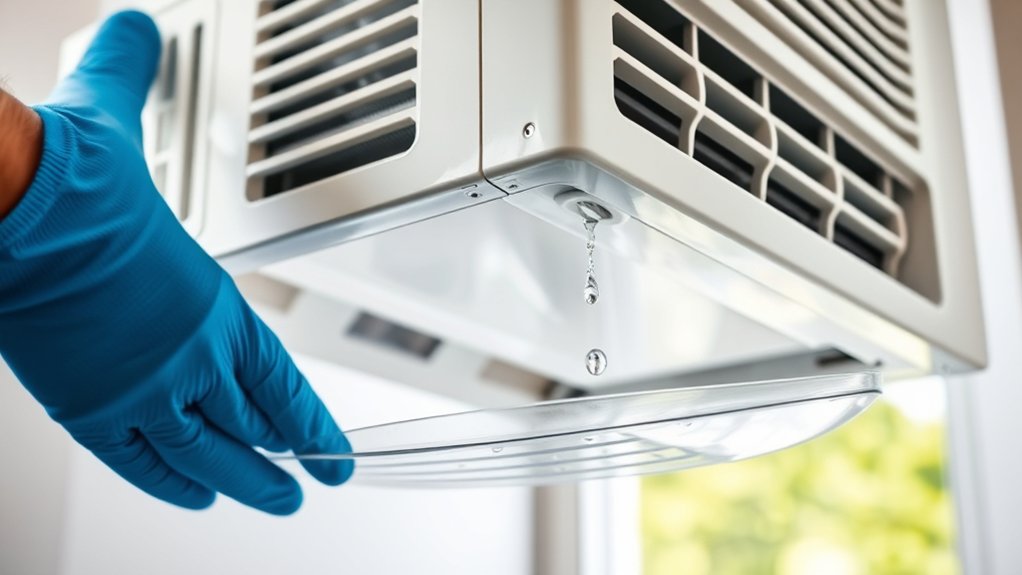
Before you start draining your AC, make sure to turn it off and unplug it completely. It’s super important to do this first so you’re not working with any live electricity, which can be pretty dangerous. Always double-check that the power is off before you begin any kind of servicing—better safe than sorry!
Power Down Safely
To safely drain water from your window AC unit, start by turning off the unit and unplugging it from the power outlet. This step keeps you safe and prevents electrical hazards.
Powering down properly also helps maintain the unit’s energy efficiency, as it cuts down on unnecessary power use during maintenance. Plus, turning off and unplugging the AC reduces noise, making it more comfortable to work around.
Don’t rush this step; a complete shutdown allows internal parts to settle, which helps prevent damage. Once it’s unplugged, you can confidently proceed with draining the water, knowing the appliance is safely disconnected from power.
Taking these precautions makes the process more effective and quieter, while also helping your unit last longer.
Unplug Before Servicing
Once you’ve safely powered down your AC unit, the next step is to unplug it from the outlet. This is important for electrical safety, preventing the risk of shock while you perform maintenance.
Always confirm the unit is completely disconnected before opening or handling any internal parts. Unplugging the unit protects you during compressor work or when clearing out water drainage areas.
Never skip this step, even if the unit seems off. Residual power can still be present, which can be dangerous.
Taking this precaution helps avoid accidents and damage to the system. Always double-check that the plug is fully removed before proceeding with any further servicing tasks.
Safety first ensures a smoother, safer maintenance process.
Ensure Complete Disconnection
How can you guarantee your window AC is completely disconnected before working on it? First, turn off the unit using the power button or thermostat. Then, unplug the power cord from the outlet to make sure there’s no electricity flowing.
Never try to service the unit while it’s still plugged in, as this could cause electrical shock or damage. Remember, handling refrigerant needs caution; even when draining water, avoid puncturing or tampering with the refrigerant lines.
Disconnecting the unit fully prevents accidental activation and keeps you safe from electrical hazards. Always wait a few minutes after unplugging to let any residual power drain.
Find the Drain Pan and Drain Line
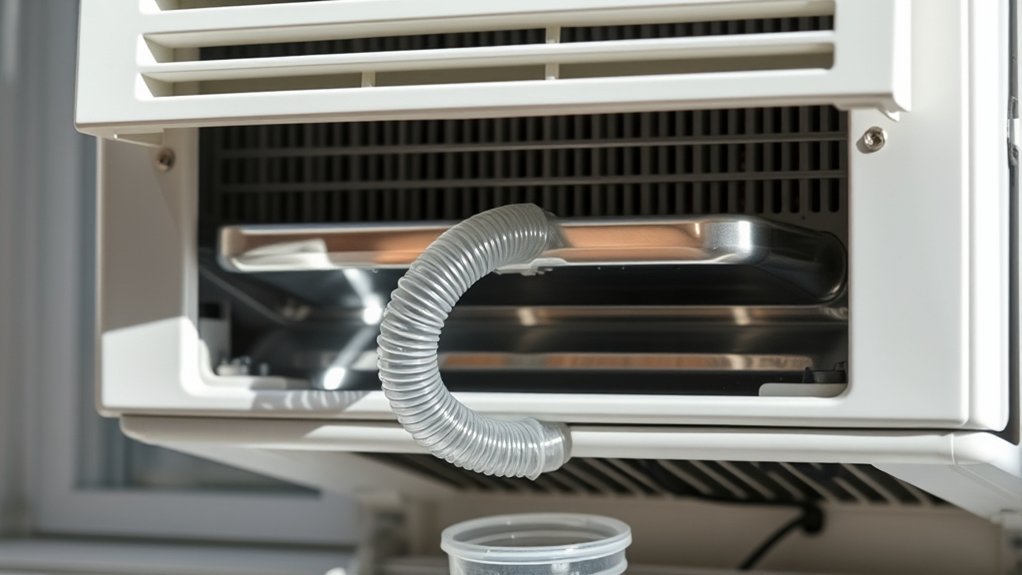
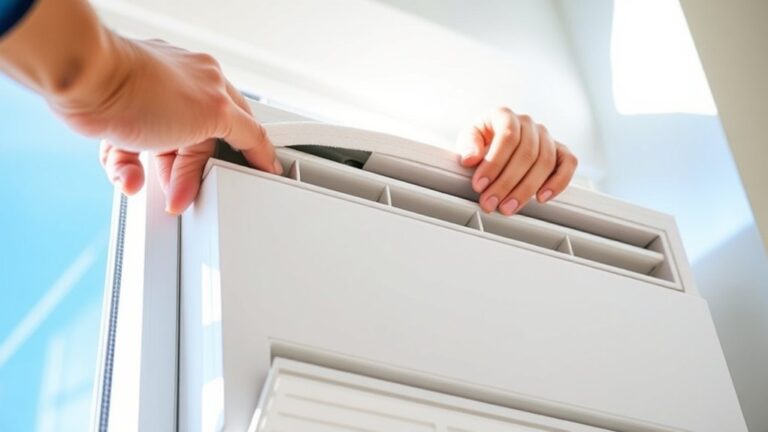
Start by locating the drain pan, which is usually positioned beneath the evaporator coil inside the unit. This pan collects water that drips off the coil during operation. Once you find it, check its condition for any signs of rust, cracks, or debris. Proper drain pan maintenance helps prevent leaks and mold growth.
Next, look for the drain line, which connects to the drain pan and directs water outside or into a drain. Follow the line to ensure it’s accessible and free from obstructions. During this inspection, look for signs of clogs, leaks, or damage.
Clearing blockages now can save you trouble later. Remember, a clean, well-maintained drain pan and a clear drain line are essential for your unit’s efficiency. Before proceeding to drain water, make sure you’ve identified these components correctly and checked their condition to avoid complications during the draining process.
Clear Blockages in the Drain Line
With the drain pan and line identified and checked for damage, it’s time to deal with any blockages that might be stopping water from flowing freely. Blocked pipes can cause water to back up, leading to leaks or even mold growth.
Check and clear drain blockages to prevent leaks and mold growth. Regular maintenance keeps your AC running smoothly.
Algae buildup is a common culprit, especially in humid environments. To clear these blockages, start by using a long, flexible brush or pipe cleaner to gently scrub inside the drain line, removing debris and algae.
Next, flush the line with a mixture of vinegar and water to dissolve any organic matter and algae. Be sure to check for kinks or bends that could be restricting water flow, and straighten the pipe if needed.
Regular maintenance helps prevent algae growth and keeps the drain line clear. When the line isn’t blocked, water flows freely, which helps prevent damage and keeps your AC running efficiently.
Drain the Water Using a Syringe, Vacuum, or Manual Method
You can get rid of water in your AC unit using a few different methods, depending on what you have on hand. One way is with a syringe—just carefully extract the water through the drain port. It’s pretty straightforward and works well if you have a syringe handy.
Another option is to use a vacuum. Just create suction to pull out the excess moisture from the drain. It’s a quick and effective method if you have a vacuum nearby.
If you don’t have any tools available, you can try a manual approach. Tilt the unit slightly to let the water drain out naturally, or use a cloth to soak up any remaining water. It’s not as fancy, but it can do the trick for a quick fix.
Syringe Drainage Technique
When draining water from your AC window unit using a syringe, vacuum, or manual method, the key is to carefully access the drain port or pan where the water collects. Using a syringe is simple; just insert the tip into the drain opening and gently pull the plunger to extract water.
This method helps prevent mold growth and keeps your unit running efficiently. While you’re at it, it’s a good idea to check your air filter and make sure your thermostat calibration is accurate for the best cooling performance.
Here are the steps to follow:
- Insert the syringe into the drain port.
- Gently pull the plunger to draw out water.
- Repeat until the drain is clear and dry.
This simple process helps maintain your AC’s performance.
Vacuum Method Overview
Using a vacuum method to drain water from your AC window unit is a quick and mess-free alternative to manual draining. It helps keep airflow clear by preventing water buildup that can block vents. Plus, it lowers the chance of mold and debris clogging your filter.
You just connect a vacuum or syringe to the drain outlet, then create a seal to suck out the water. This method saves time and keeps spills to a minimum, making your space cleaner overall.
Here’s a quick comparison:
| Method | Ease of Use | Effectiveness | Best For |
|---|---|---|---|
| Vacuum | Fast and clean | Removes most water easily | Regular maintenance |
| Syringe | Precise but slower | Good for small amounts | Spot draining |
| Manual | Less efficient | Requires effort | Small leaks or backups |
Use this approach to help your unit run smoothly.
Manual Water Removal Tips
To effectively drain water from your AC window unit, choosing the right method—syringe, vacuum, or manual—depends on the situation and your comfort level. Manual water removal works well for small water collection or managing condensation.
You can carefully use a syringe to extract water from the drain pan or condensate drain, making sure there’s no overflow. A hand pump or vacuum can also work to suction out excess water, especially in tight spots.
These methods give you control over water removal without the need to disassemble the unit. You might also try tilting or adjusting the unit to help water flow and drain more easily.
Check for Clogs or Damage and Repair Them
Before draining the water from your AC unit, it’s crucial to check for any clogs or damage that could hinder proper drainage. Start by inspecting the drainage system, including the drain hose and opening, for obstructions.
A clogged drain can cause water to back up, leading to leaks or damage. Clear any debris or dirt blocking the path, using a long, flexible brush or a vacuum if needed.
Look for cracks or damage in the drain pan or pipes, as these can also disrupt drainage. Repair any cracks with waterproof sealant or replace damaged sections to guarantee the system functions smoothly.
Regular clog prevention is key to maintaining your AC’s efficiency and avoiding water buildup. Taking these steps helps you identify potential issues early, preventing costly repairs.
Proper maintenance keeps your AC running smoothly and prolongs its lifespan.
Clean the Drain Pan and Surrounding Area
Since dirt and mold can build up quickly in the drain pan, it’s important to clean it regularly to prevent clogs and musty smells. Start by inspecting the drain pan to check for any buildup or debris.
Next, carefully remove the pan and wash it with warm, soapy water. Scrub away any mold or algae, then rinse thoroughly and dry completely before putting it back.
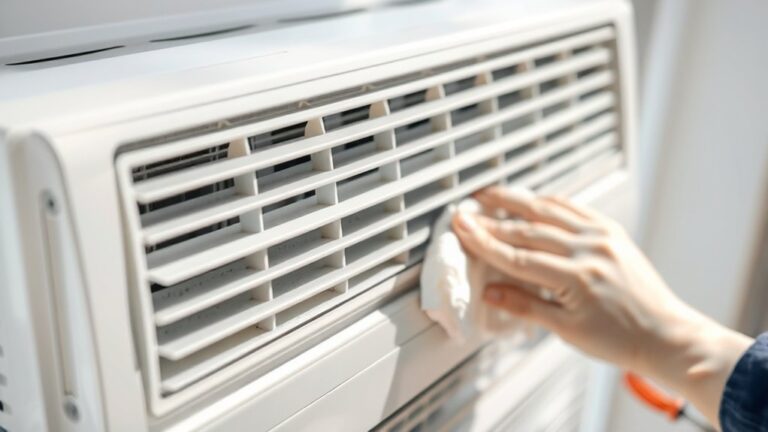
While you’re at it, clean the surrounding area to stop dust and dirt from falling into the pan later.
Here are three simple steps:
- Take out the drain pan and look for mold, dirt, or damage.
- Clean the pan with a mixture of vinegar and water or mild detergent.
- Wipe down the area around it to keep everything dry and clean.
Doing this regularly helps your AC run smoothly and keeps odors at bay.
Test the Drainage System and Restart Your AC
Have you checked if your AC’s drainage system is working properly? First, pour a small amount of water into the drain pan to see if it flows freely through the drainage pipe. If water backs up or drains slowly, clear any blockages you find.
While you’re at it, do some air filter maintenance to ensure good airflow. A clean filter helps control indoor humidity and keeps your AC running efficiently. It also prevents excess moisture buildup and prolongs the unit’s lifespan.
Once the drainage system is clear, restart your AC to see if water flows smoothly from the drain. Listen for any strange noises and check around the unit for leaks. Proper drainage keeps your AC working well and reduces water damage risks.
Regularly testing the drainage system and maintaining the air filter will help your window unit run smoothly. This keeps your indoor humidity comfortable and helps your AC last longer.
Tips to Prevent Water Blockages and Keep Your AC Running Smoothly
To keep your AC running smoothly and prevent water blockages, regular maintenance is key. Proper care helps stop airflow from getting blocked and keeps refrigerant levels balanced, both of which can cause water buildup.
Regular AC maintenance prevents water blockages and keeps airflow and refrigerant levels balanced.
Here are three simple tips:
- Keep vents and filters clean. Dust and debris can block airflow, leading to excess moisture. Make sure to replace or clean filters regularly and clear out the vents.
- Check refrigerant levels. Low refrigerant can cause the evaporator coil to freeze, which can lead to drainage problems. It’s a good idea to have a professional check refrigerant levels once a year.
- Inspect the drain pan and drainage line. Remove dirt, algae, or obstructions that might block water flow. Use a mild cleaner if needed to prevent buildup and keep everything flowing smoothly.
Frequently Asked Questions
How Often Should I Drain My Window AC Unit?
You should drain your window AC unit at least once a month, especially when you’re using it a lot. Doing this helps keep it running efficiently and improves the air quality.
Regular drainage stops mold, bacteria, and excess moisture from building up. This can help your unit perform better and last longer.
If you notice water pooling or a foul smell, it’s a good idea to drain it more often. Keeping your AC clean and dry makes it run smoothly, saves energy, and keeps the air healthier in your space.
Can I Use Household Cleaning Products to Clear the Drain Line?
You shouldn’t use household cleaning products or chemical solutions to clear your AC drain line. These cleaning agents can damage the unit or cause harmful fumes.
Instead, try a mixture of distilled water and a small amount of vinegar or a commercial AC drain cleaner made specifically for this purpose. Always follow the manufacturer’s instructions to ensure safe and effective cleaning.
This way, you protect your unit and keep your home’s air quality safe.
What Are Signs My AC Drain Line Is Clogged?
You’ll notice signs like water leaking from your unit, a musty smell, or increased humidity indoors, which could mean your drain pipe is clogged.
Airflow obstruction caused by debris or algae buildup can also be a warning sign of a blockage.
If you see water pooling or hear gurgling sounds, it’s a good idea to check and clear your drain line.
Doing this helps prevent more serious damage down the line.
Regular maintenance can help you avoid these issues altogether.
Is It Safe to Perform Drain Maintenance Myself?
Yes, you can do drain maintenance yourself if you follow proper safety precautions. Make sure the unit is unplugged and avoid using harsh chemicals.
If you’re unsure or uncomfortable, it’s best to call in a professional. They have the right tools and experience to do the job safely.
This helps prevent damage or injury. Always put safety first, and don’t hesitate to seek expert help if needed.
How Can I Prevent Mold Growth in My AC Drain Pan?
Think of your AC drain pan as a garden that needs regular care. To prevent mold growth, you need to keep it clean and dry—like watering plants carefully.
Regularly cleaning the drain pan removes mold spores and debris, stopping mold from taking hold. Make sure the drainage is proper and check for leaks so water doesn’t sit around and create a perfect environment for mold.
Consistent maintenance keeps your AC healthy and mold-free.
Conclusion
By regularly draining and maintaining your window AC, you keep it running smoothly and avoid costly repairs. Think of it as tending to your trusty steed. Don’t wait for a “knight in shining armor” to rescue you; take action now.
With these simple steps, you’ll prevent water build-up and keep your unit cool and efficient all season long. Remember, a well-maintained AC is your best armor against the heat.
Maintaining your window AC by draining water regularly ensures it works properly and lasts longer.