Essential Tips to Maintain Your Window AC Unit
Many people struggle with keeping their window AC units running efficiently, especially during the hot summer months. You’re not alone—proper maintenance can seem daunting, but it’s key to staying cool and saving money.
To keep your window AC running smoothly, regularly clean or replace filters, and vacuum or wash them with mild detergent. Inspect and maintain condenser coils, ensuring they’re free of dirt and debris, and check for water leaks or drainage issues.
Tighten electrical connections and replace worn parts promptly. Scheduling professional tune-ups before peak season can boost efficiency and prolong your unit’s life.
Keep things running well—continue exploring more tips to optimize your AC’s performance.
Key Takeaways
- Regularly clean or replace filters to keep airflow smooth and improve indoor air quality.
- Check and clean the condenser coils to make sure your unit cools efficiently.
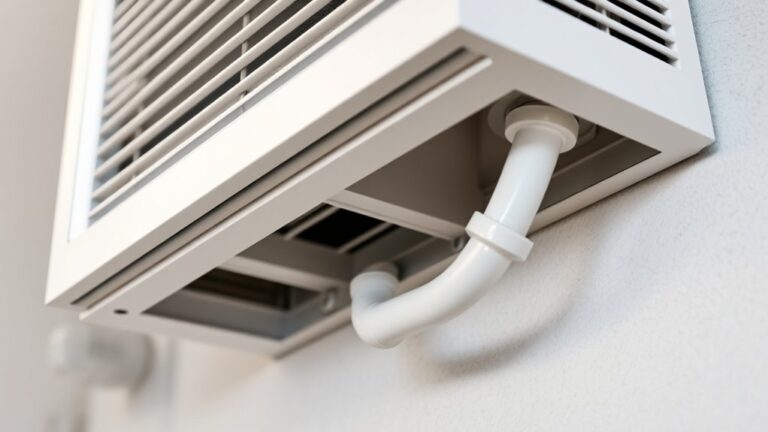
- Make sure the drain line is clear to prevent water leaks and potential damage.
- Schedule professional maintenance before the busy seasons for a deep clean and necessary repairs.
- Keep the area around your unit sealed and insulated to boost energy efficiency.
How to Clean Your Window AC Filter for Better Airflow

Regularly cleaning your window AC filter is key to keeping good airflow and cooling performance. When you do this, you stop dust and debris from clogging the filter, which helps airflow stay strong.
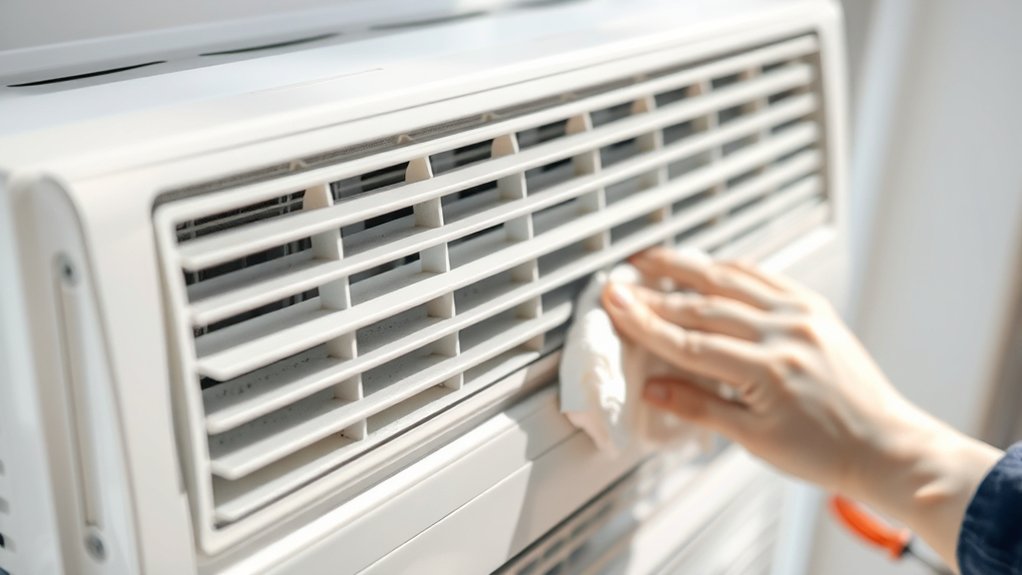
Start by turning off the unit and taking out the filter from the window frame. Gently vacuum both sides of the filter to pick up loose dirt. For a deeper clean, wash it with warm water and a mild detergent.
Turn off the unit, remove the filter, and gently vacuum both sides for easy cleaning.
Avoid harsh chemicals because they can damage the filter. Rinse it well and let it dry completely before putting it back. Clean filters improve air circulation, reduce strain on your AC, and can save energy.
If the filter is old or damaged, think about replacing it. Regularly swapping out the filter keeps your unit running smoothly and can extend its lifespan. Make cleaning and replacing your filter a routine to enjoy a cooler, more comfortable space.
Inspect and Replace Worn or Damaged Parts
It’s a good idea to regularly check your unit for any signs of wear and tear, like rust or broken parts. Catching these issues early can save you a lot of hassle down the line.
If you notice any damage, don’t wait around—replace those components right away. Keeping everything in good shape helps your AC run smoothly and efficiently. Plus, taking care of problems early can prevent bigger, more costly repairs later on.
Identify Signs of Wear
Keeping an eye on your window AC unit’s condition is essential to guarantee it runs efficiently. Signs of wear can quickly affect its cooling performance, so regular checks are vital.
Look for unusual noises, like rattling or squealing, which may mean loose or damaged parts. If you notice water leaks or too much condensation, it could be a sign of worn seals or clogged drainage.
Faded or cracked insulation around the unit can reduce efficiency, so check that as well. A persistent musty smell might signal mold or moldy parts that need attention.
Also, keep an eye out for uneven cooling or warm spots on your window unit. These issues suggest some components aren’t working properly. Addressing these signs early helps prevent bigger problems and keeps your unit cooling effectively and reliably over time.
Replace Damaged Components
Inspecting your window AC unit for damaged components is crucial because worn or broken parts can hinder its performance and lead to more costly repairs. When you notice issues like weak airflow, strange noises, or increased energy bills, it’s time to replace damaged components.
Focus on replacing filters regularly to guarantee ideal air quality and efficiency. Upgrading components like fan motors or thermostats can extend your unit’s lifespan and improve performance.
Don’t ignore signs of wear because these can escalate into major failures. Feel the frustration of a noisy, inefficient unit? Replacing damaged parts helps avoid unexpected breakdowns and costly repairs.
Restoring your cool comfort quickly is easier with proactive maintenance. Save money by staying on top of repairs and keep your cooling system running smoothly.
Regain confidence in your AC and enjoy a comfortable, efficient home all season long.
Cleaning and Maintaining Your AC’s Condenser Coils
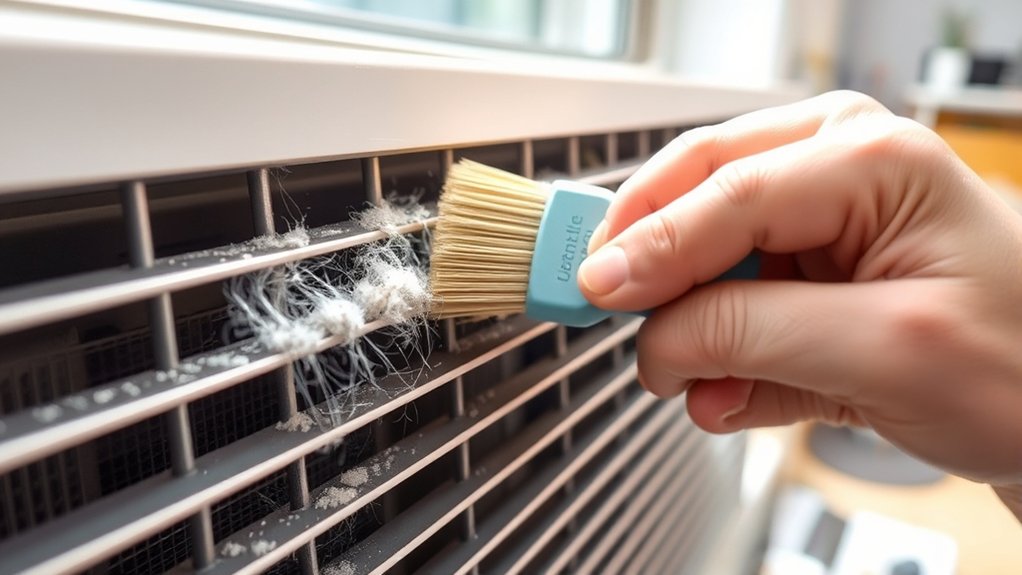
Regularly cleaning your AC’s condenser coils is key to keeping it running efficiently. Dirty coils make your unit work harder, which uses more energy and can lower cooling performance.
Keeping condenser coils clean boosts efficiency and prevents your AC from working harder.
When coils are dirty, indoor air quality can also suffer because airflow and filtration become less effective. To clean the coils, turn off the power to your AC first.
Gently remove debris like dirt, dust, and leaves using a soft brush or vacuum. For stubborn grime, spray on a coil cleaner according to the manufacturer’s instructions. Be careful not to bend the delicate fins, as damaged fins can block airflow.
Regular maintenance not only improves cooling but also helps your unit last longer. Keeping the coils clean ensures your AC runs smoothly, maintains good indoor air quality, and saves energy.
Try to inspect and clean the coils at least once a season for the best results.
How to Ensure Proper Drainage and Prevent Water Leaks
To prevent water leaks, it’s a good idea to regularly inspect the drain pan for any cracks or clogs. Just a quick check now and then can make a big difference.
Also, don’t forget to clear out any blockages in the drain line. When the line is free of obstructions, water can flow smoothly without backing up.
Staying on top of these simple steps really helps your unit drain properly and can save you from costly water damage down the line.
Check Drain Pan Regularly
One of the most important steps in maintaining your window AC unit is checking the drain pan regularly. Doing this often helps ensure proper drainage and prevents water leaks that could damage your home.
When you inspect, look for cracks, rust, or mold. These issues can block water flow and make the water collection unsafe. Clearing away debris and dirt keeps water flowing freely and smoothly.
Clear Drain Blockages
Ensuring that the drain is free of blockages is essential for proper drainage and to prevent water leaks. Over time, debris or dirt can clog the drain line, causing water to back up and leak. During window AC installation, check the drain pan and line for obstructions.
Regularly clear any debris using a pipe cleaner or a vacuum hose to maintain smooth drainage. If you notice water pooling or leaking, it might be due to a clogged drain. Keep your remote control troubleshooting skills in mind—sometimes a simple reset or battery change can fix operational issues instead of water leaks.
Clearing drain blockages keeps your unit functioning efficiently and prevents costly repairs. This ensures your window AC runs smoothly and quietly all season long.
Checking and Tightening Electrical Connections
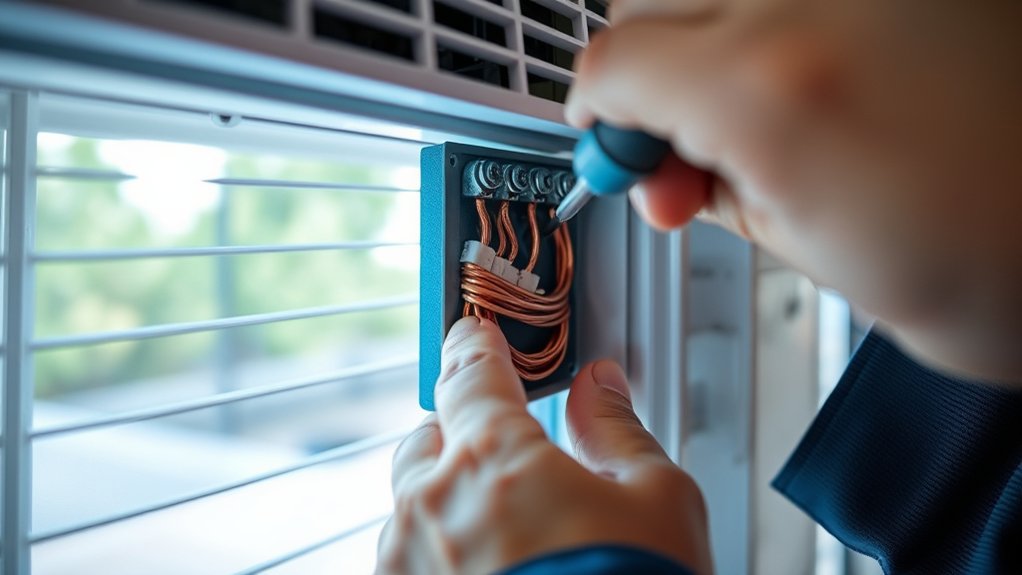
Regularly inspecting and tightening electrical connections can prevent potential malfunctions and ensure your window AC operates safely. Loose or corroded wiring can pose serious electrical safety risks, leading to shorts or fire hazards.
During wiring inspection, look for frayed wires, burn marks, or corrosion that could compromise the connection. Tighten any loose terminals to make sure they fit securely.
Remember, a small oversight can cause your AC to malfunction or become unsafe to use. Feeling confident about your wiring helps keep your home protected from electrical hazards.
Enjoy peace of mind with a safe, efficient cooling system. It also helps prevent unexpected breakdowns that can disrupt your comfort.
Ultimately, proper wiring inspection and maintenance protect your loved ones from dangerous electrical issues. It’s a simple step that makes a big difference for safety and peace of mind.
Adjusting the Thermostat for Better Cooling and Energy Savings
Adjusting your thermostat correctly can make a big difference in both your comfort and energy bills. Proper calibration ensures your AC keeps the right temperature efficiently.
Start by setting your thermostat to a comfortable level, usually around 78°F when you’re home. If your home feels warmer or cooler than that, consider recalibrating the thermostat to match the actual room temperature.
Temperature calibration involves comparing the thermostat reading with a reliable thermometer and adjusting the device if it’s off. Many modern units have a calibration feature; if yours doesn’t, you might need to replace or repair the thermostat.
Consistent calibration prevents your AC from cycling unnecessarily, saving energy and reducing wear. A well-calibrated thermostat keeps your space comfortable while minimizing energy use.
Take some time to check and adjust your thermostat periodically to ensure efficient cooling and effectiveness.
When and How to Schedule Professional Maintenance
Knowing when to schedule professional maintenance can really make a difference in keeping your window AC running smoothly and efficiently. It’s generally a good idea to book a service before the busy summer months hit or after you’ve used it heavily. That way, you can catch any issues early and make sure everything’s working properly when you need it most.
Of course, doing regular yearly checkups is always a smart move. Hiring a professional not only ensures a thorough cleaning but also helps with any repairs that might be needed. This can really extend your unit’s lifespan and keep it performing at its best all season long.
Optimal Maintenance Timing
Scheduling professional maintenance at the right times can keep your window AC unit running efficiently and prevent costly repairs. It’s best to schedule a tune-up before the peak cooling season, especially after a recent window AC installation.
Regular maintenance boosts energy conservation, saving you money and reducing environmental impact. Consider booking service in spring and early summer to ensure your unit performs well during the hot months.
Don’t wait until your AC breaks down or struggles to cool. Proactive maintenance keeps it running smoothly and gives you peace of mind.
Feel the relief of a cool, comfortable home all summer long. Know you’re protecting your investment in window AC installation.
Experience the satisfaction of lower energy bills and avoid the stress of unexpected breakdowns. Expert care when you need it most makes all the difference.
Professional Service Benefits
Getting your window AC unit professionally serviced at the right times guarantees it operates efficiently and lasts longer. Regular professional maintenance helps improve indoor air quality by ensuring filters and coils are clean, reducing dust and allergens. It also optimizes energy consumption, saving you money on utility bills.
Scheduling service before peak usage seasons ensures your unit runs smoothly when you need it most. Professionals check for refrigerant leaks, electrical issues, and worn parts, preventing costly breakdowns. They can identify and fix small problems early, avoiding more extensive repairs later.
Troubleshooting Common Window AC Problems and Fixes
When your window AC unit isn’t cooling effectively or making strange noises, it’s often a sign that something’s wrong. You might need to check a few common issues.
First, make sure you’ve replaced the air filter. A clogged filter blocks airflow and reduces cooling efficiency. If the unit still doesn’t cool well despite a clean filter, it could need a refrigerant recharge—low refrigerant levels cause poor cooling and ice build-up.
Strange noises like banging or squealing might mean loose parts or a failing fan motor. Also, check for dirt or debris blocking the vents or condenser coils, which can weaken performance.
Sometimes, a simple reset or power cycle can restore your unit’s function. Don’t forget to verify that the thermostat is set correctly.
Addressing these issues quickly can prevent costly repairs and keep your AC running smoothly.
Feeling frustrated with poor cooling? Fix it today. Tired of strange noises disrupting your comfort? Worried about rising energy bills? Frustrated by recurring breakdowns? Or do you just want to enjoy cool air effortlessly?
These simple checks can help you get back to comfort fast.
Simple Tips to Improve Your Window AC’s Energy Efficiency
To maximize your window AC’s energy efficiency, start by sealing any gaps around the unit and nearby windows. Proper sealing keeps cool air in and warm air out, so your AC doesn’t have to work as hard.
Seal gaps around your window AC to keep cool air in and reduce energy use effectively.
Think about installing energy-saving upgrades like weather stripping or foam insulation around the window frame. These help maintain a steady indoor temperature and reduce the workload on your AC.
During the hottest parts of the day, keep curtains or blinds closed to block out heat gain. Regularly cleaning or replacing filters also improves airflow and keeps your AC running efficiently.
Using a programmable thermostat can help you manage cooling cycles better and cut down on energy use. Combining window insulation with these simple tips will lower your bills, prolong your AC’s life, and keep your home comfortably cool.
How to Store Your Window AC Off-Season and Extend Its Life
Properly storing your window AC unit during the off-season can considerably extend its lifespan. Seasonal storage and indoor protection are key to preventing damage from the elements and dust buildup. To keep your unit in top shape, follow these steps:
- Clean and dry the unit thoroughly to prevent mold and corrosion.
- Cover it with a breathable, weather-resistant cover for indoor protection.
- Store it in a cool, dry place away from direct sunlight and moisture.
- Remove and store any removable filters or components safely.
- Inspect the unit for any damage before storing, and address issues promptly.
Taking these precautions keeps your AC protected during months of inactivity. Proper seasonal storage helps prevent rust, corrosion, and electrical issues, saving you money and hassle in the long run.
When spring arrives, you’ll be ready to install a clean, well-preserved unit that works efficiently.
Frequently Asked Questions
How Often Should I Replace My Window AC Filter?
You should replace your window AC filter every one to two months to keep airflow proper and your cooling effective.
Changing the filter regularly helps prevent dust buildup, boosts energy efficiency, and keeps the air clean.
If you use your unit a lot or have allergies, you might want to change the filter more often.
Keep an eye on how the filter looks; when it appears dirty or clogged, it’s time to swap it out.
This way, your AC can run smoothly and efficiently all season long.
What Signs Indicate My AC Needs Professional Repair?
Imagine your AC as a car; when strange noises, poor cooling, or a sudden spike in energy bills appear, it’s like your vehicle signaling trouble. Signs your AC needs a pro include inconsistent cooling, strange noises, or ice buildup.
Watch for refrigerant leaks that cause reduced efficiency and electrical issues that lead to frequent breaker trips. If you notice any of these, it’s time to call a professional to diagnose and fix the problem.
Can I Upgrade My Window AC for Better Efficiency?
Yes, you can upgrade your window AC for better efficiency. Modern units are designed to improve energy efficiency, helping you save on energy bills.
Look for models with high SEER ratings and energy-efficient features. Upgrading can significantly cut your cooling costs and reduce your environmental impact.
Make sure to choose a unit that fits your window size and cooling needs. This will ensure better performance and maximum savings over time.
What Safety Precautions Should I Follow During Maintenance?
Like a guardian watching over your safety, you should always prioritize electrical safety during maintenance. Turn off the power before starting, and unplug the unit to prevent shocks.
Wear personal protective equipment such as gloves and safety glasses to protect yourself from sharp edges or debris. Avoid working in wet conditions, and handle refrigerants carefully.
These precautions help ensure you stay safe while keeping your window AC in top shape.
How Do I Prevent Mold Growth in My Window AC Unit?
To prevent mold growth in your window AC unit, regularly clean or replace the filters. This helps improve air quality and reduces moisture buildup.
Keep the area around the unit dry and make sure the drainage is working properly to prevent water from pooling.
You can wipe down the interior surfaces with a mixture of vinegar and water, as vinegar helps inhibit mold growth.
Routine maintenance like this keeps the air clean and helps your unit run smoothly, stopping mold from taking hold.
Conclusion
Just like a well-tuned orchestra, your window AC needs regular care to perform at its best. Keep up with cleaning, inspections, and timely maintenance, and your unit will run smoothly for years to come. Think of it as tending to a trusted companion—your comfort depends on it.
With a little attention, you’ll enjoy cool, refreshing air all season long. This makes every summer feel like a breath of fresh air in your own personal oasis. Proper maintenance is key to keeping your window AC unit functioning efficiently and reliably.