10 Steps to Clean Mold Out of Your Window AC Unit
Many people struggle with mold buildup in their window AC units, especially during humid months. It’s a common problem that can affect air quality and overall comfort. But don’t worry—you’re not alone, and there are simple ways to keep your AC clean and mold-free.
To clean mold from your window AC, start by turning off and unplugging the unit. Remove and inspect the filter and coils for mold or debris. Clean all surfaces with a mold-safe cleaner or vinegar, scrubbing gently to loosen buildup.
Dry the unit completely with towels and fans. Reassemble, test the operation, and keep your space dry and well-ventilated.
For step-by-step details to guarantee your AC stays mold-free, keep exploring these tips.
Key Takeaways
- Turn off and unplug the AC, then remove and inspect the air filter and coils for mold or debris.
- Clear the surrounding area and gather cleaning supplies, including a mold-specific cleaner, gloves, and masks.
- Clean all accessible parts with water and a mild detergent or mold cleaner, then rinse and dry thoroughly.
- Use a disinfectant like vinegar or hydrogen peroxide on mold-prone surfaces and make sure everything dries completely.
- Reassemble the unit, test it out, and set up ongoing maintenance like regular filter changes and controlling moisture.
Why Mold Forms in Your Window AC and How to Prevent It
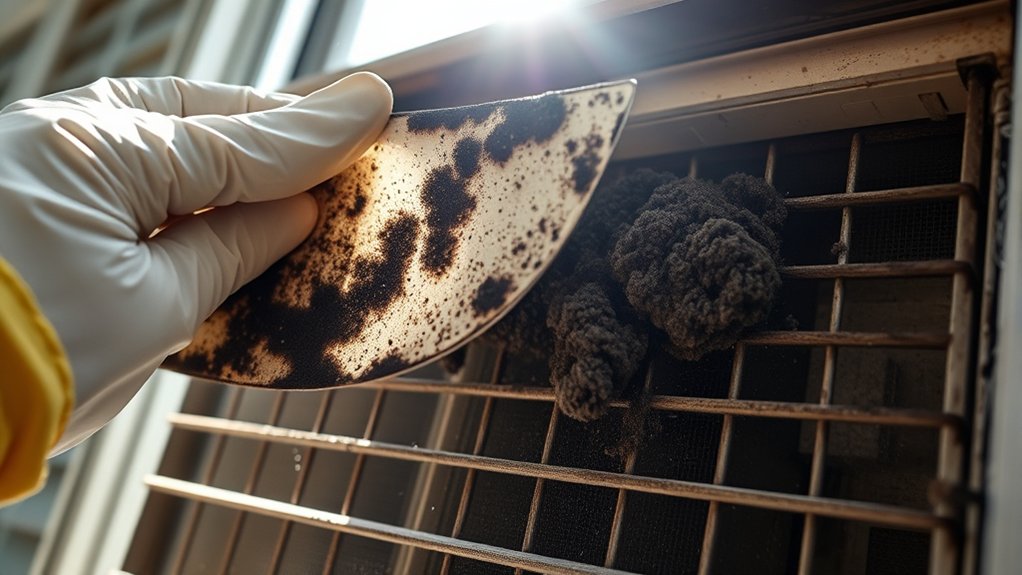
Have you ever wondered why mold tends to grow in your window AC unit? Mold causes moisture build-up, which thrives in the damp, cool environment inside your unit.
When the evaporator coil, drip pan, or filters stay wet for too long, mold spores find the perfect conditions to grow. Poor ventilation and infrequent cleaning also contribute to mold formation.
Wet coils, drip pans, and filters promote mold growth; poor ventilation and infrequent cleaning make it worse.
To prevent mold, regular maintenance is essential. Cleaning or replacing filters often, ensuring proper drainage, and keeping the area around your AC dry can make a big difference.
Running the unit periodically helps circulate air and reduce moisture buildup. Using a dehumidifier nearby can also lower humidity levels, making it harder for mold to take hold.
Preparing Your Space for Window AC Cleaning
Before you get started cleaning your window AC, make sure to clear the area around it. This gives you plenty of space to work and makes the whole process a lot easier.
Next, gather up everything you’ll need—things like cleaning solutions, rags, and a screwdriver. Having everything ready to go means you won’t have to stop in the middle to search for supplies. It really helps things go smoothly and prevents any interruptions along the way.
Clear Surrounding Area
To guarantee a smooth cleaning process, start by clearing the area around your window AC unit. Remove any furniture, curtains, or obstacles that could block access or get in the way. This creates enough space to work safely and efficiently.
As you clear the area, gather your cleaning supplies nearby for quick access. Remember to follow safety precautions—wear gloves and a mask to protect against mold spores and dust.
Move electrical cords away from the workspace to prevent accidents. Clearing the surrounding area not only protects your belongings but also minimizes the risk of cross-contamination.
A tidy, obstacle-free space makes it easier to reach all parts of your unit and ensures a thorough, safe cleaning process.
Gather Necessary Supplies
Gathering your supplies before starting the cleaning process guarantees you can work efficiently without interruptions. Begin by assembling soap, water, and a soft brush for scrubbing mold and dirt.
You’ll also need a microfiber cloth and a spray bottle with disinfectant or vinegar solution for cleaning surfaces. Don’t forget to have replacement air filters on hand for air filter maintenance; a clean filter helps prevent mold buildup.
Furthermore, ensure good outdoor ventilation by opening windows or using a fan to circulate fresh air and reduce moisture. Protective gear such as gloves and a mask is essential to avoid inhaling mold spores.
Having all these supplies ready keeps the process smooth and minimizes the risk of cross-contamination or missed steps.
Removing and Inspecting AC Components for Mold
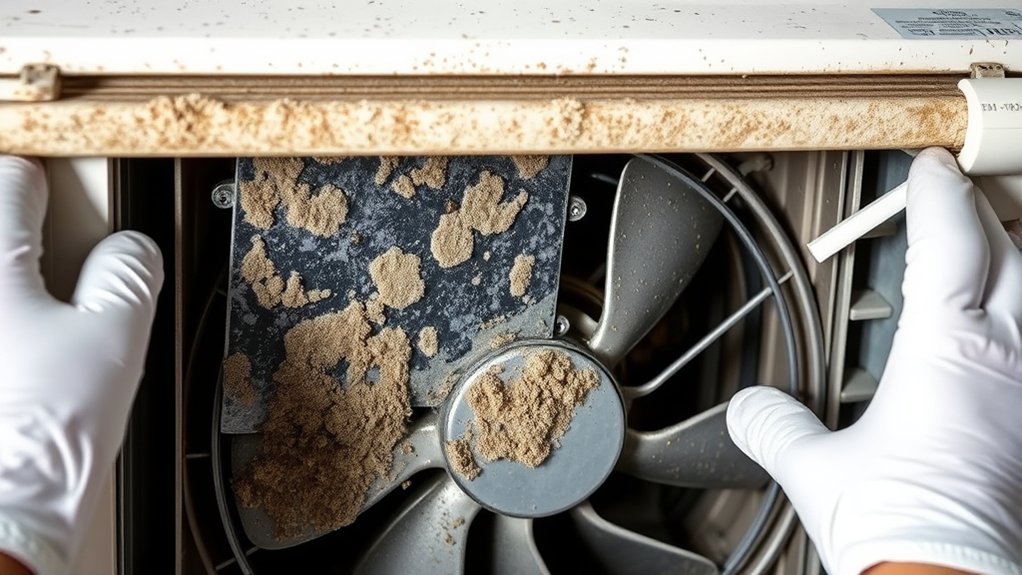
Inspecting your AC unit for mold involves carefully removing key components like the filter, grille, and access panels. Start by turning off the unit and disconnecting it from power.
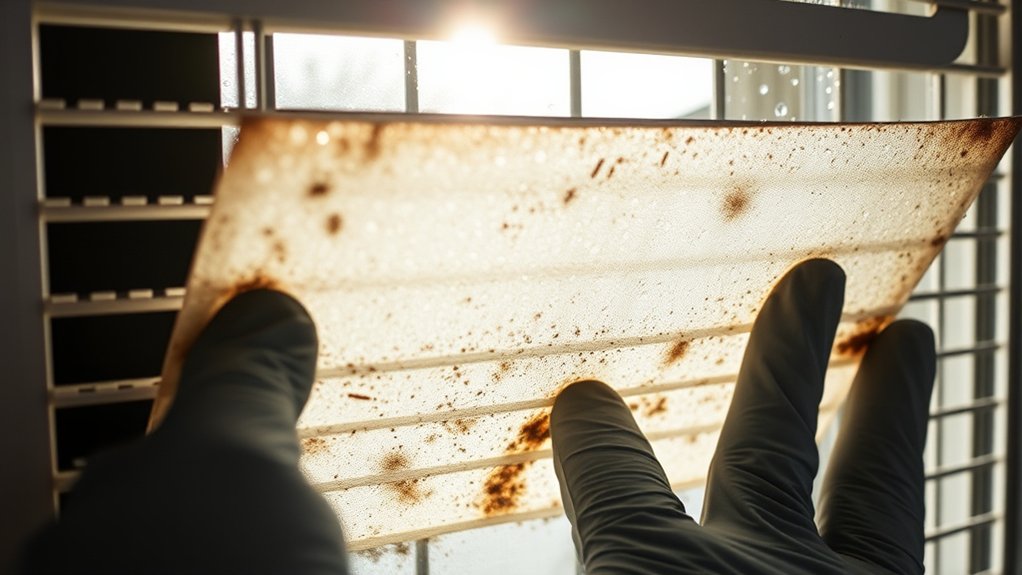
Once it’s off, open up the unit and check the air filter for mold growth or debris. This is a sign that it needs cleaning or replacing. After that, look at the coil for any signs of mold, dirt, or discoloration.
A dirty coil can trap mold spores, so it’s important to inspect it thoroughly. To do this, remove the grille and access panels carefully to expose the coil. Conduct a detailed inspection for mold, algae, or any residue.
Safe and Effective Ways to Clean Mold From Your AC
Once you’ve spotted mold on your AC components, it’s crucial to clean it thoroughly and safely. Use a mixture of water and mild detergent or a specialized mold cleaner to wipe down the affected areas.
Avoid harsh chemicals that could damage parts or reduce your unit’s energy efficiency. Wearing gloves and a mask helps protect you during the cleaning process.
After scrubbing, rinse with clean water and dry completely to prevent mold from coming back. You can also use a disinfectant like diluted vinegar or hydrogen peroxide on surfaces prone to mold growth.
These solutions not only kill mold but also help prevent future outbreaks, supporting mold prevention efforts. Keeping your unit dry and well-maintained improves energy efficiency, as a clean, mold-free AC runs more smoothly and consumes less power.
Regular cleaning and proper drying are key to maintaining a healthy, efficient cooling system and avoiding costly repairs caused by mold buildup.
Scrubbing the Evaporator Coils and Inside Surfaces
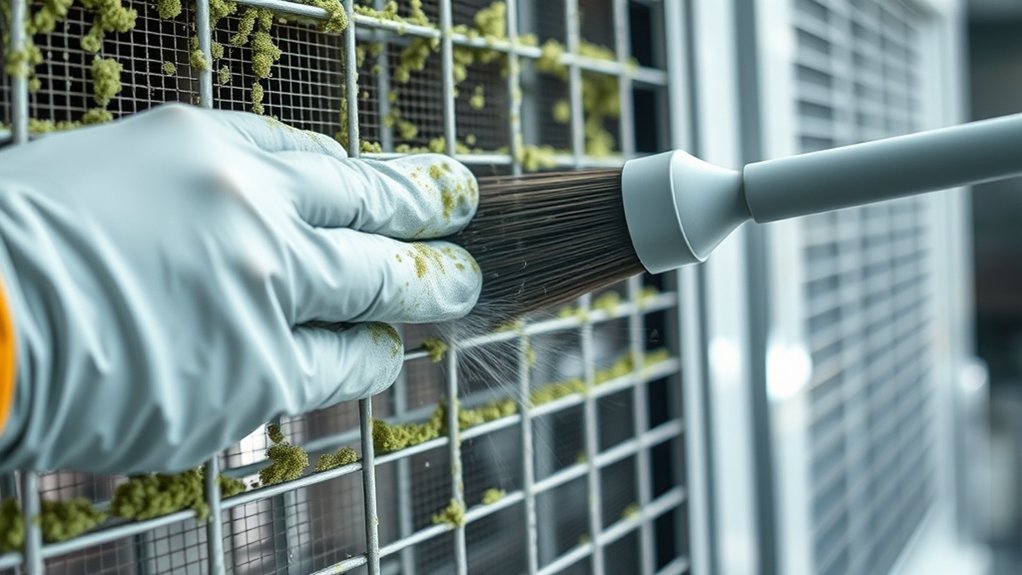
Before you begin scrubbing, it’s a good idea to remove any loose debris from the coils and inside surfaces. This way, you’ll get a cleaner, more thorough result.
Once that’s done, apply a cleaning solution specifically designed for mold and dirt buildup. This helps break down the grime and makes the actual scrubbing much easier and more effective.
Remove Loose Debris
Start by removing any loose debris from the evaporator coils and inside surfaces of your window AC unit. Clearing away dust, dirt, and debris helps prevent mold growth and makes it easier to maintain the air filter.
Once the debris is gone, use a soft brush or cloth to gently scrub the coils and surfaces. This prepares the unit for a deeper clean and helps mold-resistant coatings stick better.
Here are some tips:
- Use a vacuum with a brush attachment to pick up loose particles.
- Check for and remove any visible mold or residues.
- Keep the interior dry to stop mold from coming back and to help mold-resistant coatings work effectively.
Removing debris now makes future cleaning easier and helps your unit last longer.
Apply Proper Cleaning Solution
After removing loose debris, it’s time to apply a cleaning solution to effectively eliminate mold and grime from the evaporator coils and inside surfaces. Use a mold-safe, antimicrobial cleaner or a mixture of water and mild detergent to target mold spores and prevent future growth.
Spray the solution generously onto all surfaces, making sure to cover the coils thoroughly. Let it sit for several minutes to break down mold and grime buildup. Scrubbing with a soft brush will loosen stubborn mold and dirt.
Proper cleaning improves air quality by removing mold spores that can circulate through your unit. Regular use of a suitable cleaning solution not only clears existing mold but also helps prevent mold recurrence, ensuring your AC unit stays clean and safe for your household.
Disinfecting the Air Filter and Drain Pan
Disinfecting the air filter and drain pan is essential for preventing mold growth and keeping the air clean. Proper maintenance of your air filter and drain pan helps stop mold from thriving in your unit.
To disinfect effectively, remove the air filter and soak it in water mixed with a mild disinfectant or vinegar for 10-15 minutes. Rinse it thoroughly and let it dry.
Clean the drain pan with a bleach and water solution, scrubbing away grime or mold buildup. Rinse well to remove any residue.
Wipe down the drain pan and surrounding areas with a clean cloth dampened with disinfectant to eliminate lingering mold spores.
This process ensures mold doesn’t spread and keeps your AC running efficiently. Regularly disinfecting your air filter and drain pan as part of your routine is key to healthy, mold-free air.
Drying Your Window AC Completely to Stop Mold Growth
To stop mold from coming back, it’s really important to dry out your window AC completely. You want to make sure there’s no leftover moisture that mold can cling to.
One good way to do this is by using proper ventilation. Open up windows or turn on fans to help air circulate and speed up the drying process. This way, the moisture evaporates faster and leaves your unit dry.
And don’t forget, removing any remaining water inside the AC is key. You can use towels or a wet/dry vacuum to get rid of those damp spots. When everything is dry, it becomes much harder for mold to grow, keeping your AC fresh and clean.
Proper Ventilation Techniques
Drying your window AC unit thoroughly is essential to prevent mold from coming back. Proper ventilation helps promote air circulation, which speeds up drying and reduces leftover moisture.
To get the best results, keep the unit’s vents open after cleaning so air can keep flowing. Using fans or dehumidifiers nearby can also help improve circulation and remove excess moisture.
If possible, leave the window slightly open to let fresh air in and prevent humidity from building up inside.
These simple steps stop moisture from lingering inside the unit, creating a perfect environment for mold to grow. Good air circulation is key to drying your AC completely and keeping your space healthy and mold-free.
Effective Water Removal Methods
After ensuring proper ventilation, removing residual water from your window AC unit is the next important step to prevent mold growth. Leftover moisture creates a perfect environment for mold spores to thrive, which can harm your air quality.
To dry your unit effectively, wipe down all accessible surfaces with a clean, absorbent cloth or towel. Then, run the fan or blower on the highest setting to circulate air and speed up evaporation.
If possible, leave the unit open for a few hours in a well-ventilated space. This helps facilitate thorough drying and prevents mold spores from taking hold.
Ensuring the entire unit is dry is key to maintaining healthy indoor air quality. Proper water removal is essential for mold prevention and cleaner air inside your home.
Reassembling and Testing Your Cleaned Air Conditioner
Once you’ve thoroughly cleaned the components, it’s time to reassemble your air conditioner carefully. Make sure each part fits securely in its original position.
Carefully reassemble your air conditioner, ensuring each part fits securely for optimal performance.
Start by reinstalling the filter, ensuring it’s properly seated. This helps maintain good airflow and makes future filter changes easier.
Next, reattach the cover panels, checking that all screws are tight to prevent rattling. Once assembled, plug in your unit and turn it on to test how it’s working.
Focus on these key steps: verify the compressor runs smoothly without strange noises, which could mean troubleshooting is needed. Check that air flows freely through the vents, confirming the filter is installed correctly.
Run the unit for a few minutes to make sure it cools effectively and cycles on and off as it should. These checks help confirm your cleaning was successful and your window AC is ready to use regularly.
Tips for Keeping Your Window AC Mold-Free Long-Term
Keeping your window AC mold-free over the long term requires consistent habits and regular maintenance. To prevent mold, regularly clean or replace the air filter since dirty filters trap moisture and debris that promote mold growth.
Make sure there’s proper air circulation around the unit by keeping furniture and curtains away from vents. This helps prevent humidity buildup, which can lead to mold.
Use a dehumidifier or run your AC in dry conditions to keep humidity levels below 60%. Lower humidity discourages mold from developing.
Keep the area around the unit clean and dry. Wipe down surfaces to remove dust and excess moisture that can support mold growth.
Schedule monthly inspections to check for signs of mold or excess condensation. Running the fan periodically, even when the AC isn’t cooling, promotes air circulation and reduces stagnant air that can lead to mold.
Consistent maintenance and good airflow habits are key to keeping your window AC mold-free and helping it last longer.
When to Call a Professional for Mold Removal Help
Sometimes, mold growth in your window AC unit can become too extensive or stubborn to handle on your own. If you notice persistent mold despite cleaning efforts, it’s time to think about professional help.
You should call a pro if the mold covers a large area or keeps coming back after cleaning.
If you notice a strong or musty odor that won’t go away, it’s also a sign to get expert assistance.
And if you experience respiratory issues or allergic reactions when using the unit, don’t wait—seek professional help.
Trying to remove mold in these situations can be risky. Spores may spread or worsen if not handled properly.
A professional mold remediation service can safely eliminate mold and thoroughly clean your AC.
They have the right equipment and expertise to tackle stubborn growth, preventing health problems and further damage.
When mold becomes severe or persistent, don’t hesitate to contact an expert for peace of mind and a healthier environment.
Frequently Asked Questions
How Often Should I Clean My Window AC to Prevent Mold?
You should clean your window AC regularly—ideally once a month during peak use—to prevent mold growth. Focus on maintaining the air filter and inspecting the drainage.
Make sure to replace or clean the filters and check that the drains are clear of debris. This routine helps reduce moisture buildup, which can encourage mold.
If you notice a musty smell, clean it immediately. Regular upkeep keeps your unit running smoothly and helps prevent mold from spreading.
Can Mold in My AC Cause Health Problems?
Yes, mold in your AC can cause health problems. It can make the air quality worse, leading to issues like allergies or asthma.
When mold spores circulate through your home, they can irritate your lungs and nasal passages, especially for sensitive folks. Regular cleaning of your unit helps stop mold from growing and keeps the air cleaner.
If you notice persistent mold, it’s a good idea to call in a professional for a thorough cleanup.
What Cleaning Products Are Safest for My Window AC?
Think of your AC as a shield, protecting your air from airborne spores. To keep it strong, use safe cleaning products like mild dish soap or vinegar, which are effective and gentle.
Mold-resistant sprays can be helpful for prevention, but just make sure they’re non-toxic. Avoid harsh chemicals, as they can irritate your lungs.
Regular cleaning with these safe options helps maintain a healthy, mold-free environment in your home.
How Do I Identify Hidden Mold Inside the Unit?
To identify hidden mold inside your window AC unit, start by looking for musty odors, visible discoloration, or moisture buildup. These signs can often point to mold lurking inside.
Next, inspect air filters, vents, and coils closely, since mold can hide in hard-to-see spots. Using a flashlight can help you get a better look in those dark areas.
You might also notice increased allergies or respiratory issues if mold is present. Regularly check for signs of mold, and if you suspect it, consider using a mold test kit to confirm what’s there.
Is It Necessary to Replace My AC After Mold Removal?
Think of your AC as a trusted ship; if mold has taken over, replacing it isn’t always necessary. After mold removal, you should inspect and possibly replace your air filter to prevent future growth.
Also, make certain electrical components are safe, avoiding potential hazards. If the unit shows extensive damage or persistent mold issues, then replacement might be the best course.
Otherwise, proper cleaning and maintenance keep your AC sailing smoothly.
Conclusion
Don’t let mold turn your cool comfort into a health hazard. With these simple steps, you can effectively clean your window AC and prevent future mold growth.
Think it’s too messy or time-consuming? It’s easier than you think, and the benefits—clean air and peace of mind—are worth the effort.
Just stay consistent with maintenance, and you’ll enjoy a fresher, healthier home. Regular cleaning of your window AC helps prevent mold buildup and keeps your space safe.
By following these steps, you’ll keep mold out of your window AC and maintain a healthier environment. Proper care is key to avoiding costly professional help down the line.