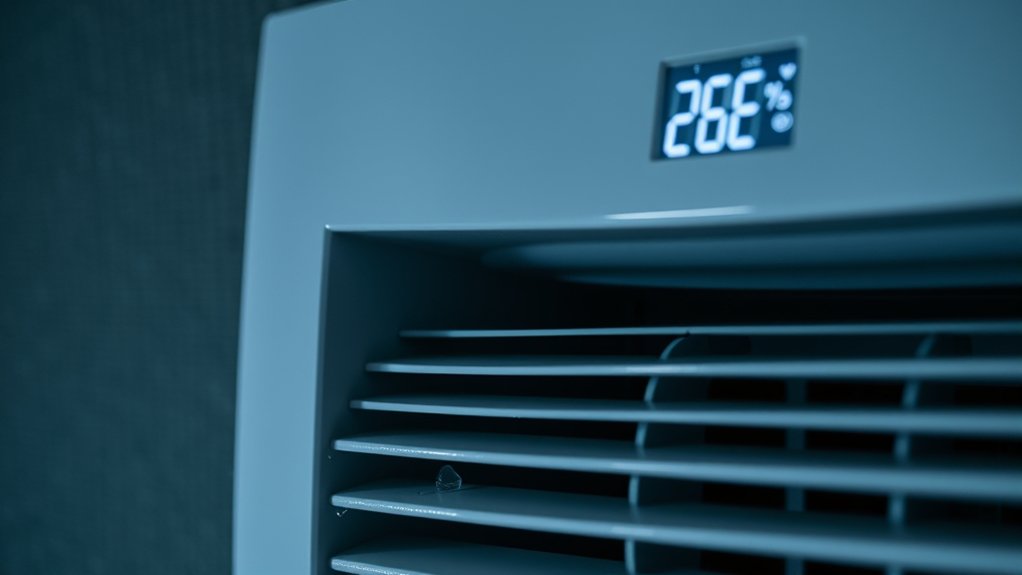
How to Diagnose Why Isn’t My AC Blowing Cold Air
Are you tired of your AC not blowing cold air when you need it most? You’re not alone—many people struggle with their cooling systems not performing as they should, especially during the hottest days. Troubleshooting your AC can seem daunting, but with a few simple checks, you might find the fix is easier than you think.
If your AC isn’t blowing cold air, start by checking your thermostat settings and replacing batteries if needed. Make sure the air filter is clean and free of debris, and inspect vents for blockages.
Look at your outdoor unit for dirt, obstructions, or damage. Confirm the power supply and circuit breakers are working properly. Environmental factors can also affect cooling.
For more tips on troubleshooting effectively, keep exploring these common issues.
Key Takeaways
- Check that the thermostat is set to “cool” and the temperature is lower than the room temperature.
- Inspect and replace dirty air filters to make sure airflow isn’t blocked.
- Verify that the outdoor unit is clear of debris and the condenser fins are clean.
- Confirm refrigerant levels are adequate and look for leaks or oil spots.
- Listen for unusual noises or odors, which could indicate mechanical issues or refrigerant problems.
Why Is My Air Conditioner Not Cooling Properly?
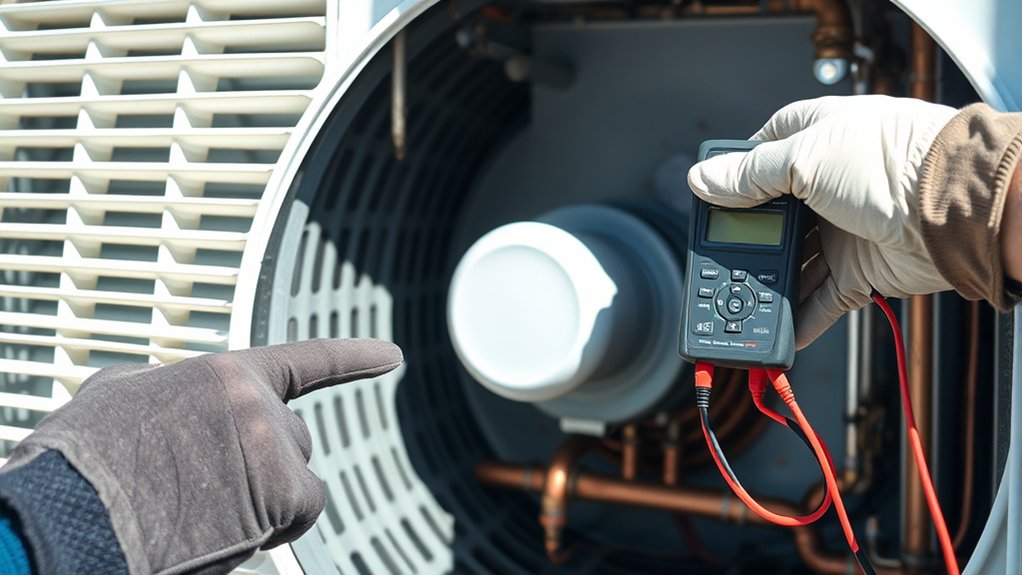
If your air conditioner isn’t cooling properly, there could be a few common issues causing the problem. One possibility is that your system isn’t running at peak energy efficiency, making it harder to cool your space effectively.
Regular maintenance is really important. If you skip scheduled checkups, filters can get dirty, coils can clog up, or refrigerant might leak—all of which can hurt cooling performance. Dust and debris on filters and coils block airflow, forcing your AC to work harder and less efficiently.
Low refrigerant levels can also prevent your AC from reaching the right temperature. Ignoring these issues might cause the system to run constantly without cooling properly. To fix things, schedule routine maintenance, clean or replace filters regularly, and make sure your refrigerant levels are correct.
Keeping up with maintenance helps improve energy efficiency and keeps your AC working at its best. It also helps prevent cooling problems before they even start.
Check Your Thermostat Settings and Replace Batteries
Sometimes, simple thermostat issues can cause your AC to stop blowing cold air. First, check your thermostat settings. Make sure it’s set to “cool” and the temperature is lower than the current room temp.
If your thermostat uses batteries, it might need a quick replacement. Dead batteries can cause calibration errors or stop the thermostat from working properly.
Here’s a visual to help you imagine your thermostat’s status:
| Thermostat Setting | Battery Status | Calibration Accuracy |
|---|---|---|
| Set to “cool” | Check and replace if dead | Ensure it reads correctly |
| Temperature low | Fresh batteries | Confirm it’s calibrated properly |
| Display shows errors | Replace batteries | Reset calibration if needed |
Taking these steps guarantees your thermostat accurately controls your AC. This helps it blow cold air again.
Inspect and Clean Your Air Filter
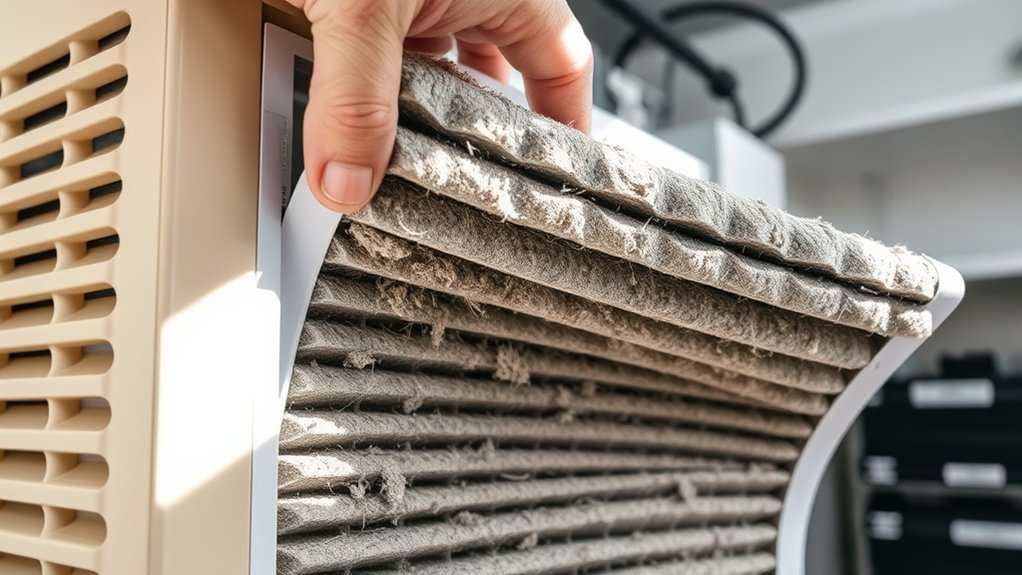
Have you checked your air filter lately? Dust buildup can block airflow, making your AC work harder and reducing cooling efficiency. Inspecting and cleaning your air filter is a simple step that can make a big difference.
When you remove the filter, imagine it covered in thick layers of dust and dirt, piles of pet hair and pollen, debris, small particles, discolored and clogged fibers, and visible grime and allergens.
A dirty filter restricts airflow, causing your AC to strain and blow warm air. Cleaning or replacing it ensures proper circulation and helps your system run smoothly. Regular maintenance also prolongs your unit’s lifespan and improves indoor air quality. Keep an eye on dust buildup and don’t skip this important step if your AC isn’t blowing cold air.
Look for Blockages in Vents and Registers
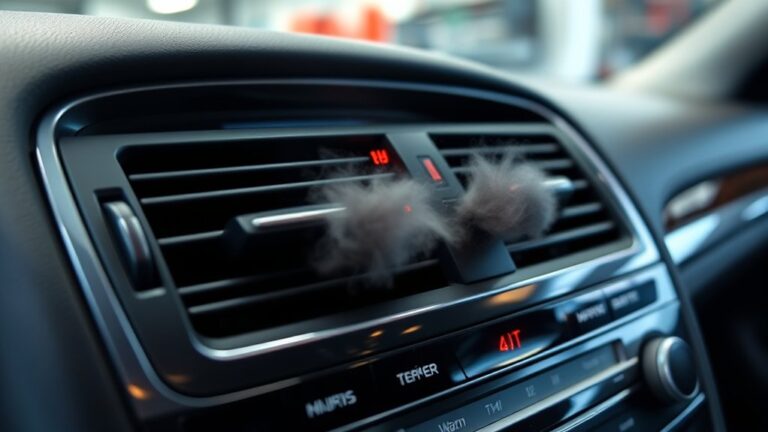
Vents and registers can easily get blocked by dust, debris, or furniture, which restricts airflow and makes it harder for your AC to cool your space effectively. When vents are obstructed, less cool air reaches your rooms, leading to uneven cooling.
Check each vent and register to see if anything is blocking the opening or if dust has built up. Remove furniture, curtains, or objects that might be blocking airflow. Use a vacuum or a damp cloth to clean dust and debris from the vents and registers thoroughly.
Proper airflow is key for your AC to work efficiently. Blockages can cause uneven cooling or make your system run longer without cooling effectively. Regularly inspecting and clearing obstructions helps keep airflow steady and your AC running smoothly.
Take a Peek at Your Outdoor Conductor Unit
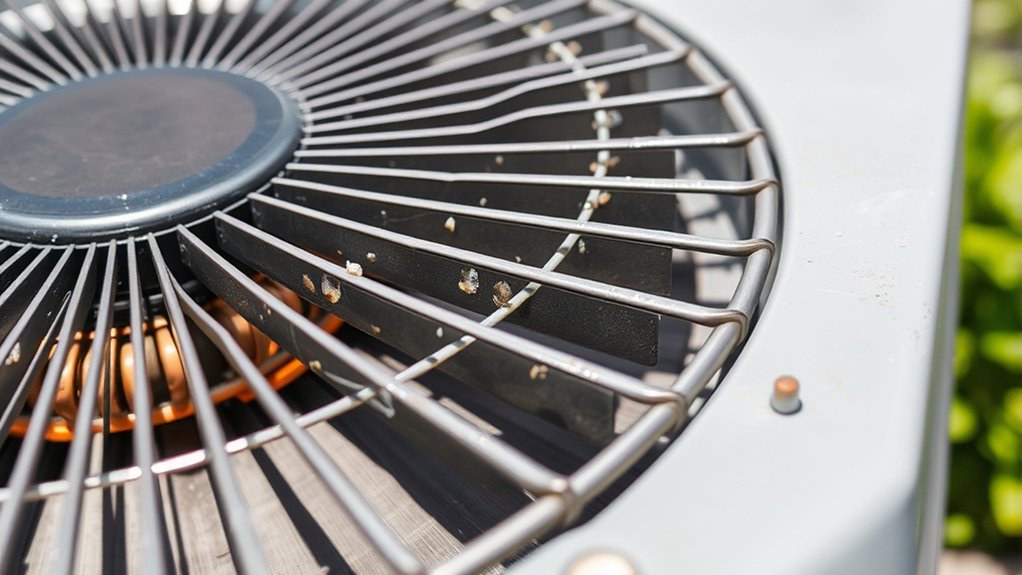
Your outdoor condenser unit plays a vital role in cooling your home, so it’s important to inspect it regularly. Proper outdoor unit maintenance ensures peak performance and energy efficiency.
Start by checking for debris like leaves, dirt, or grass that might block airflow. Clear away any obstructions around the unit to prevent overheating.
Next, look at the condenser fins for dirt buildup or damage. Regular cleaning helps keep heat transfer effective. Make sure the unit is level and stable; an uneven foundation can cause issues.
Check the fan to see if it’s spinning freely and quietly. Finally, inspect the electrical connections for corrosion or loose wires, which could impair operation.
Test Refrigerant Levels and Look for Leaks
First off, take a look at the refrigerant levels to see if they’re where they should be. While you’re at it, keep an eye out for any signs of leaks around the coils, fittings, or hoses. Leaks can lead to low refrigerant, which definitely impacts cooling performance. If you notice that the levels are low or you spot any leaks, it’s a good idea to call in a professional to handle the repairs safely.
Check Refrigerant Quantity
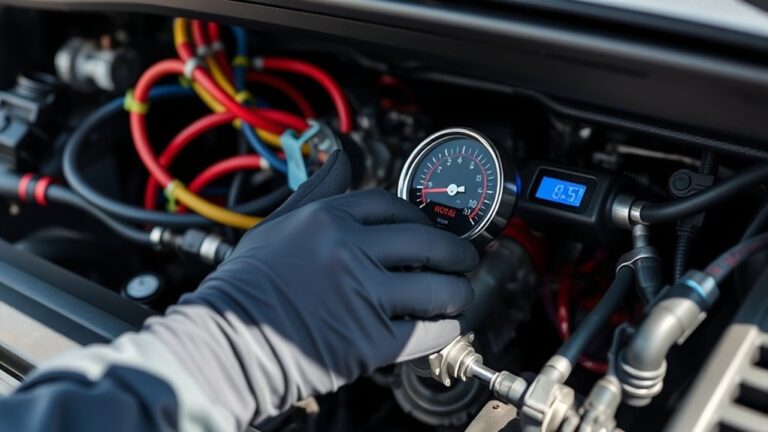
Checking refrigerant levels is a key step when diagnosing why your AC isn’t blowing cold air. You want to make sure the refrigerant is within the recommended range.
Low refrigerant often points to a leak, so leak detection is essential. To check, you’ll use gauges to measure pressure and compare it to the manufacturer’s specs.
Visualize the process with these steps:
- Connecting gauges to service ports
- Reading pressure levels accurately
- Noticing if pressure is below normal
- Listening for hissing sounds that could mean leaks
- Preparing for refrigerant recharge if needed
If the refrigerant is low, don’t just top it off. Consider leak detection first to prevent future issues. Properly checking refrigerant quantity helps determine if a recharge is needed or if a leak needs fixing.
Inspect for Leaks
After measuring refrigerant levels, it’s important to look for signs of leaks that could be causing the low refrigerant. Refrigerant leaks are common and can significantly reduce your AC’s cooling power.
Inspect the refrigerant lines, connections, and coils for oily spots or corrosion, which often indicate leaks. Using a leak detector or soap solution can help spot small leaks quickly.
If you find leaks, you’ll need to repair or replace the damaged components. Also, consider sealing your ductwork if cool air isn’t reaching your vents well, as leaks there can mimic refrigerant issues.
Properly sealing ducts improves overall efficiency and makes sure cold air reaches your living space. Addressing refrigerant leaks promptly keeps your AC running smoothly and prevents further damage.
Watch Out for Strange Noises or Odors
Strange noises or odors coming from your AC unit are often signs that something isn’t working right. Unusual sounds like banging, squealing, or rattling can mean loose parts, a failing motor, or debris inside.
Odd odors, such as a musty or burning smell, might point to mold growth or electrical problems. These clues help you catch potential issues early before they get worse.
Picture these scenarios: a high-pitched squeal when the unit runs, grinding or banging sounds during operation, a foul moldy smell from vents, a burning odor indicating overheating, or a sweet chemical smell suggesting refrigerant leaks.
If you notice any of these strange noises or odors, turn off your AC right away and check it out or call a professional. Addressing these signs early can prevent bigger problems and keep your system running smoothly.
Ensure Your Power Supply and Circuit Breakers Are OK
First, make sure the power switch is turned on and working properly. Sometimes, it’s the small things that get overlooked, so it’s good to double-check.
Then, take a look at your circuit breaker. See if any of the switches have tripped and need to be reset. It’s a common issue, and resetting the breaker might just do the trick.
Lastly, test the power outlet to confirm it’s actually providing electricity. You can plug in another device or use a voltage tester to be sure your AC unit is getting the power it needs.
Check Power Switch
Is your AC not blowing cold air? First, check the power switch. It’s a simple step but important for saving energy and making sure your unit works properly.
Make sure the switch is fully turned on, not in the off position. Think of the switch as a small, often overlooked part that’s vital for your AC’s operation.
It’s usually located near the unit or on a wall. The switch looks like a standard light switch and is often labeled “On” or “Off.” It may be a toggle or rocker type and is easy to access for quick checking.
Ensure the switch is firmly in the “On” position. A loose or off switch cuts power and stops cold air from blowing.
Confirming this simple step can save you time and energy. It also helps your AC run efficiently.
Inspect Circuit Breaker
Have you checked your circuit breaker lately to see if your AC’s power supply is still on? It’s important to inspect the breaker to make sure your system is getting power.
Go to your breaker panel and look for switches that are flipped to the off position or appear tripped. Resetting the breaker might fix the problem if it’s tripped.
While you’re at it, check the electrical connections for any signs of damage, corrosion, or loose wires. Make sure everything is tight and secure.
A faulty or overloaded circuit can cause the breaker to trip repeatedly, which prevents your AC from blowing cold air. Regular inspections can help catch problems early before they get worse.
Test Power Outlet
Before digging deeper into your AC’s issues, it’s important to check if the power outlet is actually working. A faulty outlet can stop your AC from getting power, even if the circuit breakers look fine.
To test the outlet, plug in a device you know works, like a lamp or your phone charger. If it lights up or charges, the outlet is likely fine.
If it doesn’t power on, check for loose or damaged wiring behind the outlet. Be careful—if you see sparks, frayed wires, or burn smells, it’s best to call a professional.
Consider Environmental Factors That Affect Cooling
Environmental factors can really impact how well your air conditioner cools. Seasonal changes and outdoor temperature swings can make your AC seem less effective, especially during heatwaves or cold snaps.
When outdoor temps soar, your system has to work harder, which can reduce cooling performance. On the other hand, cooler weather might cause your AC to cycle less often, leading to less effective cooling.
Think about this emotionally:
| Situation | Your Response |
|---|---|
| Hot summer days strain your AC | It struggles to keep your home cool |
| Sudden cold snap hits your area | Your AC cycles less, losing efficiency |
| Prolonged high temps | Increased energy bills and discomfort |
Knowing these environmental factors helps you realize some issues are out of your control. Adjusting expectations during extreme weather or scheduling maintenance before seasons change can help your AC perform better all year.
When Should You Call a Professional for Help?
Knowing when to call a professional can save you time and prevent further damage to your AC. If you notice persistent issues like high indoor humidity or airflow restrictions despite basic troubleshooting, it’s time to seek expert help.
Call a professional if:
- The air isn’t cooling even after changing filters
- You hear strange noises or unusual vibrations
- The thermostat isn’t responding correctly
- There’s excessive indoor humidity that won’t go down
- Your AC runs constantly without cooling effectively
A technician can diagnose complex problems like refrigerant leaks or faulty compressors. They’ll also check for airflow restrictions caused by dirty ducts or blocked vents. Addressing indoor humidity issues often requires specialized equipment.
If basic cleaning doesn’t improve cooling, a professional can identify hidden problems that could damage your system long-term or impact air quality. Trusting an expert guarantees your AC runs efficiently and keeps your home comfortable.
Frequently Asked Questions
How Often Should I Replace or Clean My Air Filter?
You should replace or clean your air filter every 1 to 3 months, depending on how much you use it and the type of filter. Regular maintenance helps your AC run smoothly and keeps indoor air quality high.
Check your filter monthly during busy seasons, and stick to your replacement schedule to prevent reduced airflow or strain on your system.
If you have pets or allergies, you might need to change your filter more often for better comfort and performance.
Can a Dirty Evaporator Coil Cause AC to Blow Warm Air?
A dirty evaporator coil can definitely cause your AC to blow warm air. When the coil gets clogged with dust and grime, it can’t absorb heat well, which makes your system less efficient.
This buildup reduces cooling ability, so your AC struggles to cool the air properly. Regular coil cleaning and maintenance are key to keeping your AC running smoothly and preventing warm airflow.
Basically, keeping the coil clean helps your system do its job and keeps your home comfortable when you need it most.
What Are Common Signs of Refrigerant Leaks?
You might notice your AC has trouble cooling or see ice buildup on the lines, which can be a sign of refrigerant leaks. Low refrigerant levels often cause these issues, so it’s important to check them.
Other signs include hissing sounds or oily spots around the lines. These are good indicators that a leak might be present.
Conducting leak detection helps pinpoint the exact problem, allowing for proper repairs. This way, you can make sure your AC is working efficiently again.
How Can I Tell if My Thermostat Is Malfunctioning?
You can tell if your thermostat is malfunctioning by checking its calibration and wiring. If the temperature readings don’t match your desired settings, it might need recalibration.
Also, take a look at the wiring connections for any loose or damaged wires, which can cause inaccurate signals. If you have a digital thermostat, consider replacing the batteries.
If problems keep happening, you may need to replace the thermostat or get it professionally calibrated to make sure your AC works properly.
What Impact Do Outdoor Temperatures Have on AC Performance?
Outdoor temperatures act like a harsh sun, beating down on your AC and reducing its efficiency. High outdoor humidity and intense solar radiation make it harder for your system to cool effectively, turning your AC into a sluggish worker.
When it’s hot outside, your AC struggles to shed heat, often leading to warm air blowing inside. To keep cool, it’s helpful to understand how these factors impact your system and consider routine maintenance or upgrades.
Conclusion
Sometimes, troubleshooting your AC is just about paying attention to the little details—like a forgotten thermostat setting or a dusty filter. When you check these common issues, you might find the solution right around the corner.
But if the cool air still refuses to flow, it’s like missing a piece of the puzzle. Trust your instincts and don’t hesitate to call in a pro. Sometimes, a fresh pair of eyes makes all the difference when diagnosing why your AC isn’t blowing cold air.