Fixing Your Car AC Not Blowing Cold Air: A Step-by-Step Guide
Are you tired of getting into your car on a hot day only to find the AC isn’t blowing cold air? You’re not alone—many drivers struggle with this frustrating issue, especially during peak summer months.
Luckily, fixing your car AC not blowing cold air can often be straightforward with a few simple checks and steps.
If your car’s AC isn’t blowing cold, start by checking the basic settings like temperature, fan speed, and mode to guarantee everything’s correct. Then, inspect the cabin air filter for dirt or blockages and confirm the refrigerant level isn’t low.
Listen for compressor engagement and examine fuses and relays. Poor airflow or strange noises could signal other issues.
To fix these problems and keep your cool, follow detailed troubleshooting steps—you’ll find all the tips you need to know.
Key Takeaways
- Check and adjust the AC controls, including temperature, fan speed, and mode settings, to make sure everything’s set correctly. Sometimes, a simple tweak can restore cold air.
- Inspect refrigerant levels for leaks or undercharge, and recharge if needed. It’s best to get professional help for this step to ensure it’s done safely and properly.
- Verify that the compressor engages properly by listening for clicking sounds and watching the pulley. If you don’t hear or see anything, there might be an issue with the compressor.
- Replace or clean the cabin air filter to improve airflow and get rid of any odors. A clean filter helps your AC work more efficiently.
- Examine electrical fuses, relays, and other system parts for faults. Faulty components can prevent your AC from cooling, so it’s worth checking these out.
How to Tell If Your Car’s AC Isn’t Blowing Cold?
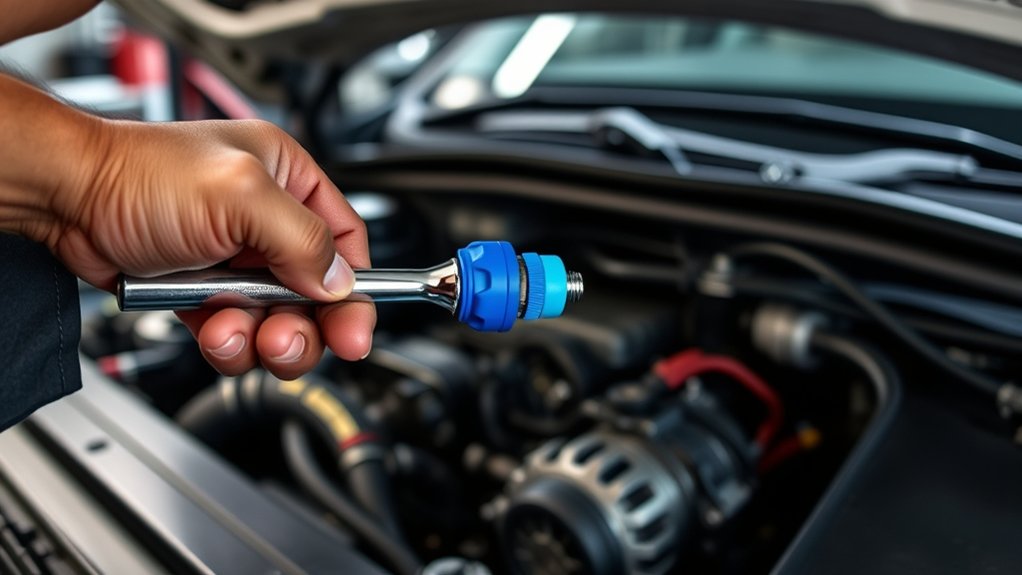
If your car’s AC isn’t blowing cold air, there are a few signs to watch for. First, notice if the air feels warm or only slightly cool—that’s a sign something’s off with your AC system.
If your car’s AC isn’t cold, check for warm air or weak cooling signals something’s wrong.
You might also hear strange noises like hissing or rattling when the AC is on. A noticeable decrease in airflow could mean a clogged filter or blocked vents.
Check if the dashboard vents are working properly; weak airflow often points to underlying issues. Poor engine performance, like rough idling or stalling, can sometimes be linked to your AC system’s strain.
Regular maintenance helps catch these problems early and prevent further damage. If your AC isn’t cooling as it should, it could be low refrigerant, a faulty compressor, or related engine issues.
Addressing these signs promptly keeps your car running smoothly and keeps you comfortable.
Check Your Car’s Basic AC Settings and Components
First, take a quick peek at your temperature settings. Make sure they’re set to cool and not accidentally turned off or set to heat. Sometimes, it’s the small things that cause the biggest headaches!
Next, give your AC controls a once-over. Ensure they’re working correctly and haven’t been bumped or damaged. Sometimes, a simple check like this can fix the issue without needing any complicated repairs.
Verify Temperature Settings
Before diving into more complex troubleshooting, it’s important to verify that your car’s basic AC settings are correctly adjusted. Start by checking the temperature calibration on your climate control system.
Make sure it’s set to a cold setting rather than warm or off. Sometimes, the temperature dial or digital controls may be misaligned or accidentally changed. Confirm that the fan speed is adequate and that the system isn’t set to recirculate mode, which can affect cooling efficiency.
Also, ensure the climate control system is switched to AC mode, not just vent or heat. Properly calibrated temperature settings help your system work as intended and prevent simple misconfigurations from causing the AC to blow warm air when it should be cold.
Inspect AC Controls
Have you checked that your AC controls are properly set and working? Sometimes, the problem is as simple as the climate control system being misadjusted.
Make sure the fan is on, the temperature is cold enough, and the mode is set to blow air through the vents. If your controls are manual, verify they move smoothly and aren’t stuck.
For digital systems, look for error messages or unresponsive buttons. Properly functioning AC controls are key to maximum comfort inside your vehicle.
Here’s a quick breakdown:
| Climate Control Setting | Effect on Comfort |
|---|---|
| Fan Speed | Determines airflow volume |
| Temperature | Sets desired coolness |
| Mode (vents/demist) | Directs airflow to specific areas |
Inspect these components to confirm your climate control system is working efficiently.
How to Inspect Refrigerant Levels and Look for Leaks

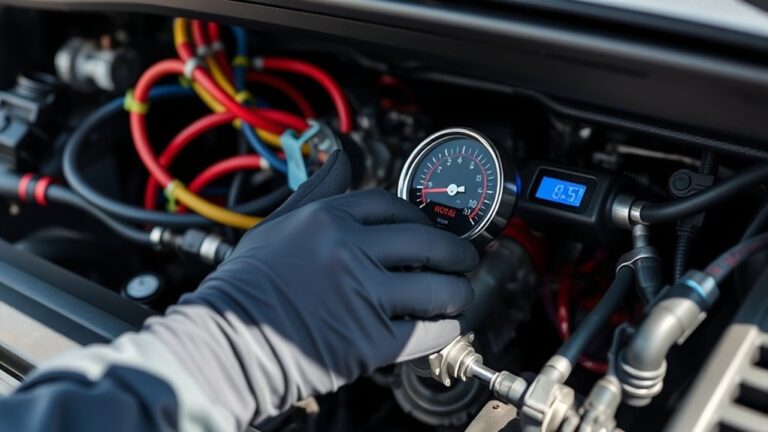
To get your AC cooling again, the first step is to check the refrigerant levels. You can do this using a gauge to see how much refrigerant is in the system. It’s pretty straightforward—just attach the gauge and read the pressure.
While you’re at it, it’s also a good idea to look for any signs of leaks. Keep an eye out for oily spots around the connections or hissing sounds, which could indicate a leak. Catching these issues early can save you a lot of trouble down the line.
Once you’ve checked the levels and looked for leaks, you’ll have a better idea of whether a simple recharge will do the trick or if you’ll need to call in a professional for repairs.
Checking Refrigerant Quantity
Wondering how to tell if your car’s refrigerant levels are enough? First, find your vehicle’s service ports—usually near the AC compressor.
Use a refrigerant gauge to check the pressure. This will tell you if the levels are low or just right. Keep in mind, refrigerant types vary; some cars use R134a, while others now prefer eco-friendly options like R1234yf.
These newer refrigerants are better for the environment and often need different charging methods. If the gauge shows pressure below the recommended range, your system might be undercharged.
Always check your vehicle’s manual or talk to a professional to make sure you’re using the right refrigerant type. Properly checking refrigerant levels is key to restoring your AC’s cooling power.
Detecting Leaks Effectively
Detecting leaks effectively is key to keeping your car’s AC system working properly. Finding leaks early with leak detection and refrigerant testing can prevent bigger problems down the road.
Start by checking visible lines and connections for oily residue, which is a common sign of a leak. Using refrigerant testing tools like UV dye or electronic leak detectors can help you pinpoint issues more accurately.
These methods make it easier to identify leaks without guesswork.
| Leak Detection Method | Key Benefit |
|---|---|
| UV Dye | Visual identification under UV light |
| Electronic Detectors | Fast, accurate leak detection |
Both techniques boost your ability to find leaks quickly, ensuring your AC gets repaired properly and refrigerant levels stay balanced.
Is Your AC Compressor Engaging? How to Find Out
If your car’s AC isn’t blowing cold air, one of the first things to check is whether the compressor is engaging. The AC compressor pressurizes and circulates refrigerant, so if it’s not turning on, your system won’t cool properly.
To see if it’s engaging, turn on your AC and listen for a clicking sound from the engine bay. That click indicates the compressor clutch is engaging. You can also look at the compressor itself; if the pulley spins freely without engagement, it’s not activating.
Turn on AC, listen for a click, or check if the compressor pulley spins freely to see if it’s engaging.
Keep in mind, refrigerant leaks can prevent the compressor from engaging because low refrigerant levels cause the system to shut down as a safety measure. If the compressor isn’t engaging despite having enough refrigerant, it could be a mechanical issue or a problem with the clutch or electrical components.
Figuring out whether the compressor engages is a key step in diagnosing why your AC isn’t blowing cold air.
How to Test Electrical Fuses and Relays for Your AC System
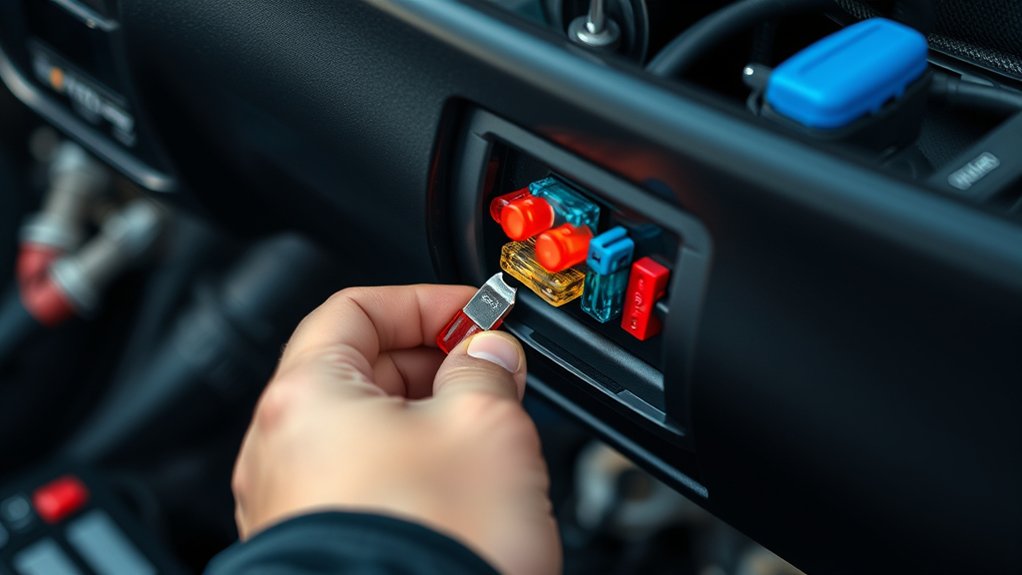
When your AC compressor isn’t engaging, a common cause can be an electrical issue like a blown fuse or a faulty relay. Conducting electrical diagnostics is key to figuring out the problem.
Start by locating the fuse box, usually under the dashboard or in the engine bay. Find the fuse connected to the AC system, using the vehicle’s manual or fuse diagram for guidance.
To test the fuse, remove it and inspect it visually. A blown fuse will have a broken filament or look blackened. To be sure, use a multimeter set to continuity mode or a fuse tester to check for electrical flow.
For relays, remove the relay and gently shake it—if it rattles, it might be faulty. You can also swap it with a similar relay in the fuse box to see if the AC starts working again.
Proper fuse testing and relay checks are essential steps when troubleshooting your AC system.
How to Check and Replace Your Cabin Air Filter
First things first, you want to locate your cabin air filter. It’s often tucked away behind the glove box or sometimes under the dashboard. Once you find it, take a good look at the filter. Check for any dirt, debris, or blockages that might be messing with the airflow. If it looks pretty dirty or clogged up, it’s a good idea to swap it out for a new one. That way, your AC will work more efficiently and you’ll breathe easier inside your vehicle.
Locate the Cabin Filter
Wondering where to find your cabin air filter? It’s usually behind the glove compartment or under the dashboard, depending on your vehicle.
To locate it, open the glove box and remove any contents, then release the clips or screws holding it in place.
Once you access the filter slot, you’ll see the filter tucked in carefully. Finding the cabin filter is key for maintaining interior comfort and air quality.
It traps dust, pollen, and pollutants, so clearing or replacing it can greatly improve your AC’s performance and your overall driving experience.
Keep in mind that every vehicle is different, so checking your owner’s manual can help you find the exact location.
Now, you’re ready to check or replace it for better airflow.
Inspect for Blockages or Dirt
Before inspecting your cabin air filter, make sure your vehicle is turned off. Locate the filter slot, remove the cover, and carefully take out the air filter.
Check the filter’s surface for any visible dirt, debris, or pollen buildup. A dirty filter can block airflow and make your AC less effective at cooling.
If the filter looks clogged or covered in pollen, it’s a clear sign it needs cleaning or replacing. Also, make sure there are no blockages or debris in the filter slot itself.
Keeping the air filter clean helps ensure good airflow and stops pollen from circulating inside your car. This can prevent bad odors and keep your AC running smoothly.
Replace if Necessary
If your cabin air filter is dirty or clogged, replacing it can really boost your AC’s cooling. A clean filter ensures good airflow, which is important whether you’re driving an alternative fuel vehicle or a gas-powered car.
Check your owner’s manual to find the filter, then carefully remove it. If it looks dirty or clogged with debris, it’s time to replace it.
While you’re at it, check your tire pressure to keep everything running smoothly. Proper tire pressure helps your vehicle run efficiently and reduces strain on the AC system.
Installing a new cabin air filter not only improves air quality but also helps your AC cool better, especially on hot days. Regular replacements keep your system working well and can help it last longer.
Why Is Airflow Poor? Common Causes and Fixes
Poor airflow is a common reason your car’s AC isn’t blowing cold air, and there are several issues that can cause it. One main cause is airflow obstruction, which blocks proper ventilation inside the cabin. When vents are blocked by debris or personal items, airflow gets worse.
Here are some common causes and fixes:
- Clogged cabin air filter – Just replace it to improve airflow.
- Obstructed vents – Clear out any debris or objects blocking the vents.
- Damaged blower motor – Have it inspected and repaired if it’s not working right.
- Faulty blend door actuator – Make sure it’s working properly to control airflow direction.
Fixing these problems restores proper ventilation, so your AC can blow cold air again. Regular maintenance helps prevent airflow issues, keeping your car comfortable and airflow clear.
When Should You Recharge or Refill Your Car’s Refrigerant?
Even after fixing airflow issues, your car’s AC might still struggle to produce cold air if the refrigerant level is low. You should consider recharging or refilling your refrigerant when you notice weak cooling or if your AC blows warm air even when the system is running.
Low refrigerant levels can cause weak cooling even after airflow fixes. Refill for optimal AC performance.
It’s important to check for leaks first because low refrigerant often points to a leak rather than the need for a refill. Different refrigerant types, like R-134a or newer eco-friendly options such as R-1234yf, are used for various vehicle models.
Using eco-friendly refrigerants helps reduce environmental impact while keeping your cooling system effective. Be sure to follow your vehicle manufacturer’s guidelines for refrigerant levels and refill procedures.
Keep in mind that refrigerant refills should be handled by a professional to avoid overcharging, which can damage your system. Recharging is necessary when refrigerant levels drop below the ideal range to ensure your AC produces cold air effectively.
Troubleshooting Strange Noises or Smells From Your AC
Strange noises or unusual smells from your car’s AC can signal issues that need fixing before they get worse. Listening carefully helps figure out if the problem is from worn bearings, loose belts, or debris in the system. Odd odors usually mean mold, bacteria, or a dirty cabin filter that should be cleaned or replaced.
To troubleshoot, start by noting if the noise is a squeal, grind, or rattle. Then check the belts and pulleys for wear or looseness. Next, inspect the cabin air filter for dirt or mold and replace it if needed.
Run the AC with the windows down to see if the smell sticks around. If it does, it might be mold or bacteria buildup. Using an automotive odor eliminator can help clear out persistent smells and improve air quality.
Dealing with noise and odors early on can prevent bigger problems and keep your AC running smoothly.
When to Seek Professional Help for Your Car’s AC Repair
While troubleshooting minor noises and smells can often be handled on your own, there are times when professional help becomes necessary. If your AC isn’t blowing cold air despite basic checks, it’s time to seek expert assistance. A mechanic can perform engine diagnostics to identify issues like refrigerant leaks or failing components that can’t be seen easily.
If your vehicle has other symptoms, such as overheating or unusual engine behavior, it could be linked to the AC system or broader engine problems. Furthermore, tire maintenance is essential because uneven tire wear can affect overall vehicle performance, indirectly impacting the AC’s efficiency.
If you notice persistent issues like a lack of cooling, strange noises, or if DIY fixes don’t work after a few attempts, don’t hesitate to visit a professional. They have the tools and expertise to diagnose complex problems quickly and guarantee your AC system is repaired safely and effectively.
Frequently Asked Questions
Can a Broken Thermostat Cause My Car AC to Stop Blowing Cold?
Yes, a broken thermostat can cause your car AC to stop blowing cold air. During car thermostat troubleshooting, you might find that a faulty thermostat isn’t regulating coolant properly, which can affect the AC system diagnostics.
When the thermostat malmalfunctions, it can prevent the AC from cooling effectively, leading to warm air. Addressing the thermostat issue promptly helps ensure your AC system works correctly and keeps you comfortable.
How Long Does It Typically Take to Recharge a Car’s AC System?
Recharging your car’s AC usually takes about 30 minutes, but if there’s a refrigerant leak or unusual compressor noise, it might take longer. You want to make sure the system is sealed properly, so the process isn’t rushed.
A professional technician will carefully add refrigerant, checking for leaks and compressor issues along the way. Rushing this step can lead to inefficiency or further damage, so patience is key.
Are There DIY Methods to Fix an AC Compressor Failure?
You can try DIY refrigerant recharge if you’re comfortable working with AC systems, but replacing the AC compressor is best left to professionals.
For minor issues, check for leaks and recharge the system with a DIY refrigerant kit, just make sure to follow all safety instructions.
If the compressor has failed mechanically, replacing it yourself is complicated and risky. It’s better to consult an auto AC specialist to avoid causing more damage.
What Are the Signs of a Failing AC Condenser?
You’ll notice a failing AC condenser if your car’s air isn’t as cold as it used to be. Watch for refrigerant leaks, which can cause reduced cooling.
Listen for unusual noises or check if the condenser fan isn’t working properly, leading to overheating. You might also see visible damage or debris on the condenser.
Addressing these signs early can help prevent further AC system issues and keep you cool.
How Often Should I Have My Car’s AC System Serviced?
Think of your car’s AC system as a garden that needs regular tending. You should have it serviced at least once a year, especially before summer, to keep it thriving.
During service, check the air filter and cabin air quality to prevent dust buildup and ensure fresh air. Regular maintenance keeps your AC running efficiently, prolongs its lifespan, and keeps your ride cool and comfortable.
Conclusion
Now that you know how to troubleshoot your car’s AC, you’re equipped to keep your cool on the road. Think of it like tuning a fine instrument—you can often fix minor issues yourself and avoid costly repairs.
But if your AC acts up like a stubborn mule, don’t hesitate to call in the pros. Staying proactive with your car’s AC repair helps maintain your comfort, no matter how hot the journey gets.