Fix Your Car’s AC Blowing Hot Air With This Step-By-Step Guide
Having trouble with your car’s AC blowing hot air? You’re not alone—many drivers struggle with keeping their cool during hot days.
Luckily, fixing this issue can often be straightforward if you know what to check first.
If your car’s AC blows hot air, start by checking your settings and airflow to guarantee everything is correct.
Inspect the cabin air filter, and look for leaks or damage around the condenser, hoses, and compressor.
Test the clutch and electrical components, and verify the controls and blend doors function properly.
If these steps don’t fix the issue, there’s more to investigate.
Keep going for a detailed, step-by-step guide to restore your cool comfort.
Key Takeaways
- Check and set your AC controls, vents, and air filters to make sure everything is working properly and is clean.
- Inspect the condenser, fins, and any external obstructions to ensure good airflow.
- Test refrigerant levels with pressure gauges and look for leaks using leak detection methods.
- Verify that the compressor clutch engages correctly and that the electrical components are functioning properly.
- If problems keep happening or if you suspect refrigerant leaks or electrical issues, it’s best to seek professional help.
How Do I Know My Car’s AC Is Blowing Hot Air?
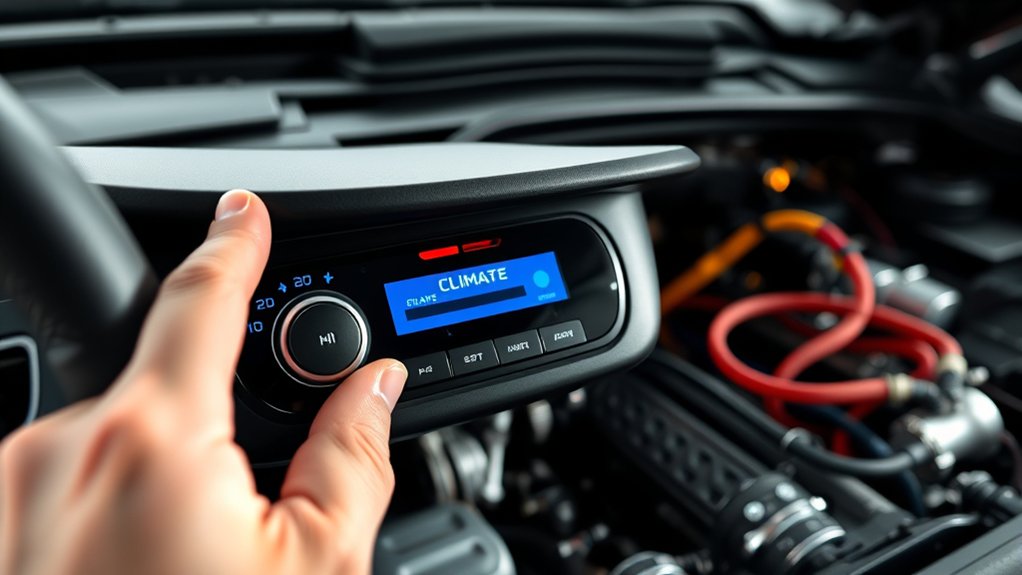
If your car’s air conditioning suddenly starts blowing hot air, you’ll notice it right away, especially on a hot day. This disrupts your comfort and signals a problem with your vehicle’s climate control system. You might feel warm air coming from the vents even when you set the AC to cool.
Check if the air temperature stays warm or if the airflow feels weak or inconsistent. Sometimes, the air may seem cool at first but then gradually warms up. A quick way to test this is by feeling the air as it exits the vents—if it’s not noticeably cooler than outside air, your AC isn’t working properly.
Also, watch out for foggy windows or strange smells. These can indicate issues with your climate control system, too. Recognizing these signs early helps you figure out if your AC is blowing hot air and whether it’s time to troubleshoot or get professional help.
Quickly Check Your AC Settings and Airflow
Before diving into complex troubleshooting, take a moment to quickly check your AC settings and airflow. Sometimes, the problem is as simple as a misconfigured system or blocked airflow.
Start by making sure your temperature is set to cool and the fan is on high. Then, peek at your dashboard diagnostics—are there any warning lights or error messages? These can indicate airflow problems or dirty air filters.
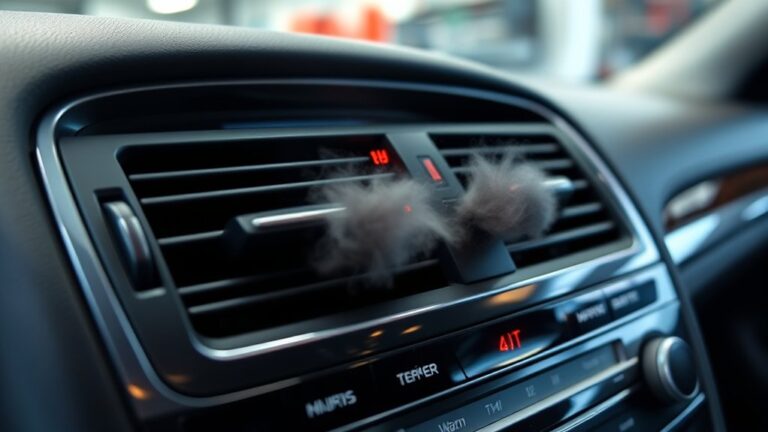
Next, confirm you’ve recently replaced or cleaned your air filter, as a clogged filter can limit airflow and blow hot air. Check that all air vents are fully open and nothing is blocking them.
Finally, run a quick check of your AC controls and settings to ensure everything is properly turned on and set correctly. These simple steps can often reveal the cause of hot air and save you time before more in-depth troubleshooting.
Is the Refrigerant Level Adequate? How to Check for Leaks
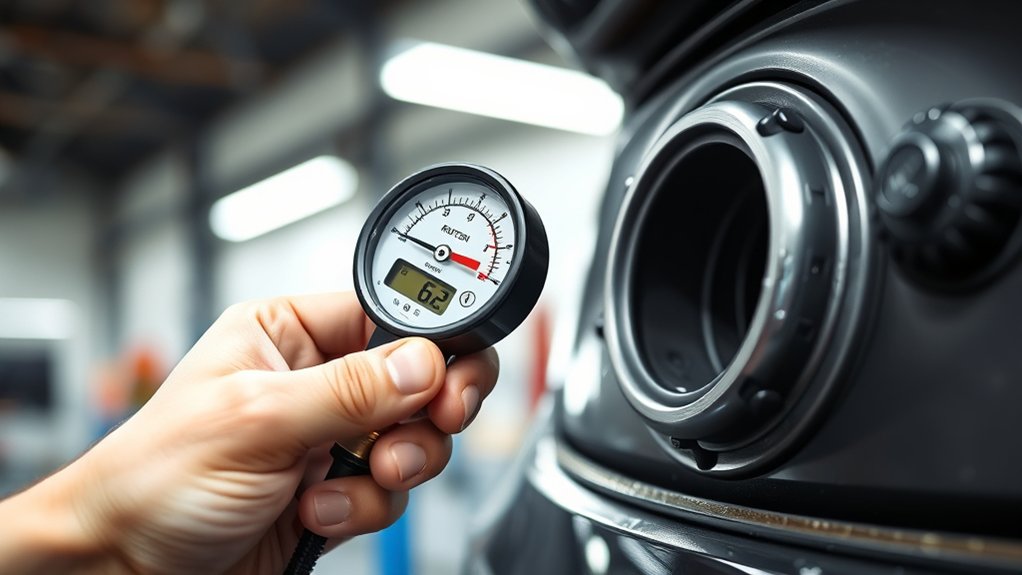
You’ll want to make sure your refrigerant level is just right because if it’s too low, your AC might blow out hot air instead of cool. It’s a good idea to keep an eye out for any signs of leaks around the AC components, like oily spots or damaged hoses. Catching leaks early on can really help restore your AC’s cooling power and keep everything running smoothly.
Inspect Refrigerant Level
Maintaining your car’s refrigerant level is crucial for effective cooling. Low refrigerant can cause the AC to blow hot air, so it’s important to check it regularly.
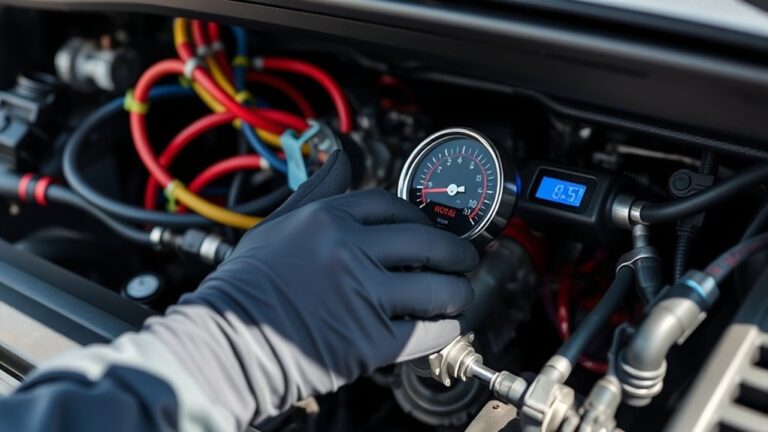
First, identify your vehicle’s refrigerant type—most modern cars use R134a, but older models may use R12. Then, use a pressure gauge to measure the refrigerant pressure against the manufacturer’s specifications.
If the pressure is low, it usually means you have a refrigerant shortage. Keep in mind that refrigerant levels can drop over time because of leaks, so regular leak repairs are necessary.
Detect Possible Leaks
How can you tell if your refrigerant is leaking? Look for signs like decreased cooling or oily spots around AC components. These can be clues that something’s wrong.
To detect leaks, inspect hoses and fittings for damage or oily residue. You can also use an electronic leak detector or apply soapy water to spot bubbles at leak points.
| Step | What to Check | How to Identify |
|---|---|---|
| 1 | Hoses and fittings | Oily spots or damage |
| 2 | AC compressor | Unusual noises or leaks |
| 3 | Visible components | Bubbles or residue during soap test |
| 4 | Refrigerant gauge | Low pressure indicating leak |
Effective leak detection helps prevent refrigerant loss and saves you time and money.
Is the Compressor and Clutch Working Properly?
Wondering if your AC compressor and clutch are working properly? Well, the first thing to do is see if the compressor is kicking in when you turn on the AC. If it’s not running, that could be a sign something’s off.
Then, take a look at the clutch. It should engage when you turn on the AC and disengage when you turn it off. If it’s not doing that, or if it’s sticking, your system might not be working as it should. When either of these parts isn’t functioning right, it can cause your AC to blow hot air instead of cold.
Checking Compressor Functionality
When diagnosing your car’s AC, start by checking if the compressor and its clutch are working properly because they’re key to getting cool air. Proper testing helps make sure your system isn’t missing that boost of cold air.
To do this, run system diagnostics to spot any issues with how the compressor is operating. Here are three simple steps to verify if your compressor is functioning correctly:
First, listen for the clutch engaging when you turn on the AC. If you don’t hear anything, that could be a sign of a problem.
Next, visually inspect the clutch to see if it moves smoothly. Look for any signs of damage or slipping that might affect performance.
Finally, check the refrigerant pressure changes. Proper cycling of pressure indicates the compressor is working as it should.
Following these steps can help you determine whether your compressor is functioning properly or if you need to consider further repairs.
Inspecting Clutch Engagement
Since the clutch is responsible for engaging the compressor, making sure it activates properly is crucial for your AC to blow cold air. Start by checking if the clutch engages when you turn on the AC.
If it doesn’t, the clutch might not be getting power or could be faulty. Next, look at the pulley—make sure it spins smoothly and stays aligned with the compressor. Misalignment can stop the clutch from engaging and cause hot air to blow.
Listen for a clicking sound when you turn on the AC—that’s a sign the clutch is engaging. If it’s not engaging or the pulley isn’t aligned right, you’ll need to fix those issues before moving on to more diagnostics.
Getting the clutch to engage properly is key to having a cold and working AC system.
Make Sure the Condenser Is Cooling and Getting Enough Air

Ensuring your condenser is both cooling properly and receiving enough airflow is crucial for your AC to work well. When it’s not maintained, it can overheat or get blocked, causing hot air to blow inside your car. To keep it running smoothly, focus on airflow and condenser upkeep.
Here are three simple steps to help you out:
- Clear away debris and dirt around the condenser to prevent airflow restrictions.
- Check for bent or damaged fins and carefully straighten or repair them.
- Make sure nothing is blocking airflow in front of the condenser, like leaves or other obstructions.
Doing these things helps cool your condenser and boosts your AC’s efficiency. Regular maintenance prevents hot air from blowing inside and keeps you comfortable on every drive.
Check if the Fan and Blower Motor Are Operating Correctly
If your car’s AC isn’t blowing cold air, it’s important to check if the fan and blower motor are working properly. Turn on your AC and listen for any fan noise. If you hear nothing, the blower motor might be faulty.
Check for fan noise when turning on AC; silence may indicate a faulty blower motor.
Next, check the blower speed control. If it stays at the lowest setting or doesn’t change when you adjust the fan speed, there could be an issue with the motor or its resistor. Feel for airflow coming through the vents; weak or no airflow indicates a problem with the blower motor.
If the fan noise is faint or inconsistent, or if the blower doesn’t respond to speed adjustments, you’ll need to inspect the motor and wiring. Ensuring the blower motor works smoothly and responds to your controls is key for good cooling.
Fixing any issues here can help restore airflow and improve your AC’s performance.
Is Your Cabin Air Filter Dirty or Blocked?
A dirty or blocked cabin air filter can really reduce airflow and make your AC less effective. When the filter gets clogged, less fresh air comes through your vents, so your AC has to work harder.
You might also notice a persistent cabin odor because mold, dust, and debris build up on the filter.
Check these signs:
- Weak airflow from your vents, even when the fan is on high.
- Unpleasant odors lingering inside the cabin, especially when the AC is on.
- Visible dirt or debris on the air filter when you inspect it.
Replacing or cleaning the filter is a simple fix that can restore airflow and get rid of bad smells. Keeping it clean helps your AC run smoothly and keeps your cabin fresh.
Don’t ignore it—your comfort depends on it.
Are Electrical Components Causing the Problem?
Electrical issues can often disrupt your AC’s ability to blow cold air, especially if sensors, relays, or switches aren’t working properly. To figure out if electrical components are the problem, start with electrical diagnostics.
Use a multimeter to check for power and grounding issues in the AC system’s wiring and connectors. Faulty relays or switches can stop signals from reaching the compressor or climate control modules, leading to warm air.
If you find a malfunctioning part, replacing it is usually pretty simple. For example, swapping out a defective relay can restore proper operation. Make sure all electrical connections are clean and secure too.
Ignoring electrical problems can cause more damage or keep your AC from working right. Conducting thorough diagnostics helps identify the root cause and guides you to the right replacement, so your AC system can work properly again.
Could Temperature Controls or Blend Doors Be Faulty?
Faulty temperature controls or blend doors can stop your car’s AC from blowing cold air, even if the electrical parts seem fine. When these parts break, your system struggles to control airflow and temperature properly. You might notice that even when you turn the climate control to cold, the air stays warm.
Look out for these signs to spot issues with temperature controls or blend doors:
- Inconsistent air temperature even after adjusting the controls.
- Unusual noises when changing the temperature setting.
- Airflow stuck at a certain temperature, no matter what you do.
The problem usually comes from the blend doors, which direct air through the heater or AC vents. If they’re stuck or broken, they can’t switch between hot and cold air properly. Diagnosing these parts involves inspecting the controls and the blend door actuators for faults or damage.
When Should You See a Professional for Car AC Repairs?
Knowing when to call in a professional can save you time and prevent further damage when your car’s AC isn’t cooling properly. If you notice persistent issues like warm air blowing, strange noises, or unusual smells, it’s time to seek expert help.
Problems affecting the car interior, such as limited airflow or strange odors, often point to deeper issues that need professional diagnosis. Don’t try to fix these yourself, as they may require special tools and knowledge.
If you see exterior damage to the AC components—like refrigerant leaks, dents, or broken vents—avoid attempting repairs. These damages can compromise the entire system and lead to more costly problems later.
Simple fixes like replacing filters or checking fuses are worth trying first. But if those don’t improve comfort, a professional technician can perform a thorough inspection.
They can identify leaks, electrical problems, or compressor issues safely and accurately. This ensures your AC system is repaired correctly and reliably.
Frequently Asked Questions
Can a Faulty Sensor Cause the AC to Blow Hot Air?
Yes, a faulty sensor can cause your AC to blow hot air. Sensor malfunction affects the cooling system’s efficiency by giving incorrect data to the control unit.
This can cause the system to fail in regulating the temperature properly. If the sensor isn’t working right, your car’s AC might not cool effectively, leading to hot air.
Check and replace the faulty sensor to restore proper cooling and ensure your system works correctly.
How Often Should I Replace My Car’s Cabin Air Filter?
You should replace your car’s cabin air filter every 15,000 to 30,000 miles, or once a year if you don’t drive much.
Neglecting air filter maintenance can turn your vehicle into a stuffy, allergen-filled nightmare. Regularly swapping it out keeps cabin air quality high and makes sure your AC runs smoothly.
Don’t wait until you’re overwhelmed by musty odors. Stay ahead of the game for a fresher, healthier ride.
What Are Common Signs of a Failing AC Compressor?
If your AC system diagnostics reveal unusual compressor noise or the air isn’t as cold as before, your AC compressor might be failing.
Common signs include loud banging or squealing sounds, frequent cycling on and off, and reduced airflow.
It’s important to check these symptoms promptly because ignoring them can lead to more serious damage.
Addressing compressor issues early helps keep your AC reliable and ensures your home stays comfortable.
Does Low Refrigerant Always Mean a Leak?
Low refrigerant doesn’t always mean a leak; it could be evaporation or improper recharging.
To figure out if you really have a leak, look for signs like hissing sounds, oily residues, or ice buildup.
Accurate diagnosis methods include pressure testing and dye inspection.
It’s best to check these signs and methods before jumping to the conclusion of a leak—sometimes, low refrigerant levels happen because of other issues or maintenance needs.
How Long Does a Typical Car AC Repair Take?
A typical car AC repair usually takes between one to three hours, depending on the issue. During this time, technicians focus on restoring proper temperature regulation and making sure your climate control systems work well.
If your AC needs refrigerant recharge or a component replacement, it might take a bit longer. Keep in mind, complex repairs or waiting on parts can extend the process.
It’s a good idea to ask your mechanic for an estimate based on your specific problem so you’re not caught off guard.
Conclusion
Think of fixing your car’s AC like tuning a musical instrument—you need every part in harmony. By following these steps, you’re tuning your system to hit the right notes of cool comfort.
If you’ve checked everything and it’s still blowing hot air, don’t hesitate to call in a pro. Sometimes, even the best musicians need a skilled technician to bring the symphony of your car’s AC back to life.