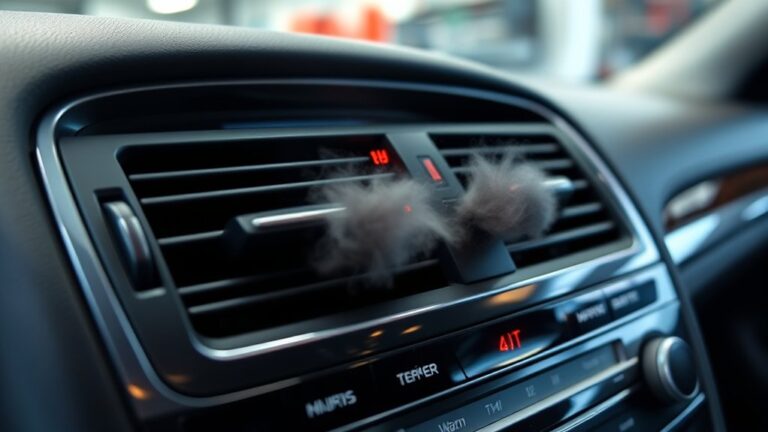
How to Diagnose Why My Car AC Is Not Blowing Cold Air
Feeling frustrated when your car AC isn’t blowing cold air? You’re not alone—many drivers struggle with this issue, especially during hot days. Luckily, diagnosing the problem doesn’t have to be complicated.
To diagnose why your car AC isn’t blowing cold air, start by listening for strange noises and checking if the compressor clutch engages. Inspect the belt for cracks and wear, and make certain airflow around the condenser isn’t blocked.
Check the refrigerant level with a gauge and look for leaks using UV dye or detectors. Verify electrical fuses and sensors are functioning, and test the system for proper pressure and pressure switch operation.
If you keep exploring, you’ll find more tips to fix your AC.
Key Takeaways
- Check for refrigerant leaks and low levels using gauges or leak detectors. If the refrigerant is low, your AC might not blow cold air.
- Inspect the AC compressor clutch to make sure it engages and runs properly. If it’s not working, the system can’t cool the air effectively.
- Verify that the AC belt is intact, properly tensioned, and not worn or slipping. A loose or worn belt can prevent the compressor from functioning.
- Examine the condenser for debris, damage, or obstructions that could block airflow. A clogged condenser reduces cooling efficiency.
- Test electrical components, fuses, and pressure switches to ensure they’re working correctly. Faulty electrical parts can cause the AC to fail.
Why Is My Car’s AC Not Blowing Cold Air?
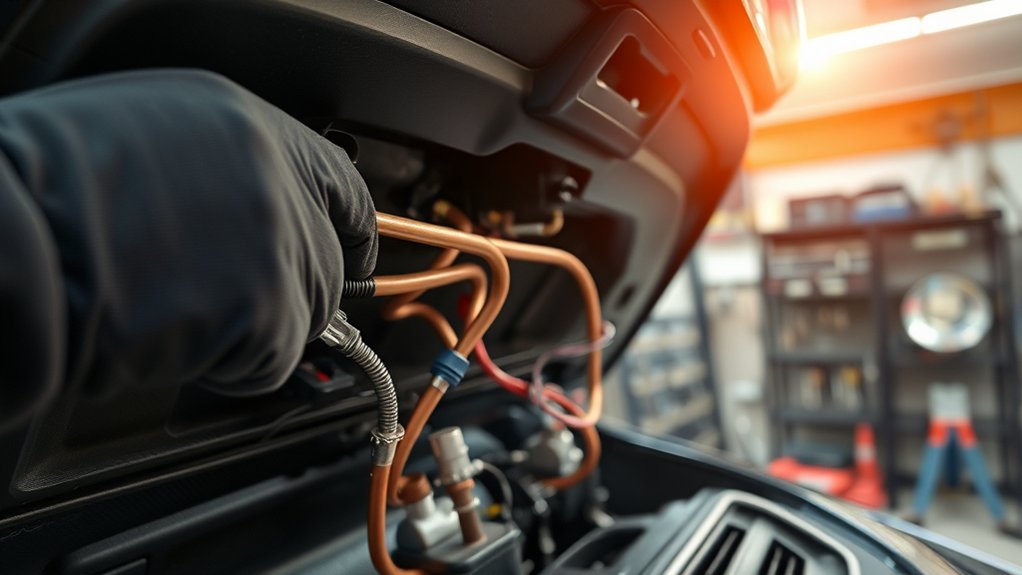
If your car’s AC isn’t blowing cold air, there could be several reasons behind the issue. One common cause is a problem with the car’s climate control system, which might be disrupted by a faulty thermostat or sensor.
Poor engine cooling can also affect your AC’s performance. If your engine isn’t running at the right temperature, the AC may struggle to produce cold air.
Leaks in the refrigerant system can cause the AC to blow warm air instead of cold. Dirty or clogged air filters restrict airflow, which reduces cooling efficiency.
If your cooling fans aren’t working properly, they won’t dissipate heat effectively, impacting the AC’s ability to cool. Lastly, a malfunctioning compressor or electrical issues can prevent cold air from blowing through the vents.
All these factors can affect your car’s comfort and AC performance, so it’s important to figure out the root cause.
How to Check if the AC Compressor Is Working?
First off, give a listen when you turn on your AC. If you hear any strange noises like clicking or squealing, that could be a sign something’s not right with the compressor. It’s a good place to start because those sounds often point to issues.
Then, take a quick peek at the compressor clutch. You want to see if it’s engaging and spinning when the AC is running. If the clutch isn’t moving at all, it probably means the compressor isn’t working as it should be. That’s a clear sign you might need to get it checked out or repaired.
Listen for Compressor Noise
When your car’s AC isn’t blowing cold air, one of the first things to do is listen for the compressor’s sound. A healthy compressor usually makes a steady, faint hum or a slight clicking when it kicks in.
If you don’t hear any compressor noise at all, it might mean the compressor isn’t turning on, which could be a sign of a problem. Keep in mind that refrigerant leaks can cause the compressor to cycle on and off or not run at all, leading to no noise.
If you hear hissing or a sound like air near the compressor, refrigerant leaks might be the issue. Listening carefully can help you figure out if the compressor is trying to work but can’t, or if it’s not engaging because of other problems.
Inspect Compressor Clutch
To see if the compressor is actually engaging, start the engine and turn on the AC. Check if the clutch engages during this process. The clutch is a small pulley at the front of the compressor that should spin when the AC is on.
If it doesn’t spin, the compressor might not be cycling properly, indicating a problem with clutch engagement. When doing compressor maintenance, inspecting the clutch can help spot wear or damage that keeps it from engaging fully.
Listen for a clicking sound when you turn on the AC—that’s a sign the clutch is trying to engage. If the clutch stays still, you might need to test the electrical parts or think about replacing the clutch to get the compressor working right again.
How to Inspect the AC Belt and Its Condition?
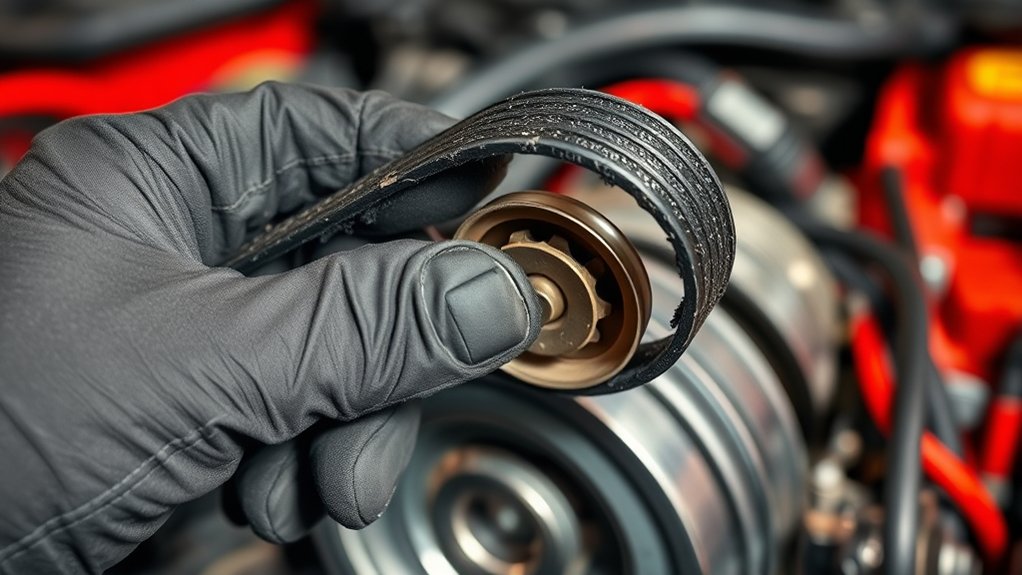
Inspecting the AC belt is an important step in figuring out why your car’s air conditioning isn’t blowing cold air. The belt drives key parts of the AC system, so a worn or loose belt can cut down or stop the cold airflow.
Start by finding the belt—it’s usually a rubber belt running around pulleys near the engine. Check its condition for cracks, fraying, or a shiny surface, which shows wear. You should also test how tight it is; it shouldn’t be too loose or too tight.
Locate the rubber belt around engine pulleys; inspect for cracks, fraying, or shiny wear.
To check tension, press down on the belt at its middle point. There should be a slight give, about half an inch. If the belt feels loose or shows signs of damage, replacing or adjusting it can help bring back proper tension.
A good AC belt makes sure the compressor and other parts work smoothly. This is key for your system to blow cold air and keep you comfortable.
Checking Refrigerant Levels and Finding Leaks
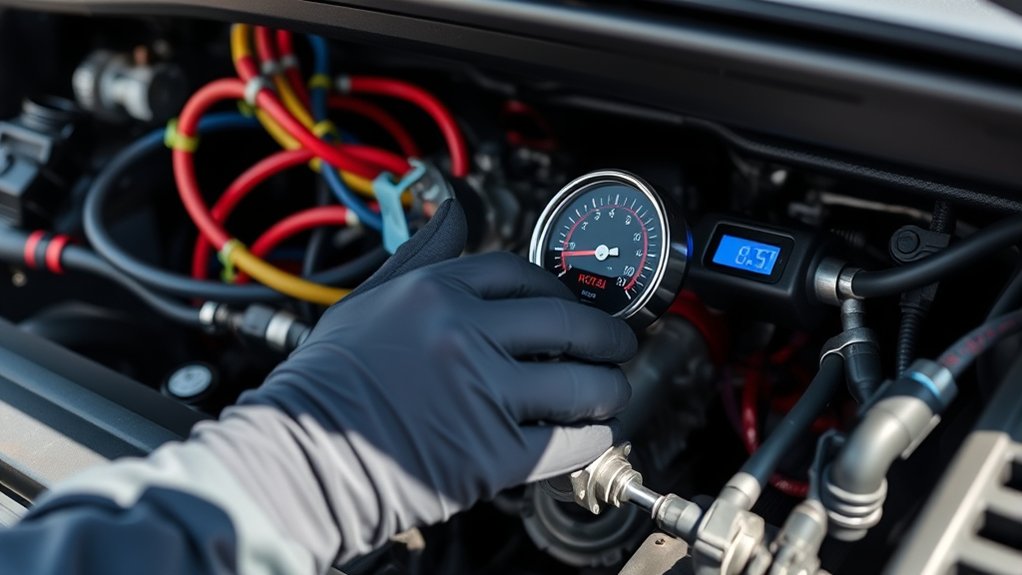
If your car’s AC isn’t blowing cold air, low refrigerant levels might be the culprit. Start by checking the refrigerant level with a gauge designed for automotive AC systems. If it’s low, a refrigerant recharge can restore cooling efficiency.
However, before recharging, it’s important to perform leak detection to find any leaks causing refrigerant loss. Use a UV dye or an electronic leak detector to identify leak points in hoses, fittings, or the compressor.
Once you locate a leak, repair or replace the damaged component before refilling the refrigerant. Never just add refrigerant without diagnosing the leak, as it’ll just leak out again.
Proper leak detection not only restores your AC’s cooling power but also prevents further damage to the system. Remember, handling refrigerants requires caution, so consider consulting a professional if you’re unsure about the process.
How to Test the AC Condenser for Obstructions?
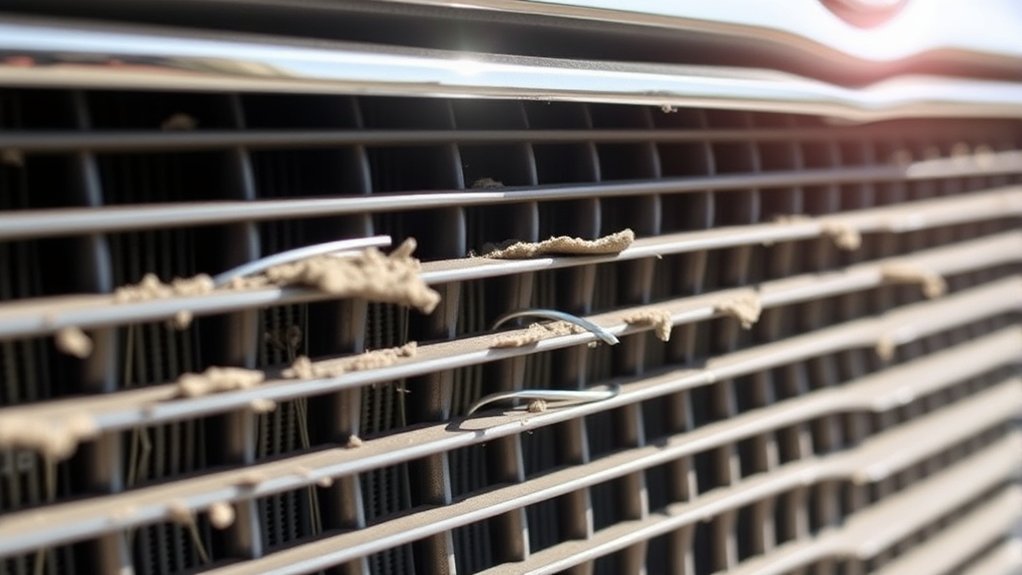
First, give the condenser a good look to see if there’s any debris like leaves, dirt, or other stuff that could be blocking the airflow. It’s pretty common for things to get caught up there, especially if your car or AC unit is near trees or open areas.
Next, take a close look at the fins and coils for any signs of physical damage. Bent fins or leaks are a red flag—they can really mess with how well the condenser works. If you spot any, it might be worth fixing or replacing those parts.
Finally, make sure air can flow around the condenser without any obstructions. Clear space around it so the air can cool the refrigerant effectively. Proper airflow is key to keeping your AC running smoothly and efficiently.
Visual Inspection for Debris
Since debris can block airflow and reduce your AC’s efficiency, it’s important to visually check the condenser for obstructions. Start by inspecting the area around the condenser for leaves, dirt, or bugs that may have accumulated.
Make sure your air filter isn’t clogged, as a dirty filter can cause poor airflow that affects the condenser’s cooling ability. Also, check the engine temperature gauge—an overheating engine can impact your AC’s performance.
If you see debris on the condenser fins, carefully remove it with a soft brush or compressed air, avoiding damage. Keeping the condenser clean allows proper airflow, which is crucial for maximum cooling.
Regular inspections help prevent blockages that could lead to reduced cold air output.
Check for Physical Damage
Have you noticed any visible dents, bent fins, or cracks on the condenser? Physical damage can block airflow and reduce the condenser’s efficiency, which can affect your interior comfort and climate control.
Carefully inspect the fins for obstructions or deformities, and look for cracks or leaks. Sometimes damage isn’t obvious, so gently run your hand over the fins to feel for irregularities.
Use the table below to identify common issues and solutions:
| Issue | Solution |
|---|---|
| Bent fins | Use a fin comb to straighten fins |
| Cracks or leaks | Replace the condenser |
| Obvious dents | Assess if repair or replacement is needed |
| Debris lodged in fins | Clear with compressed air or a soft brush |
| Corrosion | Consider professional cleaning or replacement |
Ensuring the condenser isn’t compromised helps restore efficient climate control and keeps your cabin comfortable.
Ensure Proper Airflow
Inspecting the airflow is a simple way to check if the condenser is blocked. If airflow is restricted, it can reduce cooling efficiency and impact cabin air quality.
To test this, park your car in the shade and turn on the AC. Open the hood and look at the condenser, which is in front of the radiator.
Check for debris like leaves, dirt, or bugs blocking the fins. Gently remove any obstructions with a soft brush or compressed air.
Make sure the airflow through the condenser is free when the engine is running. Good airflow is key to effective heat exchange, keeping your AC cold and your cabin air fresh.
Inspecting the Cabin Air Filter and Its Effect on Cooling
A clogged or dirty cabin air filter can really affect your car’s cooling. When it’s dirty, it blocks airflow, making your AC less efficient and lowering air quality inside the cabin.
To check it, find the filter—usually behind the glove box or under the hood—and look for dirt, debris, or discoloration. If it looks dirty or clogged, it’s time to replace it to get better airflow.
A clean cabin air filter helps your AC work properly, keeping your cabin cooler and breathing fresher air. Remember, a blocked filter can cause unpleasant odors and poor air quality too.
Regularly inspecting and replacing the filter is a simple but important step. It can help you figure out why your AC isn’t blowing cold and keep your ride cooler and cleaner.
How to Verify Electrical Components and Fuses?
Sure! Here’s a more conversational version of the text:
First off, find your fuse box and take a good look at the fuses inside. You’re checking for any signs of damage, like burns or cracks. Sometimes, a blown fuse is obvious, but other times it might look fine and still be faulty, so keep that in mind.
After that, it’s a good idea to check all the electrical connections around the fuse box and other components. Make sure everything is snug and secure—that there are no loose wires or corrosion that could cause issues.
If you do find a blown fuse, go ahead and replace it with a new one of the same type and rating. Once you’ve swapped it out, turn everything back on and see if your AC starts blowing cold air again. That should tell you if the fuse was the problem!
Check Fuse Box Location
Wondering where to find the fuse box in your car? The location can vary depending on the vehicle. Common spots include under the dashboard, in the engine bay, or near the glove compartment.
To check the fuse box, refer to your owner’s manual for the exact spot. Inside, you’ll find blade fuse types, which are rectangular with two metal prongs. These fuses protect electrical parts like your AC system.
Use a fuse puller or tweezers to carefully remove the fuses. Here’s a quick guide:
| Location | Fuse Type | Common Components Protected |
|---|---|---|
| Under the dashboard | Blade fuse types | Interior lights, radio, AC compressor |
| Engine bay | Blade fuse types | Cooling fans, alternator, AC system |
| Glove compartment | Blade fuse types | Airbags, sensors |
Inspect Blown Fuses
Before jumping to conclusions about your AC system, it’s important to check if any fuses have blown. Open your car’s fuse box and find the fuse for the climate control or AC system—refer to your vehicle’s manual if you need help.
Carefully remove the fuse and look at it closely. Check for a blown filament or a blackened, broken appearance. If you see any of these signs, replace the fuse with a new one of the same amperage.
A blown fuse cuts off power to the AC components, which stops the system from blowing cold air. Checking the fuse is a quick and easy way to rule out a simple electrical problem affecting your car’s climate control.
Always make sure the new fuse is properly seated before testing your AC again.
Test Electrical Connections
After confirming that the fuse isn’t the issue, the next step is to check the electrical connections powering your AC system. Keeping your battery in good shape helps your vehicle’s electrical system run smoothly, which affects both engine performance and AC operation.
To test the electrical connections, start by inspecting for loose or corroded wires at the AC compressor and fuse box. Use a multimeter to check the voltage at key connectors and make sure power is flowing properly.
Next, look over the relays and switches for any signs of damage or malfunction. Also, ensure your battery connections are secure, clean, and providing enough power to the system.
Addressing these electrical components helps prevent strain on your engine and keeps your cooling system working efficiently. Proper electrical testing makes sure your AC gets the power it needs to operate smoothly.
Testing the AC Pressure Switch and Sensors
Testing the AC pressure switch and sensors is a crucial step in figuring out why your car’s AC isn’t blowing cold air. These parts help control refrigerant flow and keep the climate just right.
Testing AC pressure switches and sensors is essential to diagnose why your car’s AC isn’t cooling properly.
You can start with remote diagnostics tools if your vehicle supports them. They let you check sensor readings without taking anything apart.
If you prefer a manual method, connect a multimeter to the pressure switch terminals. This way, you can verify if it’s working properly. When the switch detects low or high pressure, it should open or close the circuit accordingly, shutting down the compressor to protect the system.
Faulty sensors or switches can cause the compressor to turn off, which results in warm air. Make sure your sensors are clean and calibrated correctly.
Regular testing of these components helps catch issues early, so you can fix them before more serious damage occurs. Properly functioning pressure switches and sensors are key to keeping your vehicle’s climate control effective.
When to Call a Professional for Car AC Repairs
Knowing when to call a professional for car AC repairs can save you time, money, and frustration. If your AC isn’t providing proper climate control or interior comfort, it’s time to seek expert help. Don’t ignore persistent issues that could signal major problems.
Consider calling a professional if:
- The AC blows warm air despite recharging or troubleshooting.
- Unusual noises or strange smells come from the system.
- The system cycles on and off frequently or doesn’t turn on at all.
- Your AC shows visible leaks or damage.
These signs suggest more complex issues beyond simple fixes. A professional technician can diagnose the root cause efficiently, making sure your climate control works properly. Proper repairs protect your vehicle’s interior comfort and prevent further damage. When in doubt, trusting an expert ensures reliable results and keeps your car’s AC system in top shape.
Tips to Keep Your Car’s AC Cooling Well in the Future
To keep your car’s AC cooling effectively over time, regular maintenance is essential. Start by checking your cabin air filter and replacing it as needed, which helps maintain airflow and air quality. Keep your car interior fresh with air fresheners—they don’t affect cooling but make your drive more comfortable.
Protect your seats with covers to prevent sweat and grime from building up on the upholstery. This reduces odors and bacteria that could affect the AC system. Regularly run the AC for a few minutes, even in cooler months, to keep the components lubricated and prevent parts from seizing.
Park in shaded areas whenever possible to reduce heat buildup inside your vehicle. Keep windows closed when using the AC to maximize cooling efficiency. Lastly, schedule periodic professional inspections to catch issues early and keep your AC in top shape. This way, you’ll enjoy consistent, cold air whenever you need it.
Frequently Asked Questions
Can a Clogged Cabin Air Filter Affect AC Cooling Performance?
Yes, a clogged air filter can affect your AC’s cooling performance. When the filter is dirty or blocked, it restricts airflow in the cabin, making it harder for the system to circulate cool air.
This reduced airflow can cause your AC to blow warm air or struggle to cool the cabin properly. Regularly replacing or cleaning your air filter helps ensure good airflow and keeps your AC working efficiently.
How Does Ambient Temperature Impact My Car’s AC Efficiency?
Ambient temperature really affects how well your car’s AC works. When it’s hot outside, your AC has to work harder to cool the air, which can make it less effective.
High outdoor temps put more strain on the system, so it might blow less cold air and not cool as efficiently. On the other hand, cooler outside temperatures help your AC perform better.
This means you’ll stay more comfortable during your drive when the weather is cooler outside.
Are There Specific Signs Indicating Refrigerant Leaks?
Think of your AC as a delicate balloon; if it’s losing air, signs will show. You might notice reduced refrigerant pressure or see icy or oily spots around the components—these are clear signs of a refrigerant leak.
Leak detection tools are helpful for pinpointing the exact spot, preventing further escape. If you spot these signs, it’s a good idea to check the refrigerant pressure and conduct leak detection.
Keeping an eye out for these signs can help you keep your AC running smoothly and avoid bigger problems down the line.
Can Interior Electrical Issues Cause AC Failure?
Interior electrical issues can definitely cause AC failure. If your interior lighting flickers or dashboard controls become unresponsive, these problems might be linked to a blown fuse, faulty wiring, or a malfunctioning relay affecting your AC system.
When electrical components fail, they disrupt the signals that control the AC compressor and fans, preventing cold air from blowing. Ensuring your interior electrical system functions properly can help keep your AC working efficiently.
What Are Common Causes of AC System Noise?
Did you know that nearly 60% of car AC problems are caused by unusual noises? These sounds can be a sign that something’s not right.
Common causes include compressor noise, which often points to a failing part, and fan vibration, usually due to loose or damaged blades.
These noises are more than just annoying—they can indicate issues that need quick attention. If you hear rattling or loud sounds from your AC, it’s best to have a professional check the compressor and fan system to avoid further damage.
Conclusion
Remember, a stitch in time saves nine—don’t ignore your car’s AC issues. Regular checks and maintenance can keep your cooling system running smoothly and help you avoid costly repairs later.
If troubleshooting on your own doesn’t do the trick, don’t hesitate to call a professional. Diagnosing why your car AC isn’t blowing cold air can sometimes be tricky, but experts have the tools to get to the root of the problem.
Keeping your AC in top shape means you’ll stay cool and comfortable, no matter how hot it gets outside. Because when it comes to car AC problems, prevention really is better than cure.