How to Identify Window ACs: What Are They Called?
Feeling overwhelmed trying to find the right cooling solution for your space? You’re not alone—many people struggle with choosing the best air conditioner for their needs. If you’re considering a window AC, understanding how to identify one can make your shopping much easier.
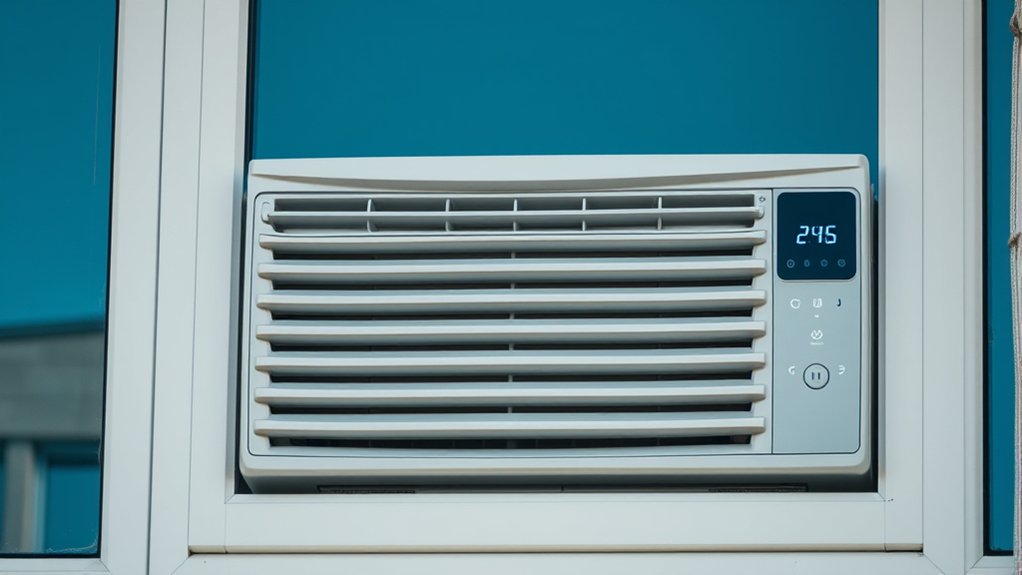
To identify a window AC, look for its boxy shape with a front grill or vents designed to fit snugly into a window opening. It’s usually installed with the top outside and the bottom inside, supported by mounting brackets.
These units are commonly called “window units” or “window coolers.”
If you want to know more about their features and installation tips, keep exploring to get all the details you need.
Key Takeaways
- Look for a box-shaped unit installed in a window, with front vents and adjustable side panels.
- Check if the unit supports from outside the window, sitting flush and sealed to prevent drafts.
- Identify if it has a front control panel or remote control, which usually indicates a typical window AC.
- Confirm if it is supported by mounting brackets and fits securely within the window opening.
- These units are commonly called “window unit,” “window AC,” or “room air conditioner” in regional terminology.
How Can You Recognize a Window Air Conditioner?
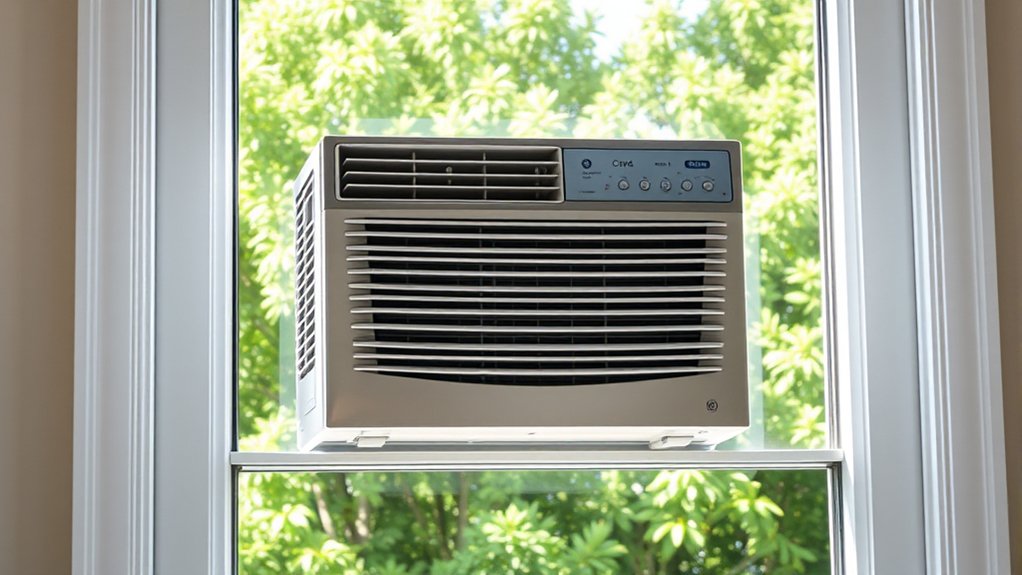
To recognize a window air conditioner, start by looking for a unit that’s designed to fit into a window opening. These units usually have a boxy shape with a front grill or vents, and they’re installed with the top outside and the bottom inside.
Identify a window air conditioner by its boxy shape, front vents, and typical top-outside, bottom-inside installation.
When inspecting, check for mounting brackets or a sill pan, which help secure the unit and prevent leaks. Installation tips include making sure the window frame is sturdy and sealing gaps to boost efficiency.
Maintenance involves regularly cleaning or replacing filters, inspecting the exterior for dust or debris, and checking for leaks or mold. Most window units have a control panel on the front for easy access, and some come with remote controls.
Recognizing these features helps you identify an actual window air conditioner quickly. Knowing its installation needs and upkeep ensures it performs at its best.
What Features Should a Window AC Have?
When you’re picking out a window AC, one of the first things to consider is how energy-efficient it is. Looking for a unit with good energy ratings can really help you save on those monthly electricity bills. No one wants a device that’s going to jack up their costs every month, right?
Another important factor is how easy it is to install. It’s great if the AC comes with clear instructions and doesn’t require a complicated setup. That way, you can get your cool air running quickly without any hassle.
All in all, you want a window AC that’s reliable, simple to install, and easy on your wallet when it comes to running costs.
Energy Efficiency Ratings
Are you aware of what makes a window AC energy-efficient? It all comes down to its energy efficiency ratings, which help you understand potential energy savings. Look for models that meet or exceed current efficiency standards to get the most out of your purchase. Higher ratings usually mean lower electricity bills and less environmental impact.
To evaluate an AC’s efficiency, consider these features:
- EER (Energy Efficiency Ratio): Higher numbers indicate better efficiency.
- SEER (Seasonal Energy Efficiency Ratio): Great for seasonal energy savings.
- Energy Star Certification: Shows the unit meets strict energy standards.
- Inverter Technology: Adjusts compressor speed for better efficiency.
Focusing on these features ensures your window AC runs efficiently and saves you money over time.
Ease of Installation
Wondering what features make a window AC easy to install? Look for models with simple installation tips and flexible mounting options. These features help you save time and avoid frustration.
Choose units that include clear instructions, adjustable brackets, and a slide-out chassis for easier setup. They make the process smoother and more straightforward.
| Feature | Benefit |
|---|---|
| Removable side panels | Makes mounting and wiring simpler |
| Adjustable brackets | Fits different window sizes |
| Clear instruction guides | Reduce guesswork during installation |
| Lightweight design | Easier to handle and position |
| Multiple mounting methods | Provide versatility for various window types |
How Do Window ACS Differ From Portable or Through-The-Wall Units?
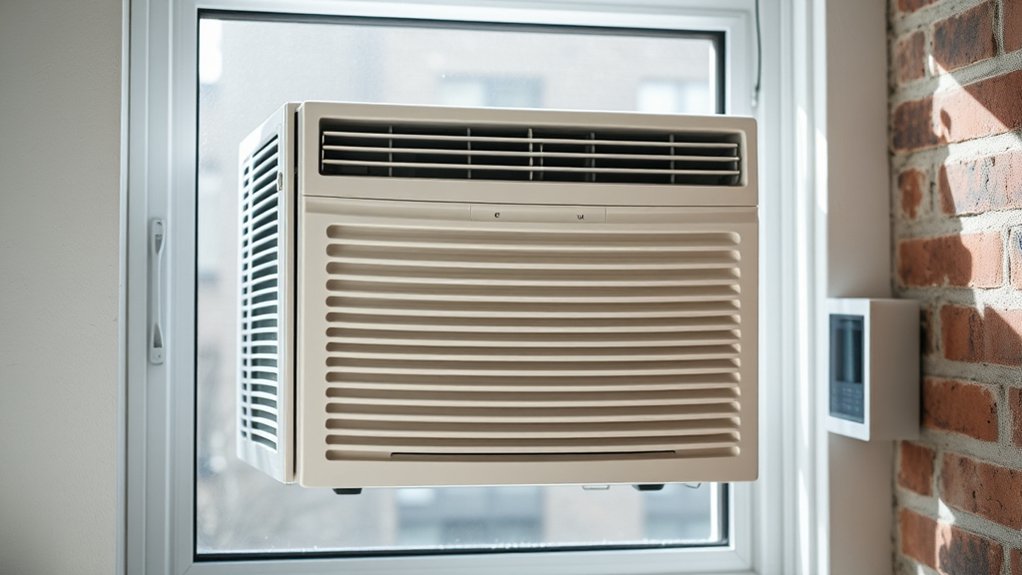
Ever wondered how window ACs differ from portable or through-the-wall units? The main differences are in installation, maintenance, and noise levels. Window units are installed directly in a window, making them more secure and less invasive than portable models, which sit on the floor. Through-the-wall units are built into a wall opening, offering a permanent solution but requiring more installation effort.
Window ACs are secure and less invasive, offering easier installation and quieter operation than portable or through-the-wall units.
Maintenance is easier with window units since they’re more accessible for cleaning filters and servicing. Through-the-wall units may need a bit more effort to maintain. When it comes to noise, window ACs tend to be quieter than portable units because they’re mounted in a fixed position, reducing vibrations.
Portability is another factor. Portable units can be moved between rooms, unlike window or through-the-wall units, which are more permanent. Installation is quicker for window units, but through-the-wall models are designed for a more permanent setup.
Understanding these differences helps you pick the right cooling option for your space and lifestyle.
What Are Other Names for Window Air Conditioners?
You might hear window air conditioners called by different names depending on where you are. Some folks just call them “window units” or “room air conditioners,” but the terms can change depending on the region.
Plus, industry jargon and brand names often influence what people end up calling these appliances. So, you might hear them referred to as “AC units,” “window coolers,” or even “portable window air conditioners” in some places. It’s pretty flexible—everyone has their own way of naming these handy appliances!
Common Alternative Names
What are some other names for window air conditioners? You might hear them called *window units*, *window coolers*, or *room air conditioners*.
These alternative names often come from older models that were simpler in design, reflecting earlier manufacturing methods. Some people also call them *room air conditioners* because they’re installed directly in a window or wall opening to cool individual spaces.
The term *window unit* emphasizes where they’re usually placed, while *window cooler* highlights what they do. These names have stuck around over time, no matter how much manufacturing has advanced.
Knowing these common alternative names helps you recognize different references to the same appliance, especially when shopping or reading product descriptions.
Regional Terminology Variations
Regional differences influence what people call window air conditioners, leading to a variety of terms across different areas. Your local dialects and terminology shape these names, making it interesting to see how language varies.
For example, in some regions, people might call it a “window unit,” while others simply say “AC” or “air cooler.” Here’s a quick look:
| Region | Common Term |
|---|---|
| North America | Window AC, Window Unit |
| Australia | Cool Box, Window Cooler |
| UK | Air Conditioner, Split Unit |
| India | Cooler, Split AC |
| Middle East | Window AC, Room Conditioner |
Knowing these regional variations helps you communicate effectively and understand local terminology better.
Industry and Brand Terms
Many industry and brand names refer to window air conditioners by various terms, often reflecting the manufacturer’s branding or marketing strategies. Recognizing these names helps you understand product options and market trends.
Industry standards influence how brands label and describe their units, which affects brand recognition and consumer trust. Some common alternative names include:
- Window unit
- Room air conditioner
- Single-hose AC
- Through-the-wall unit
These variations highlight different features or installation styles but still refer to similar products. Being aware of these terms ensures you can accurately identify window ACs no matter the branding or terminology used.
Understanding industry standards also helps you compare models more effectively, making smarter choices based on consistent definitions and features.
How Can You Tell If a Unit Is a True Window AC?
To figure out if a unit is a true window air conditioner, start by looking at its design and how it’s installed. True window ACs are made to fit snugly into a window opening, with everything in one self-contained unit that has both the evaporator and condenser.
Check for a boxy, rectangular shape that’s designed to be mounted in a window frame. Many models have adjustable side panels to help fit different window sizes. If it comes with a remote control, that’s usually a good sign it’s a standard window unit.
Listen to the noise level too. True window ACs tend to be louder than split systems because their compressors are inside the same unit. When installed properly, they sit flush against the window frame, sealing the opening to keep out drafts.
If the unit is portable or has separate components, it’s probably not a true window model.
What Size and Capacity Is Right for Your Room?
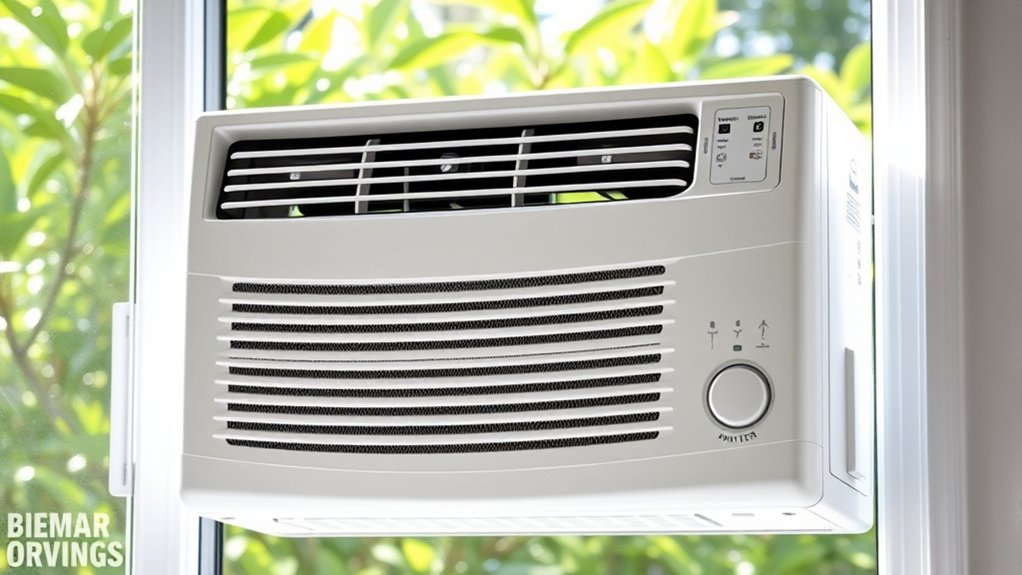
Choosing the right window AC is all about matching it to your room size and how much cooling power you actually need. Basically, you’ll want to look at the square footage of your space and then pick a unit with the right BTU capacity to handle it.
And don’t forget, paying attention to cooling efficiency tips can make a big difference. That way, you can find an energy-smart option that keeps your room comfortable without running up your electricity bill.
Room Size Considerations
How do you determine the right size and capacity for your room? First, consider the room’s size and layout. A larger room needs a more powerful unit, while a smaller space requires less capacity.
Measure the window frame accurately to make sure the AC fits properly. Keep in mind that a unit that’s too powerful may cause unnecessary noise, while one that’s too small won’t cool efficiently.
Also, think about insulation and sunlight exposure, which can affect cooling needs. To get it right, focus on these key points:
- Match AC capacity to room size for efficiency
- Verify the window frame can support the unit securely
- Choose a model with noise levels suitable for your environment
- Avoid overestimating capacity, which can lead to higher energy costs
Getting these details right helps you pick the perfect window AC.
BTU Capacity Guidelines
Selecting the correct BTU capacity ensures your window AC cools effectively without wasting energy. The Btu measurement shows the unit’s cooling power, helping you match it to your room size.
A unit with too low a BTU will struggle to cool the space, while one with too high a Btu might cool too quickly and leave humidity unaddressed.
As a general rule, rooms up to 150 square feet need around 5,000 Btu. Larger rooms up to 300 square feet require about 8,000 Btu.
For even bigger spaces, consider units with higher Btu ratings. Properly evaluating your room’s size helps you choose an AC with the right Btu measurement for efficient cooling and comfort.
Cooling Efficiency Tips
To guarantee your window AC operates efficiently and keeps your space comfortable, it’s crucial to match its size and capacity to your room. An undersized unit struggles to cool the space, while an oversized one wastes energy and increases noise levels.
Consider the room’s size, insulation, and the presence of indoor plants, which can affect humidity and temperature. Properly sizing your AC improves cooling and saves energy.
Keep these tips in mind:
- Choose the right BTU capacity based on room size
- Avoid units that are too large for efficient cooling
- Minimize noise levels for a peaceful environment
- Use indoor plants to help regulate humidity naturally
Matching your AC to your room ensures optimal comfort and efficiency.
How to Spot a Properly Installed Window AC and Its Design Features
A properly installed window AC not only cools effectively but also ensures safety and energy efficiency. To spot a good installation, check the window frame for secure mounting and look for any gaps or tilting.
The unit should sit flush within the window opening, not sticking out or uneven. The height of the installation matters too; ideally, the AC should be centered in the window for better airflow and stability.
| Feature | Indicator of Proper Installation |
|---|---|
| Window frame | Supports the unit securely without wobbling or gaps |
| Installation height | Centered within the window for balanced airflow |
| Sealing around the unit | Weatherstripping or foam to prevent air leaks |
| Mounting brackets | Firmly attached, keeping the AC steady in place |
Spotting these features helps ensure your window AC is installed safely and performs at its best.
Where Are Window Air Conditioners Best Used?
Window air conditioners work best in spaces where quick, targeted cooling is needed, especially in rooms that don’t require central air. They’re perfect for bedrooms, small living rooms, or home offices where you want to control indoor humidity and improve window ventilation. These units are great for cooling specific areas without affecting the whole house.
To get the most out of them, keep a few things in mind:
- They work well if your room has good window access for installation.
- They’re ideal for spaces that need rapid cooling or dehumidification.
- They’re suitable where window ventilation can be optimized.
- They’re great for temporary or seasonal use in areas with limited insulation.
What Should You Consider Before Buying a Window AC?
Before purchasing a window AC, you should carefully assess your cooling needs and the specifications of the unit to guarantee it fits your space. Consider the size of the room and the AC’s cooling capacity, measured in BTUs. If it’s too small, it won’t cool effectively, but if it’s too large, it might waste energy.
Check the indoor humidity levels that the unit can handle, especially if you live in a humid climate. Some models help dehumidify, which can improve your overall comfort. Noise levels are also important; a loud unit can disrupt sleep or work.
Look for reviews about the AC’s operational sound to make sure it’s suitable for your environment. Additionally, consider energy efficiency ratings like the Energy Star label to help save on electricity costs.
Finally, verify installation requirements and see if the unit has features like remote control or adjustable vents. These can make your experience more comfortable and convenient.
How Do You Confirm You’re Choosing the Right Window Air Conditioner?
To confirm you’ve chosen the right window air conditioner, start by checking if the unit matches your specific cooling needs. Consider the room size, as a unit with the proper BTU rating ensures efficient cooling without wasting energy.
Furthermore, review maintenance tips to keep it running smoothly over time. Knowing the historical development of window ACs can help you understand their durability and design improvements.
Ensure the unit’s BTU capacity fits your room size. Look for energy-efficient models with good SEER ratings.
Check for easy access to filters and cleaning features. Consider units with reliable warranties and support.
Frequently Asked Questions
Can Window ACS Be Used in Any Window Type?
Window ACs can’t be used in any window type because of window frame compatibility and installation considerations. They’re designed to fit specific window styles, typically sliding or casement windows.
Before installation, you need to check if your window frame can support the AC unit securely. If your window doesn’t match the AC’s requirements, you might need an alternative cooling solution or modifications to guarantee safe and effective installation.
How Noisy Are Typical Window Air Conditioners?
Think of a window air conditioner as a gentle breeze or a roaring storm—its noise levels can vary. Typically, they produce moderate noise, similar to a running refrigerator, but modern units have noise reduction technology.
Some models operate quietly, making them less disruptive, while older or less advanced ones can be quite loud. If you want peace, look for units designed for quieter operation to enjoy cooling without the noise.
Are There Energy-Efficient Window AC Models Available?
Yes, there are energy-efficient window AC models you can choose from. Look for units with features like programmable timers and energy-efficient compressors.
Many of these models also use eco-friendly refrigerants, which help reduce their environmental impact. Choosing an energy-efficient window AC can save you money on electricity bills and help lower your carbon footprint.
Always check for ENERGY STAR certifications to make sure you’re picking the most efficient and eco-friendly options available.
What’s the Average Lifespan of a Window AC Unit?
Imagine your window AC as a loyal guardian, standing watch through seasons. Typically, it lasts about 10-15 years with proper maintenance tips and regular cleaning.
To extend its lifespan, guarantee correct installation considerations like sealing leaks and secure mounting. Keep the filters clean, and schedule professional check-ups when needed.
This way, your trusted guardian stays efficient, protecting you from the heat for many summers to come.
How Often Should I Service or Clean My Window AC?
You should service and clean your window AC at least once a year, ideally before summer starts.
Make it a habit to check and clean the filters, coils, and vents monthly when you’re using it heavily.
When cleaning, turn off the unit first, remove and wash the filters, and look for any debris around the unit.
Sticking to this routine helps your window AC run smoothly and lasts longer.
Conclusion
Knowing how to identify a window air conditioner isn’t just about labeling. It’s about understanding their unique features and how they’re installed. When you recognize these signs, you can make smarter choices and stay comfortable.
Some people think window ACs are outdated, but their efficiency and affordability say otherwise. They’re still a great option for many spaces.
Trust your instincts and knowledge. Sometimes, the best solutions come from understanding what’s right in front of you. Classic designs like window ACs still hold their ground in today’s world.