5 Simple Steps to Recharge Your Window AC Unit
Many people struggle with keeping their window AC units running efficiently, especially during those hot summer months. If your AC isn’t cooling like it used to, you’re not alone.
Often, a simple recharge can make all the difference, but it can feel intimidating if you’re unsure where to start.
To recharge your window AC, start by turning off the unit and cleaning or replacing the filters to guarantee proper airflow. Check the coils for dust and debris and clean them gently.
Use a refrigerant gauge to identify low levels and carefully add refrigerant if needed, but only if you’re confident—if not, call a pro.
Test the electrical components like capacitors and relays, then verify cooling performance.
More tips await if you keep going.
Key Takeaways
- Turn off and unplug the unit before starting the recharge process.
- Find and remove the service access panel to get to the refrigerant ports.
- Carefully connect a refrigerant recharge kit with gauges to the service port.
- Add refrigerant slowly while keeping an eye on the pressure so you don’t overcharge.
- Turn the unit back on, check that it cools properly, and look for any leaks or strange noises.
Is DIY Recharging Your Window AC Safe? When to Call a Pro
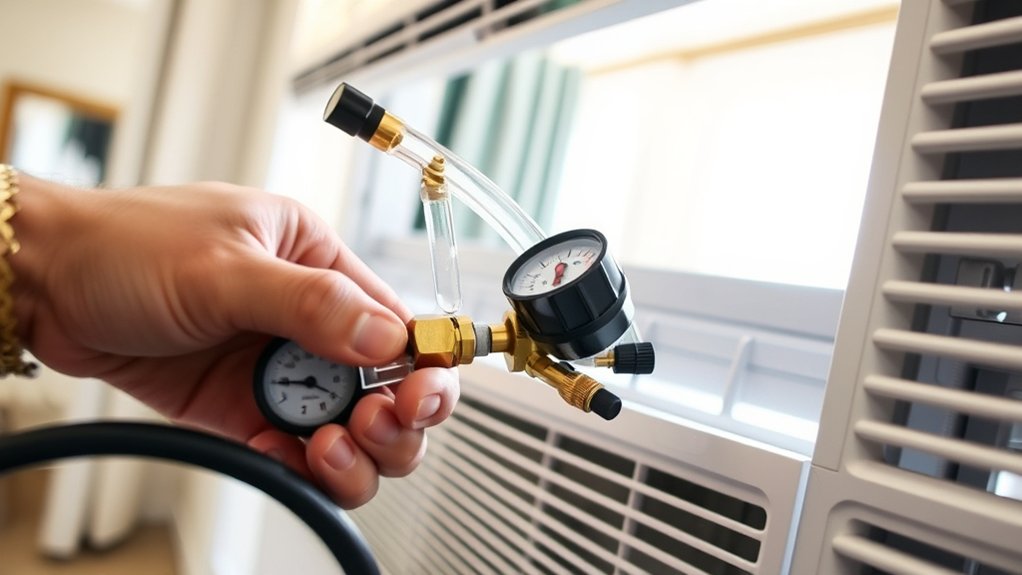
While recharging your window AC might seem straightforward, it’s important to know when DIY efforts are safe and when you should call a professional. Handling refrigerant involves safety risks, and improper procedures can lead to leaks or damage.
Refrigerant safety is critical; exposure to refrigerants can cause health issues, so it’s best to avoid direct contact or inhalation. If your AC isn’t cooling properly or you notice hissing sounds, it may be low on refrigerant, but refilling it yourself can be tricky and dangerous.
In such cases, calling for professional assistance is the safest choice. Certified HVAC technicians have the training, tools, and knowledge to recharge your unit safely and correctly. They also ensure the refrigerant system is sealed properly, preventing leaks that harm the environment and your unit’s efficiency.
When in doubt, prioritizing professional help protects you from potential hazards and guarantees your AC functions at its most effective.
Clean Air Filters and Coils to Improve Cooling
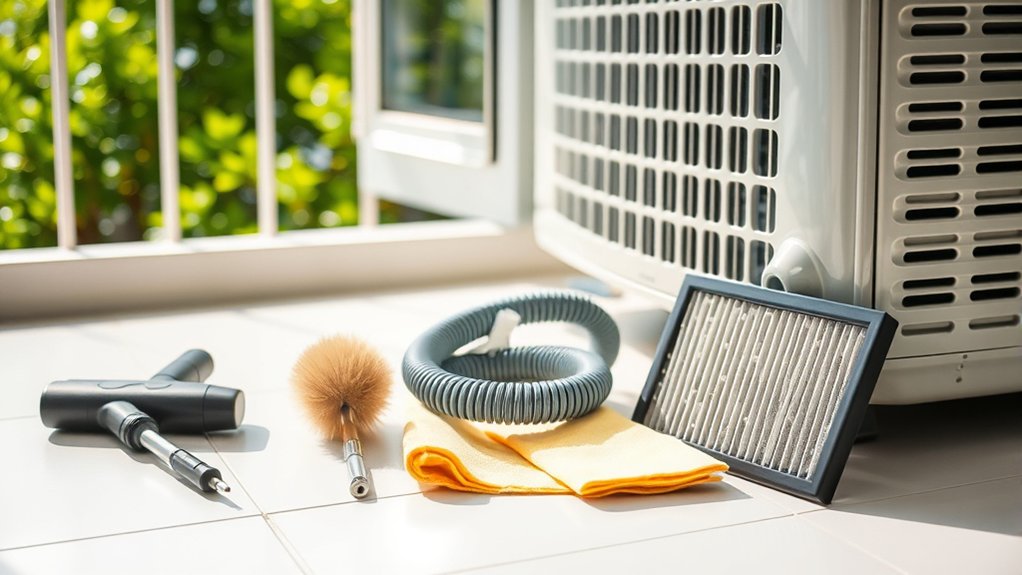
After verifying your refrigerant levels are correct and safe, the next step to boosting your window AC’s performance is cleaning the air filters and coils. Proper airflow maintenance is vital because clogged filters and dirty coils hinder cooling efficiency.
Start by turning off your unit and removing the filters. If they’re reusable, wash them gently with warm, soapy water, then let them dry completely before reinstalling. If filters are disposable, replace them with new ones.
Dirty filters restrict airflow, forcing your AC to work harder and consume more energy. Next, clean the coils using a soft brush or vacuum to remove dust and debris. This prevents buildup that impairs heat exchange.
Regular filter replacement and coil cleaning ensure your unit runs smoothly, cools effectively, and prolongs its lifespan. Incorporate these simple steps into your routine for a more efficient cooling experience.
How to Check and Refill Refrigerant in Your Window AC
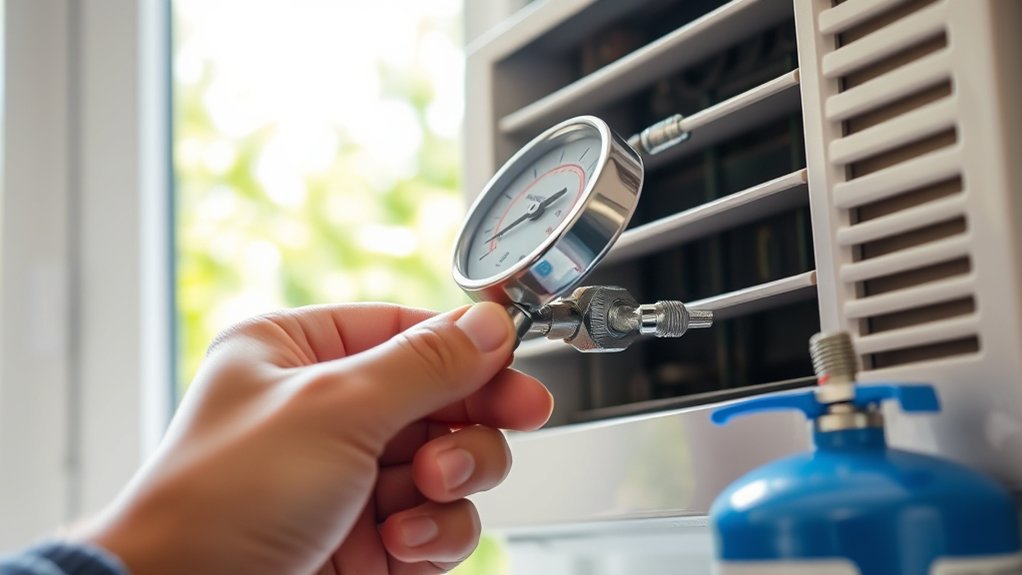
Wondering how to guarantee your window AC has the right amount of refrigerant? First, identify the correct refrigerant type for your unit, usually listed on the label. Common types include R-22 and R-410A.
To check refrigerant levels, look for signs like reduced cooling or ice buildup on coils. These could indicate low refrigerant. Leak detection is also essential; inspect the coils, hoses, and fittings for oily spots or cracks.
If you suspect a leak, don’t try to repair it yourself. It’s best to call a professional. To refill refrigerant, use a gauge to measure pressure and ensure you’re adding the right amount. Overcharging can damage your unit.
Test and Replace Your AC’s Capacitor and Electrical Parts
Testing and replacing your AC’s capacitor and electrical parts is key to keeping your unit running smoothly and efficiently. Start by testing the capacitor to see if it’s working properly; a faulty capacitor can make your AC struggle or not start at all.
Use a multimeter to check the capacitance and look for signs like bulging or leakage. If the capacitor is bad, replace it with an exact match. During electrical troubleshooting, inspect all wiring and connections for corrosion, damage, or looseness.
Tighten any loose connections and replace damaged wires to prevent issues. Also, test other electrical components like relays and contactors to confirm they’re working correctly. Doing these checks helps prevent breakdowns and keeps your AC performing well.
Always turn off power before working on electrical parts. If you’re unsure about anything, it’s best to call in a professional. Proper testing and replacement will keep your window AC reliable, especially during the hottest days.
Verify Your Window AC’s Cooling Performance After Recharging

Once you’ve recharged your window AC, it’s important to check if it’s cooling properly. Make sure cool air is coming out steadily and feels comfortable.
Pay attention to the noise level. If it’s quieter than before, that’s a good sign the system is running efficiently. Keep an eye on your electricity bill too—less power use usually means it’s working well.
To make sure everything’s working right, try feeling the airflow at different vents to see if the cooling is even. Listen for any strange noises that might mean a problem.
Check the compressor and fan to see if they’re running smoothly and quietly. Doing these checks helps keep your AC efficient and cooling effectively.
A properly working unit saves you money and keeps your space comfortable.
Frequently Asked Questions
How Often Should I Recharge My Window AC Unit?
You should recharge your window AC unit when it starts cooling poorly. This is usually needed every 1-2 years, but it depends on the type of refrigerant and if there are any leaks.
Make sure to use proper charging techniques. Add the right refrigerant type, like R-22 or R-410A, and avoid overcharging the unit.
It’s also a good idea to regularly check for leaks. If you’re unsure about how to do this, it’s best to call a professional.
Keeping up with maintenance helps your AC run efficiently and can extend its lifespan.
What Are Signs My Window AC Needs Recharging?
You’ll notice your window AC needs recharging if it blows warm air, struggles to cool, or cycles on and off frequently.
Check for refrigerant leaks or reduced cooling efficiency. When recharging, make sure you understand refrigerant types like R-22 or R-410A.
Follow safety precautions to avoid injury or damage. If you’re unsure, it’s best to consult a professional to handle refrigerant safely and properly restore your unit’s cooling power.
Can a Clogged Drain Affect AC Performance?
A clogged drain can definitely affect your AC’s performance. When there’s a drain blockage, water can’t drain properly, leading to mold buildup inside the unit.
This mold not only hampers cooling efficiency but also causes unpleasant odors and potential leaks. Regularly check and clean your drain to prevent blockages.
Clearing out any debris guarantees proper drainage, keeps mold at bay, and helps your AC run smoothly and efficiently.
Are There Environmental Concerns With Recharging Refrigerant?
Recharging your AC with refrigerant can cause serious environmental harm if not done responsibly. Refrigerant leaks release chemicals that can damage the ozone layer and contribute to global warming, leading to ecological chaos.
Fortunately, eco-friendly alternatives like natural refrigerants exist, which minimize environmental impact. Always have a professional handle recharging to prevent leaks and protect our planet from the harmful effects of traditional refrigerants.
What Tools Are Necessary for Safely Recharging My AC?
To safely recharge your AC, you’ll need tools like a pressure gauge, refrigerant identifiers, and a leak detector.
Make sure you know the refrigerant types your unit needs, such as R-22 or R-410A.
Always follow safety precautions, including wearing gloves and eye protection, and work in a well-ventilated area.
Using the proper tools and safety measures helps prevent accidents and makes sure you add the correct refrigerant amount safely.
Conclusion
Recharging your window AC is like giving it a revitalizing gust — simple steps can make a big difference. Just remember, if you’re unsure or uncomfortable at any point, it’s better to call a pro.
With a little effort, you’ll keep your cool and enjoy an invigoratingly comfortable space all season long. Think of it as giving your AC a spa day — quick, easy, and totally worth it!