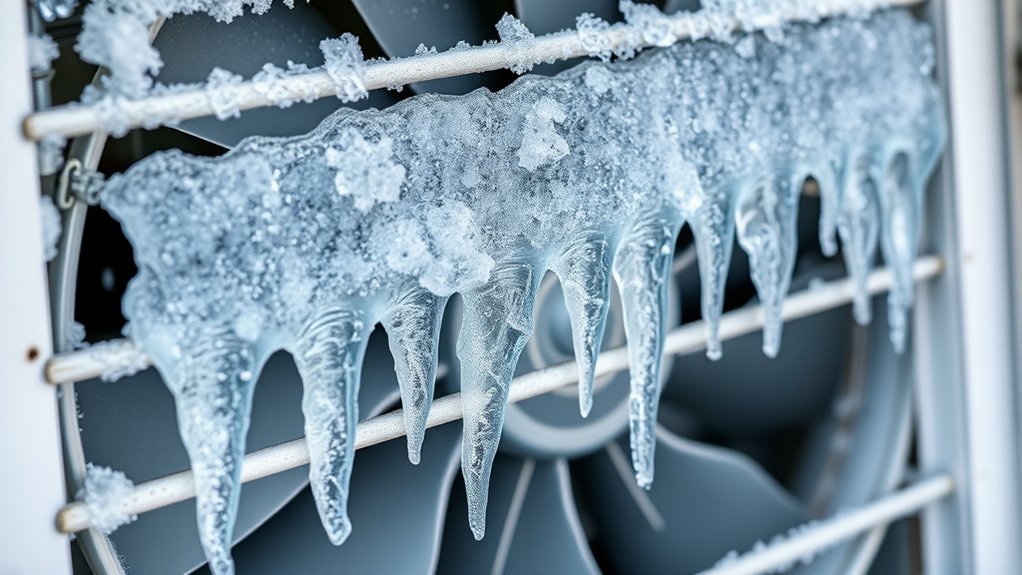
How to Diagnose Causes of Window AC Freeze-Up
Are you tired of dealing with a window AC that keeps freezing up? Many people struggle with this frustrating issue, especially during hot summer months when cooling is essential. Don’t worry—you’re not alone, and there are simple ways to diagnose what’s causing the problem.
To diagnose why your window AC is freezing up, start by checking the airflow. Make sure vents aren’t blocked and filters are clean, as poor airflow can cause ice buildup.
Next, inspect for ice on the coils and see if the unit is working efficiently. Low refrigerant levels or leaks could also be the cause, so consider that if the unit struggles.
If you keep these steps in mind, you’ll uncover the common issues and how to fix them.
Key Takeaways
- Check for ice buildup on coils or vents to catch freezing issues early.
- Inspect and replace dirty or clogged filters to keep airflow proper.
- Monitor refrigerant levels and look for leaks if the coil looks frosted.
- Test thermostat accuracy and make sure the unit isn’t overworking or cycling improperly.
- Keep an eye on outdoor temperature and humidity, as these conditions can cause the coil to freeze.
How to Recognize if Your Window AC Is Frozen
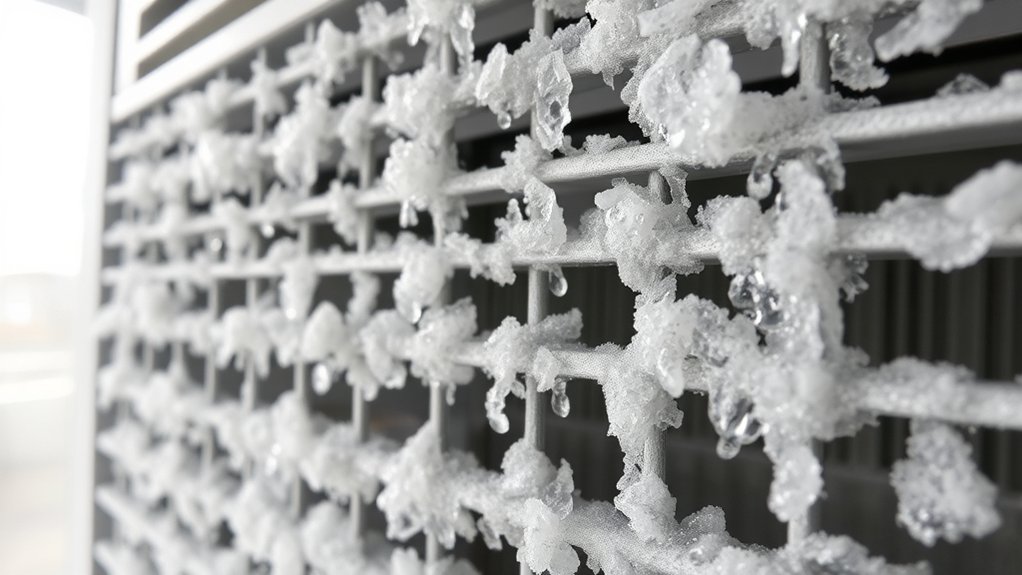
A frozen window AC unit often shows clear signs that you can spot without any technical tools. One of the easiest clues is reduced airflow—if cool air isn’t coming out or feels weak, your unit might be frozen.
You’ll also notice increased energy consumption because the AC has to work harder to cool the room, which lowers its efficiency.
Another sign is unusual noise; a frozen coil can cause rattling or buzzing sounds due to ice buildup.
Visually, you might see frost or ice forming on the vents or the outside of the unit.
These signs mean your AC isn’t running at its best. Ignoring them can lead to higher energy bills and less effective noise reduction.
Spotting these signs early helps you catch the problem before it gets worse, keeping your cooling system efficient and quiet while avoiding unnecessary repairs.
What Causes a Window AC to Freeze Up?
Ever wonder why your window AC suddenly freezes up? Several factors can cause this. One common reason is poor airflow, which leads to uneven cooling and ice formation.
Poor airflow can cause your window AC to freeze and malfunction.
If the air filters are clogged or dirty, airflow decreases, reducing energy efficiency and causing the unit to work harder. This extra strain can result in freezing and increased sound levels, making the unit noisier than usual.
Moreover, low refrigerant levels can disrupt the cooling cycle, leading to ice buildup. If the refrigerant leaks, your AC’s ability to absorb heat diminishes, causing the evaporator coil to freeze.
Overworking your unit due to high outdoor temperatures or a malfunctioning thermostat can also contribute. All these issues reduce energy efficiency and can make your AC louder or less effective.
Addressing these causes promptly helps prevent freezing and keeps your unit running smoothly and quietly.
Why Poor Airflow Leads to Freezing Issues
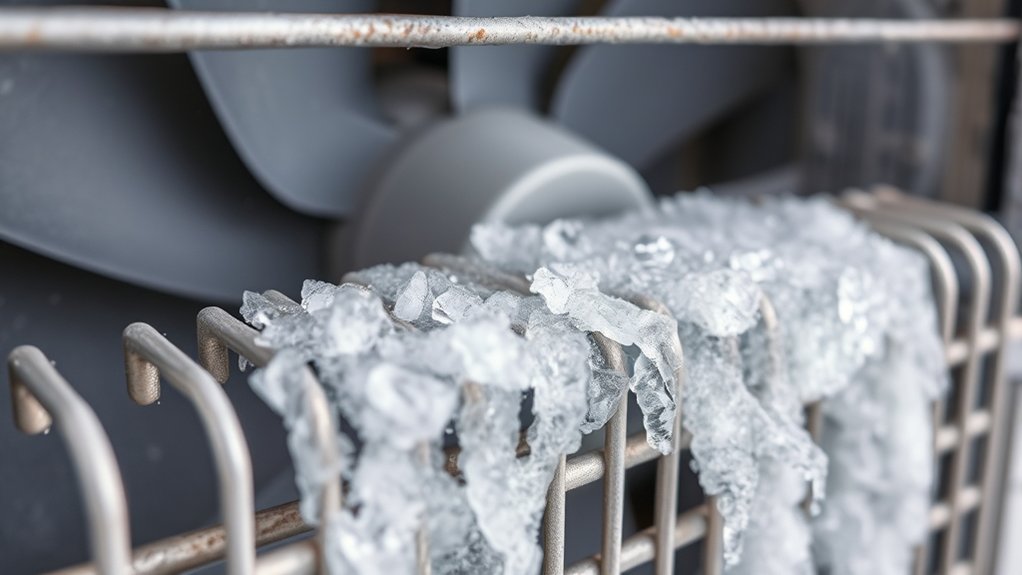
When airflow gets blocked or restricted, your AC has a tough time cooling the air properly. This can lead to the system freezing up. Things like obstructed vents, dirty filters, and poor circulation can all cut down on airflow, making it more likely for ice to form.
To keep everything running smoothly, make sure your vents are clear and your filters are clean. This helps maintain good airflow and prevents ice buildup, so your AC can do its job without any hiccups.
Obstructed Air Vents
Have you noticed that your window AC unit isn’t cooling effectively? Obstructed air vents could be the cause, blocking proper airflow and making the unit freeze up.
Check for blockages like indoor plants, furniture, or clutter blocking the vents. Also, make sure the window insulation isn’t sealing the unit too tightly, which can restrict air circulation.
Here’s a quick guide:
| Obstruction Type | Common Causes | Solutions |
|---|---|---|
| Indoor plants | Placed near vents | Move plants away from airflow sources |
| Window insulation | Seals around the unit | Adjust or replace the insulation |
| Furniture | Blocking vents | Rearrange furniture |
| Dust or debris | Vent grilles clogged | Clean vents thoroughly |
| External debris | Outside unit blocked | Clear the area around the unit |
Good airflow helps your AC run smoothly and prevents it from freezing.
Dirty Air Filters
If your window AC isn’t cooling properly despite clear vents and good airflow, dirty air filters might be to blame. Over time, air filters collect dust, dirt, and debris, which reduces airflow and causes the unit to work harder.
This extra strain can lead to the evaporator coil freezing up. Knowing the air filter lifespan is crucial; most filters need replacing every 1 to 3 months, depending on use and environment.
Regular filter replacement is really important. Clean filters ensure proper airflow and efficient cooling. If you neglect to change filters, dirt builds up and impairs the AC’s ability to regulate temperature.
Inadequate Air Circulation
Poor air circulation prevents your window AC from maintaining proper temperatures, which can cause the evaporator coil to freeze up. When airflow is restricted, cool air doesn’t circulate well, leading to cold spots and ice buildup.
To improve airflow, check for obstructions like furniture or curtains blocking vents. Make sure your unit’s filters are clean and replace any damaged or mismatched filters, especially if you want to maximize energy efficiency.
Remember, different models come with various color options that may help them blend into your space. Consider upgrading to a unit with better airflow design for optimal performance.
Here’s a quick guide:
| Issue | Solution | Benefit |
|---|---|---|
| Dirty filters | Clean or replace filters | Better airflow, efficiency |
| Blocked vents | Clear obstructions | Improved cooling |
| Incorrect filters | Use appropriate filters | Energy savings |
| Poor design options | Upgrade to models with better airflow | Enhanced performance |
How Low Refrigerant Levels Can Freeze Your AC
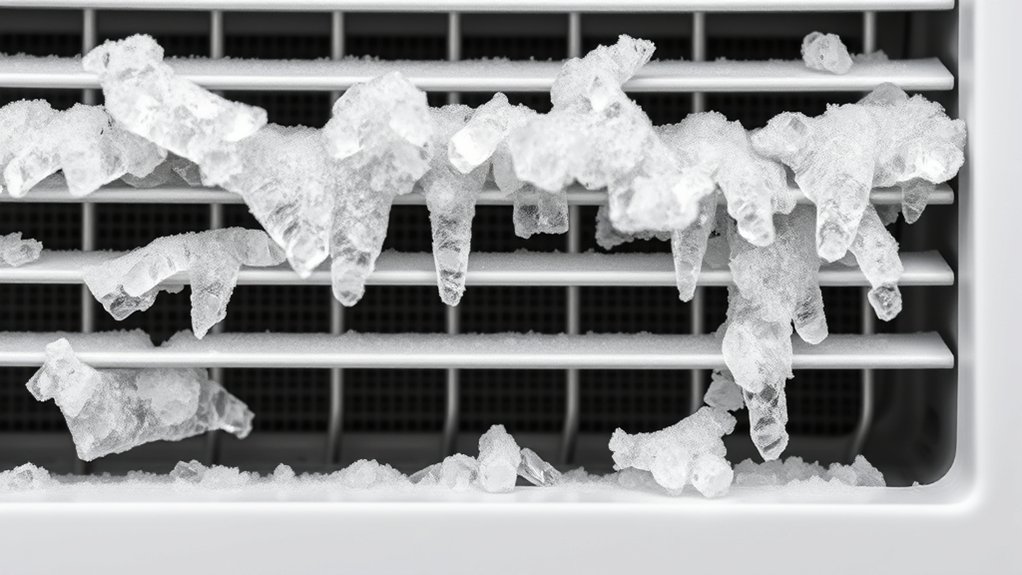
When refrigerant levels drop too low, your air conditioner can start to freeze up. This happens because not enough refrigerant means the system can’t absorb heat properly, causing the evaporator coil to get too cold.
Common causes include refrigerant leaks or compressor faults, which disrupt the flow of refrigerant. To diagnose this, start by checking for refrigerant leaks. Look for oily spots or hissing sounds around the coils or connections, as these can signal leaks.
Next, listen for compressor faults. A failing compressor may not circulate refrigerant correctly, leading to low levels. You should also inspect for ice buildup on the evaporator coil. Excessive ice usually points to low refrigerant, especially if the system isn’t cooling effectively.
If you notice these signs, it’s best to call a professional. They can recharge the refrigerant and fix any leaks or compressor problems.
How Dirty Air Filters Can Cause Freezing Problems
A dirty air filter can really block the airflow, making your AC work much harder than it needs to. When the filter gets clogged, it’s like trying to breathe through a straw — the system struggles to pull in enough air. That extra effort can make the AC less efficient and cause uneven cooling in your home.
Now, here’s the thing — all that restricted airflow can lead to the evaporator coil freezing up. When the coil gets too cold because it’s not getting enough warm air passing over it, ice can start to form. And trust me, a frozen coil is a headache you definitely want to avoid!
Restricted Airflow Flow
Dirty air filters can significantly restrict airflow through your window AC unit, often leading to freezing issues. When airflow is blocked, the evaporator coil can become too cold, causing frost buildup.
To prevent this, check your air filter regularly and replace it if it’s dirty. Reduced airflow also affects the fan speed, making it work harder and less efficiently.
Here’s what to do:
- Inspect the air filter and replace it if it’s clogged or dirty.
- Make sure the fan is running at the right speed and isn’t blocked.
- Clear any debris around the vents or intake grills to improve airflow.
Keeping airflow free-flowing helps maintain proper cooling and prevents the coil from freezing up. Regular maintenance is key to avoiding these problems.
Reduced Cooling Efficiency
Restricted airflow caused by dirty air filters hampers your window AC’s ability to cool effectively. When filters are clogged, the unit works harder to circulate air, reducing energy efficiency and increasing your electricity bills.
This strain can also lead to uneven cooling and longer run times. A dirty filter can cause the compressor to overwork, which may produce more noise and wear out faster.
Regularly cleaning or replacing filters improves airflow, restoring cooling performance and energy efficiency. It also helps reduce noise levels, making your unit operate more quietly.
The Effect of Weather Conditions on Window AC Freezing
Weather conditions play a big role in causing window AC units to freeze up. When outdoor temperatures drop or humidity levels rise, your AC is more likely to freeze.
Cold weather lowers the temperature difference inside and outside, making it easier for ice to form on the coils. High humidity adds moisture that can condense and freeze on your unit.
To understand how weather impacts your AC, keep these points in mind:
- Low outdoor temperatures, especially below 60°F, can cause the refrigerant to drop too low, leading to freezing.
- Increased humidity levels add moisture that can settle on coils and freeze during cooler nights.
- Sudden weather changes, like cold fronts, can disturb your AC’s cooling cycle and encourage ice formation.
Keeping an eye on these conditions helps you spot when weather might be causing your window AC to freeze.
Easy Steps to Thaw and Fix a Frozen Window AC
When your window AC unit freezes, the first thing to do is turn it off and unplug it. This helps prevent any further damage. Let the ice melt naturally, which can take a few hours.
If you want to speed things up, you can point a fan at the unit or use a hairdryer on a low setting. Once the ice has melted, clean the air filter and evaporator coils to improve airflow.
Regular seasonal maintenance is key to keeping your AC running efficiently and preventing future freeze-ups. Keep an eye on airflow and temperature settings to avoid overworking the unit.
Here’s a quick guide:
| Step | Tip | Result |
|---|---|---|
| Turn off and unplug | Let ice melt naturally or with a fan | Prevents damage |
| Clean filters and coils | Remove dirt and debris | Restores airflow and efficiency |
| Check settings | Keep temperature steady | Avoid freeze-ups |
Preventing Your Window AC From Freezing Up
To keep your window AC from freezing up, it’s a good idea to regularly clean and replace the filter. Trust me, a clean filter makes a big difference! It helps the air flow smoothly and keeps everything running nicely.
Also, make sure there’s plenty of space around the unit. Avoid blocking the vents or putting stuff too close, because good airflow is key. When your AC gets enough air and stays clean, it’ll run more efficiently and you’ll avoid those annoying freeze-ups that can turn into a costly hassle.
Regular Filter Maintenance
Regular filter maintenance is essential for preventing your window AC from freezing up. A clean filter improves energy efficiency by reducing strain on the compressor, helping your unit run smoothly and cost-effectively. It also minimizes noise, making your cooling experience more comfortable.
To keep your AC in top shape, check and replace filters every 1-2 months, especially during peak use. Use high-quality filters that trap dust and debris effectively. Regularly inspect for dirt buildup around the filter area and clean as needed.
Adequate Airflow Levels
Ensuring proper airflow is key to preventing your window AC from freezing up. Start by checking the air filter; a dirty or clogged filter restricts airflow and causes the evaporator coil to freeze. Replace or clean it regularly to keep airflow flowing smoothly.
Also, verify refrigerant levels. Low refrigerant reduces heat absorption, which can lead to ice formation. Make sure vents aren’t blocked by furniture or curtains, as this can hinder airflow and cause uneven cooling.
Proper airflow keeps the evaporator coil within a safe temperature range, preventing ice buildup. By maintaining a clean air filter, adequate refrigerant levels, and unobstructed vents, you support efficient operation and lower the risk of freeze-up.
Consistent airflow management is essential for your AC’s longevity and performance.
When to Call a Professional for Window AC Repairs
Knowing when to call a professional for window AC repairs can save you time, money, and frustration. If your unit keeps freezing or doesn’t seem to be working efficiently, it’s a good idea to get expert help. Here are three signs to watch for:
Knowing when to call a pro can save you time, money, and frustration with your window AC.
First, if the AC has a poor design that blocks airflow or causes uneven cooling, it might lead to frequent freeze-ups. This isn’t usually something you can fix on your own.
Second, even after cleaning the filters, if your unit uses more energy than normal, there could be underlying mechanical issues. A professional can diagnose and fix these problems.
Lastly, if the temperature doesn’t match your thermostat or you hear strange noises, it could mean internal component problems. These are often beyond basic troubleshooting.
Calling a professional helps keep your AC looking good and running efficiently. Attempting repairs yourself might void warranties or make issues worse. Trust a licensed technician to diagnose and fix complex problems, so your window unit works smoothly all season long.
Final Tips to Keep Your Window AC Running Smoothly
To keep your window AC running smoothly, start by changing or cleaning the filters regularly, ideally once a month during peak use. This helps prevent airflow blockages that can cause freezing.
Consider energy-efficient upgrades like programmable thermostats or ENERGY STAR models. These can help reduce energy consumption and extend your unit’s lifespan.
You can also implement noise reduction techniques, such as installing vibration pads or soundproofing the surrounding area. This makes your AC quieter and more comfortable to use.
| Tip | Benefit | Example |
|---|---|---|
| Clean filters monthly | Maintains airflow, prevents freeze-up | Use a vacuum or wash with water |
| Upgrade to ENERGY STAR | Saves energy, reduces costs | Replace old units |
| Noise reduction tech | Less disturbance, more comfort | Vibration pads, insulation |
Frequently Asked Questions
Can Electrical Issues Cause a Window AC to Freeze?
Yes, electrical issues can cause your window AC to freeze. Faulty wiring or a failing thermostat might disrupt the compressor, leading to abnormal compressor noise and uneven cooling.
If indoor humidity is too high, the AC works harder, increasing electrical strain and risking freezing. Addressing electrical problems quickly guarantees your unit runs smoothly, prevents freeze-ups, and keeps your indoor comfort just right.
How Does Improper Installation Affect Freezing Problems?
Improper installation can turn your AC into a ticking time bomb. When installation mistakes happen, they often lead to Freon leaks or poor airflow, both of which cause freezing problems.
Poor sealing, incorrect positioning, or faulty wiring can stop the unit from working the right way. This mishandling messes up the cooling cycle, making your AC work harder and freeze up faster.
Getting professional installation helps you avoid these issues from the start. It ensures everything is set up correctly so your AC runs smoothly and stays ice-free.
Are There Specific Brands More Prone to Freezing?
Some brands are more prone to freezing due to model susceptibility and reliability issues. You might notice that certain less reputable brands or older models tend to have cooling problems, including freezing.
Well-known brands with high reliability generally experience fewer freezing issues, but no brand is entirely immune. Regular maintenance, proper installation, and choosing a reputable brand can help prevent freeze-ups, no matter which model you pick.
Can Thermostat Malfunctions Lead to AC Freeze-Up?
Think of your thermostat as the conductor of your AC’s symphony; when it malfunctions, chaos ensues.
A thermostat calibration issue or sensor malfunction can cause your unit to run excessively, leading to freeze-up.
When the thermostat misreads room temperature, it may keep the compressor running, causing ice to form on the coils.
Ensuring proper calibration and checking sensors can prevent this icy disruption and keep your AC humming smoothly.
How Does Outdoor Temperature Influence AC Freezing?
Outdoor temperature greatly affects your AC’s chance of freezing up. When it’s very cold outside, the refrigerant has a tough time evaporating properly, which can cause ice to form on the coils.
High outdoor humidity makes things worse by adding moisture that cools the coil faster, increasing the chances of ice buildup. Plus, lower temperatures can make the compressor less efficient, leading to uneven cooling and freezing.
To avoid this, keep your unit well-maintained. During colder months, using a cover can help protect it from humidity and cold damage.
Conclusion
Regular maintenance is key to avoiding a frozen window AC, saving you money and discomfort. Did you know that over 70% of air conditioning repairs are caused by simple issues like dirty filters or poor airflow?
By staying vigilant and addressing problems early, you can keep your unit running efficiently all season long. Remember, a well-maintained AC not only cools better but also lasts longer, ensuring you stay comfortable when it matters most.
If your window AC starts to freeze up, checking for dirty filters, blocked vents, or low refrigerant levels can help diagnose the cause. Taking these small steps can prevent bigger issues and keep your AC running smoothly.