What Alternatives Does a Window AC Unit Have for Installation?
If you’ve ever struggled with installing a window AC unit or felt limited by its space requirements, you’re not alone. Many people look for better alternatives to keep their homes cool without the hassle.
If you’re looking for alternatives to installing a window AC unit, you can consider portable air conditioners that vent through a hose to a window or wall, or ductless mini-split systems that require a small hole for installation.
Evaporative coolers are another option in dry climates, offering natural cooling.
Through-the-wall units provide a permanent solution if you prefer a built-in option.
Keep exploring to find out which choice best suits your home setup and needs.
Key Takeaways
- Through-the-wall units offer a permanent, built-in option that doesn’t depend on window installation.
- Ductless mini-split systems are installed through a small wall hole, so you don’t need a window mount.
- Portable air conditioners vent through windows or other openings, giving you flexible placement options.
- Evaporative coolers don’t require window installation and work well in dry climates with minimal setup.
- Central air systems connect to existing ductwork, cooling your whole home without needing window-based units.
What Are the Limitations of Standard Window AC Units?
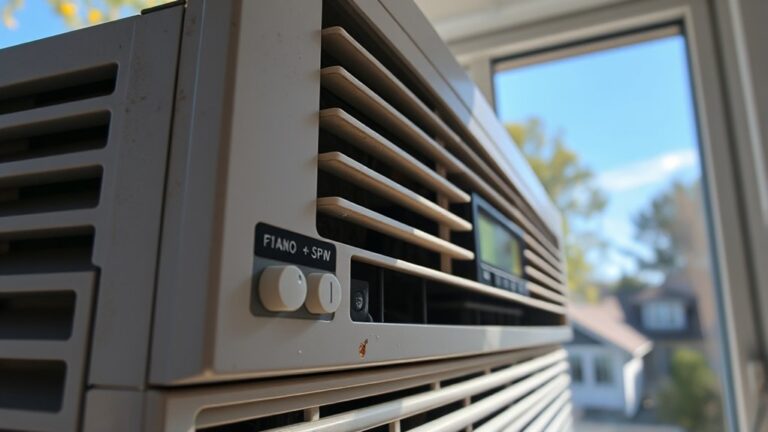
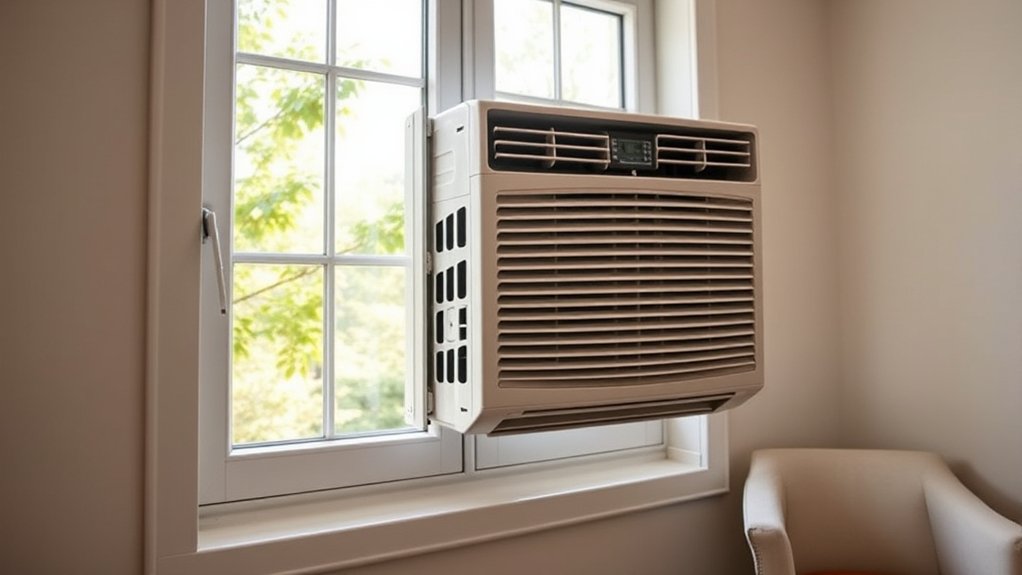
Standard window AC units have several limitations that can affect their performance and convenience. One major issue is window restrictions. Not all windows are suitable for installation, especially those that don’t slide open horizontally or are too small or obstructed. This limits where you can place a window unit, reducing flexibility.
Noise concerns are another common problem. These units tend to generate significant noise, which can disturb your sleep or work, especially if the unit is located close to your resting area. The noise can also be disruptive for neighbors if you live in close quarters.
Additionally, installation can be a hassle—you may need tools or help to secure the unit properly. Overall, these limitations can impact how effective and comfortable a window AC unit is, prompting many to explore alternative cooling options that are less restricted and quieter.
How Do Portable Air Conditioners Work, and Can They Be Installed Without Windows?
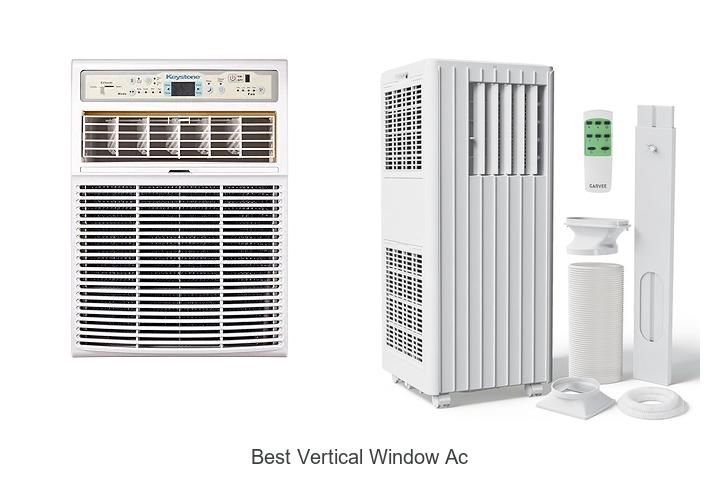
Portable air conditioners basically work by drawing in warm air from your room, cooling it down, and then blowing the cooled air back into your space. Most of the time, they need to be vented outside to get rid of the hot air they remove from the room. Usually, this venting is done through a window, using a hose or a kit designed for that purpose.
But here’s the thing—there are some alternative venting options that can let you install a portable AC without having to use a window. For example, some people use venting through a wall, a door, or even a drop ceiling if the setup allows. There are also special kits and accessories that make it possible to vent the hot air into a different space or into a vented duct, so you don’t always have to rely on a window.
Functionality of Portable ACs
Since portable air conditioners rely on expelling heat outside, they usually need a window or an opening to vent hot air. They work by drawing warm indoor air over refrigerant coils, cooling it, and then releasing the cooled air into the room.
Meanwhile, the heat absorbed is expelled outside through a flexible hose. To make the space cozy, you might add indoor plants or decorative curtains, which can help soften the appliance’s appearance.
| Feature | Details |
|---|---|
| Venting Requirement | Needs a window or opening for hot air exhaust |
| Installation Flexibility | Can be moved easily but still needs a vent setup |
| Cooling Method | Uses a refrigerant cycle to cool indoor air |
| Aesthetic Options | Use indoor plants and decorative curtains to hide or blend the unit |
Alternative Venting Methods
While traditional portable air conditioners rely on a window or opening to vent hot air outside, alternative venting methods aim to eliminate this requirement. These options include ventless models, which use advanced filtration to cool air without exhausting heat outside, potentially increasing energy savings.
However, ventless units are usually less effective and may raise indoor humidity levels. Another option involves ductless venting systems that connect to existing HVAC vents or use flexible hoses routed through walls or ceilings.
These systems reduce noise levels and offer more discreet installation. Keep in mind, these methods may impact energy efficiency and noise levels. It’s important to weigh the convenience against potential trade-offs in cooling performance and energy use.
Are Ductless Mini-Split Systems Easy to Install and Suitable for Your Home?
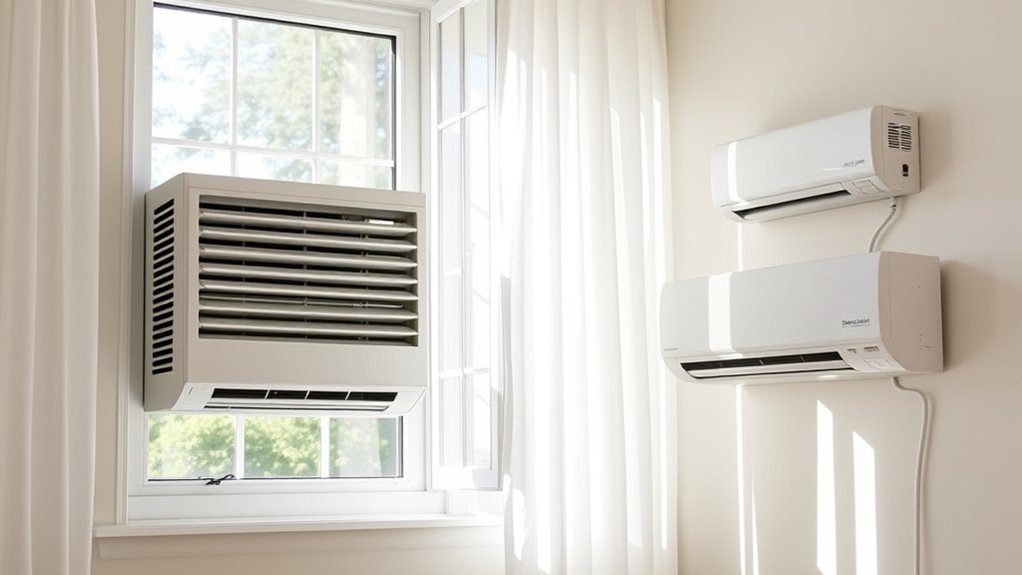
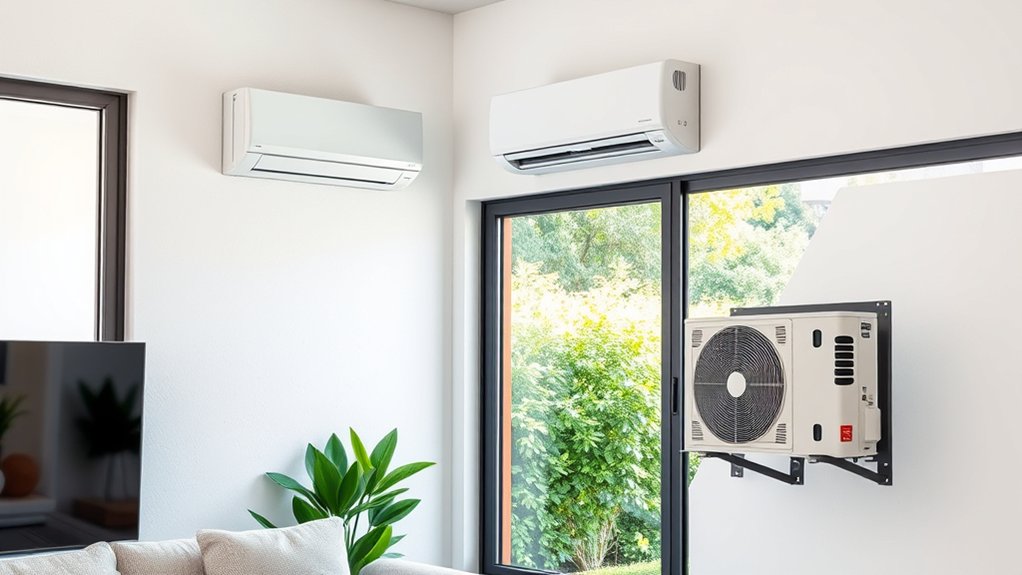
Ductless mini-split systems are usually pretty easy to install. Most of the time, all you need is a small hole for the conduit, and there’s not much else that needs changing around your home. They’re really flexible and can fit into different spaces and home styles without much hassle.
And the best part? They’re often budget-friendly and energy-efficient, which can help you save money in the long run. So, if you’re thinking about upgrading your cooling and heating system, ductless mini-splits might just be a great option to consider!
Installation Process Simplicity
Are ductless mini-split systems a straightforward choice for home installation? Generally, yes. These systems are designed for easier setup compared to traditional central units, often requiring only a small hole for the conduit and minimal wall modifications.
You won’t need extensive ductwork, which saves time and effort. Installation is usually quick, and many homeowners find it manageable with basic DIY skills or professional help.
Plus, ductless mini-splits offer excellent energy efficiency, helping to lower your energy bills over time. They also operate quietly, making them a subtle and unobtrusive addition to your home.
Space and Design Compatibility
Is your home layout compatible with a ductless mini-split system? These units are versatile and can fit into various indoor decor styles since they don’t need bulky ductwork or major structural changes.
The indoor units are sleek and unobtrusive, blending seamlessly into your space without disrupting your design aesthetic. Plus, mini-split systems usually operate quietly, with low noise levels that won’t disturb your daily activities or sleep.
This makes them a great choice for bedrooms, living rooms, or home offices where a peaceful environment is essential. Their flexible installation options allow you to position indoor units in different areas, maximizing comfort without sacrificing style.
Cost and Energy Efficiency
Installing a mini-split system can be straightforward, especially compared to traditional HVAC setups that need lots of ductwork. Ductless systems often save energy because they avoid losses from ducts. Plus, their installation costs are usually lower since you don’t need big renovations.
Here are some key points:
- Lower Installation Costs: Less labor and materials mean it’s more affordable.
- Energy Efficiency: Targeted cooling reduces waste and helps cut your bills.
- Flexible Placement: Easy to install in different rooms without major construction.
- Long-term Savings: The initial cost pays off with lower energy bills over time.
What Are Evaporative Coolers, and Are They a Good Alternative?
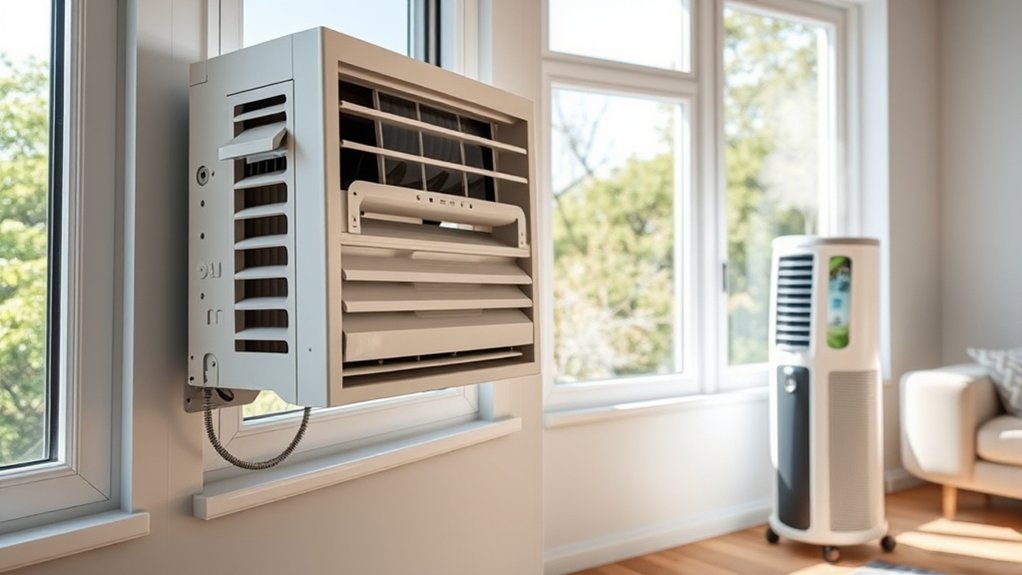
Evaporative coolers, also called swamp coolers, work by pulling warm air through water-saturated pads. As the water evaporates, it cools the air around you. This process, known as evaporative cooling, is energy-efficient and eco-friendly, especially in dry climates.
It’s a great alternative to traditional air conditioning, but they work best in areas with low humidity. Keep in mind, they add moisture to the air, which can be good or bad depending on where you live.
Here’s a quick comparison to help you decide:
| Feature | Evaporative Cooler | Traditional AC |
|---|---|---|
| Climate Suitability | Best in dry, low-humidity areas | Suitable for all climates |
| Water Use | Yes, water evaporation is needed | No water required |
| Energy Efficiency | Generally high | Moderate to low |
| Air Quality | Adds humidity, naturally cools | Filters air but dehumidifies |
This table highlights the main differences, making it easier to see if evaporative cooling is right for you.
How Do Through-the-Wall Air Conditioners Compare for Long-Term Use?
Through-the-wall air conditioners are built for long-term use, offering a permanent cooling solution that stays in place over time. They’re sturdy, reliable, and designed to handle extended operation.
When comparing them for long-term use, think about these factors:
- Energy savings. They often come with energy-efficient features, which can help cut down your electricity bills.
- Noise levels. These units tend to be quieter than portable options, making them a good choice for bedrooms or offices.
- Durability. Built to withstand continuous use, they usually last longer if you keep up with regular maintenance.
- Installation permanence. Once installed, they stay fixed in place, which can mean less hassle compared to removable units.
Can Portable or Ductless Units Be Moved Between Rooms or Homes?
Portable and ductless units are designed with flexibility in mind, so you can move them between rooms or even different homes. With a remote control, you can easily adjust the temperature and settings from across the room, making them super convenient for changing environments.
Their lightweight design means you can reposition them without much hassle, providing cooling exactly where it’s needed. Keep in mind, noise levels can vary; some models run quietly, while others may be louder during high fan speeds.
Moving these units between homes is possible but involves disconnecting and reinstalling the exhaust or ventilation hoses. This can take a bit of time, so it’s not as quick as just plugging and unplugging.
What Factors Should You Consider When Choosing a Cooling System Installation?
Choosing the right cooling system installation involves evaluating several key factors to guarantee it meets your needs effectively.
First, consider energy efficiency, as a more efficient system saves you money on utility bills and reduces environmental impact. Second, noise levels matter; quieter units provide comfort without disruption.
Prioritize energy efficiency and low noise levels for a comfortable, cost-effective cooling system.
Third, think about the space where you’ll install the system, ensuring it fits and functions properly without obstructing airflow. Fourth, assess the maintenance requirements—some systems need more frequent upkeep, which could affect convenience and long-term costs.
Furthermore, compatibility with your existing electrical setup and local climate conditions can influence your choice.
How Does Installation Complexity Affect Cost and Convenience?
Have you ever thought about how the complexity of installing a cooling system can affect both your costs and your convenience? A more complicated setup often comes with higher upfront costs because it may need extra labor or specialized tools.
Installation complexity also impacts how easy it is for you to use. Longer, invasive installations can disrupt your daily routine and require more planning ahead. On the other hand, simpler installs usually cost less and are faster to finish, saving you time and money.
When it comes to energy savings, complex systems might have advanced features that boost efficiency. But they can also mean higher initial expenses. Plus, installation complexity can change how your home looks. Invasive or bulky setups might detract from your interior’s look, while simpler options tend to be less noticeable.
In the end, balancing cost, convenience, energy efficiency, and aesthetic impact helps you pick the best cooling solution for your home.
Which Cooling Options Are Best for Different Home Structures or Situations?
The best cooling options really depend on your home’s structure and what you need. If noise is a concern, ductless mini-split systems are quiet and efficient, making them perfect for bedrooms or offices.
Choosing the right cooling depends on your home’s design and specific comfort needs.
If controlling indoor humidity is a priority, swamp coolers work well in dry climates by adding moisture and cooling at the same time. For older homes with limited space, portable air conditioners are flexible and easy to install without making changes to walls or windows.
Finally, central air conditioning is great for larger, well-insulated homes, providing even cooling across multiple rooms. Think about these factors to find the best fit for your home’s design and your comfort needs:
- Ductless mini-split systems for quiet operation and zone control.
- Swamp coolers for humidifying dry indoor air.
- Portable AC units for flexible, space-saving cooling.
- Central air for whole-home cooling with consistent indoor humidity control.
What Are the Pros and Cons of Each Alternative for Your Cooling Needs?
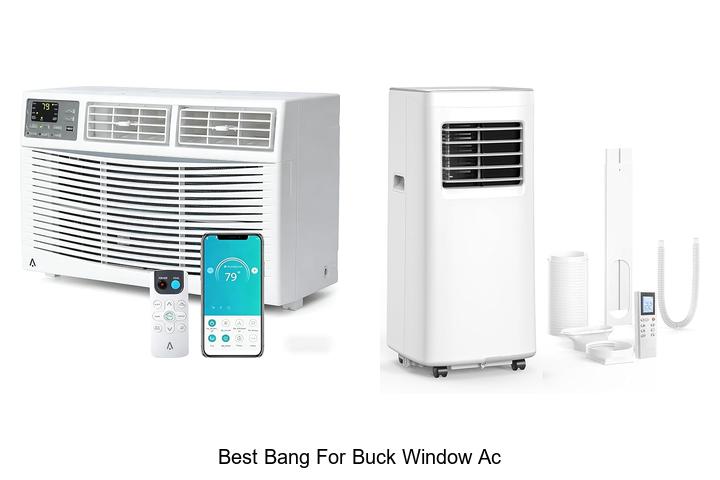
Every cooling option has its own pros and cons, so it’s good to think about what matters most to you. Portable units are super flexible—you can move them around easily—but they can also be pretty noisy. On the other hand, window-mounted units are usually more affordable and easy to install, but they might block your view or take up window space.
Then there are split-system air conditioners, which are great because they’re quiet and energy-efficient. The catch? They tend to cost more upfront because of the installation. So, really, it’s all about balancing these factors and figuring out what works best for your space and budget.
Portable Unit Advantages and Disadvantages
Are portable air conditioning units a practical choice for your cooling needs? They come with several advantages and disadvantages.
Pros:
- Flexibility: You can move portable units easily, so you can cool different rooms whenever needed.
- Easy installation: No permanent setup is required, making them perfect for renters.
- Space-saving: Their compact design fits into small spaces without major modifications.
- Energy efficiency: Modern models often have adjustable settings that help save on energy costs.
Cons:
- Noise levels: Portable units tend to be louder than window or split systems.
- Energy efficiency: They may use more energy to provide the same cooling power.
- Ventilation requirements: They need a window or vent for exhaust, which can limit placement options.
Window-Mounted Units Pros and Cons
Window-mounted units offer a simple way to cool a room without permanent installation, making them popular for many homeowners. They usually save energy compared to larger systems, especially if you’re cooling just one room.
However, their noise levels can be noticeable, which might bother light sleepers or quiet spaces. These units are easy to install and remove, making them a flexible choice for renters or temporary setups.
On the downside, they block part of your window view and might reduce natural light. Plus, their energy efficiency varies, so choosing a model with a good Energy Star rating can help save money over time.
Split-System Air Conditioners Benefits
Split-system air conditioners offer a versatile alternative to window-mounted units, providing powerful cooling without blocking your windows or sacrificing space. They are known for better energy conservation and quieter operation. Here are some benefits:
- Energy efficiency: They often use less power, helping you save on energy bills.
- Lower noise levels: Because the compressor is outside, indoor noise is kept to a minimum.
- Flexible installation: You can place the indoor unit almost anywhere, freeing up window space.
- Enhanced aesthetics: They blend seamlessly into your room decor without bulky units.
While they cost more upfront and need professional installation, their energy savings and quiet operation make them a smart choice for long-term comfort.
Frequently Asked Questions
Are There Windowless Options Suitable for Rental Properties?
Yes, there are windowless options suitable for rental properties. Portable solutions like mini-split units or portable air conditioners are great choices.
They offer energy-saving features and easy installation without damaging walls or windows. These units are ideal for renters since they’re movable, efficient, and don’t require permanent modifications.
Plus, their energy-saving features help reduce your utility bills. They’re convenient and eco-friendly options for cooling your space.
Can Existing Ductwork Be Used for Alternative Cooling Systems?
Think of your ductwork as a highway—use it wisely. Yes, existing ductwork can be repurposed for central air systems, making cooling more seamless.
Ductless systems, like mini-splits, are also a great option, especially if you want to avoid ductwork altogether. They’re energy-efficient and easy to install, providing targeted cooling without the need for extensive modifications.
Either way, you can upgrade your cooling system without starting from scratch.
What Are the Energy Efficiency Considerations for Non-Window Units?
Non-window units generally offer better energy efficiency, leading to greater energy savings over time. You should consider insulation impact, as well-insulated spaces reduce workload and power consumption.
Proper installation and sealing can maximize these units’ efficiency, lowering your energy bills. Keep in mind that ductless mini-splits often outperform portable units in efficiency, especially if your space is well-insulated.
This makes them a smart choice for long-term savings.
Are There Aesthetic or Space-Saving Alternatives to Traditional Units?
You’ll love the options available. About 80% of homeowners prefer compact designs for space efficiency.
Decorative covers can turn traditional units into stylish decor pieces that blend seamlessly into your home’s aesthetic. These alternatives save space and add personality.
They’re perfect for small rooms or apartments. With innovative designs, you get the cooling power you need without sacrificing style or taking up extra space.
How Do Installation Requirements Differ for Portable Versus Split Systems?
With portable options, installation is pretty straightforward—you just need to vent the unit through a window or door, so setup is minimal.
On the other hand, split systems are more involved. They require mounting the indoor unit on a wall and connecting it to the outdoor condenser with refrigerant lines and electrical wiring.
Split systems usually need professional installation, while portable units are more DIY-friendly and flexible for different spaces.
Conclusion
When choosing a cooling system beyond traditional window units, imagine yourself in a sunlit room feeling a cool breeze from a ductless mini-split or evaporative cooler.
Each option has its own perks, like easy installation or efficient cooling, and can suit different home layouts.
By weighing the pros and cons, you create a cool, relaxing space where comfort flows naturally, turning your home into a refreshing retreat during hot summer days.
So, if you’re exploring alternatives to window AC units, these options can help you find the perfect fit for your cooling needs.