How to Determine Window AC Units’ Energy Efficiency
Are you tired of running your window AC unit all summer without really knowing if it’s energy-efficient? Many people struggle with choosing the right model that keeps them cool without skyrocketing their energy bills. You’re not alone in this quest for comfort and savings.
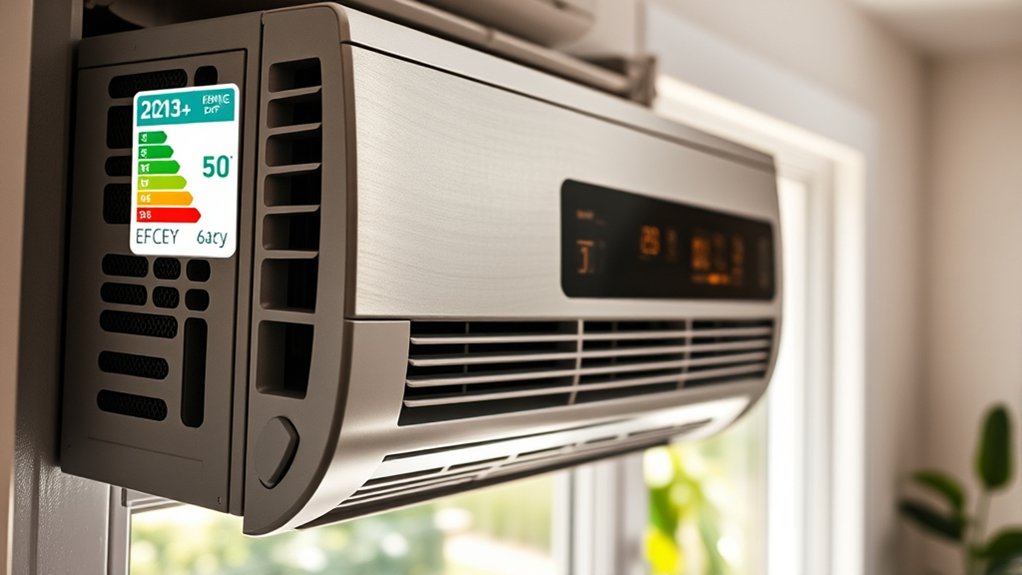
To determine your window AC unit’s energy efficiency, check the energy labels for ratings like SEER and EER. Higher numbers mean better efficiency and lower energy use.
Look for models with Energy Star certification and features like eco mode, adjustable fans, and eco-friendly refrigerants.
Make sure the unit matches your room size for peak performance. Want to learn more about how to choose the most efficient model? Keep exploring for the details.
Key Takeaways
- Check the EER (Energy Efficiency Ratio) rating; higher values mean better efficiency.
- Look for the SEER (Seasonal Energy Efficiency Ratio) to assess seasonal performance.
- Verify if the unit has an ENERGY STAR certification for stricter efficiency standards.
- Compare model EER and SEER ratings across different units before buying.
- Review energy labels and symbols that indicate efficiency features and eco-friendly options.
What Does Energy Efficiency Mean for Window AC Units?
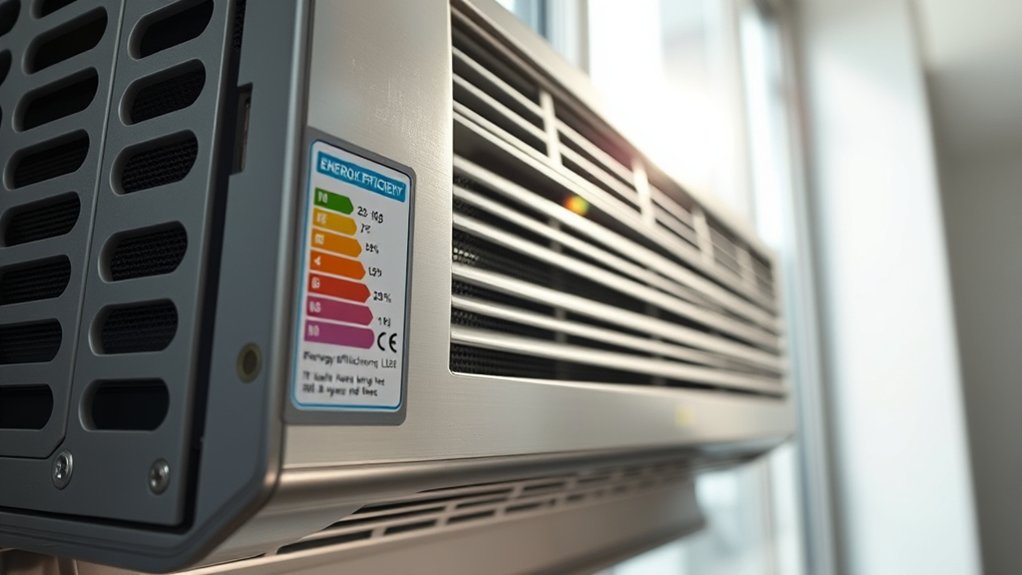
Understanding what energy efficiency means for window AC units helps you make smarter choices when shopping for cooling solutions. Essentially, energy-efficient units use less power to cool your space, which reduces your overall energy consumption. This not only saves you money on electricity bills but also supports energy conservation efforts.
Energy-efficient window AC units save money, reduce energy use, and support environmental conservation.
An efficient AC unit operates smoothly, maintaining a comfortable temperature without overworking the compressor or fans. Moreover, energy-efficient models often feature noise reduction technologies, making your environment quieter and more peaceful.
Reduced noise levels mean less disturbance, especially if you work or sleep nearby. By choosing an energy-efficient window AC, you’re investing in a device that balances effective cooling with lower energy use and quieter operation.
This means you’ll enjoy a cooler room without the drawbacks of high energy bills or disruptive noise. Ultimately, understanding these factors helps you select an AC that’s both eco-friendly and suited to your comfort needs.
Understanding Energy Efficiency Ratings: SEER and EER Explained
To gauge how energy-efficient a window AC unit is, you need to familiarize yourself with key ratings like SEER and EER. SEER, or Seasonal Energy Efficiency Ratio, measures how efficiently the unit cools over an entire season, with higher numbers indicating better efficiency. EER, or Energy Efficiency Ratio, assesses performance at a specific temperature, often providing a clearer picture of daily energy use.
Both ratings influence your electricity bills and overall comfort. Higher SEER and EER ratings typically mean lower energy consumption and better air quality since efficient units filter air more effectively. Noise levels are also affected because more efficient models often operate more smoothly and quietly, reducing noise pollution in your living space.
When comparing units, look for those with high SEER and EER numbers, as they offer maximum energy savings, better air quality, and quieter operation. These are the smart choices for your home.
How to Read and Interpret Energy Labels on Window ACs
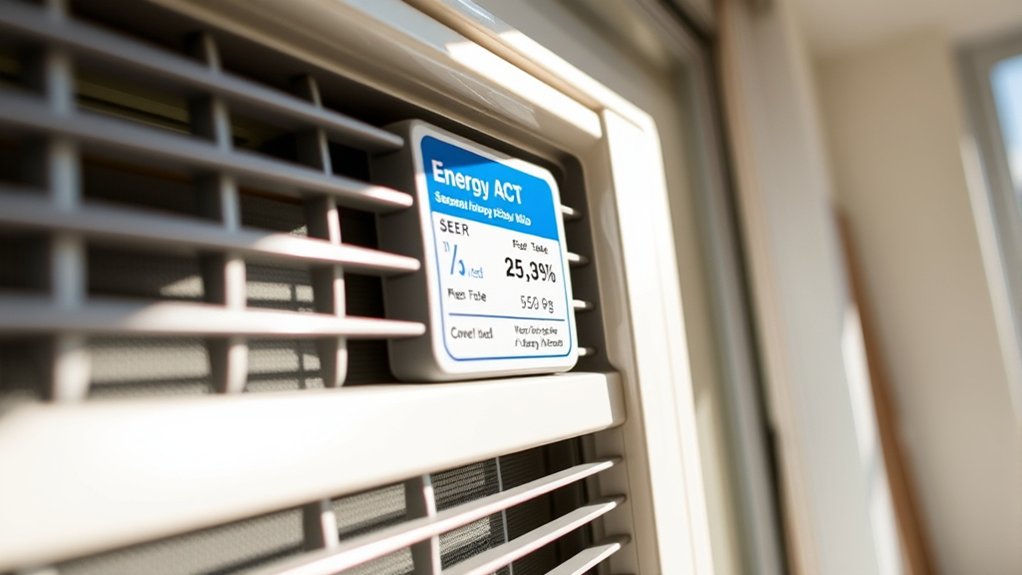
When you check out the energy label on a window AC, you’ll notice some symbols and numbers. These might look a bit confusing at first, but they actually tell you a lot about how efficient the unit is. Getting the hang of what these symbols mean makes it way easier to compare different models and see which one will save you the most energy.
Understanding Energy Efficiency Ratings
Have you ever wondered how to quickly gauge a window AC unit’s energy efficiency just by looking at its label? Understanding these ratings helps you pick models that save on energy costs and last longer.
Here’s what to look for:
- EER (Energy Efficiency Ratio): Shows how much cooling you get per watt. Higher numbers mean better energy savings.
- SEER (Seasonal Energy Efficiency Ratio): Reflects efficiency over an entire season. Opt for higher SEER ratings for long-term savings.
- Energy Star Certification: Indicates the unit meets strict efficiency standards, ensuring it uses energy wisely.
Interpreting Label Symbols and Numbers
Understanding the symbols and numbers on the energy label is key to making an informed choice. The label shows important details like the Energy Efficiency Ratio (EER) and cooling capacity to help you compare models easily.
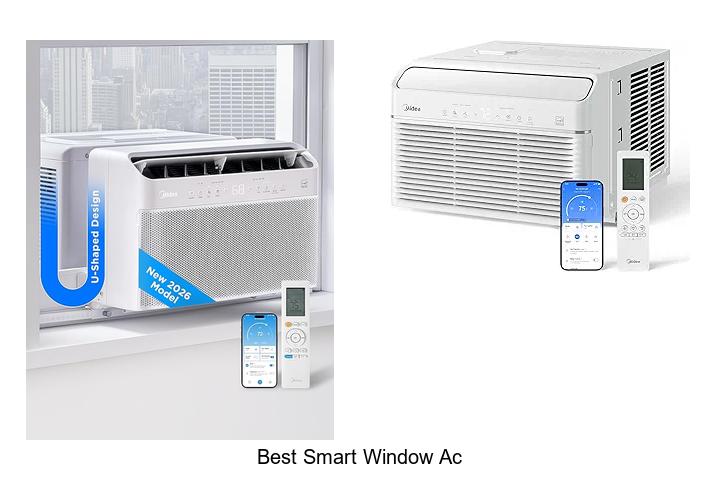
Look for symbols that indicate features like smart controls, which can boost energy savings by optimizing operation. If your AC has battery storage options, check for icons or notes that highlight this feature, as it can improve overall energy management.
These symbols guide you in choosing a unit that fits your needs while maximizing efficiency. Pay attention to the seasonal energy efficiency ratio (SEER) and any other indicators that reflect advanced controls or energy-saving features.
Interpreting these labels helps you find a window AC that balances performance, convenience, and energy conservation.
Key Features That Make Window AC Units More Energy Efficient
Certain features can significantly boost a window AC unit’s energy efficiency, helping you save on electricity bills while keeping your space comfortable. These key features not only improve performance but also include energy-saving tips and noise reduction strategies.
- Energy-efficient compressor: Modern compressors with inverter technology adjust power based on cooling needs, which reduces energy waste and noise.
- Programmable thermostat: This lets you set specific temperatures and schedules, preventing unnecessary operation and saving energy.
- Low-noise design: Features like sound insulation and quiet fans minimize noise while maintaining efficiency, making your space more comfortable.
How to Compare Window AC Models for Energy Efficiency
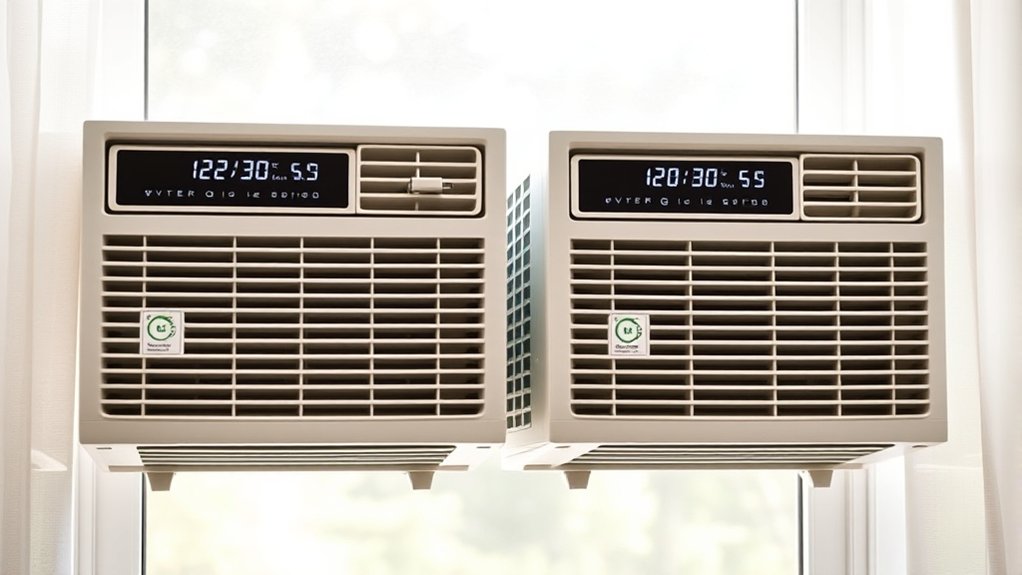
When you’re comparing different window AC models to find the most energy-efficient one, a good place to start is by checking out their Energy Efficiency Ratio, or EER. Basically, this tells you how well the unit cools relative to the amount of power it uses—higher EER means more efficiency.
Then, take a look at the Energy Star ratings. These are like a seal of approval showing that the unit meets certain high standards for energy efficiency. Choosing a model with an Energy Star label can help you save money in the long run.
Finally, it’s smart to look at each model’s overall power consumption. This gives you a clear idea of which AC will be gentler on your electricity bill and more environmentally friendly over time. Picking the right one means you’ll stay cool while also saving energy!
Check Energy Efficiency Ratio
Curious about how to compare window AC units for energy efficiency? One key step is checking the Energy Efficiency Ratio (EER). This ratio shows how much cooling you get for each watt of energy used, helping you find the most efficient models. Look for the numbers on the EnergyGuide label—higher EER means better efficiency.
Compare EER values across different units to find the most energy-efficient option. Make sure the unit’s capacity matches your cooling needs to avoid over- or under-powered models.
Finally, consider using smart thermostats and energy-saving tips to boost your AC’s performance and cut energy costs even more.
Compare Energy Star Ratings
Comparing Energy Star ratings is one of the easiest ways to gauge a window AC unit’s energy efficiency. These ratings show which models meet strict energy standards set by the EPA, helping you spot more efficient options.
A higher Energy Star rating usually means the unit uses less energy, which can save you money on your utility bills. It also often means the unit is quieter, making your space more comfortable.
When you’re looking at different models, check for the Energy Star label and compare their ratings side by side. Keep in mind that while a higher rating indicates better efficiency, you should also consider your cooling needs and the features you want.
This simple approach makes it easier to choose an energy-efficient window AC unit that fits your needs.
Assess Power Consumption
Evaluating the power consumption of different window AC models gives you a clear idea of their energy efficiency. To compare them effectively, check the wattage listed on the energy label or manual.
Here are some key points to consider:
- Look at the Energy Efficiency Ratio (EER). A higher EER means better energy savings and lower energy use.
- Review annual energy consumption figures to understand typical costs over time.
- Think about noise reduction features. Quieter models often operate more efficiently and can help reduce overall energy use by maintaining consistent operation.
Why Proper Installation Is Essential for Maximum Efficiency
Proper installation is essential because even the most energy-efficient window AC unit can underperform if it’s not set up correctly. Installation mistakes like improper sealing or incorrect positioning can cause leaks and reduce cooling efficiency.
When the unit isn’t installed properly, it can lead to poor airflow, making your AC work harder than necessary. Ensuring the unit is level and securely mounted helps optimize airflow, which directly impacts energy use.
If the unit isn’t sealed tightly in the window frame, warm air can enter and make the system work longer to cool the space. Blocking airflow around the unit, like with curtains or furniture, also diminishes efficiency.
Correct installation not only improves cooling performance but also reduces energy consumption, saving you money in the long run. Taking the time to avoid installation pitfalls and focusing on airflow helps your window AC operate at peak efficiency.
How to Maintain Your Window AC for Peak Performance
To keep your window AC running smoothly, it’s really important to clean the filters regularly. If the filters get dirty, they block airflow and make your unit work harder, which uses more energy. So, a quick clean every now and then can make a big difference.
Also, make sure your AC is installed in a shady spot and not blocked by curtains or furniture. This helps it cool better and improves airflow, making your room more comfortable.
Staying on top of these simple maintenance tips will keep your AC performing its best and can even save you some money on energy bills.
Regular Filter Cleaning
Have you noticed your window AC struggling to cool your room effectively? Regular filter cleaning is key to keeping it running smoothly. A clean air filter allows better airflow and dust removal, which helps save energy.
Here’s what you should do:
Turn off the unit and locate the air filter, usually behind the front grille. Remove the filter carefully and check for dirt and dust buildup.
Wash it with water and mild detergent, then let it dry completely before putting it back. Cleaning your filter every month, especially during busy times, helps prevent dust from clogging airflow.
This simple step keeps your AC working well, uses less energy, and cools your space more effectively.
Proper Unit Placement
Ever wondered if your window AC is working at its best? Proper unit placement is key to maximizing energy efficiency.
Position your AC so that the vents aren’t blocked by curtains or furniture, which helps airflow stay effective. Make sure the window allows for good ventilation—avoid shaded spots that trap heat or direct sunlight that causes overheating.
Keep the unit slightly tilted outward so it drains condensation properly. Also, avoid placing the AC near heat sources like stoves or electronics, which can make it work harder.
Proper window placement promotes better airflow and improves cooling capacity. This helps lower energy consumption and keeps your space comfortable.
When installed correctly, your AC will run more efficiently, saving you money and making sure your room stays cool.
Common Mistakes That Waste Energy When Using Window ACs
Many people unknowingly waste energy when using their window AC units by neglecting simple habits that can make a big difference. One common mistake is not improving window insulation, which lets cool air escape and warm air seep in. This makes your AC work harder and wastes energy.
Ignoring noise reduction can also lead you to set the thermostat lower than needed just to stay comfortable.
Here are three key mistakes to avoid:
- Leaving gaps or cracks around the window frame, which reduces insulation and increases energy loss.
- Using the AC without sealing or insulating the window, making it less efficient.
- Overlooking noise reduction strategies, causing you to lower the temperature excessively to stay comfortable.
What Room Size Means for Your Window AC Efficiency
Choosing the right window AC unit really depends on your room size. If it’s too small, it won’t cool effectively, and if it’s too big, it can waste energy and wear out faster.
The window size is important here—you need a unit that fits well without blocking airflow or leaving gaps. Make sure to measure your window accurately for the best fit.
Think about your room’s insulation too. Well-insulated rooms hold cool air longer, so you might need a slightly smaller unit. Poorly insulated spaces lose coolness quickly, so a more powerful AC is better.
Ignoring these factors can lead to high energy bills and insufficient cooling. Matching your window size, room size, and insulation helps your AC perform better and saves energy.
Getting the right size means your unit runs efficiently without overworking, keeping you comfortable and your energy costs down.
Practical Tips for Choosing an Energy-Efficient Window AC Unit
To pick an energy-efficient window AC unit, start by comparing the ENERGY STAR ratings. These ratings show which models use less energy and save you money over time.
Look for units with eco-friendly features like eco mode, programmable timers, and filters that improve air quality without using extra energy. These features help you stay comfortable while being kind to the environment.
Here are some practical tips to help you choose:
- Check the EER (Energy Efficiency Ratio). Higher EER numbers mean the unit is more efficient.
- Look for multi-speed fans. These let you adjust the power and save energy when full capacity isn’t needed.
- Prioritize units with eco-friendly features. Such as energy-saving modes or environmentally safe refrigerants.
Frequently Asked Questions
How Does the Placement of the Window Affect AC Energy Efficiency?
Your window placement and sun exposure really impact your AC’s energy efficiency. If you install your unit in a shaded window, it doesn’t have to work as hard, which saves energy.
On the other hand, direct sunlight heats up the room, making your AC run longer to keep things cool. So, it’s best to position your window unit where it’s protected from direct sun and away from heat sources.
Proper placement can cut down on energy use, keep your space cooler, and help lower your electricity bills.
Can Using a Programmable Thermostat Improve Window AC Efficiency?
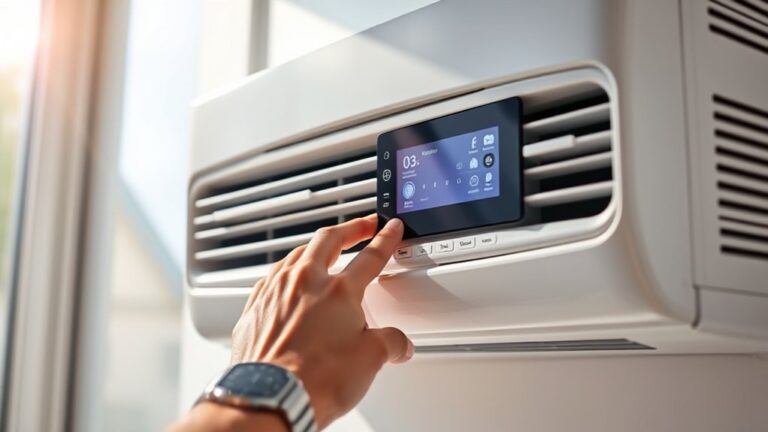
Using a programmable thermostat can definitely improve your window AC’s efficiency. Smart controls let you set specific schedules, so your unit isn’t running unnecessarily and wasting energy.
When you pick a thermostat with high energy ratings, it ensures reliable performance and helps you manage energy better. These features work together to cut down your cooling costs and make your AC more efficient.
What Are the Signs of an Inefficient or Malfunctioning Window AC?
If your window AC isn’t cooling well, look for signs like unusual noises or it not cooling effectively. You might notice the compressor running constantly or strange smells.
Compressor issues and refrigerant leaks are common signs of malfunction. If your unit struggles to maintain the right temperature or makes loud, frequent cycling sounds, it’s time to get it checked or repaired.
Addressing these issues can help restore efficiency and prevent further damage to your AC.
How Does Insulation Impact the Energy Efficiency of Window AC Units?
Imagine a cozy blanket wrapping your window AC—that’s insulation. When insulation is effective, it creates a thermal barrier that blocks heat transfer, helping your unit run less and save energy.
On the other hand, poor insulation allows heat to sneak in, making the AC work harder to keep your space cool.
Good insulation keeps the temperature steady, boosts energy efficiency, and cuts down your electricity bills by stopping unwanted heat exchange.
Are There Specific Brands Known for More Energy-Efficient Window ACS?
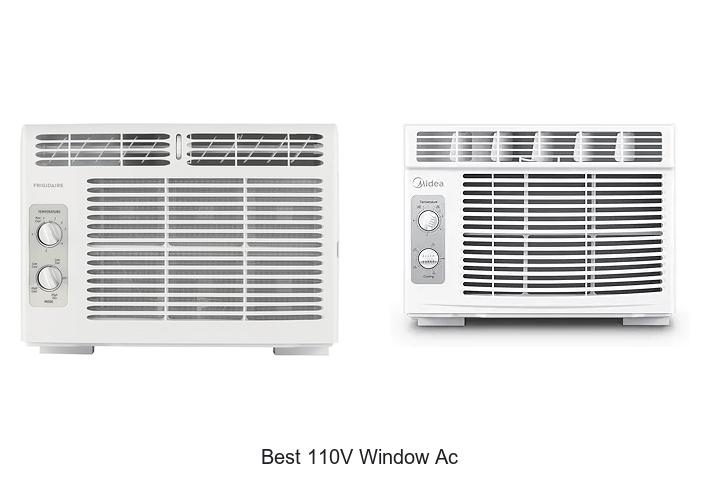
You’ll find that brands like LG, Frigidaire, and Friedrich are known for more energy-efficient window AC units. Their strong brand reputation and high energy ratings make them reliable options.
Look for models with ENERGY STAR certification, which indicates better efficiency. By choosing these brands, you can save on energy costs and enjoy effective cooling.
Knowing you’re investing in units recognized for their performance and eco-friendliness makes the choice easier.
Conclusion
Choosing an energy-efficient window AC is like planting a well-nurtured tree. It guarantees healthy growth and savings for years to come.
By understanding ratings, features, and proper maintenance, you can make smart choices that keep your home cool without draining your wallet.
Remember, selecting the right unit is your first step toward a more energy-conscious lifestyle. It turns your cooling needs into a breeze rather than a storm of expenses.