Where Is the Drain Line on My Window AC Unit?
If your window AC unit is leaking or not draining properly, you’re not alone. Many people struggle with understanding where the drain line is and how to keep it clear, which can lead to water damage or mold growth.
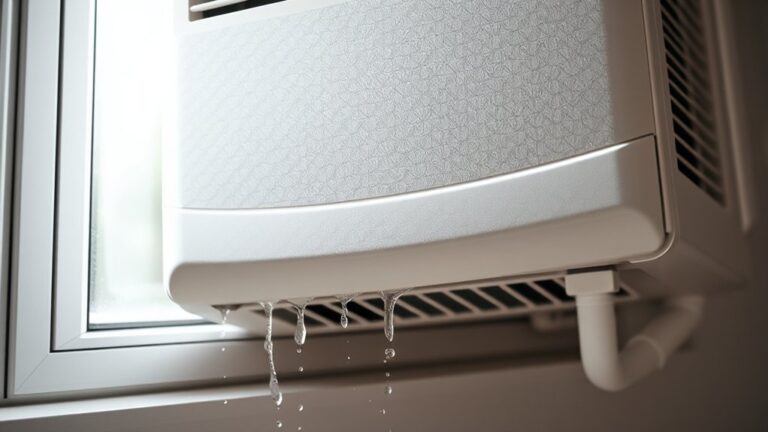
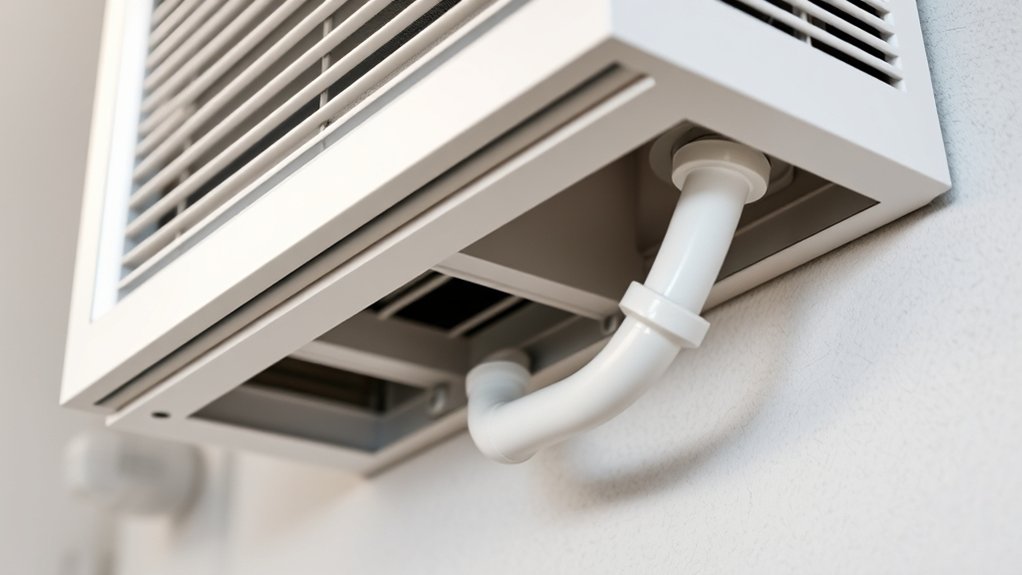
The drain line on your window AC unit is usually a small, flexible tube located near the back or side at the bottom of the unit. It’s often close to the evaporator coil or drainage pan and may be hidden behind panels or filters.
The line typically appears as a thin, clear or white plastic hose with a slight curve.
If you want to know how to identify and keep it clear, keep exploring for helpful tips.
Key Takeaways
- The drain line is usually located near the back or side bottom of your unit, close to the evaporator coil or drainage pan.
- It looks like a small, flexible tube made of clear or white plastic, typically about 1/4 to 1/2 inch wide.
- The drain line exits through a drain hole or opening, often marked or positioned to carry condensate outside.
- You might find it near the filter compartment or behind panels. Sometimes it’s hidden but still accessible for you to check.
- The drain line generally has a slight downward slope or curve to help the water drain properly.
Why Is My Window AC Leaking or Smelling?
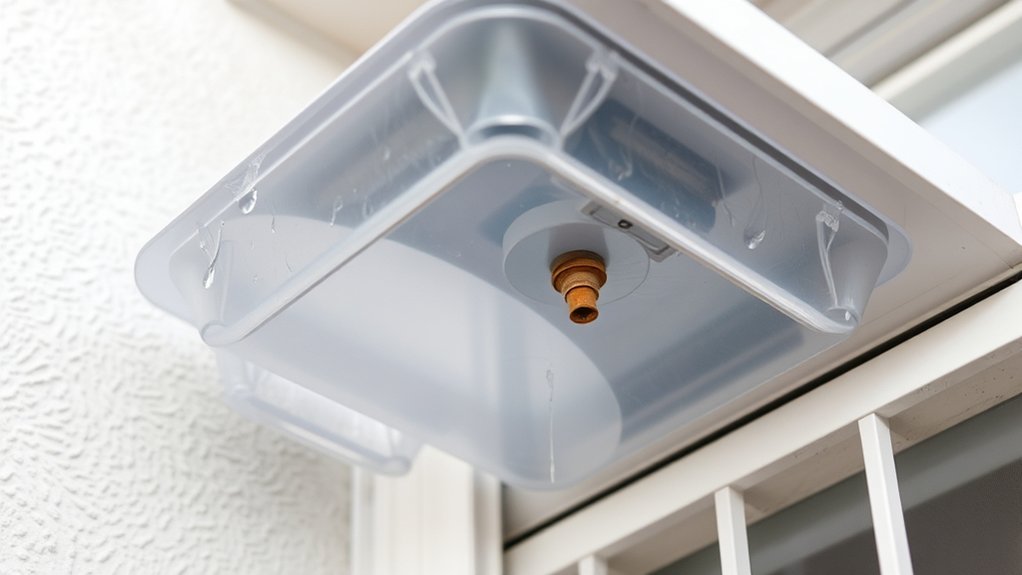
If your window AC unit is leaking or giving off a bad smell, there’s probably an underlying issue that needs fixing.
This often happens because of poor seasonal maintenance, which can lead to mold, mildew, or dirt buildup inside the unit.
These problems not only cause bad odors but also make your AC work harder, which can increase your energy bills.
Bad odors and increased energy bills result from a struggling, inefficient AC. Maintain it regularly.
A clogged or damaged drain line can cause water to leak inside or outside the unit, leading to leaks and foul smells.
Regularly cleaning or replacing filters and inspecting the drain line can help prevent these issues.
Proper seasonal maintenance keeps your AC running smoothly and helps maintain its efficiency.
Addressing leaks and odors early can prevent further damage and ensure your unit runs quietly and effectively.
Ignoring these problems can make them worse and shorten your AC’s lifespan, so stay proactive with routine upkeep.
How to Locate the Drain Line on Your Window AC
Locating the drain line on your window AC unit is key for proper maintenance and troubleshooting. Usually, you’ll find it as a small, flexible tube or pipe that exits the back or side of your unit.
Check near the bottom of your AC—you might see a PVC or rubber hose leading outside or into a drain pan. If your unit is close to indoor plants or air purifiers, make sure the drain line isn’t blocked or clogged.
A blockage can cause water to back up and damage your equipment. Removing obstructions or dirt buildup helps keep the drainage working efficiently. Sometimes, the drain line is hidden behind panels or filters, so check your user manual if you’re having trouble finding it.
Regularly inspecting this line helps prevent leaks and mold growth, keeping your indoor environment healthier. Properly locating and maintaining the drain line ensures your AC runs smoothly and protects your indoor plants and air purifiers from excess moisture.
Why the Drain Line Matters for Your AC’s Performance
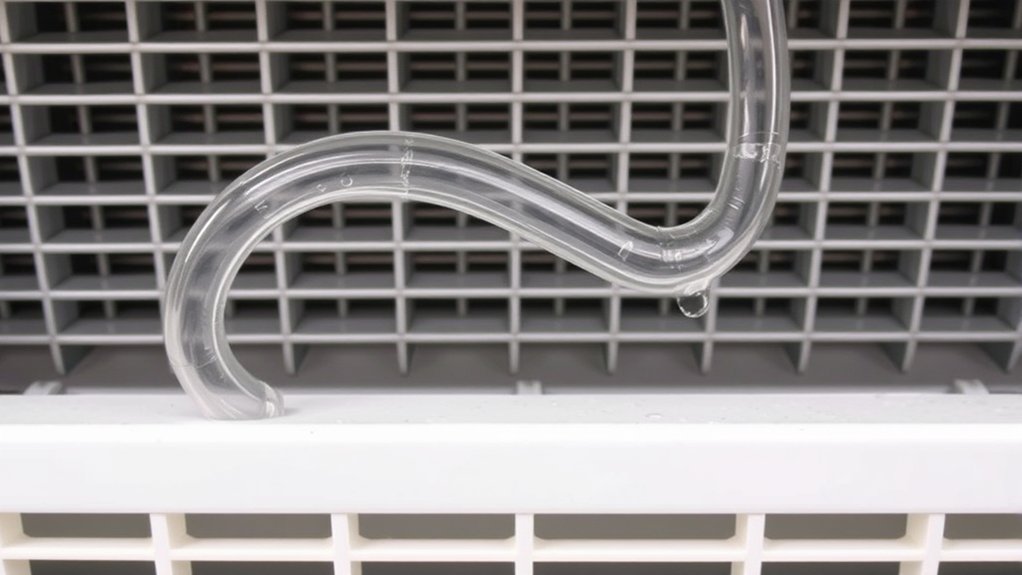
Your AC’s drain line is pretty important because it helps prevent water from leaking inside your home, which can cause damage. Basically, it’s like a little pathway that carries away the excess moisture your unit produces. If it’s working right, your AC runs smoothly and efficiently.
But here’s the thing—if the drain line gets clogged, things can get messy. Mold might start to grow, and that’s not only bad for your health but can also make your AC work harder and less effectively. So, keeping that drain line clear is a simple way to keep your AC running well and your home safe.
Prevents Water Damage
A properly functioning drain line is essential because it prevents water from pooling inside your AC unit, which can lead to costly water damage. When the drain line works correctly, it directs excess moisture outside, avoiding leaks that could damage walls, floors, or furniture.
This also helps maintain your unit’s energy efficiency, as excess moisture can cause the system to work harder. A clear drain line reduces noise caused by dripping or pooling water. Visualize these benefits:
- Water smoothly flowing outside through the drain
- No puddles forming inside or around your unit
- Quiet operation without dripping sounds
- Reduced risk of mold or corrosion buildup
- Lower chances of structural water damage
Ensuring your drain line is clear keeps your AC running smoothly and protects your home from water-related issues.
Maintains Unit Efficiency
When the drain line is blocked or clogged, excess moisture can build up inside the unit. This forces the system to work harder to keep the temperature just right.
That extra effort reduces energy efficiency, causing your air conditioner to use more power than necessary. Keeping the drain line clear allows moisture to exit smoothly and helps the unit run at its best.
When your system runs efficiently, it also stays quieter because it doesn’t have to strain as much. Regularly checking and cleaning the drain line makes sure water drains properly, keeping your AC smooth and efficient.
Avoids Mold Growth
Blocked or clogged drain lines don’t just cause water buildup. They also create the perfect environment for mold to grow inside your AC.
If the drain line isn’t clear, moisture can linger around your window frame and air filters. This can cause mold spores to spread throughout the unit.
This mold not only damages your AC but also impacts your indoor air quality, which can pose health risks.
To prevent this, regularly check and clear the drain line. Imagine mold thriving in damp, dark spots behind your air filters, around the window frame, and inside the drain pan.
Keeping the drain line clear helps maintain a dry environment, reducing mold growth. It also ensures your AC runs smoothly.
Regular maintenance keeps your unit clean, safe, and free of mold problems.
Where Is the Drain Line Usually Located?
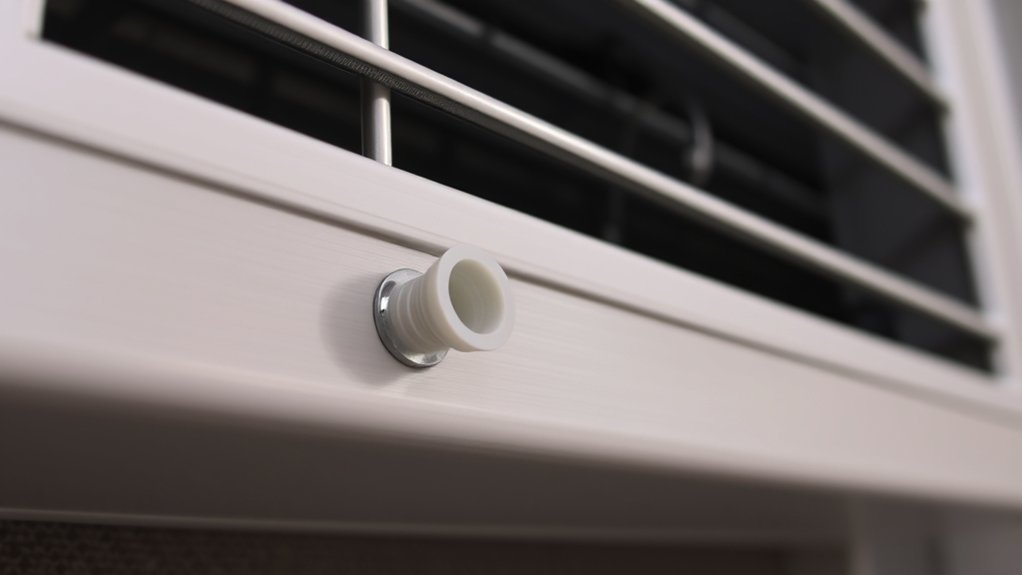
The drain line on your window AC unit is usually located near the back or side of the unit, where it can effectively channel condensed water away from the interior parts. You’ll typically see it as a small, plastic pipe or tube, often sticking out slightly from the casing.
Its placement is important for keeping good air quality because proper drainage prevents mold and bacteria buildup that can affect indoor air. A well-functioning drain line also helps your AC run more efficiently by reducing leaks or water damage.
Regularly checking this spot ensures your unit drains properly and works at its best. Keep in mind, if the drain line gets clogged or disconnected, it can cause water leaks and humidity issues inside. Knowing where to find it makes routine maintenance easier and helps keep your AC running smoothly.
How to Identify Your AC Drain Line and Its Features
Sure! Here’s a more conversational version of the text:
If you’re trying to find your AC drain line, start by looking for a small, flexible tube. You’ll usually find it near the back or side of your unit. It often has a slightly wider opening and might be made of clear or white plastic, so it’s pretty easy to spot. Usually, this drain line is positioned just below the evaporator coil or close to the drainage pan. Once you know what to look for, it’s much simpler to identify!
Locating the Drain Line
Ever wonder how to find the drain line on your window AC unit? It’s usually a small, flexible tube that helps remove excess moisture, which affects your unit’s energy efficiency and air quality.
To locate it, look near the back or side of the unit, often near the bottom. Keep an eye out for a thin rubber or plastic hose, a downward-facing tube that drains outside, or a slight bulge or loop in the tubing.
You might also notice a connection point where the hose exits the unit, or a small opening or drain pan beneath the coil. These clues can help you easily spot the drain line.
Visual Features of Drain
When trying to identify your AC drain line, look for a small, flexible tube that often appears as a thin rubber or plastic hose. The drain line usually runs from the unit’s interior to the outside.
Its visual features include a slight curve or downward slope, which helps with proper drainage. You might notice airflow patterns around the hose, especially if it’s active during operation, indicating refrigerant flow and moisture removal.
The drain line is usually near the condensate pan or drip tray, and it may be connected to a drain hole or opening. Its diameter is generally small, around 1/4 to 1/2 inch. Recognizing these features makes it easier to locate and inspect the drain for clogs or leaks.
Typical Drain Line Placement
The drain line is usually located near the bottom of your window AC unit, close to the condensate pan or drip tray. Look for a small, flexible tube or pipe that runs downward or out of the side of the unit. It’s often made of clear or black plastic, blending into the frame.
When you’re identifying it, check for a thin tube extending from the side or back of the unit. It’s typically near the air filter compartment and runs toward a drain or outside the window. It’s usually connected to the condensate pan or drip tray.
The drain line is often close to the thermostat for easy access. Knowing where it is helps you keep an eye out for clogs or leaks, especially when adjusting the thermostat or cleaning the air filter.
How to Check If Your Drain Line Is Clogged
Clogged drain lines can cause excess water to back up and leak from your window AC unit. To check if yours is blocked, start by turning off the unit and locating the drain line, usually near the back or bottom.
Clogged drain lines can lead to water leaks from your window AC unit. Regular checks help prevent damage.
Make sure your air filter is clean, as a dirty filter can cause the system to work harder and produce more condensate, increasing the risk of clogs. Next, set your thermostat to cooling mode and lower the temperature slightly to activate the unit.
Watch for water to start dripping from the drain line. If no water flows within a few minutes, the line may be clogged. You can also gently pour water into the drain pan or near the drain opening; if it doesn’t flow out, it’s likely blocked.
Regularly checking these signs helps prevent water backup and potential damage to your window AC.
How to Clear and Maintain Your AC Drain Line
If you want your AC to run smoothly, it’s pretty important to know how to find and clear out the drain line regularly. It’s not too complicated—just some simple steps like removing any debris and flushing it with a cleaning solution can really help prevent those annoying clogs before they even happen.
Doing this kind of regular maintenance means your unit stays efficient and you can avoid costly repairs down the line. It’s one of those small tasks that makes a big difference in keeping your AC working properly all season long.
Locating the Drain Line
Locating the drain line on your window AC unit is key to keeping it running smoothly. Once you find it, you can better monitor air quality and noise levels to ensure peak performance.
To identify the drain line, look for a small, flexible tube usually near the back or bottom of the unit. It often drains into a pan or outside. Visual cues include a slightly sloped pipe or a small hole with a tube connected.
Keep in mind, a clear drain line helps prevent mold and moisture buildup, which can impact air quality and cause increased noise levels.
Signs to look for include a thin, rubber or plastic tube tucked behind the unit, a pipe leading outside or to a drainage pan, or an accessible hole near the base of the unit.
You might also notice a slight downward slope in the pipe or labels/markings indicating the drain location.
Clearing and Preventing Clogs
Regularly inspecting and cleaning your AC drain line is key to preventing clogs that can cause water leaks and lower efficiency. A clear drain line also helps keep the air quality good by stopping mold and mildew from building up, which can circulate in your unit.
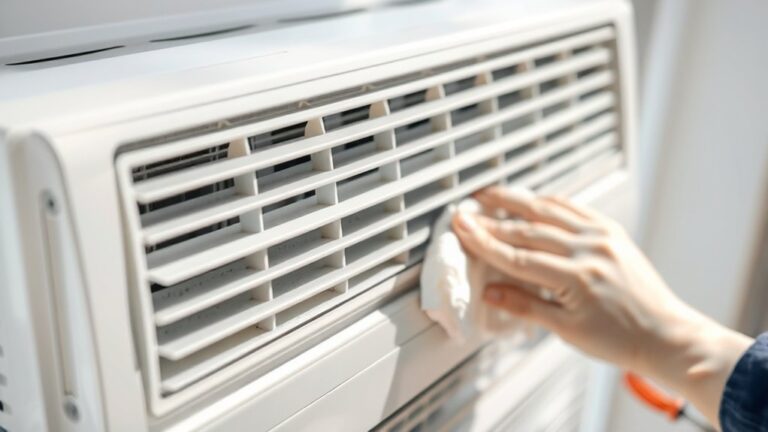
To clear a clog, start by turning off your AC and locating the drain line, usually near the back or side of the unit. Use a wet/dry vacuum to pull out debris or flush the line with a mix of vinegar and water to break up blockages.
Prevent future clogs by cleaning the drain line every few months. Keeping the line clear not only avoids water damage but also reduces noise caused by trapped water or debris, helping your AC run quietly and smoothly.
Signs of Drain Line Clogs and When to Call a Professional
A clogged drain line can cause water to back up and lead to leaks or damage around your window AC unit. You might notice pooled water beneath the unit or increased humidity inside your room. Other signs include:
- Excessive water dripping from the unit during operation
- A musty odor indicating mold growth in the drain pan
- Reduced cooling performance despite proper cleaning of filters
- Water leaking onto walls or window sills
- Ice forming on evaporator coils due to poor drainage
If you see these signs, it’s time to call a professional. A clogged drain line can also affect refrigerant levels, leading to inefficient cooling. Regularly cleaning filters helps prevent some blockages, but persistent issues often need expert diagnosis.
How to Unclog Your AC Drain Line Effectively
When your drain line gets clogged, water can’t flow out properly, leading to leaks and potential damage. To unclog it effectively, start by turning off your unit and locating the drain line—usually at the back or side. Use a wet/dry vacuum to remove debris or flush the line with a mixture of vinegar and water.
This helps maintain energy efficiency by preventing the AC from working harder due to water buildup and reduces noise caused by vibrating water or debris. Imagine this scene:
| Debris | Water Flow | Clean Line |
|---|---|---|
| Leaves | Blocked | Clear |
| Dust | Stagnant | Flowing |
| Dirt | Clogged | Unobstructed |
| Mold | Foul | Fresh |
| Algae | Stale | Clean |
Regular cleaning keeps your AC quiet and efficient, helping it last longer.
Preventative Tips to Keep Your Drain Line Clear
To keep your AC drain line clear and prevent clogs, adopting simple maintenance habits is key. Regularly inspecting the drain line helps prevent blockages that can cause water to overflow and affect indoor air quality. Watch for mold or algae buildup, which can block the line and lead to refrigerant leaks or humidity issues.
Here are some preventative tips:
- Schedule monthly flushes with a vinegar solution to dissolve debris.
- Use a brush or pipe cleaner to clear out any algae or mold buildup.
- Make sure your unit’s air filters are clean to reduce indoor air contaminants that can cause clogs.
- Check for signs of refrigerant leaks, which can lead to excess moisture and clogging.
- Keep the area around your AC dry and free of debris to prevent dirt from entering the drain line.
Consistent maintenance keeps the drain line clear, protecting your indoor air quality and AC performance.
Frequently Asked Questions
Can I See My AC Drain Line From Inside the House?
Yes, you can see your AC drain line from inside your house. Usually, it’s a small, white, or clear pipe near your unit’s indoor air handler.
Regular condensate pipe maintenance helps prevent drain line blockage, which can cause water leaks or poor cooling.
Check if the drain line is clear and unobstructed regularly. If you notice water pooling or mold, it’s time to clear or replace the drain line to keep your AC running smoothly.
What Tools Do I Need to Access the Drain Line?
To access your drain line, you’ll need a screwdriver, pliers, and a wet/dry vacuum. Think of it as opening a secret pathway to keep your AC running smoothly.
These tools help with drain line cleaning and replacement, making sure there are no blockages or leaks.
Carefully remove any coverings, disconnect the line if needed, and use the vacuum to clear out clogs.
Having the right tools makes maintenance safer and more effective.
How Often Should I Inspect My Drain Line?
You should check your drain line at least once every few months to avoid clogs and leaks. Regular cleaning helps keep everything flowing smoothly and prevents issues.
Keep an eye out for signs of water leaks or mold, and clear away any debris or buildup right away. Staying on top of this keeps your AC running efficiently and helps prevent water damage.
Making sure the drain line stays clear not only prevents problems but also extends the life of your unit. Regular inspections are the best way to keep your system working smoothly.
Is It Safe to Pour Water Into the Drain Line?
It’s generally safe to pour water into the drain line during maintenance, but you should focus on proper drain line care and water disposal safety.
Use a small amount of water to clear any blockages, making sure it flows freely. Don’t pour excessive water, as that could cause leaks or damage.
Whenever possible, use clean, distilled water, and always follow your manufacturer’s instructions. This helps keep your AC running smoothly and safely.
What Are the Signs of a Drain Line Leak?
A leak line’s a quiet troublemaker, so watch for signs like water pooling around your unit or a sudden drop in cooling efficiency. Drain blockages often cause these issues, leading to leaks.
Regular leak detection helps catch problems early. If you notice mold, a musty smell, or water leakage, it’s time to check for a leak line issue.
Conclusion
So, next time your window AC starts leaking or smelling odd, don’t forget to check the drain line—your unit’s secret escape route.
Ironically, what’s supposed to keep your AC running smoothly often becomes its biggest troublemaker if neglected. Regular maintenance isn’t just a chore; it’s your best bet to avoid unexpected indoor waterfalls.
A clear drain line guarantees cool air flows in, not water chaos—because who wants a mini flood on their window sill? So, remember to locate and keep the drain line clean for optimal AC performance.