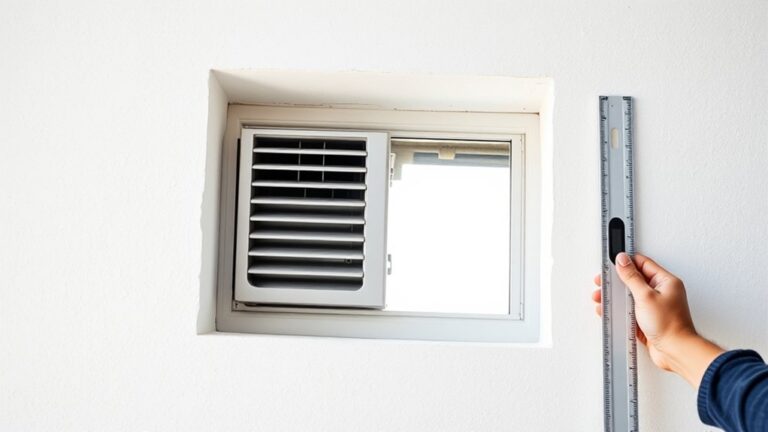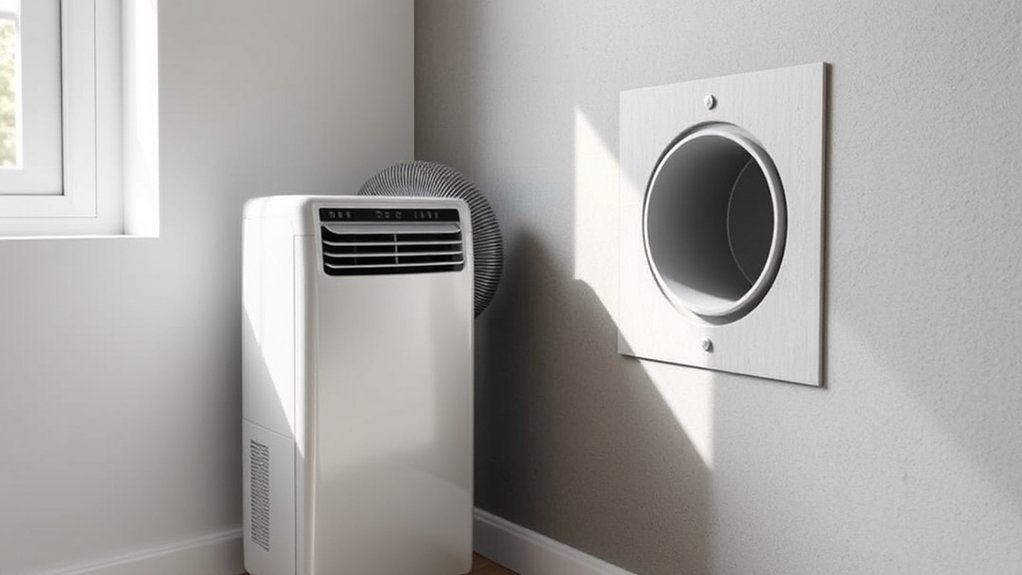
How to Vent a Portable AC Without a Window
If you’ve ever struggled to find a way to vent a portable AC without a window, you’re not alone. Many people want effective cooling but face the challenge of limited options for venting hot air.
Luckily, there are several creative solutions to keep your space comfortable.
To vent a portable AC without a window, you can redirect hot air through various alternatives like door gaps, wall openings, or drop ceilings using flexible ducts. Installing a wall or door vent kit or sealing the opening tightly helps maintain efficiency.
You might also vent into attics or crawl spaces with proper insulation. Ventless units are an option but tend to increase humidity.
If you want detailed solutions, you’ll find useful tips and safety considerations to keep your space cool and safe.
Key Takeaways
- Redirect hot air outside through door gaps, wall openings, or drop ceilings using flexible ducting or vent kits.
- Seal all vent connections tightly with weatherproof caulk or foam to prevent air leaks and make your setup more efficient.
- Install wall vent kits or use insulated ducts to channel warm air outdoors through existing wall or ceiling openings.
- Think about venting into attics, crawl spaces, or other unoccupied areas, but make sure there’s proper airflow and insulation.
- Mix these venting options with fans and indoor plants to boost air quality and keep your cooling effective.
How Does Venting a Portable AC Without a Window Work?
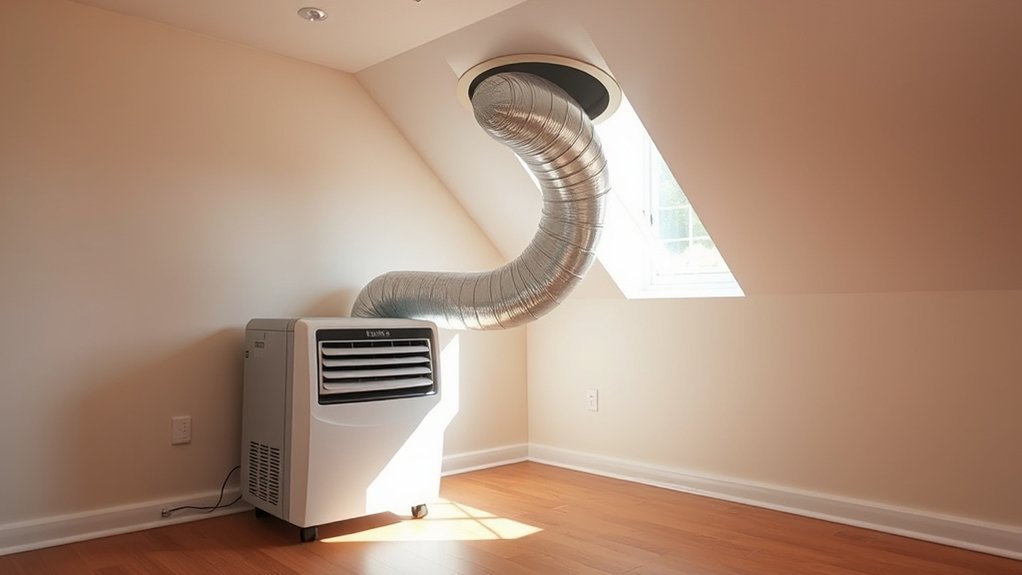
Even if you don’t have a window nearby, venting a portable AC is still doable by redirecting hot air outside through other openings. You just need a sealed pathway for the hot air so it doesn’t recirculate inside your space.
Using a flexible vent hose connected to a duct or an open area, you can channel the warm air outdoors. To keep things comfortable, try placing indoor plants nearby—they help absorb excess heat and improve air quality.
Use a flexible vent hose to direct hot air outside and add indoor plants to boost comfort and air quality.
This setup also helps reduce noise by containing the compressor’s sound, keeping it from spreading throughout your room. Proper venting ensures your portable AC runs efficiently and keeps the space cool.
The main thing is to find or create a suitable opening, like a vent or a gap in a door, to serve as an outlet for the hot air. This way, you get the best cooling performance without relying on a window.
Best Alternative Methods to Vent Your Portable AC Without a Window
When a window isn’t an option for venting your portable AC, exploring alternative methods can help you stay cool and comfortable. One effective way is to use a venting kit that directs hot air through a door gap or a dedicated wall opening, reducing the need for a window.
If venting isn’t possible, you might consider indoor plants. They won’t replace proper venting but can improve air quality and help absorb extra heat, making your room feel cooler.
An air purifier can also help by filtering pollutants and reducing humidity, creating a fresher environment. Combining these methods can help you manage indoor heat and air quality without traditional venting.
Keep in mind, though, these options might not eliminate all heat. Using fans along with them can boost overall comfort. They aren’t perfect substitutes but are practical alternatives when window venting isn’t an option.
Install a Wall Vent Kit for Effective Exhausting
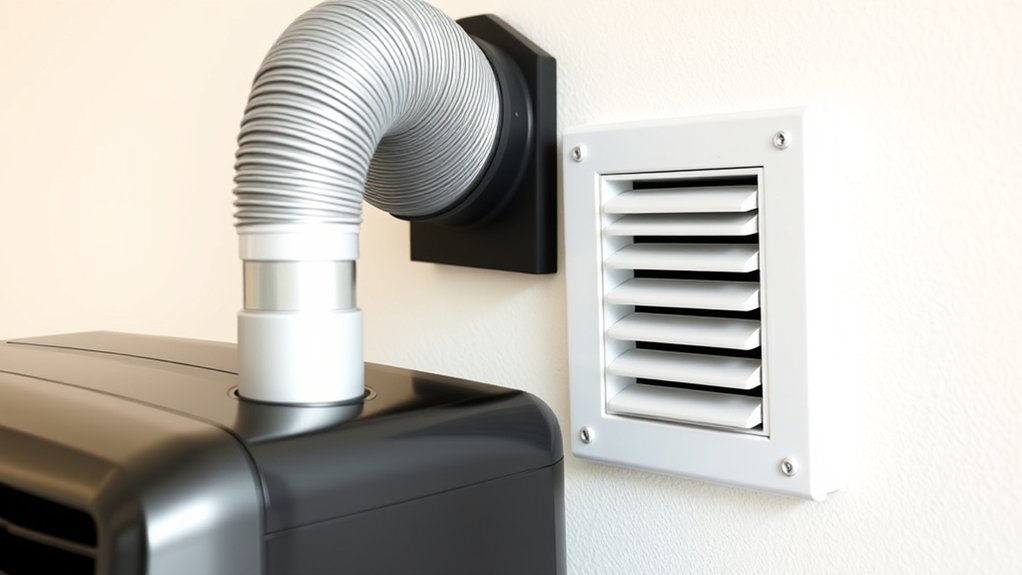
Installing a wall vent kit might seem a bit tricky at first, but it’s pretty straightforward once you pick the right vent. Make sure the vent you choose fits your wall opening and matches the diameter of your portable AC’s exhaust hose. This way, everything lines up nicely, and you won’t have any compatibility issues.
When you’re putting it all together, pay close attention to how you seal everything up. A tight seal is key to keeping the vent secure and working efficiently. If there are any gaps, warm air can sneak in, or cool air can escape, which isn’t what you want. So, double-check that the vent seal is snug and airtight. Doing this will help maintain good airflow and keep your space comfortable and energy-efficient.
Selecting Appropriate Wall Vent
Choosing the right wall vent kit is crucial to ensure your portable AC exhausts properly. You need a vent that fits securely and helps prevent indoor humidity from building up, which can lead to mold or discomfort.
Look for a vent with adjustable damper(s) to control airflow and stop outside air from sneaking in. Noise reduction features like insulated panels or quiet fans can keep sound levels down and make your space more comfortable.
Make sure the vent material is durable, weather-resistant, and easy to clean. Proper sizing is key—an undersized vent can restrict airflow, while an oversized one might be inefficient.
Proper Installation Techniques
Proper installation of your wall vent kit guarantees your portable AC exhausts efficiently and maintains indoor comfort. Start by carefully following the manufacturer’s instructions to guarantee a secure fit.
When installing, choose a location away from indoor plants and air purifiers to prevent moisture buildup or airflow disruption. Use a level to ensure the vent is straight, which helps prevent leaks and improves efficiency.
Seal all joints tightly with weatherproof caulk or foam sealant, avoiding gaps that could let in outdoor pollutants or let cooled air escape. Proper mounting assures the vent remains stable, reducing noise and vibration.
Ensuring Vent Seal Integrity
Ensuring the seal of your vent is airtight is crucial for top portable AC performance. A good seal stops warm air from leaking back into the room, helping your unit cool efficiently.
Installing a wall vent kit creates a tight, secure connection that boosts air quality by reducing dust and allergens getting in through gaps. It also cuts down on noise since a snug seal dampens the sound of airflow.
Make sure the vent flange sits flush against the wall and seal all edges with weatherproof caulk or foam. Regularly check the seal for wear or gaps, and re-seal if needed.
A well-sealed vent not only improves cooling but also helps air stay cleaner and keeps noise levels down.
Set Up a Door Vent Kit to Redirect Exhaust
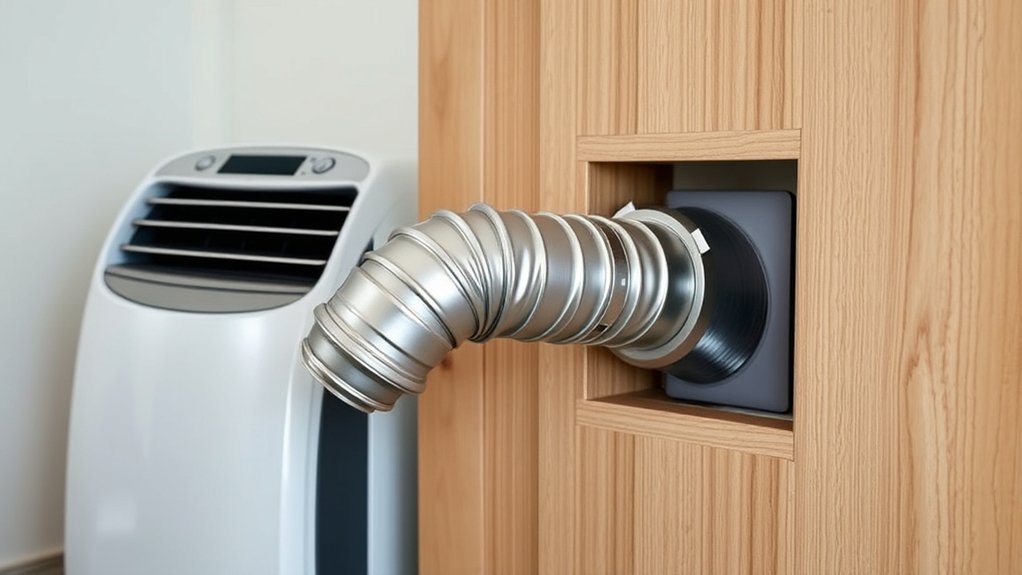
If your door has a gap or can be slightly opened, setting up a door vent kit is a good way to redirect your portable AC’s exhaust. You’ll want to attach the vent kit securely around the door frame, making sure the hose directs hot air outside instead of into the room.
This helps prevent indoor air quality issues and keeps your space comfortable. While doing this, think about how indoor plants and air purifiers can support air circulation and purification.
Indoor plants help absorb excess humidity and improve overall air quality, which complements the venting process. Air purifiers can filter out dust, pollen, and other pollutants, making your environment healthier.
Make sure the vent hose is long enough to reach outside or into a vent opening. Regularly check for leaks or gaps around the setup to maximize efficiency.
Properly venting your portable AC helps keep indoor air fresh while protecting indoor plants and air purifiers from excessive heat or pollutants.
Venting Through a Drop Ceiling or Ceiling Vents
Before you start venting through a drop ceiling or ceiling vents, it’s important to see if your ceiling can handle the setup. Check if there’s enough space and easy access for the vent hose without risking damage to anything. Once you’ve confirmed that, plan out a clear route to guide the exhaust outside or into a designated vent area. This way, everything will run smoothly and safely.
Assess Ceiling Compatibility
Evaluating ceiling compatibility is a key step when venting a portable AC through a drop ceiling or ceiling vents. You need to check if your ceiling height allows for proper installation and airflow.
Make sure the ceiling material can handle modifications without damage. Durable materials like metal or concrete are ideal for this purpose. Think about the weight of the vent components and if the ceiling structure can support them securely.
Consider the ceiling height. Is there enough space for the venting parts without blocking movement or other fixtures? Also, check if the material can withstand cutting or drilling without cracking or collapsing.
Finally, see if you can easily access the ceiling space for installation and future maintenance. This assessment helps ensure your venting setup is both safe and effective.
Create Proper Vent Path
Creating a proper vent path through a drop ceiling or ceiling vents requires careful planning to guarantee effective airflow and safety. Start by selecting a vent location that directs warm air outdoors efficiently.
Use a durable, insulated duct to connect your portable AC to the ceiling vent, ensuring a tight fit to prevent leaks. Incorporate indoor plants near the vent to help absorb noise and improve air quality, making the space more comfortable.
When installing, consider noise reduction measures like attaching a muffler or using flexible ducting to minimize sound transmission. Confirm the vent path is clear of obstructions and secure all connections.
Properly planned venting not only improves cooling efficiency but also maintains a quiet, safe environment in your room.
Create an Exterior Wall Vent for Your Portable AC
To effectively vent a portable AC through an exterior wall, you’ll need to install a dedicated vent opening. This allows hot air to escape outside directly, improving efficiency and keeping noise levels down. When creating the vent, consider placing it near indoor plants, which can help absorb sound and reduce noise from the unit. Proper sealing around the vent minimizes air leaks and maintains insulation.
Picture this: a sturdy, weatherproof vent cap installed flush with the wall. A carefully cut opening matching your vent hose’s diameter. A sealant or gasket around the edges ensures an airtight fit.
This setup not only improves airflow but also minimizes noise transfer indoors. An exterior wall vent can be a clean, effective solution for venting your portable AC without disturbing your living space or relying on windows. It’s a smart way to keep your home comfortable while managing noise and indoor air quality.
Use Flexible Ducts to Vent Into Attics or Crawl Spaces
Using flexible ducts to vent your portable AC into attics or crawl spaces can be a good option when installing a dedicated exterior vent isn’t possible. These ducts let you direct hot air away from your living space without having to cut into walls or windows.
When installed properly, they help keep indoor humidity levels in check by removing excess moisture, making your home more comfortable. To reduce noise, pick insulated flexible ducts, which help dampen sound and cut down on vibrations that could transfer into your home.
Make sure the duct length and bends are kept to a minimum to ensure good airflow and prevent backpressure. Proper sealing around the duct openings is also key to avoiding leaks and keeping the system efficient.
Just keep in mind that venting into attics or crawl spaces needs some careful planning. These areas should be well-ventilated and free of mold or moisture buildup to prevent potential problems.
This method offers a discreet, practical way to vent your portable AC without disturbing your home’s structure or aesthetics.
Consider a Ventless Portable Air Conditioner: Pros and Cons
While ventless portable air conditioners might seem like an appealing solution because they don’t require external venting, it’s important to weigh their advantages and disadvantages carefully. These units are generally more portable and easier to install, making them ideal for small spaces or renters.
They typically use less energy, offering better energy efficiency since they don’t rely on venting systems. Without external ducts, they tend to operate with less noise, leading to noise reduction benefits.
However, ventless units can be less effective at cooling larger rooms. They rely on evaporative cooling methods that increase humidity, which can make the space feel damp or sticky, especially in dry climates.
Additionally, they require a constant water supply or frequent refilling, which might be inconvenient. Overall, they are portable and easy to set up without venting, and they often have higher energy efficiency and lower noise levels.
But keep in mind, their limited cooling capacity can be a drawback, especially in dry environments.
Safety Tips for Venting Without a Window
Venting a portable AC without a window presents unique challenges, especially regarding safety. First, make sure your venting method doesn’t block airflow or create hazards. If you’re using an alternative route like a door or wall opening, secure the setup firmly to prevent leaks or accidents.
Be cautious about how your venting affects indoor air quality; improper ventilation can lead to humidity buildup and mold. Keep indoor plants nearby healthy, as they help improve air quality by absorbing excess moisture and filtering pollutants.
Regularly check your venting system for leaks or obstructions, and avoid blocking vents with furniture or other objects. Always follow manufacturer instructions and safety guidelines.
If you’re venting through an enclosed space, ensure good airflow to prevent overheating or pressure buildup. Maintaining a clear, secure setup is key to safe operation, protecting both your indoor environment and your health.
Troubleshooting Common Venting Issues and Fixes
If your portable AC isn’t cooling as well as it should, the first thing to do is check the vent hose. Make sure it’s securely attached and straight—that way, air can flow properly. Also, look closely for any leaks or gaps where air might be sneaking out. If you spot any, seal them up with the right materials. Fixing these little issues can really boost your unit’s efficiency and help it cool your space more effectively.
Checking Vent Hose Alignment
Have you checked whether your vent hose is properly aligned? Misaligned hoses can block airflow, which reduces ventilation efficiency and airflow optimization.
To make sure it’s correctly aligned, inspect the hose for kinks or bends that might be blocking air movement. Ensure the hose is securely connected to both the AC unit and the vent outlet, with no gaps or leaks.
Proper alignment helps maintain steady airflow, preventing hot air from recirculating and improving cooling performance. Check that the hose extends straight without sharp bends, as these can restrict airflow.
Keeping the hose well-aligned guarantees your portable AC vents effectively, maximizing ventilation and helping you stay cool without frustration.
Sealing Leaks Effectively
Even with the hose properly aligned, leaks can still undermine your portable AC’s efficiency. To seal leaks effectively, check all connections and use weatherproof tape or foam sealant around the hose and vent openings.
Gaps let warm air in and cool air out, which reduces cooling performance. Keep indoor plants away from the vent area because they can block airflow and cause leaks.
Proper sealing also helps with noise reduction by minimizing the sound of escaping air. Regularly inspect the sealant and replace it if it starts to degrade.
Frequently Asked Questions
Can Venting a Portable AC Cause Structural Damage?
Venting a portable AC can pose some structural risks if not done properly, but it generally doesn’t cause serious damage to your home’s structure.
Poorly installed or excessive ventilation may lead to issues like cracks or leaks, especially around the venting area.
To avoid this, make sure your venting setup is secure and well-sealed. Proper installation helps prevent problems and keeps your home’s structural health intact.
What Are the Best Materials for DIY Venting Solutions?
You should use sturdy DIY materials like flexible aluminum ducting and weatherproof venting accessories for your venting solution. These materials are easy to work with, durable, and help prevent leaks.
You might also consider using a vent cover or a custom-made panel with a hole cut to fit your ducting. Make sure all connections are airtight to maximize efficiency and prevent warm air from entering your space.
How Loud Are Alternative Venting Methods?
Imagine a whispering breeze behind a thin curtain—that’s how loud alternative venting methods can be. Noise levels vary, but using sound barriers or mufflers can significantly cut down the sound, making it less intrusive.
Some DIY setups emit gentle hums, while others might produce noticeable noise. Usually, these methods are quieter than direct exhausts, but adding insulation or foam can help keep the sound more subdued.
This way, you can enjoy proper ventilation without disturbing your comfort or peace.
Will Venting Through a Ceiling Affect Indoor Air Quality?
Venting through a ceiling can affect indoor air quality if it interferes with proper airflow and ventilation safety.
Poor ventilation might lead to moisture buildup, mold growth, or lingering odors, which can harm air quality.
To avoid this, make sure your ceiling venting system allows good airflow, doesn’t bring in contaminated air, and follows safety standards.
A well-designed ventilation system helps keep your indoor environment healthy and your air fresh.
Are There Legal Restrictions on Venting Through Certain Areas?
Yes, there are legal restrictions on venting through certain areas. You need to make sure you’re following local venting rules before you go ahead.
These regulations change depending on where you are and often specify where and how you can vent your portable AC. If you don’t follow these rules, you might face fines or safety issues.
Always check with local authorities or look at your building codes to make sure you’re venting correctly and legally.
Conclusion
Think of venting your portable AC without a window like guiding a river through a new path—careful planning guarantees smooth flow. With the right setup, you can keep your space cool even without traditional windows.
Just like rerouting water around obstacles, choosing the best venting method clears the way for effective cooling. Options include venting through a wall, ceiling, or door using specialized kits or DIY solutions.
When done right, you’ll enjoy a comfortable room, no matter the challenge. Venting a portable AC without a window is totally doable with some ingenuity and the right approach.