How Many Watts Does a Small Window AC Use?
Many people struggle with keeping their home cool without racking up huge energy bills. If you’re tired of guessing how much power your small window AC uses, you’re not alone. Understanding its wattage can help you save money and stay comfortable all summer long.
A small window air conditioner typically uses between 500 and 1,500 watts, depending on its size, cooling capacity, and efficiency. The wattage varies based on features like remote controls or extra functions.
Larger units require more power, while smaller, efficient models use less.
Proper installation, maintenance, and ideal usage can help reduce power consumption. If you want to find out how to keep your unit running efficiently, keep exploring this guide.
Key Takeaways
- Small window AC units usually use between 500 and 1,500 watts, depending on their size and efficiency.
- Larger or less efficient models might need up to 2,000 watts.
- How much power they use depends on their cooling capacity, features, and how you set them.
- Proper installation and regular maintenance can help save energy and keep wattage low.
- To find out the exact wattage for a specific model, check the unit’s label or manual.
How Much Power Does a Small Window Air Conditioner Use?
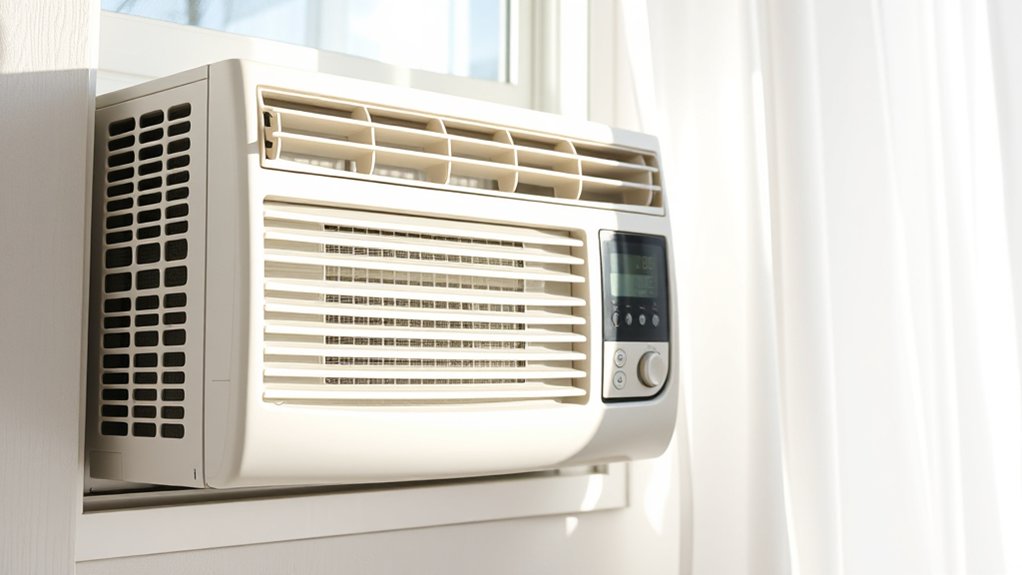
Understanding how much power a small window air conditioner uses is key to managing your energy costs. Most small units typically operate between 500 and 1,500 watts, depending on their size and efficiency.
Most small window air conditioners use between 500 and 1,500 watts, depending on size and efficiency.
To save energy, consider choosing an ENERGY STAR-rated model and keeping it well-maintained. Proper installation is also important; a poorly installed unit can use more power.
Make sure it’s sealed correctly and positioned for good airflow. Adding proper insulation around the window helps reduce the workload and can lower wattage consumption.
Using a programmable thermostat is another smart tip. It helps you avoid running the AC when you’re away, saving energy and money.
By understanding typical power usage and applying these tips, you can make smarter choices. This can reduce your energy bills and keep your small window AC running efficiently.
What Factors Influence the Wattage of Small AC Units?
The wattage of your small AC unit mainly depends on its size and cooling capacity. Basically, the bigger or more powerful the unit is, the more energy it needs to do its job effectively.
Energy efficiency ratings also come into play here. Units with higher efficiency tend to use less power to cool the same space, which can save you money in the long run.
And don’t forget, how you use the AC matters too. Running it on high settings or leaving it on all day can boost wattage consumption, while using it wisely and setting it to a comfortable but moderate level can help keep your energy use down.
Size and Capacity
Ever wondered what determines the wattage of a small window AC? Size and capacity are the key factors. A larger unit with higher cooling capacity usually uses more watts because it needs more power to cool bigger spaces.
When choosing your AC, think about the size of the room. Smaller rooms need less capacity, which saves energy and cuts costs. Color options can change how it looks but don’t affect wattage directly.
Proper installation tips are essential for efficiency. Placing the unit correctly ensures maximum performance and helps prevent unnecessary energy use.
An incorrectly installed unit might work harder, increasing wattage consumption. Always match the AC’s capacity to your room size and follow installation tips to keep wattage in check.
This way, you can balance cooling needs with energy efficiency effectively.
Energy Efficiency Ratings
Have you ever wondered what influences the energy efficiency ratings of small AC units? Several factors play a role in determining their wattage and efficiency.
The type of refrigerant used makes a big difference. Newer, eco-friendly refrigerants usually lead to better efficiency and lower energy consumption. Noise levels also matter—quieter units tend to run more smoothly and waste less power.
The design and insulation of the unit are important, too. Better build quality and improved airflow can help reduce how much energy it needs to operate.
Here are the main factors affecting energy efficiency ratings:
- Refrigerant types
- Noise levels
- Design and build quality
Usage and Settings
The settings you choose and how you operate your small window AC greatly affect its wattage use. For the best efficiency, set the thermostat around 75°F—comfortable but not too cold.
Using higher fan speeds uses more power, so switch to lower settings when you can. Regular maintenance like cleaning filters and ensuring proper airflow also helps cut energy use.
Make sure your unit is installed properly—seal it well in the window to prevent air leaks. This stops the AC from working harder than necessary. Avoid running it all the time; instead, use timers or eco modes if you have them.
These tips not only boost efficiency but also help your AC last longer, saving you money and energy in the long run.
How Cooling Capacity Affects Your Small Window AC’s Energy Use
The cooling capacity of your window AC really affects how much power it uses. Generally, a bigger unit tends to consume more watts because it’s working harder to cool larger spaces. But it’s not just about size—some models are actually more energy-efficient than others, even if they’re similar in capacity.
Getting a handle on this relationship can help you pick the right unit. You want something that cools your space effectively without driving up your energy bills. So, thinking about both the size and the efficiency of the AC can make a big difference in finding a balance between comfort and savings.
Larger Capacity Means More Power
As you increase the cooling capacity of your small window AC, it naturally demands more power to operate effectively. A larger capacity unit can cool bigger spaces but uses more electricity, which means higher wattage consumption.
When choosing a unit, think about not just the power but also factors like color options and installation tips. This helps ensure it matches your room’s decor and fits your setup needs.
Higher capacity units often need stronger installation methods. They also tend to be larger in size, which can affect where you place them.
Keep in mind that increased capacity usually comes with higher energy consumption, so it’s good to balance your cooling needs with efficiency.
Efficiency Varies With Size
Larger cooling capacities in small window AC units tend to consume more energy, making efficiency a key consideration. Your AC’s energy use depends heavily on factors like thermostat settings and window insulation.
If you set the thermostat too low, the unit works harder and uses more watts. Proper window insulation reduces heat transfer, helping your AC run more efficiently and consume less power.
Smaller units with lower cooling capacity generally use fewer watts, but their efficiency can be affected by how well your room retains cool air. Adjusting the thermostat wisely and improving window insulation can optimize energy use regardless of size.
Comparing Wattage of Small vs. Larger Window Air Conditioners
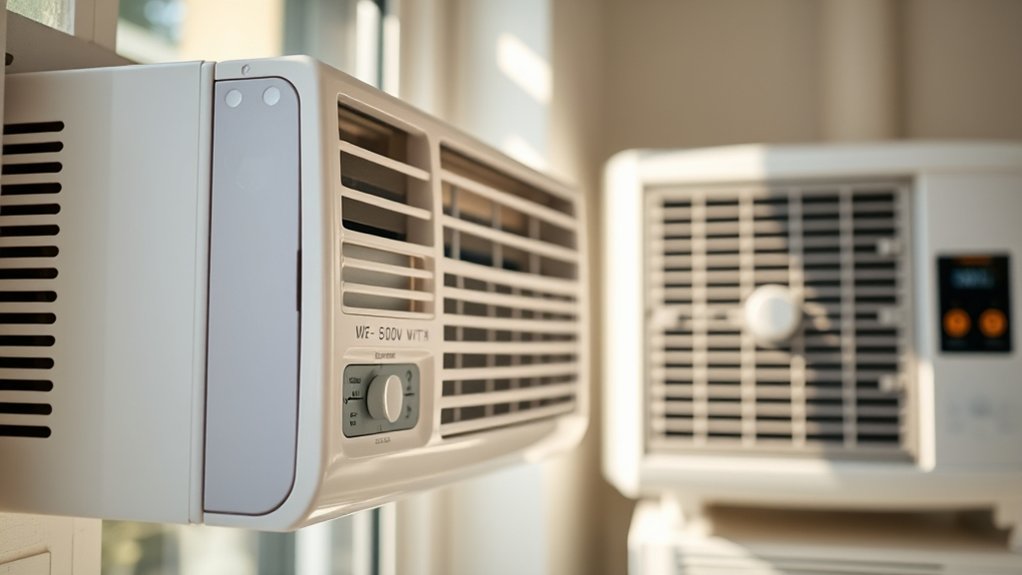
While small window air conditioners typically use less power than their larger counterparts, there’s a noticeable difference in wattage that affects energy use and operating costs. Small units usually run between 500 to 1,000 watts, making them energy-efficient for small spaces.
Larger units, on the other hand, can require 1,200 to 2,000 watts. This increases power consumption but provides more cooling capacity. The wattage difference also impacts indoor air quality and noise levels.
Smaller ACs tend to produce less noise, making them perfect for bedrooms or quiet spaces. They circulate indoor air effectively without overcooling or drying out the room. Larger ACs are more powerful but often generate more noise and can disturb indoor comfort if not maintained properly.
In summary:
- Power consumption varies a lot with size
- Smaller units are quieter and better for indoor air comfort
- Larger units use more watts but cool bigger spaces faster
Features That Influence the Energy Consumption of Small Window ACs
Several features directly impact how much energy a small window AC consumes, and understanding them can help you choose a more efficient unit. One key factor is remote controls, which let you turn the unit on or off and adjust settings without unnecessary operation, saving energy.
The design and quality of remote controls also matter because they influence how easy it is to use the unit properly. When remote controls are user-friendly, you’re more likely to operate the AC efficiently.
Installation guidelines are crucial too. Correct placement ensures good airflow and cooling efficiency, which reduces strain on the compressor. Improper installation, like poor window sealing or bad positioning, can cause energy leaks and raise power use.
Other features, such as adjustable thermostats and fan speeds, allow you to customize energy use based on your comfort needs. Paying attention to remote control features and following proper installation tips helps maximize efficiency and lower energy consumption of your small window AC.
How to Calculate the Energy Cost of Running Your Small AC
Want to figure out how much your small AC is really costing you? It’s pretty straightforward. First, you need to find out how much power your AC uses, which is usually listed in watts. You can find this info on the label or in the manual.
Next, think about how many hours you run your AC each day. Once you have those numbers, doing the math is simple. Just multiply the power consumption (in watts) by the hours used each day, then multiply that by the number of days in a month. Don’t forget to convert watts to kilowatt-hours (kWh) since electricity is billed that way — just divide watts by 1,000.
Finally, take that number and multiply it by your local electricity rate. And voilà, you’ll know exactly how much your small AC is costing you each month!
Determine Power Consumption
Calculating the energy cost of running your small window AC starts with understanding its power consumption. To do this, check the unit’s label or user manual for wattage information.
Keep in mind that features like remote controls can affect energy use, especially if they enable continuous operation. Also, maintaining your air filter can improve efficiency, reducing overall power consumption.
Here are key points to contemplate:
- Review the AC’s wattage rating to estimate energy use
- Factor in additional features like remote controls that may influence power draw
- Regular air filter maintenance helps keep the unit running efficiently
Calculate Running Hours
Understanding how long your small window AC runs is key to estimating its energy cost. To get an accurate idea, track how often it turns on and off each day.
Keep in mind that voltage fluctuations can make your AC work harder or cycle irregularly, which affects the total running time.
Make sure the refrigerant levels are adequate because low refrigerant can cause your AC to run longer and use more energy.
Use a timer or energy monitor to record actual operating hours over several days for a more precise estimate.
Consistent refrigerant levels and stable voltage help your AC cycle normally, making your calculations more reliable.
Knowing the exact running hours helps you understand how much electricity your AC uses, so you can budget for energy costs more effectively.
Tips to Choose an Energy-Efficient Small Window Air Conditioner
Choosing an energy-efficient small window air conditioner starts with paying attention to its Energy Star rating and cooling capacity. An Energy Star label shows the unit meets energy efficiency guidelines, helping you save on electricity bills. Also, pick a model that matches your room size to avoid overuse and excess energy use.
Choose an Energy Star-rated small window AC with proper cooling capacity for efficient, quiet comfort.
When comparing units, consider indoor humidity control features, which boost comfort without increasing energy consumption. Noise levels are important too—look for models that operate quietly to prevent disruptions.
To make a smart choice, focus on:
- Energy Star rating for efficiency standards
- Appropriate cooling capacity for your room size
- Indoor humidity control and noise levels for comfort
Choosing wisely ensures your small window AC uses less power, keeps indoor humidity at a comfortable level, and runs quietly, all while lowering your energy bills.
Common Mistakes That Lead to Higher Energy Bills With Small ACs
One common mistake that drives up energy bills is leaving your small window AC running when it’s not needed or setting it to a lower temperature than necessary. Many people forget to make seasonal adjustments, causing the AC to work harder than it needs to.
Instead, use smart thermostats to program your unit for maximum efficiency, especially during unoccupied hours. These devices help maintain a comfortable temperature without constant manual adjustments, ensuring your AC runs only when needed.
Furthermore, setting your thermostat too low forces the unit to work harder, increasing power consumption. Proper seasonal adjustments, like raising the temperature slightly during cooler months, can greatly reduce energy costs.
Avoid the temptation to leave the AC on all day or set it to extreme temperatures. Small changes, like using smart thermostats and adjusting settings seasonally, can make a big difference in lowering your energy bills while keeping your space comfortable.
How Your Daily Usage Patterns Impact Small AC Power Consumption
Your daily habits really impact how much power your small window AC uses. For example, how often you turn it on or off makes a difference in energy consumption.
Using the remote control wisely can help you avoid unnecessary cycling, saving power. Keep the noise level in mind; running the unit at high settings when not needed wastes energy.
If you leave the AC on all day, even at a low setting, you’ll end up using more electricity than necessary. On the other hand, manually adjusting the thermostat to keep a comfortable temperature helps reduce waste.
Smart habits also include closing curtains or blinds to block out heat, which lessens the workload for your AC. Remember, frequently using the remote for small tweaks can cause the unit to run longer, increasing power use.
Being mindful of these habits helps you stay energy-efficient and can lower your electricity bills.
Simple Ways to Monitor and Reduce Your Small Window AC’s Power Use
Monitoring and reducing your small window AC’s power use doesn’t have to be complicated. Start with simple maintenance tips, like regularly cleaning or replacing filters, to keep it running efficiently. Dirty filters make the unit work harder, which uses more energy.
Next, check that your installation is proper. Sealing around the window helps keep cool air in and warm air out, easing the workload. Using a plug-in energy monitor can help you track daily power use so you can spot patterns and make adjustments.
Setting your thermostat a few degrees higher can significantly cut back on energy without sacrificing comfort. Also, avoid blocking vents or placing the AC in direct sunlight, which can cause it to run longer.
Regular upkeep and good installation are key. By paying attention to these tips, you’ll monitor your AC’s power use better and save money on your energy bill.
Frequently Asked Questions
What Is the Average Lifespan of a Small Window AC Unit?
A small window AC unit usually lasts about 10 to 15 years if you take good care of it. Proper maintenance is key to getting the most out of its lifespan.
To help it run smoothly for longer, make sure to clean the filters regularly and look out for refrigerant leaks. Keeping up with these tasks reduces strain on the unit and helps it stay efficient.
When you’re not using it, cover the unit to protect it from dust and weather. Also, scheduling professional inspections now and then can keep everything in good shape for years to come.
Are There Specific Brands Known for Energy-Efficient Small Window ACS?
Think of energy-efficient small window ACs as the sleek race cars of cooling—fast, reliable, and designed for savings.
Brands like LG, Frigidaire, and Midea are well-known for their energy savings and strong reputations, making them top choices.
These brands combine innovative features with proven durability, so your cooling needs are met without draining your wallet.
How Does Insulation Affect the Power Consumption of a Small Window AC?
Insulation impact plays a vital role in your small window AC’s power consumption. When your space is well-insulated, less heat enters, so your AC doesn’t work as hard, leading to energy savings.
Conversely, poor insulation causes heat gain, making your AC run longer and use more watts. To optimize energy efficiency and reduce power use, improve your insulation by sealing gaps and adding insulation materials.
Can I Upgrade My Small Window AC to Reduce Energy Use?
You can’t upgrade a small window AC to significantly cut down on energy use.
But you can try some simple tips like sealing leaks and keeping filters clean to improve efficiency.
While noise reduction isn’t directly linked to upgrading, choosing a more energy-efficient model can lower both power use and noise levels.
If you want better performance, think about replacing your unit with a newer, more efficient one.
That way, you get better energy savings without sacrificing comfort or quiet operation.
What Safety Features Should I Look for in Energy-Efficient Small Window ACS?
You should look for energy-saving features like programmable timers and eco modes to cut down on energy use. These options help you operate the unit efficiently and save money in the long run.
Safety certifications such as UL or ETL are important because they show the unit meets safety standards. This gives you peace of mind knowing your window AC is safe to use.
Also, check for features like a secure window bracket, automatic shut-off, and anti-tip design. These safety features help protect you and your home while keeping energy efficiency a priority.
Conclusion
As you switch on your small window AC, imagine the gentle hum of its compressor as a cool breeze whispers through your room, silently working to keep you comfortable.
By understanding its wattage and making mindful choices, you can enjoy this invigorating breeze without surprises on your energy bill.
Think of it as tuning into a steady rhythm, balancing comfort and savings so every summer day feels just right.
A small window AC typically uses between 500 and 1,000 watts, depending on its size and efficiency.
Knowing this helps you manage your energy use and keep your bills in check while staying cool.