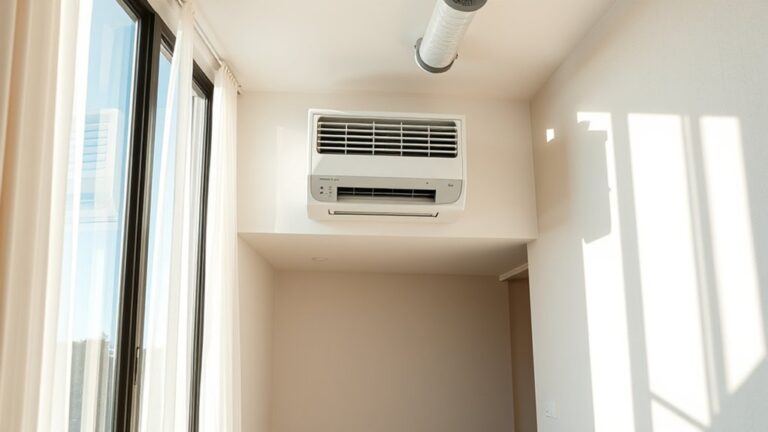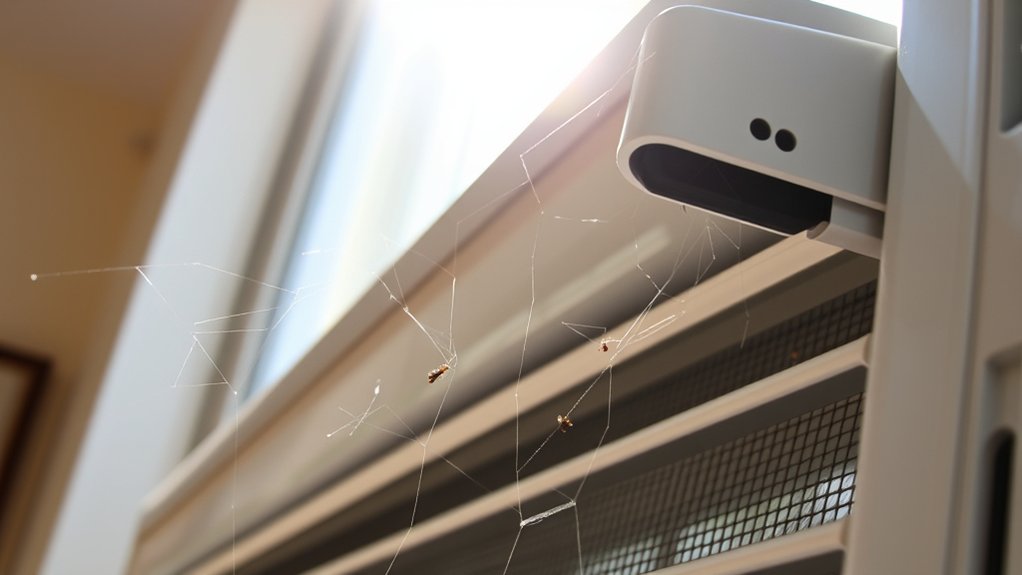
What Risks Do Window AC Units Pose for Getting Bugs Through?
Many homeowners know the frustration of dealing with bugs sneaking into their homes, especially during warmer months. If you have a window AC unit, you’re not alone—this common problem can be tricky to prevent.
Window AC units can pose risks for bug entry through gaps, cracks, and poorly sealed areas. Standing water and debris inside or around the unit attract pests like mosquitoes, silverfish, and bugs seeking shelter.
Damaged filters and clogged drains create moist environments that invite infestations. If these vulnerabilities aren’t addressed, bugs can easily get inside your home.
To find out how to prevent these issues and protect your space, keep exploring further.
Key Takeaways
- Gaps and cracks around the unit act as entry points for insects looking for shelter or places to breed.
- Poor sealing and installation create weak spots that pests can use to get inside your home.
- Standing water and high humidity inside or near the AC can attract bugs like mosquitoes and silverfish.
- Dirty filters and clogged drains give pests a place to hide and breed.
- Damaged screens and lack of regular maintenance make it easier for bugs to get in through the AC.
How Do Window AC Units Make It Easy for Bugs to Enter?
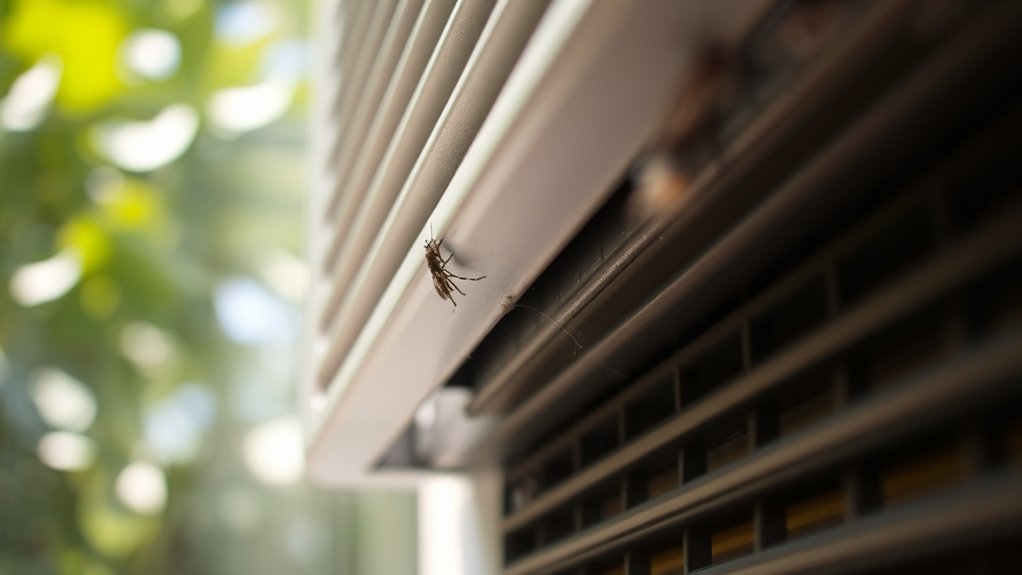
Have you ever wondered how bugs manage to sneak into your home through a window air conditioner? It often comes down to design flaws. When your AC isn’t properly sealed, gaps around the unit can create tiny openings that bugs easily exploit.
These gaps also let outdoor dust and debris enter, which can ruin indoor air quality. Plus, if airflow isn’t well-controlled, your indoor air can feel stale, making you run the unit longer. That impacts energy efficiency too.
Bugs are attracted to the warmth and moisture around the unit, especially if there’s standing water or organic debris nearby. If you don’t seal these gaps tightly, insects find it easy to crawl in through the spaces.
This makes your home less secure from pests. Improving the seal around your window AC not only keeps bugs out but also helps maintain better indoor air quality. It also boosts energy efficiency by preventing unnecessary heat exchange.
Where Do Bugs Usually Enter Your Window AC?
Bugs usually sneak into your window AC through tiny gaps and cracks around the unit or the window frame. It’s kind of sneaky, but those small openings can give bugs easy access.
Also, don’t forget about the drainage openings. If they aren’t sealed properly, bugs can use them as entry points too. So, it’s a good idea to check these spots regularly and make sure everything’s sealed up tight. That way, you can keep those bugs out and enjoy a bug-free cool breeze!
Gaps and Cracks
Gaps and cracks around your window AC unit create easy entry points for bugs. These openings can also reduce ventilation efficiency, making your space less comfortable and harder to cool.
Bugs can slip inside through even small gaps, especially when the unit isn’t tightly sealed. Sealing these cracks helps prevent pests from entering and improves noise reduction, keeping your home quieter.
Properly sealed gaps ensure unwanted critters can’t sneak through while maintaining good airflow. If you notice gaps, use weatherstripping or caulk to close them up.
This simple fix boosts your unit’s performance, keeps bugs out, and makes your environment more comfortable and pest-free. Addressing gaps is a quick way to improve your window AC’s effectiveness and security.
Drainage Openings
While drainage openings are essential for preventing humidity buildup and water damage, they can also be easy entry points for bugs. If these openings aren’t properly sealed or cleaned regularly, pests can crawl through and get inside your unit.
Bugs often target drainage holes because they provide a direct route past barriers like filters. Plus, the area around these openings often has electrical wiring, which can attract insects looking for shelter or moisture.
Over time, debris or dirt can clog these openings, creating a moist environment that invites pests. Regular maintenance, sealing gaps, and ensuring proper drainage can help reduce these vulnerabilities.
Keeping drainage openings clean and secure is key to preventing bugs from slipping inside your window AC unit.
Can Gaps and Poor Seals Let Bugs Inside?
Sure! Here’s a more conversational version of the text:
—
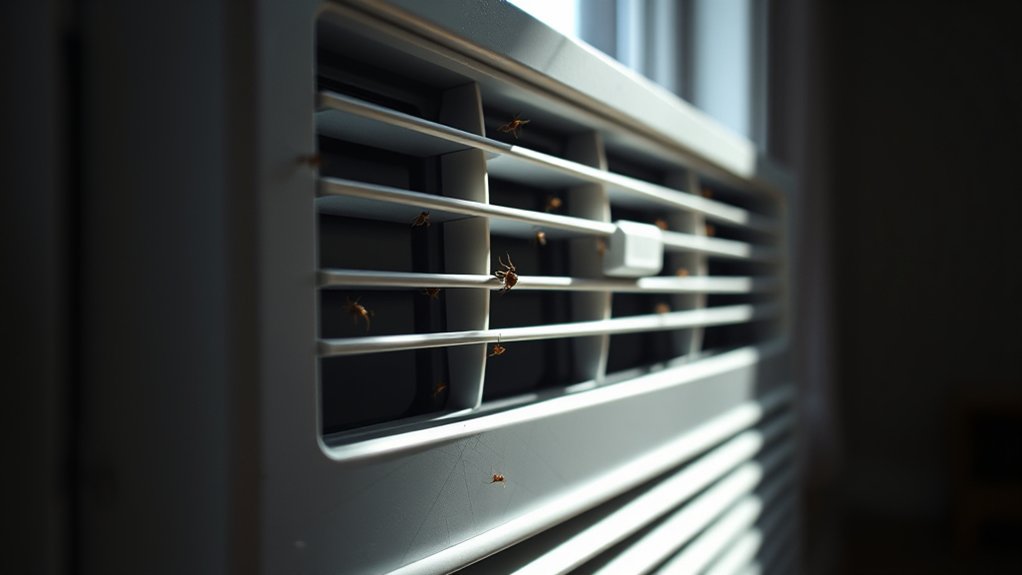
Have you ever wondered if gaps around your window frame or worn-out sealant could be letting bugs sneak in? It’s pretty common—those tiny spaces are like open invitations for bugs to come inside. And if your AC isn’t installed quite right, it might leave little gaps that bugs can squeeze through too.
Gaps Around Window Frames
Ever wondered how tiny openings around your window frame can invite unwanted pests inside? These gaps create chances for bugs to slip through, especially if your window isn’t tightly sealed.
Gaps around the frame can also cause air leaks, making it easier for pests to get in and for your cooling unit to lose efficiency. Even small cracks or spaces can be pathways for insects like ants, flies, or roaches.
If your window frame isn’t properly sealed, bugs can hide behind the unit or squeeze through these openings. This is especially true when the AC is running and airflow is disturbed.
Regularly inspecting and sealing gaps around your window frame helps block these entry points. Doing so reduces the risk of pests sneaking inside through these tiny but dangerous openings.
Sealant Deterioration Over Time
Over time, sealants around your window frame can wear down, crack, or lose their adhesive properties, creating new openings for bugs to enter.
Sealant deterioration breaks the barrier that keeps pests out, making it easier for insects to find their way inside.
When the sealant weakens, gaps form, giving pests direct access to your home’s interior.
Even if the window looks sealed, pests can still get in through these cracks.
Regularly inspecting and resealing any cracks or gaps helps keep a tight barrier against bugs.
Ignoring sealant deterioration allows pests to exploit these vulnerabilities, increasing the chances of bugs getting inside.
Proper upkeep of the sealant is essential for reducing pest entry and protecting your home.
Improper Installation Risks
When window units are installed improperly, gaps and poor seals often happen, which can let bugs inside.
These gaps not only let pests in but also cause ventilation problems, making it harder to control airflow and indoor air quality.
Bad installation can also hurt your unit’s energy efficiency, causing it to work harder and raising your energy bills.
Bugs can take advantage of weak spots, especially if seals aren’t tight or if the unit isn’t securely mounted.
Making sure the installation is done right with tight seals and proper positioning helps keep bugs out and ensures good ventilation.
Proper setup is key to preventing pests from sneaking in while keeping your AC running efficiently and saving energy.
Does Standing Water in Your AC Attract Pests?
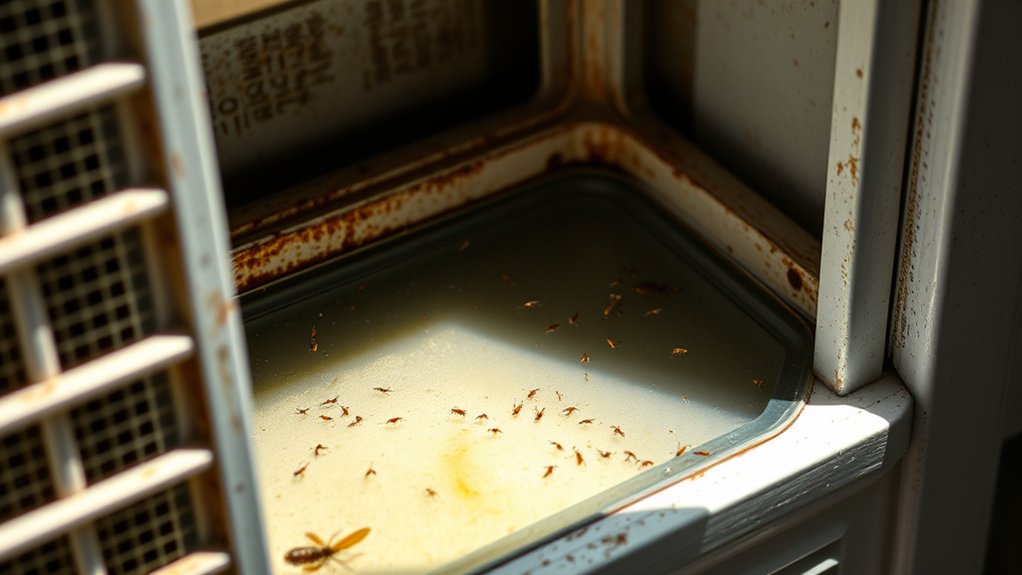
Standing water inside your window AC unit can invite pests. When water collects, it raises indoor humidity, making your space more attractive to bugs like mosquitoes and silverfish.
Stagnant water also provides a breeding ground if it’s left sitting for too long. Poor airflow can make things worse by causing moisture to settle in certain areas, increasing the chances of standing water.
If your unit isn’t draining properly, that stagnant water becomes a prime hiding spot for pests to hide and reproduce. Regularly checking and draining any accumulated water helps cut down these risks.
Ensuring proper airflow can also prevent moisture buildup, making your AC less appealing to bugs. Managing indoor humidity and keeping good airflow lowers the chances of pests being drawn to your unit through standing water.
How Do Dirty Filters and Drains Invite Bugs?
Dirty filters and drains create the perfect environment for pests to thrive inside your AC unit. When you neglect air filter maintenance, dust and debris build up, giving bugs hiding spots. Dirty filters also block airflow, leading to moisture buildup that attracts pests.
Blocked drains cause stagnant water, which bugs love for breeding. Dirty filters provide shelter and food for insects hiding inside the unit. Moist environments from drainage issues attract pests seeking water sources.
Signs That Bugs Are Coming Through Your Window AC
If bugs are starting to appear around your window AC, it’s a clear sign they might be trying to get inside. One clue is seeing more bugs near the unit, especially during warmer months.
Poor air circulation can trap stagnant air, making it easier for bugs to sneak in through tiny gaps. If you notice an increase in indoor humidity, bugs could be attracted to the moisture or your AC might not be controlling humidity well.
Sometimes, bugs get in through small cracks or gaps around the unit, especially if the window seal isn’t tight. You might also see debris or insect trails near the vents or on the window sill.
These signs suggest bugs see your window AC as a doorway into your home. Keeping an eye on indoor humidity and making sure air flows properly can help you catch early signs of a bug invasion.
How to Seal Your Window AC to Keep Bugs Out
Sealing your window AC unit properly is key to keeping bugs out. It also helps your unit run more efficiently and keeps noise down. Start by checking for gaps around the unit and fill them with weatherstripping or foam insulation.
You might also want to add a removable panel or curtain that’s easy to adjust when you’re using the AC. This makes sealing more flexible and convenient.
Some helpful tips include applying high-quality weatherstripping around the window frame and the unit. Installing a foam or rubber gasket between the AC and the window sash is also a good idea.
Don’t forget to use caulk to seal any cracks or gaps in the window frame. These simple steps help keep pests outside while making sure your AC works efficiently and quietly.
Proper sealing is a quick and easy way to keep your home pest-free and comfortable.
Why Regular Cleaning Is Key to Pest Prevention
Regular cleaning is essential because it removes food crumbs, spills, and clutter that attract pests. When your window AC unit isn’t cleaned regularly, dust and debris can build up, creating hiding spots for bugs.
Cleaning filters and surrounding areas helps lower indoor humidity, making your space less inviting for pests that thrive in moist environments. Reduced humidity also boosts the effectiveness of natural pest repellents like essential oils or sprays.
Wiping down surfaces and removing dirt prevents pests from establishing nests near your unit. Regular maintenance keeps pests from using your AC as an entry point or breeding ground.
Staying consistent with cleaning eliminates potential food sources and dampness, creating an environment pests find less attractive. This proactive approach not only keeps bugs out but also helps your AC work better and last longer.
Tips to Prevent Bugs From Using Your Window AC as an Entry Point
If you want to keep bugs out of your place through your window AC, the first thing you should do is seal up any gaps or cracks around the unit. It’s a simple step that can make a big difference.
Adding screens or mesh over your window can also help prevent insects from sneaking inside. It’s like giving your AC a protective barrier. And don’t forget to do regular maintenance checks—those little issues can turn into big problems if you ignore them. Staying on top of things means fewer bugs, and a more comfortable home!
Seal Gaps and Cracks
Even small gaps and cracks around your window AC unit can be easy entry points for bugs. These openings can disrupt airflow patterns and let insects slip inside, especially when condensation builds up and attracts bugs.
To prevent this, seal any gaps with weatherstripping or caulk to create a tight barrier. Focus on areas where the unit meets the window frame and siding. Proper sealing not only keeps bugs out but also boosts energy efficiency.
Use weatherstripping to seal gaps around the unit, and apply caulk to cracks in window frames and siding. Make sure to regularly check for new gaps after storms or temperature changes.
Sealing these spaces keeps bugs out and maintains balanced airflow, reducing the chances of pests entering through your window AC unit.
Use Screen or Mesh
Installing a screen or mesh over your window AC unit creates a physical barrier that blocks bugs from entering. Understanding insect behavior helps you choose the right mesh that prevents pests from squeezing through small gaps. A fine, durable screen restricts entry points, making it harder for insects to access your home.
Proper installation is key. Make sure the mesh covers all openings completely and fits tightly to prevent gaps. This simple pest prevention method reduces the chances of bugs hitching a ride inside when you turn on your AC.
Regularly inspect and replace damaged screens to keep protection effective. By creating a sturdy barrier, you minimize the risk of unwanted pests using your window AC as an entry point. This keeps your home cleaner and more comfortable.
Regular Maintenance Checks
Regular maintenance checks are essential to keep bugs from using your window AC as an entry point. Regularly inspecting and cleaning your unit helps improve air quality and keeps energy efficiency high. During these checks, focus on sealing gaps around the unit, cleaning filters, and removing debris that could attract pests.
To boost effectiveness, consider sealing all cracks and gaps around the window frame, replacing or cleaning filters to improve air quality, and clearing debris to ensure vents are unobstructed.
These simple steps prevent bugs from slipping inside while keeping your AC running smoothly. Consistent maintenance not only reduces pest risks but also helps your unit operate at peak performance, saving energy and maintaining a healthier indoor environment.
When Should You Call a Pest Control Expert?
Knowing when to call a pest control expert is crucial, especially if you notice bugs repeatedly appearing around your window AC units. If DIY methods haven’t worked, it’s a clear sign you need professional help. Persistent bugs might mean there are hidden issues like high indoor humidity or leftover allergens attracting pests.
If cleaning and sealing gaps don’t stop the infestation, it’s time to call in the pros. Pest control experts can find hidden entry points and treat the root cause effectively, saving you time and frustration.
Here’s a quick guide:
| Situation | Action | Reason |
|---|---|---|
| Bugs keep returning despite DIY efforts | Call a pest control specialist | Presence suggests hidden entry points or infestations |
| Increased indoor humidity | Use dehumidifiers, seek professional assessment | Excess moisture attracts pests and promotes allergen buildup |
| Visible pest droppings or nests | Immediate professional intervention | Indicates established infestation needing targeted treatment |
| Recurrent allergic reactions | Consult pest control to eliminate allergens | Pest presence worsens allergies and health risks |
| Failure of DIY solutions | Professional pest control needed | Long-term solution for persistent problems |
Frequently Asked Questions
Can Outdoor Pests Infiltrate Through the Window AC During Off-Season?
Yes, outdoor pests can get in through your window AC during the off-season if it isn’t sealed properly. When the unit isn’t running, indoor humidity can rise, which attracts bugs looking for moisture.
To keep pests out, use pest repellents around the unit and make sure all gaps are sealed tightly. Regular maintenance and checking for any openings can help prevent pests from getting inside.
Doing these simple steps will help you maintain a pest-free and comfortable indoor environment all year round.
Do Certain Types of Bugs Pose a Greater Risk for Entering via Window AC Units?
Certain bugs, like flies and fruit flies, are more likely to enter through window AC units because they’re attracted to moisture and food residues. These units can become key entry points for pests.
Make sure to regularly clean and inspect your AC to prevent attracting bugs. Sealing gaps around the unit also helps keep bugs from sneaking inside.
Doing these simple steps can help keep your home pest-free and improve airflow.
How Do Weather Conditions Influence Bug Entry Through Window AC Units?
Weather conditions like high humidity and rain can make it easier for bugs to get in through window AC units because they create a more inviting outdoor environment.
Keep an eye on your indoor humidity levels, since high humidity attracts pests looking for moisture. Using pest repellents around your window unit can also help keep bugs away.
During humid or rainy weather, make sure your AC’s screens are intact and tightly sealed to prevent pests from slipping inside. This simple step helps keep your home bug-free.
Are There Specific Window AC Designs More Vulnerable to Pest Intrusion?
Certain window AC designs can be more inviting to pests, especially those with gaps around the edges or poorly sealed units.
You might notice airflow patterns pulling bugs in if the unit’s placement isn’t strategic, like a magnet drawing pests inside.
To keep critters out, pick a design with tight seals and ensure proper placement.
Try to position your AC away from foliage or clutter to block sneaky entry points.
Can Installing Screens Prevent Bugs From Entering Through the AC Unit?
Yes, installing screens on your window AC unit can really help keep bugs out. They act as a physical barrier, blocking pests from getting inside when the unit is running or the window is open.
Make sure the screens fit tightly and cover all openings around the unit. This way, no gaps are left for bugs to squeeze through.
Regularly check the screens for tears or gaps and fix any damage. This keeps your home protected and pest-free effectively.
Conclusion
To keep pests at bay, don’t underestimate the vulnerabilities of your window AC. Small gaps around the unit can serve as easy entry points for bugs. Sealing these gaps helps prevent unwanted critters from sneaking inside.
Cleaning filters regularly and removing standing water around your AC are simple steps that can turn your unit from a pest gateway into a fortress. Neglecting these details is like leaving a welcome mat for bugs.
Stay vigilant—your home’s comfort and hygiene depend on it. Remember, a little prevention today keeps the pests away tomorrow, especially when it comes to window AC units.