Can I Leave My Window AC On When Not Home?
Many people wonder if it’s okay to leave their window AC on when they’re not home, especially when trying to stay comfortable or save energy. You’re not alone—this is a common concern for homeowners seeking convenience and safety.
Yes, you can leave your window AC on when you’re not home if it’s well-maintained, properly installed, and has safety features like timers or automatic shut-offs. Regular maintenance reduces risks of electrical issues, leaks, or fire hazards.
To save energy and extend your unit’s lifespan, consider using a timer or setting a higher temperature. If you’re curious about best practices and how to keep your home safe and efficient, there’s more to investigate.
Key Takeaways
- Well-maintained units with safety features are generally safe to leave on when you’re not home.
- Setting the thermostat higher and using timers can help save energy and keep things safe.
- Regular maintenance, like cleaning filters and checking for damage, cuts down on fire and electrical risks.
- Keeping the AC on all the time can boost energy costs and wear out the unit faster, so try to limit usage.
- Keep an eye out for signs of trouble, like strange noises or water leaks, and fix issues quickly.
Is It Safe to Leave Your Window AC On When No One’s Home?
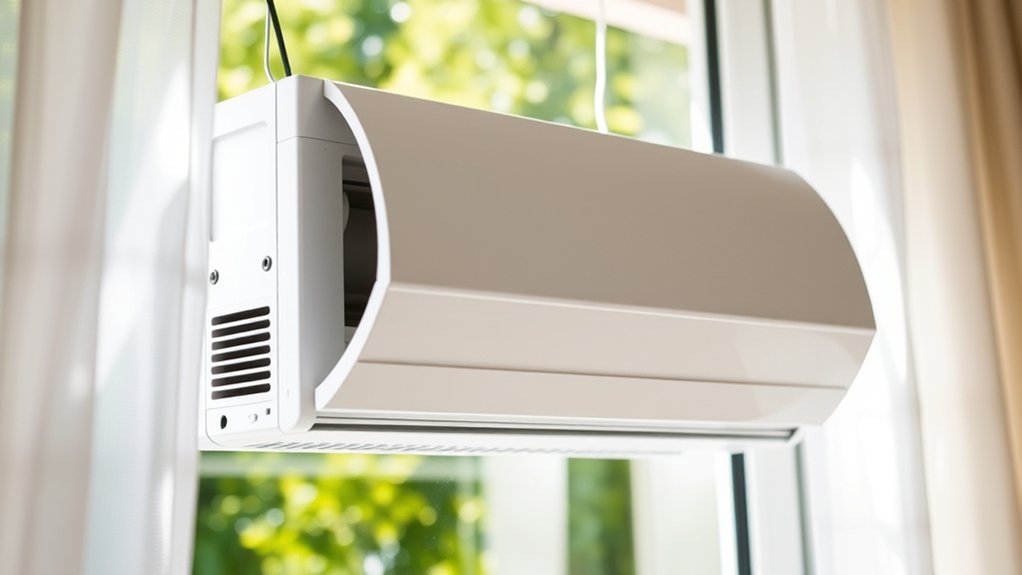
Is it safe to leave your window AC on when no one’s home? It depends on a few things. If your AC is in good shape and installed correctly, it usually doesn’t pose many safety risks.
Leaving your window AC on when you’re away can be safe if it’s well-maintained and properly installed.
But think about indoor air quality, especially if you have plants inside. They can help clean the air by filtering toxins and adding oxygen, but a faulty or old AC might spread dust, mold, or pollutants instead.
If you’ll be gone for a while, make sure your AC is well-maintained to avoid leaks or electrical problems. Also, check if it has safety features like shut-off timers or automatic shut-offs in case something goes wrong.
Leaving your window AC on can be safe if you trust its condition and your home’s safety measures. Just remember to keep up with regular maintenance and ensure proper ventilation to keep your indoor air healthy.
How Leaving Your Window AC On Affects Energy Consumption
Leaving your window AC on continuously can really hike up your energy bills because it uses a lot of electricity. When the AC runs nonstop, it consumes more energy, which makes your overall energy efficiency drop.
Running it all the time also means higher utility costs, making it expensive to keep your home cool all day. To save money, try turning off the AC or setting a schedule when you’re not home.
Using a timer or adjusting the thermostat can help you stay comfortable while being more energy-efficient. This way, you cut down on your bills and also help your AC last longer.
Being mindful of how you operate your AC can make a big difference in your energy use and overall savings.
Are There Safety Risks in Leaving Your Window AC On?
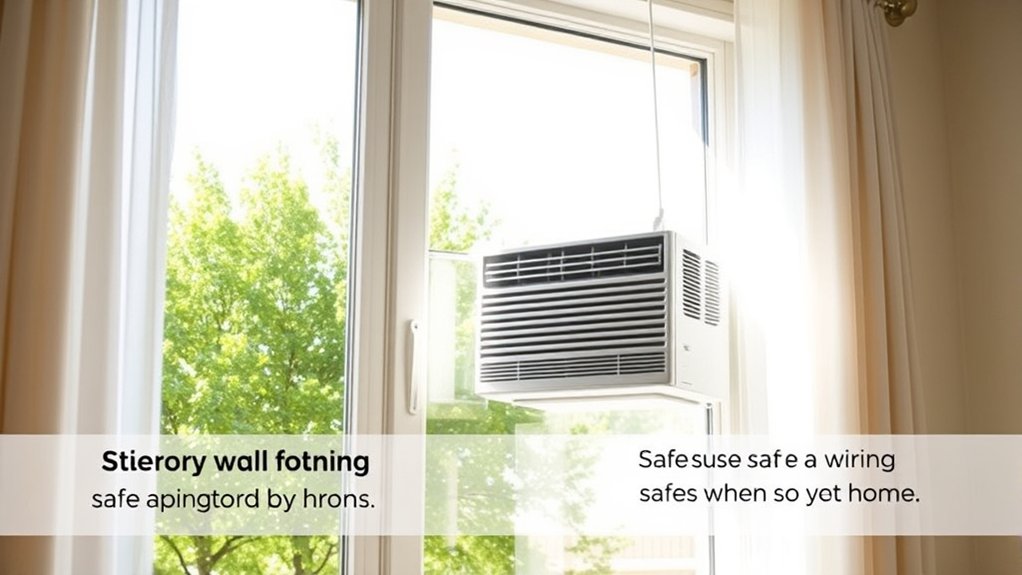
Leaving your window AC on can actually come with some safety concerns. For example, if the unit overheats or malfunctions, there’s a small chance it could pose a fire risk. And if the wiring isn’t in great shape, you might run into electrical short circuits, which could cause damage or even be dangerous.
Plus, if you leave the AC running while you’re not home or unattended, it could make it easier for someone to try and break in. So, it’s good to be aware of these potential risks and take precautions, like turning off the unit when you’re not around or making sure it’s properly maintained.
Fire Hazard Risks
While window air conditioners are generally safe if used properly, they do carry some fire risks if not installed or maintained correctly. Poorly secured units or faulty wiring can lead to electrical sparks that might ignite nearby materials.
Overheating parts inside the AC are another concern, especially if dust or debris block airflow. Leaving your AC on when you’re not home can also affect indoor air quality by circulating dust and allergens, which could increase fire risk if they accumulate.
Noise levels sometimes signal mechanical issues or loose parts that might spark a fire. Regular maintenance, proper installation, and attentive operation help reduce these risks and keep you safe, even if you leave your window AC on.
Electrical Short Circuits
Electrical short circuits are a major safety concern when your window AC runs nonstop, especially if it’s not well-maintained. Short circuits can lead to fires or damage your unit, making safety risks higher.
Power surges from faulty wiring or storms can trip circuit breakers or harm internal parts. Knowing what might cause these issues helps you stay prepared.
Here’s a quick table to understand common problems:
| Issue | Cause | Risk |
|---|---|---|
| Electrical fires | Short circuits, overheating | Property damage |
| Power surges | Faulty wiring, storms | Equipment damage |
| Component failure | Wear and tear, dirt buildup | Malfunction |
| Safety hazards | Lack of maintenance | Personal injury |
Regular inspections and upkeep can help prevent these dangers and keep your AC running safely.
Unauthorized Access Potential
If your window AC unit isn’t properly secured or monitored, unauthorized individuals could potentially access it, posing safety risks. Weak window security makes it easier for intruders to manipulate the unit or gain entry through the window.
Leaving your AC on without proper safeguards could allow someone to tamper with the controls or drain power, creating hazards or inviting theft. If the window isn’t locked tightly, it becomes a vulnerable point for unauthorized access.
To minimize risks, ensure your window security is strong—use locks, security bars, or screens. Regularly check that the unit is secure and monitor it remotely if possible.
Taking these precautions helps protect your home from potential intruders and keeps your window AC system safe when you’re not home.
How Continuous Use Affects Your Window AC’s Lifespan
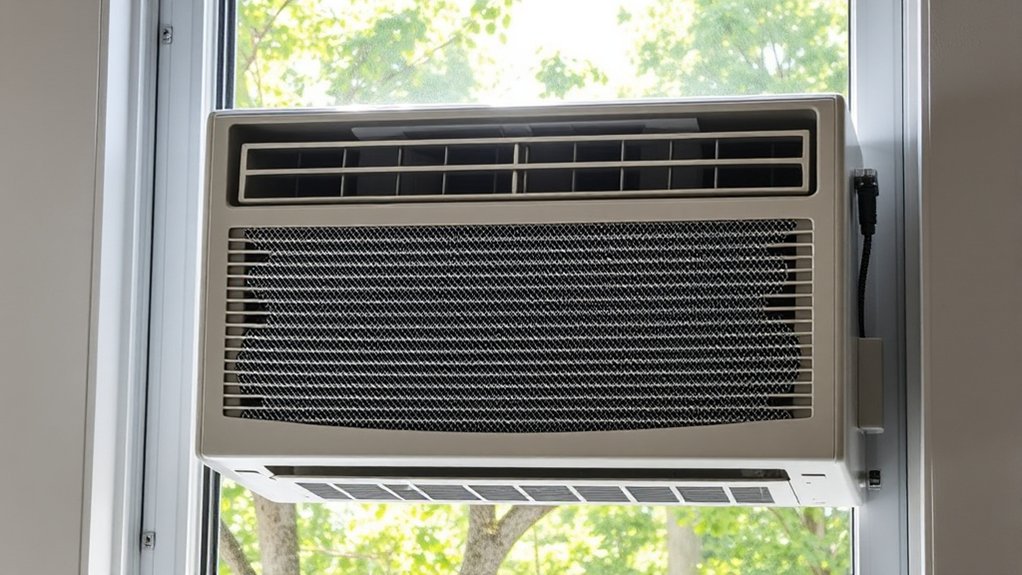
Constantly running your window AC can wear out its components faster, leading to a shorter lifespan. Continuous use puts extra strain on parts like the compressor and fan motor, increasing the risk of breakdowns. It also affects air filter maintenance, as filters clog sooner, reducing efficiency and air quality.
Furthermore, noise levels may rise over time due to worn-out parts. This makes your unit louder and more disruptive.
| Effect | Impact |
|---|---|
| Faster component wear | Higher chances of breakdowns |
| Increased noise levels | Louder operation over time |
| Frequent air filter changes | Better air quality, longer lifespan |
| Reduced efficiency | Higher energy bills, less cool air |
To prolong your AC’s lifespan, routine maintenance like cleaning filters and checking noise levels is essential. Limiting continuous operation can also help avoid unnecessary wear.
Best Practices for Running Your Window AC When You’re Away
Running your window AC efficiently while you’re away can help prevent unnecessary wear and save on energy bills. To get the most savings, set your thermostat to a higher temperature, around 78°F (25-26°C), so the unit doesn’t have to work too hard.
Using a programmable timer or smart controls lets you turn the AC on right before you get home. This way, it’s not running all the time when you don’t need it, which also helps reduce noise and keeps your home comfortable.
Keep windows and curtains closed to trap the cooled air and improve the unit’s effectiveness. Regularly cleaning or replacing filters ensures the AC runs smoothly and prevents strain that could cause damage.
How to Set Your Window AC for Safe and Efficient Use
Want to keep your window AC running safely and efficiently? Just set the thermostat to a comfy temperature—about 78°F when you’re home. It’s a good idea to do regular maintenance too, like cleaning the filters and checking for any issues. This way, you’ll prevent problems before they start.
Getting the settings right and staying on top of upkeep not only helps save energy but also keeps your unit running smoothly, even when you’re away.
Proper Temperature Settings
Setting your window AC to the right temperature is key to ensuring safety and saving energy. For the best control, aim for a setting between 75°F and 78°F when you’re away. This keeps your home comfortable without wasting power.
Here are four tips to help you set the right temperature:
- Keep the thermostat around 78°F when you’re not home to prevent unnecessary energy use.
- Avoid setting it too low, as that can strain your unit and boost energy costs.
- Use a programmable thermostat if you have one for automatic temperature adjustments.
- Check the temperature regularly to keep cooling consistent without overworking your AC.
Proper temperature settings help you save energy and protect your unit, especially when you’re away.
Regular Maintenance Checks
Regular maintenance checks help guarantee your window AC runs safely and efficiently, especially when you plan to leave it on while you’re away. Start by inspecting the air filter; a clean filter ensures proper airflow and improves cooling performance. Replace or clean it regularly to prevent dust buildup that can strain the unit.
Next, check refrigerant levels. Low refrigerant can cause the system to work harder, increasing energy use and risking damage. If refrigerant levels are low, call a professional for a refill — do not attempt to do this yourself.
Regularly clean the coils and vents to prevent dust and debris from blocking airflow. These simple checks keep your AC running smoothly, reduce energy costs, and help avoid potential breakdowns, giving you peace of mind when you’re not home.
When Should You Use a Timer or Smart Thermostat for Your Window AC?
Using a timer or smart thermostat can really boost your window AC’s efficiency and make things more convenient, especially when you’re not home. These devices help you create smart schedules, so your unit only runs when it needs to, saving energy and cutting costs.
You should think about using a timer or smart thermostat when you want to pre-cool your home before you arrive, making sure it’s comfortable by the time you get back. They’re also great if you’re away during peak hours and want to avoid wasting energy.
If you’re aiming to optimize energy use by syncing your AC with your daily routine, these tools are a good choice. Plus, they help prevent your unit from running unnecessarily overnight or when no one’s home.
Signs Your Window AC Might Be Unsafe to Leave Unattended
If your window AC starts making strange noises, smells weird, or shows any visible signs of electrical damage, it’s probably a good idea to keep an eye on it. These could be hints that something’s not quite right, and leaving it unattended might not be the safest move.
Also, if you notice excessive water leaks coming from your unit, that’s a red flag too. It could lead to water damage around your window or even pose electrical hazards. Just staying alert to these signs can help you keep your home safe and prevent bigger problems down the line.
Unusual Smells or Sounds
Unusual smells or sounds from your window AC are clear warning signs that something may be wrong and that leaving it unattended could be unsafe. These signals can affect indoor air quality and noise levels, indicating potential hazards.
A burning or smoky odor suggests electrical issues or overheating components. A musty or moldy smell could point to mold buildup inside the unit.
Loud or grinding noises often mean a mechanical failure or loose parts. Rattling sounds may indicate debris or loose screws inside the unit.
If you notice any of these signs, it’s best not to leave your window AC unattended. Addressing these concerns promptly helps ensure safety and maintains good indoor air quality.
Visible Electrical Damage
Visible electrical damage is a clear red flag that your window AC may not be safe to leave alone. Look for frayed or burnt electrical wiring, which can mean internal damage or wear.
Rust or corrosion around electrical parts suggests moisture gets in, risking short circuits. Signs like frequent breaker trips or overheating point to electrical strain.
| Warning Signs | Potential Risks |
|---|---|
| Frayed or burnt wiring | Risk of electrical shock |
| Corrosion around components | Short circuits and fires |
| Frequent breaker trips | Circuit overload, fire hazard |
| Overheating or burning smell | Electrical fires, damage |
If you notice any of these signs, it’s best to turn off the unit and call a professional.
Excessive Water Leaks
Are you noticing pools of water around your window AC or damp spots on the wall? Excessive water leaks can signal malfunctions and pose safety risks if not taken care of.
Watch for these signs:
- Continuous dripping or pooling beneath the unit
- Water overflowing from the drip pan or drain line
- Unusual moisture or mold around the unit
- Persistent dampness on nearby walls or windowsills
These issues mean your AC isn’t preventing water leaks properly. Leaving it on with these problems can cause water damage or electrical hazards.
If you see excessive leaks, it’s best to turn off the unit and get it checked. Proper maintenance helps prevent water leaks and keeps your window AC safe when unattended.
Alternative Ways to Keep Your Home Cool When You’re Not Home
When you’re not home, keeping your home at a comfortable temperature can be tricky. Luckily, there are some good alternatives to leaving your window AC on all the time.
Using ceiling fans or portable fans to circulate air can help keep rooms feeling cooler without racking up high energy bills. Indoor plants are also great—they boost air quality and naturally cool your space by releasing moisture and absorbing heat.
Closing blinds or curtains during the hottest parts of the day stops sunlight from heating your home, which reduces the need for cooling. You might also set your thermostat higher or get a programmable one that adjusts the AC based on your schedule.
These strategies not only make your home more comfortable but also help save energy and lower your utility bills. Combining these methods keeps your place cooler when you’re away, with less reliance on continuous AC use.
Common Mistakes to Avoid When Operating Your Window AC Unattended
Operating your window AC unattended can lead to costly mistakes if you’re not careful. One common error is neglecting regular window maintenance, which can cause dust buildup and reduce efficiency. Poor maintenance can also impact air quality by circulating allergens or mold.
Be cautious of these pitfalls:
- Ignoring filter cleaning can decrease airflow and worsen air quality.
- Forgetting to check for debris or damage might cause overheating or leaks.
- Leaving it on without monitoring climate settings risks wasting energy or damaging the unit.
- Not inspecting seals or weather stripping can affect cooling performance and air quality.
Frequently Asked Questions
Can Leaving My Window AC on Drain My Electricity Bill Excessively?
Yes, leaving your window AC on when you’re not home can significantly increase your energy bills. The unit keeps running unnecessarily, wasting electricity even if the room is already cooled.
To save money, try setting a timer or using a smart thermostat to turn it off when you’re away. This helps cut down on energy waste and keeps your electricity costs more manageable.
Does Leaving My Window AC on Affect Indoor Air Quality?
Leaving your window AC on can impact indoor air quality by helping to reduce dust and allergens through air filtration, making the air cleaner.
However, it might increase noise levels, which could disturb your comfort or sleep if you’re nearby.
While it helps keep a steady temperature, think about these factors, especially if you’re away, to balance the air quality benefits with noise concerns and energy use.
Are There Specific Types of Window AC Units Better for Unattended Operation?
Some window AC units are better for unattended operation, especially energy-efficient models with low noise levels. Look for units with programmable thermostats and timers to help you save energy and keep noise down while you’re away.
These features make it easier to optimize your cooling without constant supervision. They can also help you save on electricity bills and prevent disturbances.
Choosing an energy-efficient, quiet model ensures your space stays comfortable even when you’re not home. It gives you peace of mind knowing everything is running smoothly.
How Does Outdoor Weather Impact Leaving My Window AC On?
Outdoor weather really impacts leaving your window AC on. When it’s hot outside, the unit has to work harder, which can make it less energy-efficient and boost your energy bills.
Humidity also plays a role, making the AC run longer to keep things cool. Plus, extreme weather can cause noise levels to go up, which might disturb you or your neighbors.
To save energy and keep noise down, try using a programmable thermostat or timer. Also, make sure your AC is well-maintained for different weather conditions.
Can Leaving My Window AC on Cause Mold or Humidity Issues?
Leaving your window AC on can sometimes cause ventilation issues, leading to mold or humidity problems. When the unit runs nonstop, it might not let in enough fresh air, trapping moisture and creating a mold-friendly environment.
To avoid this, make sure your space is properly ventilated. Consider turning off the AC or setting a timer when you’re away. This helps keep humidity levels in check and prevents mold from forming.
Conclusion
Leaving your window AC on when you’re not home is like steering a ship through calm, unseen waters. You might save time and effort, but it comes with risks.
By following best practices, using timers, and keeping an eye on safety signs, you can keep your home cool without drifting into trouble.
Think of it as balancing on a tightrope. Steady steps and mindful choices ensure you reach your destination safely and comfortably.
If you’re wondering whether leaving your window AC on when not home is a good idea, consider these tips to make it safer and more efficient.