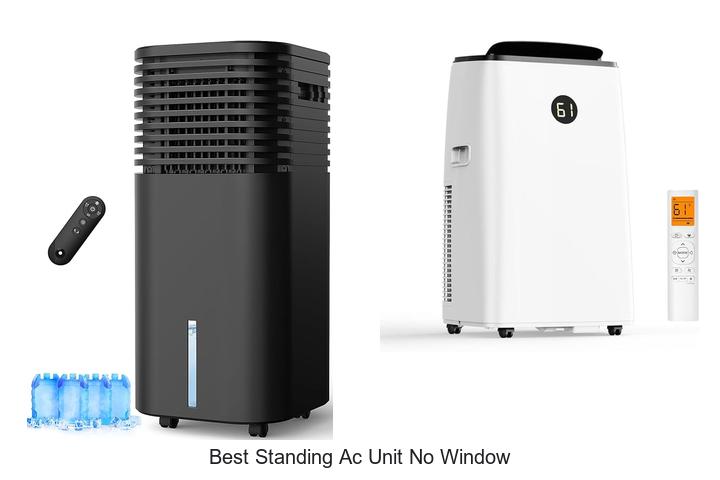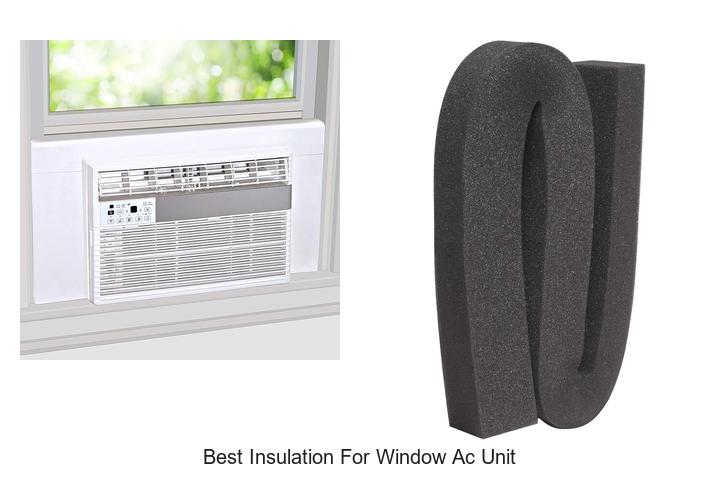
How You Use a Window AC Without a Window
If you’re trying to stay cool without a window AC unit or your space lacks a traditional window, you’re not alone. Many people struggle with how to effectively cool their rooms when the usual options aren’t available.
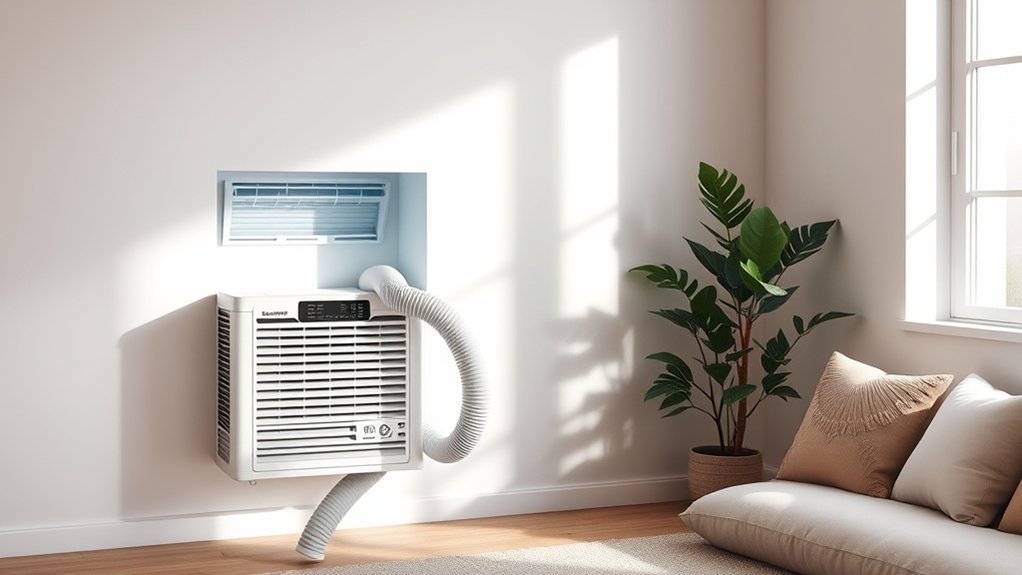
To use a window AC without a window, you need to redirect hot air outside through an alternative opening like a wall or ceiling vent. Properly position and seal the unit to maximize cooling efficiency, and use ducts or hoses to channel air outdoors.
Improve airflow with fans, seal gaps, and ensure safe wiring. Want to uncover detailed steps and creative solutions? Keep exploring to find out how to make your space comfortably cool.
Key Takeaways
- Vent the AC through an exterior wall or ceiling using specialized ducts or adapters.
- Seal gaps around the unit and vent to prevent cool air from escaping and external heat from entering.
- Place the unit centrally and high for efficient cooling and quieter operation.
- Use insulated ducts and weatherproof outlets to maintain airflow and energy efficiency.
- Regularly inspect and maintain vents and seals for optimal performance without a window.
How Can You Cool a Space Without a Window?
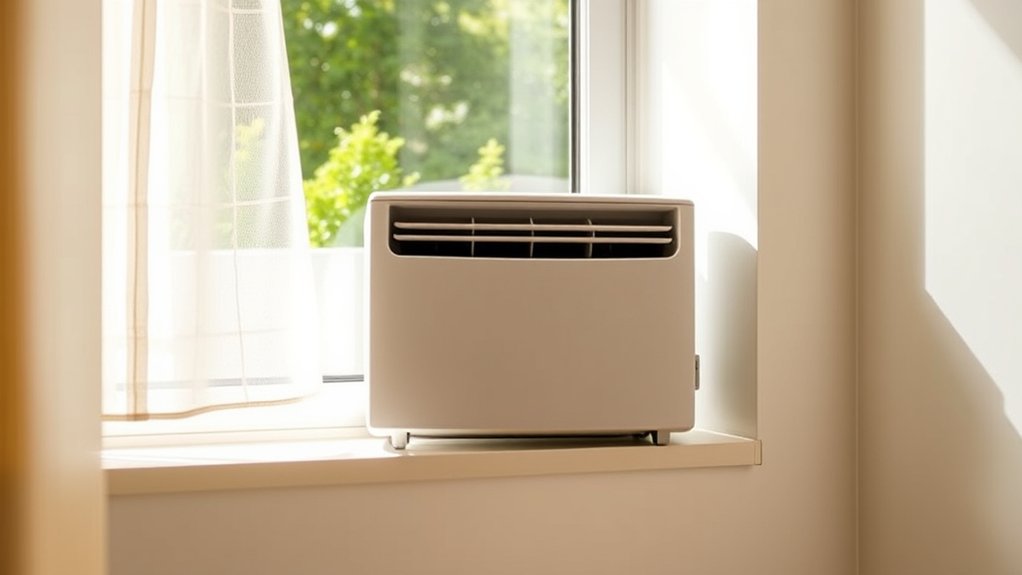
Have you ever wondered how to cool a space that doesn’t have a window? Without traditional airflow, you need alternative methods to stay comfortable.
Portable or ductless air conditioners are great options because they’re energy-efficient and easy to install. These units don’t need a window for exhaust; instead, they vent through a wall or ceiling, which helps save energy.
To get the most out of your cooling system, insulate the space well and seal any gaps. This keeps warm air out and cooled air in, making everything more efficient.
Using sound-absorbing materials can also help reduce noise and make the environment more comfortable. Keep doors closed to contain the cooled air and consider using fans to improve circulation without adding noise.
Regular maintenance keeps your AC running smoothly and efficiently. By choosing the right unit and optimizing insulation, you can create a cooler, quieter space without needing a window.
This makes your cooling solution both effective and energy-conscious.
Choosing the Best Placement for Your Window AC
Selecting the ideal spot for your window AC unit is key to getting the best cooling and efficiency. Place it where it can easily draw in cool air and push out hot air, ideally near a window or vent.
To save energy and keep noise down, avoid spots with a lot of foot traffic or objects that might block airflow.
Check out the table below for some helpful placement tips:
| Placement Tip | Why It Matters |
|---|---|
| High, central location | Ensures even cooling and quieter operation |
| Away from heat sources | Prevents strain and boosts efficiency |
| Near an exhaust vent | Helps get rid of hot air more effectively |
How to Set Up Ventilation to Exhaust Hot Air
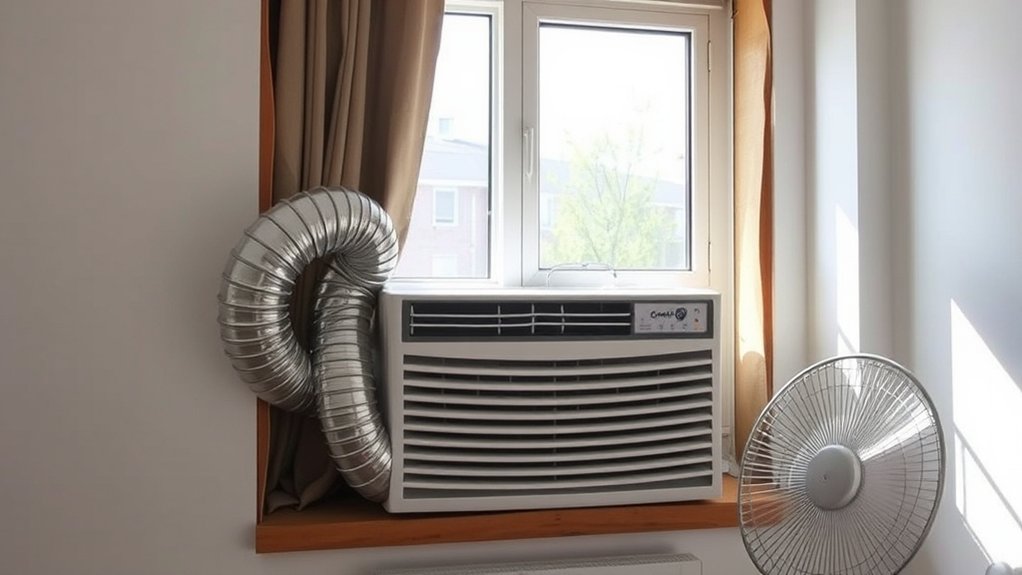
If you want to keep your space cool, it’s really important to set up proper ventilation to get rid of that hot air. Think about where you place your exhaust vents—making sure they’re in the right spots can make a big difference. You’ll want to use ducts that direct the hot air outside smoothly, so it doesn’t just hang around inside.
And don’t forget, having a good airflow balance is key. It helps your air conditioner work more efficiently and prevents heat from getting trapped indoors. So, a little planning with your vents and ducts goes a long way in keeping things comfortable.
Proper Ventilation Placement
Where should you position your ventilation to effectively exhaust hot air? To get the most energy efficiency and keep noise down, placement really matters. Proper ventilation helps hot air escape smoothly without messing up your space.
Here are some helpful tips:
- Place vents near the ceiling since hot air rises naturally, making it easier for it to escape.
- Use insulated ducts to stop heat from sneaking in and to save energy.
- Keep vents away from areas where noise matters, so sound doesn’t travel easily.
- Make sure vents are sealed tightly to prevent leaks that could reduce cooling power.
Use Exhaust Ducts Effectively
Setting up your exhaust ducts properly ensures hot air is expelled efficiently from your space. Correct installation guarantees good airflow, preventing hot air from building up and helping your cooling system work better.
To get the most airflow, position the ducts so hot air can escape outside without any obstacles. Seal all connections tightly to avoid leaks, and use flexible ducts if you need to navigate tight spaces.
Here’s a quick guide:
| Step | Key Point | Benefit |
|---|---|---|
| Duct Placement | Install ducts high for hot air | Faster removal of hot air |
| Seal Connections | Use tape or clamps to seal connections | Prevent leaks, improve airflow |
| Duct Length | Keep ducts short and straight | Boost airflow efficiency |
| Vent Location | Place outside exhaust vent away from windows | Better hot air expulsion |
| Regular Checks | Inspect for blockages or leaks | Maintain optimal performance |
Following these tips will help your exhaust system work smoothly and keep your space cool.
Maintain Airflow Balance
When setting up ventilation to exhaust hot air effectively, it’s important to balance airflow between intake and exhaust points. Proper airflow helps hot air exit smoothly while fresh air comes in, keeping things comfortable.
To keep the airflow balanced, start by adjusting exhaust vents so they match the intake flow. This prevents any pressure imbalances that could cause issues.
You can also use noise reduction methods like sound blankets or mufflers to cut down on airflow noise. Installing dampers or adjustable vents gives you more control over how much air flows through.
Lastly, make sure to regularly inspect and clean your ducts. This helps prevent restrictions and keeps noise levels down, ensuring everything runs efficiently.
Sealing Your Space for Better Cooling Efficiency
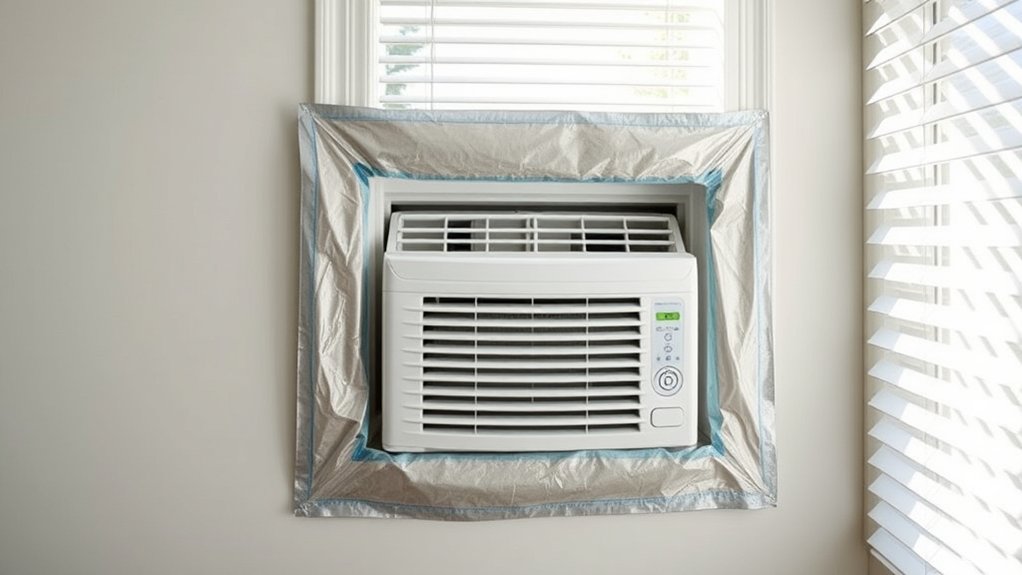
A well-sealed space is key to getting the most out of your window AC. Proper insulation around your windows stops warm air from sneaking in and cool air from escaping, making your AC work more efficiently.
Sealing and insulating your space boosts window AC efficiency and keeps your room cooler longer.
Check for gaps around doors, windows, and vents, and seal them with weatherstripping or foam tape. This reduces heat transfer and keeps your room cooler for longer.
Sealing your space also helps cut down on outside noise, making your environment more peaceful. Use draft stoppers on door gaps and seal any cracks or openings that could let in noise or heat.
During the hottest parts of the day, keep curtains or blinds closed to block sunlight and boost insulation.
Focusing on window insulation and sealing leaks creates a more efficient cooling space, saving energy and easing your AC’s workload.
A tightly sealed room helps your AC work smarter, not harder.
Using Ducts or Hoses to Redirect Air Outside
Using ducts or hoses to redirect hot air outside can really boost your cooling setup, especially if you don’t have a window. Proper duct installation helps vent hot air away from your space, making it cooler and more comfortable.
Start by choosing the right hose—look for flexible, durable, and heat-resistant options. Measure everything carefully to ensure your hose length fits your setup without kinks or bends that could block airflow.
Securely attach the hose to your AC’s exhaust outlet, making sure it’s tight to prevent leaks. Then, direct the other end outside through a vent, window opening, or a custom hole. Position it to expel hot air efficiently.
Picking the right hose and installing ducts properly are key for maximum airflow and cooling power. This simple upgrade makes your air conditioner much more effective, especially in windowless spaces.
Electrical Safety Tips for Non-Standard AC Installations
When you’re installing a window AC in a way that’s not quite standard, it’s really important to keep safety in mind. First off, make sure your grounding is solid. Proper grounding helps prevent shocks if there’s a fault.
Next, pay attention to your power sources. Use a reliable outlet that’s rated for the AC’s power needs. Avoid overloading circuits, and if you’re unsure, it’s a good idea to get a professional to help out.
Finally, be careful with your wiring. Secure all connections properly to avoid any loose wires or short circuits that could lead to fires. Always double-check everything before turning it on. And if you’re ever unsure about any part of the process, don’t hesitate to ask a professional for advice — better safe than sorry!
Proper Grounding Techniques
Even when installing a window AC unit in a non-standard way, proper grounding is essential for safety. It helps prevent electrical shocks and reduces risks related to poor air quality and excessive noise.
To ensure correct grounding:
- Use a grounded outlet or install a grounding rod if needed.
- Check that the power cord has a three-prong plug and that the outlet is properly grounded.
- Avoid using extension cords or adapters, as they can compromise safety.
- Regularly inspect grounding connections for corrosion or damage.
Proper grounding ensures the AC unit runs safely, maintains good air quality, and keeps noise levels down. Always prioritize grounding to protect yourself and your home’s electrical system during unconventional installations.
Reliable Power Sources
Ensuring a reliable power source is key when installing a window AC in a non-standard way. Unstable or improper connections can cause electrical hazards, so it’s important to be careful.
Use a dedicated, grounded outlet to prevent overloads and protect your equipment. Make sure your power supply matches the AC’s energy efficiency ratings to avoid wasting energy and overheating.
A stable power source helps reduce noise caused by voltage fluctuations, keeping your unit quieter. Avoid sharing circuits with high-power appliances, which can cause dips or surges.
If you need to use extension cords, choose high-quality ones rated for your AC’s wattage. Never overload them, as this can be dangerous.
A dependable power source not only keeps your AC running smoothly but also boosts safety and helps the unit last longer.
Secure Wiring Practices
When installing a window AC without a traditional window, securing your wiring is essential to prevent electrical hazards. Proper wiring ensures safety, improves energy efficiency, and minimizes noise that could disrupt your space. Here are four key tips:
- Use weatherproof, grounded outlets to prevent electrical shocks.
- Keep wires neat and raised to avoid damage and reduce noise transfer.
- Install a dedicated circuit to avoid overloads and improve energy efficiency.
- Secure wires with cable clips or conduits to prevent accidental disconnection or wear.
Following these practices helps maintain safe, quiet operation while optimizing your AC’s energy use. Proper wiring not only protects you but also extends the lifespan of your unit, ensuring it runs smoothly without unnecessary noise or risk.
Troubleshooting Common Problems With Your Non-Window AC Setup
Dealing with common problems in your non-window AC setup can be frustrating, but many issues have simple solutions. If your unit isn’t cooling well, check that air filters are clean and not blocked. Dirty filters make your AC less efficient and use more energy.
Clean air filters to improve cooling and efficiency in your non-window AC.
Poor airflow can cause uneven cooling too. Make sure vents and ducts are clear of obstructions. If your AC is making loud noises, look for loose parts or debris that might cause rattling or vibrations. Tightening screws or cleaning fans usually fixes the problem.
Noise levels can also be affected by where you place your unit. Putting it on a stable surface and away from walls helps reduce vibrations. To save energy, set the thermostat at an ideal temperature and avoid constantly changing it.
Regular maintenance like cleaning filters and checking components keeps your AC running smoothly. This not only improves cooling but also lowers energy bills and reduces disruptive noise.
Enhancing Cooling With Fans and Accessories
Placing fans in the right spots can really help improve your cooling. Try to position them so they create a steady airflow across your space—that way, everything stays cooler and more comfortable.
You can also add some accessories like vent seals or reflective curtains. These little things help trap the cool air inside and block out the heat from outside. It’s amazing how small tweaks in where you put your fans and what accessories you use can make a pretty big difference in keeping your space comfortable.
Optimal Fan Placement
Have you thought about how placing fans strategically can really boost your cooling? Proper placement helps maximize airflow, save energy, and keep noise down.
Here are four simple tips to get your setup just right:
First, position fans near your window AC outlet to help circulate cool air more effectively.
Next, use oscillating fans to spread the air evenly across the room, making everyone more comfortable.
Place fans on opposite sides of the room to create a cross-breeze, which enhances cooling.
Finally, lift fans slightly off the ground to reduce noise and improve airflow, helping keep things quieter.
Using Cooling Accessories
Using cooling accessories like fans and venting options can really boost your room’s comfort, especially when a window isn’t available. Fans come in various colors, so you can match your decor while getting extra airflow.
Choose quieter models to keep noise levels down and maintain a peaceful environment. Venting accessories, such as exhaust hoses or ducts, help redirect warm air outside, making your AC more efficient.
By combining these accessories, you create a more effective cooling system without adding noise or clutter. Proper placement of fans can improve airflow and reduce hot spots, helping the room cool down faster.
Look for accessories with adjustable settings so you can customize your comfort level. Overall, adding these accessories maximizes your cooling potential, even if you can’t install a window unit.
Are There Permanent Alternatives to Window ACs in No-Window Spaces?
If you’re trying to cool a space without a window, there are definitely permanent alternatives to traditional window air conditioners. These options tend to be more efficient and less intrusive.
- Portable units: These are standalone systems that you can move easily. They don’t need a window for installation, making them perfect for no-window spaces.
- Ductless systems: Also called mini-split systems, they have an indoor unit mounted on the wall connected to an outdoor compressor. They provide strong cooling without needing window access.
- Through-the-wall units: Installed directly into a wall, these units give you a permanent cooling setup without a window.
- Whole-house cooling: Central air systems circulate cooled air through ductwork, so you don’t need individual window units at all.
These options give you permanent cooling solutions that don’t rely on window access, offering more flexibility and efficiency.
Final Tips for Safe and Effective Cooling Without a Window
Cooling a space without a window can be effective and safe if you follow a few key guidelines. First, make sure your setup maximizes energy efficiency by sealing leaks and insulating the area. This prevents cool air from escaping and helps cut down on energy costs.
Use a programmable thermostat to regulate temperatures and avoid overcooling. It also helps reduce noise by preventing unnecessary operation. Place the AC unit on a stable, vibration-free surface to keep noise levels low and prevent damage.
Remember to regularly clean filters and coils to keep everything running smoothly and efficiently. Consider adding fans alongside your AC to improve airflow and distribute cool air evenly. Always follow the manufacturer’s instructions for safety, especially if you’re venting through other openings.
Lastly, keep the space well-ventilated to prevent humidity buildup. These steps will help you stay cool, save energy, and keep things safe and quiet.
Frequently Asked Questions
Can I Install a Window AC Unit in a Wall Instead of a Window?
Yes, you can install a window AC unit in a wall instead of a window, but there are some installation challenges.
You need to check if the wall can support the weight of the unit and create a secure opening.
Ventilation options are important; you’ll have to cut an opening for the exhaust and ensure proper airflow.
It’s a good idea to consult a professional to make sure the installation is safe and the cooling works effectively.
What Are the Best Portable AC Units for Non-Window Setups?
A stitch in time saves nine, so choosing the best portable AC units for non-window setups is essential. Look for models with a portable compressor and evaporative cooling features, which improve efficiency and comfort.
Brands like Honeywell and Black+Decker offer reliable options that are easy to move and install. These units are perfect for spaces without windows, providing effective cooling without the hassle of permanent installation.
How Much Power Do Non-Window AC Solutions Typically Consume?
Non-window AC solutions usually use between 800 and 1,500 watts, depending on their size and cooling capacity.
It’s a good idea to look at their energy efficiency ratings, like SEER or EER, to get a better idea of how much power they really use.
Units with higher efficiency tend to use less power, which can save you money on your electricity bills.
Keep in mind that portable and ductless units might use a bit more power than traditional window units, but they offer more flexibility and convenience for setups that don’t have windows.
Are There Specialized Adapters for Connecting Hoses to Different AC Models?
Did you know that most portable AC hoses are compatible with over 80% of models?
Yes, there are universal adapters designed specifically for connecting hoses to different AC models, guaranteeing hose compatibility.
These adapters help you avoid leaks and ensure a snug fit, no matter what brand or design your unit has.
How Do I Maintain Safety When Using DIY Cooling Solutions?
To stay safe with DIY cooling solutions, prioritize ventilation tips and safety precautions. Make sure you have proper airflow by opening windows or vents nearby, and avoid blocking exhaust paths.
It’s also important to regularly check your setup for leaks or electrical issues. Never leave your equipment unattended while it’s running.
Use insulated hoses and secure connections to prevent accidents. Always follow the manufacturer’s instructions and consider consulting a professional to make sure your cooling system is safe and works well.
Conclusion
Cooling a space without a window is like trying to catch sunlight in a jar—you need the right setup and a bit of ingenuity.
By choosing the best placement, sealing your space, and using ducts or fans, you can turn your room into a cool oasis even without a window.
Keep experimenting and troubleshooting to find what works best for you.
With patience, you’ll create a comfortable environment that feels as invigorating as a breeze on a hot day.
Using a window AC without a window is possible with some clever adjustments and the right approach.