10 Steps to Easily Drain Your Window AC Unit
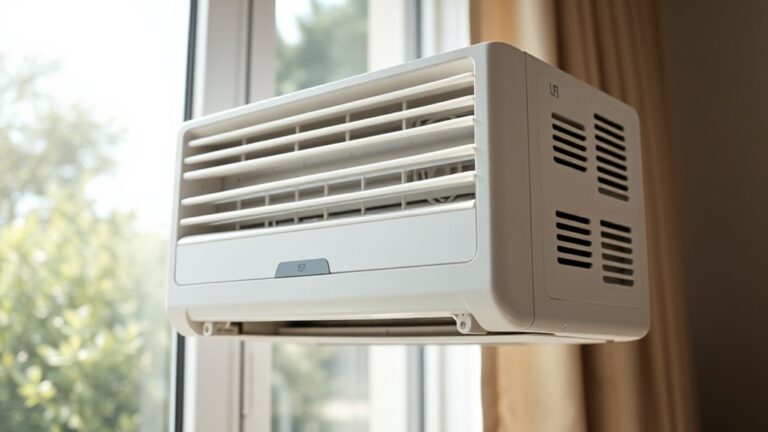
Many people struggle with keeping their window AC units running smoothly, especially when it comes to drainage issues. If your AC isn’t draining properly, it can lead to leaks or mold. Don’t worry—you’re not alone, and there’s an easy fix.
To easily drain your window AC unit, start by turning off and unplugging it for safety. Find the drain pan and drain hole, then carefully remove any access panels or the drain pan itself.
Clear out clogs or debris from the drain path, and clean the pan with soap and disinfectant. Reassemble everything tightly and test the system for leaks.
Regular maintenance helps prevent issues, so follow these steps for smooth operation and stay on top of the process for better results.
Key Takeaways
- Turn off and unplug the AC unit before starting maintenance for safety.
- Locate and access the drain pan and drain hole carefully.
- Clean out debris and standing water from the drain pan and line regularly.
- Tilt the unit slightly downward to promote proper drainage.
- Reassemble all components securely, then test the drainage system with water.
Get Ready: Tools and Safety Gear for Draining Your Window AC
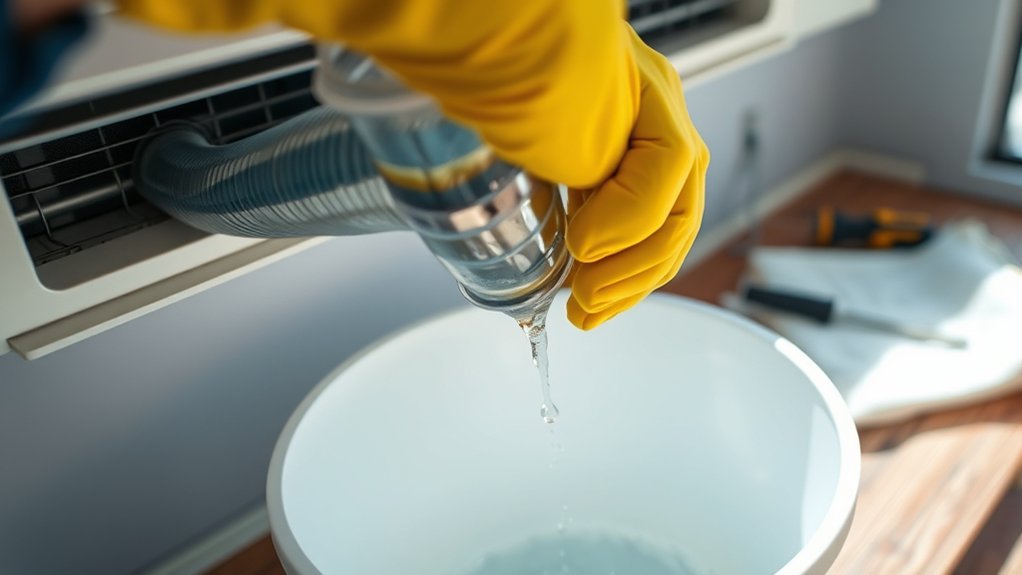
Before you start draining your window AC, it’s important to gather the right tools and safety gear. Being prepared makes the process safer and more effective, and helps keep your unit running efficiently during seasonal maintenance.
You’ll want a plastic container or pan to catch the draining water, a screwdriver to remove panels, and a funnel to guide the water safely. Wearing rubber gloves and safety goggles will protect you from splashes.
Having a shop vacuum or turkey baster nearby can help remove any remaining water from the drain pan. Keeping your tools organized will save time and reduce the risk of damaging parts.
Taking these steps not only improves safety but also ensures your AC runs smoothly afterward. Regular draining prevents mold and mineral buildup, which can extend your unit’s lifespan.
Being well-prepared makes the whole process quicker, safer, and more effective. Proper maintenance helps your window AC operate at peak performance all year round.
Turn Off and Unplug Your AC Unit Safely
To guarantee your safety and prevent electrical hazards, always turn off and unplug your window AC unit before starting any maintenance. This step is essential to protect yourself from electrical shocks and keep the unit safe during draining.
Turning off the AC also helps improve energy efficiency by stopping unnecessary power use while you’re working. Plus, unplugging the unit reduces noise levels, making the process quieter and more manageable.
Once disconnected from the power source, you eliminate the risk of accidental activation, which could cause injury or damage. Remember, even if the unit is off, residual energy can sometimes remain, so unplugging is a key safety step.
This simple action sets the foundation for a safe and effective draining process. It allows you to work comfortably without worries about electricity or loud interruptions.
Find the Drain Pan and Drain Hole on Your Window AC
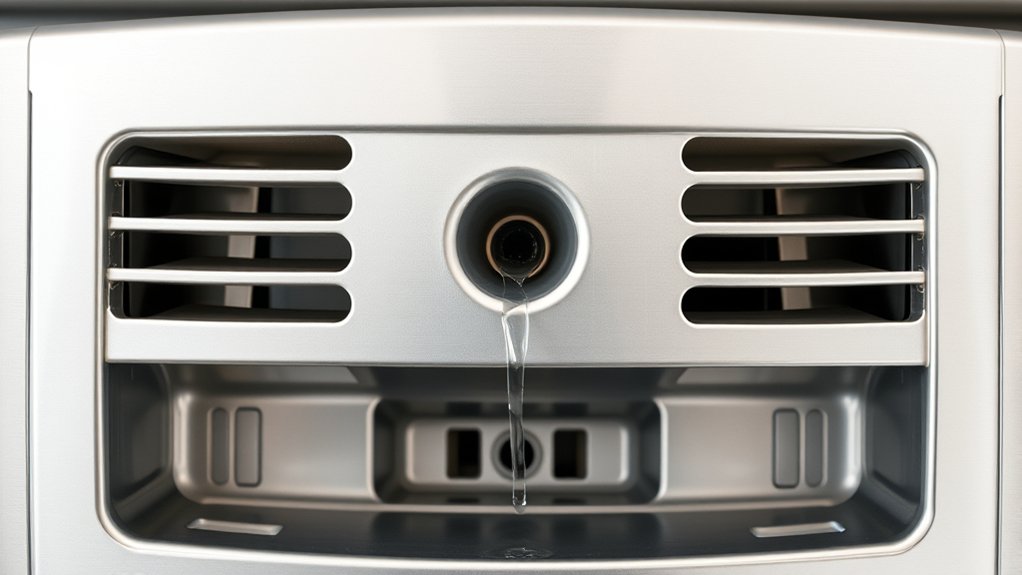
Start by locating the drain pan, which is usually at the bottom of your window AC unit, and identify the drain hole, typically a small opening near the back or side. The drain pan collects condensation caused by indoor humidity, helping maintain better air quality and preventing mold growth.
Once you’ve found the drain hole, check if it’s clear of debris or buildup. This small opening lets excess water escape, ensuring your unit works efficiently. Clearing and maintaining this drain system helps prevent leaks and improves air quality by reducing excess moisture that can lead to mold or musty odors.
Be gentle when inspecting the drain hole, and avoid forcing anything inside. Properly locating the drain pan and hole is essential for smooth drainage, keeping your AC running well, reducing indoor humidity, and supporting healthier air in your space.
Remove the Drain Pan or Access Panel to Access the Drain System
Gently remove the drain pan or access panel from your window AC unit to reveal the drain system. This step is important for drain pan maintenance and gives you a clear look at the drain area. Be careful when detaching the panel—don’t force it, so you avoid damage.
Once you’ve removed the panel, you’ll have easy access to the drain components below. Take your time and handle everything gently to prevent any unnecessary repairs or damage.
Here are three key tips:
- Check the panel for damage during removal to prevent future leaks.
- Clean around the drain pan to remove dust and dirt that could cause clogs.
- Inspect the drain opening for debris or obstructions that might block proper drainage.
Removing the drain pan or access panel makes it easier to perform maintenance and prepare your AC unit for draining. Stay gentle and precise to keep everything working smoothly.
Clear Out Clogs and Remove Debris From the Drain Path
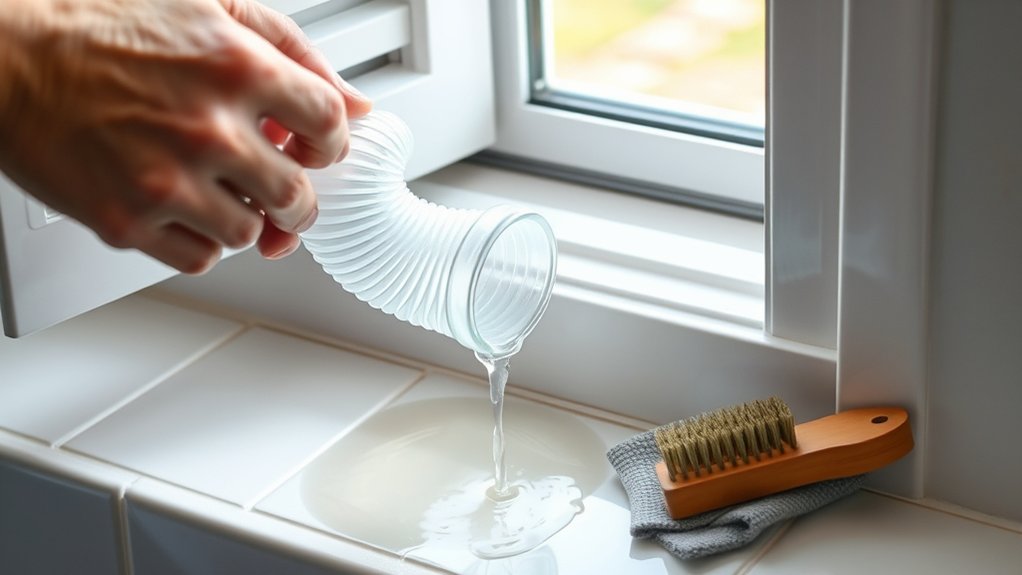
It’s a good idea to check your drain line regularly so you can catch any clogs before they become a big problem. If you notice any blockages, make sure to clear them out completely—using a brush or some compressed air can do the trick. Keeping the drain path free of debris helps ensure everything drains smoothly. When the drain is clear, you’ll prevent water from backing up and avoid possible damage to your unit.
Inspect Drain Line Regularly
Regularly inspecting your drain line helps prevent clogs and water damage, keeping your AC running smoothly and improving indoor air quality. When you check the drain line, look for debris or mold buildup that could block water flow. Use a flashlight to spot any obstructions and clear them out quickly.
Proper drain maintenance also stops mold and bacteria from thriving, which can affect the air inside your home. To stay ahead, try these simple steps:
- Flush the drain line with a mixture of water and vinegar to clear minor clogs.
- Check for cracks or leaks that could become worse over time.
- Keep the drain area clean to prevent debris from building up.
Regular drain line checks help your AC perform at its best and create a healthier environment inside your home.
Remove Blockages Thoroughly
When removing blockages from your drain line, it’s important to thoroughly clear out any clogs and debris blocking water flow. Start by turning off the unit and unplugging it for safety.
Check the drain line for visible obstructions and use a long, flexible brush or pipe cleaner to dislodge debris. At the same time, make sure your air filter is up to date because a dirty filter can cause clogs.
Clear out any standing water or buildup in the drain pan. Once everything is clear, flush the drain line with a mixture of water and vinegar to prevent future clogs.
Regular maintenance like this keeps your AC running smoothly, prevents water damage, and ensures electrical safety.
Tilt or Position the AC to Help Drain Excess Water
To make sure your AC drains properly, you should tilt it slightly downward toward the drain hole. This helps water flow out easily instead of pooling inside. Just double-check that the unit is positioned the right way so everything drains smoothly.
If water isn’t draining well, it can cause leaks or even damage your AC. So, taking a moment to tilt it correctly can save you a lot of headaches later on.
Adjust Tilt to Drain
Adjusting the tilt of your window AC unit is key for proper drainage. When you tilt it slightly, excess water flows toward the drain pan, helping to prevent leaks and water buildup.
Getting the right tilt also improves airflow, making your unit run more efficiently and quietly. To do this effectively, follow these simple steps:
- Slightly tilt the unit downward toward the drain hole to help water drain quickly.
- Make sure the tilt isn’t too steep, as that could cause noise or make the unit unstable.
- Check that the tilt directs water away from electrical parts to reduce risks and noise during operation.
Ensure Proper Unit Positioning
Proper positioning of your window AC unit is key to making sure it drains properly and doesn’t leak. Make sure the unit sits slightly tilted downward toward the drain side. This tilt helps excess water flow naturally out of the drainage opening.
Check the window alignment to ensure the unit is securely seated and stable. This prevents shifts that could mess with proper drainage. If needed, use shims or leveling blocks to get the right tilt.
Avoid positioning the unit too straight or tilting it too much, as either can cause water to pool or leak inside. Proper window alignment and thoughtful placement help water drain smoothly.
This simple step reduces the risk of overflow or damage and keeps your AC running efficiently.
Check for Water Flow
Ensuring water flows smoothly out of your window AC unit starts with the right positioning. Tilt or adjust your unit slightly to promote ideal water flow and improve drain efficiency. Proper positioning helps prevent water from pooling inside the unit, reducing leaks or mold growth.
To get the best drain performance:
- Tilt the unit slightly downward to help water drain out easily.
- Check the drain pan’s angle and make sure it directs water toward the outlet.
- Keep the area around the drain clear of debris or anything that could block water flow.
Empty and Clean the Drain Pan for Better Performance
To keep your window AC unit running efficiently, it’s important to regularly clean and maintain the drain pan. The drain pan collects water from the cooling process, preventing excess moisture from damaging the unit.
Over time, debris, dust, and mold can build up in the drain pan. This can block water flow and lead to leaks or mold growth.
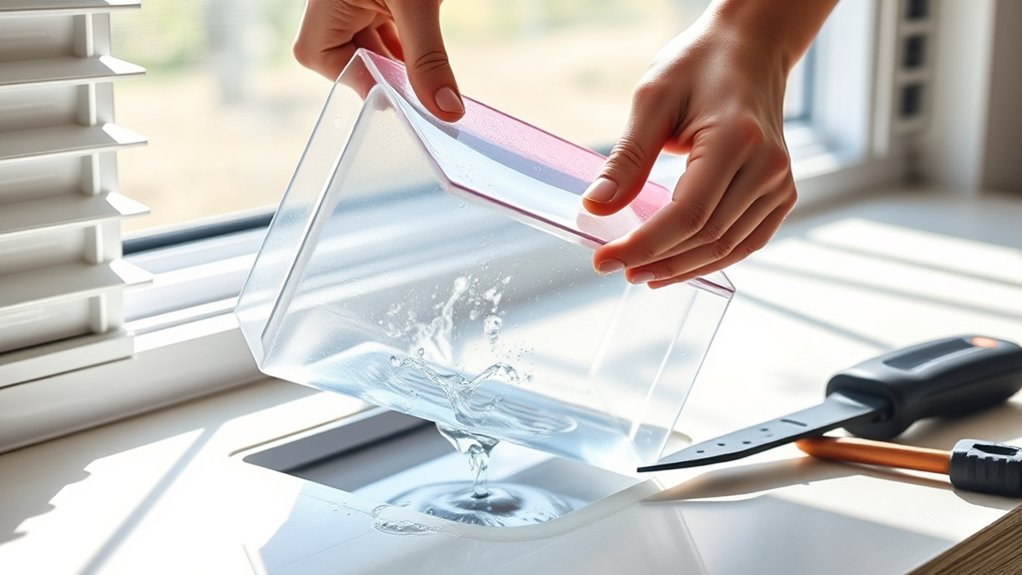
To clean it, turn off your AC and find the drain pan beneath the evaporator coil. Carefully remove any standing water and wipe the pan with a cloth or sponge soaked in a mixture of mild soap and water.
Use a brush to scrub away stubborn dirt or mold. Rinse thoroughly and dry completely before putting it back in place.
Regular cleaning helps ensure proper water collection and prevents clogs that could affect your AC’s performance. Keeping the drain pan clean not only boosts efficiency but also helps extend the lifespan of your unit.
Reassemble Your Window AC and Check for Leaks
After cleaning the drain pan, carefully reassemble the AC unit by placing the components back in their original positions. Make sure all parts fit snugly to prevent air leaks, which can affect indoor air quality.
Once reassembled, check for any visible gaps or loose screws that might compromise the seal. Proper reassembly helps keep energy efficiency high by preventing cool air from escaping and warm air from entering.
Ensure all screws are tight and seals are intact to maintain energy efficiency and prevent air leaks.
To ensure a secure fit, try these steps:
- Tighten all screws and fasteners to avoid leaks that reduce cooling performance.
- Inspect the filters and seals for any damage or gaps that could impact indoor air quality.
- Confirm that the drain pan is correctly positioned to prevent future leaks and water damage.
Test Your Drain System to Ensure Proper Functioning
Before you finish, it’s important to test your drain system to make sure it’s working properly.
Start by pouring a small amount of water into the drain pan or drain opening. Watch to see if the water flows freely through the drain hose and exits outside.
If water backs up or drains slowly, you might need to clear any blockages. While doing this, check that your air filter maintenance is up to date since a clogged filter can affect drainage efficiency.
Also, verify your thermostat calibration to ensure your AC is cooling properly. This can influence condensation levels and drainage.
Properly functioning drainage prevents water buildup that can cause leaks or mold. If the drain isn’t working as it should, clear any debris or obstructions.
Regular testing helps keep your AC running efficiently and prolongs its lifespan, keeping your space comfortable and dry.
Maintain Your AC Drain System Regularly to Prevent Clogs
To keep your AC drain running smoothly, it’s a good idea to check the drain pan regularly. Just take a quick peek to see if there’s any standing water or debris hanging around. If you spot anything, clear it out before it turns into a bigger problem.
Also, don’t forget to clear out any blockages you find along the way. Using the right cleaning solutions can really help prevent buildup and keep things flowing freely. Staying on top of these little tasks can save you from dealing with clogs later on and make sure your AC unit keeps working efficiently all season long.
Check Drain Pan Often
Regularly inspecting your drain pan is essential to keep your AC drain system working properly. A clean drain pan helps prevent mold, bacteria, and potential leaks that can reduce energy efficiency.
To keep it in good shape, check for standing water daily to catch clogs early. Clean the pan with a mild detergent and disinfectant weekly to prevent mold buildup.
Also, make sure your air filter is maintained properly. A clogged filter can increase moisture and put extra strain on the drain system.
Clear Blockages Regularly
Clearing blockages in your AC drain system is essential for preventing water backups and mold growth. When your drain gets clogged, excess moisture can build up, leading to poor air quality and increased mold risk.
Regularly inspect the drain line for debris, algae, or dirt that might cause obstructions. Use a wet/dry vacuum or a pipe cleaner to clear out any impediments.
Keeping the drain clear ensures proper drainage, which maintains good air quality in your space and prevents mold from thriving. Don’t forget to check the drain pan too, as stagnant water can also contribute to mold growth.
Use Proper Cleaning Solutions
Using the right cleaning solutions is key to keeping your AC drain system free from buildup and clogs. Picking effective cleaners helps maintain your drain and avoids future problems.
Here are three essential tips:
- Use a mild detergent or vinegar solution to break down algae and mold, which often cause blockages.
- Avoid harsh chemicals that can damage the PVC pipes or corrode the system over time.
- Regularly rinse with warm water after cleaning to flush out loosened debris and residues.
Frequently Asked Questions
How Often Should I Drain My Window AC Unit?
You should drain your window AC unit at least once a month during peak use, especially when it’s humid outside.
Follow your maintenance schedule and consider cleaning the drain more often if you notice mold, odors, or if your unit isn’t cooling as well.
Regular draining helps prevent mold buildup and keeps your AC running smoothly.
Always check your user manual for specific recommendations, but staying consistent with drain cleaning helps your unit perform its best and last longer.
Can I Use Household Cleaning Products to Clear the Drain?
You shouldn’t use household cleaning products or chemical solutions to clear your window AC drain, as they might damage the unit or cause harmful fumes.
Instead, try a mixture of water and mild soap or use a specialized AC drain cleaner. These options are safe and effective, helping to clear blockages without risking damage to your AC system.
Always follow the manufacturer’s instructions for the best results.
What Signs Indicate a Clogged or Malfunctioning Drain?
A stitch in time saves nine. If your AC’s drain isn’t draining properly, you’ll notice water pooling around your unit, musty odors, or excessive humidity.
Regular drain pan maintenance and filter inspection can catch issues early. Look for signs like water leaks or mold buildup.
These indicators suggest a clogged or malfunctioning drain, so act promptly to prevent further damage and ensure your AC runs smoothly.
Is It Safe to Tilt the AC Unit for Drainage?
Tilting your window AC unit is generally safe for drainage if you do it carefully, but you should always consider tilt safety and drainage risks. Make sure you support the unit properly to prevent damage or accidents.
Avoid tilting too much, as it can cause water leaks or damage internal components. Always turn off the unit first, and if you’re unsure, check the manufacturer’s instructions. This can help prevent any unintended issues.
What Are Common Causes of Drain System Clogs?
Common causes of drain system clogs include debris buildup in the drain pan or condensate line, mold growth, dirt, and algae. Over time, these blockages prevent proper drainage, which can lead to water leaks or overflowing.
Regularly cleaning the drain pan and flushing the condensate line can help prevent clogs. Make sure the line stays clear by using a mixture of vinegar and water to dissolve any buildup, keeping drainage efficient and avoiding water damage.
Conclusion
Now that you’ve learned how to drain your window AC, you’re all set to keep it running smoothly. Imagine the relief of a cool, leak-free unit on a hot day. Neglecting maintenance, on the other hand, can lead to costly repairs.
Taking these simple steps helps keep your AC efficient and your home comfortable. Don’t wait for a problem to happen—stay proactive. Enjoy the cool breeze, knowing your unit is in top shape and ready to chill.