7 Simple Steps to Unclog Your Window AC Drain Line
Many people struggle with their window AC units, especially when it comes to keeping them running smoothly. A common issue is clogged drain lines, which can lead to leaks and reduced cooling efficiency. If you’re tired of dealing with this problem, you’re not alone, and the good news is it’s something you can fix yourself.
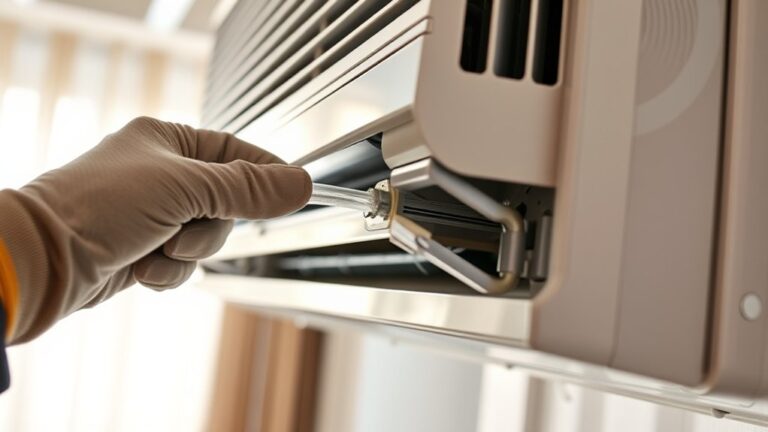
To unclog your window AC drain line, turn off the unit and gather tools like a screwdriver, pliers, and a vacuum. Locate the drain line and inspect it for blockages such as mold or debris. Use a pipe cleaner or similar tool to clear any obstructions.
Then flush the line with water or vinegar to disinfect and remove residue. Regular maintenance helps prevent future clogs—keep exploring for detailed steps to fix it effectively.
Key Takeaways
- Turn off the AC unit and disconnect it from power for safety.
- Find the drain line and look for any visible blockages or buildup.
- Clear out debris from the drain line using a coat hanger or pipe cleaner.
- Flush the drain line with vinegar, then rinse with water to clear any residue.
- Make sure to schedule regular maintenance to prevent future clogs and keep the drainage working properly.
How to Tell if Your Window AC Drain Line Is Clogged
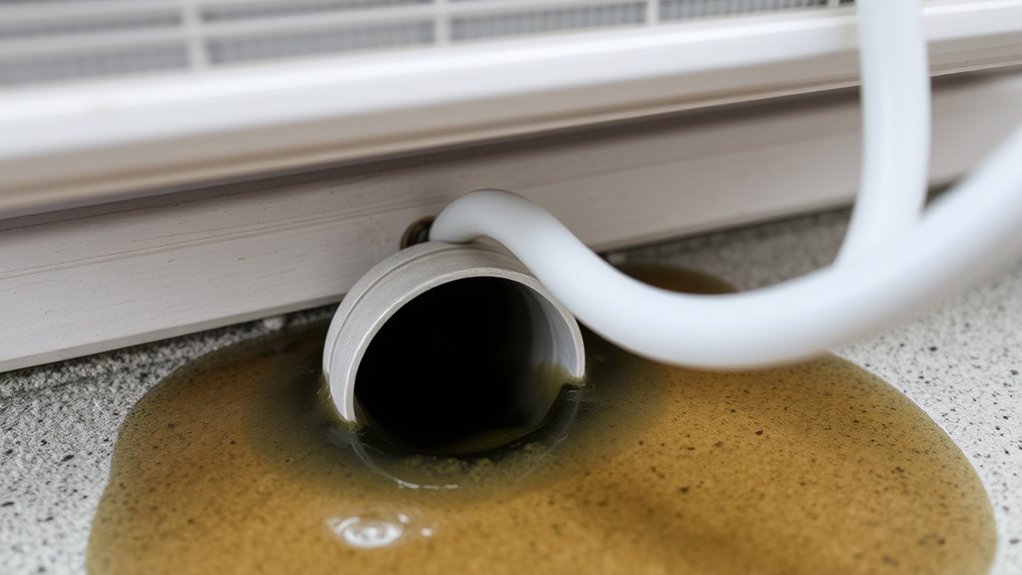
If your window AC isn’t cooling well or you notice water pooling around it, your drain line might be clogged. A common cause is airflow restriction, which can happen if you don’t maintain the filter regularly.
When the filter gets dirty or clogged, airflow decreases, causing excess moisture to build up inside the unit. This extra moisture tries to drain out, but if the drain line is blocked, water will leak around the AC.
Check for reduced airflow from the vents. If the airflow feels weak or inconsistent, it’s a sign that airflow restriction is affecting your unit. Also, inspect the filter— a dirty filter can be part of the problem.
Regular filter maintenance helps prevent these issues. If you see water pooling or cooling problems, it’s a clear sign your drain line might be clogged. Addressing airflow and filter issues can help troubleshoot the problem.
Turn Off Your AC and Prepare Your Tools
Before you start working on your AC drain line, make sure to turn off your window unit to prevent any electrical hazards or water leaks. Shutting it down also helps maintain energy efficiency during the cleaning process and keeps noise to a minimum.
Turn off your window unit to prevent hazards, leaks, and noise during drain line cleaning.
Once it’s off, gather your tools to make the task easier. You’ll need a screwdriver or pliers for removing panels, a wet/dry vacuum for clearing the drain line, a funnel and cleaning solution for flushing, and gloves and safety goggles for protection.
Turning off your AC ensures safety and allows you to work comfortably without the noise from the unit. Preparing your tools beforehand saves time and keeps the process smooth.
Properly shutting down and organizing your tools also helps prevent accidental damage or leaks. Now, you’re ready to inspect and clear the drain line effectively.
Locate and Inspect the Drain Line for Blockages
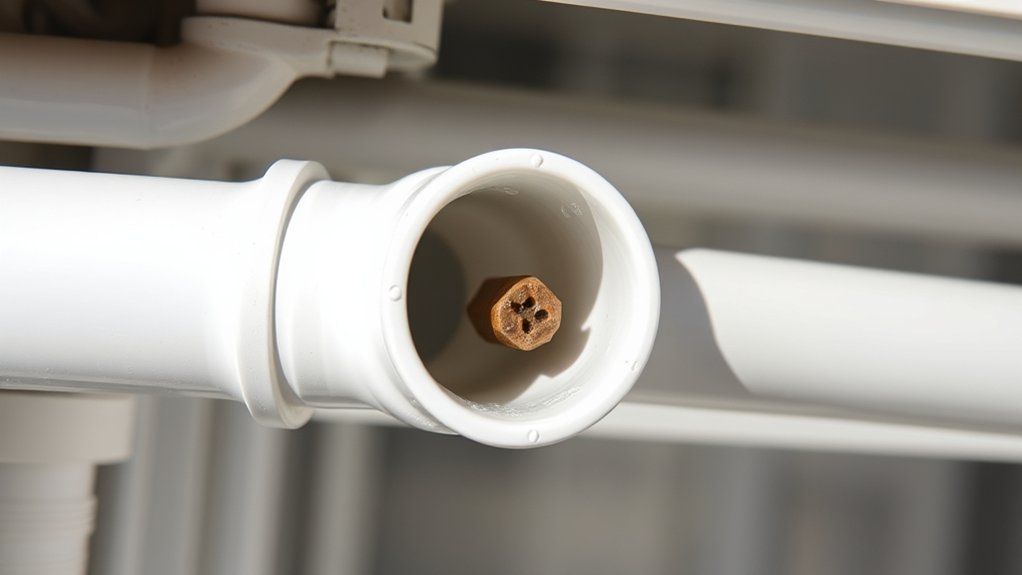
To locate and inspect the drain line, start by finding the drain pan underneath your AC unit, which is usually at the back or side of the unit. The drain line typically extends from the drain pan to the outside or a drainage area.
Check that the line is visible and accessible. Look for any signs of blockage or debris, like algae, dirt, or mold, which can hinder airflow efficiency.
A clogged drain line can cause water to back up, leading to issues with window sealing and potential leaks or water damage. Gently clear any visible obstructions with a coat hanger or similar tool.
Make sure the line is straight and free of kinks, as these can restrict drainage. Proper inspection helps your AC run smoothly, maintains airflow, and keeps your window sealing intact, preventing unnecessary repairs or inefficiencies.
Flush the Drain Line With Water or Vinegar
Using vinegar to flush your drain line is a pretty effective way to break down buildup and stop clogs before they get too bad. Plus, vinegar has antibacterial properties, so it can help keep your drain cleaner overall. When you’re doing this, just pour the vinegar slowly and give it some time to work its magic.
Now, whether you should go with water or vinegar really depends on how bad the clog is and what you prefer. If the clog isn’t too stubborn, vinegar might do the trick. But if you’re dealing with a more stubborn blockage, sometimes flushing with water or a combination of both can be more effective. Just take your time and see what works best for your situation!
Benefits of Using Vinegar
Have you considered how vinegar can simplify cleaning your AC drain line? It offers several benefits, especially when busting common vinegar myths. It’s a natural, affordable way to effectively break down mold and algae buildup.
Here are four key advantages:
- Disinfects without harsh chemicals, cutting down health risks.
- Breaks down organic debris, helping prevent clogs.
- Eliminates odors caused by mold or bacteria.
- Easy to use—just mix vinegar with water for quick application.
Many people think vinegar isn’t effective, but it’s actually a safe and efficient choice. It’s a popular alternative for homeowners looking to keep their AC drain lines clean.
Proper Flushing Techniques
Flushing your AC drain line with water or vinegar is a simple way to clear out clogs and prevent mold buildup. To do this effectively, start by pouring a mixture of water and vinegar into the drain line, letting it flow freely.
This helps break up residue and keeps the drain clear. While flushing, check your drain pan for any standing water or debris, and clean it if needed to keep the drain functioning properly.
Proper drain line maintenance not only clears clogs but also promotes airflow, helping your AC run efficiently. Be sure to run water through the line until it drains smoothly to prevent future blockages and keep your system clean and odor-free.
Water vs. Vinegar Choice
When choosing between water and vinegar for cleaning your AC drain line, think about what you want to achieve. Vinegar is great for disinfecting and breaking down mold or algae that can harm your air quality, helping your unit run more efficiently.
Water, on the other hand, flushes out loose debris and makes sure everything drains properly without using chemicals.
Here are some tips to help you decide:
- Use vinegar if you notice mold or bad odors affecting your air quality.
- Opt for water if your drain line is just clogged with dust or debris.
- You can also use both—start with vinegar to disinfect, then rinse with water.
- Regularly flushing with water helps keep your system efficient by preventing buildup.
Use a Pipe Cleaner or Cleaning Tool to Clear Clogs
Using a pipe cleaner or a specialized cleaning tool can effectively remove stubborn clogs from your window AC drain line.
Start by inserting the pipe cleaner into the drain opening and gently pushing it through to dislodge any buildup or debris.
Cleaning tools designed specifically for drain cleaning are often flexible and narrow, making them perfect for reaching deep into the line.
As you work the pipe cleaner back and forth, you’ll break up and pull out blockages, restoring proper drainage.
Be sure to apply steady pressure to avoid damaging the pipe. If you notice resistance, don’t force it—try twisting slightly or using a different tool.
Regularly using pipe cleaners or cleaning tools helps prevent future clogs by removing sludge, mold, and dirt that accumulate over time.
Keep in mind, the goal is to clear the line completely, ensuring your AC functions efficiently and avoiding water damage.
Maintain Your Drain Line to Prevent Future Clogs
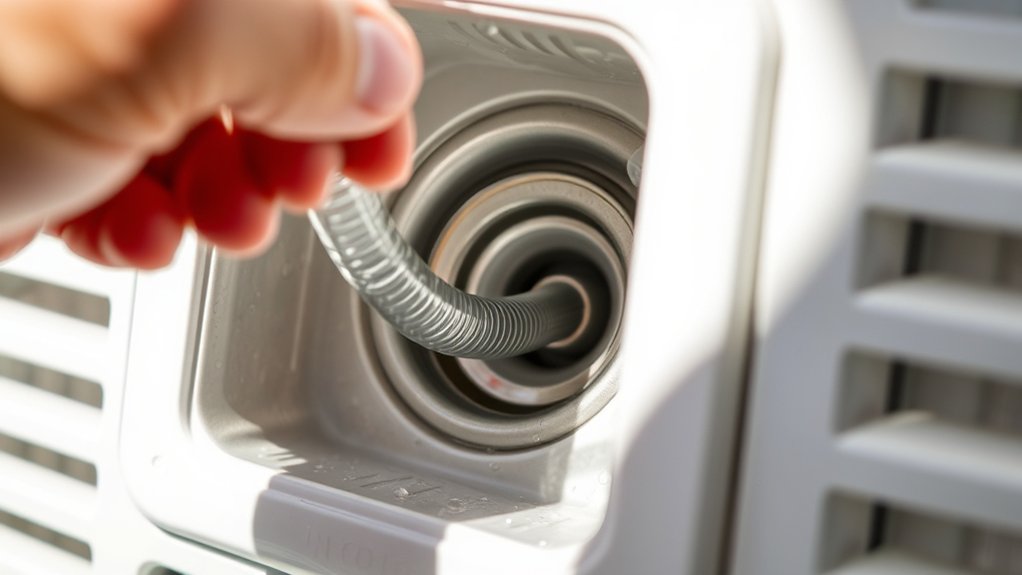
Regularly maintaining your drain line is key to preventing future clogs and keeping your AC running smoothly. When the drain stays clear, airflow improves, which boosts your unit’s efficiency and helps save energy.
To stay ahead of problems, try these simple steps:
- Flush the Drain Line: Mix water and vinegar once a month to clear out debris and prevent buildup.
- Inspect the Drain Pan: Look for cracks or mold that could cause blockages or bad odors.
- Keep the Surrounding Area Clean: Remove leaves, dust, and dirt that might clog the drain opening.
- Use a Vacuum: Regularly siphon out debris from the drain line to keep the flow unrestricted.
Signs You Need a Professional for Drain Line Repairs
If your window AC is leaking water, smelling weird, or making your home feel more humid than usual, it’s probably time to call in a professional. These kinds of issues—like persistent leaks, bad odors, or increased humidity—are pretty clear signs that your drain line needs some expert attention. Ignoring them can lead to bigger, more expensive problems later on.
Persistent Water Leaks
Persistent water leaks around your window air conditioner often mean the drain line is clogged or damaged and needs professional attention. If leaks continue despite cleaning, it’s time to get help.
Signs include excess water pooling near the unit, which can affect your window treatments. Also, if it keeps dripping even after clearing debris, the drain line might be blocked or cracked.
Poor ventilation can cause humidity buildup, making leaks worse. You might also notice mold or mildew around the unit, which points to long-standing moisture issues.
A professional can inspect and fix the drain line, ensuring proper drainage and ventilation. They may also suggest better ventilation methods to prevent future leaks.
Addressing these signs quickly helps protect your window treatments and keeps your AC running efficiently.
Unpleasant Odor Emissions
Unpleasant odors coming from your window air conditioner often mean the drain line is clogged or dirty. When the drain isn’t flowing right, moisture can sit there and encourage mold growth.
This mold can release bad smells that affect your indoor air quality and make your home less healthy. If you notice a constant musty or sour smell, it might be mold growing in your drain pan or line.
Ignoring these odors can cause bigger problems, like allergies or breathing issues. It’s a good idea to call a professional to check and clean your drain line.
Regular maintenance will get rid of the smells and help keep the air in your home fresh and healthy.
Increased Indoor Humidity
Noticing that your home feels unusually humid, even when the air conditioner runs, could be a sign your drain line needs professional attention. Increased indoor humidity can make indoor air quality worse and reduce your AC’s energy efficiency.
Watch out for these signs:
- Persistent dampness or condensation on walls and windows
- Mold or musty odors inside your home
- Frequent sweating of the AC unit or water pooling around it
- Higher utility bills despite no change in usage
These issues often mean your drain line might be clogged or leaking, causing extra moisture. Getting it checked out by a pro can restore proper drainage, improve air quality, and keep your AC running smoothly. Don’t ignore increased humidity—it’s a sign to take action.
Frequently Asked Questions
How Often Should I Clean My Window AC Drain Line?
You should clean your window AC drain line at least once a year as part of your maintenance routine. Regular cleaning helps prevent clogs and mold growth.
If you’re using your AC heavily or notice water leaks, clean the drain line more often—every few months should do the trick.
Simple steps like checking for obstructions and using a cleaning solution can keep your drain line clear. This helps your AC run smoothly and avoids costly repairs.
Can I Use Bleach Instead of Vinegar to Clear Clogs?
Imagine a burst of sunlight breaking through clouds, that’s how using bleach feels compared to vinegar. Yes, you can use bleach as a chemical alternative to clear clogs, but safety precautions are essential.
Always dilute the bleach properly, wear gloves, and ensure good ventilation. Vinegar is gentler, but if you choose bleach, handle it carefully to avoid damage or harmful fumes.
Prioritize safety to keep your air conditioner in top shape.
What Tools Are Safest for Cleaning the Drain Line?
You should use a soft brush or a flexible pipe cleaner for cleaning techniques, as they’re gentle yet effective.
Safety precautions include turning off the AC and wearing gloves to avoid contact with mold or debris.
Avoid using sharp or harsh tools that could damage the drain line.
These tools help you clean safely, ensuring the line stays clear without risking damage or injury during the process.
How Long Does It Take to Unclog a Drain Line?
Typically, unclogging your drain line takes about 15 to 30 minutes. You’ll start with drain pipe maintenance by clearing out debris and doing clog prevention methods like flushing with a vinegar solution.
Be patient and persistent. Rushing can cause more issues. With proper care, you can quickly clear the clog, preventing future problems and keeping your AC running smoothly.
Regular maintenance helps keep everything flowing freely and fuss-free.
Is It Necessary to Replace the Drain Line if Clogged Frequently?
If your drain line keeps clogging, you might need to replace it. But regular maintenance can often prevent these clogs. Make sure to inspect and clean the line regularly to keep it clear.
If the clogs keep coming back even after maintenance, it could be a sign of a bigger issue. In that case, replacing the drain line might be the best move.
Staying on top of maintenance helps avoid costly replacements and keeps your AC running smoothly.
Conclusion
By following these simple steps, you’ll keep your window AC draining smoothly—no more water disasters or indoor lakes! Imagine your unit working flawlessly, like a well-oiled machine, without a single clog causing chaos.
Don’t let a tiny blockage turn your home into a soggy swamp. Stay vigilant, maintain your drain line, and you’ll be the hero who keeps the cool air flowing effortlessly.
Because a clogged drain is no match for your newfound skills in unclogging your window AC drain line!