How to Diagnose My Car AC Blowing Hot Air
Struggling with your car’s AC blowing hot air? You’re not alone—many drivers face this frustrating issue, especially during hot weather. Luckily, there are some simple steps you can take to diagnose and possibly fix the problem before heading to the mechanic.
If your car AC blows hot air, start by checking the refrigerant level and look for leaks or signs of damage around hoses and connections. Inspect the compressor, belts, and condenser for any visible issues or debris.
Don’t forget to replace your cabin air filter if it’s dirty. If the problem persists or you notice electrical issues like blown fuses or weak wiring, it’s time to get professional help. Continuing will give you detailed steps to troubleshoot further.
Key Takeaways
- Check for refrigerant leaks, oil residue, or ice buildup on hoses and connections to spot possible leaks or damage.
- Inspect the compressor for leaks, unusual noises, or visible damage while it’s running.
- Verify refrigerant levels with service ports and gauges, making sure they match what the manufacturer recommends.
- Look at the belts for cracks, proper tension, and alignment to avoid system failure or engine overheating.
- Test electrical parts, fuses, and wiring for faults that might stop the AC from working correctly.
How Do I Know if My Car A/C Is Blowing Hot Air?

If your car’s air conditioning suddenly starts blowing hot air, it’s a clear sign something’s wrong. First, check your tire pressure—low tires can affect overall vehicle performance, including fuel efficiency, which might indirectly impact your AC system’s operation.
Properly inflated tires help keep your car running smoothly and ensure the AC isn’t overworking due to drivetrain stress. Next, monitor your fuel efficiency; if you notice a sudden drop, it could mean the engine is working harder, possibly because of issues affecting the AC system or related parts.
While low tire pressure and poor fuel efficiency don’t directly cause hot air from your AC, they can be signs of underlying problems that might also affect your AC’s performance. If these factors are in order but your AC still blows hot air, the problem is probably elsewhere—like low refrigerant or a faulty compressor.
Are Your A/C Compressor and Belts in Good Condition?
Even if your tire pressure and fuel efficiency seem fine, issues with the A/C system can still cause hot air. The A/C compressor and belts are essential for cooling your car. If the compressor is damaged or the belts are worn, your A/C won’t work properly, which can lead to engine overheating and lower fuel efficiency.
Check these key points:
- Inspect the compressor for leaks or damage
- Listen for unusual noises when the A/C is on
- Look for cracks or fraying on the belts
- Make sure the belts are tight and properly aligned
- Watch for engine overheating, which can happen if the compressor or belts are failing
Ignoring these parts can put extra strain on the engine, reduce fuel efficiency, and cause cooling problems. Regularly maintaining your compressor and belts helps keep your A/C running smoothly and prevents overheating issues.
Is Your Refrigerant Level Correct and Safe to Refill?
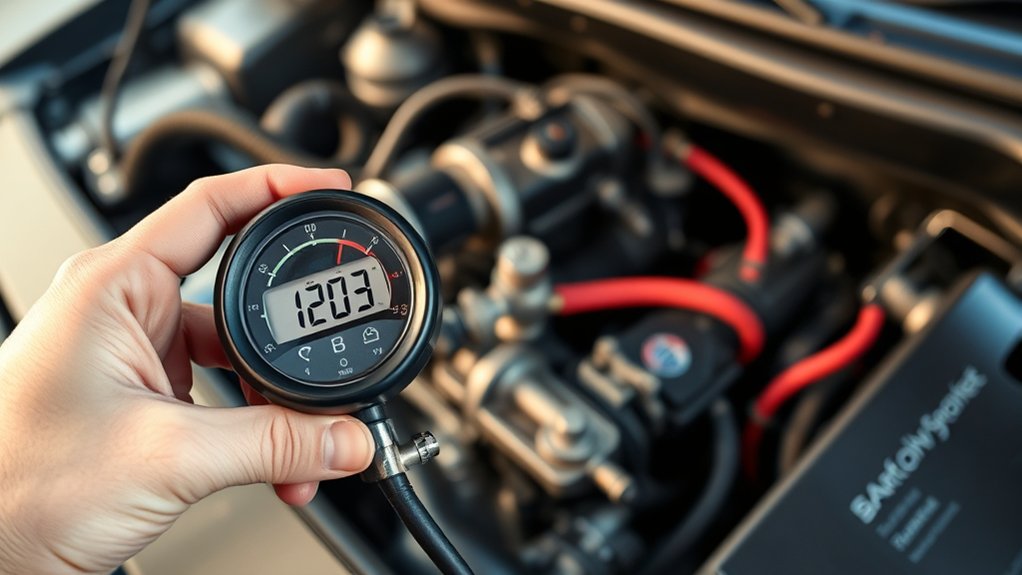
You should check your refrigerant pressure to make sure it’s at the right level. If it’s too low or too high, that could be a sign something’s not right. Also, keep an eye out for leaks—things like oil spots or strange odors can be clues that there’s a problem.
If you decide to refill the refrigerant, just be sure to follow the proper safety procedures. You want to avoid overcharging the system or causing any damage. Taking these steps can help keep everything running smoothly and safely.
Checking Refrigerant Pressure
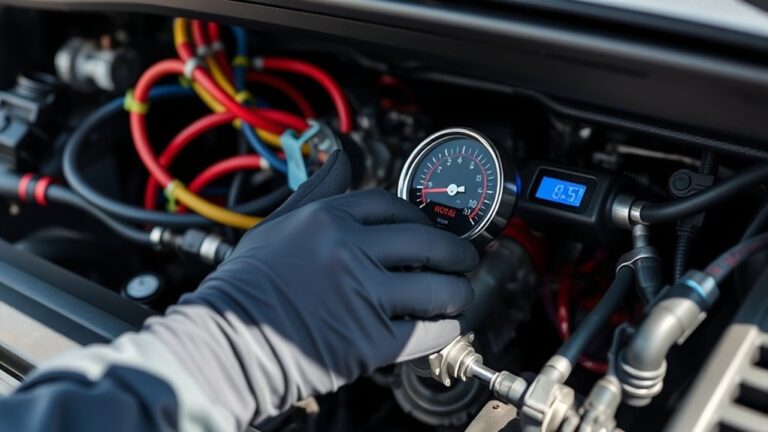
To check your car’s refrigerant pressure, start by locating the service ports on the AC system—usually near the compressor or along the high and low-pressure lines. Use pressure gauges compatible with your vehicle’s refrigerant types to get accurate readings.
Make sure the engine and AC are running so you can get a proper measurement. Keep these points in mind: confirm the refrigerant type (like R134a or R1234yf), attach the gauge securely to the service port, and observe the readings while the AC is on.
Compare the pressure readings to your vehicle’s manufacturer specifications. Be careful not to overcharge or undercharge the system. Monitoring refrigerant pressure helps ensure your system has the correct and safe level, preventing further issues.
Identifying Leak Signs
A common sign of a refrigerant leak is ice buildup on the AC hoses or around the service ports. This indicates the system is losing refrigerant and moisture is mixing into the lines.
When inspecting for leaks, check your air conditioning filters. Debris or mold can hide leak signs or make the system work less efficiently.
Also, examine the cabin insulation. If it’s damp or moldy, refrigerant leaks might be causing moisture buildup inside.
Leaks often cause refrigerant levels to drop, making it unsafe to refill without repairs. Look for oily residue around fittings and connections, which can also signal a leak.
Addressing these signs early helps prevent further damage and keeps your AC system running smoothly and safely.
Safe Refill Procedures
Before refilling your car’s AC system, it’s important to verify that the refrigerant level is correct and safe to add. Overfilling can reduce fuel efficiency, increase tire wear, and damage your AC components.
To ensure safety, use a refrigerant gauge to check the current level and always follow the manufacturer’s guidelines. Keep in mind that improper refills may cause system imbalance, which can affect fuel economy and tire wear over time.
Be cautious when handling refrigerant, as leaks can be harmful. If you’re unsure, it’s best to consult a professional mechanic.
Is the Condenser Clear of Blockages or Damage?
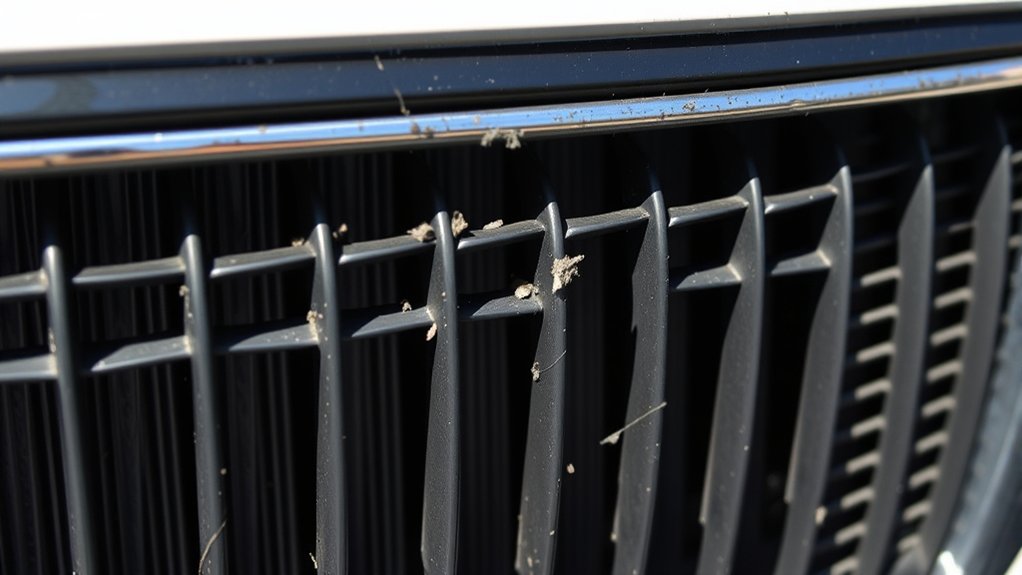
The condenser plays a crucial role in cooling down the refrigerant, so any blockages or damage can greatly impair your AC’s performance. Check if the condenser is free of dirt, debris, or bent fins, which can restrict airflow.
A clean, undamaged condenser ensures optimal airflow and efficient cooling for your AC system.
Poor radiator airflow reduces the heat exchange process, making the condenser work harder and decreasing fan efficiency. Visually inspect the condenser for signs of damage or corrosion that could cause leaks or blockages.
Make sure nothing is obstructing airflow behind or in front of the condenser, as restricted airflow prevents proper heat dissipation. If debris or dirt accumulates, clean it gently with a soft brush or compressed air.
Damaged fins may need straightening or replacement. A clear, undamaged condenser allows ideal radiator airflow and fan efficiency, ensuring the refrigerant cools properly.
This is crucial for your AC to blow cold air and operate effectively.
Does Your Cabin Air Filter Need Replacing?
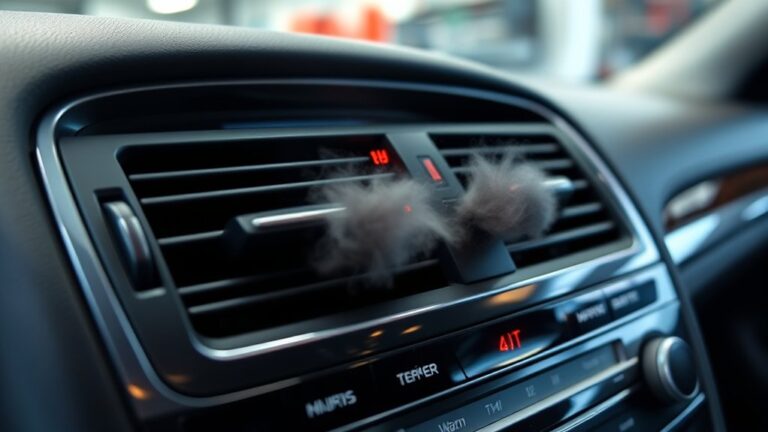
Your cabin air filter plays a vital role in keeping good airflow and air quality inside your vehicle. When it gets clogged or dirty, you might notice reduced airflow, musty odors, or a decline in interior air quality. These signs mean it’s time to replace the cabin filter.
Look out for these common signs:
- Reduced airflow from the vents
- Unpleasant or stale odors
- More dust or allergens inside the car
- Visible dirt or debris on the filter
- Allergic reactions or breathing discomfort
Replacing your cabin filter is a simple step that can really improve the air inside your vehicle. Regular replacement helps keep the air clean and your comfort high. If you see any of these signs, don’t wait—changing the filter now can prevent bigger issues and keep your AC working smoothly.
Is Your A/C System Losing Pressure or Leaking?
Is your A/C not cooling as well as it used to? It could be losing pressure or leaking refrigerant. You might notice sounds like hissing or see oily spots around the fittings and hoses—that’s often a sign of a leak.
To get to the bottom of it, you can use leak detection methods to find out exactly where the problem is. Catching leaks early can save you money and keep your A/C running smoothly!
Signs Of Refrigerant Leak
A refrigerant leak often shows up through signs that your A/C system is losing pressure or leaking. You might notice the air isn’t as cold as before, or that you need to recharge the refrigerant more often.
Leaks can also throw off the A/C system’s calibration, causing inconsistent cooling. You might hear hissing sounds near the vents or under the hood, which are signs of refrigerant escaping.
Another indicator is oily residue around fittings or hoses, suggesting a leak. Low refrigerant levels also reduce cooling efficiency, and frost buildup on the AC components is a clear sign something’s wrong.
Keeping an eye out for these signs can help prevent your system from completely failing. It also ensures your A/C stays reliable when you need it most.
Checking For Visible Damage
How can you tell if your A/C system is losing pressure or leaking? Start by inspecting visible components for damage. Look for oily residue or refrigerant stains around connections, hoses, and fittings—these often point to leaks.
Check the compressor and condenser for cracks or corrosion. Also, compare your tire pressure recently; if it’s consistently low without a clear reason, it might be a sign of a leak elsewhere in the system.
Keep an eye on your engine temperature gauge too. An overheating engine can be linked to low refrigerant levels because the system struggles to cool properly. Visible damage or leaks suggest your system isn’t sealed correctly, which can cause hot air blowing from your vents and may lead to other problems like engine overheating if not addressed quickly.
Using Leak Detection Methods
Leaking refrigerant is a common cause of low system pressure, which can make your AC blow hot air. To find leaks, start by checking visible parts like hoses, fittings, and the compressor for oil residue. That often shows where a leak might be.
You can also add UV dye to the refrigerant. After running the system, shine a UV light to spot any dye leaks. Pressure gauges are helpful too—they show how the system pressure changes over time, which can indicate a leak.
Electronic leak detectors are great for finding tiny cracks where refrigerant might be escaping. Lastly, a soap bubble test on suspected areas can reveal leaks through bubbling. Using these methods helps you accurately find and fix refrigerant leaks in your car.
Could Electrical Issues Be Causing Your Hot Air Problem?
Electrical issues can often be the culprit behind your car’s AC blowing hot air, especially if the system isn’t responding as it should. Start with electrical diagnostics to identify any faulty wiring or blown fuses that could disrupt the AC’s operation.
Electrical problems, like faulty wiring or blown fuses, can cause your car’s AC to blow hot air.
A common cause is a weak or dead battery, which can prevent the AC system from engaging properly. Perform a battery inspection to check for corrosion, loose connections, or low voltage. If your battery is failing, it might not supply enough power to run the AC components effectively.
Moreover, inspect the fuses related to the AC system. A blown fuse can disable key parts like the compressor clutch or blower motor. Remember, electrical issues can be tricky to diagnose, but addressing these basic checks can often reveal the problem source.
Ensuring your battery and electrical system are in good shape is a vital step toward fixing hot air issues from your car’s AC.
When Should You Call a Professional for Your Car A/C?
While some minor AC issues are easy to troubleshoot, there are times when calling a professional is the best move. If your car’s A/C keeps blowing hot air despite basic fixes, it’s time to get expert help. Professional diagnosis keeps your interior comfy and ensures safe driving.
You should reach out to a pro if you notice persistent hot air even after recharging the refrigerant. Unusual noises from the system or foul odors when you turn on the A/C are also signs you need a specialist. Visible leaks or fluid pooling under your car are clear indicators of a problem.
Inconsistent cooling performance or system failures mean it’s time to see a professional. Ignoring these signs can cause more damage, cost more to fix, and impact safety. A qualified technician can diagnose complex issues like compressor failures or electrical problems.
Getting expert help when you’re unsure protects your comfort and keeps you safe on the road. Don’t hesitate to consult a pro if anything seems off with your car’s A/C system.
How Can Regular Maintenance Keep Your A/C Cool?
Regular maintenance is key to keeping your car’s A/C system working efficiently and providing cool air when you need it most. Regular checks and servicing help extend the lifespan of the system by preventing issues like leaks, worn-out parts, or clogged filters, which can reduce cooling performance.
Replacing cabin air filters keeps your climate control effective and freshens the air inside your car. Charging the refrigerant levels regularly helps the system run at peak efficiency and prevents it from blowing hot air.
Inspecting hoses, belts, and the compressor early on can catch small problems before they turn into costly repairs later. Keeping up with maintenance isn’t just about staying cool—it also prolongs the life of your A/C system and saves you money in the long run.
What Are Your Next Steps If Troubleshooting Doesn’t Fix It?
If troubleshooting your car’s AC still doesn’t fix the hot air issue, the next step is to consult a professional mechanic. They can do a thorough inspection, including A/C system calibration, to make sure all parts are working properly.
A mechanic will also check for refrigerant leaks and might recycle the refrigerant to restore the correct pressure levels. If those steps don’t solve the problem, they may recommend replacing faulty parts like the compressor or expansion valve.
Consider options like recharging or replacing refrigerant after recycling, inspecting for leaks, or calibrating the A/C system for better performance. They might also suggest replacing worn-out components like the compressor or condenser.
A full system diagnostic can help identify hidden issues that might be causing the problem. Getting professional help ensures your A/C system is properly calibrated and working efficiently, bringing cool air back to your vehicle.
Frequently Asked Questions
Can a Faulty Temperature Control Switch Cause Hot Air?
Yes, a faulty temperature control switch can cause hot air in your car’s AC system. When it malfunctions, it might send incorrect signals to the control module, which handles the compressor and blend door actuators.
A failing temperature sensor can also play a role, leading to improper temperature regulation. Both issues can stop your AC from cooling properly.
It’s a good idea to check these components to diagnose and fix the problem effectively.
How Does Interior Duct Blockage Affect Cooling?
A duct obstruction causes airflow restriction, which directly impacts your car’s cooling efficiency. When debris or debris blocks the interior duct, less cool air reaches the vents, making your AC seem less effective.
This airflow restriction prevents the proper circulation of cooled air, leading to warmer interior temperatures. Regularly inspecting and clearing your interior ducts helps maintain ideal airflow.
Keeping your ducts clean ensures your AC system cools effectively, providing comfort on hot days.
Can Recent Repairs Impact A/C Performance?
Recent repairs can definitely impact your A/C performance, especially if they involve the refrigerant system. A Freon leakage might happen if fittings weren’t sealed properly, which reduces cooling efficiency.
If the compressor failed during repairs, it could also cut down airflow and cooling power. It’s always a good idea to have a professional inspect your system after repairs to make sure there are no leaks or compressor issues affecting your A/C’s ability to cool effectively.
Are Aftermarket Parts Reliable for A/C Repair?
Aftermarket parts can be reliable for your A/C repair if you choose high-quality options. Their reliability depends on the brand and proper A/C compatibility, so make sure to research and select parts designed specifically for your vehicle.
While some aftermarket parts may offer cost savings, always verify their compatibility and reviews. This helps ensure they meet your expectations and won’t compromise your A/C system’s performance.
How Long Does a Typical A/C Recharge Last?
Think of your car’s AC like a living thing; a recharge can keep it cool, but it’s not forever.
Typically, a recharged system lasts about 1 to 2 years, depending on factors like a Freon leak or compressor failure.
If those issues arise, your AC’s lifespan shortens drastically.
Regular check-ups prevent surprises, making sure your system stays cool and your drives remain comfortable.
Conclusion
If your car’s A/C blows hot air, start with simple checks—inspect the belts, refrigerant, and filters. These are often the culprits and easy to fix.
If issues persist, consider electrical problems or damage. Sometimes, the compressor or condenser might be the issue, so don’t hesitate to seek professional help.
Regular maintenance keeps your A/C running smoothly and helps prevent future problems. Keeping an eye on these things can save you from surprises on hot days.
Stay vigilant and proactive to keep your cool. When troubleshooting doesn’t work, trust the experts to diagnose, repair, and restore your comfort behind the wheel.