Best Angle for Installing a Window AC: Should It Be Tilted?
Many people struggle with installing their window AC units correctly, worried about leaks, stability, or poor performance. If you’ve ever wondered whether your unit should be tilted or level, you’re not alone. Getting the angle just right can make all the difference.
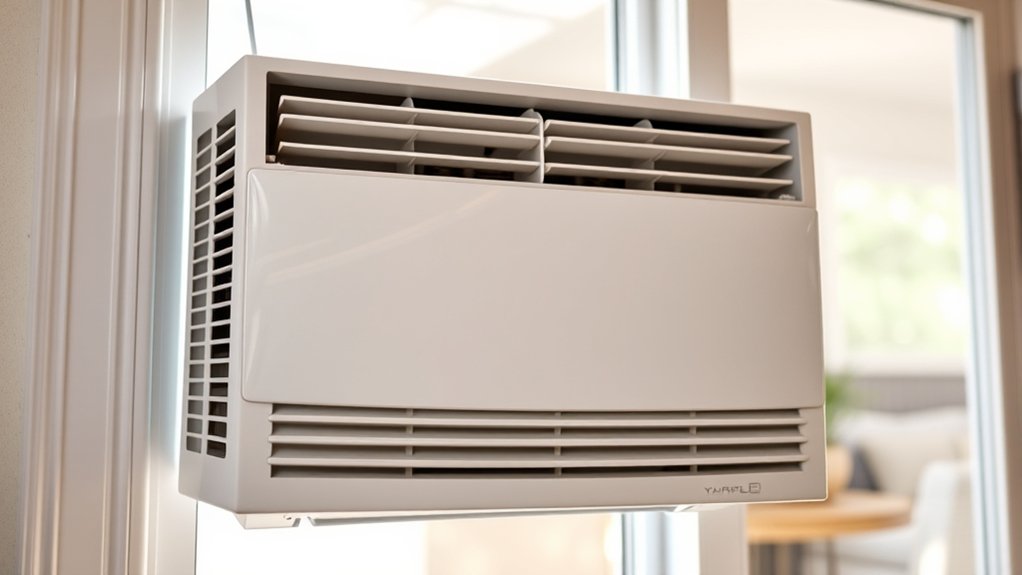
For ideal performance, you should install your window air conditioner with a slight downward tilt toward the outside—about 1/4 inch per foot. This helps guarantee proper drainage, prevents water leaks inside, and keeps the unit stable.
Too much tilt can affect the appearance and cause issues, while being level or slightly tilted upward can lead to drainage problems. To learn how to get the angle just right and avoid common mistakes, keep exploring the details.
Key Takeaways
- The AC should be installed with a slight downward tilt toward the outside for better drainage and moisture removal.
- Proper leveling keeps the unit stable, prevents leaks, and helps it work efficiently.
- Be careful not to tilt it too much, as that can cause water to pool inside or create drainage problems.
- Adjust the tilt based on the climate—more downward in sunny areas to stop heat buildup.
- Use leveling tools to get the right angle, which supports both how it looks and how well it works.
Should Your Window Air Conditioner Be Tilted or Level?
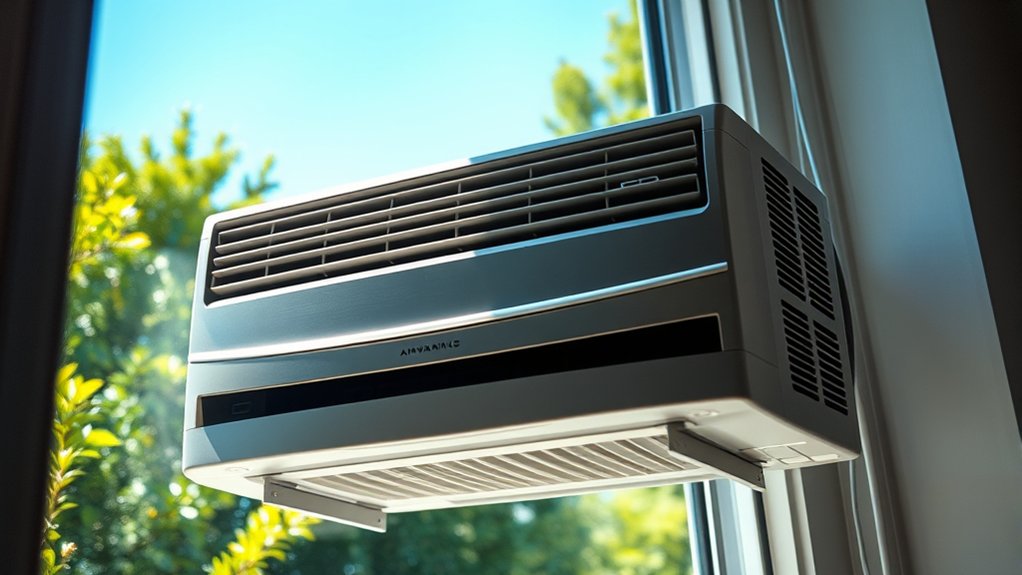
When installing a window air conditioner, you might wonder whether it should be tilted or kept level. While making sure it works well is key, how it looks also matters.
An aesthetic choice involves how the unit appears once installed. Keeping it level usually gives a cleaner, more balanced look. If you want your AC to blend smoothly with your window setup, a level installation might be best.
A level installation creates a cleaner, more balanced look that blends seamlessly with your window setup.
Some people prefer a slight tilt for practical reasons like drainage. But this can also affect how the unit looks overall. A tilted unit might seem less uniform and could stand out more.
Ultimately, your decision depends on your style preferences and how much you care about visual harmony. Finding the right balance helps your window AC work properly and look good in your room.
Why the Installation Angle Matters for Your Window AC’s Performance
The angle you choose when installing your window AC really matters. If it’s not positioned just right, it can affect how well your unit drains away moisture. And let’s be honest, nobody wants water leaking inside or messes to clean up!
Getting the install angle right helps keep everything running smoothly. It makes sure the unit cools effectively by allowing proper airflow and efficient moisture removal. So, taking a little extra time to get the angle right can make a big difference in how well your AC works and how long it lasts.
Proper Drainage and Moisture
Ensuring proper drainage is essential because a poorly angled installation can cause excess moisture to build up inside your window AC unit. This moisture can lead to mold, bad odors, and even damage to your unit’s parts.
To prevent this, make sure your AC is installed with the right tilt, so water drains effectively. Good drainage keeps your window setup looking clean and neat. It also helps your AC run more efficiently since a dry, well-ventilated unit doesn’t have to work as hard to cool your space.
Remember to:
- Check the tilt angle regularly to ensure proper moisture runoff
- Clear any debris or obstructions from drainage pathways
- Keep the drainage hole open for continuous flow
Following these steps will help your AC perform well and last longer.
Optimal Cooling Efficiency
Proper drainage not only keeps your window AC clean and prevents issues like mold, but it also helps improve cooling performance. When your unit is installed at the right angle, it ensures proper airflow and stops warm air from mixing with cooled air, making it more efficient.
This setup also allows your remote control to work better, so you can easily adjust settings without any trouble. An ideal angle reduces strain on the compressor, which uses less energy and saves you money on electricity bills.
Plus, correct positioning helps the unit distribute cool air evenly throughout the room, making your space more comfortable. Overall, a well-installed angle maximizes your window AC’s cooling power while conserving energy.
Key Factors That Influence the Best Tilt or Level Position
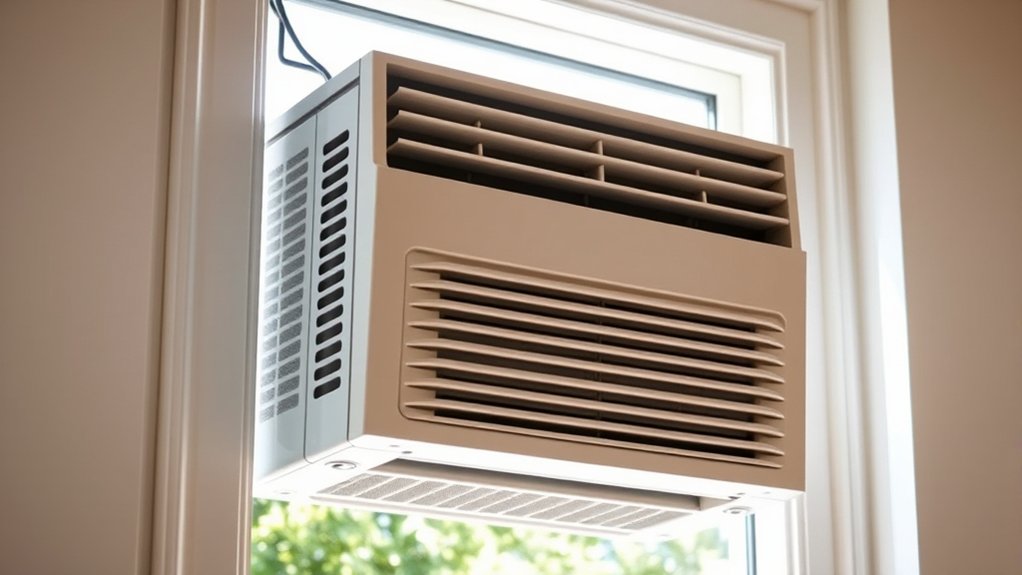
Your window AC’s tilt is pretty important because it affects how well water drains out. You want to set it at a slight downward angle so it doesn’t leak inside your room. At the same time, stability matters too—you don’t want the unit wobbling or moving around, so make sure it’s secure. And don’t forget about leveling; a properly leveled unit helps with good airflow, which means it runs more efficiently and keeps your space comfortable.
Drainage and Water Flow
Since water needs to drain away efficiently, the angle at which you install your window AC unit plays a crucial role in preventing puddles and leaks. Proper drainage ensures water flows smoothly out of the unit, avoiding damage or mold.
When choosing the tilt, consider confirming that the drain pan directs water properly to prevent overflow. Maintain a slight tilt toward the outside for ideal water flow.
Think about noise levels too, as improper drainage can increase vibrations and sound. Color options don’t influence drainage but can affect how visible water stains are on the unit’s surface.
A level installation might look sleek, but a slight tilt improves drainage. Proper positioning helps keep your space dry and quiet, making the AC more efficient and less disruptive.
Unit Stability and Security
Ever wondered how to keep your window AC secure and stable? The key is choosing the right tilt or level position to prevent slips or vibrations.
Check the unit’s color options to match your window frame or decor, but also pay attention to its energy ratings for efficiency and safety.
A high energy rating usually means the unit has sturdy construction, making it more secure when installed properly.
Make sure to tighten the mounting brackets well and verify that the AC is level. Avoid any tilt that could cause it to shift or fall.
Proper installation not only keeps your unit stable but also helps prevent water leaks or damage.
Air Circulation Efficiency
What impact does the tilt or level position have on your window AC’s airflow? Proper positioning guarantees ideal air circulation, helping cool your space efficiently. When the unit is level, it promotes even airflow, reducing warm spots and improving overall comfort.
An angled installation can cause uneven airflow, making the AC work harder and increasing noise levels. Plus, a level unit highlights decorative accents around your window, keeping it looking sleek. Proper tilt also reduces noise by preventing rattling or vibrations that can disturb your peace.
Keep these factors in mind:
- Guarantees consistent airflow for better cooling
- Reduces noise caused by vibrations or rattling
- Maintains aesthetic appeal with decorative accents
Achieving the right angle maximizes efficiency and comfort.
How Tilt Affects Drainage and Prevents Water Leaks
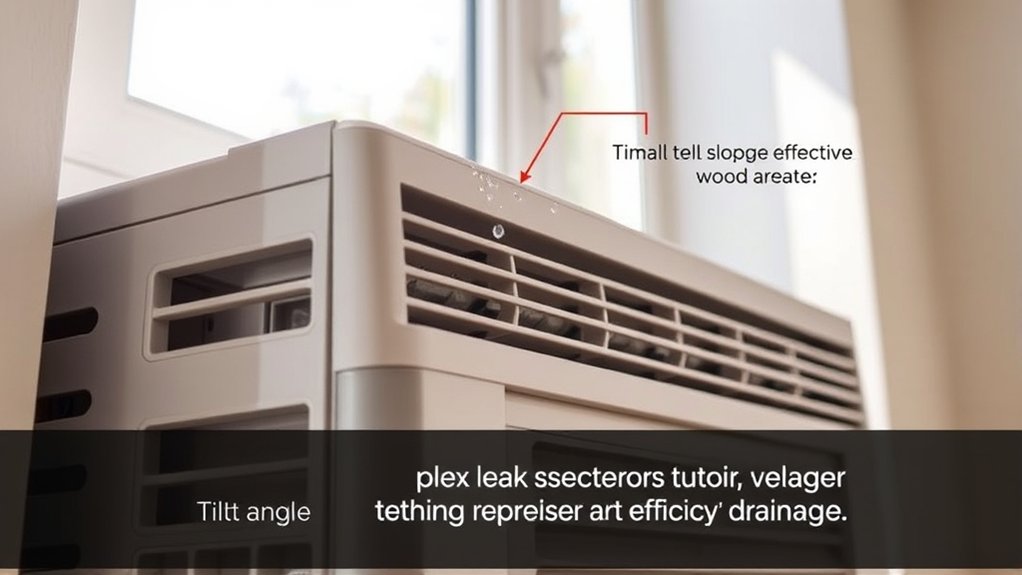
Proper tilt guarantees that your window AC unit drains water efficiently, preventing leaks inside your room. When installed at the right angle, the drainage system works smoothly, directing water away from the unit and window frame.
This is essential to avoid water damage, mold, and moldy odors. A slight tilt also helps keep the decorative trim in place, maintaining the aesthetic appeal of your window area.
Without proper drainage, water can pool and seep into gaps, causing potential damage and reducing your AC’s efficiency. Ensuring the unit is tilted just enough allows the condensate to flow freely into the drain pan and outside.
Signs Your Window AC Is Not Installed at the Right Angle
If your window AC isn’t installed at the correct angle, you might see signs of water leaking inside your room or around the unit. This usually means drainage isn’t working properly because of the wrong tilt.
Incorrect installation angle can cause water leaks and drainage issues with your window AC.
You could also notice water pooling on the window sill or staining your decorative window coverings, which can damage your space and reduce the unit’s efficiency.
An incorrect angle can cause more noise too, disrupting your comfort even if you’ve tried noise reduction tricks. You might hear rattling or banging sounds as the unit struggles to run properly.
Look out for these signs:
- Water leaks or pooling around the unit
- Water stains on window coverings
- Excessive noise or vibrations during operation
Fixing these issues early helps keep drainage working right and prevents more damage. This way, your AC will run smoothly and quietly.
Tools and Tips for Achieving the Perfect Installation Angle
To make sure your window AC is installed at the right angle, you’ll want to have a good leveling tool on hand, like a spirit level or bubble level. It’s pretty straightforward—using the right tool helps you get that perfect tilt.
Getting the pitch just right is important because it allows the unit to drain properly and run smoothly. Once you know how to use these tools and techniques, you’ll find it’s actually pretty easy to do a stable, professional-looking installation.
Leveling Tools Needed
Achieving the correct installation angle for your window AC starts with using the right leveling tools. These tools ensure your unit is properly aligned, which is key for top performance and less noise.
You’ll want to have a bubble level or laser level to check the tilt accurately. A spirit level is great for quick, manual verification. A measuring tape helps confirm consistent positioning.
Using reliable leveling tools helps you avoid issues like uneven vibrations or water drainage problems. Consider choosing tools in bright colors—they’re easier to spot.
Proper leveling not only reduces noise but also improves the overall look of your installation. It helps your unit blend seamlessly with your window’s color options for a neat finish.
Proper Pitch Techniques
Ensuring the proper pitch for your window AC involves using the right tools and techniques to get the perfect angle. Start with a level or inclinometer to measure the tilt, making sure it slopes slightly downward toward the outdoors.
This slight downward tilt helps prevent water buildup and saves energy. When adjusting, you can add decorative touches like trim or weather stripping to fine-tune the angle without affecting how it looks.
Make sure to secure the unit firmly but avoid overtightening, as that could change the pitch. Proper pitch not only improves drainage but also boosts efficiency, reducing strain on the compressor.
Take your time to double-check your measurements. Remember, a small tilt is usually enough to optimize performance and energy savings while keeping everything looking neat and finished.
Step-by-Step: How to Install Your Window AC at the Correct Angle
When installing your window AC, getting the right angle is key for peak performance and safety. To do it right, follow these simple steps:
- Measure the tilt: Use a level to make sure the unit tilts slightly outward at the back, about 1/4 inch for every foot of width. This helps with drainage and reduces noise.
- Secure the unit: Mount it firmly in the window frame, ensuring it’s level side-to-side for a clean look and stability.
- Adjust for aesthetics: Check that the unit isn’t sticking out awkwardly and align it with your window for a neat appearance.
Proper tilting improves the look, cuts down on noise, and prevents water leaks. Taking the time to install at the correct angle helps your AC run smoothly, last longer, and look good in your space.
Common Mistakes to Avoid When Tilting or Leveling Your Window AC
Even small mistakes in tilting or leveling your window AC can cause big problems later on. One common mistake is neglecting proper support, which can lead to uneven angles that affect the look of your space.
Small tilting errors can cause big issues, including appearance problems and future malfunctions.
If your unit isn’t level, water might leak or pool, causing wall damage and mold risks. Incorrect tilting can also make the unit noisier, as vibrations and rattling become more noticeable.
Avoid the temptation to over-tilt the unit for faster drainage. A slight angle is enough to do the job. Over-tilting can cause shifting over time, disrupting the perfect level and making your space noisier.
Always double-check your measurements and ensure the window frame and supports are stable. Proper leveling not only looks better but also keeps the unit quieter and more efficient.
Steady, precise installation is key to avoiding these common mistakes and ensuring your window AC works smoothly for years to come.
How Climate Conditions Impact Your Installation Angle
Climate conditions play a big role in choosing the best installation angle for your window AC. If you get a lot of strong sunlight, especially during the hottest parts of the day, tilting the unit slightly downward can help keep it cool by preventing heat buildup.
In cooler, shaded spots, a level or just a slight tilt is usually enough. The climate also affects noise—setting the AC at the right angle reduces vibrations and rattling, which helps keep things quieter in your space.
Think about these factors:
- Solar heating: Tilt downward to avoid absorbing too much heat and to boost cooling efficiency.
- Noise reduction: Proper angling helps cut down vibrations and noise.
- Weather conditions: If it’s windy or rainy, adjust the tilt to stop water or debris from getting inside.
When to Call a Professional for Your Window AC Installation
Installing a window AC might seem straightforward, but there are times when it’s better to call in a professional.
If you’re worried about how it will look, a pro can make sure it’s installed neatly without messing up your window’s appearance. Proper installation also helps reduce noise; a poorly mounted unit can be loud and disruptive.
A professional ensures a neat look and minimizes noise for a comfortable, unobtrusive installation.
If you’re unsure about the right tilt angle or how to secure the AC safely, a professional has the experience to do it correctly.
Also, if your window frame is damaged or unstable, trying to install it yourself could cause more problems or safety risks.
Electrical connections that seem complicated or involve wiring should always be handled by a trained technician to avoid fire hazards.
In the end, calling a professional ensures your window AC is installed safely, efficiently, and performs at its best—giving you peace of mind and a comfortable space.
Frequently Asked Questions
Can a Slight Tilt Improve My Window Ac’s Cooling Efficiency?
A slight tilt can improve your window AC’s cooling efficiency by enhancing ventilation and promoting better airflow. It helps hot air escape more effectively and prevents water from pooling inside, which reduces noise.
You should tilt your unit slightly downward, aiming for about 1-2 degrees, to optimize performance. Just make sure the tilt isn’t too steep, as that could cause leaks or make the unit unstable.
How Do I Know if My Window Frame Supports Proper Installation Angles?
You can check if your window frame supports proper installation angles by inspecting its mounting stability and overall condition.
Make sure the frame is sturdy, free of cracks, and can hold the weight of the AC securely.
A stable, well-supported frame helps reduce noise and vibrations, which makes your unit operate more quietly.
If you’re unsure, consider consulting a professional to evaluate the frame’s integrity and ensure the installation is ideal.
Does the Window Type Affect the Ideal AC Tilt or Level Position?
Your window type does impact the ideal AC tilt or level position. For casement windows, you want the unit slightly tilted downward toward the outside to guarantee proper drainage.
Sliding windows typically require the AC to be level for stability and efficient operation. Always check your window’s design and manufacturer guidelines.
Tilting too much or too little can cause leaks or poor cooling performance, so it’s important to get it just right.
What Are the Risks of Installing a Window AC at the Wrong Angle?
Installing your window AC at the wrong angle can cause water leaks, which might damage your home and make installation less safe.
It can also reduce energy efficiency, forcing your unit to work harder and increasing your utility bills.
Think of it like a boat sailing at the wrong angle—inefficient and unstable.
Getting the tilt right helps prevent leaks, protects your space, and keeps your cooling system running smoothly and safely.
Is There a Recommended Angle for Installing a Window AC in Humid Climates?
In humid climates, you should install your window AC with a slight tilt downward to ensure proper drainage and prevent water leaks. This angle helps water flow out naturally, avoiding messes inside your home.
It also supports safe installation by preventing water damage to your walls and window frames. Keeping the right tilt can make your unit work more efficiently, saving energy and reducing strain on the system.
Always follow the manufacturer’s guidelines to get the best performance and safety during installation. A little attention to the angle makes a big difference in how well your AC runs.
Conclusion
Think of your window AC as a delicate boat needing the right keel angle to sail smoothly. When installed correctly—either tilted or level—you guide your cooling vessel through the stormy waters of humidity and heat, avoiding leaks and inefficiencies.
Ignore the signs of imbalance, and you risk taking on water or losing performance. With proper setup, your AC can navigate the summer seas with ease, keeping your home cool and comfortable all season long.
So, should your window AC be tilted? Usually, a slight tilt toward the outside helps drain water properly and keeps everything running smoothly. Proper installation ensures your unit works efficiently and lasts longer, making your summer a lot more comfortable.