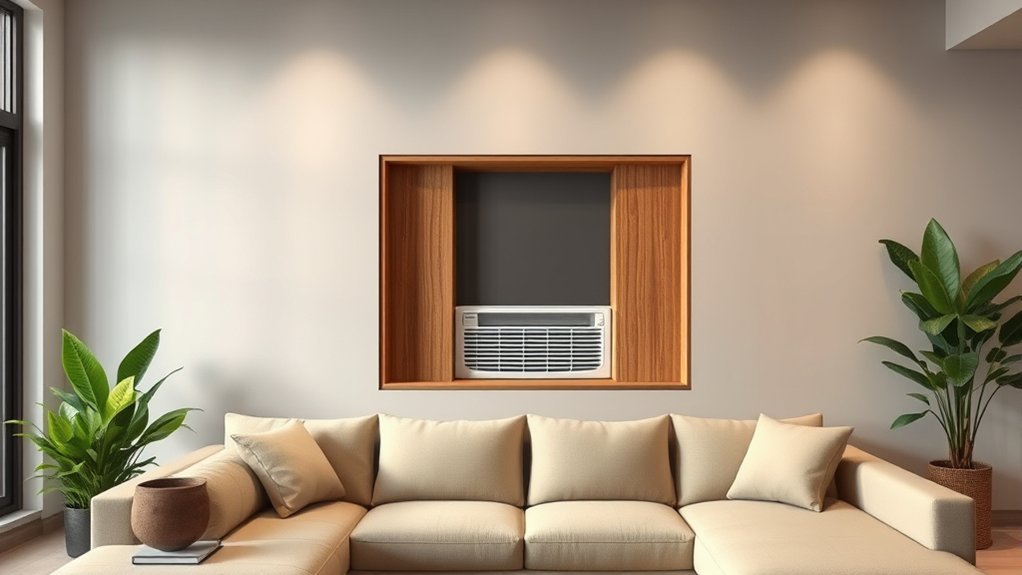
How to Hide Your Window AC Unit Inside: A Step-by-Step Guide
Many people struggle with how to hide their window AC units inside without sacrificing style or ventilation. If you’ve ever felt frustrated by an unsightly unit disrupting your decor, you’re not alone.
Luckily, there are simple ways to conceal your AC while keeping it accessible and well-ventilated.
To hide your window AC unit inside, start by measuring the space to guarantee a proper fit and check that the frame is sturdy enough to handle a cover.
Choose a concealment method that matches your style and budget, like decorative screens, furniture, or custom-built covers, guaranteeing ventilation and easy access for maintenance.
Add decorative elements such as plants or artwork to blend the unit with your decor.
For more practical tips, keep exploring how to make installation seamless and stylish.
Key Takeaways
- Measure the window frame and check its structural support before picking a way to hide the unit.
- Choose durable, weather-resistant materials like wood or vinyl to build the cover or enclosure.
- Make sure to include ventilation gaps or vents so air can flow properly and the unit doesn’t overheat.
- Use decorative screens, curtains, or plants to help the unit blend into your room’s decor in a stylish way.
- Design easy-access panels for maintenance and cleaning, so your unit stays efficient and works well.
Assess Your Window Space and Structural Constraints
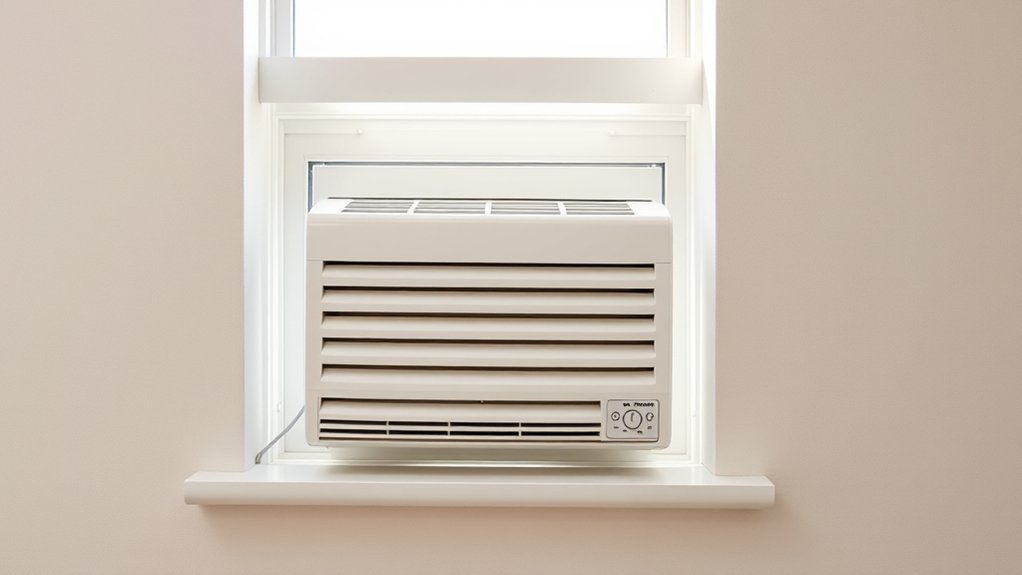
Before trying to hide your window AC unit, it’s important to evaluate your window space and surrounding structure. Start by measuring the size of your window frame to see how much room you have.
Assess your window space and support to ensure a safe, effective concealment solution.
This will help you decide whether to build a custom cover or choose an existing concealment solution. Then, check the structural support around the window.
Make sure the frame is sturdy enough to handle any extra weight or modifications without risking safety. If your window frame is weak or damaged, consider reinforcing it first.
Also, think about how much the unit protrudes and if there’s enough space for airflow and maintenance. Understanding these constraints ensures your hiding method won’t block ventilation or weaken the window.
Taking these steps helps you plan a safe, effective solution that fits well with your window and its support system.
How to Choose the Best Concealment Method for Your Style and Budget
Once you’ve checked out your window space and structural support, the next step is picking a concealment method that matches your style and budget. Think about how color coordination fits into your decor—choosing materials that blend in or stand out can really boost the look.
Material durability is also important. You want solutions that hold up to daily use without needing constant repairs. Here’s a quick comparison to help you decide:
| Method | Cost | Style Compatibility | Durability |
|---|---|---|---|
| Decorative Shutters | Moderate | Customizable to match your decor | High |
| Fabric Curtains | Low | Flexible, can match or contrast | Moderate |
| Wooden Panels | High | Looks great in traditional or modern styles | Very high |
| Louvered Covers | Moderate | Adds texture, customizable colors | Good |
| Built-in Cabinets | High | Fully hides the unit, personalized | Excellent |
Choosing the right option depends on your budget, style, and how much durability you need.
Build a Hidden Cabinet or Cover for Your AC
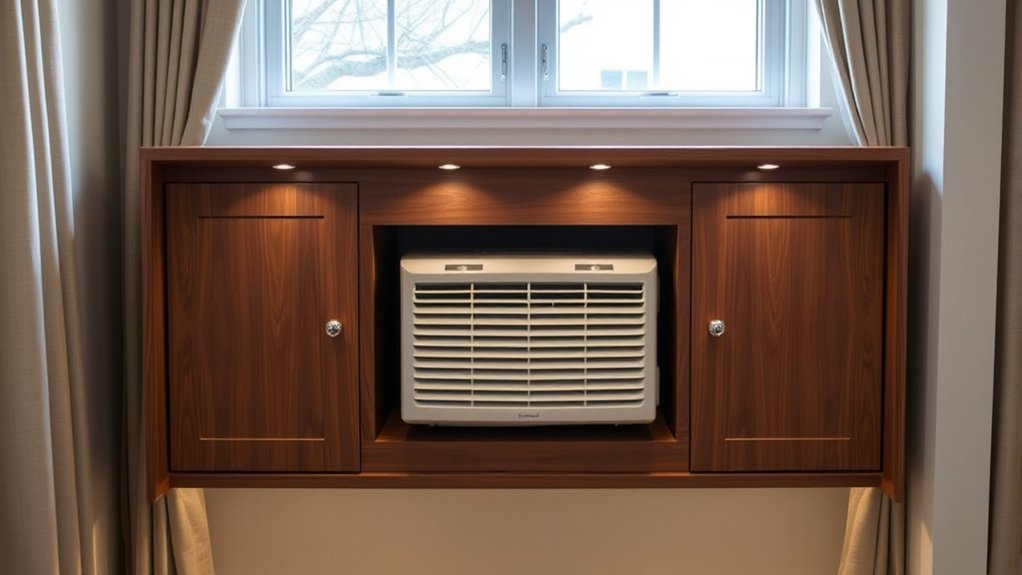
Thinking about building a hidden cabinet for your AC? It’s a great way to keep your space looking tidy. Just make sure to pick materials that match your decor and are tough enough to handle weather if it’s outside. You don’t want your cover to look out of place or fall apart over time.
Also, don’t forget about ventilation. Your AC needs proper airflow to stay cool and run efficiently, so be sure to include enough ventilation spaces in your design. And it’s a good idea to have easy-access panels—this way, maintenance and any repairs won’t be a hassle. With a bit of planning, your hidden cabinet will look stylish and keep your AC functioning perfectly.
Choosing Suitable Materials
Choosing the right materials is essential for building a discreet and durable cover for your window AC unit. You want materials that can handle weather and daily wear while still looking good.
Go for sturdy options like wood, vinyl, or composite panels. They offer both strength and blend nicely with your decor.
Picking durable materials ensures your cover stays in good shape over time, so you won’t need frequent repairs.
Designing Ventilation Spaces
Have you thought about how good ventilation can make or break your hidden AC cover? Proper airflow is key to preventing overheating and keeping your cooling system efficient.
When designing your concealment, include discreet vents or slats that blend seamlessly with the cover’s look. Place these openings near the AC unit to let air circulate freely and avoid heat buildup.
Balance looks with functionality by choosing materials and designs that hide the unit but still allow airflow. Blocking vents or sealing airtight spaces can reduce cooling performance and create noise issues.
Thoughtfully designing ventilation spaces helps your hidden cabinet stay sleek and work at its best. It keeps your space cool without sacrificing style.
Ensuring Easy Access
To make sure you can easily access your AC unit for maintenance or adjustments, designing a hidden cabinet or cover with convenient access points is key. Use removable panels or doors that allow quick, hassle-free entry without taking apart the entire cover.
This way, your AC stays accessible for routine checks while keeping its hidden look intact. Proper access design also helps improve energy efficiency by preventing drafts and gaps that cause heat loss.
Plus, a well-built cover with soundproofing materials can cut down noise, making your space more comfortable. Focus on easy access in your design to save time and effort.
With some thoughtful planning, you’ll keep your AC hidden, maintain great performance, and enjoy a quieter, more energy-efficient environment.
Use Decorative Screens, Curtains, or Plants to Mask Your AC
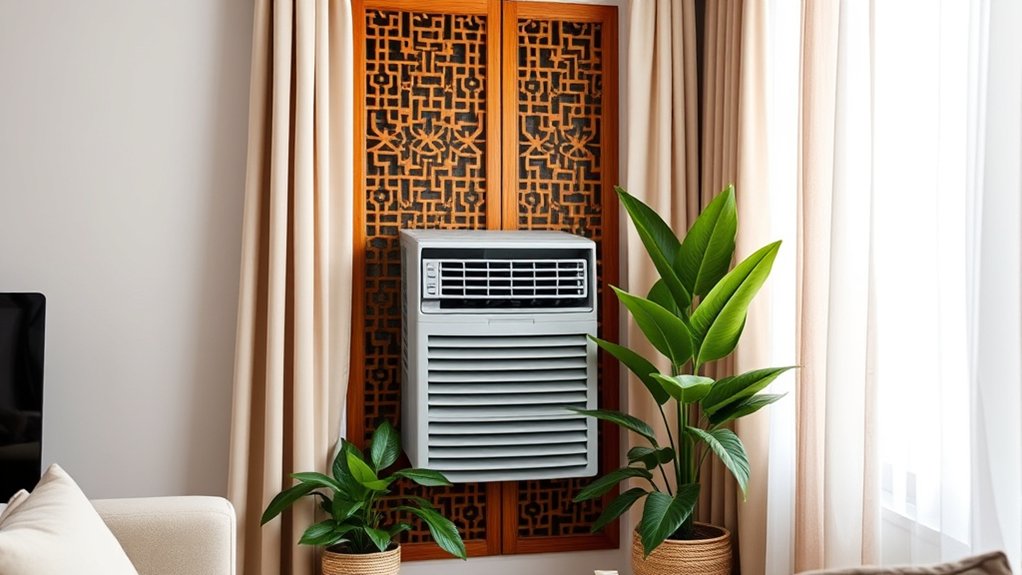
Looking for an easy way to hide your AC without sacrificing style? Consider using decorative screens, curtains, or even some lush plants. Picking the right stylish screens that match your decor can make a big difference and instantly give your space a more polished look.
You can also hang curtains that blend seamlessly with your room’s color scheme—it’s a simple trick to keep things looking cohesive. And don’t forget about plants! Arranged strategically, they not only hide the unit but also add a fresh, lively touch to your space.
Selecting Stylish Decorative Screens
Decorative screens are a great way to hide your window AC unit while adding some style to your space.
When choosing a screen, pick options that match your room’s decor and boost its overall look.
Look for screens with decorative lighting features to create a cozy vibe, especially at night.
Make sure the colors work well with your existing decor for a seamless appearance.
You can choose screens made from different materials like wood, metal, or fabric, depending on your style.
To make your space more inviting, go for a design that balances both function and fashion.
Here are some tips to help you select the right screen:
- Opt for screens with built-in decorative lighting
- Match colors to your room’s palette
- Choose materials that blend with your decor style
Arranging Curtains or Plants
Using curtains, plants, or decorative screens can effectively hide your window AC unit while adding to your room’s look. Curtain arrangements can be customized to fit your space, using lightweight or blackout curtains that drape nicely around the unit.
Choose rod placements that make it easy to open curtains for maintenance. Plant placements also work well—try tall, leafy plants or potted shrubs near the unit to hide it naturally.
Just make sure to pick indoor-friendly plants that won’t block airflow. Decorative screens can act as stylish dividers, positioned to hide the AC without blocking vents.
Combining curtains, plants, or screens creates a seamless look. This makes your AC less noticeable and adds a touch of greenery or elegance to your room.
Create an Enclosure Using Furniture or Shelving
Creating an enclosure with furniture or shelving is a smart way to hide your window AC unit while still keeping it accessible. It helps blend the unit into your room’s look without blocking airflow.
When picking furniture, think about where your window is so you don’t block your view or natural light. Make sure the furniture is sturdy enough to support the enclosure and won’t damage the wall or window frame.
Here are some tips:
- Use open shelving or a cabinet with a vented back to let air flow freely.
- Pick furniture that matches your decor for a seamless look.
- Ensure the enclosure can be easily removed or opened for maintenance and adjustments.
This method keeps your room functional and stylish, all while respecting the space and placement of your window AC unit.
Ensure Proper Airflow and Easy Maintenance When Hiding Your AC
If you’re hiding your AC, it’s super important to make sure it still gets enough airflow. You want to leave some open vents or gaps so air can move around freely, just like it would if the unit were out in the open. This way, your AC won’t have to work harder than it should, and it can keep your space cool efficiently.
Also, think about setting up easy access points for cleaning and maintenance. It’s much simpler to keep your unit in good shape if you can reach it easily whenever needed. So, plan for some sort of panel or door that lets you get to the AC without hassle. It’ll save you time and keep everything running smoothly!
Maintain Ventilation Efficiency
Even when hiding your window AC unit, proper ventilation is still really important for efficient operation and easy maintenance. Good airflow helps your unit run smoothly and keeps noise levels down.
To keep ventilation working well, try leaving some gaps around the cover or enclosure so air can flow freely. Using breathable materials that don’t trap heat or moisture is also a smart move.
Make sure to check vents regularly for dust or debris that could block airflow. These simple steps help prevent overheating and reduce noise, making your space more comfortable and energy-efficient.
Proper ventilation also makes future maintenance easier, so your unit stays in top shape and keeps performing well inside your hidden setup.
Access for Cleaning
Ensuring easy access for cleaning is key when hiding your window AC unit. It helps keep good airflow and makes maintenance simpler.
When designing your concealment, leave a small opening or removable panel around the unit. This allows quick access and keeps your AC running smoothly.
Proper access helps prevent dust buildup, which can hurt performance and make more noise. Keep the area around the unit clear of obstructions to reduce noise and ensure smooth operation.
Regular cleaning and maintenance through easy access can extend your AC’s lifespan and keep it running quietly. Prioritizing access for cleaning makes sure your unit stays energy-efficient and quiet, even when hidden.
Incorporate Decorative Elements to Blend Your AC With Your Decor
Blending your window AC unit with your decor can turn an eyesore into a seamless part of your space. To do this, add decorative elements that match your style.
Focus on color coordination by choosing paint or fabric that complements your wall colors and furniture. Texture matching is also key; use materials like wood, fabric, or faux greenery for a cohesive look.
Consider options like decorative screens or panels that match your wall color or pattern. Fabric coverings or curtains that blend with your existing curtains or upholstery work well, too.
You can also use artwork or wall decals to camouflage the unit while adding some visual interest. These small touches help your AC blend right in with your decor.
Common Mistakes to Avoid When Hiding Your Window Air Conditioner
While decorating your window AC unit can help it blend into your space, overlooking common pitfalls can lead to problems down the line. One mistake is blocking airflow, which reduces energy efficiency and causes the unit to work harder, increasing energy costs. Make sure that any covers or decorations don’t obstruct vents or filters.
Decorate without blocking vents to keep your AC efficient and easy to maintain.
Another error is creating a space that amplifies noise. Bulky or poorly designed enclosures can make your AC louder. Instead, choose materials that absorb sound and allow for proper ventilation.
Furthermore, neglecting to leave access for maintenance can make it hard to clean filters or repair components. This can affect both performance and energy efficiency. Avoid sealing the unit too tightly or covering it with heavy, non-breathable materials.
Properly designed hiding solutions should blend seamlessly with your decor without blocking airflow, increasing noise, or making maintenance difficult. This way, your window AC can operate efficiently and quietly.
How to Access Your AC for Maintenance or Repairs
Have you ever struggled to access your window AC unit for routine maintenance or repairs? It can be tricky, especially when you’ve hidden it inside a decorative cover. To keep your AC running efficiently and save energy, regular checks are a must.
When you need to get to your unit, start by carefully removing or opening the cover. Use your remote control to turn the unit off so you don’t accidentally activate it. Once it’s exposed, you can:
- Clean or replace the filters for better airflow
- Check for any debris or obstructions around the unit
- Inspect the vents and coils for dust or damage
Final Tips to Seamlessly Integrate Your Window AC Into Your Interior Style
To seamlessly integrate your window AC into your interior style, start by choosing a cover or enclosure that complements your decor. Opt for designs made from materials that don’t compromise energy efficiency, ensuring your unit stays cost-effective. Consider custom-built covers that match your wall color or style, blending into the background rather than standing out.
Choose custom covers that blend seamlessly with your decor for a stylish, energy-efficient window AC solution.
When selecting or designing your enclosure, prioritize noise reduction. A well-insulated cover can minimize sound transmission, making your space more peaceful. Keep ventilation in mind—allow enough airflow to maintain cooling efficiency without sacrificing aesthetics.
Adding decorative elements like plants or artwork around or on the cover can further disguise the unit while enhancing your room’s overall look. Remember, the key is balancing functionality with style. Aim for solutions that hide the AC effectively without impeding its performance or increasing noise.
This way, your space remains both beautiful and comfortable.
Frequently Asked Questions
Will Hiding My Window AC Affect Its Cooling Efficiency?
Hiding your window AC can affect its cooling efficiency if you block airflow or restrict vents, but if you do it right, it shouldn’t be a problem.
Proper concealment can make your space look better and reduce noise, making things more comfortable. Just make sure the unit stays well-ventilated and easy to access for maintenance.
If you keep those things in mind, you can enjoy good cooling performance along with a quieter, cleaner-looking room.
How Can I Hide My AC Without Blocking Airflow?
Think of your AC like a secret garden—hidden but thriving. To hide your unit without blocking airflow, use decorative panels that allow air to pass through, like lattice or slatted designs.
Combine these with ventilation solutions to guarantee proper circulation. This way, you keep your space cool and stylish, like a well-guarded treasure that’s easy to access whenever you need it.
Are There Any Safety Concerns When Concealing a Window AC?
Yes, there are safety concerns when concealing a window AC. You should ensure proper ventilation to prevent overheating and avoid blocking airflow, which could damage the unit.
Incorpororate sound insulation to reduce noise without compromising safety. Also, make sure the unit remains accessible for maintenance and emergency shut-off.
Prioritize aesthetic improvements carefully to avoid blocking vents or interfering with electrical components. This will help maintain safe operation.
Can Hiding an AC Unit Damage the Window or Wall?
Hiding your AC unit can be like wrapping a gift, but if you’re not careful, it might damage your window or wall. Using decorative panels and insulation materials helps protect the structure while disguising the unit.
Without proper ventilation and support, you risk warping the frame or causing leaks. Make sure you install these materials correctly, maintaining airflow and avoiding pressure that could harm the window or wall over time.
How Do I Prevent Mold or Moisture Buildup Behind the Cover?
To prevent mold and moisture buildup behind the cover, make sure you use a breathable cover that allows air to circulate. This helps keep the area dry and reduces the chance of mold growth.
Regularly remove and clean the cover to keep it free of dust and moisture. If your room tends to be humid, consider using a dehumidifier nearby for extra moisture control.
Check for leaks or condensation around the unit, as these can contribute to moisture buildup. Good airflow and routine cleaning are key to keeping everything dry and healthy.
Conclusion
Hiding your window AC can really boost your space’s look and feel. Did you know about 60% of homeowners who conceal their units feel more satisfied with their interiors?
By assessing your space, picking the right concealment, and blending it with your decor, you can create a stylish and functional environment. Just remember to keep access for maintenance in mind.
With some planning, you’ll enjoy both comfort and curb appeal without sacrificing ease or style. If you want a seamless look, hiding your window AC is a great move.