10 Steps to Clean Your Window AC Unit Effectively
Many people struggle with keeping their window AC units clean and running efficiently, especially during peak summer months. If you’re tired of your unit not cooling as well or making strange noises, don’t worry—you’re not alone. Regular maintenance can make a huge difference in performance and longevity.
To clean your window AC unit effectively, start by turning it off and unplugging it for safety. Remove the filter, wash it with mild soap and water, and allow it to dry completely.
Clean the coils and surrounding components with a soft brush or vacuum, and use a coil cleaner if needed.
Wipe down the exterior, inspect parts for damage, and replace any worn or dirty components.
Reassemble, test the unit, and keep external vents clear.
For more tips, keep exploring this guide.
Key Takeaways
- Turn off and unplug the unit to stay safe before you start cleaning.
- Remove the filter and wash or replace it. Check for any damage or dirt buildup.
- Clean the coils and fins with a soft brush or coil cleaner to get rid of dust and debris.
- Clear out the drain pan and line, then flush them with vinegar and water to prevent clogs.
- Wipe down the external vents and the surrounding area, removing leaves, dirt, and any obstructions.
Why Regular Cleaning of Your Window AC Is Important

Regularly cleaning your window AC is essential because it helps maintain peak performance and prolongs the unit’s lifespan. When you keep your AC clean, it operates more efficiently, which reduces energy use and lowers your utility bills.
Regular cleaning boosts efficiency and extends your window AC’s lifespan.
A clean filter and coils also improve air quality by removing dust, mold, and allergens. This benefits your health and makes your space more comfortable to breathe in. Dirt buildup can restrict airflow, causing the unit to work harder and wear out faster.
Regular cleaning keeps your AC running smoothly, helping prevent breakdowns and costly repairs. Plus, a clean unit cools your space more effectively, especially during hot weather.
Spending a little time on routine upkeep can make a big difference. You’ll enjoy better indoor air quality, improved energy efficiency, and a longer-lasting air conditioner.
It’s a simple step that greatly improves your comfort, health, and savings.
Gather the Tools and Supplies Needed for Cleaning
Before you start cleaning your window AC, it’s important to gather all the necessary tools and supplies to make the process smooth and efficient.
First, identify the type of air filter in your unit—whether it’s a disposable fiberglass filter, a washable foam filter, or a reusable electrostatic filter—so you can choose the right cleaning method.
You’ll need cleaning solutions designed for air filters and coils, like a mild detergent or a specially formulated coil cleaner. Have a soft brush or cloth ready to scrub dirt from the fins and surfaces.
A spray bottle or gentle hose attachment helps rinse components without causing damage. Also, gather a screwdriver if you need to remove covers or filters, and gloves to protect your hands.
Preparing these tools and supplies beforehand ensures you won’t waste time searching during cleaning, making the whole process quicker and more effective.
Turn Off and Prepare Your AC for Maintenance
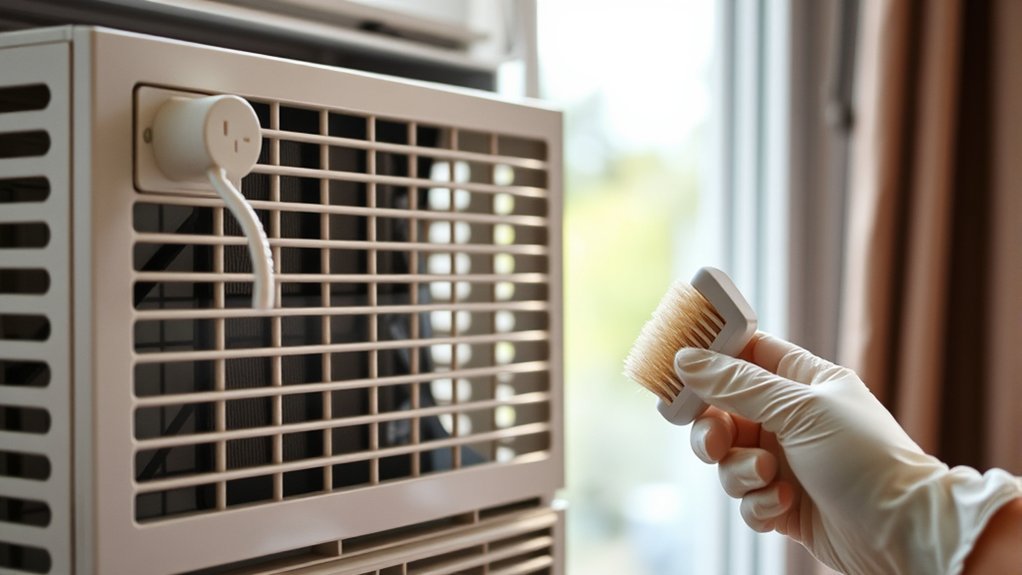
To guarantee your safety and prevent damage to your unit, always turn off and unplug your window AC before starting any maintenance. This step ensures safety and helps maintain ideal energy efficiency.
When the unit is powered down, you reduce the risk of electrical shock and avoid damaging internal components. Preparing your AC also minimizes noise during cleaning, making the process more comfortable.
Consider the following insights:
| Safety & Efficiency | Noise Reduction | Proper Preparation |
|---|---|---|
| Unplug before cleaning | Quiet operation depends on clean parts | Turn off to prevent damage |
| Check power switch | Use gentle tools to avoid loud sounds | Clear surrounding area |
| Inspect for hazards | Use soft brushes | Gather tools in advance |
Remove and Clean Your Window AC Filter
Removing and cleaning your window AC filter is a key part of keeping your unit working well. A clean filter makes sure airflow is good and the cooling works efficiently. It also helps your AC last longer.
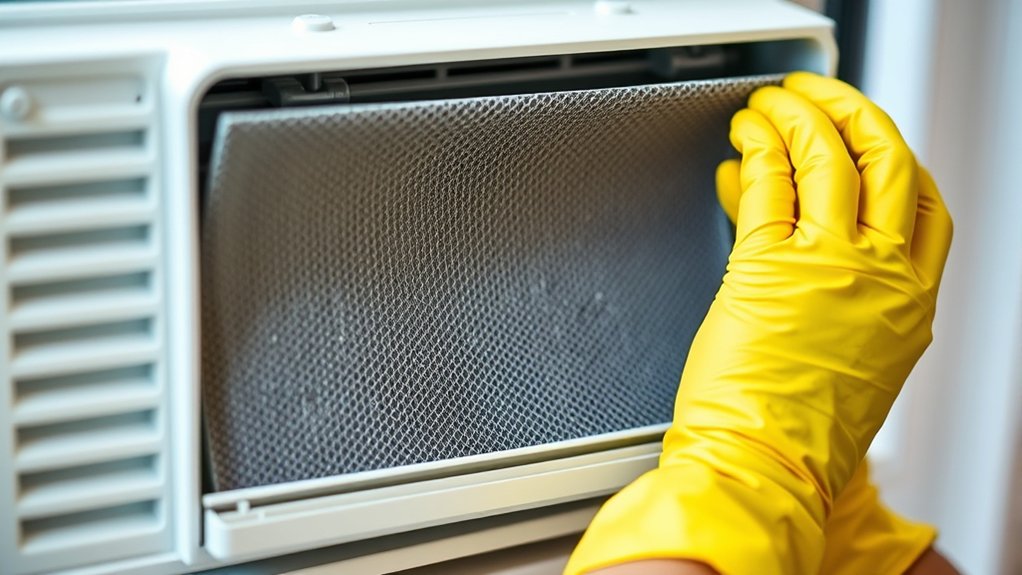
Start by turning off the unit and finding the filter, usually behind the front grille. Carefully take it out and check for any damage or heavy dirt buildup. Wash the filter with mild soap and water, then let it dry completely before putting it back.
Regular filter maintenance keeps your AC running smoothly and helps lower energy bills. It’s a good idea to do this every 1 to 3 months. Replace the filter if it’s worn out or really dirty to keep airflow and cooling at their best.
Keep track of when you clean or replace your filter. This way, you’ll always ensure your AC performs efficiently and stays in great shape.
Clean the Coils of Your Window AC

First, take a moment to clear away any debris and dust from the coils. This is important because it helps ensure air can flow smoothly through the unit. Once you’ve done that, grab a cleaning solution made specifically for AC coils and carefully apply it. Doing this regularly will help keep your AC running efficiently and prevent any buildup that could cause issues down the line.
Remove Coil Debris
Over time, dust, dirt, and debris can build up on the coils of your window AC, making it less efficient and cooling less effectively. To clean the coils properly, turn off the unit and open the window frame to get access.
Carefully inspect the area around the control panel to make sure no debris falls inside. Use a soft brush or a vacuum with a brush attachment to gently loosen and remove debris from the coils. Be careful with the fins—they’re delicate and can bend easily.
Make sure to remove any leaves or twigs lodged in the coils. Clear debris around the window frame to prevent future buildup. Wipe down the control panel with a damp cloth to keep dust from accumulating.
Finally, ensure the surrounding area is clean. Good airflow is key to your AC’s cooling efficiency and overall performance.
Use Appropriate Cleaning Solution
Once you’ve cleared away loose debris from the coils, it’s time to use the right cleaning solution to remove dirt and grime that may be stuck deeper in the fins. Choose a cleaning solution suited for your AC, whether store-bought or DIY remedies.
Using the wrong solution can damage the fins or reduce efficiency. Here’s a quick guide to help you pick the best one:
| Cleaning Solution Type | Pros | Best For |
|---|---|---|
| Commercial cleaner | Powerful, fast results | Heavy grime, mold |
| DIY vinegar solution | Gentle, eco-friendly | Light dirt, regular upkeep |
| Baking soda paste | Mild abrasive, deodorizes | Freshening, minor buildup |
Pick the solution that matches your needs, and apply carefully for a thorough clean.
Clear the Drain Pan and Drains
To guarantee your window AC unit operates efficiently, it’s essential to clear the drain pan and drains. Over time, debris and algae can clog these areas, causing water to back up and reducing cooling effectiveness. Regular drain maintenance and pan cleaning prevent mold growth and water damage.
Start by turning off your unit and locating the drain pan and drain hole. Clear out any visible debris or dirt. Use a mixture of vinegar and water to flush the drain line, which helps dissolve buildup. You can also use a small brush or pipe cleaner for stubborn blockages. Make certain the drain pan is dry and free of mold or residue.
Remove and rinse the drain pan thoroughly. Use a vacuum or a wet/dry shop vac to clear clogs in the drain line. Pour a cleaning solution to disinfect the drain pan. Check for leaks or cracks in the drain pan to prevent future issues.
Wipe Down the Exterior and Vents for a Fresh Look
Cleaning the exterior and vents of your window AC unit not only makes it look better but also helps keep the airflow smooth. Dust, dirt, and debris can build up outside, blocking airflow and making the unit work harder.
Use a soft cloth or a damp microfiber towel to wipe down the outside surfaces, removing grime and smudges. Pay special attention to the vents, which can collect dust that hampers airflow and cooling.
Gently wipe outside surfaces and vents with a soft cloth to remove dust and improve airflow.
For stubborn dirt, gently scrub with a brush or a mild cleaning solution. Make sure the vents are clear and unobstructed for the best operation.
Regularly wiping these areas prevents buildup that can block airflow and reduce your unit’s efficiency. Keeping the exterior clean also helps preserve its appearance and extends its lifespan.
With just a few quick wipes, your window AC will look fresh and run more efficiently.
Inspect and Replace Worn or Dirty Parts
You should take a good look at your AC parts to see if anything looks damaged or worn out. Sometimes, you might notice rust, cracks, or corrosion—that’s a sign it’s time to replace those parts.
Keeping everything in good shape helps your unit run smoothly and efficiently, which can save you money on repairs down the line. So, a little regular inspection can go a long way!
Check for Visible Damage
Start by carefully inspecting your window AC unit for any visible damage or signs of wear. Look for cracks, dents, or broken parts that could affect the unit’s structure.
Check the fan blades for chips or warping, as damaged blades can reduce efficiency and cause noise. Examine the vents and filters for excessive dirt or tears, which can block airflow.
Also, inspect the wiring and connections for fraying or corrosion, as these issues could be safety hazards. Look for cracks or dents in the casing or frame.
Check if the fan blades are bent or broken, and see if the filters and vents are torn or clogged. Look for frayed wires or corroded connections.
Address any visible damage before you start cleaning to make sure your unit operates safely and effectively. Repair or replace damaged parts to keep it working at its best and avoid further problems.
Replace Old Components
After inspecting your unit for visible damage, focus on identifying worn or dirty components that may need replacing. Old, clogged filters, frayed fan belts, or corroded contacts can reduce your AC’s energy efficiency and shorten component lifespan.
Replacing these parts ensures your unit runs smoothly and consumes less power. Dirty or damaged coils, for example, hinder heat exchange, decreasing cooling performance.
By swapping out worn components promptly, you prevent further damage and keep your system operating at its best. This not only boosts energy efficiency but also extends the overall lifespan of your AC.
Regularly updating old parts keeps your unit functioning well, saving you money on energy bills and costly repairs later. Always choose quality replacements to get the most out of your AC’s performance.
Reassemble Your Window AC and Test Its Performance
Once all the components are thoroughly cleaned and dried, carefully reassemble your window AC unit, making sure each part fits securely. Proper reassembly is key to keeping indoor air quality high and energy bills low.
Double-check that filters are correctly positioned, and the panels snap back into place without gaps. Once everything is assembled, plug in the unit and turn it on to test how it performs.
Listen for any unusual noises and make sure the airflow is strong and steady. Check that the remote or control panel responds quickly and accurately.
Observe the temperature setting and cooling response to ensure the unit is working efficiently. Regular testing after cleaning helps catch issues early, which keeps indoor air quality good and energy costs down.
Tips for Keeping Your Window AC Clean Throughout Summer
To keep your window AC running smoothly all summer long, it’s a good idea to clean or replace the filters regularly. It’s a simple step that can make a big difference in how well your unit performs. Plus, fresh filters help improve the air quality in your space, so it’s a win-win!
Don’t forget to keep the outside part of your AC free of debris and obstructions. Things like leaves, dirt, or even small branches can block the airflow and make your unit work harder than it needs to. Giving it a quick check now and then can help ensure it’s running efficiently throughout the season.
Regular Filter Maintenance
Regular filter maintenance is essential for keeping your window AC unit running efficiently throughout the summer. Knowing the right air filter types and sticking to a consistent filter replacement schedule helps prevent dust buildup and maintains peak airflow.
Check your filter monthly, especially during peak use. When replacing, consider filter types like fiberglass, pleated, or electrostatic filters for better air quality. A timely replacement ensures your unit doesn’t strain or waste energy.
Keep a record of your replacement schedule to stay on track, typically every 1-3 months depending on usage and filter type. Regular maintenance reduces dust, allergens, and bacteria, prolonging your AC’s lifespan and improving indoor air quality.
- Choose the right air filter type for your needs
- Follow a consistent filter replacement schedule
- Inspect filters monthly during high usage
- Consider upgrading to high-efficiency filters
Keep External Units Clear
Keeping your external unit clear of debris and obstructions is essential for maintaining good airflow and cooling efficiency during the summer months.
Make sure the outdoor area around the external vents stays tidy, free from leaves, dirt, and plant growth. Regularly check the area and remove anything that could block airflow.
Proper airflow helps your unit run smoothly and prevents overheating. Think of it like giving your AC room to breathe and work its best.
Here’s a quick visual to understand the impact:
| External Environment | Impact on Your Unit |
|---|---|
| Leaves and Debris | Block airflow, reduce efficiency |
| Overgrown Plants | Obstruct vents, cause damage |
| Dirt and Dust | Clog external vents, impair cooling |
| Nearby Structures | Limit ventilation, raise energy use |
| Clutter Near Vents | Restrict airflow, increase wear |
Keeping the vents clear ensures your window AC runs smoothly all summer long.
Frequently Asked Questions
How Often Should I Schedule Professional Maintenance for My Window AC?
You should schedule professional maintenance for your window AC at least once a year. Regular servicing can improve energy efficiency by up to 15% and help reduce noise levels.
This keeps your unit running smoothly, which can save you money on energy bills and prevent unexpected breakdowns. It’s a simple way to ensure your AC stays quiet and efficient.
Timely maintenance means you stay comfortable all season long without any surprises or disruptions.
What Are Common Signs Indicating My Window AC Needs Deep Cleaning?
You’ll know your window AC needs deep cleaning if you notice poor airflow, strange odors, or higher energy bills.
Check for dust buildup on the air filters and replace them if they’re dirty. Also, inspect the fan blades for debris or damage, since dirty or bent blades can reduce efficiency.
Regularly changing the air filters and inspecting the fan blades helps keep your AC running smoothly and can prevent the need for more extensive cleaning later.
Can I Use Household Cleaning Products on the AC Components?
Sure, you can use household cleaning products, but be careful—think of it like walking a tightrope.
For DIY cleaning, stick to gentle, non-abrasive cleaners for your AC parts.
Avoid harsh chemicals that might cause damage or leave residues. These can turn your cool oasis into a chemical battleground.
Use mild soap and water or specialized AC cleaners, and follow proper cleaning methods.
This way, you keep your unit running smoothly without risking damage to its delicate parts.
How Do I Prevent Mold and Mildew Buildup Inside My Window AC?
To prevent mold and mildew buildup, make sure your unit has proper airflow and change the filter regularly. When airflow is blocked, moisture tends to stay, creating the perfect spot for mold to grow.
Check that your vents aren’t covered or blocked and clean the filter at least once a month. Running the fan on dry mode after turning off the AC also helps dry out any remaining moisture.
This simple step really helps cut down on mold growth and keeps your AC fresh and safe to use.
Is It Safe to Clean the AC Coils With a Garden Hose?
Cleaning your AC coils with a garden hose isn’t recommended because it can damage components or push debris further inside.
For outdoor cleaning and coil maintenance, use a gentle spray or coil cleaner specifically designed for AC units. Carefully rinse from the outside, avoiding high pressure that might harm fins.
Always turn off the unit before cleaning, and consider professional help if you’re unsure to guarantee safe and effective coil maintenance.
Conclusion
Now that you know these simple steps, keeping your window AC clean is a breeze. Regular maintenance not only boosts efficiency but also helps your unit last longer.
Why settle for a dusty, noisy AC when a quick clean can make all the difference? Just follow these tips, stay consistent, and enjoy cool, clean air all summer long.
Ready to keep your AC in top shape? Your refreshed, hassle-free cooling experience with a clean window AC awaits!