The Ultimate Guide: Do All You Need for Portable AC Units Without Windows
Struggling to stay cool in a windowless space? You’re not alone. Many people find it challenging to keep their rooms comfortable without traditional window AC units.
If you’re considering a portable AC for a windowless space, you’ll need to investigate alternative venting options like wall, ceiling, or duct openings. Make sure to ensure proper sealing to prevent leaks.
Choosing ventless units or evaporative coolers can also work in dry environments.
Proper setup, regular maintenance, and sealing gaps will maximize efficiency.
Want to learn all the tips and tricks to set up and operate your portable AC effectively? Keep examining for more expert advice.
Key Takeaways
- Effective venting options include wall vents, exhaust kits, or flexible hoses directed through walls or ceilings.
- Ventless portable AC units and evaporative coolers work well for small, dry rooms with minimal modifications.
- Proper sealing of gaps, hoses, and vents helps ensure your cooling is efficient and stops heat or humidity from leaking in.
- Alternative venting ideas like DIY vents or using plants can boost airflow without needing windows.
- Regular maintenance, checking filters, and sealing gaps help keep your unit running well and improve air quality in windowless spaces.
How Do Portable Air Conditioners Work Without a Window?
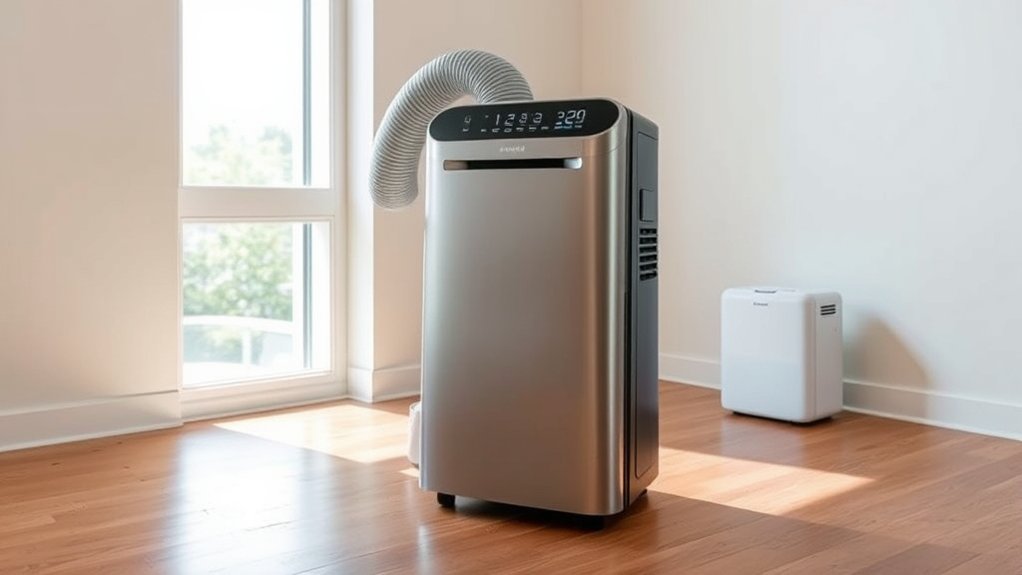
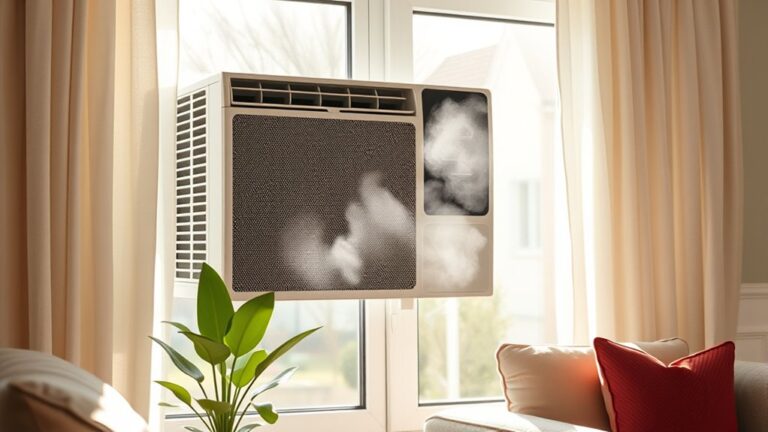
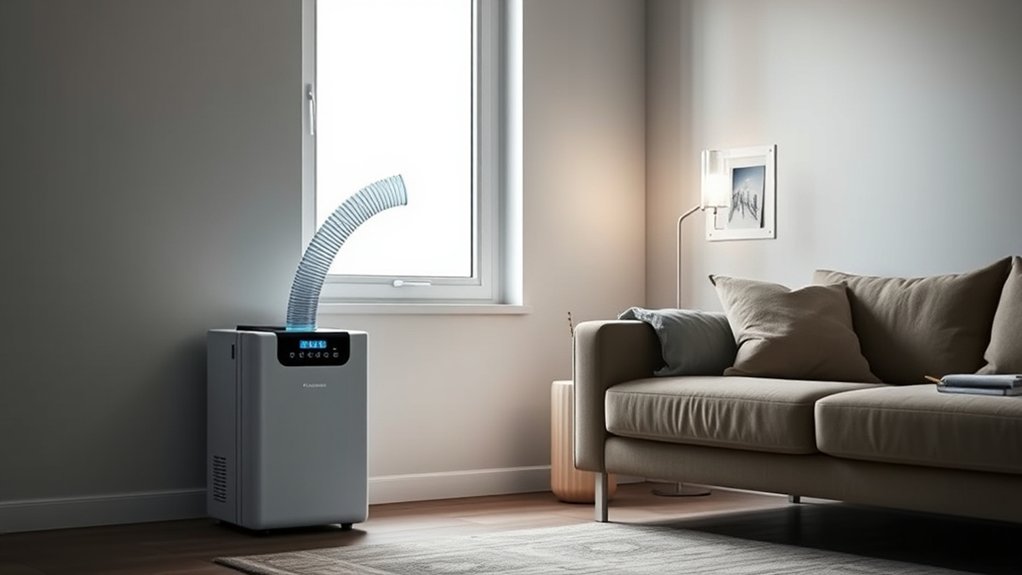
Even if you don’t have a window nearby, portable air conditioners can still cool your space effectively. These units work with a self-contained system that doesn’t need traditional window vents.
Portable air conditioners cool effectively without windows, thanks to self-contained systems and alternative venting options.
Instead, they often have alternative venting options, like flexible hoses or exhaust systems that can be directed through walls or ceiling openings. This design helps keep the air fresh by filtering out dust and pollutants, so you breathe cleaner air.
Modern portable AC units are built to operate quietly, so they won’t disturb your daily activities or sleep. They use insulated parts and sound-dampening tech to keep noise levels low.
The cooling process involves drawing warm air in, cooling it with refrigerant, and then circulating it back into your space. Because they don’t rely on external windows, these units are perfect for apartments or rooms without traditional ventilation options.
They provide comfort without sacrificing air quality or creating excessive noise.
What Are the Best Venting Options for Windowless Rooms?
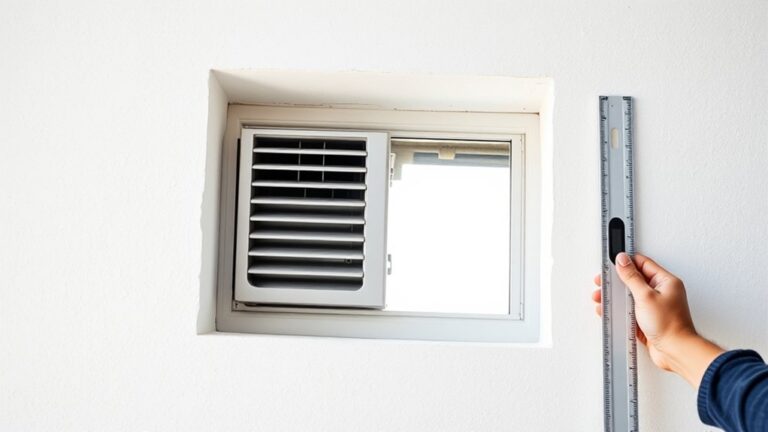
If you’re trying to vent a portable AC unit in a windowless room, choosing the right option is key for effective cooling and air circulation. One good solution is installing a window replacement, like a wall vent or an external exhaust outlet. This lets hot air escape without needing a window, keeping the space sealed.
When picking venting options, think about noise reduction. Some systems are designed to minimize sound so they won’t disturb your room. You might also consider a through-the-wall vent kit, which provides a permanent solution and helps keep noise levels low.
Proper venting not only boosts cooling efficiency but also prevents humidity and heat from building up. Making sure your venting system is well-sealed and insulated can improve noise reduction and overall comfort. This makes your windowless room more livable, especially during hot days.
Can I Use Ducting or Exhaust Kits Without a Window?
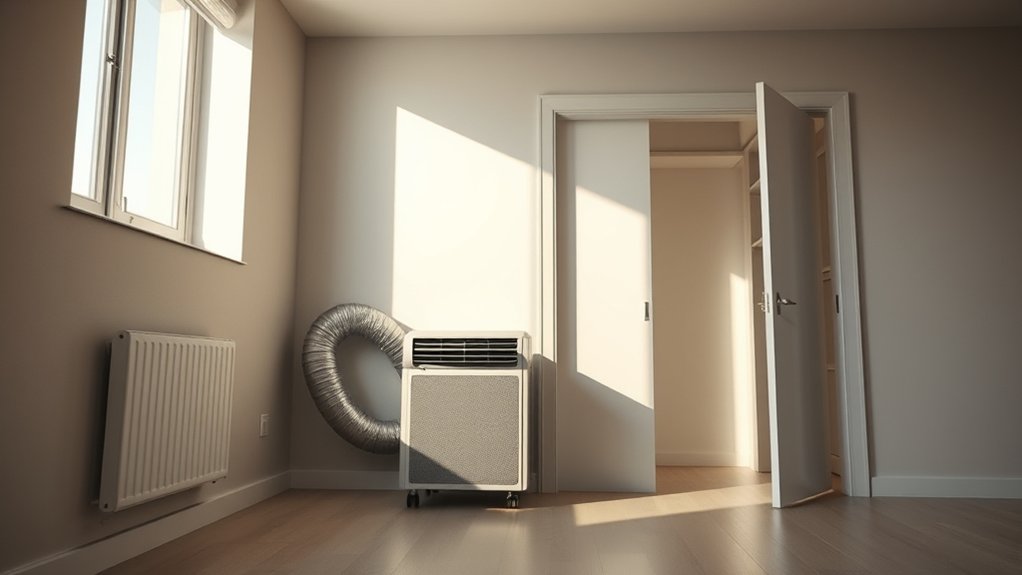
Using ducting or exhaust kits without a window is definitely possible, but you’ll need to plan carefully to ensure proper ventilation. You’ll want a way to vent hot air outside so indoor air quality stays good.
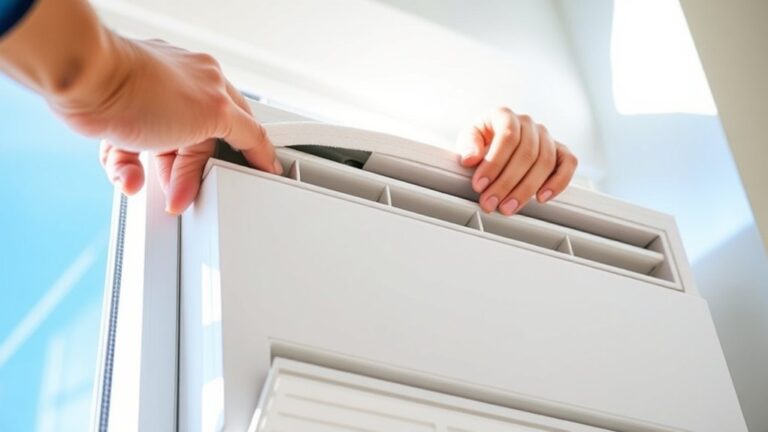
This might mean creating a vent through a wall, ceiling, or door. Just make sure the opening is sealed properly to prevent leaks. Proper installation helps keep the air fresh and stops humidity and odors from building up.
Keep in mind that ducting can also raise noise levels. Longer or poorly insulated ducts might make more noise and reduce noise reduction. To stay comfortable, think about using soundproofing materials around the ducting.
While setting up ducting without a window is doable, take a close look at your room’s structure and ventilation options. This will help you ensure everything works safely and your indoor air stays healthy.
How to Set Up a Portable AC in a Room Without a Window
Setting up a portable AC in a room without a window might seem tricky at first, but don’t worry—you just need to get a bit creative with ventilation options. Since there’s no window to vent outside, it’s all about finding alternative ways to keep the air fresh and circulating.
The key thing is making sure the air doesn’t get stale or stuffy. Good air circulation helps your unit run smoothly and keeps your space comfortable. So, it’s a good idea to explore different methods to vent and maintain airflow in your room.
Alternative Ventilation Options
When you don’t have a window available for venting a portable AC, exploring alternative ventilation options is key to keeping your space cool and safe. Many people believe myths like needing a window or that setup will be really noisy.
In reality, options like venting through a door, using a ceiling vent, or installing a dedicated venting system can work effectively. Noise concerns are valid but often exaggerated; modern units are designed to be quiet, and proper installation can reduce sound.
You might also consider venting through a wall or using a venting kit that connects to an existing vent or duct. These alternatives help maintain airflow without a window, keeping your room cool and comfortable.
Proper Air Circulation
Ensuring proper air circulation is key when installing a portable AC in a room without a window. It helps keep the cooling efficient and air quality high.
Start by regularly checking and changing your air filter. This prevents dust buildup that can block airflow and make the AC less effective.
A clean filter also reduces indoor allergens and odors, making the space healthier.
To cut down on noise and boost comfort, place the unit away from quiet areas and make sure any panels are secured.
Using fans can help improve airflow and keep fresh air moving throughout the room.
Good circulation prevents hot spots, boosts cooling efficiency, and creates a healthier indoor environment.
All of this makes your portable AC work better and keeps the room more comfortable.
Are Ventless Portable Air Conditioners a Good Choice?
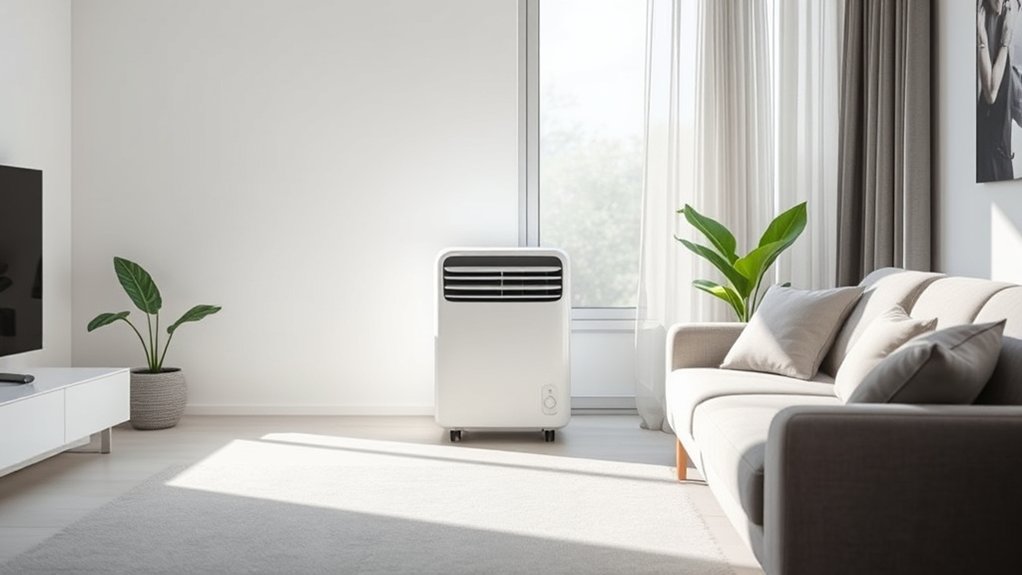
Ventless portable air conditioners can be a pretty appealing choice because they’re usually more energy-efficient and easier to set up than the traditional ones. You don’t have to deal with installing vents or exhaust hoses, which makes them a straightforward option for many spaces.
That said, it’s really important to consider whether their cooling power is enough for your needs before making a decision. They work great for small rooms or as a supplemental cooling source, but they might not be the best fit if you’re trying to cool a larger area.
Energy Efficiency Benefits
While ventless portable air conditioners might seem like a convenient choice, their energy efficiency can vary a lot. These units usually use less power than traditional ACs because they don’t need venting, which helps save energy.
But they might have limited cooling capacity, meaning they could have to work harder and use more energy in bigger spaces. This can affect how efficient and eco-friendly they really are.
Choosing a ventless unit with features like adjustable fans or timers can help cut down on power use even more. Overall, they can save energy in some cases, but it’s important to consider your space and cooling needs to see if they’re the best option for efficiency and the environment.
Ease of Installation
Installing ventless portable air conditioners is generally straightforward because they don’t require complex ductwork or permanent modifications. You can set them up quickly, often needing just a power source and a flat surface.
This makes installation hassle-free, especially if you’re renting or want flexibility. When considering ease of installation, think about:
- Minimal setup time
- No need for window or wall modifications
- Portable design for easy relocation
- Lower cost compared to traditional systems
These units often have lower upfront costs, which makes the overall cost comparison more favorable. Noise levels are usually moderate, but some models operate quietly enough for bedrooms or offices.
Can Evaporative Coolers Cool Without Windows?
Evaporative coolers rely on fresh air intake and moisture evaporation to lower indoor temperatures, so they need proper airflow to work well. Without a window or vent, this airflow becomes a challenge, which limits how effectively they can cool.
These coolers work best in dry environments with low indoor humidity because they add moisture to the air. If the humidity is already high, their efficiency drops significantly.
Plus, evaporative coolers can be noisy due to their fans and water pumps, which might be disruptive indoors. Without proper ventilation, the cooled air may circulate only within the space, making them less effective overall.
Tips to Maximize Portable AC Efficiency Without a Window
Looking to get the most out of your portable AC without a window? One easy trick is to use reflective coverings to block out sunlight and keep the heat outside. It’s a simple way to help your unit work smarter, not harder.
Next, focus on improving airflow. Arrange your vents and fans so they work together smoothly, and make sure to seal any gaps or leaks around the unit. That way, all the cool air stays inside where you want it, instead of sneaking out.
Use Reflective Window Coverings
If you’re trying to keep your space cooler without access to a window, reflective window coverings can be a game-changer. They work by boosting heat reflection, which prevents sunlight from entering and warming up your space.
To get the best results, consider using materials like reflective foil or specialized blackout shades. These coverings bounce heat away instead of absorbing it, helping to reduce the load on your portable AC.
Make sure to cover the entire window surface for maximum heat reflection. Proper placement is important—face the reflective surface toward the sun.
Sealing the edges is also key. It helps eliminate gaps that could let heat in, making your cooling efforts more effective.
For even better results, combine reflective window coverings with other cooling methods.
Optimize Airflow Circulation
Maximizing airflow circulation is key to making your portable AC work better, especially if you don’t have access to windows. Good airflow helps cool the whole space and prevents hot spots.
Use fans or oscillating devices to direct air around the room, so the cooled air spreads evenly. Keep vents clear and place your unit in a central spot for the best circulation.
Good airflow not only cools better but also improves air quality by reducing stagnant air. It helps prevent mold and musty smells. Regularly clean filters and vents to keep airflow smooth and avoid clogs.
Seal Gaps and Leaks
Sealing gaps and leaks around your portable AC unit is key to making it run more efficiently, especially if you don’t have a window to vent through. Air leaks let cool air escape and warm air sneak in, which makes your unit work harder.
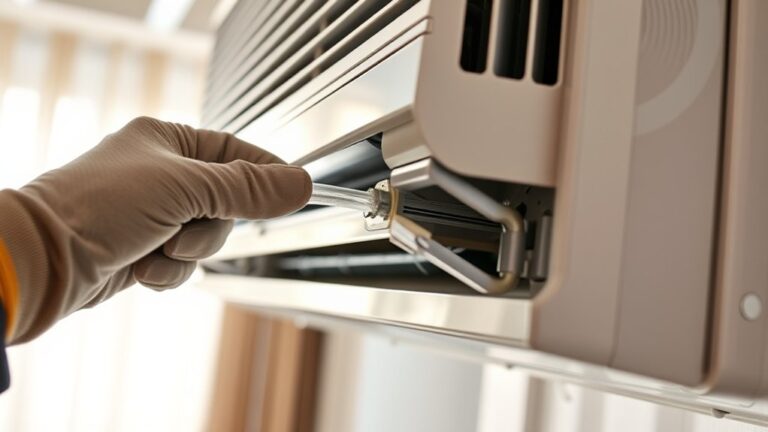
Take a close look around the unit and seal any gaps you find with weatherstripping, foam tape, or caulk. Also, double-check that all vents and hoses are tightly connected to prevent leaks.
Here are some quick tips:
- Use weatherstripping around the edges of the unit
- Seal gaps around the exhaust hose with foam or tape
- Plug any small holes or cracks nearby
- Make sure doors and windows are closed tightly
DIY Vents and Solutions for Portable ACs in Windowless Spaces
When you don’t have a window to vent your portable AC, creating a DIY solution can make all the difference. You can build a simple vent using cardboard, duct tape, and a flexible hose to direct hot air outside through a wall or door.
To improve air circulation and comfort, place indoor plants near the vent. They help absorb heat and humidity, boosting cooling efficiency.
Furthermore, adding a fabric or foam seal around the vent can reduce noise from the AC and airflow, making your space quieter. If noise is a concern, consider stacking blankets or towels around the vent opening to dampen sound.
This approach offers an inexpensive, customizable way to vent your portable AC without a window. Indoor plants and noise reduction methods enhance overall comfort.
With some creativity and basic materials, you can effectively cool your space even in windowless environments.
Safety and Maintenance Tips for Using Portable ACs Without Windows
Using a portable AC without a window vent needs careful attention to safety and maintenance to avoid hazards and keep it working well. First, make sure it’s plugged into a grounded outlet and steer clear of extension cords, as they can cause overheating.
Regularly check the electrical connections for any signs of wear or damage. Keep the filters clean or replace them as the manufacturer recommends to keep airflow and cooling at their best.
It’s also important to ensure proper ventilation so the unit doesn’t overheat or build up carbon dioxide. Keep an eye out for unusual noises or bad odors, which might mean there’s a mechanical issue.
Is a Windowless Portable Air Conditioner Right for Your Space?
Deciding whether a windowless portable air conditioner is right for your space depends on a few key factors. First, think about your indoor environment, especially if you have indoor plants that need consistent, cool air.
These units can help keep your space comfortable without windows, but make sure the area isn’t too humid, which could harm your plants. Noise levels are another thing to consider.
Some models can be quite loud, which might disturb work or rest. Be sure to check reviews before buying. Also, consider your room size and airflow needs—windowless units usually work best in smaller to medium rooms.
If you want a quiet environment and healthy indoor plants, a windowless portable AC could be a good choice. But if noise or humidity control is a concern, you might want to look into other ventilation or cooling options.
In the end, understanding your space’s specific needs will help you decide if this type of AC is the right fit for you.
Frequently Asked Questions
Are There Portable AC Units Designed Specifically for Windowless Environments?
Yes, there are portable AC units designed specifically for windowless environments. These units offer effective cooling options without needing a traditional window setup.
They use alternative venting methods, like venting through a door or ceiling. This makes them great for spaces where installing a window vent isn’t possible.
Look for units with flexible venting options so you can enjoy cool comfort without a window. They’re perfect for apartments, offices, or enclosed spaces.
How Loud Are Portable AC Units Without Window Venting?
Portable AC units without window venting tend to be louder than those with traditional exhaust setups. Their sound levels usually range from 50 to 70 decibels, which is similar to a normal conversation or background noise.
You might notice the noise more in quiet environments, so it can be quite noticeable. If noise is a concern, look for units that have quieter operation modes or sound-dampening features to help reduce the disturbance during use.
Can Portable AC Units Operate Effectively in Sealed Rooms?
Yes, portable AC units can work well in sealed rooms, but you’ll want to consider humidity control and air purification.
Since there’s no ventilation, humidity might rise, so pick a unit with dehumidifying features to keep things comfortable.
For better air quality, look for models that have air purification filters. These help keep the air fresh and make the space more livable without losing efficiency.
What Are the Energy Consumption Differences for Ventless vs. Vented Portable ACS?
Vented portable ACs generally have better energy efficiency and lower power consumption than ventless models because they expel hot air outside, reducing the workload on the unit.
Ventless units rely on dehumidification and air circulation, which can increase energy use and reduce efficiency.
If you want to save on power consumption, choosing a vented portable AC is usually the smarter option, especially for long-term use.
Are There Alternative Cooling Methods Besides Portable ACS for Windowless Spaces?
Imagine a cool breeze swirling through your windowless space, offering relief without traditional ACs. You can explore alternative cooling methods like evaporative coolers, which add moisture and lower temperatures.
Or try portable air coolers that use water to chill the air. These options provide effective windowless cooling, helping you stay comfortable without needing window access.
They’re practical solutions that bring refreshing relief right where you need it most.
Conclusion
Without windows, cooling your space might seem tricky, but it’s totally doable. Did you know that portable AC units can reduce room temperatures by up to 20°F?
By choosing the right venting options and DIY solutions, you can keep your room comfortable without sacrificing airflow.
With a little effort, you’ll enjoy a cool, fresh environment even in the most windowless spaces.
This makes using portable AC units without windows an easy way to stay cool indoors during summer.