How Should Your Window AC Sit for Maximum Efficiency?
If you’ve ever struggled with your window AC not cooling as well as you’d like, you’re definitely not alone. Many people find that their units don’t perform efficiently, especially during the hottest days.
Luckily, a few simple adjustments can make a big difference.
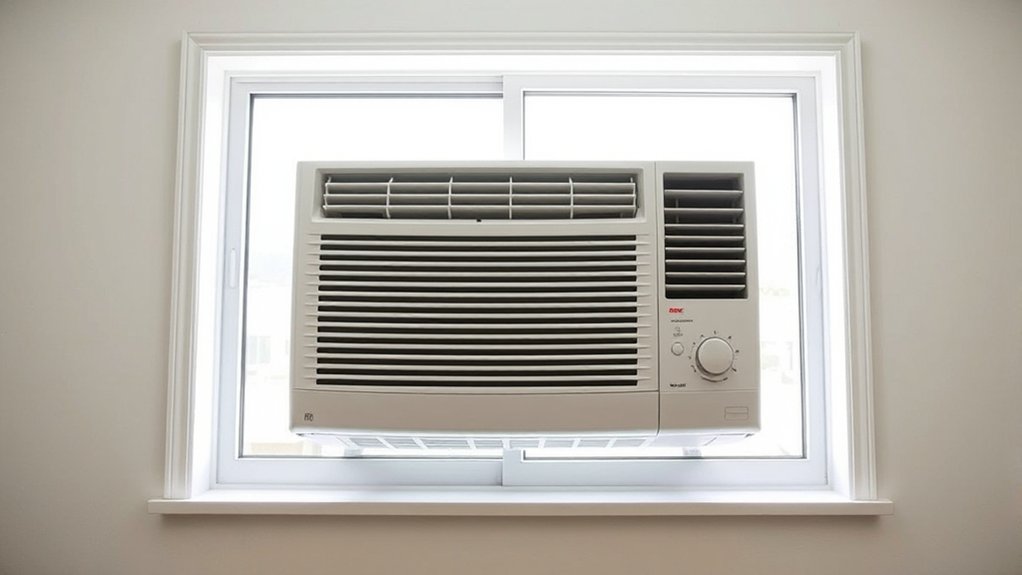
To maximize your window AC’s efficiency, make certain it’s properly installed and leveled with a slight backward tilt of about 3 to 5 degrees for good drainage. Mount it securely above the window sill with vents at or just above eye level for better airflow.
Keep the area clear of obstructions, seal all leaks around the window, and check that vents and outside exhausts aren’t blocked. Proper positioning and sealing help the unit cool effectively and use less energy.
Keep exploring to learn more tips for peak performance.
Key Takeaways
- Mount the AC slightly above the window sill with a proper tilt of 3 to 5 degrees for better drainage and efficiency.
- Make sure the unit is perfectly level using a bubble level to promote even airflow and prevent leaks.
- Position vents at or just above eye level and keep nearby objects clear to maximize airflow and cooling.
- Seal all gaps around the window frame with weatherstripping or foam to prevent air leaks and boost energy efficiency.
- Keep outdoor vents unobstructed and clean filters regularly for the best airflow and system performance.
Why Proper Placement Boosts Your Window AC’s Efficiency
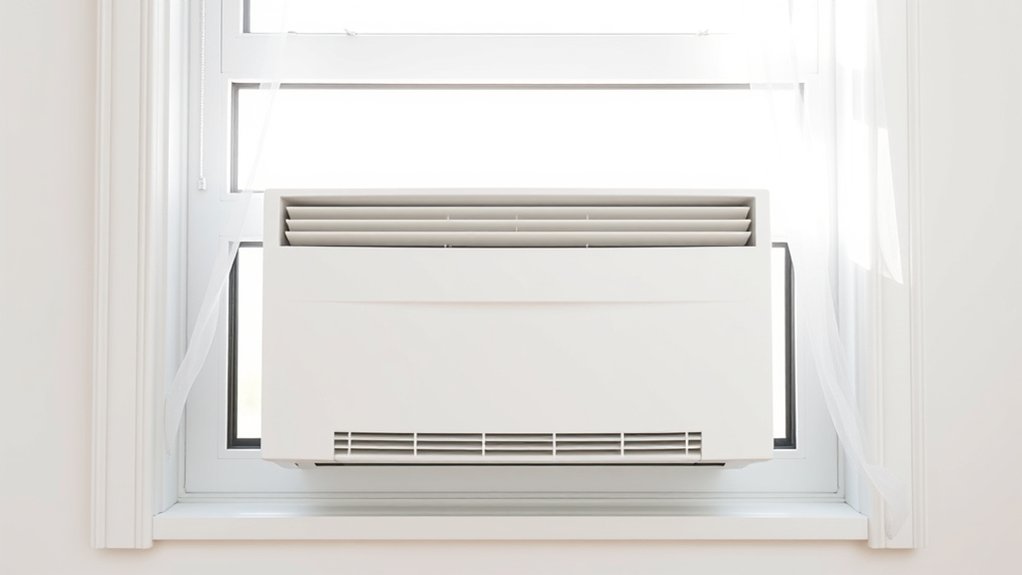
Proper placement of your window AC unit is essential because it directly affects how well it cools your space. When installed correctly, your unit works more efficiently, saving energy and lowering your utility bills.
Proper placement ensures your window AC cools efficiently, saving energy and reducing utility costs.
Positioning the AC in a shady spot or avoiding direct sunlight helps improve energy efficiency by preventing unnecessary heat absorption. A well-placed unit also minimizes noise, making your space more comfortable.
If the AC is installed too high or unevenly, vibrations and rattling increase, raising noise levels. Proper placement ensures airflow isn’t blocked, allowing your unit to circulate air effectively.
This boosts cooling performance and reduces strain on the compressor, which helps extend your AC’s lifespan. When you focus on the right placement, your window unit runs quietly and efficiently, providing a cooler environment while saving energy.
How to Choose the Best Window for Installing Your Air Conditioner
Choosing the right window for your air conditioner is pretty important if you want it to work efficiently. You’ll want to think about the material of the window and make sure it’s compatible with your unit.
Also, double-check that the window size matches your air conditioner so it fits snugly. This helps prevent any pesky air leaks that could make your unit work harder than it needs to. And don’t forget to secure the AC properly—wobbly or shifting units are no fun!
When you pick the right window, you’re not just making your AC work better, but you’re also helping it last longer.
Window Material Compatibility
When choosing a window for your air conditioner, it’s important to consider the material to ensure compatibility and secure installation. The window frame’s material can impact durability and how well your AC fits.
Some frames, like vinyl or aluminum, are easy to work with and resist weathering, which helps them last longer. Others, such as wood, might need reinforcement to stay stable.
| Frame Material | Durability | Compatibility |
|---|---|---|
| Vinyl | High | Easy to install |
| Aluminum | Very high | Good for most units |
| Wood | Moderate | Needs reinforcement |
| Steel | Very high | Heavy-duty use |
| Composite | High | Versatile |
Pick a frame that matches your AC’s weight and installation needs.
Proper Window Size Selection
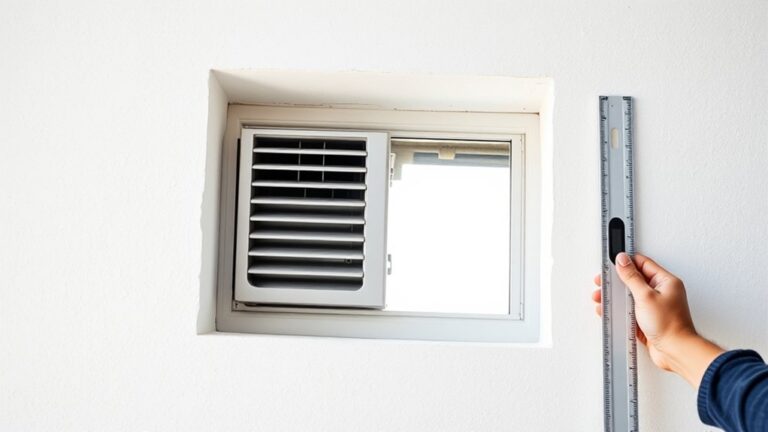
Selecting the right window size is crucial to ensure your air conditioner fits securely and works efficiently. Take careful measurements of your window frame to get the exact dimensions, including both width and height.
An AC unit that’s too small won’t cool effectively, while one that’s too large can cause poor airflow and waste energy. Make sure the window opening matches the unit’s specifications so it sits snugly without gaps.
Getting the size right helps keep the air conditioner stable and maintains good airflow, which is essential for efficient cooling. If the window is too wide or narrow, the unit won’t sit properly, reducing its effectiveness and possibly causing vibrations.
Always double-check your measurements and choose a window size that matches your AC’s requirements precisely.
Secure Installation Methods
To guarantee your window air conditioner stays secure and operates safely, it’s important to choose a window that provides a stable and sturdy platform. A well-fitting window keeps your AC steady and helps prevent accidents or damage.
Make sure the window frame is in good condition and can support the unit’s weight. Use secure brackets or braces if needed, especially for larger models. Proper installation also helps improve energy efficiency by sealing gaps where cool air can escape and warm air can enter.
With a stable setup, you can easily control your AC using the remote without worry. A secure fit not only boosts cooling performance but also helps extend the lifespan of your unit, ensuring consistent comfort and safety.
Position Your AC for Maximum Airflow and Cooling
Want to get the most out of your window AC? The trick is to position it just right. Usually, a few inches above the window sill works best. This height allows for better airflow and helps the unit cool your room more evenly.
Also, be sure there aren’t any obstructions nearby—things like curtains or furniture that could block the air from circulating freely. Keep the area around the AC clear so it can do its job without any hiccups. When your AC is properly placed, it runs more efficiently and cools your space faster.
Ensure Proper Placement Height
Positioning your window AC at the right height is key for good airflow and cooling. Placing it too high or low can mess up the airflow, making your unit work harder and less efficiently.
For the best results, install the AC so that the vents are about level with the middle of the window opening. This height helps it blend nicely with your interior decor and keeps things looking tidy.
A proper height also helps reduce noise by minimizing vibrations and sound transfer to other parts of your home. Avoid mounting the unit too high, which can cause uneven cooling, or too low, which can block airflow and increase noise.
Getting the height right ensures your space stays comfortable, quiet, and looks good.
Avoid Obstructions Nearby
Ensuring there are no obstructions around your window AC allows it to breathe and operate efficiently. Keep decorative curtains pulled back or away from the unit to prevent blocking airflow.
Avoid placing furniture or other objects directly in front of the AC, as they restrict air circulation. If you have window tinting, make sure it doesn’t cover or shade the unit excessively, which can trap heat and reduce cooling performance.
Obstructions like thick curtains or nearby objects can cause the unit to work harder, leading to increased energy use and faster wear. By clearing the area around your AC, you guarantee maximum airflow, helping it cool more effectively and efficiently.
Proper placement and minimal nearby obstructions are key to peak performance.
Maintain Clear Airflow Path
For your window AC to work efficiently, make sure there’s a clear path for air to flow freely in and out. Proper positioning helps with optimal cooling and saves energy.
Avoid blocking vents or placing decorative curtains too close, as they can restrict airflow and lower performance. Keep the area around your AC unobstructed so fresh air can circulate easily.
Think about how window decorations, like curtains, might impact airflow. Try pulling them back or keeping them away from the unit.
Here’s a quick table with placement tips:
| Tip | Benefit |
|---|---|
| Keep curtains pulled back | Maximizes airflow, improves cooling |
| Clear surrounding space | Prevents obstruction, boosts efficiency |
| Position for unobstructed flow | Keeps airflow steady and your space comfortable |
How to Secure and Level Your Window AC for Optimal Performance
To get the best performance from your window AC, it’s important to secure and level the unit properly. Make sure the AC is firmly mounted in the window frame to prevent wobbling or shifting.
Secure and level your window AC for optimal performance and stability.
Use shims or a level to ensure the unit is perfectly horizontal. This helps it operate efficiently and prevents leaks. When positioning your AC, think about remote placement for easy access to controls.
Consider how it looks too; a well-installed unit should blend smoothly with your window and room decor. Visualize the installation with these points:
- Secure mounting brackets firmly attaching the AC to the window frame
- Level placement with a bubble level for even airflow
- Proper tilt to drain condensation away from the window
- Adequate clearance around the unit for airflow and easy access
Getting these steps right ensures maximum performance and a neater look, making your cooling more effective.
Sealing Air Leaks to Save Energy and Improve Cooling
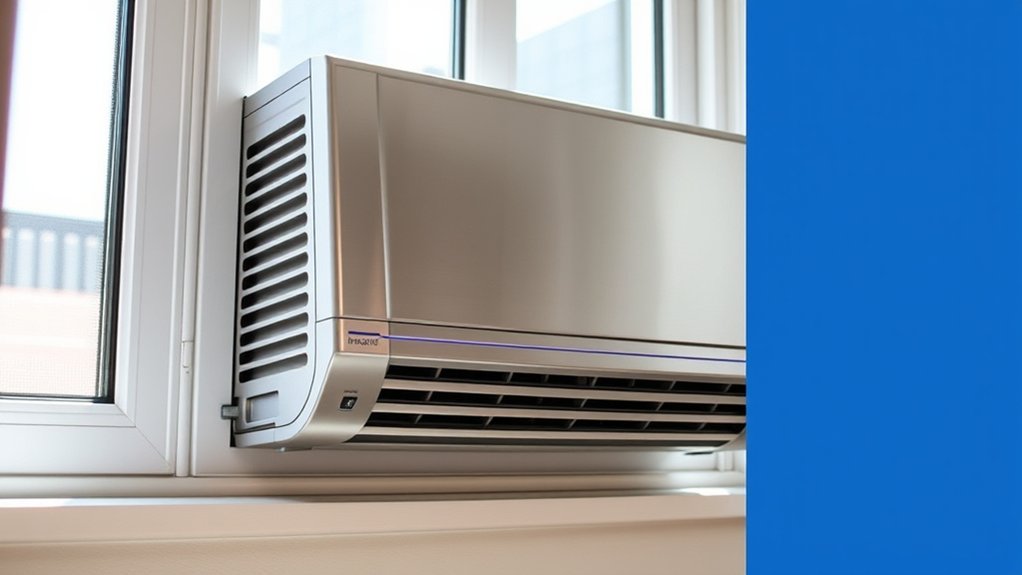
Sealing air leaks around your window AC can make a big difference in how well it works. Warm air sneaking in and cooled air escaping can really cut down its efficiency.
To keep your indoor temperature steady, focus on sealing those leaks. Use a flashlight or smoke pencil to spot gaps around the unit, then seal them with weatherstripping or foam sealant.
You can also add insulation like foam boards or draft stoppers to block air from getting in. Check all sides of your AC and the window frame for leaks.
Sealing these gaps not only helps your cooling work better but also lowers your energy bills. Properly sealed units run more efficiently, last longer, and keep your space more comfortable.
Just a little regular maintenance on the seals around your window AC can go a long way in saving energy and improving performance all year round.
The Best Height and Angle for Your Window AC
When you’re installing your window AC, finding the right height is pretty important. Usually, it’s best to mount it so that it’s centered—that way, the airflow stays balanced and effective. Think of it like giving your AC the best shot at cooling your space evenly.
Now, about the tilt angle—just a tiny bit of tilt is all you need. It should be enough to help drain the condensation properly, but not so much that it leaks or feels unstable. A small adjustment can really make a difference in how well your AC cools and how much energy it uses. So, taking a little time to get these details right can make your cooling experience much better!
Optimal Mounting Height
Have you ever wondered if your window AC is installed at the right height? The ideal mounting height helps with efficient cooling and proper airflow. You want the unit to be level within the window frame, avoiding tilting that can cause leaks or poor performance.
Mount it so the vents are at or just above eye level for even air distribution. Think about adding insulation materials around the frame to block drafts and heat exchange, which can affect efficiency. Visualize your unit sitting flush within the window frame, slightly above the sill for better air circulation, and securely level for stability.
Surround the unit with well-sealed insulation materials. This setup maximizes cooling and minimizes energy waste, ensuring your window AC works its best. Proper height is key for both comfort and efficiency.
Ideal Tilt Angle
Achieving the right tilt angle for your window AC is key to ensuring it works efficiently and avoiding issues like water leaks or poor cooling. A slight tilt backward helps water drain properly, preventing leaks and damage.
For the best temperature control, aim for a tilt of about 3 to 5 degrees. This helps with proper airflow and even cooling across the space.
This angle also helps reduce noise by minimizing vibrations and rattling sounds that can happen if the unit isn’t aligned properly. Keep the unit level from side to side, but tilt it slightly toward the outside to help with drainage.
Adjusting the tilt correctly not only boosts cooling performance but also cuts down on operational noise, making your space more comfortable and quieter.
Keep the Air Intake and Exhaust Clear of Obstructions
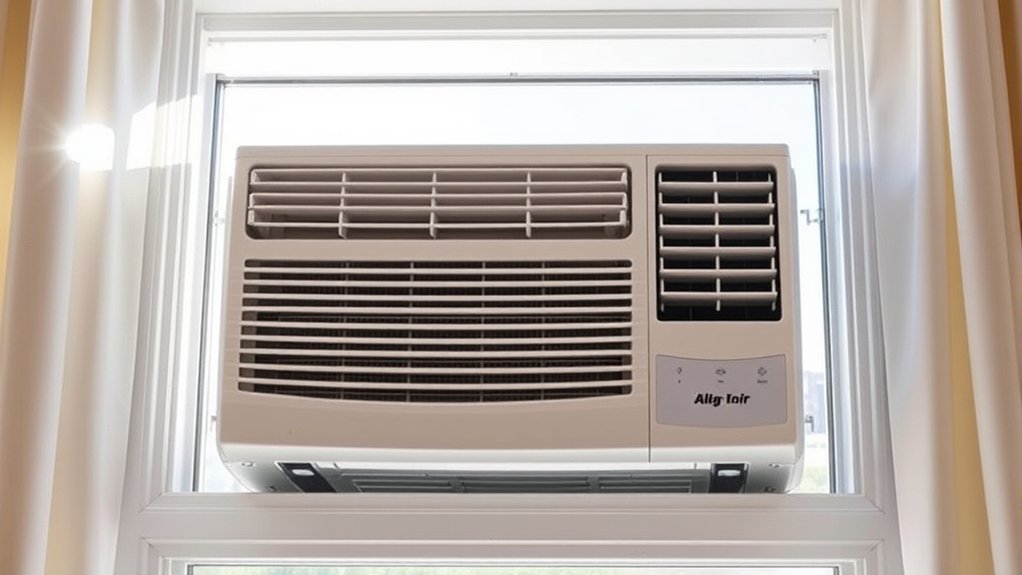
Ensuring your air intake and exhaust are free of obstructions is key for your window AC to work its best. Blockages can cut down airflow, making your unit work harder and less efficiently.
Keep air intake and exhaust clear for optimal window AC performance and efficiency.
Regularly check that nothing is cluttering the vents, like leaves, dirt, or debris. Keep the air filter clean so airflow stays good and dust doesn’t build up, which can strain the system.
Also, don’t forget to verify your coolant levels. Low coolant can make your AC struggle to cool properly and use more energy.
Picture your unit with clear vents and grilles, free of plants or furniture blocking them. Make sure the air filter isn’t dusty, and there’s no leaves or dirt around the outdoor unit or vents. Keep coolant levels adequate for optimal cooling.
Tips to Maintain Good Airflow Throughout the Summer
Maintaining good airflow during the summer months helps your window AC perform at its best and keeps your space comfortable. To boost energy efficiency, make sure nothing blocks the vents or the area around your unit.
Regularly clean or replace filters to improve airflow and reduce strain on the system, which also minimizes noise. Keep curtains, furniture, or other objects away from the unit’s front and sides to prevent airflow restrictions.
Use a fan in the room to help circulate air more effectively, reducing the workload on your AC. Proper airflow not only improves cooling but also cuts down on energy consumption, saving you money.
Furthermore, good airflow can lessen the noise produced by your AC, making your environment more peaceful. Regularly inspecting and adjusting your window unit’s position and surroundings will keep airflow steady.
This ensures optimal performance and comfort throughout the summer.
Common Placement Mistakes That Reduce Your AC’s Effectiveness
Many common placement mistakes can really cut down your window AC’s effectiveness. If you block airflow or pick the wrong spot, your unit has a tough time cooling properly.
For example, placing your AC in a shaded area helps it run better, while putting it in direct sunlight makes it work harder. Ignoring the color options of your unit can also cause problems; darker units tend to absorb more heat, which can raise noise levels and lower efficiency.
Positioning your AC near curtains or furniture blocks airflow, making it less effective. Setting the unit too high or low on the window can cause vibrations and increase noise, disturbing your comfort.
For the best results, make sure your AC isn’t obstructed, is in a spot that allows good airflow, and consider the color options that affect heat absorption. Proper placement reduces noise, keeps your room cooler, and improves your unit’s efficiency.
Seasonal Tips to Keep Your Window AC Running Smoothly
As the seasons change, it’s important to give your window AC some extra attention to keep it running smoothly. Start by cleaning or replacing the filter regularly to improve airflow. This not only boosts energy savings but also keeps your unit efficient.
Check the drain pan and drain holes to prevent water buildup, which can put extra strain on the system. Keep the exterior of the unit free from debris and leaves to ensure proper ventilation and reduce noise.
Consider installing a weatherproof cover during the off-season to protect it from dust and moisture. When you’re not using the unit, turn off the power and unplug it to avoid unnecessary energy drain.
Sealing gaps around the window frame also helps prevent warm air from sneaking in. This makes your AC work less hard and helps save energy. Following these seasonal tips will keep your window AC running quietly, efficiently, and reliably all season long.
Frequently Asked Questions
How Often Should I Clean or Replace My Window AC Filters?
You should clean your window AC filters every 1 to 2 months during regular use.
Check them more often if you notice reduced airflow or higher energy bills.
When it comes to replacing filters, it varies. Usually, if filters are damaged or heavily soiled after cleaning, it’s time to replace them.
Regular cleaning and replacing on time help your AC run efficiently, improve indoor air quality, and extend its lifespan.
Can Installing a Curtain or Shade Improve My Ac’s Efficiency?
Did you know that shading your window can reduce indoor temperatures by up to 10%? Installing a curtain or shade helps your AC work more efficiently by blocking direct sunlight.
This means your unit doesn’t have to work as hard to cool your space. Proper curtain placement, whether outside or inside the window, really boosts how much shade you get.
Just a simple step like this can lower your energy bills and help your AC last longer. It makes your cooling system more effective and eco-friendly too.
What’s the Ideal Temperature Setting for Energy Savings?
You should set your window AC to around 78°F for the best energy savings. This temperature strikes a good balance between comfort and efficiency, helping to reduce strain on the unit.
Proper temperature calibration helps prevent overcooling, which wastes energy and raises your bills. When you’re away or sleeping, raising the thermostat slightly higher can save even more energy without sacrificing comfort.
Make sure to check your AC’s settings regularly to keep this ideal temperature. That way, you can get the most savings while staying comfortable.
How Does Outdoor Noise Affect My Window Ac’s Performance?
Outdoor noise can really affect how your window AC works by causing vibrations and interrupting its operation. Adding sound insulation around the unit can help cut down on the noise, making it run more smoothly and putting less strain on the compressor.
When outdoor noise levels are high, your AC might have to work harder to keep your room at the right temperature. This can lead to increased energy use. To get the best performance, think about installing soundproofing materials or choosing a quieter model, especially if you’re in a noisy area.
Is It Better to Run My Window AC Continuously or Intermittently?
You should run your window AC continuously for better energy conservation and noise reduction. It keeps a steady temperature and prevents the system from working overtime.
Turning it on and off causes fluctuations, which can increase energy use and noise levels. Think of it as hitting two birds with one stone—keeping your space comfortable while saving energy and reducing disruptive sounds.
Consistent operation is your best bet.
Conclusion
Mastering your window AC’s placement boosts its efficiency and makes your space more comfortable.
By paying attention to positioning, securing, sealing, and airflow, you can avoid poor performance and annoying issues.
A proper setup and regular maintenance help keep your room cool and consistent all summer long.
Don’t forget to follow seasonal tips for peak performance.
With mindful placement and upkeep, you’ll master the art of efficient cooling.
This ensures your space stays cool, comfortable, and easy to enjoy throughout the season.