What Size Generator Do You Need for Window AC?
Installing a window AC unit is a great way to stay cool, but figuring out the right size generator can be confusing. Many people struggle with this because they want to avoid overloads and keep their devices running smoothly. You’re not alone—finding the perfect generator is a common challenge during summer months.
To determine the right size generator for your window AC, check the unit’s label for its starting and running wattage. Add these wattages and include a 20% safety margin.
Also, consider other summer devices like fans or dehumidifiers. Choosing a generator that comfortably handles these loads prevents overloads and ensures smooth operation.
For detailed steps on sizing and safe connection tips, keep exploring how to make the best choice.
Key Takeaways
- Find out the window AC’s starting and running wattage from its energy label, then add a 20% safety margin to ensure enough capacity.
- Make sure the generator’s surge capacity is higher than the AC’s starting wattage so it can handle the compressor’s startup without overload.
- Don’t forget to include other summer devices like fans and dehumidifiers in your total load calculation for accurate sizing.
- Pick a generator that provides stable voltage during startup to prevent damage and keep your AC running smoothly.
- Think about noise levels and use outdoor-rated extension cords to keep your setup comfortable and safe during power outages.
How to Find Your Window AC’s Power Needs
To figure out how much power your window AC needs, start by looking for its energy label or specification tag, usually on the side or back of the unit. This label gives you key info like voltage, amperage, and wattage, which help you estimate its total power use.
Check the energy efficiency rating too. More efficient models use less power, making them easier to run with a generator. Noise levels are also good to note; quieter units might have different power needs.
Once you see the wattage on the label, you’ll know the continuous power your AC requires to run smoothly. This helps you pick a generator that can handle your unit’s load without overloading or wasting energy.
Knowing these details makes it easier to find a generator that powers your window AC efficiently while keeping operation comfortable and quiet.
Understanding Starting and Running Watts for Your AC
When choosing a generator for your window AC, it’s important to understand the difference between starting and running watts. Starting watts are the extra power needed to get your AC’s compressor going, which is usually higher than what it uses once running.
Running watts cover the power your AC needs for continuous operation. Knowing both helps you pick a generator that can handle the initial surge without overloading.
Energy efficiency matters too—an efficient AC uses less power, making it easier to select a suitable generator. Noise levels are also key, especially in quiet neighborhoods; a quieter generator is often preferred.
By understanding these wattage differences, you can ensure your generator can handle the initial startup and steady running of your AC. This prevents interruptions or damage and helps you stay comfortable.
Knowing how much power your AC needs allows you to optimize energy use while keeping noise down. It also helps you choose a generator that balances efficiency and quiet operation.
How to Size Your Generator for Your Window AC
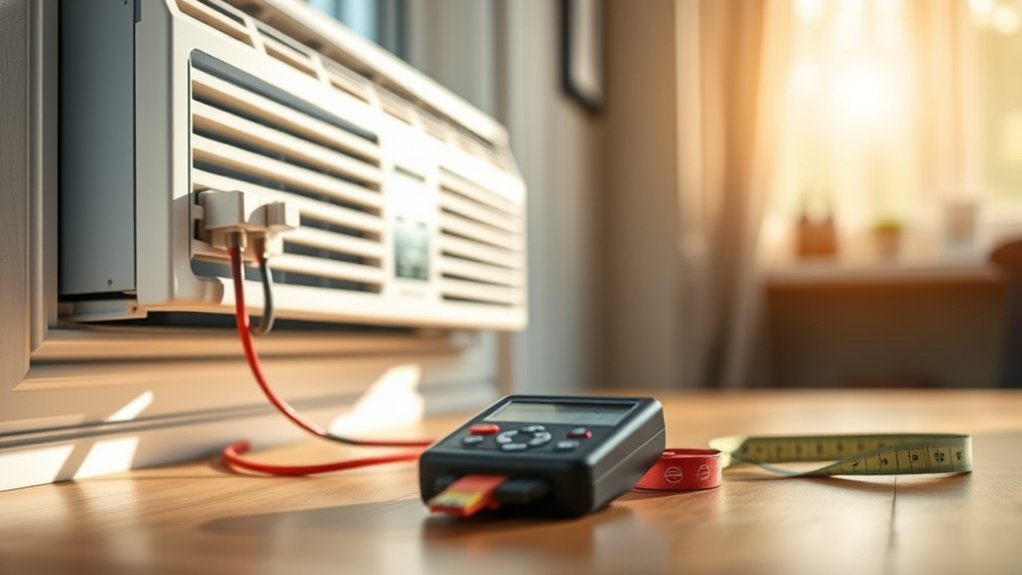
Sizing your generator correctly guarantees your window AC runs smoothly without overloads or interruptions. To do this, start by adding the AC’s running watts to its starting watts, then add a safety margin of about 20%. This helps your generator handle brief power surges.
Next, consider generator maintenance; choosing a model that’s easy to service helps keep performance optimal and extends its lifespan. A well-maintained generator runs more efficiently, which reduces fuel consumption and saves you money.
Fuel efficiency is really important, especially during long outages. Look for generators with features like economy modes or fuel-saving technology. Avoid undersizing, as it can cause overloads and damage your equipment, or oversizing, which wastes fuel and costs more.
Calculating Your Home’s Total Power Load
Understanding your home’s total power load is essential before choosing a generator. It ensures you have enough capacity to run all your essential appliances at the same time.
Start by listing every device and appliance you plan to operate, noting their wattage. Focus on high-energy items like your refrigerator, lighting, and electronics.
Add these numbers together to get a rough estimate of your total power needs. Keep energy efficiency in mind—choosing appliances with better ratings can reduce your overall load and make your generator work more efficiently.
Think about noise levels too. Quieter generators are more comfortable, especially if your home is close to neighbors. Always add some extra capacity for unexpected power surges or future appliances.
Calculating your total power load accurately helps you pick a generator that can handle your current needs while minimizing noise and maximizing energy efficiency.
Accounting for Extra Devices in Summer
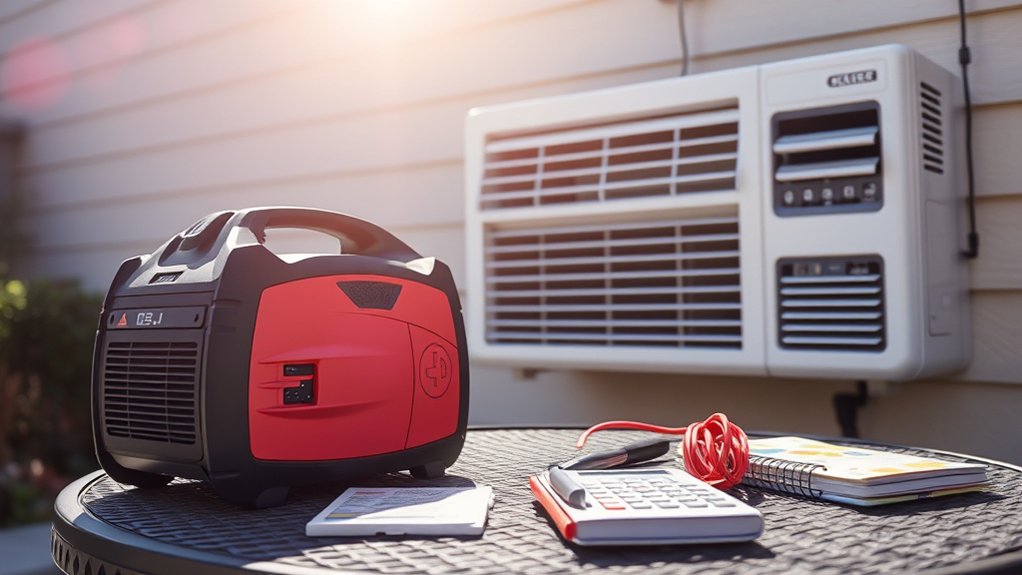
Have you thought about how the demand for electrical devices ramps up during summer? Besides your window AC, you might be running fans, dehumidifiers, or even portable fridges. These extra devices can add a lot of load, so it’s important to choose a generator that can handle it.
Plan your generator size based on this increased demand. Focus on energy efficiency to prevent overloading your system and to keep utility bills in check. Also, think about noise levels—some devices are louder, which could be disruptive if you’re sensitive or have neighbors nearby.
Here’s a quick overview:
| Device Type | Power & Noise Considerations |
|---|---|
| Fans | Moderate power, low noise |
| Dehumidifiers | Higher power, moderate noise |
| Portable Fridges | Low power, minimal noise |
| Lighting | Low power, negligible noise |
| Small Electronics | Low power, silent |
Adding these devices means you’ll need a generator that balances enough power, energy efficiency, and low noise output for summer comfort.
What Are the Best Generators for Running a Window AC?
Looking for the best generators to run your window AC? You want a model that combines energy efficiency with low noise levels so your comfort isn’t compromised. Portable inverter generators are a great choice because they run appliances smoothly without wasting fuel.
Their energy-efficient operation helps save fuel and reduce emissions, making them cost-effective. Plus, inverter generators produce cleaner power, which helps protect your AC’s motor. Look for models with noise levels around 50-60 decibels—they’re quieter and won’t disturb your household or neighbors.
Brands like Honda, Yamaha, and Westinghouse offer reliable options that balance efficiency and quiet operation. These generators are portable and durable, perfect for emergency backup and outdoor activities.
Why It’s Better to Overestimate Your Generator Size
Choosing a generator that’s slightly larger than your immediate needs can save you from the hassle of power shortages and equipment malfunctions. When you overestimate your generator size, you ensure your window AC and other appliances run smoothly without straining the system.
This extra capacity makes generator maintenance easier because the load on the unit is less intense, reducing wear and tear over time. Plus, a slightly larger generator tends to be more fuel-efficient because it operates closer to its ideal load range, preventing constant throttling or overworking.
While it might seem smart to go with the smallest generator that can handle your AC, underestimating can lead to frequent outages or damage to your equipment. Overestimating gives you peace of mind, reliable power, and a longer equipment lifespan.
It also helps keep your generator in better shape with less frequent maintenance. Overall, opting for a bit more capacity is a smart move for dependable, efficient power.
Common Mistakes When Choosing a Generator for Your AC
Many folks forget to consider power surges and the starting wattage when they’re picking out a generator. It’s easy to overlook, but not keeping these in mind can really cause problems. When the AC kicks on and demands a burst of extra power, your generator might not be able to handle it, which could make your AC shut down or even get damaged.
Ignoring Power Surge Needs
Failing to account for power surges can cause your generator to struggle or even fail when your window AC kicks on. Power surges happen when the compressor starts, creating a quick spike in power demand.
If your generator isn’t designed to handle these surges, it can lead to voltage instability, which might cause your AC to shut down or run less efficiently. To avoid this, choose a generator that can handle the initial startup wattage and has a buffer for sudden increases in power.
Ignoring these surge needs can damage your appliances or shorten your generator’s lifespan. Always check the surge capacity and make sure your generator can maintain stable voltage during startup so your AC runs smoothly without interruptions.
Overlooking Startup Wattage
When selecting a generator for your window AC, overlooking the startup wattage can cause big problems. The initial surge of power needed to start the compressor is often much higher than the running wattage.
Failing to account for this can make the generator struggle or shut down unexpectedly. While energy efficiency matters, don’t sacrifice capacity. Insufficient wattage can damage your AC or shorten its lifespan.
Also, think about noise levels. Some higher-wattage generators might be louder, which could affect your comfort. Always pick a generator that can handle the startup wattage comfortably.
This ensures smooth operation and reduces the risk of overloads. Properly considering startup wattage guarantees reliable performance without sacrificing efficiency or creating too much noise.
Safe Ways to Connect Your Generator to Your Window AC
Connecting your generator to a window AC safely is essential to prevent electrical hazards and ensure reliable operation. Before connecting, make sure your generator is well-maintained—check cords, outlets, and grounding to avoid faults.
Use a heavy-duty, outdoor-rated extension cord designed for high power loads, and never overload it. Always turn off the generator before plugging in or unplugging devices to prevent sparks or surges.
Follow safety precautions like keeping the generator outdoors in a well-ventilated area to prevent carbon monoxide buildup. Use a transfer switch if possible, which isolates your home’s wiring from the grid and reduces shock risk.
Regular generator maintenance, such as inspecting connections and testing safety features, helps minimize risks. Never connect your generator directly to your home’s wiring without proper equipment, as this can cause backfeeding and endanger utility workers.
Following these safety steps will help you power your window AC safely and efficiently during outages.
Testing Your Setup for Reliable Power During Summer
After setting up your generator and window AC, it’s important to test the system to guarantee everything works reliably during the summer. Start by running your generator with the AC to check for consistent power delivery and stable operation.
Ensure your generator and AC work reliably by testing for stable power and smooth operation before summer.
Monitor energy efficiency during the test; if your setup consumes more power than expected, it may indicate an issue with your generator size or wiring. Pay close attention to noise levels as well, since a louder generator can become disruptive, especially during hot nights.
Adjust your setup if needed to optimize energy use and reduce noise. Make sure your generator’s capacity matches your AC’s power needs, avoiding overloads that could cause outages.
Regular testing helps identify potential problems early, ensuring your AC runs smoothly when you need it most. Properly tested and optimized, your setup will keep you cool and comfortable all summer long.
Frequently Asked Questions
Can I Run Multiple Window AC Units With One Generator?
Yes, you can run multiple window AC units with one generator if it has enough power capacity.
You’ll need to consider the combined starting wattage and running wattage of all your units.
Choose a generator that’s efficient with fuel to avoid constantly refueling during operation.
Always check the specifications of your AC units and pick a generator that comfortably exceeds your total power needs for reliable and efficient cooling.
How Long Can a Generator Run Continuously for Cooling?
A generator can run continuously for cooling depending on its capacity and your AC’s power consumption. Usually, a properly sized generator can run for 8-12 hours if it’s well-maintained and has enough fuel.
To keep your cooling uninterrupted, make sure the generator’s capacity matches your AC’s power needs, including starting and running wattage. Regular maintenance also helps keep it running smoothly for longer periods.
Do Inverter Generators Better Support Window AC Units?
Think of inverter generators as the whispering breeze behind your window AC, supporting it with graceful efficiency.
They excel in inverter efficiency, providing cleaner power that keeps your AC running smoothly.
Plus, their quiet operation minimizes noise levels, so you won’t feel like you’re hosting a rock concert in your living room.
This makes inverter generators a smarter, more harmonious choice for powering your window AC without disturbing the peace.
What Safety Precautions Are Necessary When Connecting a Generator?
For generator safety, always follow connection precautions to prevent electrical hazards. Before connecting, make sure your generator is turned off and properly grounded.
Use heavy-duty, outdoor-rated extension cords, and avoid daisy-chaining multiple cords together. Keep the generator in a well-ventilated area, away from windows and vents.
Regularly inspect cords and connections for any signs of damage. Following these safety tips helps protect you and your equipment during power outages.
How Does Outdoor Temperature Affect Generator Performance?
Like a boat in choppy waters, outdoor temperature can sway your generator’s performance. When it’s hot, your generator capacity might decrease because components overheat, causing efficiency drops.
Conversely, cold temperatures can make starting more difficult or reduce fuel efficiency. Temperature impact is vital; make sure your generator is rated for your climate.
Consider a model with a wider temperature range to keep your window AC running smoothly no matter the weather.
Conclusion
Choosing the right generator size guarantees your window AC runs smoothly without interruptions. Overestimating your needs by about 20% can help prevent overloads and extend your generator’s lifespan.
Did you know that during peak summer, household power loads can increase by up to 30%? Properly sizing your generator helps keep your cool and avoids unexpected outages.
So, take the time to calculate accurately. Your comfort depends on choosing the correct size generator for your window AC.