8 Simple Steps to Clean Window AC Unit Coils
Many people struggle with keeping their window AC units clean and running efficiently. Over time, dirt and debris can build up on the coils, making your unit less effective and possibly increasing energy bills. Don’t worry—you’re not alone, and cleaning your AC coils is easier than you might think.
To clean your window AC unit coils in 8 simple steps, start by turning off and unplugging the unit for safety. Clear the area and remove debris around the coils.
Use gentle cleaning supplies like a spray bottle with vinegar or baking soda and a soft brush to loosen dirt, then rinse carefully with water.
Dry the coils and reassemble the unit. If you follow these steps, you’ll improve efficiency and air quality. More tips are just ahead.
Key Takeaways
- Turn off and unplug the AC unit, then remove the front panel or cover to access the coils.
- Clear debris around the unit and gently vacuum or brush off loose dust from the coils.
- Spray a coil cleaner or a mixture of vinegar and water evenly onto the coils.
- Let the cleaner sit for 5-10 minutes to loosen dirt, then gently scrub with a soft brush.
- Rinse the coils with water carefully, dry thoroughly, then reassemble and turn the unit back on.
Why Regularly Cleaning Your Window AC Coils Matters
Regularly cleaning your window AC coils is essential because dirty coils can significantly reduce your unit’s efficiency. When dust, dirt, and debris build up, your AC has to work harder to cool your space, which means higher energy bills and more wear on the system.
Keeping coils clean boosts energy efficiency, helping your unit run smoothly and save you money. Plus, dirty coils can be a breeding ground for mold and bacteria, which can circulate through your home’s air and cause health problems.
Regular cleaning helps prevent mold buildup, improving indoor air quality and protecting your health. If you ignore coil maintenance, your AC might overheat or break down sooner, leading to costly repairs or replacements.
Preparing Your Window AC Unit for Coil Cleaning
Before you start cleaning the coils, it’s important to prepare your window AC unit properly to ensure safety and effectiveness. First, turn off the unit and unplug it to prevent electrical hazards.
Next, clear the area around the AC to make sure you have easy access and stay safe during cleaning. You should also remove any debris or obstructions that could block airflow or damage the unit.
Here’s a quick checklist:
| Step | Purpose |
|---|---|
| Turn off and unplug | Ensure safety and prevent shocks |
| Clear surrounding area | Improve access and safety |
| Remove debris | Protect coils and airflow |
Proper preparation makes cleaning safer and more thorough. Plus, when your coils are clean, your unit runs more efficiently, saving energy and reducing costs.
Safely Access and Remove the Coils
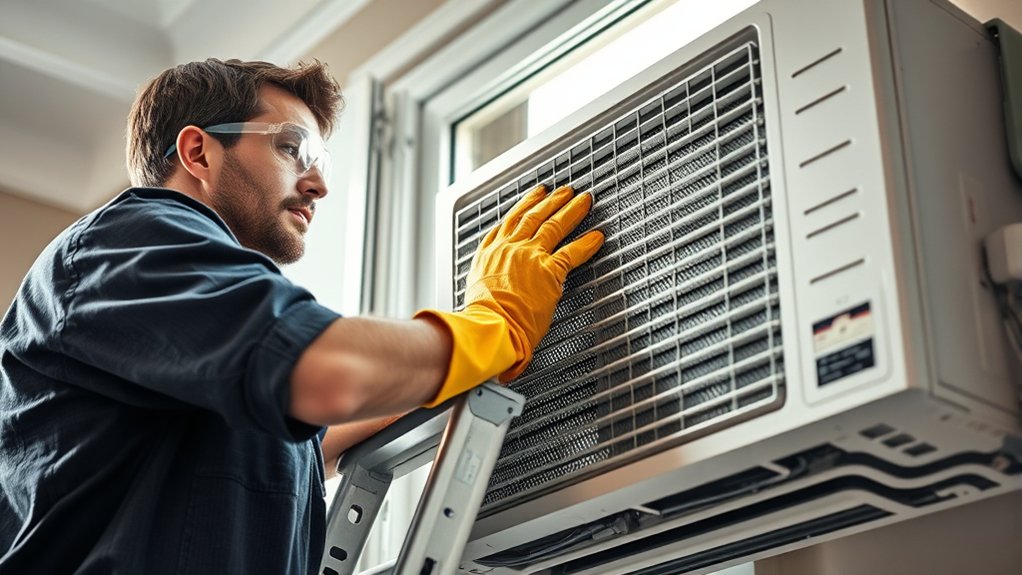
Before you start removing the coils, it’s really important to turn off the unit and unplug it. This way, you can avoid any electrical hazards and stay safe. Make sure you’re wearing some safety gear too, like gloves and eye protection, just to be extra cautious.
Once everything’s turned off and you’re protected, carefully get to the coils. Follow the manufacturer’s instructions to remove them properly. Take your time and be gentle to avoid any damage.
Turn Off and Unplug
To safely access and remove the coils, you need to turn off your window AC unit and unplug it from the power source. This step is vital for your safety and helps prevent electrical shocks.
Once unplugged, the unit won’t draw power, which can also improve its energy efficiency over time. Turning off and unplugging the AC can considerably reduce noise during cleaning, making the process more comfortable.
Before proceeding, double-check that the unit is completely powered down. Taking this step guarantees you won’t accidentally activate the fan or compressor while working on the coils.
It’s a simple but fundamental step to protect yourself and ensure your AC runs smoothly once cleaned. This also contributes to better energy efficiency and quieter operation.
Use Proper Safety Gear
Always wear proper safety gear before trying to access or remove your window AC unit’s coils. Protective gear is key to preventing injuries and staying safe during the process.
Put on gloves to protect your hands from sharp edges or debris, and safety goggles to shield your eyes from dust or flying particles.
If your unit is heavy or tricky to handle, consider wearing sturdy footwear and a dust mask for extra safety.
Following safety precautions reduces risks and helps you work more efficiently.
Remember, rushing or skipping safety gear can lead to injuries.
Take your time, stay alert, and wear the right protective equipment to make the coil removal safer and more effective.
Choosing the Best Tools and Supplies for Cleaning Coils
When it comes to cleaning your AC coil, having the right tools and supplies makes all the difference. You want to choose a cleaner that’s gentle enough not to damage the coil, but still tough enough to do the job. It’s all about finding that perfect balance.
Next, pick sturdy brushes or sprayers that can reach into all those nooks and crannies. The right tools will make cleaning easier and help you get a thorough job done without risking any damage to your coils. When you use the best supplies, you can be confident that your coils will be cleaned properly and safely.
Selecting Appropriate Cleaning Solutions
Have you wondered what the best cleaning solutions are for your window AC coil? Your choice depends on safety, effectiveness, and environmental impact. For eco-friendly options, consider vinegar or baking soda—they’re gentle yet effective.
If you need stronger cleaning power, chemical-based cleaners work faster but may contain harsh ingredients. Use the table below to compare your options:
| Solution Type | Pros | Cons |
|---|---|---|
| Eco-friendly solutions | Safe, non-toxic, affordable | May require more effort to clean |
| Chemical-based cleaners | Fast, powerful cleaning | Can be harsh, less eco-friendly |
| Mild soap solutions | Gentle, easy to find | Less effective for heavy grime |
| Commercial coil cleaners | Specifically formulated | Usually more expensive |
| Vinegar solution | Natural disinfectant | Might need multiple applications |
Choose wisely based on your coil’s condition and your preferences.
Choosing Effective Cleaning Tools
Selecting the right tools is essential for effectively cleaning your window AC coil without causing damage. You want tools that clean thoroughly but are gentle enough to avoid bending or breaking delicate fins.
Consider using soft brushes or microfiber cloths for gentle scrubbing. A spray bottle with a nozzle helps apply cleaning solutions evenly.
For alternative cleaning methods, a garden sprayer or foam gun can help cover large areas efficiently. Eco-friendly cleaning supplies, like vinegar or biodegradable coil cleaners, are great options to reduce chemical use.
Visualize these tools in your mind:
- A soft-bristled brush for delicate fins
- A spray bottle for even solution application
- Eco-friendly cleaning supplies for safe, effective cleaning
Choosing these tools guarantees a thorough, safe, and environmentally conscious cleaning process.
How to Remove Dust and Debris From Your AC Coils
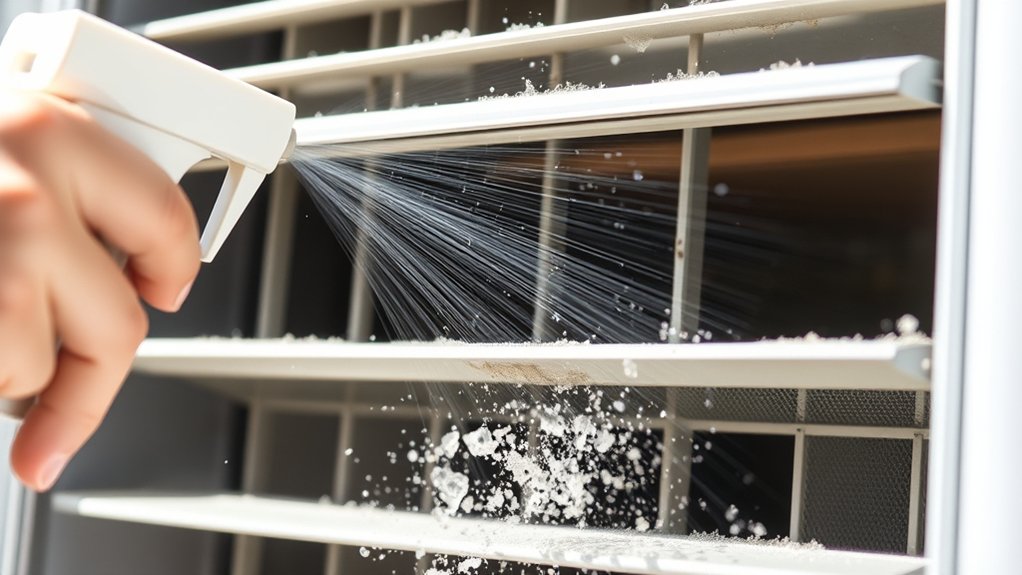
Wondering how to effectively remove dust and debris from your AC coils? The key is to clear away dust buildup that can block airflow and reduce energy efficiency.
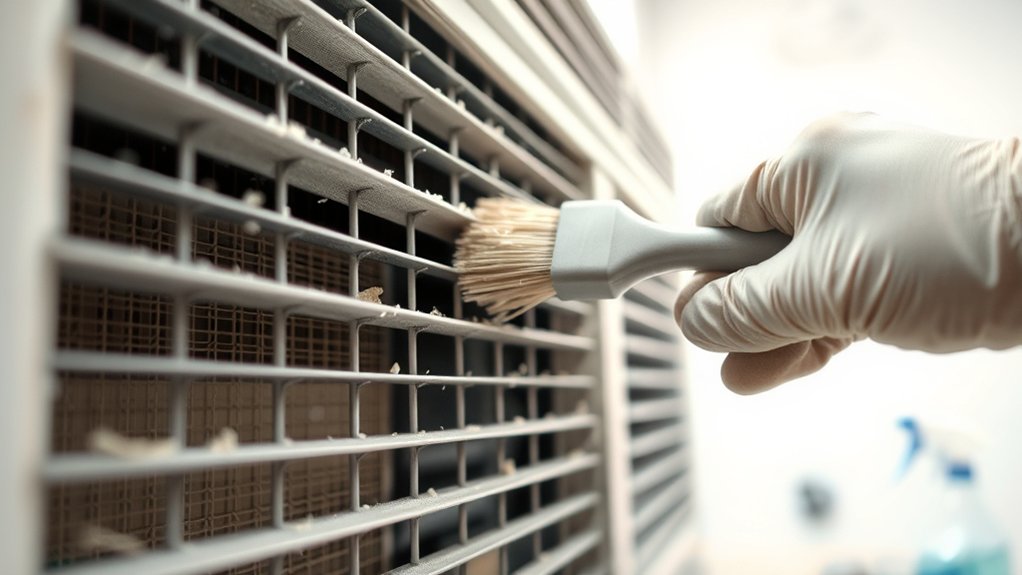
Start by turning off your unit and opening the cover to access the coils. Use a soft brush or a vacuum with a brush attachment to gently loosen and remove loose dirt and debris.
Be careful not to bend or damage the delicate fins. If you notice stubborn debris, a damp cloth can help wipe them away, but avoid soaking the coils.
Regularly removing dust buildup ensures your AC runs smoothly, consumes less energy, and cools more effectively. Keep in mind that consistent maintenance prevents dust from settling deep into the coils, which could lead to inefficiency and higher energy bills.
With these simple steps, you’ll maintain cleaner coils and a more efficient cooling system.
Using a Coil Cleaner for a Deep Clean
To thoroughly clean your AC coils, applying a specialized coil cleaner is essential. This step guarantees a deep cleaning that removes stubborn dirt and grime.
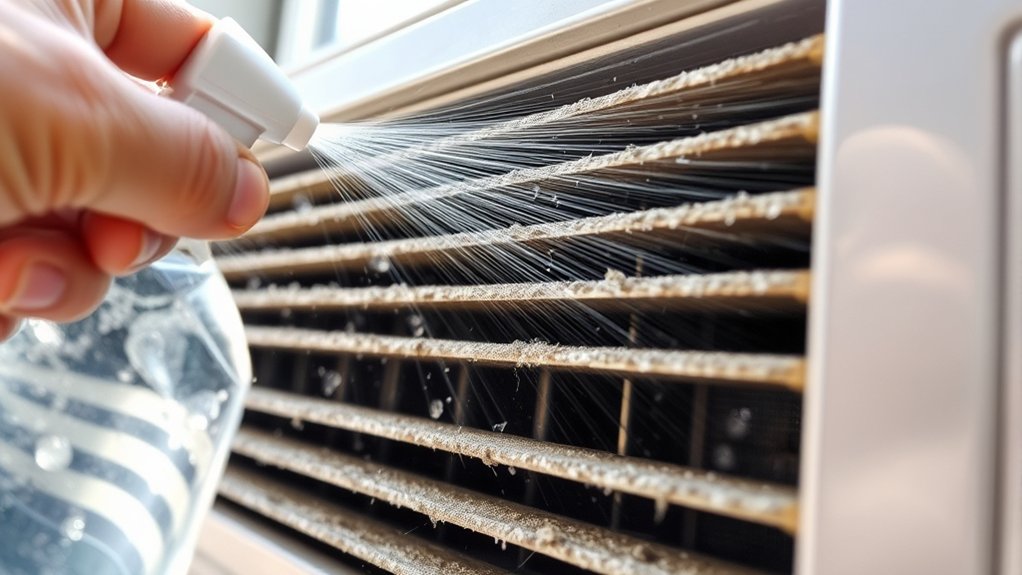
First, spray the coil cleaner evenly across the coils, covering every surface. Imagine the foam bubbling up as it dissolves grease and debris stuck deep within the fins.
Spray the cleaner evenly, watch foam bubble up, and dissolve dirt deep within the fins.
Next, let the cleaner sit for about 5-10 minutes, allowing it to penetrate and break down stubborn buildup—like a mini deep cleaning session.
Finally, use a soft brush or cloth to gently scrub any remaining dirt, ensuring the coils are spotless. Visualize the grime loosening and lifting away, revealing shiny, clean coils underneath.
Using a quality coil cleaner makes this process easier and more effective, helping your AC operate efficiently. Remember, a deep cleaning with the right coil cleaner prolongs the life of your unit and improves cooling performance.
Rinsing and Drying the Coils Properly
After applying the coil cleaner and letting it sit, it’s time to rinse away the loosened dirt and residue thoroughly. Use a gentle stream of water, making sure to cover all coil surfaces without blasting them too hard, which could damage the fins.
Rinsing well removes leftover debris and cleaner residue, which is essential for effective coil maintenance. Proper rinsing also helps prevent dirt buildup, reducing the need for frequent cleanings and extending your unit’s lifespan.
Once rinsed, gently shake off excess water or pat the coils dry with a clean cloth, especially around the fins to avoid moisture buildup. Regular cleaning frequency depends on your environment, but generally, cleaning coils every one to two years keeps your AC running efficiently.
Proper rinsing and drying are critical steps in maintaining your window AC unit, ensuring it functions *ideally* and reduces energy costs. Good coil care now saves you from more extensive repairs later.
Reassemble and Test Your Air Conditioner
Once you’ve rinsed and dried the coils, it’s time to reassemble your air conditioner carefully. Start by placing the panels back securely, making sure all screws or clips are tight.
Next, turn on your unit and listen for smooth operation, checking that the evaporator seems to be working well again. Watch for steady refrigerant flow, which shows the system is functioning properly.
To make sure everything’s working right:
- Verify the fan runs smoothly without unusual noises.
- Feel the air from the vents for consistent coolness.
- Observe the compressor for normal operation without overheating.
This process helps confirm your cleaning improved the evaporator’s performance and refrigerant flow. Proper reassembly and testing prevent leaks or inefficiencies, so your AC cools effectively and runs efficiently.
Taking these steps ensures your unit performs at its best for the season.
Frequently Asked Questions
How Often Should I Clean My Window AC Coils?
You should clean your window AC coils at least once a year to keep airflow smooth and prevent coil corrosion.
Regular cleaning helps your unit cool efficiently and lasts longer.
If you notice weaker airflow or higher energy bills, try cleaning more often, especially if your place gets dusty.
Keeping the coils clean is key to avoiding buildup that can damage them and keep your AC running well.
Can I Use Household Cleaning Products on Coils?
You can’t simply substitute household cleaning products for specialized coil cleaners. Cleaning techniques matter, and safety precautions are essential. Using harsh chemicals can damage coils or pose health risks.
Stick to gentle, manufacturer-recommended cleaners, avoiding abrasive or corrosive solutions. Always turn off the unit, wear gloves, and work in a well-ventilated area.
Protect your property and personal health with proper, safe cleaning practices. This way, your AC stays efficient and effective.
What Signs Indicate My Coils Need Cleaning?
You’ll notice your coils need cleaning when your AC isn’t cooling efficiently, and airflow seems obstructed. Reduced airflow causes your unit to work harder, which can increase your energy bills.
You might also see ice buildup or hear increased noise from your system. Regular coil maintenance helps prevent these issues and keeps air flowing freely.
Keeping your coils clean ensures your AC maintains its cooling performance and runs smoothly. If you notice any of these signs, it’s a good idea to clean your coils.
Is It Necessary to Turn off the Power During Cleaning?
Sure, because shocking yourself with electrical safety while battling coil corrosion sounds like a fun adventure.
You should turn off the power before cleaning your AC coils to prevent electrical hazards and avoid frying your unit.
It’s like giving your AC a little nap so it doesn’t wake up angry or cause a short circuit.
Trust me, it’s a small step that keeps your cooling system safe and your summer sweat-free.
How Do I Prevent Mold Growth on AC Coils?
To prevent mold growth on your AC coils, you should regularly perform coil maintenance and keep the area dry. Use a solution of mild detergent and water to clean the coils, and consider applying a mold-inhibiting spray designed for HVAC systems.
Make certain of proper airflow and replace or clean filters often. Good ventilation, controlling humidity, and routine cleaning are key for mold prevention.
This will help keep your AC running efficiently and safely.
Conclusion
By following these simple steps, you’ll breathe new life into your window AC unit, making sure it runs smoothly and efficiently. Regular cleaning keeps your cooling system fresh and helps avoid costly repairs later on.
Think of your AC coils as the heart of your comfort—give them the love they deserve. With just a little effort, you can keep your home cool and cozy without breaking a sweat.
Keeping your window AC coils clean is key to maintaining optimal performance. A well-maintained unit will run better and last longer, saving you time and money in the long run.