How Many kWh Does Your Window AC Use?
Are you tired of sky-high energy bills during the hot summer months? You’re not alone—many people struggle with keeping their cooling costs in check while staying comfortable. Understanding how much your window AC uses can help you save money and make smarter choices.
A typical window air conditioner uses between 0.5 and 1.5 kWh of electricity per hour, depending on its size, efficiency, and how you use it. Larger or older units tend to consume more energy, while modern, efficient models use less.
Factors like room size, insulation, and thermostat settings also influence power use. To better understand your AC’s energy consumption and reduce bills, keep exploring the key tips and strategies ahead.
Key Takeaways
- Check the unit’s label or manual for its specific power consumption in watts or kWh per hour.
- Multiply the AC’s wattage by hours of operation to estimate total kWh used.
- Consider the efficiency rating (EER or SEER) to figure out actual energy consumption.
- Use a power meter to measure real-time energy usage of your window AC.
- Keep in mind that factors like room size, insulation, and usage habits influence total kWh consumption.
How Much Energy Does a Typical Window Air Conditioner Use?
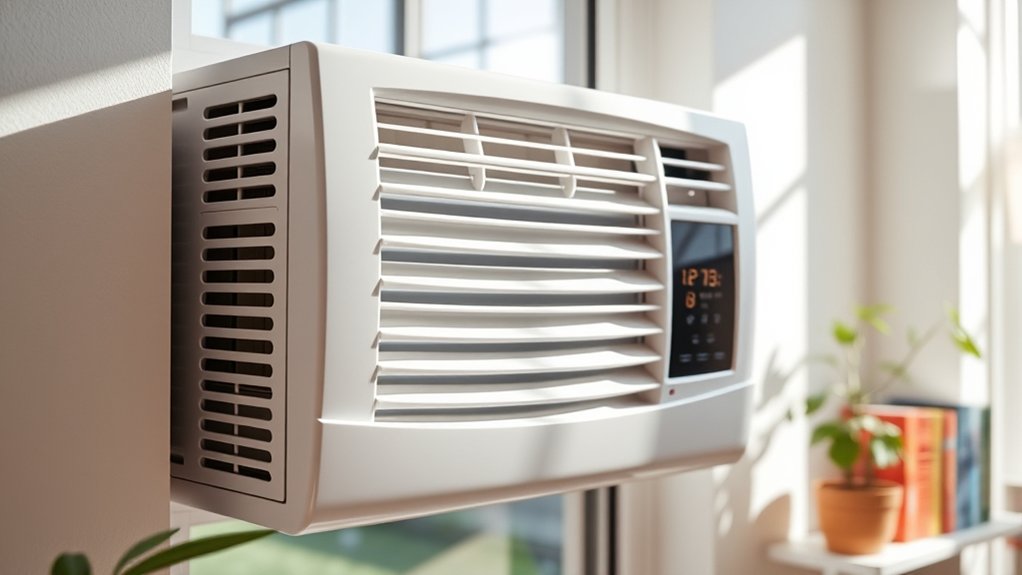
Have you ever wondered how much energy your window air conditioner uses when it’s running? Usually, a standard unit consumes between 500 and 1,500 watts, depending on its size and efficiency. That’s roughly 0.5 to 1.5 kWh per hour.
Knowing this can help you balance cooling needs and plant care without skyrocketing your electricity bill. If you’re keeping indoor plants healthy, this info is pretty handy.
Keep in mind, noise levels can also affect how long you run your AC. More noise might mean shorter cycles. Modern units are generally more energy-efficient, which helps cut down overall consumption.
To get an accurate idea, check your AC’s label or user manual for the power ratings. Understanding these factors lets you manage your energy footprint while keeping both yourself and your plants comfortable.
What Factors Affect Your Window AC’s Power Consumption?
So, when it comes to how much power your window AC uses, there are a few things to keep in mind. First off, the size of your room and how well it’s insulated really matter. If your room is big or doesn’t retain heat well, your AC has to work harder to keep it cool, which means it’ll use more energy.
Then, think about how often you run your unit and the settings you choose. Running it on high all the time or keeping it on when you don’t need to can really add up in terms of power consumption. Using the right settings and turning it off when you’re not around can make a big difference.
And don’t forget about the age and maintenance of your AC. An older unit or one that isn’t maintained properly might not run efficiently, leading to higher energy use. Regular cleaning and servicing can help keep your AC running smoothly and help you save on electricity.
Room Size and Insulation
The size of a room and how well it’s insulated are key factors in how much energy a window AC uses. Bigger rooms need more cooling power, which boosts energy consumption. Poor insulation lets cool air escape, making your unit work harder to keep the room comfortable.
To get the best efficiency, consider these points:
First, proper window placement helps by facing the main sun exposure, so your AC doesn’t have to work as hard.
Next, sealing leaks around windows is crucial to cut down heat gain and keep the room cooler longer.
The quality of insulation also plays a big role in how much energy is needed to maintain a comfortable temperature.
Finally, noise levels matter. Quieter models often operate more efficiently and are better suited for different room sizes.
Usage Patterns and Settings
How you use your window AC and the settings you choose can really impact how much energy it uses. Keeping the air filter clean ensures proper airflow, helping the unit run efficiently and use less power. When filters are clogged, the AC has to work harder, which increases energy consumption.
Setting the temperature wisely makes a big difference too. Setting it too low wastes energy, while a moderate setting keeps you comfortable without overworking the unit. Noise levels can also tell you if the AC is working harder, which might mean more energy use.
Using sleep or eco modes can help improve efficiency by adjusting settings automatically. Overall, being mindful of your usage and choosing the right settings can significantly cut down your window AC’s power consumption.
Age and Maintenance Status
As your window AC gets older, it naturally becomes less efficient, which can lead to higher energy bills. Regular maintenance can help slow down this decline.
Here are some key factors to keep in mind:
Air filter: A dirty or clogged filter blocks airflow, making the unit work harder and use more power.
Refrigerant level: Low refrigerant reduces cooling power, so the AC has to run longer to keep your space comfortable.
Component wear: Over time, parts like fans and compressors wear out, decreasing efficiency and raising your energy costs.
Cleaning and inspections: Regularly cleaning coils and checking for leaks or damage keeps your AC running smoothly and prevents unnecessary power use.
Keeping your air filter and refrigerant levels in check is crucial for saving energy and extending your unit’s lifespan.
How to Read Your Window AC’s Energy Label and Specs?
Want to get a good idea of how your window AC is performing energy-wise? Well, start by taking a look at the energy label. Look for the Energy Efficiency Ratio (EER) or Seasonal Energy Efficiency Ratio (SEER). These numbers tell you how efficiently your AC uses power. The higher the ratio, the more energy-efficient the unit is.
Then, check out the wattage and the power consumption details. This info shows you how much energy your AC needs when it’s running. Once you understand these specs, you’ll have a better idea of what your actual energy use and costs might look like. It’s a handy way to make smarter choices and save some money on your electricity bill!
Understanding Energy Labels
Understanding the energy label on your window AC unit is key to knowing how efficient it is and what you can expect to spend on running costs. The label shows important details about the unit’s energy use and efficiency ratings.
To get the most out of it, start by checking the Energy Efficiency Ratio (EER). This tells you how well the AC cools compared to the power it uses. Next, look at the Seasonal Energy Efficiency Ratio (SEER), which shows how the unit performs over a season.
Also, keep an eye out for the Energy Star certification. This indicates models that use advanced, energy-efficient technologies. Lastly, review the power consumption in kW to estimate running costs and see if renewable energy options might work for you.
Understanding these details helps you make smarter choices, save energy, and support sustainability.
Interpreting Power Specifications
Your window AC’s energy label and specifications give you important details about how much power it uses and how efficient it is. Look for the wattage or kilowatt (kW) rating to see its energy consumption.
The Energy Efficiency Ratio (EER) shows how well the unit converts electricity into cooling. A higher EER means it’s more efficient. If you’re thinking about upgrading to a more energy-efficient model, compare these ratings first.
Understanding these specs can also help you find alternative cooling options that might use less power. Keep in mind, the label might include an estimated annual energy cost, giving you a better idea of ongoing expenses.
How to Calculate Your Window AC’s Actual Energy Use?
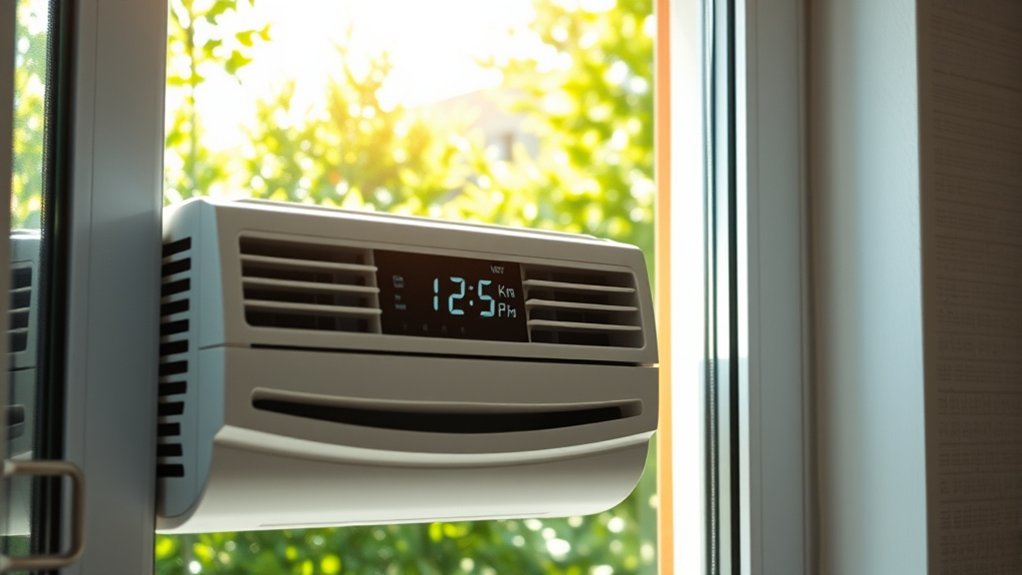
Calculating the actual energy use of your window AC is more than just checking its wattage. First, track how many hours per day you run the unit. Then, find the AC’s power consumption in kilowatts (kW) by dividing the wattage by 1,000.
Next, multiply the hours of operation by the power consumption to get your daily energy use in kWh. After that, multiply that number by the number of days you use the unit each month for an estimate of your monthly energy consumption.
For better efficiency, try some energy-saving tips like setting the thermostat higher or using a timer. Reducing noise levels often means sealing gaps and maintaining the unit, which can also boost energy efficiency. By understanding these calculations, you’ll get a clearer picture of your energy costs and find ways to save while keeping your space comfortable and quiet.
What Is the Monthly Cost of Running Your Window Air Conditioner?
Once you’ve figured out how much energy your window AC uses each month, you can estimate the cost of running it regularly. Your monthly expense depends on your local electricity rates and how many hours you use the unit.
Climate zones also play a role since hotter areas usually mean higher cooling needs and increased energy bills. Using a smart thermostat can help optimize your AC’s operation, cutting down unnecessary usage and saving you money.
For example, setting your thermostat a few degrees higher when you’re away or asleep helps minimize energy consumption. To estimate your monthly cost, multiply your AC’s average kWh usage by your electricity rate, then by the number of days you run it.
Keep in mind that warmer climates tend to have higher running costs, especially if you don’t use energy-saving devices. Monitoring your usage and adjusting settings based on your climate can significantly lower your bills while keeping your space comfortable.
Easy Ways to Reduce Your Window AC’s Energy Consumption
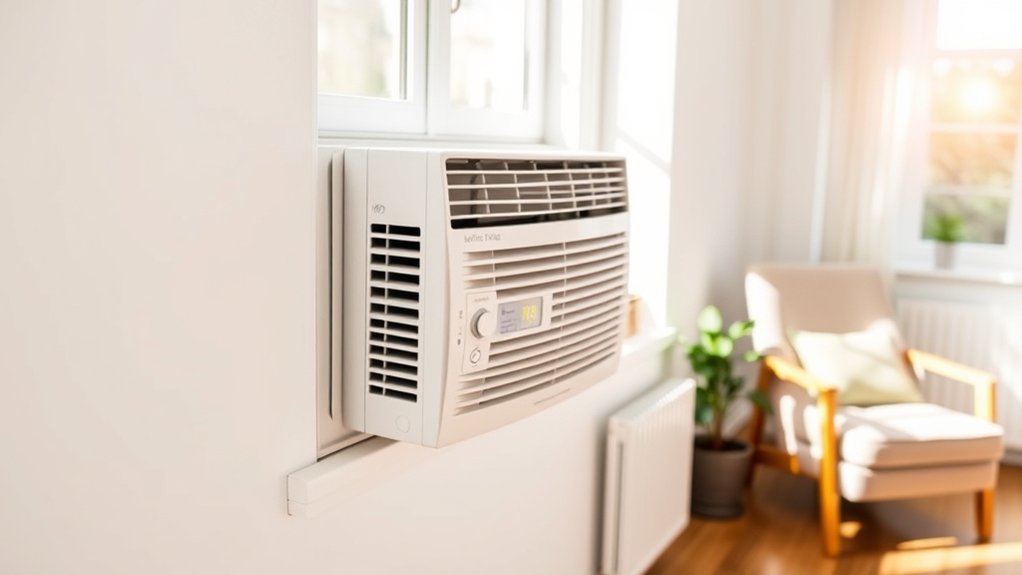
Reducing your window air conditioner’s energy use is simpler than you might think. Small tweaks can make a big difference in savings.
Start by adding energy-saving accessories like programmable thermostats or efficient filters to boost performance. Using curtains or reflective films on your windows can block heat and lessen your AC’s workload.
You can also try alternative cooling options like fans or evaporative coolers to give your AC a break and cut down on energy use. Regularly cleaning filters and coils keeps your unit running smoothly and efficiently.
These easy steps help you save on electricity bills and make your AC last longer. Just a few adjustments can help you stay cool while being more energy-conscious.
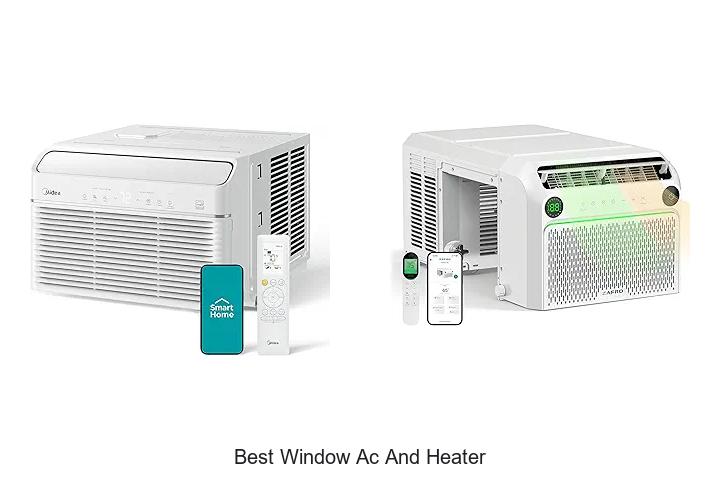
Which Window AC Units Are Most Energy Efficient?
When choosing a window AC unit, opting for models with high energy efficiency can significantly lower your electricity bills. Look for units with ENERGY STAR certification, which shows they meet strict energy standards.
These models often include features like variable-speed compressors, programmable thermostats, and fan controls that help optimize power use. Some units also have advanced insulation and better airflow design to reduce energy waste.
If you’re interested in eco-friendly options, consider units with refrigerants that are less damaging to the environment while still being efficient. Energy-efficient models usually have better build quality and modern technology, helping you cool effectively with less power.
How Your Usage Patterns Impact Your AC’s Energy Bills?
Your daily habits and how you operate your AC play a big role in your energy bills. Making small changes can really add up to some serious savings. For example, you can:
Your daily habits and AC use significantly impact your energy bills—small changes can lead to big savings.
Use a programmable or smart thermostat to set your cooling schedule. This helps you avoid running the AC when you’re not home or overnight.
Keep blinds and curtains closed during the hottest parts of the day. It helps keep your indoor temperature down and reduces the workload on your AC.
Regularly cleaning or replacing filters can boost efficiency and airflow. This means your AC doesn’t have to work as hard, saving energy.
You can also make energy-efficient upgrades like sealing gaps around windows and doors. It keeps cool air inside and prevents cool air from escaping.
When Should You Consider Upgrading Your Window AC?
If your window AC is struggling to keep your space cool or constantly running without effectively lowering the temperature, it might be time to consider an upgrade. Older units tend to become less efficient, which can lead to higher energy bills and inadequate cooling.
Consider upgrading if your AC can’t maintain a comfortable temperature even after regular maintenance. Modern models with smart thermostats let you optimize cooling schedules and monitor energy use remotely, saving you money.
Plus, newer units often use eco-friendly refrigerants, helping reduce your environmental impact. If your current AC is noisy, unreliable, or needs frequent repairs, upgrading might be a smart move.
An energy-efficient unit can significantly lower your utility bills and boost your comfort. Keep an eye on your energy consumption and how comfortable you feel—if these aren’t meeting your needs, it’s probably time to invest in a more advanced, eco-conscious window AC.
Common Mistakes That Waste Energy and How to Fix Them?
You might be wasting energy without even realizing it, like by skipping regular maintenance or setting your thermostat way too high. These small mistakes can make your AC work overtime, which means more energy and higher bills. Luckily, fixing these issues is pretty straightforward and can really help cut down on your energy costs.
Overlooking Regular Maintenance
Neglecting regular maintenance is one of the biggest energy wasters for window air conditioners. Over time, dirt, dust, and debris clog filters and coils, which reduces efficiency and indoor air quality. Proper upkeep makes sure your unit runs smoothly and conserves power.
Here are some key maintenance steps:
- Clean or replace filters monthly to improve airflow and indoor air quality.
- Inspect and clean coils once a year to prevent dust buildup.
- Check the window installation for proper sealing to avoid leaks and unnecessary energy use.
- Schedule professional servicing at least once a year to keep all parts in good shape.
Skipping these steps makes your AC work harder, which increases energy use and shortens its lifespan. Regular maintenance keeps your unit energy-efficient and helps it last longer.
Incorrect Thermostat Settings
Incorrect thermostat settings are a common mistake that can significantly hike up your energy bills. When your thermostat isn’t properly calibrated, it can cause temperature misconfigurations, making your AC work harder than it needs to.
Setting the thermostat too low makes the unit run longer, wasting energy and increasing your kWh consumption. On the other hand, setting it too high prevents effective cooling.
To fix this, check that your thermostat is calibrated correctly to match your comfort level. Use a separate thermometer to verify the actual room temperature and tweak the thermostat as needed.
Regularly checking and maintaining proper calibration helps avoid unnecessary energy waste, keeps your AC running efficiently, and ultimately lowers your electricity bills.
Getting your thermostat settings right is key to optimizing your window AC’s performance.
Frequently Asked Questions
How ACcurate Are the Energy Labels on Window AC Units?
The energy labels on window AC units are usually pretty accurate because of strict regulation standards. They’re based on standardized testing, so you can generally trust their estimates of energy use.
That said, real-world performance can vary depending on things like insulation, how you use the unit, and your climate. While they’re not perfect, these labels still give you a good idea to compare models and manage your electricity costs better.
Can Seasonal Changes Affect My Window Ac’s Energy Consumption?
Yes, seasonal changes can affect your window AC’s energy consumption. As temperatures shift throughout the year, your unit adjusts how hard it works, which impacts how much energy it uses.
During hotter months, your AC has to work harder to cool your space, so it uses more energy. On the other hand, cooler seasons mean less workload and energy savings.
Being aware of these seasonal variations can help you manage your energy use better and understand how temperature changes influence your AC’s efficiency.
Do Inverter Window AC Units Use Less Energy?
Inverter window AC units are like smart engines, using inverter technology to adjust their compressor speed. This means they use less energy.
They can save you a lot of energy compared to traditional models because they run more efficiently and avoid constant on-off cycles.
If you’re looking to cut down on power use and save money, switching to an inverter unit is a smart move that pays off in the long run.
How Does Insulation Impact My Window Ac’s Efficiency?
Insulation directly impacts your window AC’s efficiency by reducing thermal leakage. When your windows and walls are well-insulated with quality materials, less heat enters your space. This means your AC doesn’t have to work as hard to cool the room.
Proper insulation helps minimize energy waste, making your unit run more efficiently. It also lowers your energy consumption, which can save you money.
Investing in good insulation keeps your room cooler longer and helps cut down on energy bills.
Are Newer Models More Energy-Efficient Than Older Ones?
Newer models are generally more energy-efficient, saving you up to 20% on electricity compared to older units.
Don’t fall for energy-saving myths that suggest all ACs are the same. Always check the ENERGY STAR label.
To maximize savings, follow best usage tips like setting a comfortable temperature and doing regular maintenance.
This way, you guarantee your investment saves you money and keeps your space cool efficiently.
Conclusion
On average, a window AC uses about 0.75 to 1.5 kWh per hour, depending on size and efficiency. Did you know that running your AC just 8 hours a day could cost you around $30 to $60 each month?
By understanding your unit’s energy use and adjusting your habits, you can save money and reduce your carbon footprint. Small changes today can make a big difference in keeping your home cool and your bills manageable.
Knowing how many kWh your window AC consumes is key to managing your energy costs effectively.