How Much Electricity Does a Window AC Use Per Day?
Many people struggle with keeping their rooms cool without racking up huge electricity bills. If you’re like most, you’re probably wondering how much your window AC actually costs to run each day. You’re not alone—finding a balance between comfort and cost can be tricky.
A window AC typically uses between 1.2 to 2.0 kWh of electricity per hour, which adds up to about 9.6 to 16 kWh daily. The exact amount depends on the size, efficiency, and how long you run it.
Factors like room size, insulation, thermostat settings, and usage habits also influence energy use.
If you’re curious about how to maximize efficiency or compare models, there’s plenty more to uncover to help save on your energy bills.
Key Takeaways
- Window AC units typically use between 9.6 to 16 kWh of electricity each day, depending on their size, efficiency, and how long you run them.
- To figure out power use, multiply the unit’s wattage (usually 500-1500W) by the number of hours it runs daily.
- Using a power meter is the best way to get an accurate read of how much electricity your AC actually consumes each day.
- Models with a higher Energy Star rating tend to be more energy-efficient and use less electricity daily.
- Keeping your unit well-maintained and using it wisely can really help cut down on your daily energy use.
How Much Electricity Does a Typical Window Air Conditioner Use Daily?
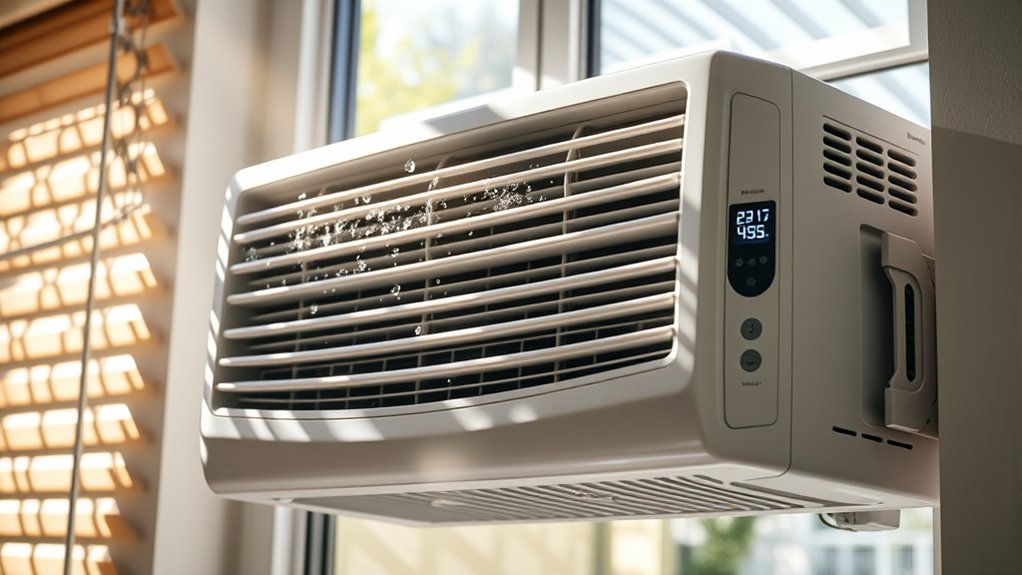
A typical window air conditioner uses between 1.2 and 2.0 kilowatt-hours (kWh) of electricity per hour of operation, depending on its size and efficiency. If you run it for about 8 hours daily, you’ll use roughly 9.6 to 16 kWh each day.
To save energy, it’s important to manage your unit wisely and avoid unnecessary use. Regular maintenance, like cleaning filters and checking seals, helps your AC run efficiently and cuts down on wasted energy.
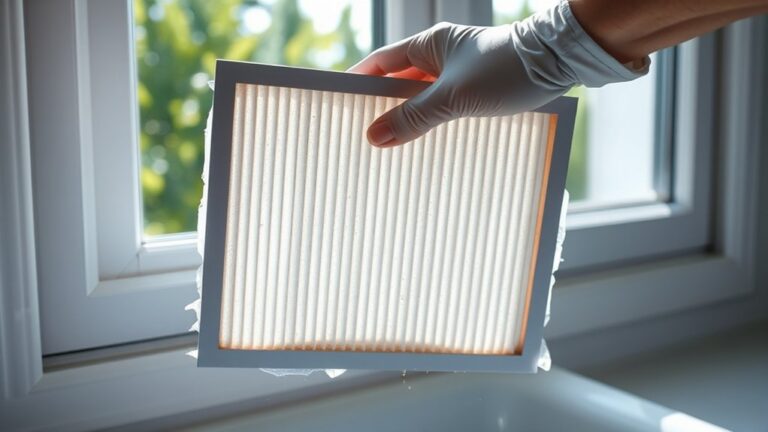
When filters are clean, your AC doesn’t have to work as hard, which saves electricity and extends its lifespan. Proper upkeep also prevents unexpected breakdowns that could lead to costly repairs or replacements.
Being proactive with maintenance and smart usage habits can lower your energy bills and lessen your environmental impact. In short, mindful operation and regular upkeep are key to keeping your window AC energy-efficient.
What Factors Affect Your Window AC’s Energy Consumption?
Several factors influence how much electricity your window AC consumes beyond just its size and efficiency. One key factor is how you manage its settings. Using temperature controls wisely can boost energy savings.
Properly managing your AC settings is key to saving energy and reducing costs.
Keeping the thermostat a few degrees higher when you’re not home reduces unnecessary power use. The frequency and duration of use also matter; running the unit continuously will consume more energy than intermittent operation.
Proper maintenance, such as cleaning filters and coils, ensures peak performance and prevents energy waste. Additionally, the room’s insulation and sunlight exposure affect cooling demands, impacting your AC’s energy consumption.
Implementing power management strategies like using a programmable timer helps you balance comfort with energy efficiency. Being mindful of these factors allows you to optimize your window AC’s operation, reducing electricity costs while maintaining a comfortable environment.
How Can You Estimate Your Window AC’s Daily Power Usage?
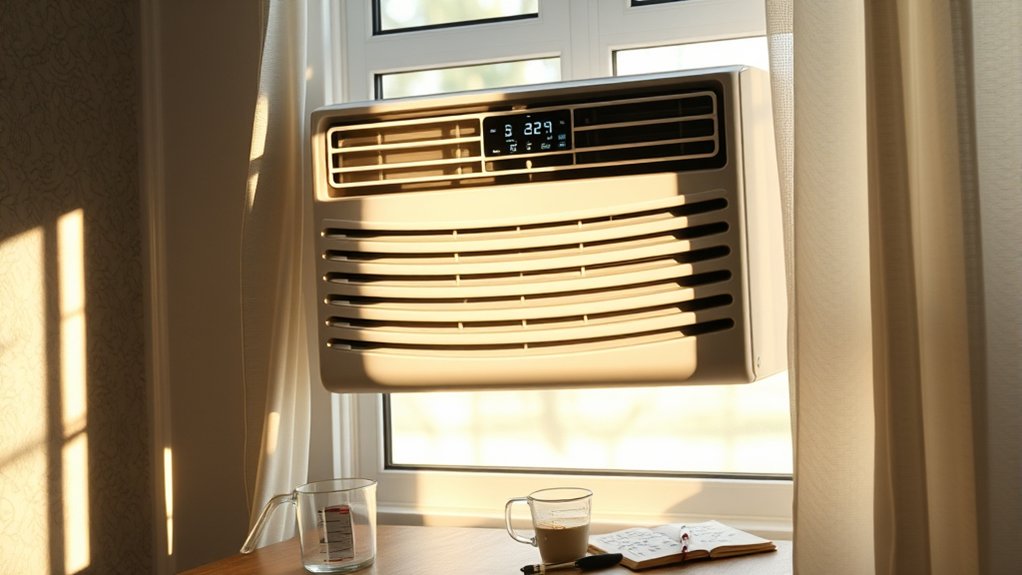
Want to get a rough idea of how much energy your window AC uses daily? It’s pretty straightforward. First, you’ll want to check out the wattage, which you can usually find on the sticker on the unit or in the user manual. Once you’ve got that number, think about how many hours you typically run your AC each day.
Now, just multiply the wattage by the number of hours you use it. That’ll give you a pretty good estimate of how much energy your window AC is consuming each day. Easy, right?
Determine Appliance Wattage
Understanding your window AC’s wattage is key to estimating how much energy it uses daily. To find this, look at the appliance’s label or user manual, which usually lists the wattage directly.
If you can’t find the info there, try searching for the model number online to get the specs. Keeping your AC well-maintained, like cleaning filters regularly, helps it run efficiently and gives more accurate wattage readings.
Make sure your AC is plugged into a dedicated outlet to avoid power fluctuations that could affect your measurements. Using a power meter is the best way to get an accurate reading of how much wattage your unit consumes during operation.
Knowing this helps you understand your energy use and plan your costs better. It’s a simple step towards managing your electricity bill more effectively.
Calculate Usage Time
Once you know your window AC’s wattage, the next step is estimating how long it runs each day. Start by considering your thermostat settings—higher or lower settings will affect how often the unit cycles on and off.
If you keep it at a cooler setting, it’ll run longer, increasing daily usage. Keep in mind that power surges can cause your AC to turn on unexpectedly or run longer than usual, especially during stormy weather.
To get an accurate estimate, track your AC’s runtime over a few days, noting how many hours it operates daily. Adjust your calculations based on typical thermostat adjustments and any power surges that might extend operation.
This approach helps you determine your daily power consumption more precisely.
How Do Different Window AC Models Compare in Energy Efficiency?
You’ll see that some window AC models are more energy-efficient than others, especially if they have an Energy Star rating. These ratings can give you a quick idea of how well a unit uses energy.
Plus, keep in mind that differences in cooling capacity and power consumption really make a difference in how much electricity the AC uses day to day. When you’re comparing these factors, it helps you pick a unit that not only works well but also saves you money on your energy bills.
Energy Star Ratings
Energy Star ratings give you a straightforward way to compare how efficient different window AC models are. These ratings help you find units that cool effectively but use less electricity.
Higher-rated models usually consume less power, which can save you money on your energy bills. Here’s a quick look at some options:
| Model A | Model B | Model C |
|---|---|---|
| 8.5 EER | 10.0 EER | 9.2 EER |
| Energy Star | Energy Star | Not rated |
| 500 kWh/year | 400 kWh/year | 550 kWh/year |
| Quiet operation | Compact design | Lower efficiency |
| Affordable | Higher efficiency | Budget option |
Choosing an Energy Star-rated window AC boosts efficiency, helping you save energy and money.
Cooling Capacity Variances
Different window AC models vary greatly in their cooling capacities, which directly impacts their energy efficiency. A unit with a higher cooling capacity can cool larger spaces but may use more electricity if not managed properly.
To maximize efficiency, adjust your thermostat settings appropriately. Setting it too low makes the unit work harder and use more energy. Make sure vents are unobstructed and properly directed to distribute cooled air evenly.
Smaller units suited for your space tend to be more energy-efficient than oversized models. Comparing cooling capacities among models helps you find one that balances performance with energy use.
Proper thermostat adjustments and airflow management ensure your AC runs efficiently, saving you electricity and cutting costs.
Power Consumption Differences
How efficiently your window AC uses electricity can vary a lot between different models, depending on design, features, and technology. Some units are designed with energy savings in mind, with higher SEER ratings and better insulation.
These models use less power to produce the same cooling, which helps cut down your daily electricity bills. To get the most efficiency, regular maintenance like cleaning filters and sealing leaks is really important. Dirty filters can make your unit work harder and consume more energy.
Comparing energy labels and understanding each model’s power use can help you choose the most efficient option. Keep in mind that newer models often have advanced technology that boosts energy efficiency.
What Is the Average Daily Cost to Run a Window Air Conditioner?
On average, running a window air conditioner costs between $0.50 and $1.50 per day. This depends on its size, efficiency, and how long you keep it on.
To get a clearer picture, consider a cost analysis of your unit’s energy use. A more efficient AC will use less electricity and save you money daily.
The actual cost varies based on local electricity rates and how many hours you run the unit. Running it for several hours each day will naturally increase your expenses.
Energy-saving tips like setting a higher thermostat or using a timer can help lower those costs. Knowing the average daily expense helps you budget better and compare models for savings.
How Can You Reduce Your Window AC’s Electricity Usage?
To cut down on your window AC’s electricity usage, start by setting the thermostat higher. Aim for around 78°F when you’re home and need cooling. This simple adjustment reduces the AC’s workload, saving energy and lowering costs.
Try using a ceiling fan to help circulate cool air more efficiently. Keep curtains or blinds closed during the hottest part of the day to block out heat. Regular maintenance routines are essential; clean or replace filters monthly to ensure maximum airflow and efficiency.
Check that the unit is sealed properly in its window frame to prevent cool air from escaping. Clear the area around the unit of debris or obstructions to improve airflow. These small steps make a big difference, helping your AC run less often and use less power while keeping your space comfortable.
Consistent maintenance and smart habits are key to reducing your electricity bills.
How Does Room Size Impact Your Window AC’s Energy Efficiency?
The size of your room really plays a big role in how well your window AC performs. If the room is larger, your AC has to work harder to keep it cool, which means it uses more energy. That can actually lower its efficiency if the unit isn’t the right size for the space.
Room Size and Cooling Needs
Since larger rooms need more cooling power, the size of your space directly affects how well your window AC works. If your room isn’t well-insulated, the AC has to work harder to keep a comfortable temperature, which uses more energy.
Proper window insulation reduces heat transfer, helping your unit run better and quieter. A small, underpowered unit in a big room will struggle, leading to higher electricity bills and more noise.
On the flip side, an AC that’s the right size for your room cools more effectively and uses less energy. Making sure your window is well-sealed and insulated helps your AC perform at its best, keeping things cooler, more efficient, and quieter.
Energy Efficiency Variations
Room size plays a big role in how efficiently your window AC works. A unit that’s too small for your room will struggle to keep the air comfortable, running constantly and using more electricity.
On the other hand, a larger AC might turn on and off often, which can be noisy and less effective. Getting the right size helps ensure your AC uses energy wisely and keeps the air quality high.
A properly matched unit also means less noise, making your space more comfortable. If your room size changes over time, you might see shifts in energy use and noise levels.
Choosing the right size keeps your window AC running smoothly, saves energy, and creates a quieter, healthier environment.
How Do Usage Habits Influence Your Window AC’s Power Draw?
Your habits directly impact how much electricity your window AC uses each day. How you use it determines how often and how long it runs, which affects its power draw.
For example, running the AC all day or setting it to a very low temperature makes it work harder and use more energy. Good power management means setting a reasonable temperature and using timers or programmable controls to avoid unnecessary operation.
Closing curtains or blinds during peak sunlight helps reduce the load on your AC, cutting down overall energy use. Keeping doors and windows sealed prevents cool air from escaping and eases the AC’s workload.
What Are Signs That Your Window AC Is Using Excess Electricity?
If your energy bills suddenly spike without a clear reason, it could mean your window AC is using more electricity than usual. You might notice it running longer or struggling to keep your room at the right temperature. Keep an eye out for these signs to catch problems early.
Your AC runs constantly without shutting off, which might point to inefficiency. You may also hear strange noises or notice uneven cooling, both signs of mechanical issues. Plus, if your utility bills go up unexpectedly, it’s likely your unit is consuming more power.
Regular maintenance can help improve efficiency and cut down on excess energy use. Simple steps like cleaning filters and sealing gaps around windows make a big difference. Following an easy maintenance routine can keep your AC running smoothly.
If these signs keep showing up, it might be time to consider repairs or even a new unit. Spotting issues early can save you money and help your AC last longer. Ensuring it works well when you need it most is always worth the effort.
Is Upgrading to a More Efficient Window AC Model Worth It?
Upgrading to a more efficient window AC can be a smart move if you’re looking to lower energy bills and improve cooling performance. Modern models use less electricity, which means you save more money over time.
The upfront cost might seem high, but the long-term savings often outweigh the initial investment. Plus, these units tend to run quieter and give more consistent cooling.
When considering an upgrade, look for ENERGY STAR-rated models—they guarantee better efficiency. Regular maintenance like cleaning filters and coils helps your new AC run at its best, maximizing energy savings.
Upgrading also reduces wear and tear, which can lower repair costs later on. If you want comfort without huge utility bills, investing in a more efficient window AC is worth it.
Over time, lower energy use and reduced maintenance needs make the upgrade a practical choice for more sustainable, cost-effective cooling.
Frequently Asked Questions
How Does Outdoor Temperature Affect Your Window Ac’s Energy Consumption?
The outdoor temperature really impacts how much energy your window AC uses. When it gets hot outside, your unit has to work harder to cool your space, which means it uses more electricity.
On the other hand, cooler outdoor temperatures help your AC run more efficiently, making it work less and saving energy. During scorching days, you’ll notice your energy bills go up because your AC is using more power to keep your indoor space comfortable.
Proper maintenance and setting your AC efficiently can help reduce this effect. This way, you can get the most out of your unit and keep your energy costs in check.
Does Running the Fan Mode Save More Electricity Than Cooling Mode?
Running your window AC in fan mode is like letting a gentle breeze whisper through your home, saving more electricity than cooling mode. Fan efficiency consumes less energy because it only circulates air, not actively cooling.
Cooling mode fights the heat, demanding more power to chill your space. So, if you’re just looking to circulate air without dropping temperatures, fan mode is your wallet’s best friend, conserving energy effortlessly.
What Maintenance Practices Can Improve Your Window Ac’s Energy Efficiency?
To boost your window AC’s energy efficiency, regularly clean or replace the filter to ensure proper airflow and cooling.
Seal leaks around the unit and windows to prevent cool air from escaping and warm air from entering, which makes your AC work harder.
Furthermore, keep the coils clean and clear of debris. These simple maintenance practices help your AC run smoothly, saving energy and reducing your electricity bills.
How Does Insulation Impact Your Window Ac’s Electricity Usage?
Poor insulation can cause your window AC to work 15% harder, which means it uses more electricity. When insulation isn’t great or walls aren’t well insulated, cool air escapes and warm air sneaks in.
This makes your unit run longer than it should. By properly insulating your walls and sealing gaps, you help keep indoor temperatures steady. That way, your AC doesn’t have to work as hard.
Good insulation is really key for efficient cooling and saving energy on your bills.
Can Using a Timer Help Reduce Your Window Ac’s Daily Energy Consumption?
Using a timer can definitely help reduce your window AC’s daily energy consumption. Smart scheduling lets you set your AC to run only when needed, so you’re not wasting energy.
Incorporating energy monitoring helps you see how much power you’re using and find ways to optimize operation. Automating your AC’s cycle times means you avoid unnecessary electricity use.
This way, you stay comfortable while saving money on your energy bills. Taking these steps makes your cooling more efficient and eco-friendly.
Conclusion
So, after all this, you might realize that your trusty window AC isn’t just cooling your room. It’s quietly draining your wallet too.
Ironically, the more efficient models could save you money. But only if you’re willing to upgrade.
So, next time you crank that unit up, remember: it’s not just cooling your space. It’s potentially heating your electricity bill.
Who knew comfort could come with such a hidden cost?