How Many BTUs Do You Need for a Window AC?
Are you tired of sweating through the heat and struggling to find the perfect window AC unit? You’re not alone—many people find the process of choosing the right size overwhelming.
Getting the right BTU rating is key to staying cool and comfortable without wasting energy or money.
To decide how many BTUs you need for a window AC, measure your room’s square footage. Smaller rooms (up to 150 sq ft) typically need about 5,000 BTUs, while larger spaces require more—around 8,000 to 14,000 BTUs.
Consider factors like high ceilings, sunlight, insulation, and furniture placement, as they affect cooling needs.
For specific advice tailored to your space, keep exploring the details to find the perfect fit.
Key Takeaways
- Measure your room’s square footage to find the right BTU range for effective cooling.
- As a general rule, 5,000 BTU works for up to 150 sq ft, and 8,000 BTU is good for 150-300 sq ft.
- Think about factors like insulation, sunlight, and layout, which can change how much cooling you need.
- Larger rooms or spaces with high ceilings will need higher BTU capacity to stay comfortable.
- Be careful not to overestimate or underestimate your needs so your AC runs efficiently and cools properly.
Determine the Right BTU Based on Room Size
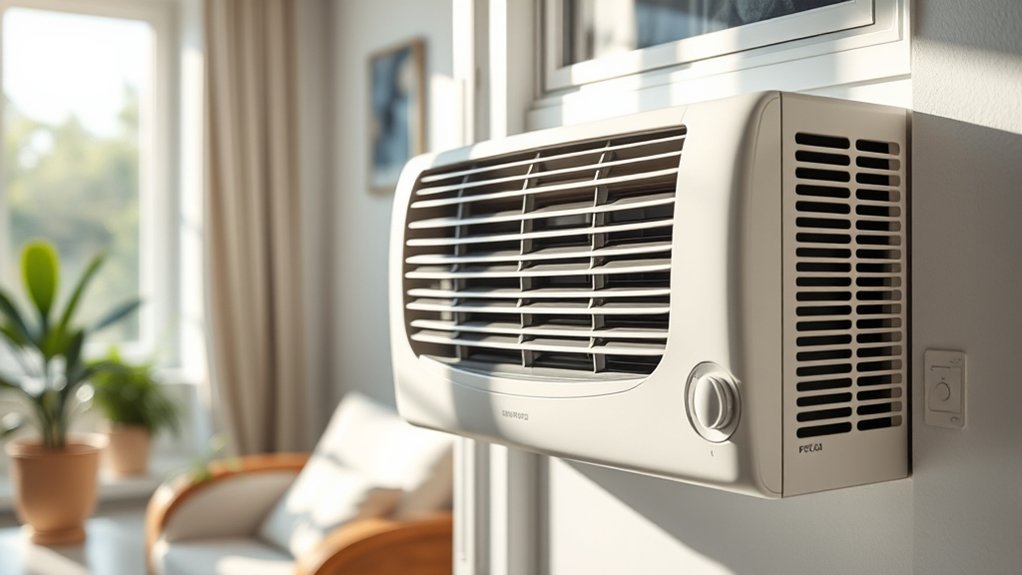
To determine the right BTU for your window AC, start by measuring the size of the room you want to cool. Knowing the room’s square footage helps you pick an AC with enough power to keep it comfortable.
Measure your room’s square footage to select the right BTU and ensure efficient cooling.
Larger rooms need higher BTU ratings, while smaller spaces require less cooling capacity. If you have indoor plants, keep in mind they can add moisture and warmth, so you might need a slightly higher BTU to compensate.
Think about your window placement too. If your window faces direct sunlight or is shaded, it can affect cooling needs. A south-facing window may require a more powerful unit, especially in hot climates.
Proper window placement is key for efficiency, so make sure your window is suitable for installation. Combining accurate room measurements with these factors will help you pick the right BTU size to keep your space cool without wasting energy.
How Do Room Dimensions and Layout Affect BTU Needs?
Room dimensions and layout directly influence how much cooling power you’ll need from your window AC. Larger rooms or those with high ceilings require higher BTU capacity, while smaller spaces need less.
The room’s shape and size affect airflow and cooling efficiency. Consider these factors carefully when choosing your unit. Ventilation patterns also play a role; rooms with many windows or doors that open frequently may need a more powerful AC to offset heat gain.
Furniture placement impacts airflow and cooling effectiveness. Cluttered or densely furnished rooms can obstruct air circulation, making your AC work harder. Open layouts allow for better air distribution, which can reduce BTU needs slightly.
Keep in mind that furniture arrangement can create pockets of heat or block airflow. Strategic placement can help improve cooling efficiency. Adjust your BTU estimate based on these layout considerations for maximum comfort.
Calculate Your Room’s Cooling Load in Simple Steps
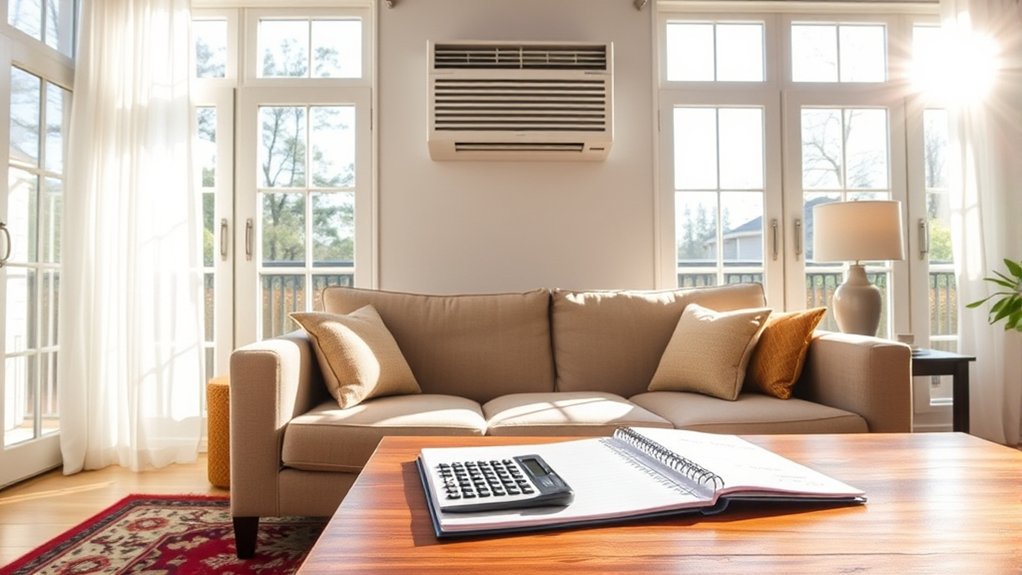
Want to figure out how much cooling your room needs? It’s pretty straightforward! First, grab a tape measure and carefully note down the length, width, and height of your room. This will give you the basic size to work with.
Then, think about how well your room is insulated—does it stay cool easily, or does heat sneak in? Also, consider how much sun hits your space during the day. All these things matter because they help you pick the right BTU size for your window AC, making sure it cools effectively without wasting energy.
Measure Room Dimensions Accurately
Accurately measuring your room’s dimensions is key to finding the right BTU capacity for your window AC. Start by measuring the length, width, and height of the space in feet. Multiply these numbers to get the cubic footage.
Knowing your room’s size helps you choose an AC unit with the correct cooling power. Also, think about how color schemes might influence heat absorption; darker colors tend to trap more heat, which could mean you need a more powerful unit.
Noise levels matter too. If you want a quieter environment, look for a unit with lower decibel ratings, especially for bedrooms or workspaces. Precise measurements ensure your AC isn’t too small or too powerful, helping you stay comfortable and save energy.
Getting accurate data leads to better cooling and energy efficiency.
Determine Insulation Quality
Since insulation plays a crucial role in maintaining or losing cool air, evaluating its quality helps determine the right BTU size for your window AC. Good insulation minimizes heat transfer, making the room easier to cool and reducing the AC’s workload.
If your walls, ceiling, or windows are poorly insulated, you’ll need a higher BTU capacity to compensate for heat gain. Consider window placement too; windows facing the sun or lacking shading can let in more heat, affecting insulation effectiveness.
Proper insulation and strategic window placement can significantly improve cooling efficiency. This allows a smaller AC unit to do its job effectively. Assess your room’s insulation to select a BTU that matches your cooling needs without overworking the unit.
Account for Sun Exposure
Ever wondered how the sun’s position affects your cooling needs? Sun exposure can significantly increase your room’s temperature, so think about how much sunlight hits your space throughout the day.
If your room has large windows with little shade, you’ll need a higher BTU capacity to handle the extra heat. Keep indoor plants in mind—they add humidity and can slightly affect cooling needs, but they also help reduce noise and improve air quality.
Be mindful that intense sun exposure can cause temperatures to fluctuate, making your AC work harder. Proper shading, curtains, or reflective window films can help control sunlight and reduce your cooling load.
This way, you avoid overloading your AC and keep your environment comfortable and efficient.
How Sunlight, Insulation, and Other Factors Impact BTU Requirements
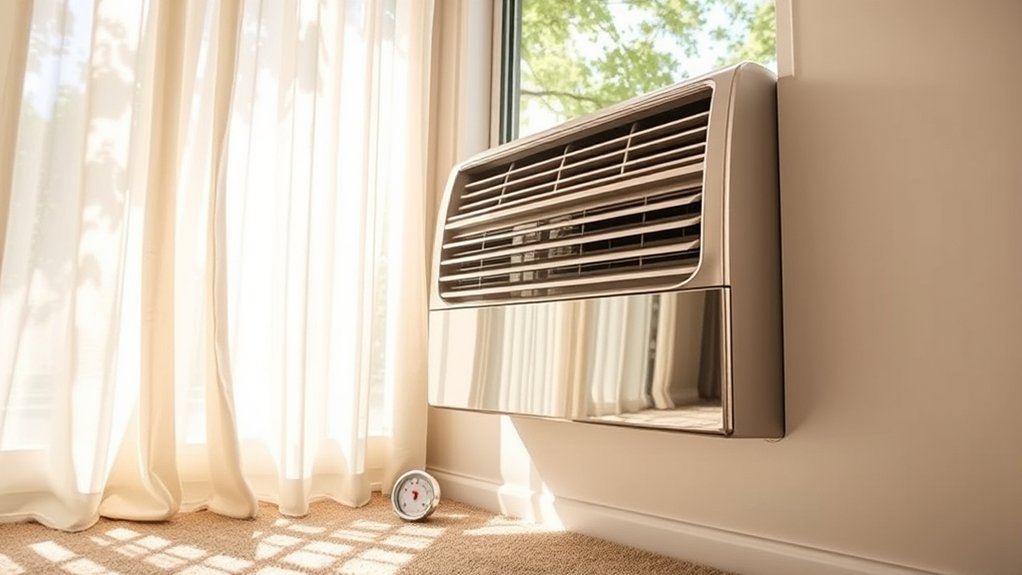
Sunlight, insulation, and other environmental factors can significantly affect the BTU needs of your window air conditioner. If your room gets a lot of direct sunlight, you’ll likely need a higher BTU capacity to keep it cool.
The room’s insulation also makes a difference; well-insulated spaces hold cool air better, which means you might not need as much cooling power. Conversely, poor insulation leads to higher BTU requirements.
Decorative styles and window materials matter too. Thick or double-pane windows provide better insulation, lowering your cooling needs, while thin or single-pane windows transfer more heat, increasing the BTU requirement.
Using curtains, blinds, or reflective window films can help control sunlight and reduce the cooling load. Knowing these factors helps you choose the right BTU size, making your AC more efficient and preventing unnecessary energy use.
Adjusting for sunlight exposure and window type is key to maintaining comfort and saving energy in the long run.
Avoid These Common BTU Selection Mistakes
Many folks tend to overestimate how big their room is when picking out a BTU rating, which can lead to an air conditioner that’s too powerful. This often results in a unit that’s noisy and doesn’t run efficiently. It’s also easy to overlook how well your space is insulated, but that’s a big deal—poor insulation can make your AC struggle or cause it to short-cycle, wasting energy and money in the process.
To get the cooling just right, it’s important to accurately figure out your room size and insulation levels before choosing a unit. That way, you’ll end up with an air conditioner that’s perfect for your space, runs smoothly, and saves you some cash too.
Overestimating Room Size
One common mistake when selecting a window AC unit is overestimating the room size, which can lead to inefficiency and higher energy bills.
When you choose a unit that’s too powerful, it cools the space quickly but cycles on and off frequently. This causes noise levels to increase and can disturb your decorating ideas.
This constant cycling can also wear out the compressor faster, reducing the unit’s lifespan.
An oversized AC may not effectively dehumidify the room, leaving it feeling damp and clammy.
Instead, focus on selecting a unit that matches your actual space. Proper sizing ensures quieter operation, better energy efficiency, and a comfortable environment.
This way, you avoid unnecessary noise or waste while keeping your room comfortable and well-dehumidified.
Ignoring Insulation Levels
Ignoring insulation levels can lead to choosing an AC unit that’s either too small or too big, making it tough to keep your space comfortable and energy-efficient.
Insulation really affects how much cooling your room actually needs. Poor insulation lets heat in or out, so weather and building materials directly impact the BTU calculation.
If you overlook insulation quality, you might underestimate or overestimate the cooling capacity needed, which wastes energy and raises costs.
Getting these factors right helps you pick an AC that truly matches your room’s needs. Remember, external elements like sun exposure or nearby heat sources also influence insulation’s impact.
Considering all these things will give you a more accurate BTU estimate and a more comfortable space.
When Should You Choose a Higher or Lower BTU for Comfort?
Choosing the right BTU rating depends on your room’s size and how you want to feel in the space. Opting for a higher BTU than needed can cool the room quickly but might lead to more noise and higher energy use, which reduces savings.
On the other hand, picking a lower BTU might save energy but won’t cool the room effectively, making it uncomfortable. If your room has high ceilings or lots of sunlight, a higher BTU unit ensures consistent comfort.
For smaller or well-insulated spaces, a lower BTU is usually enough. Think about your comfort preferences—if you want fast cooling, a higher BTU could be better, but it might be noisier.
If you prefer quiet operation and want to save energy, choosing a slightly lower BTU can keep things peaceful and cost-effective. Always consider room size, insulation, and your comfort needs when picking your AC’s BTU.
How Energy Efficiency Relates to Your BTU Choice
Selecting the right BTU rating directly impacts your air conditioner’s energy efficiency. A properly sized unit can save you money on electricity bills.
When your AC matches your space’s cooling needs, it runs more efficiently, using less energy to keep you comfortable. An oversized unit cools quickly but often cycles on and off, wasting energy and wearing out faster.
On the other hand, a unit that’s too small struggles to cool your space, which leads to higher energy use. By choosing the correct BTU, you reduce unnecessary energy consumption and save money over time.
This also helps you make eco-friendly choices by lowering your carbon footprint. An energy-efficient AC cools your space without wasting resources.
In the end, picking a unit that fits your room size boosts both performance and sustainability. It keeps your home comfortable while saving you money and helping the environment.
Tips for Confirming Your Window AC’s BTU Is Perfect
To make sure your window AC is the right size, start by measuring your room accurately. Think about things like ceiling height, how much sunlight hits the room, and how well insulated it is. Once you have an estimate of the BTU you need, check other factors too.
Check your air filter regularly. A clean filter helps improve airflow, makes your unit more efficient, and reduces noise. Keeping the filter clean also prevents strain on the AC, so it runs smoothly.
Listen for any unusual noise, which might mean the unit is too powerful or not installed correctly. This quick check can save you from bigger issues later.
Use this quick reference to verify your BTU choice:
| Room Size (sq ft) | Recommended BTU | Notes |
|---|---|---|
| Up to 150 | 5,000 | Keep filters clean for noise control |
| 150-300 | 8,000 | Check insulation for efficiency |
| 300-450 | 10,000 | Ensure proper installation |
| 450-600 | 12,000 | Consider noise reduction features |
| Over 600 | 14,000+ | May need professional sizing |
This way, you can be confident your AC fits your needs perfectly.
Adjusting BTU Needs After Installation
After you’ve set up your window AC, you might notice that your cooling needs change over time. Things like bringing in new furniture, the weather warming up, or more sunlight hitting your room can all make a difference.
Factors Influencing Cooling Needs
While calculating the initial BTU needs is essential, several factors can influence your cooling requirements once the unit is installed. Indoor plants, for example, can increase humidity and warmth, making your space feel warmer and possibly requiring a higher BTU capacity.
Noise levels also impact comfort; a loud unit might make it feel less effective or intrusive. This could lead you to consider a more powerful or quieter model.
Moreover, the number of windows, their size, and how much sunlight they let in can change your cooling needs. If your space has high ceilings or is crowded with furniture, you might need more cooling power.
Keep these factors in mind to ensure your window AC performs efficiently and keeps your room comfortable.
Re-evaluating Space Conditions
Once your window air conditioner is installed, it’s a good idea to revisit your initial calculations and see if it still meets your cooling needs. Changes in your space, like adding indoor plants, can affect airflow and temperature control.
If your indoor plants grow or multiply, they might trap more heat or block airflow, making your AC work harder. Also, pay attention to noise levels—if your unit gets louder or if external noise increases, you might need a more powerful unit or better insulation.
Regularly checking these factors helps keep your AC working efficiently and your space comfortable. Making adjustments as your indoor environment changes prevents overworking your unit and saves energy.
Adjusting Thermostat Settings
Adjusting your thermostat settings can significantly improve your comfort and save energy, especially if you’ve recently changed your space or installed a new unit.
Start by calibrating your thermostat to make sure it shows the right room temperature. If it’s off, your AC might run longer than needed, wasting energy.
Next, set the fan speed to match your cooling needs. A higher speed circulates air faster and cools the room quicker, while a lower speed keeps things quieter and steady.
Regularly review and tweak these settings based on what feels comfortable and your energy goals. Proper calibration and fan speed choices help your window AC run efficiently, keeping you comfortable without wasting energy or money.
Final Checklist to Pick the Best BTU for Your Room
Choosing the right BTU for your window AC is key to cooling efficiently without wasting energy. Before you decide, double-check your room’s size and layout to ensure the BTU matches your space.
Think about how many windows your room has, the quality of insulation, and how much sunlight it gets. These factors all affect indoor air quality and cooling needs.
Avoid oversizing your unit, which can cause high energy use and poor humidity control. On the other hand, undersizing means your AC won’t cool effectively.
Check the energy efficiency rating of the unit to save on long-term energy costs. Also, consider extra features like programmable thermostats or air purifiers to improve indoor air quality.
Finally, make sure the unit fits your window and space comfortably while providing enough cooling power. Following these steps will help you pick a window AC with the right BTU, balancing cooling, air quality, and energy bills.
Frequently Asked Questions
Can a Too-Large AC Cause Humidity Issues in My Room?
Yes, a too-large AC can cause humidity issues in your room. It cools the air quickly but doesn’t run long enough to remove excess moisture effectively, leading to dampness.
This also affects energy efficiency because the unit cycles on and off frequently, wasting power. Larger units tend to produce higher noise levels, which might disturb your comfort.
Properly sizing your AC helps balance cooling, humidity control, energy use, and noise.
How Often Should I Service or Clean My Window AC for Optimal Performance?
You should service your window AC at least once a year for the best performance and energy efficiency. Regular maintenance like cleaning filters and coils every few months can help prevent dust buildup and improve airflow.
During peak use, you might want to do more frequent cleanings. Proper maintenance reduces energy consumption, extends your unit’s lifespan, and keeps it running smoothly.
Keep track of when you last serviced your AC to make sure it operates efficiently throughout its lifespan.
Is It Better to Oversize or Undersize My Window Air Conditioner?
It’s better to size your window AC accurately than to oversize or undersize.
Oversizing can lead to higher energy bills and increased noise levels, while undersizing struggles to cool your space efficiently.
A properly sized unit guarantees maximum energy efficiency, quieter operation, and consistent comfort.
Do Different Room Types Require Different BTU Calculations?
Yes, different room types require different BTU calculations to optimize energy efficiency and cooling capacity.
For example, a small bedroom needs fewer BTUs—around 5,000 to 8,000—while larger living rooms may need 10,000 to 20,000 or more.
Considering room size, insulation, and sun exposure helps ensure your air conditioner provides enough cooling without wasting energy.
This way, you can keep your space comfortable and energy-efficient at the same time.
How Does Outdoor Temperature Influence My Ac’s BTU Needs?
Think of your AC as a shield against summer’s heat; outdoor temperature impacts your BTU needs just like weather affects your wardrobe. When outdoor temps soar, you’ll need a more powerful unit to keep your indoor space comfortable and maintain good air quality.
This also helps improve energy efficiency by preventing your AC from overworking or underperforming. A properly matched BTU ensures your space stays cool, comfortable, and energy-smart, no matter how high the mercury rises.
Conclusion
Choosing the right BTU for your window AC is like finding the perfect key to unlock comfort.
By understanding your room’s size, sunlight, insulation, and layout, you’ll hit the sweet spot for efficient cooling.
Remember, a well-matched BTU is your best ally against sweltering days, helping your AC work smarter, not harder.
So, take these tips to heart, and let your cooling solution fit perfectly like a glove.
This way, you can turn your space into a cool sanctuary with the right BTU for your window AC.