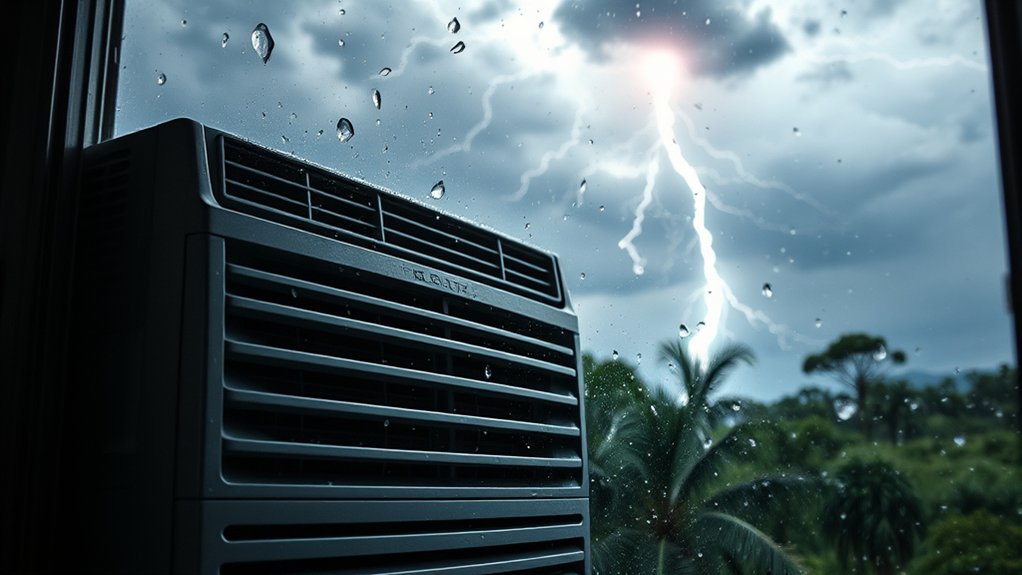
What Happens When You Run a Window AC During a Thunderstorm?
Many people rely on their window AC units to stay cool during the hottest days, but what happens when a thunderstorm rolls in? If you’re like most, you might wonder whether it’s safe to keep your AC running or if you should turn it off to avoid damage.
Running a window AC during a thunderstorm can expose it to risks like power surges, water intrusion, and lightning strikes, which may damage internal components or pose electrical hazards.
Stormy conditions increase the chances of water getting inside or causing short circuits, and lightning can cause dangerous voltage spikes.
Safely, it’s best to unplug or turn off your AC during storms. Keep watching to understand how to protect your unit and stay safe.
Key Takeaways
- Running a window AC during a thunderstorm can increase the risk of electrical surges damaging the unit.
- Lightning strikes can cause voltage spikes that might fry the internal components of the AC.
- Water from rain or moisture can get inside, short-circuit the unit, and speed up corrosion.
- Power outages or surges could reset or harm the thermostat and other electronic parts.
- Turning off and unplugging the AC before a storm is a good idea to lower the risk of electrical damage and safety hazards.
Is It Safe to Run Your Window AC During a Thunderstorm?
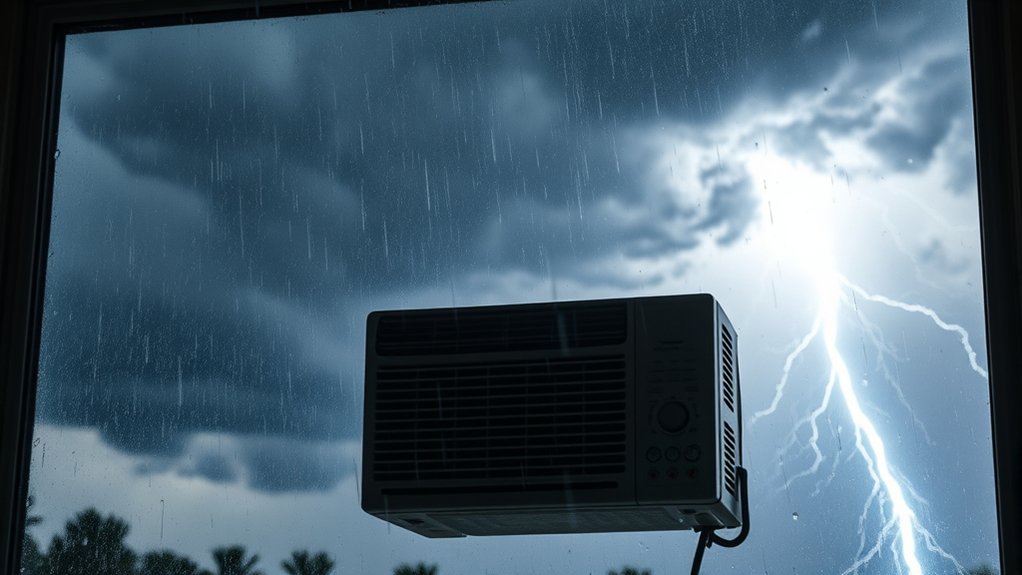
Is it safe to run your window AC during a thunderstorm? Generally, it’s best to play it safe and turn it off. Thunderstorms bring lightning, which can be risky for electrical devices, especially if your AC isn’t properly grounded.
Lightning can cause power surges that damage your appliance or create electrical hazards. To stay safe, make sure your window AC is plugged into a surge protector with good lightning protection.
Use a surge protector with lightning protection to safeguard your window AC during storms.
If your home’s wiring is outdated or not grounded well, running the AC during a storm can increase the chances of electrical shocks or fires. Lightning strikes can also cause power fluctuations that might harm your unit.
While many modern appliances have built-in safeguards, it’s still a good idea to turn off the AC during storms. Doing so helps protect you and your home from potential electrical problems.
Prioritizing safety and lightning protection is the best way to stay safe during severe weather.
What Happens When the Power Goes Out?
When the power goes out during a thunderstorm, your window AC stops cooling your room and can cause some inconveniences. You might feel sweaty and frustrated, especially if the outage lasts a while.
Power loss can also be dangerous if your system isn’t protected. It increases the risk of damage or fire once the power comes back on. That’s why storm preparedness is so important to keep your home safe.
Be aware of these emotional impacts:
- Feeling frustrated because you’re uncomfortable during a heatwave
- Worrying about electrical hazards and potential damage
- Feeling anxious about the storm’s unpredictability and safety risks
Taking simple steps like unplugging devices and having backup power sources can help you stay safe. Remember, outages aren’t just annoying—they can pose real safety risks if you’re not careful.
Can Lightning Strike Damage Your Window AC?
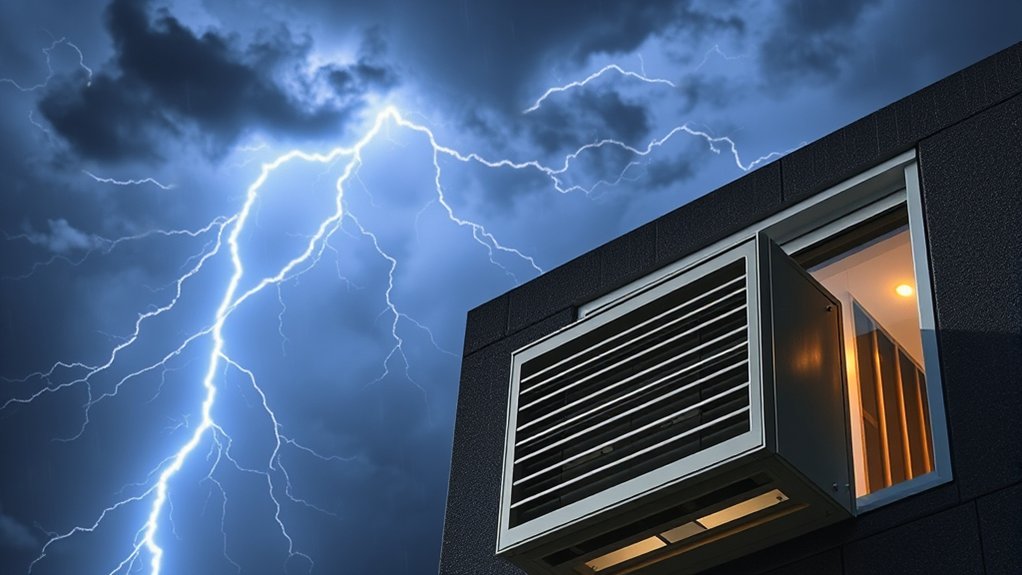
Lightning can pose a real threat to your window AC, especially if it strikes nearby or hits your home directly. When lightning strikes, it sends a powerful surge of electricity through your electrical system, which can damage your air conditioner.
If your AC is running during a lightning storm, that sudden surge can fry its internal parts, leading to costly repairs or even needing a new unit. Sometimes, lightning strikes can cause electrical fires that might spread and damage your entire home.
Even if lightning doesn’t hit your house directly, nearby strikes can create voltage spikes that travel through power lines into your AC. That’s why it’s a good idea to unplug your window AC during thunderstorms or use a surge protector to help protect it.
While lightning strikes are pretty rare, the damage they can cause is significant. That’s why taking precautions during storms is always a smart move.
How Do Power Surges During Storms Affect Your Air Conditioner?
Power surges during storms can really do a number on your air conditioner’s electronic parts. When a surge hits, it can cause serious damage, which might mean costly repairs or even having to replace the whole unit. It’s pretty frustrating, especially when you’re just trying to stay comfortable during a storm.
Plus, if the power goes out suddenly, your AC might shut off unexpectedly, and that can sometimes lead to further issues. To keep your AC safe, it’s a good idea to use surge protectors. And if a big storm is coming, unplugging your unit can give it an extra layer of protection. Staying proactive can save you a lot of trouble down the line.
Surge Damage Risks
During a thunderstorm, power surges can strike unexpectedly, and your air conditioner is vulnerable to these voltage spikes. These surges can damage internal components, leading to costly repairs or even complete failure.
Without proper protection, a single lightning strike can fry your AC’s circuitry instantly. Using surge protectors can help reduce this risk, but not all are equally effective.
Consider installing a battery backup system to shield your unit during severe surges, giving you extra security. If you ignore surge damage risks, you might face unexpected breakdowns just when you need cooling most, expensive repairs, or a shortened lifespan for your AC.
Protecting your unit with reliable surge protectors and a battery backup can save you money and prevent frustrating breakdowns during storms.
Power Outage Effects
When a thunderstorm causes a power outage, your air conditioner immediately loses its electrical supply. This can lead to several issues when the power comes back on.
Sudden outages can cause your thermostat settings to reset, making it harder to keep your energy use in check. If the system restarts unexpectedly, it might run longer or more often, which can boost your utility bills.
Power surges during restoration can also damage internal components, leading to costly repairs. To avoid this, consider using a surge protector designed for HVAC systems.
After the outage, double-check your thermostat settings to make sure they match your comfort and energy-saving goals.
Staying aware of these effects helps protect your AC and keeps your energy consumption efficient, especially during stormy weather.
Preventive Safety Measures
Storms can cause sudden electrical surges that overload your air conditioner’s sensitive parts. To protect yourself and your equipment, it’s important to be prepared for storms.
Power surges during storms can be dangerous, risking damage to your AC and even starting fires. Taking some safety steps can help prevent these issues.
Consider installing a whole-house surge protector to block harmful voltage spikes. Unplug your AC during thunderstorms to avoid electrical hazards. Also, regularly inspecting and maintaining your electrical system adds an extra layer of safety.
Are Heavy Rain and Moisture Harmful to Your AC?
Heavy rain and moisture can pose real risks to your AC, especially if it’s exposed to the elements. Without proper rain protection, water can seep into the unit’s electrical components, causing short circuits or corrosion. Moisture effects can also speed up rusting on metal parts, which reduces your AC’s lifespan and efficiency.
Heavy rain and moisture can damage your AC’s electrical parts and hasten rust, shortening its lifespan.
Even a small amount of water intrusion can cause malfunctions or electrical failures. To avoid these issues, make sure your window AC has good rain protection, like a sturdy awning or waterproof cover. Keep the unit sealed tightly to prevent water from getting inside.
Moisture buildup inside the unit can also lead to mold growth. This impacts air quality and can be tough to remove. Some models are built to handle outdoor conditions, but always check your AC’s specs and consider extra protective measures during heavy rain or storms.
Proper rain protection helps your AC run smoothly and lasts longer.
Signs Your Window AC Was Damaged in a Storm
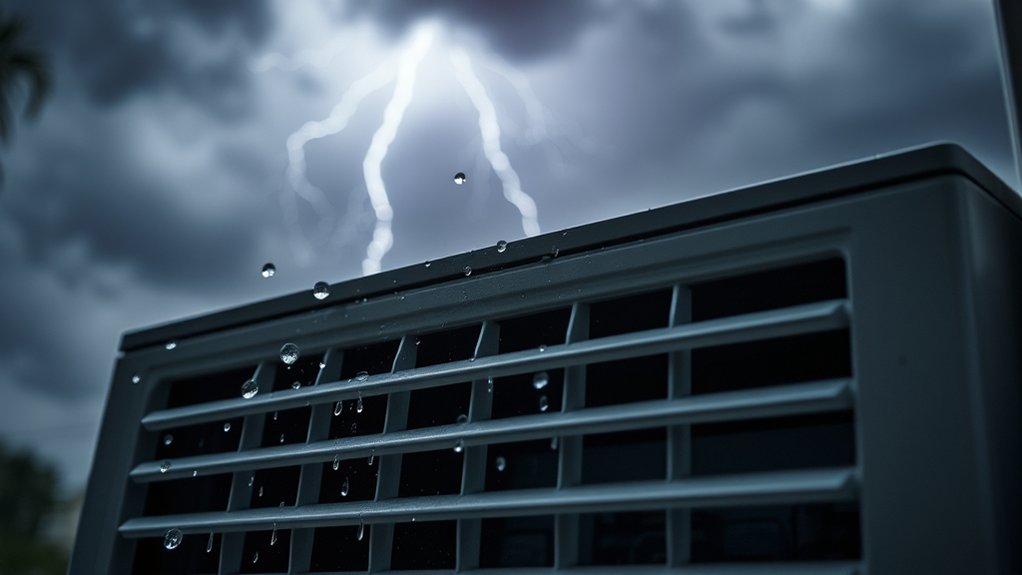
After a storm, it’s a good idea to check your window AC for any water leaks around it. That could be a sign that something inside got damaged. Also, pay attention to how it sounds when it’s running. If you notice any strange noises, like banging or buzzing, those might mean there’s an issue inside the unit. And of course, if your AC isn’t cooling your room as well as it used to, it could have taken a hit during the storm. So, keep an eye and ear out—it’s the best way to catch problems early!
Visible Water Leaks
Visible water leaks are a clear sign that your window AC might have been damaged during a thunderstorm. Storm water getting inside or condensation leaking can cause water to drip inside or onto your unit, which is a warning sign.
You might see pools of water around the unit or water streaming down the window pane. Ignoring these leaks can lead to more damage. They aren’t just an annoyance—they can mean seals are broken or electrical parts are affected by moisture.
Watch out for signs like water pooling inside your window frame, which can lead to mold growth. Excess moisture that gets worse over time and visible drips or puddles forming unexpectedly are also common clues.
These leaks show that your AC isn’t sealing properly anymore, and storm damage may have compromised how it works and its safety.
Unusual Noise Levels
Have you noticed strange noises coming from your window AC during or after a thunderstorm? An unusual noise, like banging, rattling, or grinding, could mean storm-related damage.
Vibration issues are common signs your unit has been affected, often caused by loose or damaged parts. You might hear the compressor making irregular sounds or the fan wobbling more than usual.
These noises indicate that some parts may have shifted or become loose during the storm. If you ignore these signs, the problem can worsen and lead to more costly repairs.
Continued vibrations and odd sounds can cause further damage over time. It’s a good idea to inspect your AC carefully and call a professional if the noise keeps up.
Addressing these issues early on can help prevent bigger problems and extend your unit’s lifespan.
Reduced Cooling Efficiency
If your window AC was rattling or making unusual noises during the storm, it might also be losing its ability to cool effectively. Storm damage can impact your unit’s energy efficiency, causing it to work harder for less cooling.
You may notice warmer air coming from the vents or uneven cooling across the room. This reduced performance could be a sign your AC was damaged.
To restore efficiency, check for debris or water inside the unit, and clean or replace filters. Regular maintenance tips like inspecting electrical connections and sealing gaps can prevent further issues.
Ignoring these signs can lead to higher energy bills and system failure. Promptly addressing storm-related damage helps guarantee your AC continues to cool efficiently when you need it most.
How to Protect Your Window AC From Storm Damage
Storms can strike unexpectedly, so it’s important to take steps now to protect your window AC unit and avoid costly damage.
Start by unplugging the unit when a storm is approaching to eliminate electrical hazards. If unplugging isn’t an option, turn off the circuit breaker to cut power completely.
During severe weather, think about installing a weatherproof cover made for window units. These covers help shield your AC from rain and flying debris.
Make sure the unit is securely mounted so strong winds won’t cause it to loosen or fall. Keep the area around your AC clear of loose objects that could become projectiles.
Staying safe during storms means staying informed about weather updates and acting quickly to protect your equipment.
Properly protecting your window AC can extend its lifespan and prevent electrical hazards during a storm.
Taking these precautions helps keep your unit safe from storm damage and ensures it stays in good shape for longer.
What to Do After a Storm to Check Your AC
After a storm passes, it’s important to inspect your window AC unit carefully before turning it back on. Storm safety means checking for any damage that could be dangerous or affect your unit’s performance.
Look for signs of water getting inside, corrosion, or loose wiring. Make sure the power cord and plug are intact and dry. Never ignore exposed wires—they can be hazardous.
If you see any damage, don’t try to fix it yourself. Contact a professional instead. Resetting or turning on a damaged AC can cause electrical hazards or make things worse.
Handling electrical parts with care is essential to keep your home safe. Be patient and only power up your AC when you’re confident it’s safe to do so.
Preventing Storm Damage: Tips for Safe Operation
To keep your window AC safe during a thunderstorm, it’s a good idea to unplug it before the storm begins. That way, you can avoid any electrical issues or damage from lightning strikes.
For outdoor units, make sure they’re securely fastened or covered up to protect them from strong winds or hail. Just a few simple precautions can make a big difference in preventing damage and saving you money on repairs.
Unplug During Storms
Unplugging your window AC unit before a thunderstorm strikes is one of the easiest and most effective ways to protect it from damage. It’s a simple step in storm safety and appliance care, helping prevent power surges that can damage internal parts. When you disconnect your AC, you also lower the risk of electrical fires and costly repairs.
Storms can be unpredictable, and lightning strikes can send dangerous surges through your electrical system. By unplugging, you keep your home and appliances safe from this hidden threat.
- Protect your investment and avoid expensive repairs
- Keep your home safe from electrical fires
- Peace of mind knowing your appliance is secure during storms
Secure Outdoor Units
Securing your outdoor AC unit is essential to protect it from storm damage. Start by anchoring the unit securely to prevent it from toppling or shifting during high winds.
Clear the area around the unit of debris, loose objects, and branches that could become projectiles. Make sure the unit is properly grounded to safely direct excess electricity into the ground and protect against power surges caused by lightning.
If possible, cover the unit with a weatherproof, ventilated cover. Just remember to remove it promptly after the storm passes. Regularly check the electrical grounding connections to ensure they’re intact.
Taking these steps helps safeguard your outdoor AC unit from storm-related damage and keeps it operating safely during severe weather.
Should You Leave Your AC On During a Thunderstorm?
During a thunderstorm, leaving your window air conditioner on can pose some risks, especially if lightning strikes nearby or power surges happen. Power fluctuations can damage your unit’s internal parts, making it less efficient and messing with your temperature control. It’s a good idea to consider turning off your AC to avoid costly repairs and stay safe.
Feeling relieved knowing your home is protected from unexpected power surges can give you peace of mind.
You’ll also avoid the hassle of dealing with a broken or inefficient AC when you need cooling the most. Protecting your investment and keeping your home at the right temperature is worth it, especially to prevent sudden breakdowns.
If you’re worried about energy use, turning off your AC during storms saves power and can lower your electric bill. While some might miss the cool air, shutting off the unit temporarily is a small price for peace of mind and protecting your appliance during storms.
Frequently Asked Questions
Can a Thunderstorm Cause Mold Growth Inside the AC Unit?
Running your window AC during a thunderstorm can increase storm humidity inside the unit, creating a damp environment that promotes AC mold growth.
The moisture from the storm can get trapped, especially if the unit isn’t properly maintained or dried afterward.
This excess humidity encourages mold spores to develop within the system, leading to potential air quality issues.
Regular cleaning and ensuring the unit dries thoroughly after storms can help prevent AC mold.
Does Running the AC Affect Indoor Humidity Levels During Storms?
Running your window AC during a storm can lower indoor humidity levels, helping improve air quality by reducing excess moisture. It can make the air feel more comfortable and less damp.
But keep in mind, it might also cause noise disruption, which can be bothersome during thunderstorms. If you’re trying to relax or sleep, that could be a distraction.
It’s all about finding the right balance. Too much dehumidification can dry out the air and cause discomfort, while too little leaves humidity high.
Make sure your AC unit runs efficiently to avoid issues like mold growth or feeling too stuffy. Proper maintenance and moderation are key.
How Does a Power Surge Impact the Compressor of a Window AC?
A power surge can seriously damage your window AC’s compressor, affecting both electrical safety and how long the appliance lasts.
When a surge happens, it sends extra voltage through the system, which can blow internal parts or cause short circuits.
To protect your unit, use surge protectors and unplug the AC during storms. This reduces the chance of costly repairs and helps your appliance last longer.
Taking these steps also keeps your home’s electrical system safe.
Is There a Risk of Carbon Monoxide Poisoning From Window ACS During Storms?
Running your window AC during a storm doesn’t pose a risk of carbon monoxide poisoning because ACs don’t produce CO. They only cool or heat the air.
Focus on maintaining good air quality and electrical safety by avoiding hazards like power surges or exposed wiring during storms.
Keep the unit properly maintained, and always unplug it during severe weather to prevent electrical issues. This helps ensure safe operation and healthy indoor air.
Can Storm Debris Cause Physical Damage to the Ac’s Exterior Components?
Storm debris can definitely cause physical damage to your window AC’s exterior components. Flying branches, leaves, or hail might dent or crack the casing or block airflow vents, reducing efficiency.
If debris hits the unit, it can damage fins or fans, leading to costly AC damage. To prevent this, consider covering your AC with a protective shield during storms and inspect it afterward for any debris or damage.
Conclusion
Did you know that thunderstorms can cause power surges that damage over 80% of home electronics, including your window AC? To keep your unit safe, it’s best to turn it off during storms and unplug it if possible.
Storms are unpredictable, and taking proactive steps can save you from costly repairs later. Stay safe, protect your appliances, and enjoy peace of mind knowing you’ve minimized the risk of storm-related damage to your window AC.