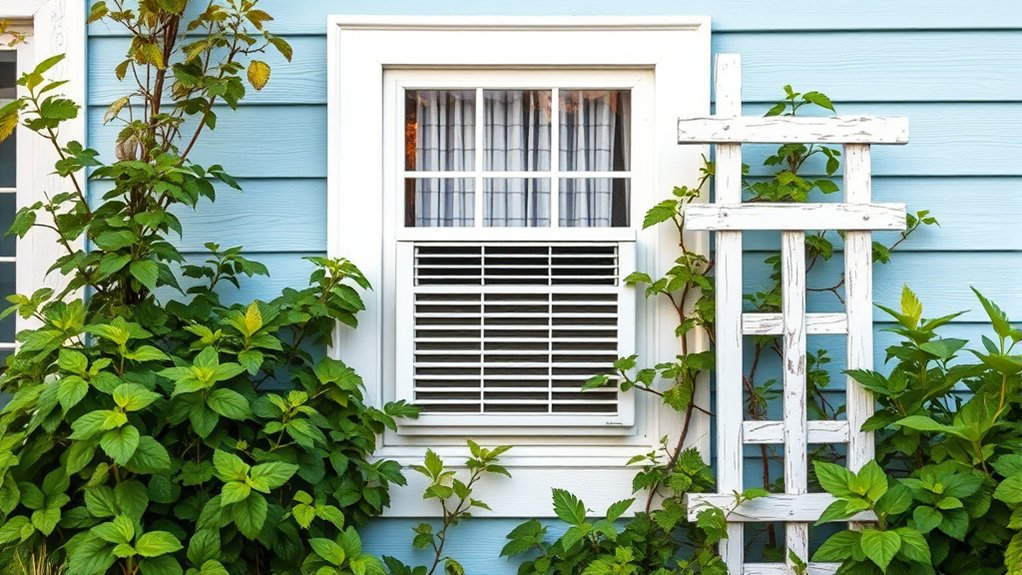
How to Hide Your Window AC Unit Outside
Many people struggle with how to hide their outdoor window AC units without sacrificing functionality or curb appeal. If you’re tired of seeing that bulky unit spoiling your yard’s look, you’re not alone.
To hide your outdoor window AC unit, start by evaluating your yard for natural spots or structures that offer coverage, like fences or tall shrubs. Use landscaping, decorative screens, or custom covers to blend the unit into your environment, and match colors to surrounding surfaces.
Make sure your concealment allows for easy access and proper airflow. For more tips on effectively hiding and maintaining your AC unit, keep exploring these ideas to find the best fit for your space.
Key Takeaways
- Choose a discreet location away from windows, making sure there’s enough space for airflow and future growth.
- Use fencing, lattice panels, or decorative screens to hide the unit while still letting air circulate.
- Plant tall shrubs, grasses, or vines around the unit for a natural look and added privacy.
- Build or customize weather-resistant covers with ventilation to keep the unit out of sight.
- Use color-matched paint and seasonal decor for a quick, budget-friendly way to conceal the unit.
How to Assess Your Yard to Find the Best Way to Hide Your AC Unit
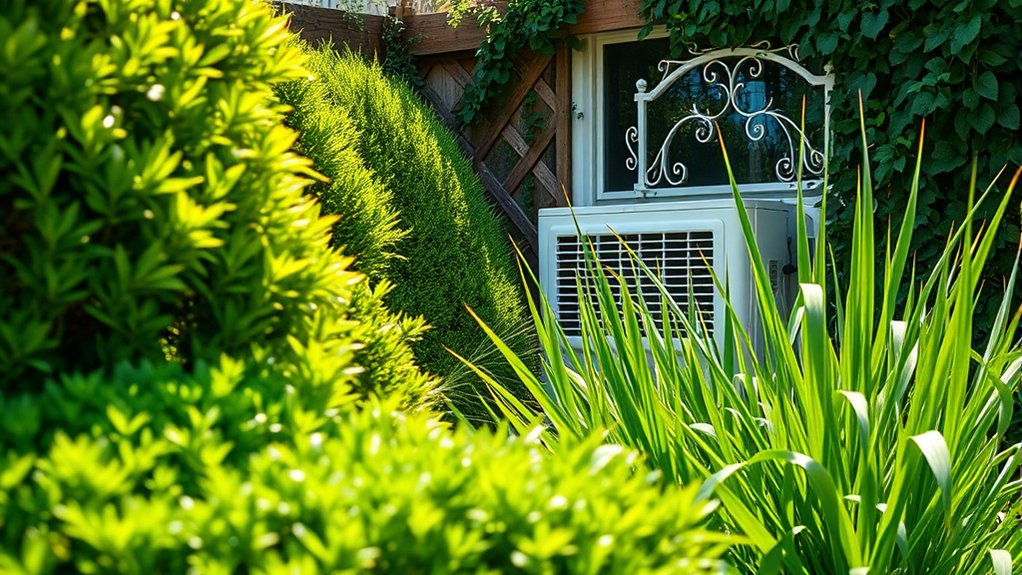
Have you ever wondered how to pick the best spot in your yard to hide your outside AC unit? The key is to look at your yard layout and how much sunlight it gets. Start by noting existing structures, trees, and fences that could act as natural hiding spots.
Choose a hidden, shaded spot away from windows to keep your outdoor AC unit cool and discreet.
Think about areas where the yard isn’t too visible from the house or walkways outside. Pay attention to sunlight because direct sun can make the unit overheat and work less efficiently. Choosing a shaded spot helps keep it cooler and quieter.
Try to avoid placing the AC near windows or patios where noise might bother you or neighbors. Measure the space carefully to make sure the unit fits well without blocking airflow.
Also, consider future growth of trees or shrubs that could block the unit later on. By evaluating your yard’s layout and sunlight, you’ll find the perfect spot that keeps your AC discreet, functional, and protected from the elements.
Choose Fencing Styles That Keep Your Outdoor AC Out of Sight
Wondering which fencing style best hides your outdoor AC unit? Your options include various styles that can effectively block sightlines.
For a seamless look, think about privacy screens made from wood, vinyl, or composite materials. They’re easy to install and can be customized to match your home’s exterior.
Taller fences or lattice panels with climbing plants also work well to obscure the unit without making your yard feel closed in.
If you want a more decorative touch, decorative panels or slatted fences offer both privacy and style.
Just make sure your fence design allows for proper airflow around the unit to prevent overheating.
When choosing fencing styles, prioritize materials that withstand weather and blend well with your landscape.
Properly installed privacy screens and fencing options help keep your outdoor AC unit out of sight, making your yard look better while still being functional.
Use Plants and Landscaping to Camouflage Your AC Unit
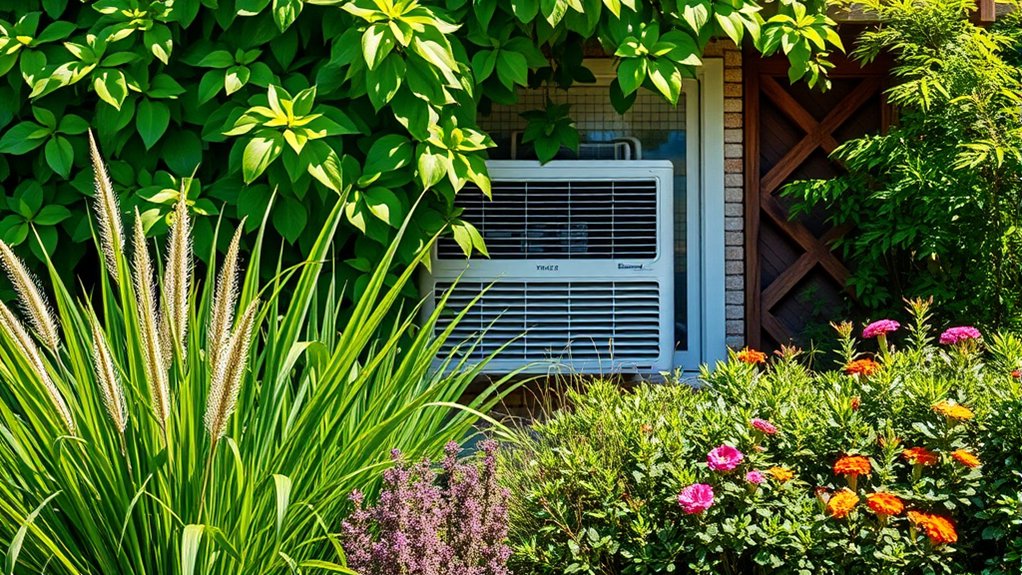
Using plants and landscaping is a great way to hide your outdoor AC unit naturally. Placing shrubs, tall grasses, or small trees around it can block the view without blocking airflow.
Use shrubs, grasses, or trees around your AC for natural concealment without hindering airflow.
Pick dense foliage that grows tall enough to hide the unit but doesn’t block vents or vents needed for proper operation. Adding a landscaped border makes your yard look better and helps keep your indoor climate comfortable.
This also shields the unit from direct sunlight, which can make it work harder. That means better energy efficiency and lower energy bills. Just be sure to leave enough space for maintenance and airflow so the unit can do its job.
With some thoughtful landscaping, you can keep your outdoor AC discreet while maintaining great performance and indoor comfort. Choosing the right plants not only beautifies your yard but also makes your outdoor space more inviting.
Build a Custom Cover for a Sleek, Hidden Look
When you’re putting together a custom cover, it’s important to pick materials that are tough and can handle the weather. You want something that will stand up over time and keep everything protected.
Also, don’t forget about ventilation. Your design should allow air to flow properly so your AC can run smoothly and stay efficient.
And lastly, choose paint and finishes that match your home’s exterior. That way, your cover will blend in seamlessly and give your outdoor space a sleek, polished look.
Choosing Appropriate Materials
Choosing the right materials is key to building a custom cover that blends smoothly with your exterior decor. You want materials that are durable enough to handle weather like rain, sun, and wind without breaking down quickly.
Look for options such as treated wood, composite materials, or weather-resistant plastics. These offer long-lasting strength and can stand up to the elements.
At the same time, think about how the cover will look. Choose finishes that are smooth and paintable, or natural wood finishes that match your home’s style.
Avoid flimsy or cheap materials that might warp or fade over time. Sturdy, attractive choices will help your cover stay functional and look great for years to come.
Designing for Ventilation
To guarantee your custom cover remains effective and safe, designing for proper ventilation is essential. You need to incorporate airflow optimization by ensuring the cover allows enough space around the unit for air to circulate freely.
Follow ventilation principles that promote consistent airflow, which prevents overheating and maintains efficiency. Avoid blocking vents or creating tight enclosures that trap heat.
Instead, include strategic gaps or vents that facilitate airflow while still concealing the unit. Consider the placement of these openings to maximize ventilation without sacrificing the sleek look you desire.
Properly designed ventilation ensures your AC unit operates smoothly, lasts longer, and stays hidden behind your custom cover without compromising performance.
Painting and Finishing
After verifying your cover has proper ventilation, the next step is to focus on painting and finishing to get a sleek, hidden look. Start by choosing a paint color that matches your home’s exterior for a seamless blend.
Use techniques like brushing, rolling, or spray painting to get a smooth, even finish. First, apply a primer to boost durability and help the paint stick better.
Choose weather-resistant, outdoor-grade paint so it can handle the elements. Pay attention to details, such as carefully painting edges and adding a clear protective coat for extra longevity.
The goal is to make your AC cover blend naturally with its surroundings, making it almost invisible while keeping your home’s look intact.
Install Decorative Screens to Conceal Your Outdoor AC Stylishly
Decorative screens are a great way to hide your outdoor AC unit while adding style to your yard. They can also provide privacy by shielding the unit from view.
Plus, they help reduce noise with sound insulation. Choosing a screen with slats or lattice allows airflow and keeps the unit visible enough for maintenance.
You can personalize your screens with paint, plants, or decorative panels to match your outdoor decor. Just make sure they’re placed properly so your AC works efficiently without blocking airflow or access.
Pick durable, weather-resistant materials for lasting use. Check out the options below to find the perfect screen for your space:
| Material | Style |
|---|---|
| Wooden panels | Classic, rustic |
| Vinyl fencing | Maintenance-free, modern |
| Metal screens | Sleek, industrial |
| Bamboo | Natural, eco-friendly |
| Trellis | Supports climbing plants |
Create a Garden Barrier to Block the View of Your AC
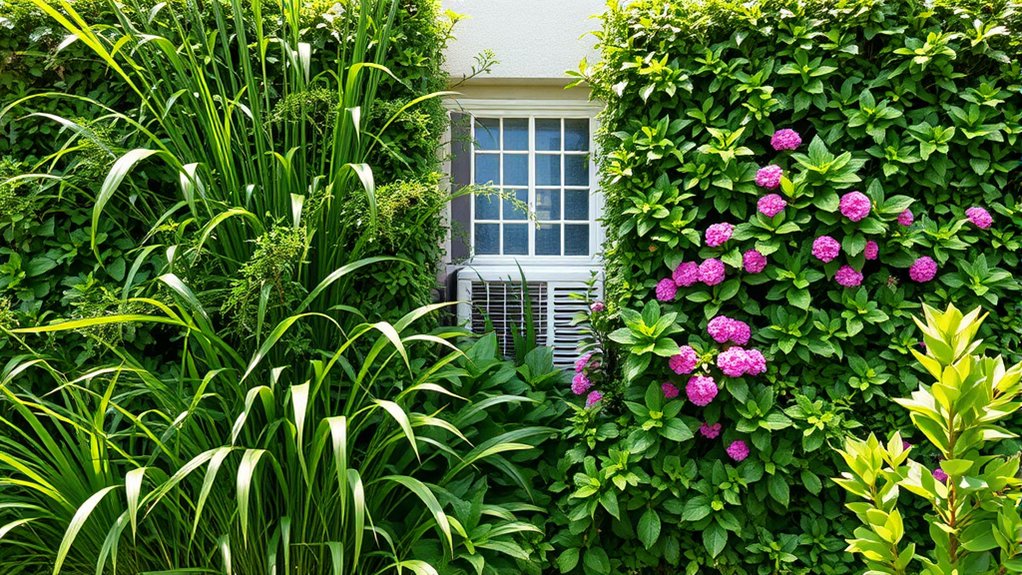
Creating a garden barrier is a great way to hide your outdoor AC unit and make your yard look more natural. You can install garden fencing to block the view and add some privacy. Choose fencing that matches your landscape and makes your yard look more interesting, like lattice or decorative panels.
To hide the unit even more, plant tall shrubs, ornamental grasses, or climbing vines around the area. These plants soften the look of the fence and help blend the AC unit into your garden naturally. Pick plants that grow quickly and reach the right height to cover the unit effectively.
Regular care is important to keep the plants healthy and doing their job. By combining fencing with smart planting, you’ll create a neat and attractive barrier. This keeps your AC out of sight while boosting your yard’s overall charm.
Use Color and Paint to Blend Your AC Unit Into the Environment
Using color and paint is a great way to help your outdoor AC unit blend into its surroundings. Start by matching the color of your unit to nearby surfaces like walls, fences, or siding through careful color matching.
Pick a paint that’s weatherproof and designed for outdoor use to ensure it lasts. Use techniques like brushing or spraying for an even coat, paying attention to vents and panels.
Applying a primer before painting can help the paint stick better and prevent chipping. If your environment features neutral tones, choose muted shades that don’t stand out.
For more vibrant settings, consider subtle variations of the existing colors to create a natural look. Remember, the goal is to make the unit less noticeable, so take your time blending the paint seamlessly into the background.
Proper color matching and paint techniques can significantly reduce the visual impact of your AC unit.
How to Keep Your AC Unit Properly Maintained and Ensure Good Airflow
To keep your AC running smoothly, it’s really important to clean those filters regularly. When the filters are clean, air can flow freely, and your unit doesn’t have to work as hard. Plus, it helps keep the air inside your home fresh and healthy.
You’ll also want to make sure the area around the AC unit is free of debris and anything that might block the airflow. Clearing out leaves, dirt, or other obstructions can make a big difference in how well your AC performs.
And don’t forget to give your unit a quick inspection now and then. Look for any signs of damage or wear, and if you notice anything unusual, it’s best to get it checked out sooner rather than later. Taking these simple steps can help your AC last longer and keep your home cool and comfortable.
Regular Filter Cleaning
Regularly cleaning your AC filter is essential for maintaining good airflow and keeping your unit running efficiently. A clean filter not only helps with filter maintenance but also prevents dust buildup that can reduce performance.
To keep your AC in top shape, start by turning off the unit and finding the air filter. Carefully remove the filter and check for dirt or debris. Then, wash or replace it following the manufacturer’s instructions.
Doing this every 1-3 months helps your system run smoothly and can extend its lifespan. Regular filter cleaning also prevents strain on the compressor and maintains good airflow.
Clear Obstruction Pathways
Ensuring your AC unit isn’t blocked by debris or nearby objects is essential for maintaining proper airflow and preventing strain on the system. Regularly clearing obstructions keeps pathways accessible, allowing air to flow freely through the unit.
Make sure to remove leaves, dirt, and any objects that could hinder airflow around the outdoor unit. Trimming back overgrown plants or shrubs nearby also helps keep access easy for maintenance and ventilation.
Proper pathway accessibility not only boosts efficiency but also reduces the risk of overheating or damage. Periodically check that nothing is blocking the vents or intake areas.
Keeping these pathways clear helps your unit run smoothly, extends its lifespan, and maintains optimal cooling performance.
Inspect for Damage
Inspecting your AC unit for damage is crucial because small issues can quickly turn into bigger problems if you ignore them. Regular checks help keep airflow smooth and the system running efficiently.
Use an inspection checklist to guide you and catch potential issues early. Focus on key areas like the fins and coils, housing and mounting, and electrical connections.
Look for dents, corrosion, or debris on the fins and coils that could block airflow. Also, check the housing and mounting for cracks or loose parts that might cause instability or energy loss.
Finally, examine the electrical connections for wear, corrosion, or loose wires that could lead to malfunctions. Regular inspections can save you time and money by preventing bigger repairs down the road.
Affordable Ways to Hide Your Outdoor Window AC
Hiding your outdoor window AC unit doesn’t have to break the bank. You can easily give it a fresh look with some budget-friendly ideas.
Try using seasonal decor like decorative screens or lattice panels, which you can find at most home improvement stores. They offer a quick, stylish cover that blends with your home’s exterior.
Decorative screens or lattice panels can quickly and stylishly hide your outdoor AC unit.
Adding outdoor lighting around the unit can also improve its look and make it less noticeable at night. String lights or solar-powered lanterns are affordable options that brighten the area and draw attention away from the AC.
If you prefer a more natural vibe, plant tall shrubs or potted plants around the unit. This creates a lush, inviting space while helping conceal the AC.
With a little creativity and a small budget, you can hide your outdoor window AC unit effectively without sacrificing curb appeal.
Tips for Maintaining Your Hidden AC Without Losing Access
Even when you’ve found creative ways to hide your outdoor AC unit, it’s important to keep access easy for regular maintenance and repairs. Staying on top of upkeep helps keep your indoor climate comfortable and your energy bills in check.
To do this effectively, consider using removable panels or lattice that blend with your concealment but can be easily taken off when needed. This way, you can access the unit without ruining the look.
Make sure there’s a clear path around the AC. Keep overgrown plants or other obstructions away so you can get to it quickly whenever necessary.
You might also install a small, weatherproof lockable access door or panel that matches your hiding method. This gives you easy access for maintenance while keeping the unit hidden and protected.
Frequently Asked Questions
Will Hiding My AC Unit Affect Its Cooling Efficiency?
Hiding your AC unit can slightly affect its energy efficiency if it blocks airflow. When airflow is restricted, the unit has to work harder to cool your space, which uses more energy.
To avoid this, make sure your hiding method allows proper airflow around the unit. Keeping it well-ventilated helps maintain its cooling efficiency and prevents unnecessary strain on the system.
How Durable Are DIY AC Covers Against Weather Conditions?
DIY AC covers can be quite durable against weather conditions if you pick the right materials. Look for options with high durability and weather resistance, like heavy-duty vinyl or treated wood. These materials help prevent damage from rain, snow, and UV rays.
Properly built covers with reinforced seams and secure fittings make sure your DIY project can handle harsh weather. This way, your AC unit stays protected while keeping its efficiency and lifespan intact.
Can Hiding My AC Unit Increase Its Lifespan?
Hiding your AC unit can actually help extend its lifespan by protecting it from harsh weather conditions and reducing wear and tear.
Plus, it makes your outdoor space look cleaner and more attractive. When the unit is well-camouflaged, it blends seamlessly into your property’s design, which can even boost your property value.
Properly hiding the AC unit ensures better protection, efficiency, and visual appeal, all of which contribute to longer-lasting performance.
What Are the Safety Considerations When Concealing an Outdoor AC?
When concealing your outdoor AC, safety is really important. You want to make sure you’re not blocking airflow or making it hard to access the unit for maintenance.
Be careful when using decorative fencing or plant screening. Make sure they don’t trap heat or restrict airflow around the unit. Keep the area clear of debris and leave enough space for proper ventilation.
It’s a good idea to regularly check your concealment setup. This helps prevent any potential hazards. And never cover the unit with materials that could trap heat or increase fire risk.
Does Hiding My AC Unit Violate Any Local Regulations or HOA Rules?
Yes, hiding your AC unit can violate local landscaping regulations or aesthetic guidelines if you don’t check with authorities first. You might find rules about screening structures, planting, or placement that limit concealment options.
To stay safe, scrutinize zoning statutes and HOA rules before disguising your unit. This helps ensure your efforts don’t lead to legal liabilities or costly conflicts.
Stay savvy and make sure your concealment complies with community codes.
Conclusion
Hiding your outdoor AC unit not only improves your yard’s appearance but also keeps it protected. Well-placed plants and strategic placement can help boost airflow and extend your unit’s lifespan.
Regular maintenance and easy access are still important, even when your unit is concealed. You want to make sure it stays efficient and easy to service.
Choosing smart hiding methods means you get a more attractive outdoor space without losing functionality. A little planning can go a long way.
With the right approach, you can keep your AC unit discreet and well-maintained all year round. Proper hiding techniques, especially for your window AC unit outside, make a big difference.