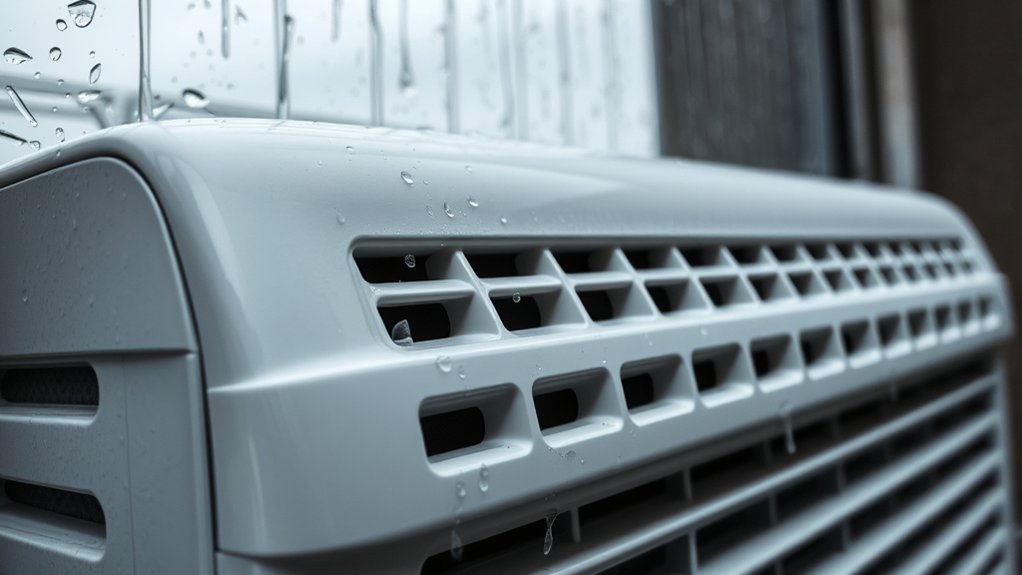
What Happens When Window AC Units Get Wet?
If you rely on your window AC unit to keep your home cool, you’re not alone in worrying about what happens if it gets wet. Many people struggle with preventing water damage and keeping their units running smoothly.
When your window AC gets wet, water can cause internal damage, mold growth, and reduce its cooling efficiency. Moisture can lead to corrosion of electrical parts, short circuits, and even system failure if not managed properly.
This can also weaken the unit’s structure or cause leaks if water gets inside. To prevent costly problems, you need to understand how to protect and maintain your AC.
Keep exploring to find out how to keep your unit dry and working smoothly.
Key Takeaways
- Water exposure can cause corrosion of electrical components, which may lead to system failure or short circuits.
- Moisture inside the unit reduces cooling efficiency and can cause the evaporator coils to freeze.
- Water intrusion might weaken the unit’s structure, increasing the risk of leaks or it falling out of the window.
- Excess moisture promotes mold and mildew growth, impacting air quality and posing health risks.
- Wet conditions increase the risk of electrical shocks, fires, and long-term damage if not properly addressed.
Why Does Water Get Into My Window AC?
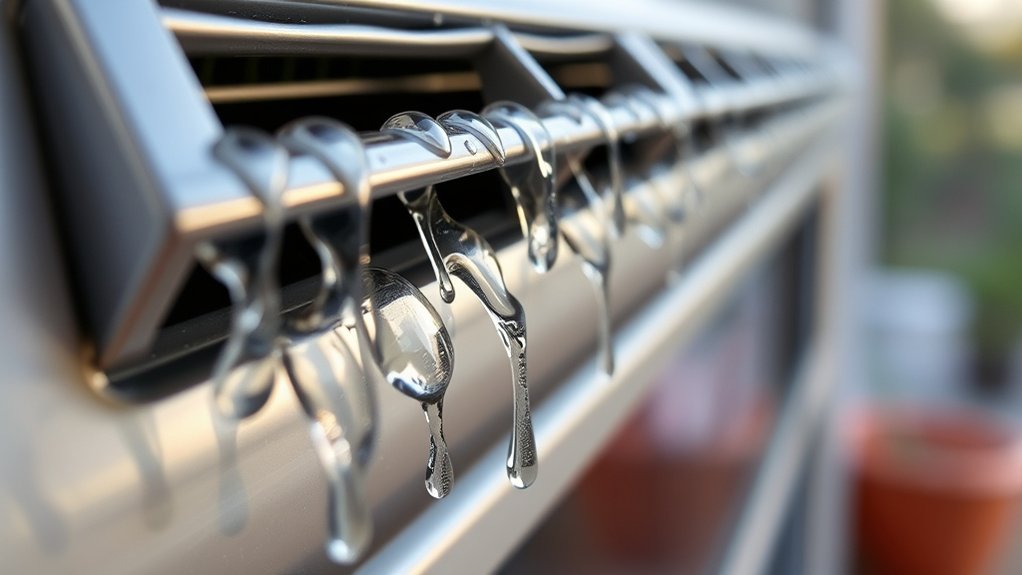
You might notice water entering your window AC unit, especially during humid days, and wonder what’s causing it. One common reason is high indoor humidity, which leads to more condensate inside the unit.
As warm, moist air passes over the cold evaporator coil, it cools down and releases moisture, creating condensation. Normally, this water drips into a drain pan and exits outside.
But if the drain gets blocked or clogged, the condensate can overflow and leak into your room. Also, if the unit isn’t installed correctly, water might not drain properly, causing leaks.
Poor insulation around the window frame can also play a role by letting humid air in and raising indoor humidity. Essentially, excess humidity and condensate buildup are the main causes of water in your AC.
This highlights how important proper drainage and installation are to prevent leaks and keep your unit working smoothly.
How Can I Prevent Water Damage During Rain and Cleaning?
To prevent water damage during rain and cleaning, it’s important to take proactive steps to protect your window AC unit. Start by sealing any gaps around the unit with weatherproof strips to keep rain from seeping in.
Regularly check and clean the filters, as this maintains good air quality and guarantees efficient operation. When cleaning, turn off the unit and avoid spraying water directly onto it; instead, use a damp cloth to wipe the exterior.
Installing a protective cover during heavy rain or off-season storage can prevent water intrusion. Ensuring proper drainage around the unit helps avoid pooling that could cause water to enter.
Maintaining these precautions not only preserves your AC’s function but also minimizes noise levels caused by water-related issues. By taking these simple steps, you protect your unit from water damage, sustain good air quality, and keep noise levels low during operation.
What Happens When Your Window AC Gets Wet?
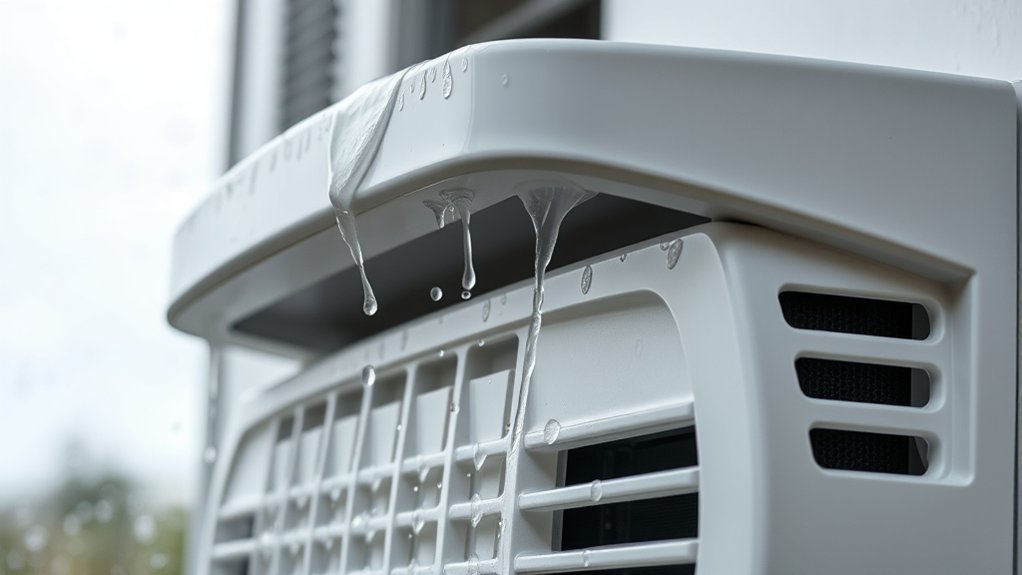
When your window AC gets wet, it can lead to some pretty tricky problems. Water damage might start to creep in, and that can really harm the internal parts of your unit. Nobody wants to deal with costly repairs or replacements, right?
Plus, a wet window AC doesn’t cool as well as it should. It has to work twice as hard to keep your room comfortable, which can make it less effective and even drive up your energy bills. But don’t worry—by doing some simple preventive maintenance, you can help protect your AC from getting soaked and keep it running smoothly for longer.
Water Damage Risks
Ever wonder what serious issues can happen if your window AC unit gets soaked? Water damage risks are pretty high if moisture seeps into the internal parts. Without proper waterproofing, moisture can corrode electrical components, leading to short circuits or complete failure.
Moisture barriers are key to stopping water from reaching sensitive areas, but if they get compromised, damage can happen faster. Mold and mildew can grow inside the unit, which isn’t just gross but also bad for your health and air quality.
Water intrusion can also weaken the unit’s structure, causing leaks or even making it fall out of the window. To avoid these problems, make sure your AC is properly sealed and well maintained. Regularly check for cracks or gaps to stop water from sneaking in and causing costly damage.
Impact on Cooling Efficiency
A wet window AC unit doesn’t just risk damage; it also directly hampers its ability to cool effectively. When moisture builds up or water leaks inside, the unit’s performance drops because it struggles to maintain ideal airflow and heat exchange.
This results in reduced energy efficiency, causing your unit to work harder and use more power. Plus, moisture buildup can lead to the evaporator coils freezing, which further decreases cooling capacity.
Here are three key impacts:
- Decreased cooling power, making your room warmer.
- Increased energy consumption due to inefficient operation.
- Potential ice formation on coils, which worsens performance.
To keep your AC running smoothly, addressing moisture buildup and preventing water intrusion is essential. This helps maintain energy efficiency and ensures your cooling stays effective.
Preventive Maintenance Tips
Moisture inside your window AC unit can cause big problems if you don’t deal with it quickly. To prevent issues, make sure to clean and check your unit regularly, especially around the filters and drainage system. This helps keep airflow and drainage working properly.
Keep the area around your AC dry and well-ventilated to cut down on excess humidity that may cause water to build up. Also, look out for leaks or blocked vents that could trap moisture, and fix them right away.
Good maintenance not only keeps the air cleaner by reducing mold and bacteria growth but also helps your AC run more efficiently. That means better energy savings and fewer costly repairs.
Scheduling routine professional inspections can catch potential problems early, keeping your unit dry, working well, and effective all year round.
Risks of Water Exposure to Electrical Components
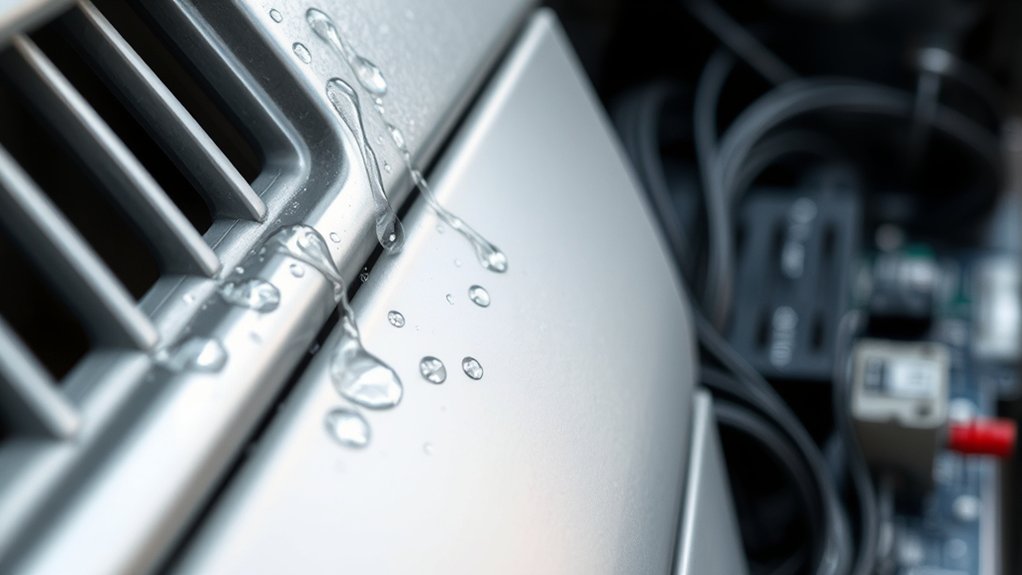
Water exposure to electrical components in window AC units can cause serious safety hazards and damage. When water gets in, it can weaken electrical insulation, increasing the risk of short circuits and electric shocks. Moisture also promotes corrosion, which can weaken wiring and other electrical parts over time. This damage might lead to system failure or even fires if not dealt with quickly.
Here are some key risks to watch out for:
- Electrical Shock: Wet components can conduct electricity unexpectedly, which can be dangerous for anyone using the unit.
- Component Damage: Water causes corrosion that degrades electrical contacts and shortens the lifespan of your AC.
- Malfunction: Water exposure can disrupt electrical insulation, leading to erratic operation or complete failure.
To reduce these risks, it’s important to use proper corrosion prevention methods and ensure electrical insulation stays intact. Always disconnect the power before inspecting or repairing parts that have water damage.
Signs Your Window AC Has Been Water-Damaged
If your window AC unit starts acting up or giving off strange odors, it could be a sign of water damage. You might also notice that it doesn’t cool as well as before, since water getting in can mess with its ability to cool effectively.
The compressor and fan could have a tough time working properly, making the unit work harder and use more electricity. You may also hear more noise, like rattling or banging, or notice it’s louder than usual.
Look out for visible signs like water stains or rust around the inside or outside of the unit. A musty smell might mean mold is growing because of excess moisture.
If you see any of these signs, it’s important to check your unit sooner rather than later. Fixing water damage early can stop bigger problems, help your AC run more efficiently, and keep things quieter for better cooling.
How Water Affects Your AC’s Cooling Power
When moisture gets into your window AC unit, it can seriously cut down its cooling power. Water inside the system makes it harder for the compressor to do its job, which means weaker airflow and less effective cooling. This not only makes you less comfortable but also wastes energy, making it tougher to save electricity.
Plus, excess moisture can cause parts to rust or break down, leading to even worse performance. Here are three ways water impacts your AC’s cooling:
- Reduced Heat Transfer: Water on the evaporator coils insulates them, stopping proper heat exchange.
- Increased Energy Use: The AC has to work harder to reach your desired temperature, using more electricity.
- Noise and Vibration: Moisture can cause parts to rattle or vibrate, creating more noise and disrupting operation.
Dealing with water intrusion quickly helps keep your unit efficient, quiet, and cooling at its best.
What Are the Best Steps to Take When Your AC Gets Wet?
If your window AC gets wet, the very first thing you should do is turn off the power right away. This is super important to avoid any electrical hazards or potential damage to the unit.
After that, take some time to carefully dry the AC. Use a soft cloth or towel to wipe away any moisture you can see. It’s also a good idea to check the unit thoroughly for any signs of damage or leftover moisture that might have seeped inside.
Doing these quick steps can really help protect your AC and keep it running smoothly for a long time.
Turn Off Power Immediately
As soon as you notice your window AC unit has gotten wet, the very first step is to turn off the power supply immediately. This prevents electrical shocks and further damage. Next, unplug the unit from the outlet to ensure it’s completely disconnected.
Once off, prioritize these steps:
- Inspect the air filter for moisture and remove it if necessary to dry and prevent mold growth.
- Check the fan blade for water accumulation or damage, and avoid running the fan until it’s dry.
- Avoid touching electrical components inside the unit to prevent shocks or short circuits.
Turning off power quickly minimizes risks and protects the internal components. Always handle electrical parts with caution, especially when water has been involved.
Dry and Inspect Thoroughly
Once you’ve turned off and unplugged the unit, the next step is to dry and inspect it thoroughly. Start by wiping down all visible surfaces with a dry cloth to remove any excess moisture.
Check the airflow patterns to make sure there are no obstructions or damage caused by water exposure. Look inside the vents and around the coils for dust buildup, which can reduce airflow and efficiency if left unchecked.
Carefully inspect electrical components and wiring for signs of corrosion or moisture damage. If you notice pooling water or persistent dampness, let the unit dry completely in a well-ventilated area before trying to operate it again.
Taking these steps helps prevent mold growth, keeps airflow clear, and ensures your AC works properly once it’s safe to turn it back on.
How to Protect Your Window AC for Long-Term Use
To make sure your window AC lasts for years, you need to protect it from moisture and weather damage. Regular maintenance also helps keep it energy-efficient and quiet. Here are three simple steps to do just that:
1. Seal Windows and Use a Weatherproof Cover
Seal any gaps around your unit and think about using a weatherproof cover when you’re not using it. This keeps moisture out and protects the inside from damage.
2. Clean and Inspect Regularly
Clean the filters often and look for rust or corrosion. A well-maintained unit runs better, saves energy, and stays quieter.
3. Elevate the Unit
Make sure the AC is a little raised above the window sill. This stops water from pooling and getting inside, which can damage the internal parts.
Following these steps will help your AC work efficiently longer and keep noise levels down.
When Should You Call a Professional for Water-Related Issues?
Regular maintenance helps keep your window AC in good shape, but sometimes water-related issues can be more serious and require professional attention. If your unit’s water leaks keep happening despite your efforts, it’s time to call an expert.
Excess water can impact your AC’s energy efficiency, causing it to work harder and use more power. You might notice higher energy bills or your cooling getting less effective. Water damage can also lead to louder noises like rattling or dripping that disturb your comfort.
If your AC makes unusual sounds or if water leaks are constant or getting worse, a professional can find out what’s going on—whether it’s a clogged drain, faulty pump, or internal problem. Addressing these issues quickly helps prevent more damage, keeps your unit efficient, and ensures it runs quietly.
Don’t ignore ongoing water problems. Getting a professional involved can keep your window AC running smoothly and efficiently.
Maintenance Tips to Keep Your Window AC Dry and Efficient
Want to keep your window AC dry and working efficiently? It’s a good idea to check the drainage system regularly for any clogs or leaks—that way, you can catch issues early before they become bigger problems.
And if it’s pouring outside, consider covering the unit to stop water from getting in and causing damage. These simple steps can really make a difference in keeping your AC running smoothly and staying dry all season long.
Regularly Inspect Drainage Systems
Have you checked your window AC’s drainage system lately? Regular inspections help prevent leaks and ensure proper drainage, which is key to managing indoor humidity.
A clogged or damaged external drainage can cause water to back up, leading to moisture issues. Here’s what you should do:
- Clear any debris from the drainage pan and external outlet to prevent clogs.
- Check the drainage pipe for cracks or blockages, and flush it if needed.
- Make sure the drainage system is properly angled so water flows out naturally.
Keep Units Covered During Rain
During heavy rain, covering your window AC unit can prevent water from seeping inside and causing damage. Using seasonal coverings or rainproof fixtures helps protect your unit from moisture exposure.
These coverings create a barrier that keeps rainwater out while still allowing airflow and ventilation. When installing seasonal coverings, make sure they fit securely and don’t block the unit’s vents or filters.
This simple step reduces the risk of water damage, mold growth, and electrical issues. If you live in an area with frequent storms, consider investing in rainproof fixtures designed specifically for window ACs.
Regularly check that your coverings stay in place during heavy weather. Keeping your unit dry not only prolongs its lifespan but also ensures it runs efficiently when you need it most.
Frequently Asked Questions
Can Water Damage Cause My Window AC to Stop Working Entirely?
Yes, water damage can cause your window AC to stop working completely. When water gets inside the unit, it creates electrical hazards and risks of corrosion that can harm the internal parts.
You might notice the AC malfunctioning or just stopping altogether. To prevent this, make sure your unit is properly sealed and kept dry.
If you think water has gotten in, turn off the AC right away. It’s best to have a professional check and repair it to avoid further damage.
Will Water Exposure Lead to Mold or Mildew Inside My AC Unit?
Yes, water exposure can lead to mold or mildew inside your AC unit. When moisture builds up because of condensation problems or leaks, it creates a perfect spot for mold to grow.
If you notice a musty smell or see visible mold, it’s important to clean the unit thoroughly and make sure the drainage is working properly. Regular maintenance, like checking for leaks and reducing excess moisture, helps prevent mold and keeps your AC running smoothly.
How Long Does It Take for Water Damage to Affect AC Performance?
Water damage can affect your AC performance within days if electrical components get wet or drainage issues cause water to stagnate. Moisture can lead to corrosion, short circuits, or damage to the compressor, which can decrease efficiency or cause system failure.
To prevent this, regularly check your drainage and electrical connections, especially after rain or high humidity. Prompt maintenance helps keep your unit working well and avoids costly repairs later on.
Are There Specific Parts of the AC That Are More Vulnerable to Water?
Your AC’s electrical insulation and compressor are the most vulnerable parts to water exposure. Water can cause electrical shorts and damage the insulation, risking your entire unit’s functionality.
The compressor, which is the heart of your AC, can suffer from corrosion if water seeps in. This can lead to costly repairs or even the need for a full replacement.
It’s important to protect these parts carefully because when water gets in, it’s like a storm threatening your comfort and savings.
Can I Repair Water-Damaged Components Myself or Should I Call a Technician?
If your window AC’s components are water-damaged, you can try DIY fixes like drying out parts and checking for corrosion. But if the damage seems extensive, it’s best to call a professional repair technician.
Water can cause electrical problems, so it’s important to avoid risking further damage or safety hazards. A technician has the right tools and expertise to properly assess, repair, or replace damaged parts.
This way, you can make sure your AC runs safely and efficiently again without putting yourself at unnecessary risk.
Conclusion
Just like Icarus flew too close to the sun, you want to avoid letting your window AC fall victim to water damage. Keep it dry, perform regular maintenance, and watch for signs of trouble.
When water sneaks in, acting quickly can prevent serious damage to your unit. Stay vigilant and catch problems early.
If water gets into your window AC and isn’t addressed, it can lead to electrical issues or mold growth. That’s why keeping it dry is so important.
By taking proper care, your air conditioner can serve you well and keep your home comfortable. Think of it as a fortress defending against nature’s unpredictable storms.