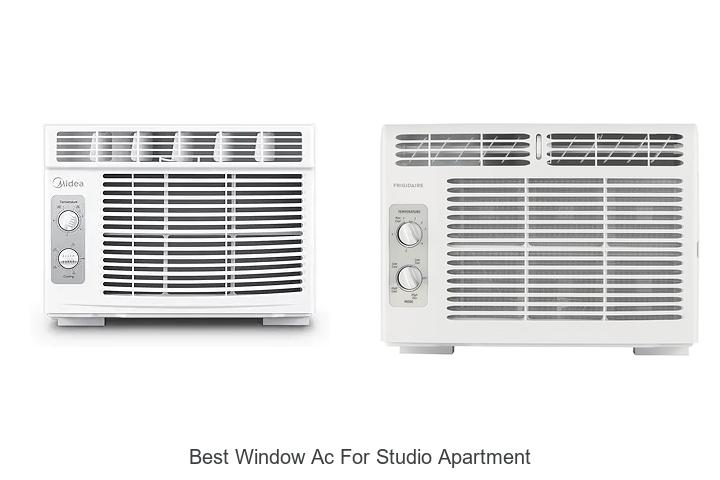
Why Does My Window AC Keep Freezing Up?
If your window AC keeps freezing up, you’re not alone—many people struggle with this frustrating issue during hot weather. It can be a real headache trying to keep your space cool when your unit isn’t working properly.
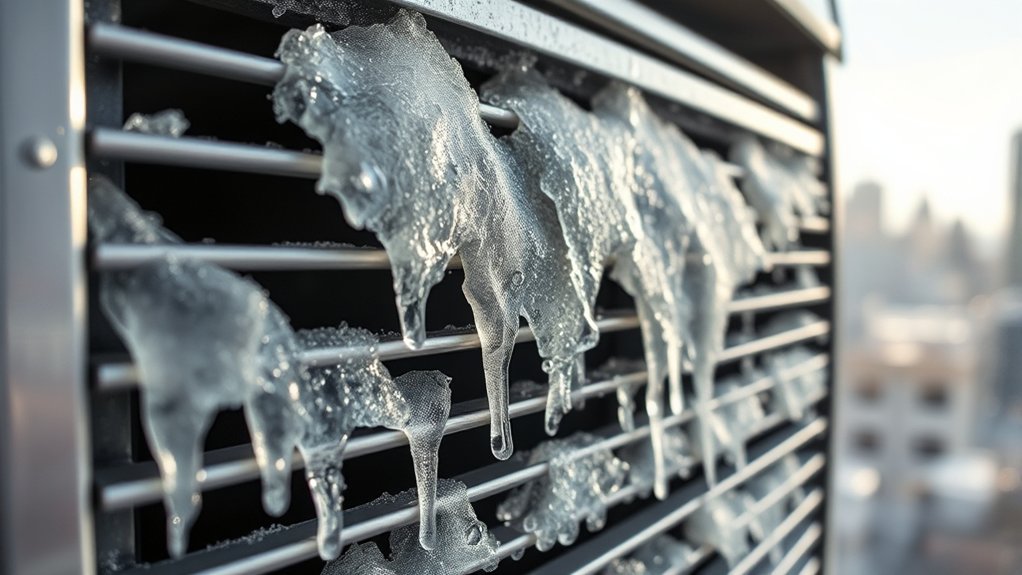
Your window AC keeps freezing up because airflow blockages, dirty filters, refrigerant leaks, or mechanical issues like faulty fans can disrupt normal operation. When airflow is restricted or coils get too cold, ice forms.
Low refrigerant levels can also cause freezing. Regular maintenance, such as cleaning filters and ensuring vents are clear, helps prevent this.
If you keep experiencing freezing, there’s more to investigate that could resolve the problem completely.
Key Takeaways
- Blocked or dirty air filters restrict airflow, causing the coils to freeze because heat isn’t exchanged properly.
- Low refrigerant levels mean the system can’t cool effectively, leading to ice buildup on the evaporator coils.
- Obstructions in vents or blocked fan blades reduce airflow, which increases the chance of freezing.
- Setting the thermostat too low causes the AC to cool excessively, making the coils freeze up.
- Mechanical issues like faulty fans or problems with the compressor prevent proper heat transfer, resulting in freezing.
Why Is Your Window Air Conditioner Freezing? Common Causes Explained
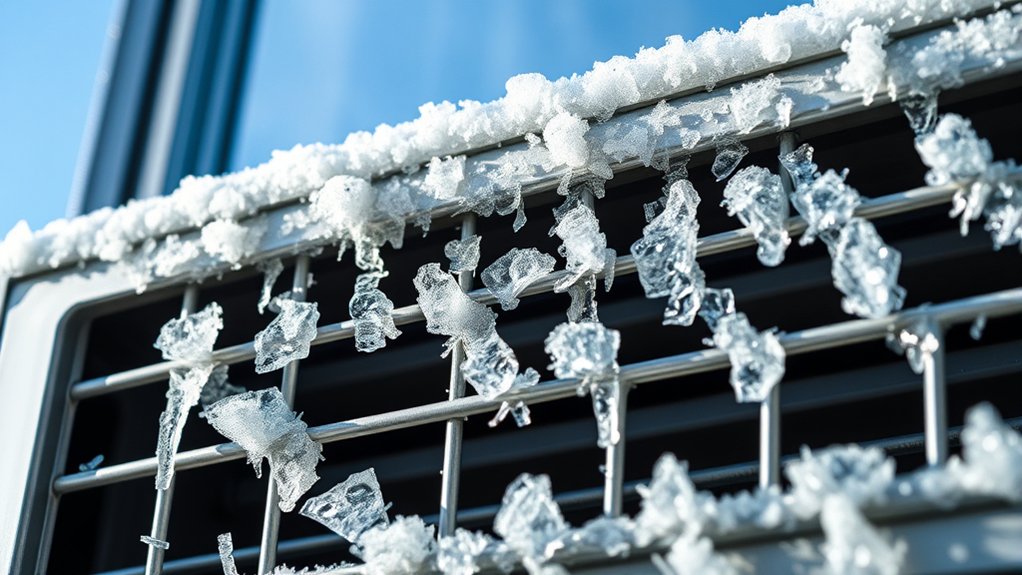
When your window air conditioner starts freezing up, it usually means something’s not right with its airflow or refrigerant levels. This ice buildup can make the unit work less efficiently, which can hike up your energy bills.
If airflow is blocked—maybe because of a dirty filter or vents that are closed off—the AC has trouble releasing heat. This causes the coils to freeze because they can’t do their job properly.
Low refrigerant levels or leaks also lead to freezing. Without enough refrigerant, the unit can’t absorb heat from the air effectively. A frozen coil can make your AC louder too, as it strains to keep up.
Regular maintenance like cleaning filters and keeping vents clear can stop freezing issues before they start. Good airflow and the right refrigerant levels are key to keeping your AC running smoothly, saving energy, and avoiding extra noise.
How Airflow Blockages Make Your AC Freeze Up
Blocked air vents and dirty filters can really mess with your AC’s airflow. When the air can’t move freely, it causes the evaporator coil to get too cold and start freezing up. Nobody wants that! So, making sure your vents are clear and your filters are clean is a simple way to keep everything running smoothly and prevent your AC from icing over.
Obstructed Air Vents
Obstructed air vents are a common cause of window AC units freezing up. When vents are blocked by clutter, furniture, or indoor plants, airflow gets restricted, leading to cold spots and ice buildup.
Make sure vents aren’t covered or obstructed to keep air circulating properly. Blocking vents can also make your unit work harder, which increases energy bills.
Keep furniture and plants away from air vents so air can flow smoothly. Proper vents help warm air circulate and prevent freezing, keeping your AC running efficiently.
Regularly check and clear any obstructions to avoid ice formation and extend your unit’s lifespan. Good airflow is key for peak performance and saving energy.
Dirty Air Filters
A dirty air filter can block airflow through your window AC, making the unit work harder and cool unevenly. When airflow is restricted, the evaporator coil can get too cold and freeze up.
Regularly replacing your air filter is really important to prevent this. Over time, filters gather dust, dirt, and debris, which reduces their effectiveness and shortens their lifespan.
If you don’t change your filter regularly, airflow drops, and your AC struggles to keep the right temperature. This extra strain makes the coil more likely to freeze.
To avoid this, check your filter once a month and replace it at least every 1-3 months. The frequency depends on how often you use the unit and the type of filter you have.
Keeping your air filter clean ensures smooth airflow and helps prevent your AC from freezing up.
Could Low Refrigerant Be Causing Your AC to Freeze?
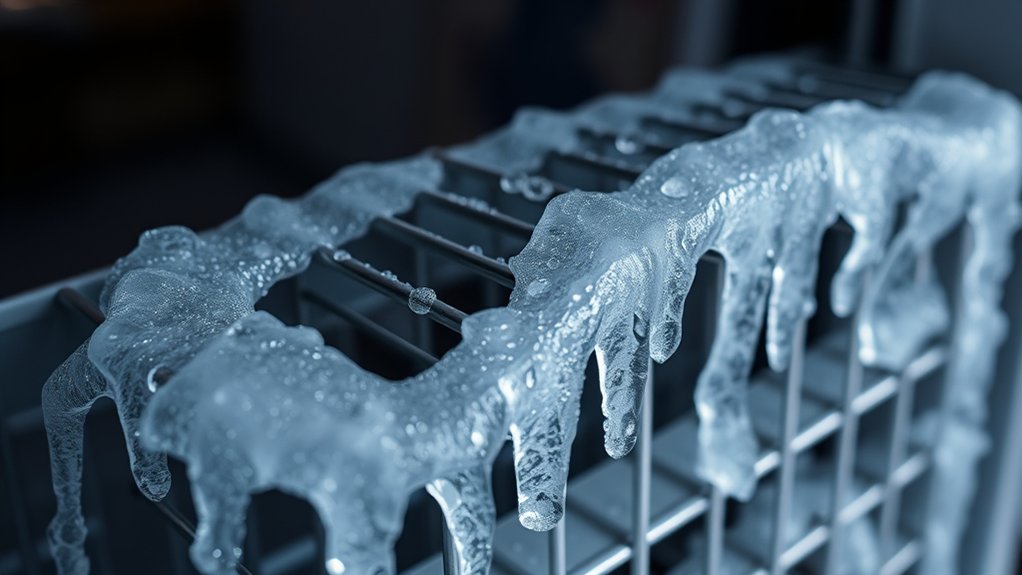
If your AC is freezing up, you might be wondering what’s going on. One common culprit could be low refrigerant. When the refrigerant levels drop, it can cause the coils to get too cold and develop ice buildup. You might also notice that your home isn’t cooling as well as it used to – that’s another sign something’s off.
A refrigerant leak is often behind this problem. When there’s less refrigerant, the system has to work harder to cool the air, which can lead to freezing. The tricky part is, fixing this usually isn’t a DIY job. You’ll want to call in a professional who can locate and repair the leak and then refill the refrigerant to the right level. That way, your AC can run smoothly again without freezing up.
Signs of Refrigerant Leak
When your window AC starts to freeze up unexpectedly, a refrigerant leak could be the culprit. Signs of such a leak include the unit running continuously without cooling effectively, and you might notice a hissing or bubbling sound near the compressor.
A refrigerant leak reduces energy efficiency because the system struggles to maintain proper cooling levels. You may also observe increased noise levels as the compressor works harder to compensate for the low refrigerant.
Furthermore, ice buildup on the evaporator coil is a strong indicator. If you notice these signs, it’s crucial to get a professional inspection.
Addressing refrigerant leaks promptly not only prevents further damage but also helps restore your AC’s peak performance, noise reduction, and energy efficiency.
Impact on Cooling Efficiency
Low refrigerant levels can really impact your window AC’s cooling ability, making it struggle to keep the room at the right temperature. When refrigerant is low, the system has to work harder, which wastes energy and boosts your electricity bills.
You might notice your AC runs longer but doesn’t cool the room effectively. Plus, low refrigerant can cause the unit to be noisier because the compressor is working overtime to compensate.
This extra effort not only hurts performance but also speeds up wear and tear on internal parts. As a result, your AC becomes less efficient and more prone to breaking down.
Fixing refrigerant issues quickly can help restore your AC’s efficiency, so it runs smoothly and quietly again.
Repair and Refill Options
A refrigerant leak or low levels can cause your window AC to freeze up, so it’s important to address this quickly. Low refrigerant not only reduces efficiency but also puts extra strain on your system, which can lead to damage.
Repairing the issue involves finding leaks, fixing them, and refilling the refrigerant to the right level. Regular seasonal maintenance can help prevent leaks and keep your AC running smoothly.
Here’s a simple step-by-step guide:
| Step | What to Do | Notes |
|---|---|---|
| Diagnose | Check for ice buildup and listen for leaks | Use professional tools if you’re unsure |
| Repair | Seal leaks and replace damaged parts | It’s best to use certified technicians |
| Refill | Add refrigerant to reach proper levels | Be careful not to overcharge |
| Test and Optimize | Run the AC and watch how it performs | Make sure it’s cooling efficiently and saving energy |
How a Dirty Air Filter Contributes to Freezing
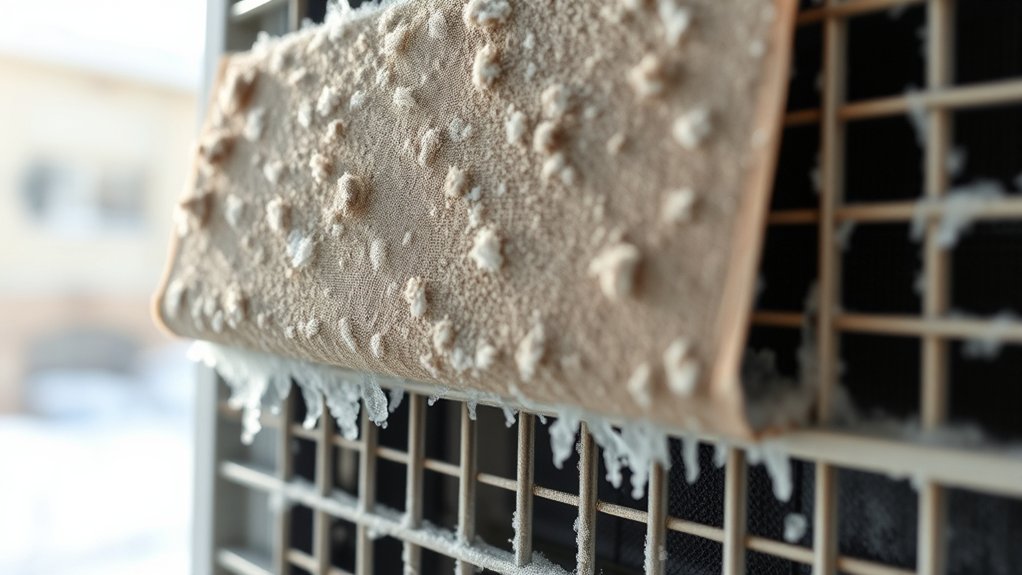
A dirty air filter can really contribute to your window AC freezing up because it blocks airflow over the evaporator coils. When airflow is limited, the coils don’t get enough warm air to stay at the right temperature, causing moisture to freeze on them.
Regular filter replacement is key to preventing this buildup. Changing the filter keeps airflow smooth, which helps maintain proper coil temperature and prevents freezing.
A clean filter also makes your AC run more efficiently and puts less strain on the system. This lowers the chance of freezing issues and helps your unit last longer.
If you neglect to replace a dirty filter, your AC has to work harder, using more energy and wearing out faster. To avoid freezing, check your filter regularly and replace it every one to three months, especially during busy seasons.
Keeping your filter clean is a simple but effective way to keep your AC running smoothly and avoid freezing problems.
What Fan Malfunctions Can Lead to Freezing Problems
If your fan isn’t working quite right, it can actually cause your AC to freeze up. Sometimes, there might be something blocking the fan blades, like dirt or debris, which messes with the airflow. Other times, the fan motor itself might be faulty or worn out, preventing it from spinning properly.
When the fan isn’t moving air as it should, it can lead to ice building up on the coils. That’s because the cold refrigerant isn’t being cooled effectively, and the moisture on the coils freezes. The good news is, catching these issues early and fixing or replacing the faulty parts can help stop the freezing problem before it gets worse.
Fan Blades Obstruction
When fan blades become obstructed or damaged, they can disrupt the airflow needed for your window AC to work properly. An obstruction can block air movement, which reduces effective circulation inside the unit.
Without proper airflow, the evaporator coil might get too cold, causing it to freeze. Debris, dirt, or even a broken fan blade can cause these blockages.
When airflow is restricted, the system struggles to keep the right temperature, and frost can form on the coil. It’s a good idea to regularly check the fan blades for damage or debris and clear any obstructions you find.
Keeping the fan blades smooth and unobstructed helps ensure proper air circulation. This prevents the coil from freezing and keeps your AC running efficiently.
Faulty Fan Motor
A faulty fan motor can cause your window AC to freeze because it prevents the fan blades from rotating properly, disrupting airflow across the evaporator coil. When the fan isn’t working correctly, cold air isn’t circulated efficiently, leading to excess cold buildup on the coil and freezing.
This issue also reduces energy efficiency since the compressor runs longer trying to compensate for poor airflow. You might notice decreased comfort because the room won’t cool evenly or effectively.
A malfunctioning fan motor can be caused by worn bearings, electrical faults, or dirt buildup. Addressing this problem promptly ensures your AC runs smoothly, maintains energy efficiency, and keeps your space comfortable without the risk of freezing issues caused by impaired fan operation.
Does Your Temperature Setting Affect Freezing?
Your temperature setting plays a significant role in whether your window AC freezes up. If you set the thermostat too low, the unit has to work harder to reach that cold temperature, which can cause the evaporator coil to chill too much and freeze.
Setting your thermostat too low can cause your AC’s evaporator coil to freeze.
Getting the right temperature adjustment is important. Aim for a comfortable, moderate setting instead of the coldest option. Remember, thermostat settings directly affect how often the compressor runs.
If you set it too low, the compressor might run constantly, increasing the chance of freezing. On the other hand, setting it too high may stop your space from cooling properly but reduces the risk of freezing.
Finding the right balance keeps your AC running efficiently without overworking the system. Always review your thermostat settings and make gradual adjustments to prevent freezing.
A moderate, well-balanced temperature setting can help your AC work well and avoid unnecessary freeze-ups.
Troubleshooting Mechanical Issues That Cause Freezing
Mechanical issues inside your window AC can cause it to freeze up, especially if parts like the fan motor, blower, or compressor aren’t working right. When these components fail or don’t work efficiently, airflow drops, leading to uneven cooling and ice buildup. Worn-out or poorly maintained parts can also make your unit noisier and less energy-efficient.
To troubleshoot, start by checking these key areas:
- Fan Motor and Blower: Make sure they spin freely and aren’t blocked. A faulty fan reduces airflow, which can cause freezing and lower efficiency.
- Compressor: Listen for strange noises, which could mean wear or failure. A struggling compressor messes with heat exchange and promotes freezing.
- Airflow Obstructions: Clear debris or dirt from vents and filters, as blockages restrict airflow, affecting both energy use and noise.
Fixing mechanical issues quickly keeps your AC running smoothly, saves energy, and cuts down on noise while stopping freezing problems.
When Should You Call a Technician for Frozen AC Problems?
Knowing when to call a technician is crucial because persistent or severe freezing often signals underlying issues beyond simple troubleshooting. If your window AC keeps freezing despite your efforts, it’s probably time to get professional help.
Persistent freezing indicates underlying issues—calling a technician promptly can save money and restore comfort.
High indoor humidity levels can cause excess moisture, making it harder for your unit to operate efficiently and leading to frequent freezing. Ignoring these signs can reduce your AC’s energy efficiency, boost your energy bills, and risk further damage.
If you’ve already checked basic causes like airflow blockages or dirty filters and the problem still persists, a technician can identify hidden issues like refrigerant leaks or faulty components.
Also, if your AC struggles to cool effectively or keeps icing up, getting a professional assessment ensures proper repairs and keeps your system running smoothly.
Don’t wait too long to call a technician when these symptoms show up. Timely help can save you money and bring back your comfort quickly.
Simple Steps to Prevent Your Window AC From Freezing
Addressing the causes of a frozen window AC can help prevent future issues and keep your unit running smoothly. Focus on maintaining proper indoor humidity and promoting good air circulation.
High humidity levels can cause excess moisture, making your AC work harder and increasing the risk of freezing. Use a dehumidifier or ensure your room is well-ventilated to reduce moisture.
Improving air circulation also helps prevent cold spots that contribute to freezing. Keep furniture away from vents and consider using ceiling fans to spread air evenly.
Regularly check and replace filters so air flows freely through the unit. Here are some simple steps to prevent freezing:
- Maintain proper indoor humidity levels
- Guarantee unobstructed air circulation
- Clean or replace filters regularly
Routine Maintenance Tips to Keep Your Air Conditioner Running Smoothly
Regular maintenance is essential to keep your air conditioner running efficiently and prevent issues like freezing. Seasonal upkeep helps maintain energy efficiency and extends your unit’s lifespan.
Start by cleaning or replacing filters monthly to ensure proper airflow. Check the coils for dirt and debris—cleaning them boosts efficiency and reduces the risk of freezing.
Inspect the thermostat to confirm it’s working accurately, helping your AC run at its best. Keep an eye on drainage pans and drain lines, clearing any blockages to avoid water buildup.
Furthermore, schedule professional tune-ups annually to catch potential problems early. Use the table below for quick reference:
| Maintenance Task | Benefit |
|---|---|
| Replace filters regularly | Improve airflow and energy efficiency |
| Clean coils | Prevent freezing and enhance cooling |
| Check thermostat | Maintain proper temperature control |
| Clear drainage lines | Avoid water damage and mold growth |
| Schedule professional tune-up | Catch issues early, boost efficiency |
Consistent seasonal maintenance keeps your AC running smoothly and efficiently all year.
Frequently Asked Questions
Can the Placement of My Window AC Cause It to Freeze?
Yes, the placement of your window AC can cause it to freeze. If your window insulation isn’t tight, cold air escapes, making the unit work harder and freeze.
Also, airflow blockage from nearby objects or curtains can restrict airflow, leading to freezing. Make sure your unit is installed properly with good insulation and clear airflow.
Proper placement helps your AC run efficiently and prevents freezing issues.
How Does Outdoor Temperature Influence AC Freezing Issues?
Outdoor temperature affects your window AC’s freezing problems because low temperatures can make the refrigerant struggle, reducing the compressor’s efficiency.
When it’s cold outside, indoor humidity can rise, which encourages ice to form on the evaporator coil.
This combination makes heat transfer harder, so your unit is more likely to freeze up.
To avoid this, make sure your space is well-insulated, keep airflow good, and think about using a dehumidifier indoors during colder months.
Can Electrical Problems Lead to My AC Freezing Up?
Electrical problems can indeed cause your AC to freeze up. Think of a thermostat malfunction as a stubborn gatekeeper messing with temperature signals, or power fluctuations as a shaky foundation causing the system to misfire.
When your AC’s electrical components falter, it can’t regulate refrigerant flow properly, leading to ice buildup. Addressing these issues promptly keeps your cooling system running smoothly and efficiently, avoiding icy surprises in the summer heat.
Does Aging Affect My Window Ac’s Likelihood to Freeze?
Aging can increase your window AC’s likelihood to freeze because older units often become less energy-efficient and struggle to regulate temperature properly.
As your unit ages, it may need more maintenance, like cleaning or replacing filters, to prevent freezing. Regular maintenance tips, such as checking for proper airflow and keeping coils clean, help your AC run efficiently longer and reduce the chances of freezing, especially as it gets older.
Are There Specific Signs Indicating a Refrigerant Leak?
Think of your AC as a delicate balance, like Icarus flying too close to the sun. Signs of a refrigerant leak include reduced cooling, hissing sounds, or ice buildup on the coils.
Low refrigerant levels hinder heat exchange, causing freezing. If you notice these signs, conduct leak detection promptly to prevent further damage.
Addressing refrigerant issues early keeps your AC running smoothly and prevents costly repairs.
Conclusion
Don’t let a frozen window AC ruin your comfort. Regular maintenance, like cleaning filters and checking airflow, can prevent freezing issues.
While it might seem complicated, most problems are simple fixes you can handle yourself. If your unit keeps freezing despite your efforts, don’t hesitate to call a technician.
Sometimes, professional help is the quickest way to get your AC back in shape. Keep up with these tips to prevent freezing and stay cool all summer long.