How to Use an Air Fryer: Beginner’s Step-by-Step Guide
As an Amazon Associate, I earn from qualifying purchases. This post contains affiliate links. Which means I may earn a small commission when make a purchase through my links, at no additional cost to you.
How Do You Use an Air Fryer?
To use an air fryer, preheat it for 3–5 minutes at the temperature your recipe calls for (usually 350–400°F or 175–200°C), lightly coat the food with oil, and arrange it in a single layer in the basket without overcrowding. Cook it, shaking or flipping halfway through. Check doneness with a food thermometer, and let the basket cool before cleaning.
That is the whole method. The sections below explain each step, give you a temperature and time chart, and show you how to avoid the mistakes that make air fryer food soggy or unevenly cooked.
Key Takeaways
- Preheat for 3–5 minutes, then cook most foods at 360–400°F (180–200°C).
- Lightly oil the food, and keep it in a single, uncrowded layer.
- Shake or flip halfway through for even browning.
- Confirm doneness with a food thermometer, for example 165°F (74°C) for poultry.
- Let the basket cool before cleaning, and hand-wash it with a soft sponge.
What Is an Air Fryer and How Does It Work?
An air fryer is a countertop convection oven that blasts very hot air around food with a strong fan, giving it a crisp, browned surface with little or no oil. A heating element warms the air, and the fan pushes it through and around the perforated basket at high speed. The moving air pulls moisture off the surface of the food, which creates the crunch you normally get from deep frying.
The cooking chamber is small, so an air fryer heats up and cooks faster than a full-size oven. Most models run from roughly 180°F to 400°F (80–200°C), and most recipes need only a teaspoon to two tablespoons of oil.
Despite the name, an air fryer does not fry. It roasts and bakes with forced air, so the results look like fried food but are not identical, especially with wet batters.
There are two common designs:
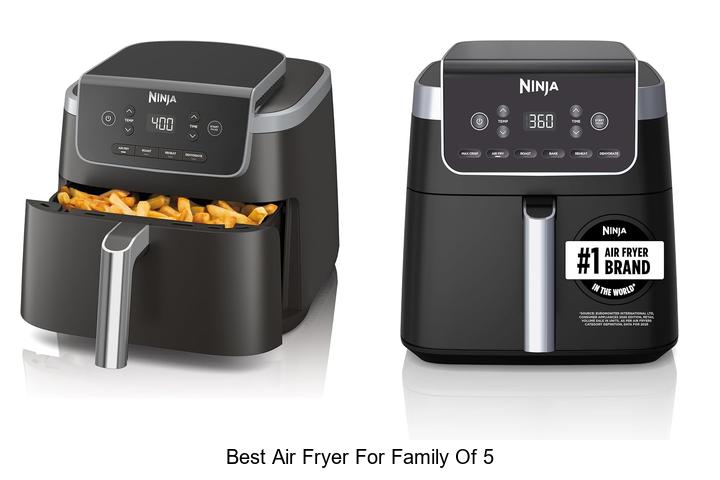
- Basket-style: a pull-out drawer with a perforated basket. It is compact, heats quickly, and suits one to four servings.
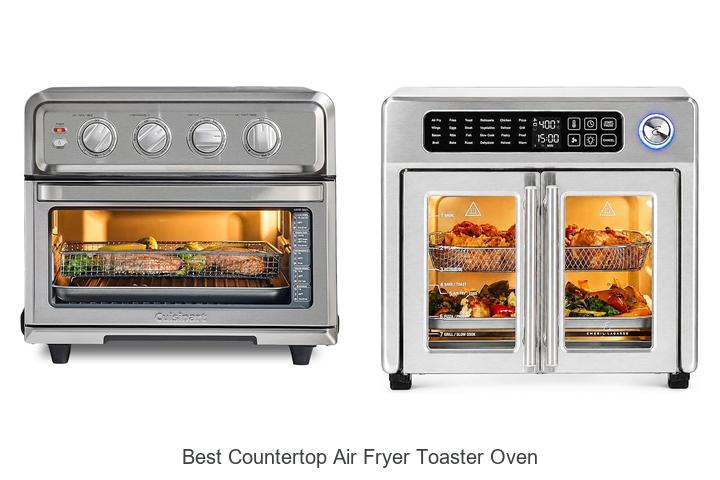
- Oven-style: a small oven with racks or trays. It holds more food at once and suits families or batch cooking.
How to Use an Air Fryer Step by Step (First-Time Guide)
Follow these nine steps for your first cook and every cook after it.
- Set it up safely. Place the air fryer on a flat, heat-safe surface with several inches of clearance on all sides, especially around the exhaust vent. Keep it away from walls, curtains, and anything flammable.
- Wash the basket before first use. Wash the basket and tray in warm, soapy water and dry them fully. Some manuals also suggest running the fryer empty for a few minutes to burn off factory residue, so check yours.
- Preheat for 3–5 minutes. Preheating is optional but recommended. If your model has no preheat button, run it at 400°F (200°C) for about 5 minutes. Skipping it can add roughly 3–4 minutes to the cook time.
- Prep the food. Pat meat and vegetables dry, cut pieces to a similar size, and season them. Toss or spray with a thin layer of oil. A light coat is enough; too much oil makes food greasy and smoky.
- Load the basket in a single layer. Leave gaps between pieces so hot air can reach every side. Cook in batches if the food does not fit without touching.
- Set the temperature and time. As a rule of thumb, lower an oven recipe’s temperature by about 25°F (15°C) and shorten the time. Use the chart below as a starting point, then adjust to your model.
- Shake or flip halfway through. Shake the basket, or flip breaded items and larger cuts with tongs, so both sides brown evenly. Wings and fries may need a shake two or three times.
- Check doneness with a food thermometer. Color alone does not prove meat is safe. Poultry needs 165°F (74°C) inside, for example. See the food safety section below.
- Remove food carefully and clean up. Open the drawer slowly to avoid a burst of steam, lift food out with tongs, and let the basket cool completely before washing.
Air Fryer Temperature and Time Chart
Most foods cook well between 360°F and 400°F (180–200°C) in 8–25 minutes. These are starting points; check food early the first time, because times vary by model, food size, and how full the basket is.
| Food | Amount and prep | Temperature | Time |
|---|---|---|---|
| Asparagus | 1 bunch, trimmed | 400°F (200°C) | 7–10 min |
| Broccoli | 1 head, 1-inch florets | 375°F (190°C) | 8–10 min |
| Green beans | 16 oz, trimmed | 380°F (195°C) | 10–12 min |
| French fries (fresh) | 16 oz, ¼-inch cut | 380°F (195°C) | 18–22 min |
| Potato wedges | 16 oz, 1-inch wedges | 400°F (200°C) | 20–25 min |
| Whole potatoes | 16 oz, pierced with a fork | 400°F (200°C) | 40–45 min |
| Bacon | 6 strips | 375°F (190°C) | 8–10 min |
| Chicken breasts | 2 boneless, 8 oz each | 360°F (180°C) | 20–25 min |
| Salmon fillets | 2 fillets, 6 oz each | 380°F (195°C) | 12–15 min |
| Steak | 2 boneless, 8 oz each | 400°F (200°C) | 10–20 min |
| Frozen chicken tenders | 16 oz | 380°F (195°C) | 15–20 min |
| Frozen mozzarella sticks | 16 oz | 375°F (190°C) | 8–10 min |
| Frozen personal pizza | 1 personal size | 375°F (190°C) | 10–12 min |
What Can You Cook in an Air Fryer?
An air fryer works best on foods that benefit from dry, circulating heat: anything you would normally roast, bake, or deep fry. Popular choices include:
- Potatoes: french fries (fresh or frozen), sweet potato fries, potato wedges, hash browns, tater tots, and whole baked or sweet potatoes.
- Chicken and meat: chicken wings, tenders, breasts, thighs, burgers, bacon, sausages, and steak.
- Fish and seafood: salmon fillets, breaded fish, and shrimp.
- Vegetables: broccoli, Brussels sprouts, asparagus, green beans, cauliflower, and zucchini.
- Frozen convenience foods: chicken nuggets, mozzarella sticks, pizza rolls, bagel bites, and hot pockets. These often turn out crispier than in a microwave or oven.
- Extras: hard-boiled eggs, croutons, biscuits, fried pickles, and reheated leftovers such as pizza and fries.
A few foods do not suit an air fryer. Loose, wet batters drip through the basket before they set, and light leafy greens such as spinach can blow around and burn. Very large roasts also do not fit well. Use a regular oven for these.
8 Tips for Crispier Air Fryer Food
- Dry the food first. Moisture on the surface turns to steam and softens the crust. Pat meat and vegetables dry with a paper towel.
- Use a light coat of oil. A spritz or a teaspoon or two of oil helps browning. Oils with a high smoke point, such as avocado or refined canola oil, work well.
- Cook in batches. Two uncrowded batches beat one crowded batch every time.
- Cut pieces to the same size. Even pieces finish at the same time.
- Shake or flip at the halfway mark. This exposes every side to the moving air.
- Keep seasoning and sauces light. Add wet sauces such as barbecue or buffalo in the last 1–2 minutes, or toss the food in sauce after cooking, so they do not burn or splatter.
- Add breading carefully. Press crumbs on firmly and spray the coating lightly with oil so it browns instead of drying out.
- Keep the grate in place. It lifts food above dripping fat so the underside crisps too.
For extra versatility in the basket, air fryer accessories such as racks and pans can help you cook more types of food.
7 Common Air Fryer Mistakes to Avoid
- Overcrowding the basket. Crowded food blocks airflow, so it steams and cooks unevenly.
- Skipping the preheat. Cold starts add a few minutes and can leave the outside less crisp.
- Using too much oil or marinade. Excess liquid drips, smokes, and makes food soggy instead of crisp.
- Using the oven temperature unchanged. Air fryers cook hotter and faster, so food can dry out or burn if you copy an oven recipe exactly.
- Never shaking or flipping. One side ends up pale while the other overcooks.
- Using lightweight items without securing them. Loose parchment, foil, or light foods can fly up into the heating element. Weigh them down with food, and never preheat with loose paper inside.
- Judging doneness by color. Browned outside does not mean cooked through. Check with a thermometer.
How to Clean an Air Fryer and Use It Safely
Cleaning. Unplug the air fryer and let it cool completely. Wipe the basket and tray with a paper towel to remove grease, then wash them in hot, soapy water with a soft sponge. Avoid steel wool and abrasive scrubbers, which scratch the nonstick coating. Check your manual to see whether the parts are dishwasher-safe. Wipe the inside of the unit and the heating element area with a damp cloth.
For easier cleanup, air fryer liners catch crumbs and drips while still letting air move.
Food safety. Use a food thermometer and cook to at least these internal temperatures, set by U.S. food safety guidance:
| Food | Safe minimum internal temperature |
|---|---|
| Poultry (chicken wings, breasts, thighs) | 165°F (74°C) |
| Ground meat and sausage | 160°F (71°C) |
| Beef, pork, and lamb steaks, roasts, and chops | 145°F (63°C), then rest 3 minutes |
| Fish | 145°F (63°C) |
| Leftovers | 165°F (74°C) |
Safe use. Keep the vent clear, do not move the fryer while it is hot, and open the drawer slowly to avoid steam burns. Do not put the unit on a surface that heat can damage. Plug it directly into a wall outlet instead of an extension cord, and never leave it running unattended.
FAQ
Do you have to preheat an air fryer?
No, but it is recommended. Preheating for 3–5 minutes gives crisper, more even results. If you skip it, add about 3–4 minutes to the cooking time.
How long does it take to preheat an air fryer?
Most air fryers preheat in 3–5 minutes at 350–400°F (175–200°C). Many models have a preheat button or beep when ready. Without one, run the fryer empty at the cooking temperature for about 5 minutes.
Do you need oil in an air fryer?
No, oil is not required. Lean foods such as vegetables, chicken, and frozen breaded foods cook well with little or none. A light spray or a teaspoon or two improves browning and crispness on fresh potatoes, vegetables, and lean meat.
Can you cook frozen food in an air fryer?
Yes. Cook frozen fries, nuggets, tater tots, and mozzarella sticks straight from the freezer, without thawing. Follow the package time and temperature as a starting point, shake the basket halfway, and expect the cook time to run a few minutes shorter than in an oven.
Can you put foil or parchment paper in an air fryer?
Yes, with care. Use perforated parchment made for air fryers or small pieces of foil, keep them below the heating element, and never run the fryer empty with loose paper inside. Do not cover the whole basket, because that blocks airflow. Avoid foil with acidic foods such as tomatoes or citrus.
Is air-fried food healthier than deep-fried food?
Often, yes. Air frying uses far less oil than deep frying, so food usually has less fat and fewer calories. It is still only as healthy as the food itself: air-fried vegetables and lean protein are a better choice than breaded, processed items.
What size air fryer should I buy?
A 2–4 quart model suits one or two people. A 5–6 quart basket handles a family of three to four. For larger households, or to cook several foods at once, choose a 7-quart-plus basket model or an oven-style air fryer. If you are still choosing, see our guide to air fryers for beginners and our general best air fryer picks.
Conclusion
Using an air fryer comes down to a few simple habits: preheat, keep the food in a single layer, shake or flip halfway, and check doneness with a thermometer. Start with an easy food such as frozen fries or chicken wings, set your first cook from the temperature chart above, and adjust the time to your model.
With a little practice, you will get crisp, evenly cooked food, often in less time than a regular oven takes.



One Comment