What Happens if You Put a Window AC Unit Sideways?
Feeling frustrated with your window AC unit and unsure how to install it properly? You’re not alone. Many people struggle with getting their AC units set up safely and efficiently, especially when it comes to unusual positioning.
Installing a window AC unit sideways can cause internal damage, reduce cooling efficiency, and create safety hazards. It may lead to water leaks, mechanical stress, and poor airflow, making the unit work harder and increasing energy costs.
Safety risks include the unit falling or electrical issues.
Poor installation can also void warranties. To avoid problems, proper installation is essential. If you want to understand how to do it safely and correctly, keep exploring the details.
Key Takeaways
- Improper orientation can cause internal damage and mechanical stress, which can shorten the unit’s lifespan.
- Installing a window AC sideways might lead to water leaks and drainage problems, risking water damage around your window.
- When not positioned correctly, airflow efficiency drops, making the AC work harder and consume more energy.
- It can also cause excessive noise, vibrations, and even safety hazards if not installed properly.
- Plus, putting it sideways might void the warranty and mean you’ll need professional help to reinstall it correctly.
What Are the Risks of Installing a Window AC Sideways?
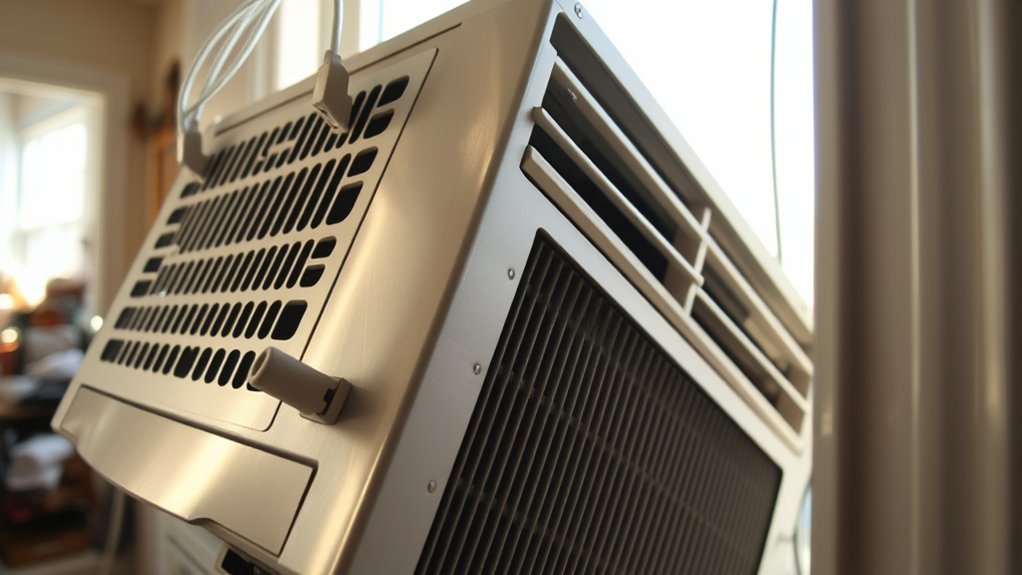
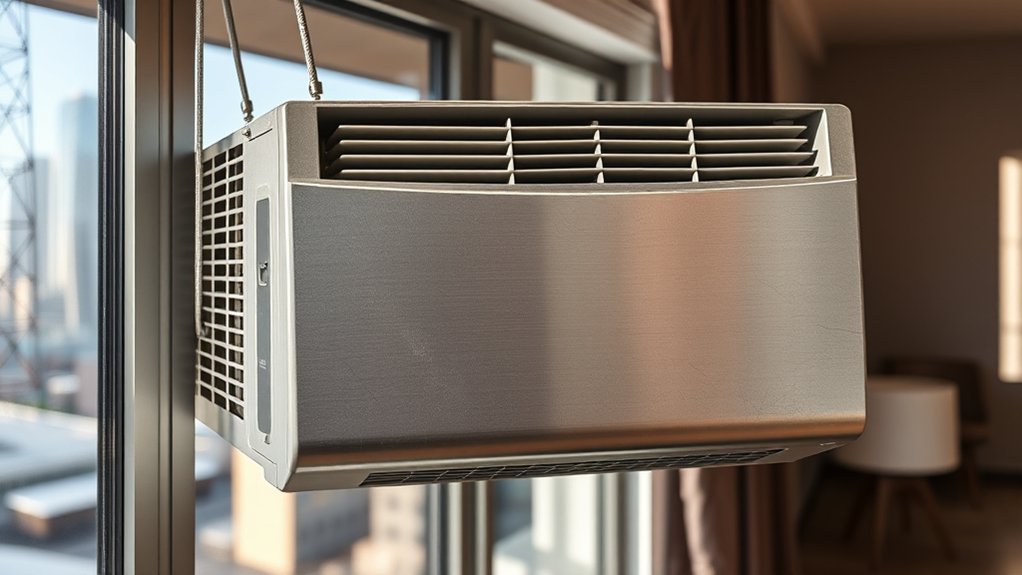
Installing a window AC unit sideways might seem like a clever workaround, but it comes with a lot of risks. One big issue is damaging the internal parts since they’re meant to be installed in a specific way.
When you put the unit sideways, the airflow and refrigerant flow can get messed up. This can make the cooling less effective and cause the unit to wear out faster. Plus, if it’s not installed properly, it might fall or shift, which is a safety concern.
Color options are usually limited, and the unit might look out of place in your window. Vibration and instability can also increase noise levels during operation. Overall, sticking to the manufacturer’s instructions is the best way to ensure safety, durability, and good performance.
How Does Sideways Installation Affect Cooling Efficiency?
Installing a window AC unit sideways can really shake things up when it comes to airflow. It might mess with how the cool air circulates through the room, making the whole cooling process less effective. The compressor, in particular, could end up working harder than it should because it’s not in the optimal position, which over time might lead to efficiency problems or even damage.
Plus, the way the cool air spreads out can become pretty unpredictable. Some spots might stay warmer than others, leaving parts of the room less comfortable. So, it’s usually best to keep the unit installed the right way for the best cooling performance.
Airflow Direction Changes
When you place a window AC unit sideways, the airflow pattern changes quite a bit, which can affect how well it cools. Instead of the usual downward or outward flow, the air might blow sideways or at odd angles, reducing its cooling effectiveness.
This misdirection can lead to uneven temperatures and make the unit work harder than necessary. It can also change the noise levels, making the unit louder or more disruptive.
If your AC has color options for the grille or casing, choosing a darker shade might help hide dust or debris caused by the altered airflow. Lighter colors, on the other hand, may reflect heat better.
Compressor Strain Risks
Positioning a window AC unit sideways can put extra strain on the compressor, which has to work harder to circulate refrigerant effectively. This added effort can lead to increased wear and potential failure over time.
The compressor’s efficiency drops because it struggles to maintain proper pressure and flow, reducing cooling performance. Sideways installation may also cause uneven oil distribution within the compressor, risking damage.
Furthermore, aesthetic considerations like color options become relevant if you want the unit to blend with your window frame or decor. While these don’t affect functionality, they can impact overall satisfaction.
Ultimately, the increased compressor strain can shorten the lifespan of your AC and reduce cooling efficiency, making sideways installation a risky choice for long-term use.
Cooling Pattern Variability
How does placing a window AC unit sideways influence its cooling pattern? When installed sideways, the airflow can become uneven, which may lower cooling efficiency. The unit’s designed airflow direction is changed, possibly leading to hot spots or inconsistent cooling.
Different models might react differently. Some could experience louder noise because the fan isn’t working as smoothly. The color options don’t affect cooling, but they might impact how nice it looks in your space.
Here’s a quick overview:
| Effect | Description | Advice |
|---|---|---|
| Cooling efficiency | Might drop due to uneven airflow | Consider proper installation |
| Noise levels | Could go up if the fan struggles | Make sure it’s installed stably |
| Color options | No effect on cooling or noise | Pick what matches your style |
| Airflow pattern | Becomes uneven and disrupted | Place it carefully for better airflow |
Can Installing Your AC Sideways Damage the Unit?
Installing your AC sideways can actually cause some drainage problems, which might lead to water leaks or even damage. It’s not just about the leaks, though — putting the unit in this position can also put extra strain on the compressor. That added pressure can increase the risk of overheating or even cause the compressor to fail. All of these issues can really shorten your AC’s lifespan and hurt its overall performance. So, it’s best to stick with the manufacturer’s recommended installation guidelines to keep your unit running smoothly.
Potential Drainage Issues
When you tilt a window AC unit sideways, drainage can become a concern because the usual design relies on gravity to move condensation away from the components. If drainage isn’t proper, you might face issues like water leaking inside your room and damaging the interior.
Excess moisture buildup can lead to mold or mildew, which isn’t good for your health or the air quality. You might also notice increased noise levels from water splashing or dripping inside the unit.
Stagnant water can cause damage to internal parts over time, making your unit less effective. Proper drainage is essential when installing the unit sideways to prevent water-related problems and keep your space clean and quiet.
Ignoring drainage issues can lead to costly repairs and reduce your comfort. So, make sure your AC is installed correctly with good drainage to avoid these common problems.
Compressor Strain Risks
Tilting your window AC unit sideways can put extra strain on the compressor, which is designed to work in a specific orientation. When the unit isn’t upright, the compressor’s oil might not flow properly, risking damage over time.
This strain can reduce energy efficiency, making it harder for your AC to cool effectively. That wastes energy and raises your utility bills. Improper positioning might also increase noise levels because the compressor works harder to compensate for the misalignment.
Over time, this added stress can shorten the lifespan of the compressor and the entire unit. To save energy and keep noise levels low, it’s best to install your AC unit upright as intended. Avoiding sideways placement can help prevent costly damage.
What Safety Hazards Come With Installing a Window AC Sideways?
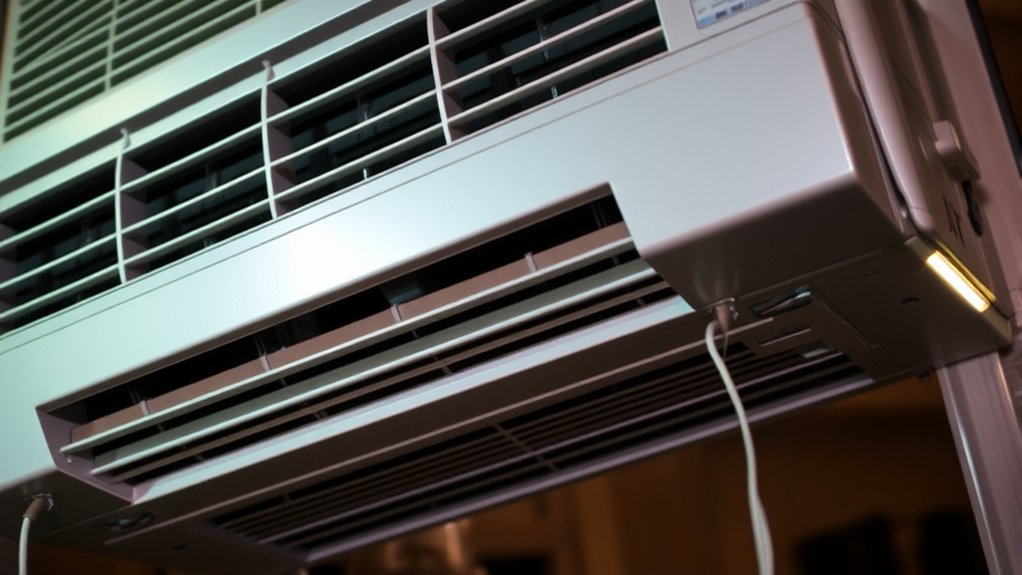
Putting a window AC unit sideways can pose serious safety risks if you’re not careful. First, the unit’s stability is affected, which means it might fall or shift unexpectedly.
Installing a window AC sideways can compromise stability and safety if not done properly.
Second, installing it incorrectly can lead to electrical hazards, like exposed wiring or short circuits. This can be dangerous, so proper wiring is a must.
Third, changing its position might make the unit louder, disturbing your peace. It can also affect how well it seals against the window, leading to drafts.
Additionally, mounting the AC sideways can cause water leaks that might damage your window or walls. Always make sure it’s securely fastened to avoid accidents.
Keep in mind, a poorly installed unit can be a safety risk for children or pets. While customizing the look with different colors might seem tempting, safety should always come first.
Proper installation is key to avoiding these hazards and keeping everyone safe.
How Does Installation Position Impact Airflow and Dehumidification?
The installation position of your window AC unit really affects how well it circulates air and dehumidifies the room. When you install it correctly, it helps distribute air evenly, making cooling and drying more effective.
If the unit is installed at odd angles or sideways, airflow can be restricted. This forces the unit to work harder, which can increase noise and energy use. Proper placement keeps things running smoothly and efficiently.
Airflow is also key for dehumidification. Good airflow lets moisture escape, preventing musty smells and mold from forming. Poor positioning can reduce moisture removal and lead to humidity issues.
Your unit’s color options don’t impact performance but can influence how it looks in your space. Just keep in mind that if it’s not installed straight, noise levels might go up. That can be pretty disruptive, especially if you’re trying to relax.
Here’s a quick summary of how placement affects important factors:
| Factor | Proper Placement | Improper Placement |
|---|---|---|
| Airflow | Maxed out, even spread | Restricted, uneven flow |
| Dehumidification | Efficient moisture removal | Less effective moisture control |
| Noise Levels | Quieter operation | Louder operation |
Signs Your AC Isn’t Working Properly After Installation
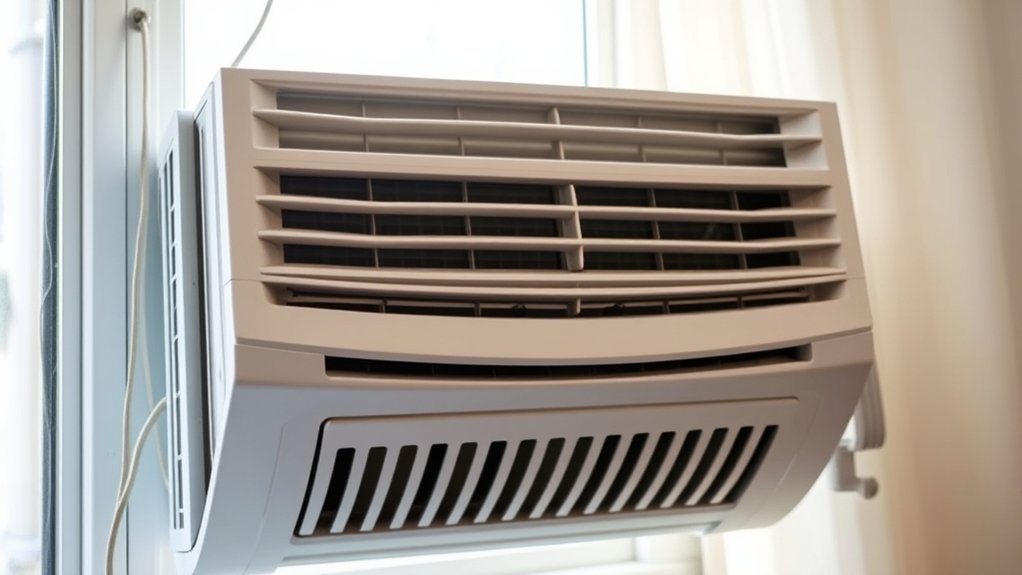
After installing your window AC unit, it’s important to watch out for signs that it isn’t working properly. First, if you notice it’s not cooling as well as it should, even when set correctly, that’s a red flag.
Next, pay attention to noise levels. Excessive or strange sounds could mean something’s wrong mechanically. Also, check the casing—discoloration or fogging might indicate internal issues or moisture buildup.
Observe the airflow. Weak or uneven air movement can point to poor installation or a clogged filter. If your AC starts rattling or gets noisier over time, it’s worth taking a closer look.
Proper installation should mean smooth operation with minimal noise and steady cooling. Ignoring these signs can cause more damage or spike your energy bills, so it’s best to address problems early and keep your unit running efficiently.
How to Correct a Sideways AC Installation Safely
If your window AC unit is installed sideways, fixing the orientation safely is key to making sure it works properly and doesn’t get damaged. First, turn off and unplug the unit to avoid any electrical hazards.
Carefully remove the AC from the window, following the manufacturer’s instructions. Check the mounting brackets and frame for any damage or misalignment.
Reposition the unit so it’s installed upright, making sure it sits level and secure within the window frame. Proper placement helps the AC cool evenly and operate efficiently.
This also helps reduce noise caused by vibrations or gaps in sealing. Before putting it back, make sure the window frame is sturdy and sealed tight to keep out drafts.
Once you’ve reinstalled the unit, test it to see if it’s working correctly. It should maintain a steady temperature and run quietly.
Fixing the installation properly not only improves performance but also extends the lifespan of your AC unit.
Best Practices for Installing a Window AC Correctly
To install your window AC properly, you want to make sure you’re using the right mounting techniques. This helps keep the unit stable and secure so it doesn’t wobble or fall out. It’s a good idea to double-check that everything is level and tightly fastened—nothing’s worse than a shaky AC!
Also, don’t forget about ventilation. You want to leave enough space around the unit so air can circulate freely. Good airflow is key for the AC to run efficiently and safely. When you pay attention to these details, it can help avoid problems down the line and even extend the life of your air conditioner.
Proper Mounting Techniques
Proper mounting is essential to guarantee your window AC operates safely and efficiently. To ensure a secure installation, follow these key steps:
- Check the unit’s weight capacity and make sure the window frame can support it.
- Choose a window with color options that match your room decor if aesthetics matter.
- Use sturdy brackets and shims to keep the unit level, which helps prevent leaks and improves energy efficiency.
- Seal gaps around the unit tightly to reduce energy consumption and keep drafts out.
Ensuring Adequate Ventilation
Ensuring adequate ventilation is essential for your window AC to work efficiently and safely. Proper airflow helps prevent overheating and keeps the cooling performance at its best.
When installing, use the right tools to secure the unit properly and avoid gaps that can block airflow. Check the color options of your window frame and AC unit to ensure a good fit, especially if you plan to paint or customize the exterior.
Proper ventilation also means positioning the unit so air can circulate freely without obstructions. Avoid placing objects around the unit and make sure the window opens fully.
Taking these steps helps your AC run smoothly, saves energy, and extends its lifespan.
Does Installing a Window AC Sideways Void the Warranty?
Installing a window AC unit sideways can make warranty issues more complicated, but whether it actually voids the warranty depends on the manufacturer’s rules. Many brands specify how the unit should be installed, and deviating from those instructions might cause problems with your coverage.
Check your manual to see if they mention acceptable installation orientations and any warranty restrictions. Improper positioning might also reduce the unit’s cooling efficiency, which could lead to warranty claims related to performance.
Installing it sideways might cause unusual vibrations or noise, and if the manufacturer sees this as improper installation, it might not be covered. Also, if the setup causes damage or leaks, your warranty could be voided, especially if they consider the installation non-standard.
Always review your warranty terms before changing the installation angle, and don’t hesitate to contact the manufacturer if you’re unsure. Proper installation helps keep your warranty in good standing and ensures your AC runs smoothly.
When Should You Call a Professional for Help?
Knowing when to call a professional can save you time, money, and potential damage to your AC unit. If you notice unusual noise levels, like rattling or grinding sounds, it’s time to seek expert help.
Likewise, if your unit’s color options seem off—such as discoloration or corrosion—this could indicate deeper issues that need a professional inspection. You should also call a pro if you’re unsure about installing the unit sideways correctly.
Improper placement can reduce efficiency or damage internal parts, so it’s best to get an expert’s opinion. Persistent problems with airflow or cooling performance are signs that a technician should evaluate your system.
Trying to fix issues beyond basic troubleshooting risks causing more damage or voiding your warranty. When in doubt, consulting a professional ensures your unit runs safely and efficiently.
Frequently Asked Questions
Will Sideways Installation Affect the Noise Levels of the AC Unit?
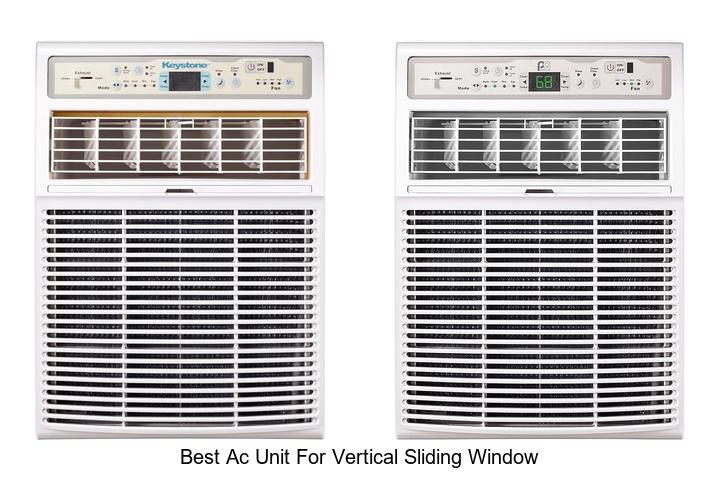
Installing your window AC unit sideways can increase noise levels because it may cause vibrations or improper airflow, leading to more sound output.
You might also face aesthetic concerns, as the unit won’t look as intended, and installation challenges, since securing it safely becomes trickier.
How Does Sideways Placement Impact the Unit’s Energy Consumption?
Think of your AC unit as a well-oiled machine. Sideways placement can make it work harder, which means higher energy consumption.
This setup can also affect energy efficiency and installation stability. When installed sideways, the compressor and fan might not run as smoothly, leading to increased power use.
As a result, your energy bills go up. For the best results, keep your AC upright to ensure it runs smoothly and uses less energy.
Can Installing It Sideways Cause Water Leakage Inside the House?
Installing a window AC unit sideways can cause water leakage inside your house. The water drainage system might not work properly, which can lead to water spilling over.
Also, sealing can be more challenging because the unit might not fit snugly, allowing moisture to escape. This can cause water damage and even mold growth.
To avoid leaks, make sure you install the unit correctly and seal it tightly, no matter how it’s oriented.
Does Sideways Installation Influence the Lifespan of the AC Unit?
Installing your AC sideways can shorten its lifespan because airflow gets disrupted. This makes the unit work harder and can cause it to overheat.
While it might seem like a quick fix, aesthetic concerns often clash with how well the AC functions. Over time, this strain on parts can lead to faster wear and tear.
Are There Specific Window Types Unsuitable for Sideways AC Installation?
Certain window types, like those with limited space or non-standard shapes, may not be suitable for sideways AC installation.
It’s important to think about window security and ventilation before trying to install.
If the window isn’t sturdy enough or doesn’t allow proper airflow, the AC might not work efficiently or safely.
Always check your window’s design and strength to make sure it can support the unit securely and provide enough ventilation when installed sideways.
Conclusion
Think of your window AC as a loyal guardian guarding your comfort. When installed sideways, it’s like turning that guardian away from its post, which can weaken its ability to do its job.
This kind of improper installation can lead to reduced cooling efficiency, increased wear and tear, and potential damage to the unit. It’s important to always install your AC correctly, standing tall and upright.
Proper placement helps it breathe easy, fights humidity better, and keeps your space comfortable. Putting it sideways can turn your trusted protector into a vulnerable shadow.
To keep your home safe and your investment lasting, install your window AC properly. A correct setup ensures it works efficiently and keeps your sanctuary secure.