7 Tips to Make Window AC Colder Fast
Many people struggle with keeping their room cool during hot days, especially when their window AC just isn’t cutting it. If you’re tired of waiting ages for your AC to cool down the space, you’re not alone. Luckily, there are quick tricks to make your window AC colder fast and more effective.
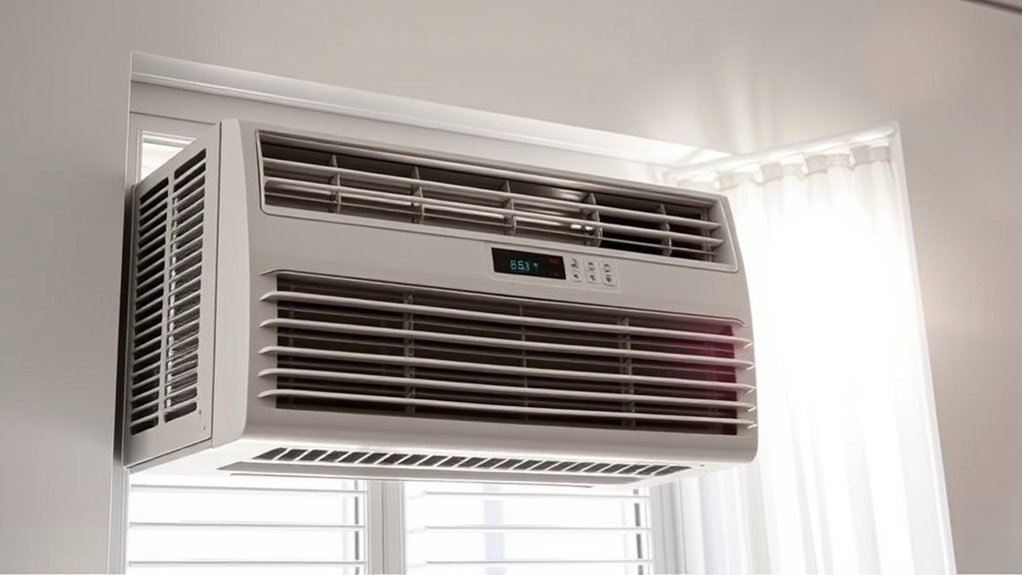
To make your window AC cooler fast, set the thermostat around 75°F or lower and turn on the coldest mode. Increase the fan speed to high or turbo to circulate air quickly, and guarantee vents and filters are clean for peak airflow.
Block sunlight with curtains, keep windows closed during peak heat, and unplug heat-generating devices. Sealing gaps and maintaining proper placement boosts efficiency.
Stick around to find out more tips for quicker, more effective cooling.
Key Takeaways
- Set the thermostat to the coldest setting and increase the fan speed for quick cooling.
- Keep windows and curtains closed to stop warm air from coming in.
- Make sure the AC unit is level, sealed well, and free of debris for better airflow.
- Regularly clean filters, vents, and coils to keep heat exchange working efficiently.
- Turn off or unplug heat-producing appliances to help lower indoor temperature and boost cooling.
Quick Ways to Cool Your Room Faster With Your Window AC
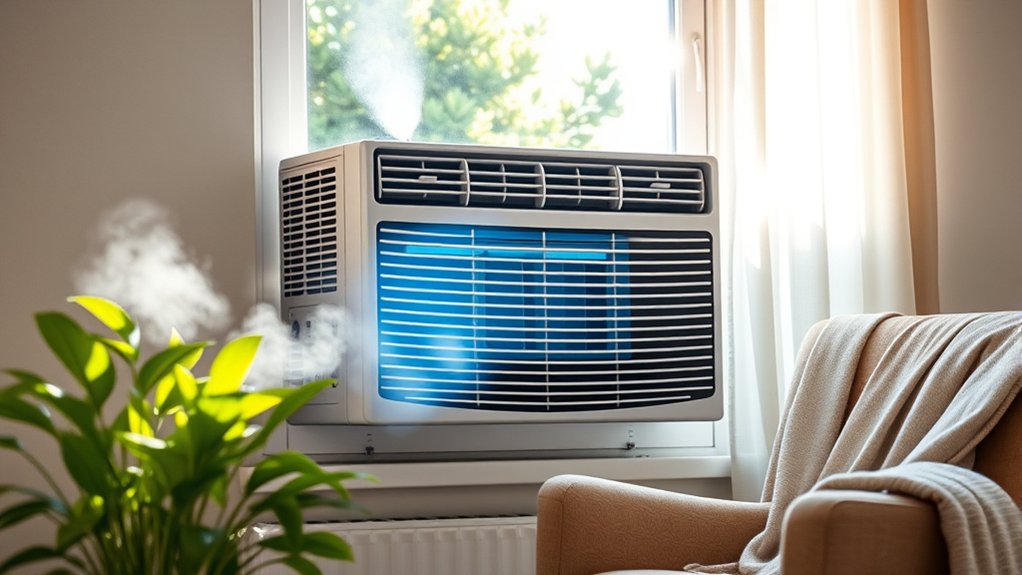
Ever wonder how to cool your room faster with your window AC? To boost cooling speed, make sure your unit runs at maximum efficiency without wasting energy. Keep filters clean because dirty filters block airflow, reducing both energy efficiency and cooling power.
Proper insulation is also important. Seal gaps and drafts around windows to stop warm air from sneaking in. Using a fan along with your AC can help circulate cool air faster, making the room feel colder sooner.
While doing this, think about noise levels—some units can be loud when running full blast. Choose a setting that balances quick cooling with comfort. Avoid setting the thermostat too low at first, as rapid cooling can strain the system and use more energy.
Check and Adjust Your AC Settings for Better Cooling
Want your AC to cool your space more effectively? Try setting your thermostat to around 75°F or even lower if you can—it helps the AC work a little harder to bring down the temperature. Also, crank up the fan speed to high; that way, the cool air gets circulated faster, making the room feel comfortable sooner. Just a few small adjustments like these can really speed up the cooling process and make things more comfortable for you.
Optimal Temperature Settings
To get the best cooling from your window AC, it’s important to check and adjust the temperature settings regularly. Proper thermostat adjustment helps your unit cool effectively without overworking.
Start by setting your thermostat between 75°F and 78°F for comfort and energy savings. If your AC isn’t cooling enough, try calibrating the thermostat to fine-tune the settings.
Remember, setting it too low won’t cool faster but will use more energy. Use the table below to guide your adjustments:
| Action | Effect |
|---|---|
| Lower temperature | Cool faster but consumes more energy |
| Raise temperature | Cool less but saves energy |
| Calibrate thermostat | Ensures accurate temperature readings |
| Adjust regularly | Keeps cooling effective and consistent |
Proper Fan Speed
Adjusting your fan speed correctly can significantly improve your window AC’s cooling performance. When you set the right fan speed, you optimize airflow, helping cool the room faster.
If your fan runs too low, airflow might not be enough to circulate cool air effectively. On the other hand, setting it too high could cause noise and waste energy without making a real difference in cooling.
Start with a medium fan speed to balance airflow and comfort, then increase it if needed. Some units have an auto setting that adjusts the fan speed based on temperature, which can be really helpful.
Regularly check and fine-tune your fan speed to make sure your AC runs efficiently. This way, you get the coolest air quickly and keep your environment comfortable.
Clear Obstructions and Improve Airflow to Boost Chill
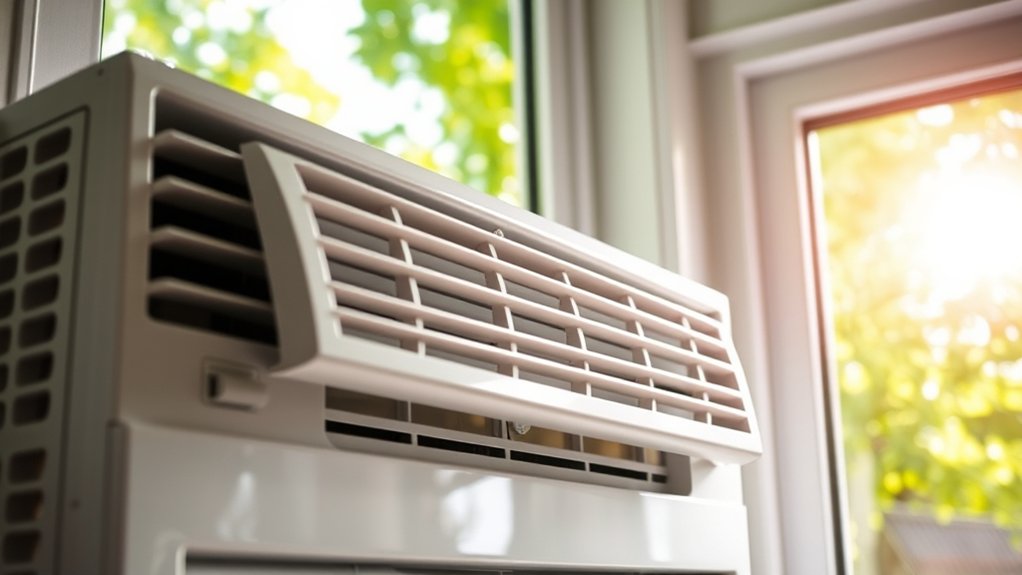
Make sure to clear away any blockages around your AC unit regularly—things like leaves or debris—so the airflow stays unobstructed. It’s a simple step that can make a big difference in how well your AC works.
Also, don’t forget to clean your air vents often. Dust and dirt can build up and block the airflow, making your cooling less effective. When the airflow is better, your AC can cool your space more quickly and efficiently.
Remove Blockages Regularly
Whenever you notice your window AC isn’t cooling as well as it should, it’s important to check for blockages. Dust, debris, or dirt can block airflow and cut down its cooling power.
Start by inspecting the vents for any obstructions that could be blocking air movement. Remove leaves, dirt, or anything else that might be blocking the intake or exhaust vents.
Regularly clearing these blockages helps ensure good airflow, making your AC work more efficiently and cool faster. Don’t forget to check the filter and surrounding areas for dust buildup too.
Keeping vents and filters free of debris allows cool air to circulate better, helping your unit run smoother and reach the desired chill more quickly.
Clean Air Vents Frequently
Regularly cleaning your air vents keeps airflow unobstructed, which helps cool your room faster. When vents are clogged with dust or debris, your AC has to work harder, reducing efficiency. To boost cooling, perform regular air filter maintenance and clear any obstructions.
Improving ventilation allows cool air to circulate freely, making your space more comfortable. Keep an eye out for dust buildup, blocked vents, and reduced airflow to maintain an efficient cooling system.
| Dust Buildup | Obstructed Vents | Reduced Airflow |
|---|---|---|
| Clogged filters | Blocked vents | Poor circulation |
| Debris accumulation | Furniture blocking | Hot spots |
| Dust particles | Curtains over vents | Uneven cooling |
Position Your Window AC for Maximum Cooling Effect
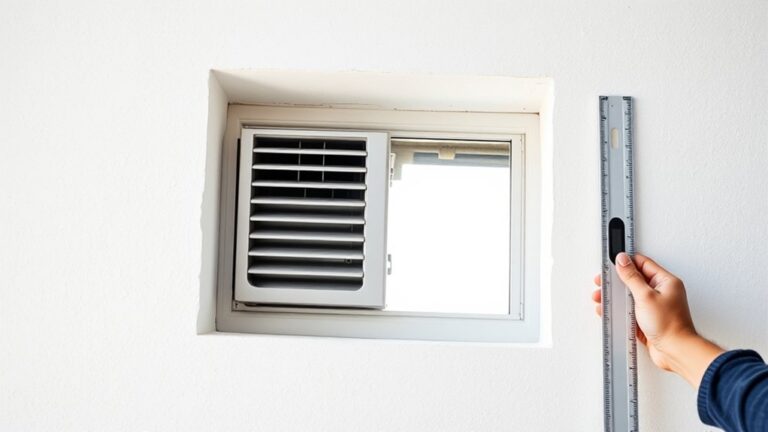
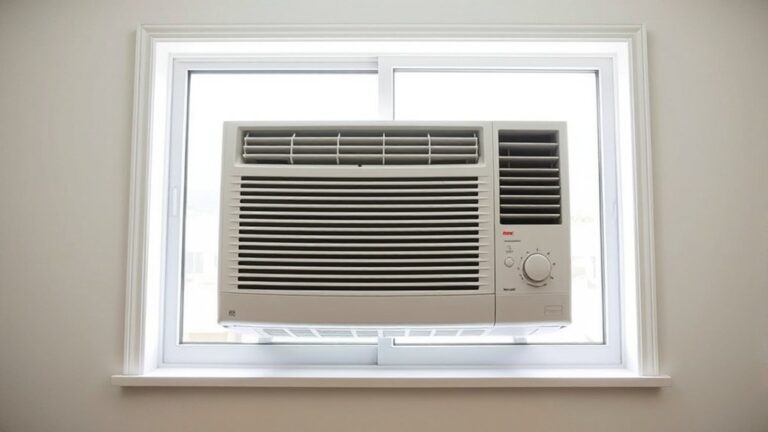
To maximize the cooling power of your window AC, positioning it correctly is key. Start with proper window placement—make sure your unit sits level and fits snugly within the window frame.
Proper window placement ensures your AC cools efficiently and fits securely for optimal performance.
An ill-fitting or crooked unit lets hot air seep in, which reduces efficiency. Use weatherstripping or foam inserts to seal any gaps and block warm air from bypassing the unit.
Keep the airflow unobstructed by keeping curtains, furniture, or other objects away from the vents. If possible, position the AC so it directs cool air toward the center of the room instead of into corners or against walls.
This helps distribute cold air evenly throughout the space. Also, avoid blocking the exhaust or air intake areas, as that can hamper performance.
Proper window placement and mounting techniques are essential for your AC to run at peak efficiency and cool your room faster.
Increase Fan Speed and Use Cold Air Settings for Faster Results
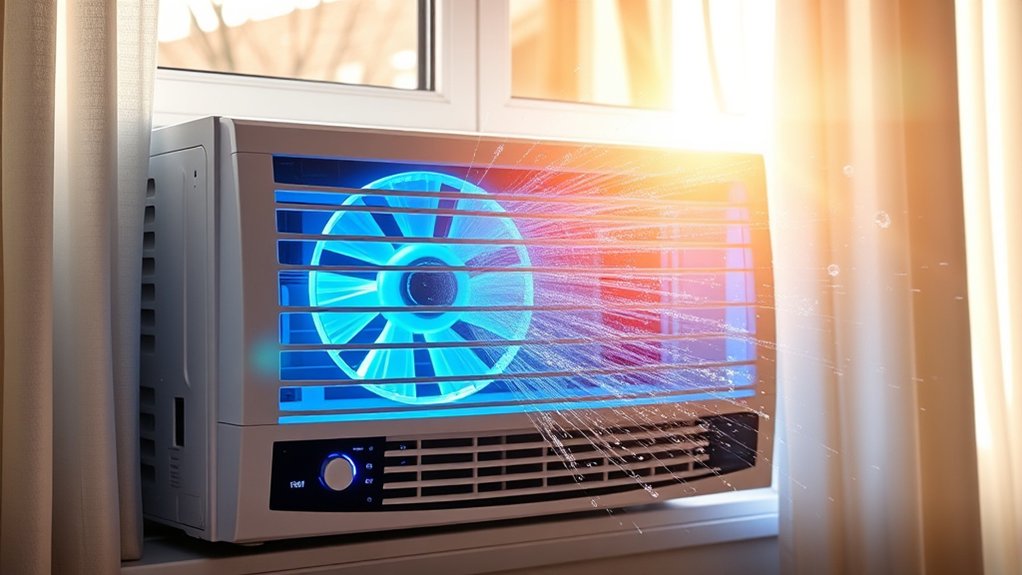
Boost your cooling speed by increasing the fan speed and setting your AC to its coldest mode. When you do this, your unit circulates more cold air quickly, helping the room reach the desired temperature faster.
Higher fan speeds move air more rapidly, spreading cold air evenly and reducing hot spots. This means your space cools down faster and more efficiently.
Here’s a quick reference:
| Fan Speed Setting | Effect on Cold Air | Ideal Use Case |
|---|---|---|
| Low | Slow circulation | Nighttime, sleep mode |
| Medium | Moderate airflow | Regular cooling |
| High | Fast circulation | Rapid cooling, hot days |
| Turbo | Maximum airflow | Fastest cool-down |
| Auto | Adjusts automatically | Energy saving, comfort |
Choosing the highest fan speed and coldest settings maximizes cold air flow. This speeds up cooling and helps you feel comfortable faster.
Manage Indoor Heat Sources and Insulation to Help Your AC Cool Better
Since indoor heat sources can significantly raise your room temperature, managing them effectively helps your AC work more efficiently. Turn off unused appliances, electronics, and lighting or unplug them when not needed.
Keep curtains or blinds closed during the hottest parts of the day to block out direct sunlight, which can raise indoor temperatures quite a bit. Address indoor humidity levels, as high humidity makes the room feel warmer and forces your AC to work harder.
Keep curtains closed during peak heat to reduce indoor temperatures and improve AC efficiency.
Using a dehumidifier or venting moisture outside can help lower humidity, making your room feel cooler. Also, check your window insulation; gaps or leaks let warm air in and cool air out.
Proper insulation prevents heat transfer, keeping your indoor environment cooler. By controlling heat sources and improving insulation, you reduce the workload on your AC, helping it cool your room faster and more efficiently.
Troubleshoot Common Problems That Keep Your Window AC From Cooling Properly
When your window AC isn’t cooling like it should, the problem is often something simple that you can fix quickly. First, check the thermostat calibration—if it’s off, your unit might not be cooling properly. Adjust the thermostat to make sure it’s set correctly and working the way it should.
Next, look at the refrigerant levels. Low refrigerant can make your AC blow warm air because it reduces cooling efficiency. If you notice this, you’ll need a professional to recharge the system. Also, make sure to clean or replace filters regularly because dirty filters block airflow and cut down on cooling power.
Check that the vents and coils are free of dirt and debris since these can slow down heat exchange. Lastly, ensure the compressor is running smoothly and that there aren’t any electrical issues stopping your AC from working properly. Fixing these common problems can help your window AC cool better and bring back comfort quickly.
Frequently Asked Questions
Can Using a Fan Alongside My Window AC Improve Cooling Speed?
Yes, using a fan alongside your window AC can help cool your room faster. The fan circulates the cool air more effectively, so the space feels cooler quicker.
It also encourages air movement, which can lighten the load on your AC. That might even save some energy in the long run. Plus, fans are pretty quiet, so they won’t add much noise.
Just make sure the fan is positioned right for the best airflow. With that setup, you’ll enjoy faster, quieter cooling.
Does Closing Curtains or Blinds Help the AC Cool Faster?
Imagine sunlight streaming through your window, turning your room into a mini oven. Closing curtains or blinds creates a barrier blocking the sun’s rays, keeping the heat out.
Blinds reflect heat away, further preventing it from entering your space. This quick action helps your room stay cooler longer and makes your AC work more efficiently.
How Often Should I Clean or Replace the AC Filters for Optimal Cooling?
You should clean or replace your AC filters every 1 to 3 months, depending on your filter’s lifespan and how often you use your air conditioner.
Regular maintenance helps keep your AC running smoothly, so it cools faster and uses less energy.
Make sure to follow your unit’s maintenance schedule and check the filters monthly during busy seasons.
If you notice reduced airflow or your energy bills go up, it’s probably time to clean or replace the filters sooner.
What Is the Ideal Temperature Setting for Quick Cooling?
Set your window AC to around 68°F for quick cooling. Seems ironic, right? But this temperature strikes a good balance between energy efficiency and noise levels.
It helps you chill faster without skyrocketing your electric bill or waking everyone up. Avoid lower settings, which can strain the unit, increase noise, and waste energy.
Keep it at this ideal point, and you’ll notice a faster cool-down while still staying comfortable and efficient.
Can Sealing Leaks Around the Window Enhance Cooling Efficiency?
Sealing leaks around your window can definitely boost your AC’s cooling efficiency.
Using insulation techniques like weather stripping or foam sealant helps stop warm air from coming in and cool air from escaping.
This makes your energy use more efficient, so your AC doesn’t have to work as hard and can cool the room faster.
Proper sealing also reduces drafts, keeps the temperature steady, and helps your window AC cool more quickly.
Conclusion
Remember, a stitch in time saves nine. Regularly maintaining and optimizing your window AC keeps it running efficiently.
By following these tips, you’ll cool your room faster and enjoy a more comfortable space. Don’t ignore small issues because they can turn into bigger problems.
Stay proactive and keep your AC in check. A little effort now can pay off with a cooler, more invigorating room when you need it most, especially for making your window AC colder fast.